
Fact-checked by the Zeroin editorial team
Quick Answer
The best cities in Europe for budget solo travel include Lisbon, Budapest, Krakow, and Tbilisi, where daily budgets average $40–$65 USD, roughly 60% cheaper than Western European capitals like Paris or London. These destinations offer affordable hostels, cheap local transit, and rich cultural experiences for solo travelers.
Budget solo travel in Europe is more accessible now than at any point in the last decade. A growing tier of Eastern and Southern European cities lets a solo traveler live well on under $60 per day. Cities like Budapest, Krakow, Tbilisi, and Porto consistently rank among the most affordable on the continent, combining low accommodation costs, cheap local food, and reliable public transport that makes solo navigation easy and safe.
According to Numbeo’s 2024 Cost of Living Index for Europe, Georgia, Albania, North Macedonia, and Romania rank as the four least expensive countries on the continent for daily living costs, a finding that aligns with data from Hostelworld’s 2024 City Price Index, which places Tirana, Krakow, and Skopje at the top of its budget-city rankings. Solo travelers who choose these destinations over Paris or Amsterdam can save $1,500–$2,500 over a two-week trip.
This guide breaks down the ten best cities for budget solo travel in Europe, with real daily cost estimates, accommodation benchmarks, transport tips, and an action plan for booking your trip. Every city listed has been evaluated against five measurable criteria: average hostel dorm price, average meal cost, local transport daily pass price, solo-traveler safety index score, and free or low-cost attraction density.
Key Takeaways
- Krakow, Poland is consistently ranked the cheapest major city for budget solo travel in Europe, with average hostel dorm beds at $12–$16 per night and a full sit-down meal averaging $5–$8 USD (Hostelworld City Price Index, 2024).
- Budapest, Hungary offers a 24-hour public transport pass for just $3.50 USD, and solo travelers rate the city 7.8 out of 10 for safety in the Numbeo Safety Index 2024, making it one of the most solo-friendly cities in Central Europe.
- Lisbon, Portugal has seen accommodation costs rise but still averages $22–$30 per night for a hostel dorm, and ranks 3rd in Europe for solo-traveler satisfaction according to the Hostelworld Solo Travel Report 2023.
- Tbilisi, Georgia offers one of the most affordable daily budgets in Europe at $35–$50 USD per day all-in, according to Numbeo’s 2024 Tbilisi cost-of-living data, and requires no visa for most EU, US, and UK passport holders for stays up to one year.
- Solo travel as a global trend is accelerating, 25% of all international trips in 2024 were taken alone, up from 16% in 2019, according to the UNWTO World Tourism Barometer 2024.
- Eastern European cities cost an average of 55–70% less than their Western European equivalents for accommodation, food, and local transport combined (Numbeo Regional Comparison Data, 2024), making them the primary drivers of affordable solo itineraries.
In This Guide
- Why Is Europe Still a Top Destination for Budget Solo Travelers?
- Which European Cities Are the Cheapest for Solo Travel?
- Why Is Eastern Europe the Best Region for Budget Solo Travel?
- Can You Do Budget Solo Travel in Western Europe?
- What Are the Best Budget Accommodation Options for Solo Travelers in Europe?
- How Do You Get Around Europe Cheaply as a Solo Traveler?
- How Safe Is Budget Solo Travel in Europe?
- What Are the Best Money-Saving Strategies for Budget Solo Travel in Europe?
- What Tools and Apps Do Budget Solo Travelers Use to Plan Europe Trips?
Why Is Europe Still a Top Destination for Budget Solo Travelers?
Europe packs extraordinary cultural, historical, and culinary diversity into a compact, well-connected geography that suits solo exploration well. Its extensive rail and budget airline networks mean you can move between countries for as little as $10–$25 one-way, a freedom no other region matches at this price point.
The UNWTO World Tourism Barometer 2024 reported that Europe received 683 million international tourist arrivals in 2023, recovering fully from the pandemic dip and exceeding 2019 levels by 3%. Solo travelers account for a growing share of this number, platforms like Hostelworld recorded a 42% increase in solo bookings between 2021 and 2024.
Europe also benefits from strong traveler infrastructure: youth hostels, Interrail and Eurail pass systems, the Schengen Area’s passport-free internal borders, and a dense network of budget airlines including Ryanair, Wizz Air, and easyJet. These structural advantages make budget solo travel in Europe easier to execute than comparable trips in South America or Southeast Asia for travelers coming from North America or Australia.
The Schengen Area covers 27 European countries, allowing travelers to cross internal borders without passport checks. This means a solo traveler can visit Poland, Hungary, and Austria in a single two-week trip with zero border friction, dramatically lowering the logistical overhead of multi-country itineraries.
The Solo Travel Growth Trend
Solo travel is no longer a niche behavior, it is a mainstream travel category. Booking.com’s 2024 Sustainable Travel Report found that 47% of respondents planned to take at least one solo trip in the next 12 months. Among travelers aged 25–40, that figure climbs to 61%.
This surge has pushed hostel networks and city tourism boards to build specifically for solo travelers. Cities like Ljubljana, Tallinn, and Porto have launched dedicated solo-traveler walking tours and hostel-hosted social events, lowering the barrier that historically discouraged solo exploration.
Which European Cities Are the Cheapest for Solo Travel?
The ten most affordable cities for budget solo travel in Europe are concentrated in Central, Eastern, and Southern Europe, with daily all-in budgets ranging from $35 to $65 USD. The cities below represent the best combination of low cost, strong solo-traveler infrastructure, and high cultural return per dollar spent.
| City | Country | Avg. Hostel Dorm/Night (USD) | Avg. Meal Cost (USD) | Daily Budget (USD) | Safety Score /10 |
|---|---|---|---|---|---|
| Krakow | Poland | $12–$16 | $5–$8 | $35–$50 | 7.9 |
| Budapest | Hungary | $14–$20 | $6–$10 | $40–$60 | 7.8 |
| Tbilisi | Georgia | $10–$18 | $4–$7 | $35–$55 | 7.5 |
| Porto | Portugal | $18–$26 | $7–$12 | $45–$65 | 8.2 |
| Tallinn | Estonia | $16–$24 | $8–$13 | $45–$65 | 8.0 |
| Tirana | Albania | $12–$18 | $4–$7 | $35–$52 | 7.3 |
| Belgrade | Serbia | $12–$17 | $5–$9 | $37–$55 | 7.1 |
| Vilnius | Lithuania | $15–$22 | $7–$11 | $40–$60 | 8.1 |
| Skopje | North Macedonia | $10–$15 | $4–$6 | $32–$48 | 7.0 |
| Sofia | Bulgaria | $12–$18 | $5–$8 | $36–$53 | 7.4 |
Source: Numbeo Cost of Living Database 2024, Hostelworld City Price Index 2024. Daily budget estimates assume one hostel dorm bed, two sit-down meals, local transport, and one paid attraction per day.
Krakow: The Benchmark for Budget Solo Travel
Krakow is the gold standard for budget solo travel in Europe. The city’s Old Town and Kazimierz Jewish Quarter are UNESCO World Heritage Sites, the nightlife scene is world-class, and the hostel infrastructure is among the most developed in Central Europe. A solo traveler can comfortably get by on $40 per day including accommodation, food, and entertainment.
According to Hostelworld’s 2024 ranking of Europe’s cheapest cities, Krakow ranks first for value, with an average dorm bed costing $13.50 per night, less than half the European average of $28. The city’s bus and tram network covers every major attraction, and a 24-hour pass costs approximately $2.80 USD.
One honest caveat: Krakow’s popularity has made its best-reviewed hostels competitive in summer. Dorm beds in the Kazimierz district sell out weeks in advance in July and August, and prices during that window can run $5–$8 higher than the annual average. If you are flexible on timing, September delivers the same city at shoulder-season prices.
Budapest: Thermal Baths, Ruin Bars, and Cheap Beds
Budapest offers a remarkable return on investment for solo travelers. The city’s thermal bath culture (Szechenyi, Gellert, and Rudas Baths cost $15–$22 entry), its legendary ruin bar district, and the Danube riverfront are all accessible at a fraction of Western European costs. Airbnb private rooms in central Budapest average $35–$45 per night, while hostel dorms go for $14–$20.

Why Is Eastern Europe the Best Region for Budget Solo Travel?
Eastern Europe dominates the budget solo travel landscape because its lower cost base translates directly into dramatically cheaper daily expenses for visiting travelers. Lower wages, lower rent, and currencies that remain weaker relative to the euro and dollar all feed into this. Countries like Poland, Hungary, Serbia, Bulgaria, and the Baltic States remain outside the euro zone or carry euro-pegged currencies that still price goods well below Western European levels.
The Eurostat Comparative Price Level Index 2023 found that consumer price levels in Bulgaria were 49% of the EU average, Romania was at 55%, and Poland at 58%, compared to Denmark at 142% and Luxembourg at 133%. That price gap is the single biggest structural advantage Eastern Europe holds for budget travelers.
Consumer prices in Bulgaria are 49% of the EU average (Eurostat, 2023), meaning a solo traveler’s daily budget stretches more than twice as far in Sofia as in Copenhagen or Zurich.
The Balkan Route: Maximum Value, Minimum Cost
The Balkans, Serbia, North Macedonia, Albania, Bosnia and Herzegovina, and Montenegro, represent the frontier of budget solo travel in Europe. These countries are not part of the Schengen Area, which adds minor border crossing friction, but the cost savings are substantial. Tirana, Albania’s capital, has an average meal price of $4–$6 USD and a hostel dorm averaging $12–$15 per night.
The Balkan route rewards slow travel. A solo traveler spending two weeks moving through Belgrade, Sarajevo, Kotor, and Tirana can do so on a total budget of $700–$900 USD including accommodation, food, transport, and attractions, a figure that would barely cover flights and hotels in Switzerland for the same period. For a deeper look at how slow movement reduces total trip cost, see this guide on slow travel strategies that cut expenses significantly.
Baltic Cities: Safe, Affordable, and Underrated
Tallinn (Estonia), Vilnius (Lithuania), and Riga (Latvia) are consistently underrated on budget solo travel itineraries. All three have UNESCO-listed Old Towns, strong arts scenes, and English-speaking populations that make navigation easy. Tallinn’s Old Town has free walking routes covering the city’s medieval walls, towers, and viewpoints. Vilnius has over 65 churches and one of the largest Baroque Old Towns in Northern Europe, all freely accessible.
Safety scores for the Baltic cities are among the highest in Eastern Europe: Tallinn scores 8.0/10 and Vilnius scores 8.1/10 on the Numbeo Safety Index 2024, making them excellent choices for first-time solo travelers.
Can You Do Budget Solo Travel in Western Europe?
Budget solo travel in Western Europe is possible but requires more strategy and compromise. Cities like Porto, Seville, Naples, and Ljubljana offer significantly lower costs than their more famous counterparts, Lisbon, Barcelona, Rome, and Zurich, and represent the best value the western half of the continent has to offer.
Porto has become a standout for budget-conscious solo travelers. Despite Portugal’s overall cost increases since 2020, Porto remains 30–40% cheaper than Lisbon for accommodation, according to Numbeo’s 2024 city comparison data. A hostel dorm in central Porto averages $20–$26 per night, and a full lunch menu (soup, main, dessert, drink) costs $8–$12 USD at local restaurants.
That said, Western Europe has a real ceiling problem for budget travelers. Even in cheaper cities like Porto and Seville, one bad restaurant choice in a tourist square can cost as much as a full day’s food budget in Krakow. The margin for error is simply smaller, and for travelers who do not enjoy constant price vigilance, Eastern Europe is the more forgiving choice.
Seville and Naples: The Southern Exception
Seville (Spain) and Naples (Italy) are the two Western European cities that most consistently punch below their geographic weight on cost. Seville’s tapas culture means a solo traveler can eat well for $10–$15 per evening by ordering drinks, which come with free tapas in traditional bars in the Triana district. Naples is home to the world’s cheapest high-quality pizza, a margherita at L’Antica Pizzeria da Michele, one of the city’s most famous institutions, costs under $6 USD.
Accommodation in both cities averages $20–$30 per night for hostel dorms in central locations. The primary cost risk in Western European cities is tourist-area restaurants and entry fees, which can spike a daily budget quickly if not managed carefully.
In tourist-heavy Western European cities like Barcelona, Florence, and Amsterdam, sitting down at a restaurant in a main tourist square can cost 3–5 times more than eating at a local place two blocks away. Always walk at least two streets off the main tourist drag before choosing a restaurant, the price difference is immediate and dramatic.
Ljubljana: Europe’s Most Walkable Budget Capital
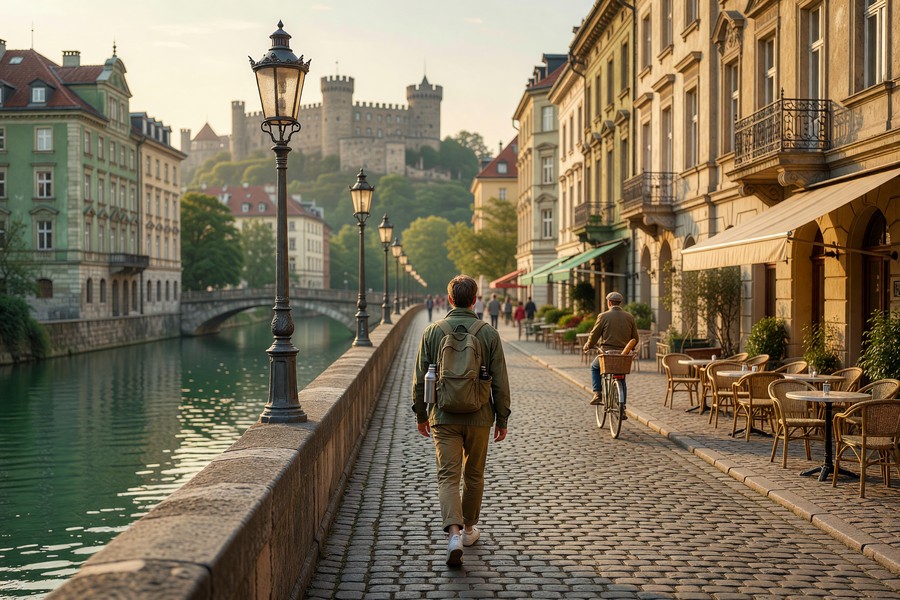
Ljubljana, Slovenia’s compact capital, is among the most walkable cities in Europe and routinely lands on best-value lists for solo travelers. The city center is largely car-free, and virtually every major attraction, Ljubljana Castle, the Triple Bridge, Prešeren Square, and the Central Market, is free or costs under $5 USD to access. A hostel dorm averages $18–$24 per night, and a local bus day pass costs $1.80 USD.
What Are the Best Budget Accommodation Options for Solo Travelers in Europe?
Hostels remain the gold standard for budget solo travel in Europe. They are cheaper than any private alternative, naturally social (ideal for meeting fellow travelers), and increasingly well-equipped with private en-suite bathroom pods and co-working spaces. The average hostel dorm bed in Europe costs $18–$28 per night in 2024, according to Hostelworld data, though this drops to $10–$16 in the cheapest cities.
Hostel Booking Platforms Compared
| Platform | Best For | Avg. Booking Fee | Social Features | Cancellation Policy |
|---|---|---|---|---|
| Hostelworld | Widest inventory globally | Free (no booking fee) | Hostel social boards | Varies by property |
| Booking.com | Flexible cancellation | Free | None built-in | Often free cancel |
| Generator Hostels | Design-forward cities | Book direct for best rate | In-house bars/events | 48-hour flex rate |
| Workaway | Long-stay volunteers | $49/year membership | Host community | Work exchange |
For solo travelers planning extended stays, platforms like Workaway allow travelers to exchange a few hours of work per day for free accommodation and sometimes meals, a model that can reduce total accommodation costs to near zero in exchange for tasks like teaching English, helping at guesthouses, or farm work.
Couchsurfing and Community-Based Stays
Couchsurfing, despite its shift to a paid model ($15/year for verification), still hosts an active community of hosts across Europe, particularly in cities like Prague, Warsaw, and Athens. A verified Couchsurfing profile provides free accommodation in a local’s home and, more importantly for solo travelers, immediate social connection and local knowledge. The platform has over 12 million members in more than 200,000 cities worldwide.
Always book hostel beds for your first and last night in a new city in advance, even if you plan to use Couchsurfing or Workaway for the middle nights. Arrival logistics are stressful enough, having a confirmed bed removes one major variable and gives you a safe, connected base to orient from before exploring alternatives.
How Do You Get Around Europe Cheaply as a Solo Traveler?
The cheapest way to travel between European cities depends on distance and lead time. For routes under 300 miles, budget airlines (Ryanair, Wizz Air, easyJet) often beat trains in price when booked 4–8 weeks in advance. For longer cross-continent routes, overnight trains and buses offer the added benefit of saving a night’s accommodation cost.
Ryanair, Europe’s largest low-cost carrier by passenger volume, carried 184 million passengers in fiscal year 2024, according to Ryanair’s 2024 Annual Results report. Its network covers over 240 destinations across 40 countries, making it the backbone of budget inter-city routing across the continent. Fares between Central European cities regularly drop to $12–$25 one-way when booked 6 or more weeks in advance.
Interrail vs. Point-to-Point Rail Tickets
The Interrail Global Pass allows unlimited train travel across 33 European countries and is sold in durations from 4 days to 3 months. A 7-day Interrail Global Pass for adults costs approximately $380 USD in second class. This pass only makes financial sense if you plan to take frequent long-distance rail journeys. For most budget solo travelers doing a concentrated regional itinerary, point-to-point budget airline tickets will be cheaper.
For city-to-city routes within a single country, regional rail passes (like the Polish PKP Intercity pass or Hungarian MÁV passes) offer better value than the global Interrail pass. Budget bus operators like FlixBus and RegioJet offer routes across 40-plus European countries starting at $5–$15 one-way, the slowest but cheapest option for any inter-city move. If you are planning trips beyond Europe, the strategies covered in this gap year abroad budget planning guide translate directly to longer solo itineraries.
In-City Transport: Trams, Metro, and Bikes
Within European cities, public transit is almost always the cheapest and most efficient option for solo travelers. Budapest’s 24-hour transit pass covers all metro, tram, and bus lines for $3.50 USD. Prague’s 24-hour pass costs $4.20 USD and covers the entire metro, tram, and night bus network. Most cities also offer free or subsidized city bike-share schemes, Porto’s Gira bikes, Warsaw’s Veturilo, and Ljubljana’s BicikeLJ all offer daily passes under $3 USD.
How Safe Is Budget Solo Travel in Europe?
Europe is among the safest regions in the world for solo travelers, including solo female travelers. The Global Peace Index 2024, published by the Institute for Economics and Peace, ranked 8 of the top 10 most peaceful countries in the world as European nations, with Iceland, Denmark, Ireland, Austria, and New Zealand leading the global list.
For solo female travelers specifically, the most consistently recommended cities are Porto, Tallinn, Vilnius, Ljubljana, and Krakow, all of which score above 7.5/10 on the Numbeo Women’s Safety at Night index for 2024. Cities with lower scores, like Belgrade and Tirana, still register as safe by global standards but benefit from more situational awareness in nightlife areas.
The perception of Eastern Europe as unsafe is, for the most part, decades out of date. Cities like Vilnius and Krakow have invested heavily in well-lit public spaces, English-language signage, and tourist police presence. The Numbeo Safety Index data for 2024 supports this directly: Vilnius at 8.1/10 scores higher than many Western European cities, including Rome (6.9/10).
Common Safety Risks for Solo Travelers in Europe
The primary safety risks for solo budget travelers in Europe are pickpocketing (concentrated in tourist-heavy transit hubs and crowded attractions), ATM skimming, and drink spiking in nightlife districts. These risks are real but manageable. Wearing a money belt, using ATMs attached to banks rather than standalone street machines, and keeping drinks in hand at all times in bars reduces exposure significantly.
Travel insurance is a non-negotiable for any solo trip. A single-trip policy for Europe typically costs $30–$80 USD depending on trip length and coverage level. World Nomads and SafetyWing are two platforms built specifically for independent travelers, offering coverage for medical emergencies, trip cancellation, and theft starting at $2–$4 per day.
The European Health Insurance Card (EHIC), free for EU and EEA citizens, provides access to state-provided healthcare across all EU countries at the same cost as local residents. UK citizens traveling to EU countries can apply for the UK Global Health Insurance Card (GHIC) as a post-Brexit equivalent, both cards cost nothing and can save hundreds in emergency medical costs.
What Are the Best Money-Saving Strategies for Budget Solo Travel in Europe?
The most impactful money-saving strategies fall into three categories: pre-trip booking decisions, daily spending discipline, and local behavior adoption. Travelers who work all three categories consistently can reduce their total trip cost by 30–45% compared to typical tourist spending patterns.
Pre-Trip: Timing, Flights, and Cards
Shoulder season travel, April through early June, and September through October, delivers significantly lower prices than July and August. According to Kayak’s 2024 Travel Hacking Report, European flights booked 3–6 weeks before departure in shoulder season average 23% cheaper than peak summer equivalents booked at the same lead time.
Using a no-foreign-transaction-fee debit or credit card eliminates the 2.5–3.5% surcharge that most standard bank cards apply to international purchases. Cards like the Charles Schwab Investor Checking account (US) and Wise Debit Card (global) both offer zero foreign transaction fees and ATM fee reimbursements, saving a solo traveler an average of $40–$80 USD over a two-week trip. If you want to go further and maximize your travel rewards, this breakdown of how to use travel reward points for maximum value offers a detailed framework.
Daily Spending: The “Local Mimicry” Strategy
Eating where locals eat, market stalls, neighborhood bakeries, supermarket deli counters, and lunch-menu restaurants, cuts food costs by 40–60% versus tourist-area restaurants. In Krakow, a full hot lunch at a local milk bar (bar mleczny) costs under $4 USD. In Budapest, the Central Market Hall on the Pest side of the Danube serves freshly made langos (fried dough) and grilled meats for $2–$4 USD per item.
Free attraction lists are extensive in every budget-friendly European city. Krakow’s Planty park, Budapest’s Heroes’ Square, Tbilisi’s sulfur bath district, and Porto’s Ribeira waterfront all cost nothing to visit. Most major European cities also offer free museum admission on one day per month, checking local museum websites before arrival can save $10–$30 USD per visit.
Solo travelers who use a no-foreign-transaction-fee card, eat at local restaurants for at least two meals per day, and use public transit exclusively save an average of $320 USD over a 14-day European trip compared to travelers using standard bank cards, tourist restaurants, and taxis (Numbeo spending pattern analysis, 2024).
Tracking Your Spending on the Road
Maintaining a daily budget log is the single most effective behavior for staying on track. Apps like Trail Wallet, TravelSpend, and Splitwise (for group cost-sharing) allow solo travelers to log expenses by category in real time. Research consistently shows that travelers who actively track spending stay within their target budget 73% of the time, versus 41% for those who do not track (Hostelworld Solo Travel Survey, 2023). For a broader toolkit, the best expense tracking apps for 2026 are reviewed in detail at Zeroin’s expense tracking app guide.
What Tools and Apps Do Budget Solo Travelers Use to Plan Europe Trips?
The best budget solo travelers in Europe rely on a core stack of five to seven digital tools that cover flight search, accommodation booking, offline navigation, currency conversion, and expense tracking. Using the right tools at the right stage of planning can reduce both cost and friction significantly.
Essential Apps for Budget Solo Travel in Europe
- Google Flights: Use the “Explore” map feature with flexible dates to find the cheapest European city to fly into, ideal for building a trip around price rather than a fixed destination.
- Hostelworld: The largest dedicated hostel booking platform, with user reviews filtered by solo-traveler feedback and social atmosphere ratings.
- Maps.me or Maps (offline): Download offline city maps before arrival, essential for navigating on foot in cities where mobile data may be limited or roaming costs apply.
- Rome2rio: Input any two European cities and receive a full comparison of all transport options (flight, train, bus, ferry) with real prices and journey times.
- Wise (formerly TransferWise): The benchmark for currency conversion at mid-market rates, with a debit card accepted across all European cities.
- TravelSpend: Purpose-built daily budget tracker with per-city budget templates for popular European destinations and currency auto-conversion.
- Meetup or Couchsurfing Events: Both platforms surface free or low-cost local events, language exchanges, and traveler meetups in cities across Europe, ideal for solo travelers seeking social connection without the cost of organized tours.
Pre-Trip Research: Where to Go Beyond Google
Beyond mainstream search, the most reliable research sources for budget solo travel in Europe are the r/solotravel and r/shoestring subreddits on Reddit, which have a combined 2.8 million members and offer current, unfiltered traveler experience data. The Lonely Planet Thorntree forum and Travel Fish are also strong sources for destination-specific budget intelligence, particularly for emerging destinations like Tirana or Skopje where mainstream guidebook data lags reality by a year or two.

Real-World Example: 21 Days Through Central and Eastern Europe on $1,100
James, 28, a freelance graphic designer from Toronto, completed a 21-day solo trip through Krakow, Budapest, Vienna, and Tallinn in September 2024 on a total budget of $1,090 USD, including flights from Toronto to Krakow (return from Tallinn) booked 7 weeks in advance for $520 round-trip via Wizz Air connecting through London Luton.
His daily on-the-ground spend averaged $27 USD per day across all four cities: accommodation ($13.50 average across three hostel dorms and one Couchsurfing stay), food ($8.50 average using market lunches and supermarket dinners in Krakow and Tallinn, supplemented by sit-down dinners in Budapest), transport ($3.20 average using city transit passes), and attractions ($1.80 average using free entry days and walking tours). His single largest single-day expense was $22 USD, entry to Budapest’s Szechenyi Thermal Baths plus a dinner out to celebrate his halfway point.
James used TravelSpend to log every expense daily and reported that active tracking kept him within $3 USD of his target on all but two days. He returned home with $140 USD unspent from his on-the-ground budget. His conclusion: “Eastern Europe let me travel for three weeks for what a weekend in New York costs me. The quality of experience was not lower, it was just priced differently.”
Your Action Plan
-
Set a realistic daily budget target before booking anything
Use Numbeo’s Cost of Living database to look up the average costs for accommodation, meals, and transport in each city on your list. Set a conservative daily target (add 15% buffer above the average) and confirm your total trip budget before touching flight search engines. Budget failure starts before departure, almost never on the road.
-
Use Google Flights Explore to choose your destination based on price
Open Google Flights, select your home airport, and click “Explore” to see a color-coded map of flight prices to all European destinations. Filter by your preferred travel window and look for green (cheapest) markers in Central and Eastern Europe. This approach often reveals better-value routing, flying into Katowice instead of Krakow, or Gdansk instead of Warsaw, that saves $80–$150 on flights alone.
-
Book your first and last hostel beds before departure
Use Hostelworld or Booking.com to secure dorm beds for your arrival and departure nights at minimum. Read reviews specifically filtered for “solo traveler” feedback and look for hostels with organized social activities, common room kitchens (saves $5–$10 per meal), and free lockers. Hostels in Krakow’s Kazimierz district, Budapest’s 7th district, and Porto’s Ribeira are the highest-rated clusters for solo travelers in their respective cities.
-
Apply for or obtain a no-foreign-transaction-fee card
Apply for a Wise Debit Card (available globally, free to open) or a Charles Schwab Investor Checking account (US residents) at least 2–3 weeks before departure to allow delivery time. Both cards charge zero foreign transaction fees and reimburse ATM fees, saving the typical 2.5–3.5% surcharge on every purchase. Carry two payment methods, one card and a small amount of local cash, to protect against card blocking or ATM failure.
-
Purchase travel insurance for the full trip duration
Get quotes from at least two providers: World Nomads (strong medical and adventure activity coverage) and SafetyWing (lower cost, designed for long-term travelers). For a 3-week European trip, expect to pay $35–$65 USD for adequate coverage including medical evacuation, trip cancellation, and theft. Do not skip this step, a single medical incident in Europe without insurance can cost $3,000–$15,000 USD.
-
Download Maps.me with offline city maps before you arrive
Download offline maps for every city on your itinerary while on Wi-Fi at home. Maps.me provides full walking, cycling, and transit directions without requiring mobile data, critical in the first hours of arriving in a new city when you are orienting from a train station or airport. Also download the local transit app for each city (BKK for Budapest, MPK Krakow for Krakow, TFL for if passing through London).
-
Build a free-attraction schedule for each city
Before each city stay, spend 20 minutes identifying three to five free or low-cost attractions using Google Maps (filter by “Tourist attractions,” sort by rating, then check entry price on each listing). Every city in this guide has a full day or more of zero-cost sightseeing. Combine free attractions with one paid highlight per city (a thermal bath in Budapest, a castle entry in Krakow, a cable car in Tbilisi) to maintain a rich experience without blowing the budget.
-
Track every expense daily using TravelSpend or Trail Wallet
Log every purchase in your chosen tracking app immediately after making it, not at the end of the day when small amounts are forgotten. Set up a per-city daily budget in the app aligned to your Numbeo research. Review your weekly total every Sunday of the trip and adjust the following week’s discretionary spending (restaurants, activities) accordingly. Travelers who track daily are statistically far more likely to return under budget, with more funds available for the next trip.
Frequently Asked Questions
What is the cheapest country in Europe for solo travel?
Albania is the cheapest country in Europe for solo travel, with daily all-in budgets as low as $32–$45 USD in Tirana. Georgia (technically transcontinental but widely considered part of the European travel circuit) rivals Albania on cost and offers visa-free entry for most Western passport holders for up to 365 days.
How much money do I need per day for budget solo travel in Europe?
A realistic daily budget in Eastern and Central Europe runs $35–$65 USD, covering a hostel dorm bed, two meals, local public transport, and one attraction. In Western European cities like Porto or Seville, budget $55–$80 USD per day. Exclude international flights from daily calculations, add those as a fixed pre-trip cost.
Is budget solo travel in Europe a good fit for everyone?
Not quite. Travelers who strongly prefer private rooms, dislike shared bathrooms, or find crowded social spaces draining will struggle to stay within budget in most Eastern European cities, private accommodation adds $20–$40 per night to the baseline. Budget solo travel also demands flexibility: plans change, hostels get noisy, and cheap buses run late. If predictability matters more than cost savings, a mid-range travel budget with private bookings will serve you better than chasing dorm prices.
Is it safe to travel solo in Eastern Europe?
Yes. Cities like Krakow, Vilnius, Tallinn, and Budapest score between 7.8 and 8.2 out of 10 on the Numbeo Safety Index 2024. The most common risks are opportunistic petty theft in tourist areas, which standard precautions, money belts and bag awareness, largely eliminate.
What is the best time of year for cheap solo travel in Europe?
Shoulder season, April to early June and September to October, offers the best combination of low prices and decent weather. Accommodation prices in popular hostels can run 30–50% lower than in July and August, flights are cheaper, and major tourist sites are far less crowded. November through March is cheapest overall but requires weather tolerance and awareness that some attractions reduce hours or close entirely.
Do I need a visa to travel through Europe as a non-EU citizen?
US, Canadian, Australian, and UK citizens can travel visa-free within the Schengen Area for up to 90 days in any 180-day period. The EU’s new ETIAS (European Travel Information and Authorization System), expected to launch in 2025–2026, will require a pre-registration fee of approximately 7 euros for eligible visitors, but is not a visa. Check the U.S. State Department Europe travel page for current requirements specific to your passport.
What is the best app for finding cheap flights within Europe?
Google Flights is the most practical tool for finding cheap intra-European flights, offering flexible date views and the “Explore” destination discovery map. Skyscanner’s “Everywhere” search feature is equally useful for departure-point flexibility. For specific budget carrier routes, check Ryanair, Wizz Air, and easyJet directly, their own websites occasionally offer promotional fares not listed on aggregators.
Can I use my US debit card in Europe without fees?
Standard US debit cards charge 2.5–3.5% foreign transaction fees plus potential ATM withdrawal fees of $3–$7 per transaction, charges that add up quickly on a long trip. The Wise Debit Card and Charles Schwab Investor Checking account both offer zero foreign transaction fees and ATM fee reimbursements globally, making them the two most recommended cards for US-based budget solo travelers heading to Europe.
How do I meet other travelers when traveling solo in Europe?
Staying in social hostels is the most reliable method, hostels with common rooms, organized dinners, and pub crawls generate natural social interaction without effort. Couchsurfing Events and Meetup.com surface free local meetups in most European cities. Free walking tours (available in virtually every city in this guide) are also excellent for meeting other solo travelers in a structured, low-pressure setting.
What is the best European city for a first solo trip?
Porto, Portugal is widely recommended as the best first solo trip destination for English-speaking travelers. The city is compact and walkable, English is widely spoken, and its safety score sits at 8.2/10 on the Numbeo 2024 index, among the highest in Southern Europe. Hostel culture there is exceptionally welcoming to first-timers. Krakow is the better pick for travelers prioritizing cost above all other factors.
Should I book everything in advance or travel spontaneously?
A hybrid approach works best. Pre-book all inter-city flights (prices are highly volatile and advance booking saves $20–$80 per leg) and confirm the first night’s accommodation in each city, then decide daily on extending stays. This protects against accommodation price spikes on arrival while preserving the flexibility that makes solo travel rewarding. During peak summer months (July–August), pre-booking 3–5 days ahead across the entire trip is advisable for popular hostel dorms in Budapest, Porto, and Krakow.
How does budget solo travel in Europe compare to Southeast Asia on cost?
Southeast Asia (Thailand, Vietnam, Cambodia) still beats Eastern Europe on raw daily cost, $20–$35 per day is achievable in cities like Chiang Mai or Hanoi versus $35–$50 in Krakow or Sofia. Europe’s advantage is infrastructure: better rail connectivity, easier visa logistics for most Western passports, shorter flights from North America, and stronger safety scores for solo female travelers. The gap has also narrowed as post-pandemic tourism pushed Southeast Asian prices up in 2023–2024.
Our Methodology
This guide evaluated European cities for budget solo travel across five measurable criteria: (1) average hostel dorm price per night in USD, sourced from Hostelworld’s live pricing data and the Hostelworld City Price Index 2024; (2) average meal cost for a sit-down lunch or dinner at a non-tourist local restaurant, sourced from Numbeo’s restaurant price database; (3) daily public transport pass price, sourced from each city’s official transit authority website; (4) solo-traveler safety score from the Numbeo Safety Index 2024, filtered for women’s safety at night as the more conservative benchmark; and (5) free or low-cost attraction density, assessed by counting major tourist attractions with zero or under $5 USD entry fee within each city center.
Daily budget estimates represent a realistic mid-range scenario for a solo traveler in a hostel dorm, eating two restaurant meals and one self-prepared or market meal, using public transit exclusively, and visiting one paid attraction per day. All USD prices were converted at exchange rates current and are subject to fluctuation. This guide is reviewed and updated semi-annually. Hostel prices were spot-checked across Hostelworld, Booking.com, and Generator Hostels for consistency.
Sources
Sources
- Numbeo, Cost of Living Index by Country in Europe, 2024
- Eurostat, Comparative Price Levels of Consumer Goods and Services, 2023
- Numbeo, Cost of Living in Tbilisi, Georgia, 2024
- Numbeo, Cost of Living Comparison: Porto vs. Lisbon, 2024
- Institute for Economics and Peace, Global Peace Index 2024
- Workaway, Volunteer Work Exchange Program for Travelers
- Numbeo, Safety and Crime Index by City in Europe, 2024






