Fact-checked by the ZeroinDaily editorial team
Quick Answer
Understanding spatial computing vs extended reality comes down to scope: spatial computing is the broader computing paradigm that merges digital and physical worlds, while extended reality (XR) is the umbrella for immersive display technologies, AR, VR, and MR. As of July 2025, the global XR market is valued at over $105 billion, and knowing the difference helps you choose the right devices, apps, and workflows for your actual needs.
The debate around spatial computing vs extended reality has moved from conference rooms into everyday conversations, especially since Apple launched its Vision Pro headset in early 2024 and reintroduced the term “spatial computing” to mainstream audiences. In July 2025, the global immersive technology market is estimated at over $105 billion by Grand View Research, and it is growing at a compound annual rate of roughly 28 percent. The two terms are often used interchangeably, but that is a mistake that can lead you to buy the wrong hardware or misunderstand what a product actually does.
The distinction matters right now because a wave of consumer and enterprise devices is hitting the market simultaneously. Meta Quest 3, Apple Vision Pro, Microsoft HoloLens 2, and a new generation of smart glasses from companies like Ray-Ban Meta are all competing for attention, and each one sits differently on the spatial computing vs extended reality spectrum. Understanding the difference helps you cut through marketing language and make smarter decisions about which technology is worth your time and money.
This guide is for everyday users, early adopters, small business owners, and anyone who has seen these terms in the news and wants a clear, jargon-free explanation. By the end, you will understand exactly what each term means, where they overlap, which devices belong in each category, and how to decide what is actually useful for your life or work.
Key Takeaways
- Spatial computing is a computing paradigm, it describes how computers process and respond to three-dimensional space, while extended reality is specifically about immersive visual display technologies (AR, VR, MR).
- The global XR market is projected to reach $597 billion by 2030, according to Grand View Research’s extended reality forecast.
- All XR devices use spatial computing, but not all spatial computing devices are XR, smart speakers, autonomous vehicles, and robotics all use spatial computing without immersive displays.
- Apple’s Vision Pro, launched in February 2024, is arguably the most prominent consumer spatial computing device to date, with a starting price of $3,499 as reported by Apple’s official product page.
- Enterprise XR adoption is growing 34 percent year-over-year, driven by training, remote assistance, and design visualization use cases, per IDC’s 2024 AR/VR spending guide.
- For everyday users, the most practical entry point into spatial computing is an augmented reality smartphone app, over 1 billion devices already support ARKit or ARCore, meaning most people already own spatial computing hardware.
In This Guide
- What Is Spatial Computing and How Does It Actually Work?
- What Is Extended Reality and What Does the XR Umbrella Include?
- What Is the Real Difference Between Spatial Computing and Extended Reality?
- Which Devices Are Spatial Computing vs Extended Reality?
- How Does Spatial Computing vs Extended Reality Affect Everyday Users Right Now?
- Should You Buy Into Spatial Computing or XR Technology Today?
- Frequently Asked Questions
Step 1: What Is Spatial Computing and How Does It Actually Work?
Spatial computing is a computing model in which digital systems perceive, process, and respond to three-dimensional physical space, not just 2D screens. Instead of you adapting to a flat interface, the computer adapts to your physical environment in real time.
How Spatial Computing Works
The core mechanism is simultaneous localization and mapping (SLAM): a device builds a real-time 3D model of its surroundings using sensors, cameras, and AI, then anchors digital information, apps, objects, instructions, to specific points in that map. The physical world becomes the interface.
Key technologies powering this include depth sensors (like LiDAR), inertial measurement units (IMUs), computer vision algorithms, and edge AI processors. Apple’s M2 chip in the Vision Pro, for example, performs trillions of operations per second to render spatial experiences in real time.
What to Watch Out For
Spatial computing is not a single product, it is a category of computing. Companies frequently use the term as a marketing label to make products sound more advanced than they are. If a device cannot actually perceive and respond to 3D space in real time, it is not true spatial computing.
The term “spatial computing” was coined by researcher Simon Greenwold in his 2003 MIT thesis, where he defined it as “human interaction with a machine in which the machine retains and manipulates referents to real objects and spaces.” The concept is over two decades old, the hardware to make it mainstream has only recently arrived.
Step 2: What Is Extended Reality and What Does the XR Umbrella Include?
Extended reality (XR) is the umbrella term for all immersive visual technologies that blend or replace the physical world with digital content. XR covers three distinct sub-categories: virtual reality (VR), augmented reality (AR), and mixed reality (MR).
The Three Technologies Under the XR Umbrella
Virtual reality (VR) fully replaces your visual field with a computer-generated environment. You wear a headset, like a Meta Quest 3 or Valve Index, and are completely immersed in a digital world, with no view of the physical room around you.
Augmented reality (AR) overlays digital content onto your real-world view. You can still see your surroundings, but digital elements, text, images, 3D objects, are superimposed on top. Snapchat filters, Pokemon Go, and IKEA’s furniture placement app are all AR. Augmented reality already has over 1 billion active users globally, according to Statista’s AR user data.
Mixed reality (MR) goes further than AR by anchoring digital objects to specific physical surfaces and allowing them to interact with the real world. A virtual ball in MR can roll off a real table. Microsoft HoloLens 2 is the most widely cited MR device in enterprise settings.
What to Watch Out For
Marketing teams frequently misuse these labels. Many products branded as “mixed reality” are actually closer to augmented reality. Microsoft itself shifted the branding of its Windows Mixed Reality platform despite the underlying technology being closer to VR in many applications. Always look at the spec sheet, not the marketing copy.
The VR segment alone is forecast to generate $22 billion in revenue by 2025, while AR is on track to reach $198 billion by 2025, according to Statista’s immersive technology market overview. AR is growing nearly nine times faster than VR in dollar terms.
Step 3: What Is the Real Difference Between Spatial Computing and Extended Reality?
The core difference between spatial computing vs extended reality is that spatial computing is a how computers work concept, while extended reality is a how you experience content concept. Spatial computing is the engine; XR is one application of that engine.
How to Think About the Relationship
Think of spatial computing as the operating system layer and extended reality as a specific type of app that runs on it. A self-driving car uses spatial computing, it maps its environment in 3D and makes decisions based on that map, but it does not use extended reality because there is no immersive display for a human user.
Conversely, a basic VR headset that plays pre-recorded 360-degree video provides an extended reality experience but uses very little spatial computing, because it is not mapping or responding to the real world in real time. The most sophisticated modern devices, like the Apple Vision Pro, combine deep spatial computing with rich extended reality experiences simultaneously.
The biggest trap in this debate is assuming the terms are interchangeable because Apple used “spatial computing” to describe a headset. Apple’s Vision Pro delivers XR experiences, but what makes it a spatial computing device is its ability to map your room, track your hands, and respond to your gaze, not just the display technology.
| Characteristic | Spatial Computing | Extended Reality (XR) |
|---|---|---|
| Definition | Computing paradigm using 3D space as the interface | Umbrella for AR, VR, and MR display technologies |
| Requires a Headset? | No, phones, robots, and cars use it | Usually yes, or at minimum a camera-equipped screen |
| Core Technology | SLAM, depth sensors, AI, computer vision | Displays, optics, tracking, rendering engines |
| Primary Use Case | Environment mapping, ambient computing, robotics | Immersive content, training, gaming, collaboration |
| Consumer Entry Price | $0 (smartphone ARCore/ARKit apps) | $299 (Meta Quest 3S) to $3,499 (Apple Vision Pro) |
| Enterprise Adoption Rate | High, logistics, manufacturing, healthcare | High, training, design review, remote assist |
| Overlap? | Yes, all XR devices use spatial computing | Yes, but XR is a subset of spatial computing |
The table above makes the relationship concrete. Extended reality is spatial computing’s most visible consumer application in 2025. Understanding this hierarchy prevents you from overpaying for a VR headset when a smartphone AR app meets your actual need, or underestimating the industrial applications of spatial computing that have nothing to do with headsets.
When a company pitches you a “spatial computing solution,” ask one question: does the device map and respond to the real-world environment in real time? If the answer is no, it is probably a standard VR or AR display being marketed with a trendier label. Real spatial computing devices perform active environment sensing, not just passive display.

Step 4: Which Devices Are Spatial Computing vs Extended Reality?
The fastest way to understand the practical difference is to look at real products and categorize them honestly. Most devices sit on a spectrum, some lean heavily toward XR, some toward spatial computing, and a few do both at a high level.
Device-by-Device Breakdown
Apple Vision Pro is both a full spatial computing platform and a mixed reality XR device. It actively scans your room, tracks your hands and eyes, and anchors apps to physical space. Its $3,499 starting price reflects the depth of the spatial computing stack it runs. It is the clearest example of the two categories overlapping.
Meta Quest 3 is primarily an XR device with meaningful spatial computing features. Its color passthrough cameras support mixed reality, and its room-mapping capability is growing. At $499, it is the most accessible mixed-reality headset on the market, per Meta’s official Quest 3 product page. Its spatial computing capabilities are shallower than Vision Pro’s, that trade-off is worth naming plainly.
Microsoft HoloLens 2 is an enterprise-focused mixed reality device with strong spatial computing credentials. It is designed for industrial use cases like Boeing’s aircraft assembly line, where technicians overlay wiring diagrams onto actual fuselages. Priced at $3,500, it is primarily sold to enterprises, not consumers.
Ray-Ban Meta Smart Glasses are a lightweight wearable with embedded cameras and a Meta AI assistant. They use minimal spatial computing and no XR display, the device captures the world but does not overlay digital content on your visual field in real time.
Your smartphone running ARCore or ARKit is both an XR device (it overlays digital content via the camera) and a basic spatial computing device (it maps surfaces and tracks objects). This is why the statement that over 1 billion devices already support spatial computing is accurate and important for everyday users.
What to Watch Out For
Do not assume that a higher price equals more spatial computing capability. Some expensive VR headsets, designed primarily for gaming, have minimal real-world sensing. The key specs to check are: depth sensor presence, hand-tracking capability, real-time mesh generation, and eye-tracking. These are the hallmarks of genuine spatial computing hardware.
Several products marketed as “spatial computing devices” in 2025 are standard Android or Windows tablets with a wide-angle camera glued on. Before purchasing, verify that the device runs real-time SLAM or equivalent environment-sensing software. Check independent reviews from sources like Road to VR or Upload VR rather than relying on the manufacturer’s spec sheet alone.
Step 5: How Does Spatial Computing vs Extended Reality Affect Everyday Users Right Now?
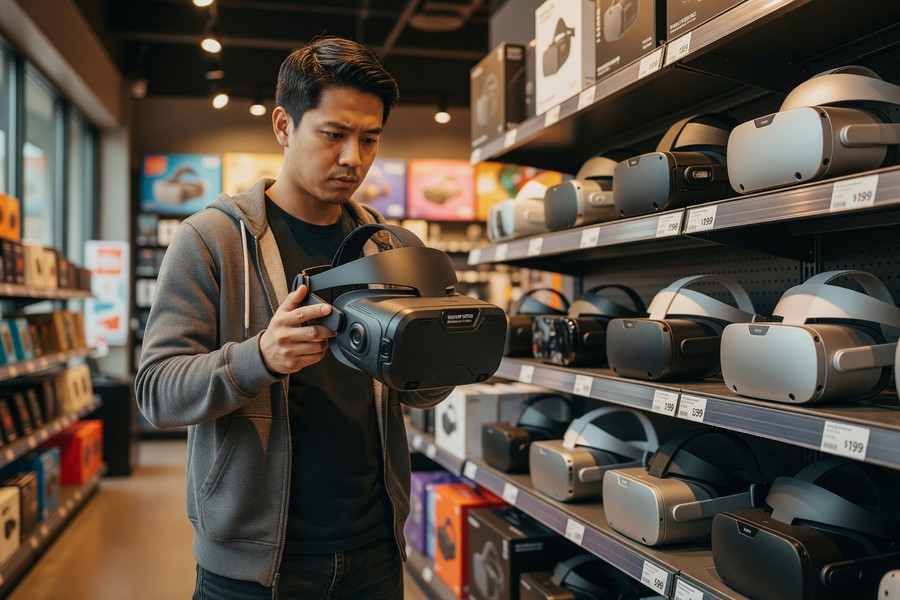
For everyday users, this distinction translates into concrete decisions about which apps to use, which devices to consider, and which workplace tools are worth requesting from your employer. The technology is not theoretical, it is already embedded in tools millions of people use daily.
Practical Applications You Can Use Today
Home and shopping: IKEA’s Place app uses ARCore to let you drop a true-to-scale virtual sofa into your living room before buying. This is AR, an XR technology, running on a spatial computing foundation provided by your phone’s sensors. It is free, requires no special hardware, and saves you from expensive return shipping.
Navigation: Google Maps Live View uses AR overlays to display turn-by-turn arrows on your phone camera’s view of the real street. The app maps the street using visual positioning, then anchors directional content to specific physical locations. AI tools are increasingly embedded in these navigation and business productivity experiences, blurring the line between spatial apps and AI assistants.
Healthcare and fitness: Surgical teams at major hospital networks are using HoloLens 2 to overlay CT scan data onto a patient during procedures. On the consumer side, apps like Visible Body use AR to display anatomical models in 3D space, helping medical students study. Enterprise XR in healthcare is growing at a 34 percent annual rate, per IDC data.
Remote work and collaboration: Microsoft Mesh, built on Azure’s spatial computing infrastructure, allows remote teams to meet as holographic avatars in shared virtual spaces. It runs on VR headsets and standard monitors alike, demonstrating how spatial computing can power XR experiences without requiring every participant to own a headset.
What to Watch Out For
Many “spatial computing” enterprise pitches oversell the readiness of the technology. Battery life is a genuine constraint, the Apple Vision Pro lasts roughly 2 hours on its external battery pack. Industrial deployments often require tethered power, which limits mobility. Factor this into any business case you are evaluating before signing a purchase order.
For small business owners especially, the ROI question matters more than the technology label. Businesses already using AI tools for automation are well-positioned to integrate spatial computing apps as the next layer of operational efficiency. The key is identifying one specific workflow, inventory management, customer visualization, or staff training, and piloting there first rather than buying hardware speculatively.
Step 6: Should You Buy Into Spatial Computing or XR Technology Today?
Whether you should invest in spatial computing or XR hardware right now depends on your use case, budget, and tolerance for early-adopter friction. The honest answer is that most everyday users do not need dedicated hardware yet, but developers, early adopters, and enterprise professionals have compelling reasons to engage now.
Decision Framework for Everyday Users
If your goal is to understand and use the technology without a major financial commitment, start with smartphone-based AR. Your existing iPhone or Android device already runs ARKit or ARCore. Apps like Google Lens and Apple Measure give you genuine spatial computing and AR experiences at zero hardware cost.
If you want an immersive VR experience for gaming, fitness, or entertainment, the Meta Quest 3S at $299 is the most cost-effective entry point. It delivers strong XR experiences without the spatial computing depth of Vision Pro, an acceptable trade-off for consumer use.
If you are a developer or enterprise decision-maker, the calculus is different. The Apple visionOS developer platform is already generating a growing app ecosystem, and building spatial computing skills now positions you ahead of the mainstream adoption curve. IDC forecasts enterprise XR spending will exceed $15 billion annually by 2026.
What to Watch Out For
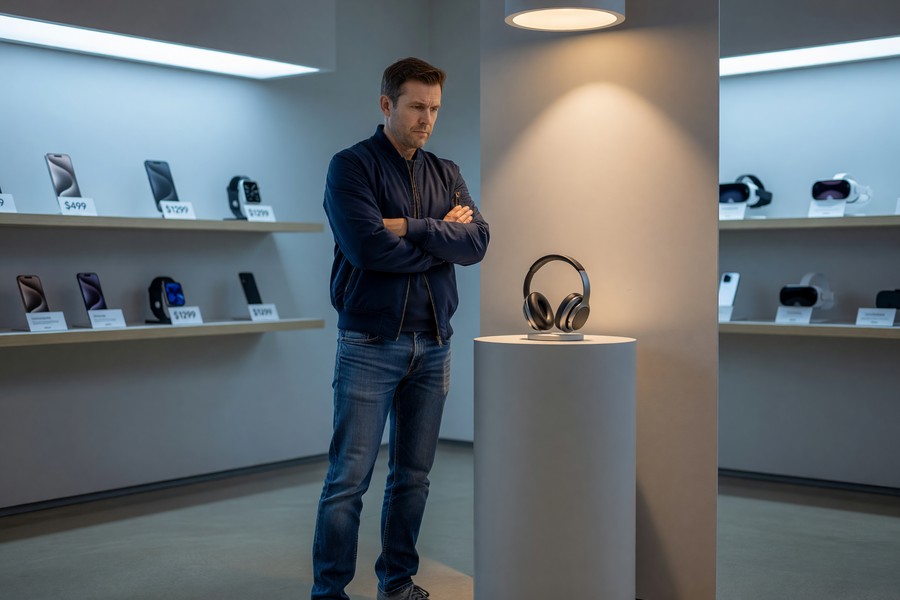
Do not let the hype cycle push you into a purchase that does not match your actual workflow. The Apple Vision Pro is an extraordinary device, but $3,499 is difficult to justify for casual use when a $299 alternative covers most consumer XR needs. The “must-have” feeling around new spatial computing hardware often fades within 90 days if you have not identified a specific problem it solves.
The digital transformation happening in banking and fintech, including the way digital banking trends are reshaping interfaces, mirrors the same pressure in spatial computing: early adoption has value, but only when tied to a real use case.
Before buying any XR or spatial computing device, spend two weeks using only free smartphone AR apps. If you find yourself using them daily and wishing for more capability, that is a genuine signal that dedicated hardware will add value to your life. If the novelty wears off after day three, save your money for the next hardware generation.
The intersection of spatial computing with other emerging technologies, including AI-powered platforms explored in our guide to AI-powered investment platforms, suggests that the software layer will matter more than the hardware over time. Devices will commoditize; the value will live in the applications and the data they generate about how people interact with physical space.
Just as blockchain technology reshaped how people think about digital ownership, spatial computing is beginning to reshape how people think about digital presence, not as something that happens on a screen, but as something woven into the physical world around you.
Frequently Asked Questions
Is spatial computing the same thing as the metaverse?
No. Spatial computing is the underlying technology infrastructure; the metaverse is a vision for a persistent, shared virtual world that uses spatial computing to operate. The metaverse requires spatial computing to function, but spatial computing has hundreds of applications that have nothing to do with a social virtual world, including logistics, surgery, and industrial design. Think of the metaverse as one possible destination that spatial computing can take you to.
Can I experience spatial computing without buying a headset?
Yes. Your smartphone is already a spatial computing device if it runs ARCore (Android) or ARKit (iOS). Apps like Google Lens, Apple Measure, and most AR filters use real-time environment sensing, which is the core of spatial computing. Over 1 billion smartphones globally already support these frameworks, meaning most people own spatial computing hardware without realizing it.
What is the difference between AR and VR for everyday use?
AR overlays digital content on your real-world view, you can still see your room, your family, your desk. VR replaces your entire visual field with a digital environment, cutting off sight of the physical world entirely. For everyday productivity, navigation, and shopping, AR is more practical. For gaming, entertainment, and immersive training, VR delivers a deeper experience. Most modern headsets, including Meta Quest 3, can switch between both modes.
Which is better for businesses right now, spatial computing or XR headsets?
For most businesses, AR-based spatial computing on existing mobile devices delivers faster ROI with lower upfront cost than dedicated XR headsets. Use cases like product visualization, field service support, and inventory management work well on smartphones or tablets. Dedicated headsets like HoloLens 2 make sense for hands-free industrial workflows where a worker cannot hold a device, but they require a larger IT investment and a real change-management effort to get adoption right.
Why did Apple call the Vision Pro a spatial computing device instead of a VR or AR headset?
Apple deliberately avoided the VR and AR labels because the Vision Pro’s core value proposition is not just displaying immersive content, it is the device’s ability to understand and interact with your physical environment through its 12 cameras, 5 sensors, and 6 microphones. Calling it spatial computing positioned Vision Pro as a general-purpose computing platform rather than a gaming peripheral or enterprise tool. The label also distances it from the negative consumer associations of failed products like Google Glass.
Is mixed reality the same as spatial computing?
No. Mixed reality is a specific type of XR display technology in which digital objects appear anchored to and interactive with the physical world. Spatial computing is the broader system that powers mixed reality, and much more. A mixed reality headset uses spatial computing to understand the room, but spatial computing also powers devices that have no display at all, such as warehouse robots and autonomous vehicles.
How does spatial computing relate to AI and machine learning?
Spatial computing depends on AI to function. Computer vision, scene understanding, object recognition, and natural language processing are all AI disciplines that power spatial computing devices. Apple Vision Pro runs dedicated AI inference chips, and Meta’s Quest platform uses machine learning for hand and body tracking. AI assistants are increasingly integrated into spatial platforms, meaning the line between a spatial computing device and an AI device is already blurring. By 2026, most spatial computing hardware will be marketed as AI hardware as well.
How long until spatial computing is as common as smartphones?
Most analysts project that lightweight AR glasses, thin enough to wear all day, will reach mass-market pricing between 2027 and 2030. IDC forecasts that shipments of AR glasses will exceed 50 million units annually by 2028. The bottleneck is not software or processing power, it is display optics and battery technology. Once those are solved, spatial computing devices will likely follow the same adoption curve as smartphones in the early 2010s.
What jobs will spatial computing create or change the most?
Spatial computing is already changing roles in manufacturing, surgery, architecture, and field services. New job categories emerging include spatial UX designers (who design interfaces for 3D environments rather than flat screens), digital twin engineers (who build real-time 3D models of physical facilities), and XR content developers. The World Economic Forum has identified spatial computing as one of the top ten technology skill areas for workforce development through 2030.
Should I wait for the next generation of devices before buying?
If your goal is consumer entertainment or experimentation, waiting 12 to 18 months typically yields significantly better hardware at lower cost, this has been true across every generation of XR devices. If you are a developer, enterprise evaluator, or early adopter whose career benefits from hands-on experience, buying now with a clear use case is justified. The Meta Quest 3S at $299 is currently the best value for users who want to explore XR without major financial risk.
Sources
- Grand View Research, Extended Reality Market Size, Share and Trends Report
- Apple, Apple Vision Pro Official Product Page
- Apple, Apple Vision Pro Technical Specifications
- Meta, Meta Quest 3 Official Product Page
- Apple Developer, visionOS Developer Platform Overview
- Microsoft, HoloLens 2 Mixed Reality Headset






