

Key Takeaways
- Get pre-approved before you start looking at houses. It tells you what you can actually afford and signals to sellers that you’re serious.
- Your down payment isn’t the only upfront cost. Closing costs, inspections, appraisals, and moving expenses add 3-6% on top of the purchase price.
- The home inspection is your last line of defense. Never skip it, never let anyone pressure you to waive it, and always attend in person.
- First-time buyer programs at the federal, state, and local level can reduce your down payment to as little as 3% or even zero for qualifying buyers.
In This Article
- Before You Look at a Single House
- Getting Pre-Approved: What It Takes and Why It Matters
- House Hunting Without Losing Your Mind
- Making an Offer That Gets Accepted
- The Inspection and Appraisal: Your Safety Net
- Closing Day: What to Expect and What to Bring
- First-Time Buyer Programs You Should Know About
Before You Look at a Single House
I spent seven years on Wall Street watching people make massive financial decisions on incomplete information. Buying a home is, for most people, the single largest purchase they’ll ever make. And yet a shocking number of first-time buyers start by browsing Zillow on a Saturday morning, fall in love with a house they can’t afford by Saturday afternoon, and spend the next three months chasing a dream that was doomed from the start.
Don’t be that person. Before you look at a single listing, you need clarity on three numbers: what you can actually afford in monthly payments (not what a bank will approve you for — those are very different numbers), how much cash you have available for upfront costs, and how much your monthly obligations will change after you buy.
The standard advice is that your total housing cost — mortgage, taxes, insurance, HOA fees — shouldn’t exceed 28% of your gross monthly income. That’s the front-end ratio, and lenders use it as a guideline. But here’s the thing: lenders will happily approve you for more than that. They’ll go up to 36% or even 43% of your gross income in total debt obligations if your credit and savings are strong. Just because they’ll lend it doesn’t mean you should borrow it. Living at 43% of gross income committed to debt leaves almost zero margin for unexpected expenses, career disruptions, or — let’s be real — actually enjoying your life.
If you haven’t already, build your emergency fund to at least three months of expenses before starting this process. Our emergency fund guide covers the mechanics. You’ll need that cushion even more as a homeowner, because the landlord isn’t calling the plumber anymore. You are. And plumbers aren’t cheap.
Getting Pre-Approved: What It Takes and Why It Matters
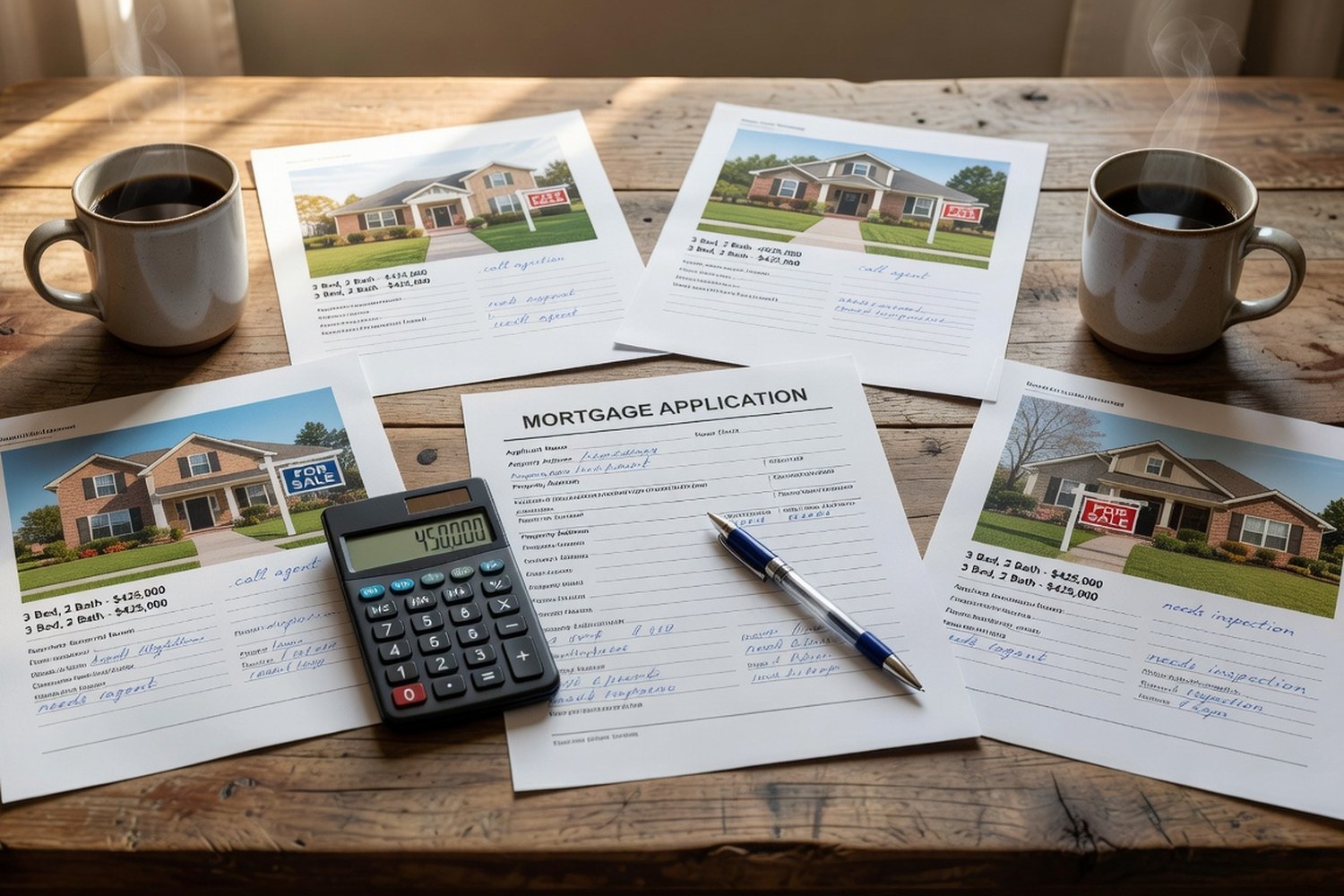
Pre-approval is not the same as pre-qualification. Pre-qualification is a lender giving you a rough estimate based on what you tell them verbally. It means almost nothing. Pre-approval means the lender has pulled your credit, verified your income and employment, reviewed your assets and debts, and issued a written commitment to lend you a specific amount. It’s the difference between “yeah you could probably get a loan” and “here’s a letter proving we’ll fund this purchase.”
You’ll need to provide several months of bank statements, recent pay stubs, two years of W-2s or tax returns, a list of debts and monthly obligations, and identification. Self-employed buyers typically need two years of complete tax returns plus a profit and loss statement — the documentation bar is higher, but it’s absolutely doable. Our guide to managing freelance income covers how to organize those records.
Get pre-approved by at least two or three lenders, not just one. Rates and fees vary more than you’d expect — a quarter-point difference in your interest rate translates to tens of thousands of dollars over a 30-year mortgage. The CFPB’s homeownership tools include a rate comparison feature that helps you evaluate different loan estimates side by side. For a deeper dive into how rates shape your costs, our interest rate guide breaks down the math in detail.
💡 Pro Tip
All mortgage credit inquiries within a 45-day window count as a single hard pull on your credit report. So apply to multiple lenders within the same few weeks and your credit score takes only one small hit, not three or four.
Mortgage options for first-time homebuyers compared on down payment, credit requirements, and PMI.
House Hunting Without Losing Your Mind
Now comes the part that’s genuinely fun — and genuinely dangerous to your financial judgment. Walking through homes triggers emotional responses that can completely override rational decision-making. That kitchen with the marble countertops? It’s making your brain release the same dopamine it would if you found cash on the sidewalk. Be aware of this. Tour with a checklist, not just your feelings.
Before each showing, review the listing details and note any concerns: age of the roof, type of HVAC system, foundation type, neighborhood flood zone status, HOA restrictions and fees. The HUD homebuying guide has a comprehensive checklist of what to evaluate during tours.
A few things I wish someone had told me before my first home search. First: the house you buy will not look like the houses on Instagram. Real homes in real budgets have quirks, dated bathrooms, and a bedroom that’s smaller than you imagined. That’s normal. Cosmetic issues are the cheapest things to fix — focus on the bones, the systems, and the location. Second: location genuinely matters more than the house itself. You can renovate a kitchen. You cannot move the house to a better school district. Third: see at least ten to fifteen homes before making an offer, even if you think you’ve found “the one” on tour number three. You need calibration for what your budget actually buys in your target area.

Making an Offer That Gets Accepted
Your real estate agent will guide the mechanics, but understanding the strategy behind a strong offer puts you in a much better position. The purchase price is the headline number, but it’s not the only thing sellers evaluate.
Earnest money — the good-faith deposit you submit with your offer — signals how serious you are. Typical amounts range from 1-3% of the purchase price. A $300,000 house might warrant $3,000 to $9,000 in earnest money. Higher earnest money doesn’t cost you extra (it gets applied to your down payment at closing), but it tells the seller you’re unlikely to walk away over minor issues.
Contingencies are the conditions that must be met for the sale to proceed. The three standard ones are financing (your loan gets approved), inspection (the house passes your inspection), and appraisal (the home appraises at or above the purchase price). In competitive markets, some buyers waive contingencies to strengthen their offer. I’ll be direct here: waiving the inspection contingency is almost always a terrible idea for a first-time buyer. You’re removing your only chance to discover deal-breaking problems before you’re legally committed. A $500 inspection could save you from a $40,000 foundation repair.
Closing timeline matters to sellers too. Some want a fast close (30 days); others need extra time to find their next home (60 days). If you have flexibility on timing, offering the seller their preferred schedule can be more persuasive than an extra $5,000 on the price. Ask your agent what the seller needs — sometimes the winning offer isn’t the highest one.
The Inspection and Appraisal: Your Safety Net
The home inspection is the single most important step in the entire buying process. I say this as someone who has watched buyers skip inspections in hot markets and regret it for years afterward. A qualified home inspector spends two to four hours examining the foundation, roof, plumbing, electrical, HVAC, and structural elements of the house. Their report tells you what’s wrong now, what might go wrong soon, and what could be catastrophically expensive down the road.
Always attend the inspection in person. Walk the house with the inspector. Ask questions about everything you see. The written report is valuable, but the real-time conversation gives you context — “this crack is cosmetic” versus “this crack pattern suggests settling that needs a structural engineer’s opinion” are very different things, and tone and body language communicate urgency that a written report sometimes doesn’t.
If the inspection turns up problems, you have three options: ask the seller to fix them before closing, negotiate a price reduction to cover repair costs, or walk away. Common issues like minor roof repairs, outdated electrical panels, or aging water heaters are perfectly negotiable. Major structural problems, active mold, or unpermitted additions are potential walk-away signals. Our home buying guide for high-rate environments covers how to evaluate whether repair costs change the math enough to reconsider.
The appraisal is a separate evaluation ordered by your lender to confirm the home is worth what you’re paying. If the appraisal comes in below your offer price, the lender won’t fund the gap. You’ll need to either renegotiate the price, bring extra cash to cover the difference, or walk away. This is a real risk in competitive markets where bidding wars push prices above comparable sales.
💡 Pro Tip
Between offer acceptance and closing, do NOT open new credit cards, take on new loans, change jobs, make large purchases, or move money between accounts in unusual ways. Any of these can tank your mortgage approval at the last minute. Your lender will re-check your financials right before closing.
Closing Day: What to Expect and What to Bring
Closing day — also called settlement — is when ownership officially transfers from the seller to you. It’s a lot of paperwork, a big check, and then someone hands you a set of keys. The whole thing takes about an hour if everything’s in order.
Three days before closing, you’ll receive the Closing Disclosure — a standardized document showing your final loan terms, monthly payment, and all closing costs itemized line by line. Compare it meticulously against the Loan Estimate you received when you applied. Numbers shouldn’t change drastically. If they have, call your lender immediately and get an explanation before the closing table.
Closing costs for first-time buyers typically run 2-5% of the purchase price. On a $300,000 home, that’s $6,000 to $15,000 on top of your down payment. This includes lender fees, title insurance, attorney fees, recording fees, prepaid property taxes, prepaid homeowners insurance, and a handful of smaller charges. Some of these are negotiable. Title insurance, for instance, can often be shopped independently for a lower rate than what your lender’s affiliate charges.
What to bring: government-issued photo ID, a cashier’s check or wire transfer confirmation for your down payment and closing costs (personal checks are not accepted for amounts this large), proof of homeowners insurance (must be in place before the lender will fund), and your own pen — sounds silly, but you’ll sign your name approximately 947 times and you might as well use a pen that doesn’t cramp your hand.
Do a final walkthrough of the property within 24 hours of closing. Confirm the sellers have moved out completely, any agreed-upon repairs have been made, and nothing has been damaged since your last visit. If something’s wrong, address it before you sign. After closing, your leverage evaporates completely.
First-Time Buyer Programs You Should Know About
One of the biggest mistakes first-time buyers make is assuming they need 20% down. That number gets thrown around so often that people treat it as a requirement. It’s not. Twenty percent down avoids private mortgage insurance (PMI), which is nice. But plenty of buyers put down 3-5% and do just fine, especially when the alternative is waiting another five years to save while prices keep climbing.
The FHA loan program allows 3.5% down with a credit score of 580 or above. The trade-off is mortgage insurance premiums for the life of the loan, but for buyers with limited savings or recovering credit, it’s often the best path to homeownership. VA loans offer 0% down with no PMI for veterans and active military — genuinely one of the best financial benefits the government provides. USDA loans also offer 0% down for properties in qualifying rural and suburban areas.
State and local programs add another layer of assistance that most buyers never investigate. Down payment assistance grants (money you don’t have to repay), closing cost assistance, below-market interest rates, and matched savings programs exist in virtually every state. The CFPB’s homebuyer tools can help you find programs specific to your location and income level.
If you’re also juggling student debt while saving for a home, our student loan forgiveness guide covers strategies that can free up cash flow for your down payment savings. And for protecting your new investment once you’ve bought it, our renters insurance guide covers the principles — but as a homeowner you’ll need a homeowners policy, which uses the same core concepts at a higher coverage level.
Buying your first home is equal parts thrilling and terrifying. That’s normal. The anxiety doesn’t mean you’re not ready — it means you’re taking the decision seriously. Follow the checklist, lean on your agent and lender for guidance, and don’t let anyone rush you through steps that protect you. This purchase will shape your finances for decades. Getting it right is worth every extra hour you put into the process.
References
- Consumer Financial Protection Bureau. “Your Home Loan Toolkit.” https://www.consumerfinance.gov
- U.S. Department of Housing and Urban Development. “Buying a Home.” https://www.hud.gov
- Federal Housing Administration. “FHA Loan Requirements.” https://www.hud.gov
Keep Reading
If you found this guide helpful, check out these related articles: