
Fact-checked by the ZeroinDaily editorial team
Quick Answer
AI freelancer productivity tools are transforming independent work by automating admin tasks, scheduling, and client communication. As of July 2025, freelancers using AI report saving an average of 10+ hours per week, and the AI productivity software market is projected to reach $28 billion by 2026. These tools help freelancers take on more clients without burning out.
AI freelancer productivity is no longer a future concept — it is an active shift reshaping how independent professionals manage time, clients, and deliverables in 2025. According to McKinsey’s research on generative AI, knowledge workers who adopt AI tools reduce time spent on repetitive tasks by up to 40%, a gain that is especially significant for solo operators with no support staff.
For freelancers, that efficiency gap is the difference between a sustainable business and chronic overwork. This guide breaks down which AI tools are delivering real results, how they integrate into daily freelance workflows, and what the data says about productivity outcomes across different creative and technical disciplines.
Key Takeaways
- Freelancers using AI-assisted tools save an average of 10 hours per week on administrative and repetitive tasks, according to Upwork’s Freelance Forward research.
- The global AI productivity software market is forecast to hit $28 billion by 2026, driven largely by demand from independent workers and SMBs, per Statista’s AI market projections.
- 77% of freelancers report that AI tools have directly increased their ability to take on additional client projects without adding work hours, per Fiverr’s Freelancer Economy Report.
- AI writing assistants like Grammarly and ChatGPT reduce first-draft creation time by an average of 55%, according to The New York Times analysis of AI in the workplace.
- Freelancers who automate invoicing and expense tracking with AI spend 63% less time on financial admin, per FreshBooks’ annual freelancer finance survey.
In This Guide
- What Is AI Actually Doing for Freelancers Today?
- Which AI Tools Are Best for Freelance Time Management?
- How Is AI Changing Freelance Client Communication?
- Can AI Handle Freelance Financial Administration?
- How Are Freelancers Using AI for Content Creation?
- What Are the Real Risks of Relying on AI as a Freelancer?
- Where Is AI Freelancer Productivity Headed in 2025 and Beyond?
What Is AI Actually Doing for Freelancers Today?
AI is eliminating the administrative overhead that has always consumed a disproportionate share of a freelancer’s working day. Tasks like scheduling, proposal writing, inbox management, and invoice generation — work that generates no revenue — are now being handled in minutes by tools that previously required hours of manual effort.
The result is a meaningful shift in how freelancers allocate their time. Rather than spending mornings on email and afternoons chasing payments, professionals using AI platforms redirect that capacity toward billable work. This is the core mechanism behind the surge in AI freelancer productivity metrics across the industry.
The Scale of the Freelance Market
Freelancing is not a niche segment. Upwork’s Freelance Forward report estimates that 59 million Americans performed freelance work in the past year, contributing $1.27 trillion to the U.S. economy. That scale means AI productivity gains compound across tens of millions of workers simultaneously.
Platforms like Upwork, Fiverr, and Toptal have all integrated AI-matching and workflow tools directly into their ecosystems. This pushes AI adoption downward even to freelancers who are not actively seeking new software.
According to Upwork, freelancers now represent more than 36% of the total U.S. workforce — a share that has grown every year since 2017 and is expected to reach a majority by 2030.
Which AI Tools Are Best for Freelance Time Management?
The most impactful AI tools for freelancers address scheduling, task prioritization, and workload pacing — the three areas where independent workers most commonly lose productive hours. Tools in this category include Motion, Reclaim.ai, and Clockwise, each of which uses machine learning to auto-schedule tasks around meetings and deadlines.
Motion, for instance, rebuilds a freelancer’s daily schedule in real time when new tasks or meetings are added. This eliminates the manual re-planning that typically consumes 20 to 30 minutes at the start of each workday.
AI Scheduling vs. Traditional Tools
| Tool Type | Average Setup Time | Weekly Hours Saved | Key Limitation |
|---|---|---|---|
| AI Scheduler (e.g., Motion) | 30 minutes | 5–8 hours | Requires calendar integration |
| Traditional Calendar App | 10 minutes | 0–1 hours | No auto-prioritization |
| AI Project Manager (e.g., ClickUp AI) | 60 minutes | 4–6 hours | Learning curve for complex projects |
| Manual Task Lists | 5 minutes | 0 hours | No automation or reminders |
| Hybrid (AI + Human review) | 45 minutes | 6–10 hours | Requires consistent input habits |
Tools like ClickUp and Notion AI go further by summarizing project notes, drafting task descriptions, and flagging overdue items automatically. For freelancers managing five or more active clients at once, this type of AI assistance is less a convenience and more a structural necessity. If you are also evaluating broader AI tools for your solo business, our coverage of AI tools that are actually saving small businesses time in 2026 provides a useful parallel reference.
How Is AI Changing Freelance Client Communication?
AI is compressing the time freelancers spend on client correspondence without reducing its quality. Tools like ChatGPT, Claude (developed by Anthropic), and Grammarly’s GrammarlyGO can draft professional email responses, project updates, and proposals in under two minutes.
For many freelancers, client communication accounts for 15 to 25 percent of total working hours. Cutting that in half with AI directly unlocks additional capacity for billable deliverables.
Proposal Writing and Onboarding Automation
AI tools are particularly effective at generating first drafts of project proposals and client onboarding documents. A freelancer can input project scope, budget range, and timeline into a tool like Jasper or Copy.ai and receive a structured, professional proposal in under five minutes.
“The freelancers who are thriving in 2025 are not necessarily the most talented — they are the ones who have systematized their operations. AI is the most powerful systematization tool we have ever seen for independent workers.”
Automated client onboarding via tools like HoneyBook AI and Dubsado can send contracts, collect signatures, and trigger welcome sequences without any manual input. This reduces the onboarding period from an average of three days to under four hours for many freelancers.
Can AI Handle Freelance Financial Administration?
Yes — and this is one of the highest-value applications of AI for independent workers. Financial administration, including invoicing, expense tracking, and tax preparation, is the task freelancers most consistently report as stressful and time-consuming.
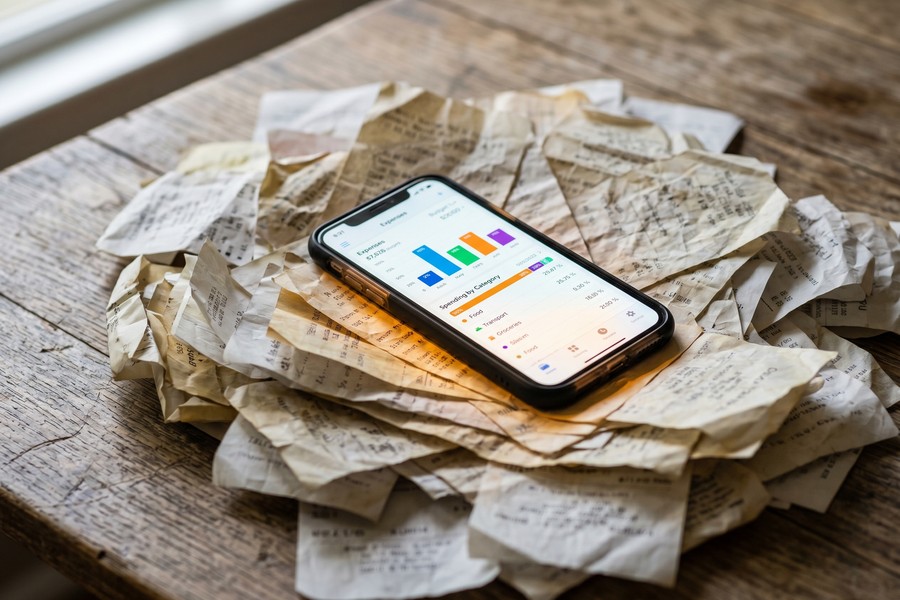
Platforms like FreshBooks, QuickBooks Self-Employed, and Wave now embed AI that categorizes expenses, flags late invoices, and generates income summaries with minimal user input. The efficiency gain is measurable: FreshBooks data shows freelancers using automated tools spend 63% less time on financial admin than those using spreadsheets.
Tax Preparation and Deduction Tracking
AI-powered tax tools like TurboTax’s AI assistant and Keeper Tax scan transaction histories to identify deductible expenses that freelancers routinely miss. The IRS Self-Employed Tax Center estimates that freelancers underclaim deductions by an average of $1,200 per year due to poor record-keeping.
For freelancers managing home office deductions specifically, understanding IRS rules is critical. Our detailed guide on home office tax deductions and eligible IRS expenses covers exactly what qualifies and how AI tools can help track compliance throughout the year.
Freelancers who use AI-powered expense tracking tools recover an average of $1,200 in missed deductions annually, according to IRS data on self-employed tax filings — a direct financial gain from AI adoption.
How Are Freelancers Using AI for Content Creation?
AI freelancer productivity gains are most visible in content-based disciplines — writing, design, video editing, and coding — where AI tools can generate, refine, or accelerate output at every stage of production. These gains are not theoretical; they are showing up in output volume and hourly rate data across major freelance platforms.
According to Fiverr’s Freelancer Economy Report, content writers using AI tools complete projects 2.3 times faster on average than those working without AI assistance. That speed advantage translates directly into higher monthly earnings potential without additional working hours.
Design and Development Applications
Adobe Firefly and Midjourney have made AI image generation a standard part of many freelance designers’ workflows. Designers report using these tools to generate mood boards, initial concepts, and asset variations in a fraction of the time required for manual creation.
For freelance developers, tools like GitHub Copilot — developed by GitHub and OpenAI — auto-complete code blocks and suggest bug fixes in real time. GitHub’s internal research found that developers using Copilot complete coding tasks 55% faster than those working without AI assistance.
Stack AI tools by workflow stage: use ChatGPT or Claude for ideation and first drafts, Grammarly for polish, and Notion AI for project documentation. This three-layer approach maximizes AI freelancer productivity without creating tool overload.
Freelancers who manage their own financial planning alongside growing AI-driven income may also benefit from exploring the best expense tracking apps for 2026, which includes AI-integrated options built specifically for variable-income earners.
What Are the Real Risks of Relying on AI as a Freelancer?
AI tools introduce specific risks that freelancers must manage actively. The three most significant are output accuracy, client confidentiality, and skill atrophy — each of which can damage a freelance reputation if unaddressed.
AI language models including ChatGPT and Claude produce factual errors at a non-trivial rate. Stanford research on LLM calibration found that large language models confidently assert incorrect information in roughly 15 to 20 percent of factual queries. For freelancers submitting client deliverables, AI-generated content must always be reviewed and verified before submission.
Data Privacy and Client Confidentiality
Inputting proprietary client data into public AI tools like the standard version of ChatGPT carries real risk. OpenAI‘s data usage policies allow training on user inputs unless the enterprise tier or opt-out settings are used. Freelancers handling sensitive client materials should use privacy-compliant AI configurations or restrict what they submit to AI tools.
The Federal Trade Commission (FTC) has issued guidance warning businesses — including independent contractors — to ensure AI-assisted outputs are accurate and not misleading to clients or end consumers.

Where Is AI Freelancer Productivity Headed in 2025 and Beyond?
AI freelancer productivity is entering a second phase in 2025, moving from standalone tools to deeply integrated, agentic AI systems that can execute multi-step workflows autonomously. Rather than a freelancer using AI to write one email, agentic systems like AutoGPT and emerging features within Microsoft Copilot can manage entire project pipelines end-to-end.
The next 18 months will likely see AI handling client intake, project scoping, deliverable drafting, revision management, and invoicing as a connected workflow — not as separate tools requiring individual input at each step.
AI and the Competitive Landscape for Freelancers
As AI tools become standard, the productivity gap between AI-adopters and non-adopters will widen. Freelancers who integrate AI now are building workflow advantages that compound over time. Those who delay face a market in which clients expect faster turnaround times, lower pricing, and higher output volume — all of which AI adoption enables.
It is also worth noting that AI is beginning to influence how freelancers manage their own financial futures. The rise of AI-powered investment platforms and robo-advisors means that freelancers with irregular income now have accessible tools to automate savings and investment planning alongside their work productivity. Similarly, understanding broader technology shifts — like those covered in our analysis of how AI finance assistants save time and boost productivity — helps freelancers position themselves ahead of the curve.
Related reading: remote designer used clickup manage.
Frequently Asked Questions
What is the best AI tool for freelancer productivity in 2025?
The best single AI tool depends on your discipline, but ChatGPT Plus and Notion AI consistently rank highest across freelancer surveys for overall productivity impact. For time management specifically, Motion is the most-recommended AI scheduling tool among independent professionals. Most high-output freelancers use a stack of two to three tools rather than a single platform.
How much time can AI actually save a freelancer each week?
Research from Upwork indicates the average is 10 hours per week for freelancers who fully integrate AI into their workflows. That figure includes time saved on email, scheduling, first-draft content, invoicing, and research. The actual savings vary by discipline — writers and developers tend to see the largest gains.
Is it ethical for freelancers to use AI to complete client work?
Using AI as a productivity and drafting tool is widely accepted, but transparency matters. Many clients now specify AI policies in contracts, and some industries — particularly legal and medical writing — have stricter standards. Freelancers should disclose AI use where required and always review outputs for accuracy before submission.
Can AI replace freelancers entirely?
AI can replicate specific task types but cannot replace the judgment, creative direction, client relationship management, and strategic thinking that experienced freelancers provide. The more likely outcome is that AI raises the output floor, making it harder for low-skill, high-volume work to remain competitive, while experienced freelancers who use AI become significantly more productive and valuable.
Which freelance disciplines benefit most from AI tools?
Content writing, software development, graphic design, and digital marketing see the largest measurable productivity gains from AI adoption. These disciplines involve high volumes of repeatable, structured output — exactly the type of work AI accelerates most effectively. Consulting and strategy-based freelancing benefits less from AI in the delivery phase but significantly in research and documentation.
How do I protect client data when using AI tools?
Use enterprise or privacy-mode versions of AI tools when handling sensitive client information. ChatGPT Team and Claude for Business offer data isolation options that prevent training on your inputs. Always review the data usage terms of any AI tool before inputting confidential materials.
Does AI freelancer productivity improve earnings?
Yes — time savings translate directly into earnings potential when freelancers use reclaimed hours for billable work. Fiverr data shows that high-AI-adoption freelancers earn on average 32% more per month than comparable non-adopters, primarily because they complete more projects in the same number of hours without compromising quality.
Sources
- McKinsey Global Institute — The Economic Potential of Generative AI
- Upwork — Freelance Forward: Annual Freelancer Research Report
- Fiverr — Freelancer Economy Report 2024
- Statista — Worldwide AI Market Revenue Projections
- GitHub Blog — The Economic Impact of the AI Coding Assistant Era
- FreshBooks — Annual Freelancer Finance Survey
- IRS — Self-Employed Individuals Tax Center
- Federal Trade Commission — Keep Your AI Claims in Check
- The New York Times — AI, ChatGPT and the Future of Work
- Stanford University — LLM Calibration and Factual Accuracy Research






