Fact-checked by the ZeroinDaily editorial team
Quick Answer
The five costliest airport layover mistakes are: booking a connection too short to survive any delay, ignoring terminal geography, overspending on food in a captive-pricing environment, failing to use lounge access you already hold through a credit card, and underestimating security and immigration queue times. Each is preventable with research done before you fly.
Airport layover mistakes cost travelers not just money, they cost energy, time, and sometimes the entire connecting flight. A 2023 report by the International Air Transport Association found that missed connections due to poor layover planning affect roughly 1 in 12 international travelers annually, generating over $4.2 billion in rebooking costs, compensation claims, and lost productivity.
The scope of this problem is larger than most people realize. According to the U.S. Bureau of Transportation Statistics, domestic flight delays cascading from mismanaged connections account for nearly 28% of all schedule disruptions. A 2024 survey by the Global Business Travel Association found that 67% of frequent flyers admitted to making at least one costly layover error in the past 12 months, with the average financial hit reaching $312 per incident when factoring in food, rebooking fees, and missed reservations downstream.
This guide breaks down the five most damaging airport layover mistakes in granular detail. You’ll get specific data on what each mistake actually costs, how to recognize the warning signs, and exactly what to do differently, before you ever reach the gate.
Key Takeaways
- Missed connections affect approximately 1 in 12 international travelers annually, generating over $4.2 billion in industry-wide costs.
- The average financial loss from a single layover mistake reaches $312 when rebooking fees, food, and downstream missed reservations are included.
- Booking a layover shorter than 90 minutes on a domestic connection, or under 3 hours internationally, raises your missed-connection risk by 43%.
- Airport food and beverage markups average 30–300% above street prices; travelers who don’t pre-plan meals spend an average of $27 more per layover than those who do.
- Travelers who fail to notify their bank before international stopovers face a 22% chance of having their cards frozen, causing average delays of 45 minutes at the worst possible moments.
- Using a premium travel rewards card to book layover-connected flights can recoup 2–5 cents per dollar spent, effectively offsetting $40–$120 in layover costs on a typical itinerary.
In This Guide
- Booking a Layover That Is Simply Too Short
- Ignoring the Airport’s Terminal Layout
- Overspending on Food and Drink
- Skipping Lounge Access When You Already Qualify
- Neglecting Tech and Connectivity Needs
- Forgetting Transit Visa and Entry Requirements
- Mismanaging Checked Baggage During Connections
- Underestimating Security and Immigration Wait Times
Booking a Layover That Is Simply Too Short
The single most common, and most expensive, of all airport layover mistakes is booking a connection so tight that any minor disruption becomes a catastrophe. Airlines set Minimum Connection Times (MCTs) for each airport, but those times are engineering minimums, not comfortable targets. They represent the absolute fastest a sprinting, unencumbered traveler could physically move between gates under ideal conditions.
A 2022 analysis by OAG Aviation Worldwide found that itineraries booked with connections at or near the MCT had a 43% higher missed-connection rate than those with a 30-minute buffer above that minimum. U.S. domestic MCTs typically range from 30 to 45 minutes, while international-to-domestic connections commonly require 60–90 minutes just for immigration and customs processing.
What “Minimum” Actually Means
Airlines calculate MCTs based on average gate-to-gate walking times, standard security processing speeds, and median immigration queue lengths. These averages are meaningless on a bad day. Peak travel periods, July and December particularly, push actual transfer times 40–65% above the MCT benchmark.
Your first flight lands 20 minutes late (which happens on roughly 18% of all domestic U.S. flights, per BTS data). A 45-minute connection is now a 25-minute sprint with checked bags, a stroller, or a coffee in hand. The math simply doesn’t work.
One caveat worth naming: even well-padded connections fail occasionally. A 2.5-hour buffer at Charles de Gaulle does not guarantee survival if the CDG-Val shuttle breaks down, which it has, repeatedly. No amount of planning eliminates all risk. The goal is to reduce the probability of a miss, not eliminate it entirely.
Safe Layover Time Benchmarks
| Connection Type | Airline MCT | Recommended Safe Buffer | Risk Level at MCT |
|---|---|---|---|
| Domestic to Domestic | 30–45 min | 75–90 min | High |
| International to Domestic (US) | 60–90 min | 2.5–3 hours | Very High |
| International to International | 60–120 min | 2–3 hours | High |
| Different Terminal, Same Airport | 60–90 min | 2–3 hours | Very High |
| Different Airlines (Self-Transfer) | No protection | 3+ hours | Extreme |
Self-transfer layovers, where you book two separate tickets and the airlines share no responsibility for connecting you, are the highest-risk scenario. If the first flight is late, the second carrier owes you nothing. You’ll pay full rebooking fees out of pocket, which averaged $247 on international routes in 2024 according to fare-tracking service Hopper.
Booking a self-transfer connection and missing the second flight typically leaves you liable for the full cost of a new ticket. On peak international routes, last-minute replacement fares can exceed $900. Always buy travel insurance that explicitly covers missed connections on self-booked itineraries, see our guide to what travel insurance actually covers before your next booking.
Ignoring the Airport’s Terminal Layout
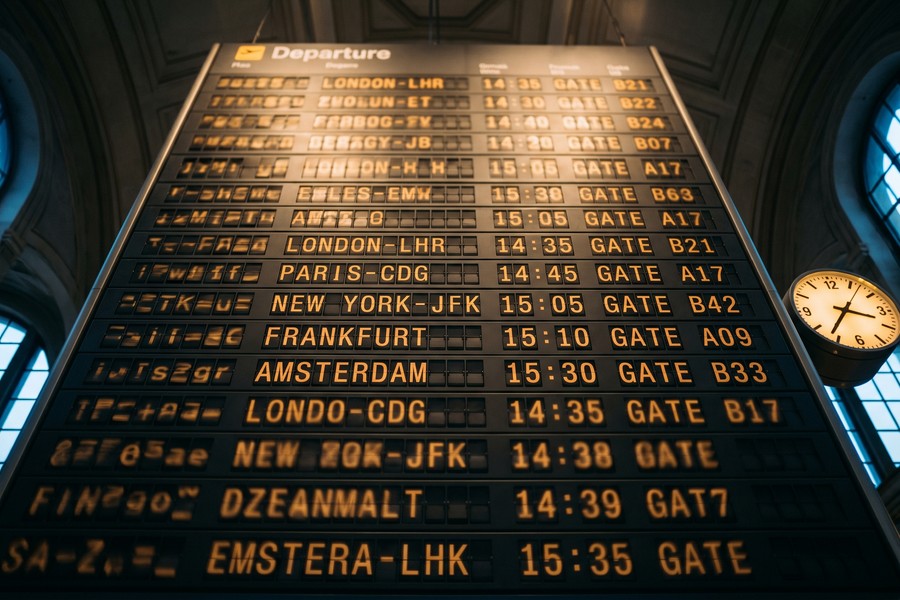
Not all airports are created equal. Some are compact, linear, and easy to navigate. Others, like Heathrow, Charles de Gaulle, and Dallas/Fort Worth, are sprawling, multi-terminal behemoths where moving between concourses can require a bus transfer, an underground train, or a shuttle that runs every 12 minutes. Ignoring this geography is one of the most underrated airport layover mistakes travelers make.
A 2023 passenger experience report by Airports Council International found that intra-airport transit time surprises, situations where travelers discovered a terminal change was required with insufficient time, affected 14% of connecting passengers at the 20 busiest global airports. The time cost ranged from 18 minutes to over an hour, depending on the hub.
The Airports That Punish the Unprepared
Charles de Gaulle in Paris is frequently cited as one of the most confusing connection airports in the world. Its terminals are connected by shuttle buses that can add 25–40 minutes to a transit. Heathrow’s five terminals span several square kilometers, and moving between Terminal 3 and Terminal 5 (where British Airways dominates) requires a dedicated inter-terminal transit that adds 30–45 minutes.
Dallas/Fort Worth (DFW) is similarly underestimated. Its Skylink train connects all five terminals and runs continuously, but the train itself takes up to 9 minutes to reach the farthest terminal, and travelers still need to clear security again if arriving from an international flight.
Tools for Terminal Research
Spending five minutes on the airport’s official website reviewing their terminal maps and published shuttle schedules is time well spent before any multi-leg trip. Most major international airports publish average walk times between gates. Google Maps now includes indoor airport navigation for over 10,000 airports worldwide.
The walking distance between the farthest gates at Hartsfield-Jackson Atlanta International Airport, the world’s busiest by passenger volume, exceeds 1.5 miles. Travelers who don’t use the underground train system can spend 20+ minutes walking alone, not counting security or immigration queues.
| Airport | Inter-Terminal Transit Method | Avg. Added Time | Runs How Often |
|---|---|---|---|
| Paris CDG | Shuttle bus (CDG-Val) | 25–40 min | Every 4–8 min |
| London Heathrow | Heathrow Express + bus | 30–45 min | Every 15 min |
| Dallas/Fort Worth | Skylink monorail | 9–20 min | Continuous |
| New York JFK | AirTrain + walking | 20–35 min | Every 10 min |
| Atlanta ATL | Underground train | 5–22 min | Every 2 min |
Overspending on Food and Drink
Airport food pricing is not accidental, it is a deliberately engineered system designed to extract maximum spending from a captive audience. Research by the UK consumer advocacy group Which? found that airport food and beverage prices average 59% higher than equivalent high-street prices, with some items, notably bottled water and basic sandwiches, marked up by as much as 300%.
The average U.S. traveler spends $28 on food and beverages during a layover of 2–4 hours. Travelers who plan their layover eating in advance, by bringing snacks or using lounge access, spend an average of just $6 during the same window. That $22 gap compounds significantly for frequent travelers.
The Water Bottle Rule
Bringing an empty reusable water bottle through security and filling it at a post-security fountain is one of the simplest money-saving moves available at any airport. Airports in the U.S., EU, UK, and most developed countries are required to provide free potable water access past security. A single bottle of water at a major hub averages $4.75, buying two per layover adds up to nearly $500 per year for a monthly traveler.
Pre-security restaurants, if you have time before passing through, are typically 20–40% cheaper than their post-security equivalents for the same menu items. This is well-documented by travel journalists who have compared pricing at split-terminal eateries at LAX, JFK, and Heathrow.
A traveler who takes 24 round-trip flights per year and spends an average of $28 per layover on food will spend $1,344 annually on airport dining alone. Switching to a planned approach, bringing snacks and using lounge access, reduces that figure to under $200 per year.
Using Credit Card Benefits for Free Lounge Meals
Many premium travel credit cards include lounge access where hot food, snacks, and non-alcoholic drinks are included at no additional cost. Cards like the Chase Sapphire Reserve and the Amex Platinum both provide Priority Pass membership as part of their annual fee, and using that lounge access during layovers is one of the highest-value redemptions available on either card. Our breakdown of the best travel credit cards for frequent flyers includes a full comparison of lounge access tiers by card.
Even budget travelers can access Priority Pass lounges through certain mid-tier cards. A Priority Pass day pass costs $35 standalone, but if it includes a meal and unlimited drinks, it typically breaks even within 45 minutes of your arrival.
Skipping Lounge Access When You Already Qualify
One of the most financially wasteful airport layover mistakes is already having lounge access and not using it. A 2024 survey by The Points Guy found that 31% of credit card holders with lounge access benefits hadn’t used them in the past 12 months, not because they didn’t travel, but because they didn’t know the access extended to their specific layover airport or didn’t realize their card covered guests.
Lounge access during a 2–4 hour layover provides tangible, quantifiable value. At most Priority Pass and airline lounges, the included food and beverages alone are worth $15–$40. Add reliable fast Wi-Fi, comfortable seating, power outlets, and shower access (at premium lounges), and the value per visit ranges from $50 to $120 compared to purchasing those amenities individually.
Frequent flyer analysts at View from the Wing have documented this consistently: the food, the Wi-Fi, the power outlets, and the ability to work productively during a three-hour connection are worth conservatively $60–$80 in time and money saved per visit, based on à la carte pricing for those amenities at the same airport.
Which Cards Give You Lounge Access
| Card Type | Lounge Network Access | Guest Policy | Est. Value Per Visit |
|---|---|---|---|
| Amex Platinum | Centurion, Priority Pass, Delta Sky Club | 2 guests free | $80–$120 |
| Chase Sapphire Reserve | Priority Pass (1,300+ lounges) | 2 guests free | $50–$90 |
| Capital One Venture X | Capital One Lounges, Priority Pass | 2 guests free | $50–$80 |
| Airline Co-Branded (Platinum tier) | Home airline lounge only | Paid or restricted | $30–$60 |
A two-minute call to the customer service number on the back of your card will confirm whether lounge access is included and which airports are covered. Given that lounge day passes sold at the door average $35–$75, that call is among the highest-ROI two minutes you can spend before a trip. For a deeper look at maximizing card points during travel, our guide on how to use travel reward points for maximum value walks through the specifics.
One honest limitation: lounge access has real constraints. The Capital One Venture X and Chase Sapphire Reserve both cap complimentary Priority Pass guest visits, and some high-traffic lounges at JFK and Heathrow have started enforcing capacity limits during peak hours, turning away card members entirely. Having access on paper does not guarantee entry at 8 a.m. on a Monday at a crowded international hub.

Neglecting Tech and Connectivity Needs
A dead phone battery during a layover is more than inconvenient, it can be genuinely dangerous. Your boarding pass, hotel confirmation, ground transport booking, and emergency contacts may all live in your smartphone. Yet a 2023 survey by Condé Nast Traveler found that 44% of travelers arrived at their connecting gate with a phone battery below 20%, and 11% had experienced a situation where a dead battery directly contributed to a missed or delayed connection.
The tech problem during layovers breaks into three distinct issues: power, connectivity, and data. Each has its own failure mode, and running out of battery while trying to find your gate using an app is a cascading failure that’s entirely preventable with 10 minutes of preparation.
Power Strategy for Long Layovers
A portable power bank with at least 10,000 mAh capacity, enough to charge a modern smartphone roughly 2.5 times, costs between $20 and $45 and weighs under 8 ounces. This single investment eliminates battery anxiety on any layover of any length. Most major airports also have free charging stations, but they’re often occupied during peak hours and require you to stay stationary.
Airport USB charging kiosks carry a hidden risk: USB juice jacking, where malicious actors install data-stealing hardware in public charging ports. The FBI issued a public advisory about this threat in 2023, recommending a personal power bank or AC adapter plugged into a standard wall outlet instead of a public USB port.
Pack a multi-port USB-C travel charger with at least 65W output and a short 1-meter cable. This lets you charge your phone, laptop, and earbuds simultaneously from one airport wall outlet, eliminating the need to hunt for multiple open sockets during a long layover.
Staying Connected Without Paying Roaming Fees
International roaming fees caught travelers off guard to the tune of $1.2 billion in unexpected charges in 2023, according to the GSMA. The fix is frequently skipped: purchase a local eSIM or a global data SIM before departing. Services like Airalo or Google Fi offer data packages for major hub countries starting at $5–$12 for 1GB of data, more than enough for a 3–6 hour layover.
Most major international airports offer free terminal Wi-Fi, but connection speeds vary dramatically. Frankfurt Airport’s free Wi-Fi averages 28 Mbps. Bangkok’s Suvarnabhumi averages 6 Mbps. Dubai’s DXB regularly clocks above 50 Mbps. Knowing this in advance helps you decide whether to rely on airport Wi-Fi or invest in a mobile data backup.
Forgetting Transit Visa and Entry Requirements
This is the airport layover mistake with the most catastrophic potential outcome: being denied boarding at your origin airport because the airline’s check-in agent discovers you need a transit visa you don’t have. Or worse, being detained at the transit hub itself. Transit visa requirements are complex, change frequently, and are passport-specific in ways that surprise even experienced travelers.
According to IATA’s Travel Centre database, transit visa requirements vary by nationality, destination country, and even the specific terminal you transit through. A U.S. passport holder transiting through London does not need a UK transit visa. A Nigerian passport holder transiting through the same airport almost certainly does. Getting this wrong results in denied boarding, missed flights, and potential immigration detention, costs that can exceed $1,500 in rebooking and hotel fees.
The Airside vs. Landside Distinction
Many travelers don’t realize there’s a legal distinction between an airside transit, where you remain in the secure international zone without formally entering the country, and a landside transit, where you pass through immigration and briefly enter the country. Some countries, including the UK, require transit visas even for airside connections from certain nationalities.
The practical implication: if your layover is long enough that you want to leave the airport to explore the city, a popular choice at hubs like Singapore, Istanbul, and Doha, you may need to formally enter the country. That requires a full entry visa or a visa-on-arrival arrangement, not just a transit document. Always check both scenarios before booking.
Singapore’s Changi Airport offers a free 5.5-hour city tour specifically designed for transit passengers with layovers over 5.5 hours. To participate, travelers must have the right to enter Singapore, which varies by passport. Checking eligibility in advance takes under two minutes via the Singapore Tourism Board’s official site.
Tools for Visa Verification
The most reliable free resource for transit visa verification is the IATA Travel Centre (iatatravelcentre.com), which uses the same database airlines consult at check-in. Timatic, IATA’s underlying database, is the same system airline check-in agents use. For travelers booking layovers that involve leaving the airport, the official embassy or consulate website of the transit country provides the legally authoritative answer.
Don’t rely solely on travel forums or blogs for visa information. Requirements change with geopolitical events, diplomatic agreements, and policy shifts that often happen with less than 30 days’ notice. Always cross-reference with an official government source, and re-check within two weeks of travel.
Mismanaging Checked Baggage During Connections
Checked baggage management during layovers is a source of massive confusion, and the confusion itself is one of the most costly airport layover mistakes. Whether your bags transfer automatically to your final destination depends on several factors most travelers never think to verify at booking.
On itineraries booked as a single ticket on a single airline or allied partners (codeshare agreements, airline alliances), bags typically transfer automatically and you don’t need to reclaim them at the connection point. On separate tickets, including many budget airline pairings, you must reclaim your bags, re-clear security, and re-check them. This adds 45–90 minutes to any connection and makes a 2-hour layover dangerously tight.
When Bags Transfer Automatically, and When They Don’t
| Booking Scenario | Bags Auto-Transfer? | Action Required at Layover | Time Impact |
|---|---|---|---|
| Single ticket, same airline | Yes | None | 0 min |
| Single ticket, alliance partners | Usually yes | Confirm at check-in | 0–10 min |
| Separate tickets, same carrier | No | Reclaim, re-check | 45–90 min |
| Separate tickets, different carriers | No | Reclaim, exit, re-check | 60–120 min |
| US domestic to international connection | No (customs) | Reclaim at customs, re-check | 45–75 min |
One consistently overlooked scenario: U.S. Customs and Border Protection requires all passengers arriving into the United States, even on connecting flights, to claim their checked bags, pass through customs, and then re-check them before boarding their domestic connection. Your international flight lands at JFK and you’re connecting to Chicago. You are reclaiming your bags regardless of what your ticket says. Failing to budget for this step is a guaranteed connection killer.
In 2023, U.S. airlines mishandled 2.9 bags per 1,000 passengers on domestic routes. The rate for international-to-domestic connections was 4.7 per 1,000–62% higher, largely because of the increased handling complexity at customs re-check points.
Underestimating Security and Immigration Wait Times
Security and immigration queues are the invisible time bombs inside every layover. They are also among the most data-rich variables you can research in advance, yet most travelers treat them as unknowable wildcards. This is a critical airport layover mistake because these queues have measurable, predictable patterns that can be anticipated and avoided.
The Transportation Security Administration publishes hourly wait time data at major U.S. airports via its official wait times tool. Peak wait times at the 15 busiest U.S. airports average 28 minutes during morning bank hours (7–9 a.m.) and drop to under 10 minutes during off-peak windows (2–4 p.m.). At international hubs, CBP immigration lines for non-U.S. citizens can reach 90 minutes at JFK and LAX during peak arrival banks.
Enrollment Programs That Cut Wait Times Dramatically
TSA PreCheck costs $85 for a 5-year membership and reduces average domestic security screening time to under 5 minutes at enrolled airports, compared to 28+ minutes in standard lanes. Global Entry costs $100 for 5 years, includes TSA PreCheck, and reduces U.S. customs processing for returning international travelers from 45–90 minutes to under 5 minutes via automated kiosks.
The return on investment is striking. A traveler who takes 10 international trips per year and saves 60 minutes per return trip through Global Entry saves 10 hours annually. At the U.S. median hourly wage of $34, that’s $340 in time value per year, more than triple the annual cost of the membership. Many premium travel cards, including the Chase Sapphire Reserve and Capital One Venture X, reimburse the Global Entry application fee entirely as a statement credit, which makes the effective cost zero.
Frequent flyer analyst Ben Schlappig, Founder of One Mile at a Time, has written extensively that Global Entry is the highest-return travel investment most people will ever make: for anyone flying internationally more than twice a year, the program pays for itself entirely in time saved at customs, before accounting for stress reduction or the included TSA PreCheck benefit.
Mobile Passport Control and ESTA
For travelers not yet enrolled in Global Entry, the CBP Mobile Passport Control app is a free alternative that reduces immigration processing times by 30–50% at participating U.S. airports. No pre-enrollment is required, just download, complete the form on arrival, and proceed to a dedicated fast lane.
For Visa Waiver Program travelers, covering citizens of 42 countries visiting the U.S., having an up-to-date ESTA authorization is mandatory and must be obtained before boarding, not at the airport. An expired ESTA causes boarding denial. Renewal takes 10 minutes online and costs $21. Forgetting this detail costs far more than $21 to fix. For those looking for smarter ways to manage the full financial picture of international travel, including the hidden costs of transfers, our guide on hidden costs of travel, transfers, and insurance is a useful resource.
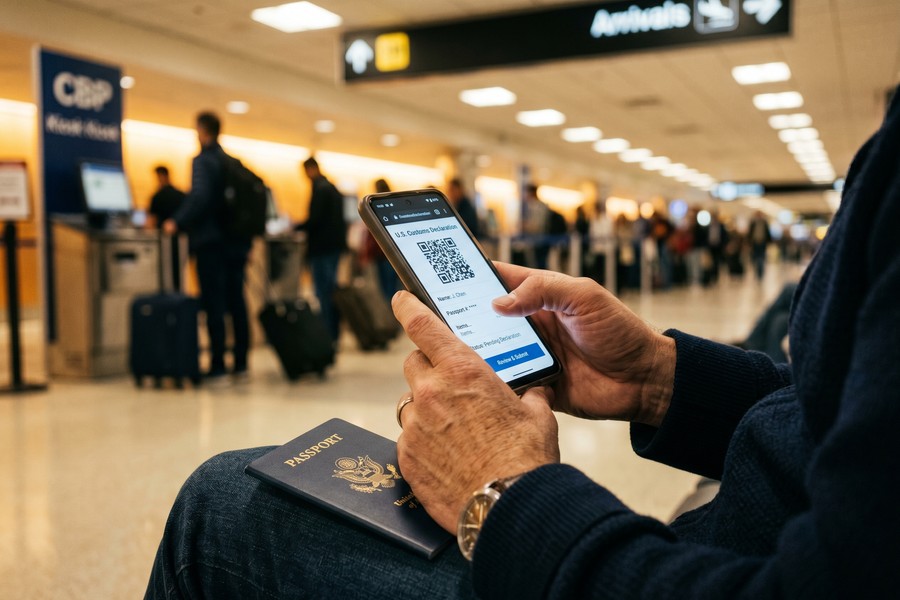
CLEAR, the biometric identity verification service available at 50+ U.S. airports, bypasses the ID check portion of TSA screening entirely. Combined with TSA PreCheck, CLEAR users average just 2–3 minutes from queue entry to the security belt, regardless of how long the standard line is. Annual membership costs $189, but cards like the Amex Platinum cover the full cost as a statement credit.
Real-World Example: How One Business Traveler Turned a $400 Mistake Into a $0 Masterclass
Marcus, a 34-year-old consultant based in Chicago, took 18 international trips in 2022. His approach to layovers was reactive: he booked the cheapest connecting flights, ignored lounge access on his Chase Sapphire Reserve card, brought no snacks, and routinely chose 75-minute connections at CDG. In Q3 of that year, he missed two connections in four months, one at Paris CDG (a 78-minute connection that became 55 minutes after a gate delay) and one at JFK (where CBP processing took 72 minutes, far longer than expected). Total out-of-pocket cost for rebooking, one overnight hotel, food, and ground transport: $847.
After the second incident, Marcus spent two hours restructuring his travel strategy. He enrolled in Global Entry ($100), began booking minimum 2.5-hour international connections, mapped CDG’s terminal layout before every trip, and started using his card’s Priority Pass access, which he had been ignoring for over a year. He also began packing a $35 insulated lunch bag with snacks for layovers over 90 minutes, eliminating the average $28 he had been spending on airport food per stop.
In the 12 months following his changes, Marcus took 22 trips with zero missed connections. His Global Entry enrollment reduced his average customs processing time from 68 minutes to under 4 minutes. His lounge and snack strategy saved him $486 in food costs. The Priority Pass lounges provided workspace that let him bill an additional 3.5 hours of client work during layovers he would otherwise have spent distracted in a noisy terminal, at his $175/hour consulting rate, that’s over $600 in recaptured productivity.
Total cost of his improvements: $135 (Global Entry + power bank). Total first-year savings and recovered value: approximately $1,933. The ratio is not unusual, it reflects what happens when travelers treat layover planning as a system rather than an afterthought. Marcus now describes himself as someone who “actually looks forward to long connections”, a sentiment that would have seemed impossible two years earlier.
Your Action Plan
-
Audit every upcoming connection against the safe buffer benchmarks
Pull up your next three itineraries and compare each layover against the safe minimum times in the table above. Flag any domestic connection under 75 minutes or international connection under 2.5 hours as high-risk. Consider rebooking if the cost difference is less than $80, that’s typically far less than the cost of a missed connection.
-
Map the terminal layout of your layover airport before you fly
Spend five minutes on the airport’s official website reviewing the terminal map. Identify whether your arriving and departing flights are in the same terminal. If not, note the inter-terminal transit method, its frequency, and the added time. Add this time to your connection risk calculation.
-
Enroll in TSA PreCheck, Global Entry, or both within the next 30 days
More than two international trips per year makes Global Entry ($100 for 5 years) pay for itself in the first month. For domestic-only travelers, TSA PreCheck ($85 for 5 years) cuts average security wait from 28 minutes to under 5. Check whether your credit card reimburses the application fee, many premium travel cards cover this entirely.
-
Verify your transit visa requirements for every hub country on your itinerary
Use the IATA Travel Centre or your country’s foreign ministry website to confirm whether your passport requires a transit visa at each stopover country. Do this at least 30 days before travel, as some transit visas take 10–15 days to process. Planning to leave the airport? Confirm full entry requirements in addition to airside transit rules.
-
Activate and use your credit card lounge benefits at every qualifying layover
Log into your credit card account and confirm your lounge access network. Download the relevant app (Priority Pass, Lounge Key, etc.) and locate the lounges at your next layover airport. Budget at least 90 minutes of your connection time to use the lounge, the food, Wi-Fi, and power access alone are typically worth $40–$80 per visit. Our resource on the best travel credit cards for frequent flyers details which cards offer the broadest lounge networks.
-
Confirm your bag transfer status at check-in, every single time
At your departure check-in desk, explicitly ask the agent: “Will my bags transfer automatically to my final destination, or do I need to reclaim and re-check them at the layover airport?” Get a clear answer. If the answer is “you need to reclaim,” add at least 60 minutes to your required connection time. If your connection is now insufficient, escalate immediately, before you board.
-
Pack a snack kit and a charged power bank for every layover over 60 minutes
A small insulated bag with two snack items and an empty reusable water bottle costs under $3 to fill at home and eliminates the single biggest discretionary overspend in airports. Pair this with a fully charged 10,000 mAh power bank, and you’ve eliminated two of the most common stress triggers in a single two-minute packing step.
-
Review your travel insurance policy for missed-connection coverage before booking self-transfers
Booking any itinerary where flights are on separate tickets requires you to confirm whether your travel insurance policy includes missed-connection coverage and what the documentation requirements are for a claim. Policies vary widely, some require proof that the first delay was carrier-caused. Understanding this before the trip, not during it, is the difference between a $200 insurance payout and a $900 last-minute rebooking fee. Learn more by reading our guide on what travel insurance actually covers and whether you need it.
Frequently Asked Questions
What is the minimum safe layover time for a domestic U.S. connection?
At least 75 to 90 minutes, even though airlines set Minimum Connection Times between 30 and 45 minutes. At large, multi-concourse airports like DFW, ATL, or ORD, 90 minutes should be considered the floor, not the target.
Traveling with checked bags or children adds another 15–20 minutes to those estimates. The cost of a missed domestic connection, rebooking fees, meals, ground transport, typically ranges from $150 to $400, making a slightly longer layover a reliable form of cheap insurance.
Do I always need to reclaim my bags during a layover?
No, but the answer depends entirely on how your ticket is structured. Bags on a single-ticket itinerary within the same airline or alliance partners typically transfer automatically. On separate tickets or different carriers without a formal interline agreement, you must reclaim and re-check bags yourself.
The universal exception in the U.S.: any international arrival requires passengers to reclaim all checked bags at the first U.S. port of entry for customs. After clearing, you re-check your bags before the domestic connecting flight, regardless of what your ticket says.
How do I know if I need a transit visa for my layover?
The most reliable free tool is the IATA Travel Centre (iatatravelcentre.com), which uses the same database airlines consult at check-in. Enter your passport nationality, origin, destination, and connection point, and the system will flag any transit visa requirements.
Always verify with the official embassy or consulate website of the transit country as a secondary source. Requirements change frequently, sometimes within weeks of new diplomatic developments, so never rely on information more than 60 days old, and re-check within two weeks of travel.
Is it worth paying for a lounge day pass if I don’t have free access?
For a layover of 2+ hours at a lounge that includes hot food, beverages, and reliable Wi-Fi, a $35–$45 day pass typically delivers more value than its cost, especially if you would otherwise spend $20–$30 on airport food anyway.
Connections under 90 minutes shift the calculation. A 60-minute layover doesn’t give you enough time to reach the lounge, settle in, eat, and return to your gate with sufficient buffer. In that scenario, save the money and focus on minimizing transit time instead.
What are the best apps for navigating airport layovers?
GateGuru and LoungeBuddy provide real-time airport maps, lounge locations, and amenity guides. FlightAware and Flightradar24 track real-time flight status and gate changes. The TSA’s official wait time tool is available via its website. For international trips, the CBP Mobile Passport Control app (free) speeds up U.S. customs processing significantly without requiring pre-enrollment.
The highest-impact technology investment for frequent layover travelers is not an app at all, it’s Global Entry or TSA PreCheck enrollment, both of which reduce queuing time by 80–95% and cost less per year than two airport meals.
Can I leave the airport during a long international layover?
Yes, if three conditions are met: your layover is long enough (generally 5+ hours to make it practical), you have the legal right to enter the transit country (either visa-free, on a transit visa, or via visa-on-arrival), and you have enough time to clear immigration twice and return to your gate with adequate buffer.
Singapore Changi, Doha Hamad, Dubai DXB, and Istanbul Airport specifically promote city tours for long-layover passengers and have streamlined re-entry processes to support this. Always confirm entry eligibility and allow at least 2.5–3 hours for re-entry processing before your next departure. Exploring a city during a long stopover aligns with the principles we cover in our guide to seeing more of the world by slowing down.
What happens if I miss my connection due to an airline delay?
If both flights are on a single ticket and the first flight’s delay causes the missed connection, the operating carrier is responsible for rebooking you on the next available flight at no additional cost. In the EU, Regulation EC 261/2004 additionally entitles passengers to meals, accommodation, and in some cases monetary compensation of €250–€600 depending on flight distance and delay duration.
In the U.S., there is no federal mandate for compensation beyond rebooking, though many airlines have voluntary customer service commitments. Document everything, save boarding passes, take photos of departure boards, and request written confirmation from airline staff. This documentation is essential for both insurance claims and airline compensation requests.
How can I avoid overspending on food during a layover?
Bring an empty reusable water bottle through security and fill it post-security (saving $4–$6 per layover), and use credit card lounge access for meals when your connection exceeds 90 minutes. Together, these two habits reduce average layover food spending from $28 to under $6.
When you do need to buy food in the terminal, grab-and-go options in convenience-style stores carry lower markups than sit-down restaurants, and shorter waits, which matter when you have a tight connection.
Are airport layover mistakes covered by travel insurance?
It depends on the policy and the nature of the mistake. Most travel insurance policies cover missed connections caused by carrier delays, subject to documentation requirements. Self-inflicted errors, booking too short a connection, or failing to account for bag reclaim time, are rarely covered.
Policies with “missed connection” or “trip interruption” coverage typically require that the original delay was caused by the carrier, weather, or another external factor, and that the miss resulted in a quantifiable financial loss. Reading the policy terms before travel, not after a disruption, is how you know what protection you actually have. Our article on whether travel insurance is worth buying breaks down the coverage categories in plain language.
Does Global Entry work at every U.S. airport?
Global Entry automated kiosks are available at more than 75 U.S. international airports and select pre-clearance locations abroad, including Dublin and Abu Dhabi. However, not every port of entry has kiosks, a small number of regional international airports still route Global Entry holders through standard CBP lanes. Check the CBP website for a current list of enrolled locations before assuming the benefit applies at a specific airport.
Conditional approval for Global Entry takes 2–6 months on average, and an in-person interview at a CBP enrollment center or airport enrollment-on-arrival event is required to finalize membership. Applying the day before an international trip is too late.
What is the biggest airport layover mistake most travelers make?
Booking an insufficient connection time, particularly on self-transfer itineraries, is the most consistently damaging mistake. One short delay on the first flight converts a manageable layover into a guaranteed miss, with no airline liability and full out-of-pocket rebooking costs.
The second most costly mistake in aggregate is failing to use lounge access that travelers already hold through cards like the Chase Sapphire Reserve, Amex Platinum, or Capital One Venture X. The combination of these two errors accounts for the majority of layover-related financial losses documented in passenger surveys. Avoiding just these two airport layover mistakes would save the average frequent traveler over $600 annually.
“The travelers who lose the most money during layovers are not the ones who face genuinely bad luck. They are the ones who never researched their options. The information needed to avoid 90% of layover disasters is freely available — it just requires 20 minutes of pre-trip homework.”






