
Fact-checked by the Zeroin editorial team
Quick Answer
The best meal kit delivery services for families in July 2025 are HelloFresh, EveryPlate, and Green Chef, based on per-serving cost, menu variety, and portion flexibility. HelloFresh starts at $7.49 per serving, while EveryPlate offers the lowest entry price at $4.99 per serving — making both strong choices for budget-conscious households feeding three or more people.
Meal kit delivery for families has grown into a mainstream grocery alternative, with the U.S. meal kit market valued at over $8.1 billion according to Statista’s 2024 market analysis. Services designed for families typically offer four-serving or six-serving plans, structured recipes suited for mixed age groups, and per-meal pricing that can undercut restaurant takeout by 60% or more.
Choosing the right meal kit delivery service for families comes down to price per serving, kid-friendly menu options, dietary flexibility, and how well portions scale for larger households. This guide ranks the top services, compares their costs directly, and identifies which works best for different family types — from picky eaters to health-focused households.
Key Takeaways
- EveryPlate offers the lowest average cost for families at $4.99 per serving, making it the most budget-friendly meal kit option for households on tight grocery budgets (EveryPlate pricing page).
- HelloFresh serves over 8 million active customers globally and consistently ranks as the most-used meal kit service for families due to its portion variety and kid-friendly recipe options (HelloFresh Annual Report 2023).
- The average American household spends $412 per month on groceries, and meal kits can reduce food waste by up to 25% compared to traditional grocery shopping (U.S. Bureau of Labor Statistics Consumer Expenditure Survey).
- Green Chef is the only USDA-certified organic meal kit service, with plans starting at $11.99 per serving, making it the top choice for health-focused families (Green Chef plan overview).
- Home Chef allows portion customization up to 6 servings per recipe, the highest scaling flexibility among major meal kit providers — a key advantage for larger families (Home Chef how-it-works page).
In This Guide
- What Makes a Meal Kit Service Good for Families?
- Which Meal Kit Service Is Best Overall for Families?
- Which Meal Kit Delivery Service Is Most Affordable for Families?
- What Is the Best Healthy Meal Kit for Families?
- How Do Family Meal Kit Services Compare Side by Side?
- How Can Families Get the Most Value from Meal Kit Delivery?
- Frequently Asked Questions
What Makes a Meal Kit Service Good for Families?
The best meal kit services for families share four core qualities: scalable serving sizes, kid-friendly recipe options, predictable weekly costs, and minimal prep complexity. Without these features, a service may work well for couples or individuals but fall short for households managing different age groups, taste preferences, and weeknight time constraints.
Serving Size Flexibility
Most meal kit companies cap their family plans at four servings per meal. Services like Home Chef and HelloFresh offer up to six servings, which better accommodates households with three or more children. Families with teenagers — who often eat adult-sized portions — benefit most from services that allow six-serving scaling.
Portion sizing directly affects cost-efficiency. A four-serving plan at $8.00 per serving costs $32 per meal. At six servings, that same per-serving rate costs $48 — but reduces the need to supplement with additional groceries, which often offsets the higher base price.
Kid-Friendly Menu Design
HelloFresh and EveryPlate both offer dedicated “Family Friendly” recipe filters, featuring dishes like pasta bakes, chicken tenders, and tacos that children readily accept. Dinnerly takes a different approach, limiting recipes to five ingredients or fewer to reduce prep complexity — a meaningful advantage for busy parents cooking on weeknights.
According to FoodNavigator-USA, families who use meal kit services report spending an average of 20 minutes less per weeknight meal compared to traditional from-scratch cooking, largely due to pre-portioned ingredients and step-by-step instructions.
Which Meal Kit Service Is Best Overall for Families?
HelloFresh is the best overall meal kit service for families in 2025, offering the broadest menu variety, consistent ingredient quality, and the most accessible pricing among premium-tier providers. Its family-friendly recipe tag filters more than 30 weekly recipes down to those rated appropriate for children and beginner cooks.
HelloFresh for Families
HelloFresh’s family plan starts at $7.49 per serving for a four-meal, four-serving weekly box. The service offers over 40 weekly menu options, including a dedicated “Hall of Fame” section featuring the highest-rated family recipes. Shipping is a flat $9.99 regardless of box size, which keeps total weekly costs predictable.
HelloFresh also leads on flexibility. Subscribers can pause, skip, or cancel weeks through a straightforward online dashboard — a practical feature for families with variable schedules, travel, or school holidays. The service integrates with Walmart+ for bundled discounts in some regions.
Home Chef as a Strong Runner-Up
Home Chef earns strong marks for families due to its “Customize It” feature, which allows protein swaps within the same recipe — useful when household members have conflicting protein preferences. Home Chef plans start at $9.95 per serving and scale to six servings per recipe, the highest ceiling among top-tier services.
“Meal kit services that prioritize simplicity and flexible serving sizes consistently outperform premium competitors in household retention. Families don’t need gourmet complexity — they need reliable, fast, and adaptable dinners that reduce decision fatigue.”

Which Meal Kit Delivery Service Is Most Affordable for Families?
EveryPlate is the most affordable meal kit delivery service for families, with a starting price of $4.99 per serving — roughly 33% cheaper than HelloFresh and nearly 50% less than Green Chef. For a family of four ordering three meals per week, that translates to approximately $60 per week before shipping.
EveryPlate Pricing Breakdown
EveryPlate, owned by the HelloFresh Group, offers a simplified menu of about 20 weekly recipes with straightforward comfort-food styling. The trade-off is a narrower selection — fewer dietary filters and no organic ingredient sourcing. For families whose primary concern is cost and convenience rather than premium ingredients, that trade-off is acceptable.
Dinnerly is the second most affordable option at $4.99–$5.79 per serving, and distinguishes itself with a digital recipe card format that reduces packaging waste. Dinnerly also offers a “Kids Eat Free” promotional add-on that periodically surfaces on its pricing page, making it worth monitoring for families with young children.
A family of four using EveryPlate for three dinners per week spends approximately $720–$800 per year less than the same family using a premium service like Green Chef at equivalent serving counts — based on published 2025 per-serving rates.
If your family is also working to reduce overall household spending, pairing a budget meal kit with strategies from our guide on beating inflation with smart shopping and saving strategies can amplify your monthly savings significantly.
Hidden Costs to Watch
Shipping fees vary significantly across services. EveryPlate charges $9.99 per delivery, while some services like Gobble charge up to $13.99. When comparing advertised per-serving prices, always factor in weekly shipping to get an accurate total cost. A service priced at $5.99 per serving with $13.99 shipping can easily exceed the total weekly cost of a $7.49 service with flat $9.99 shipping.
What Is the Best Healthy Meal Kit for Families?
Green Chef is the best healthy meal kit for families, offering USDA-certified organic ingredients and the most extensive dietary plan options — including keto, Mediterranean, and plant-based family plans. It is the only major meal kit service holding USDA National Organic Program certification across its core ingredient sourcing.
Green Chef Nutritional Standards
Green Chef meals average 650–750 calories per serving, with full macronutrient breakdowns provided on every recipe card. For families managing specific dietary needs — including gluten-free or high-protein requirements — Green Chef’s plan filters provide more granular control than competitors. Plans start at $11.99 per serving, reflecting the premium cost of certified organic sourcing.
Families prioritizing whole-food nutrition can also consider Sun Basket, which offers USDA-certified organic produce on its family plan and Clean & Lean meal options averaging under 600 calories per serving. Sun Basket starts at $10.99 per serving and offers a “Family Plan” box designed for four people.
The CDC’s National Center for Health Statistics reports that only 12% of American adults meet federal fruit intake recommendations and 10% meet vegetable intake goals — making structured meal plans with pre-portioned produce a measurable tool for improving family nutrition outcomes.
Nutrition and Family Budgeting
Healthier meal kit options carry higher per-serving costs, which means families need to weigh nutritional priorities against household budget constraints. Understanding your overall family budget structure — including how food fits within discretionary versus essential spending — is a useful exercise before committing to a premium tier service. Our guide on family money conversations and teaching kids about finances offers a useful framework for involving children in those household budget decisions.
How Do Family Meal Kit Services Compare Side by Side?
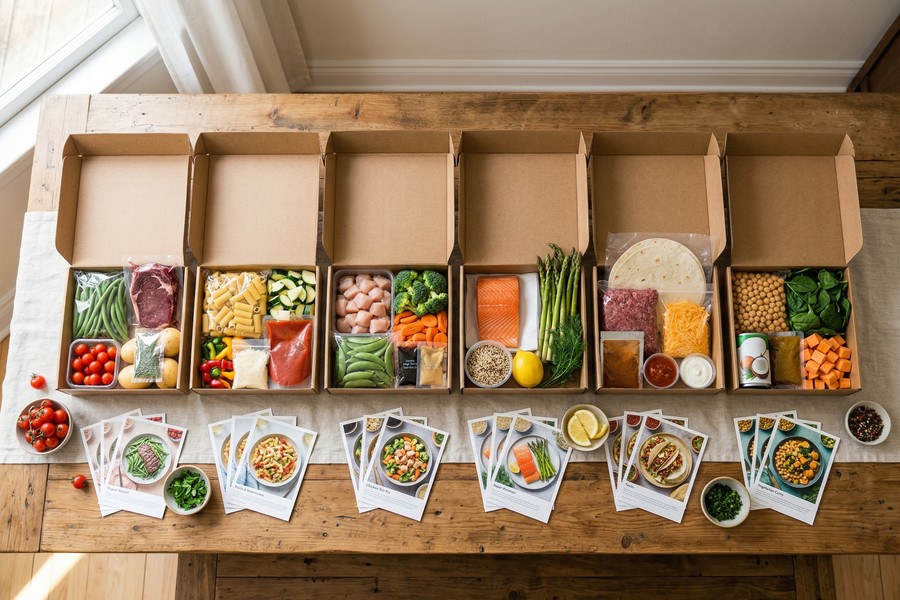
The table below compares the six leading meal kit delivery services for families across the metrics that matter most: per-serving cost, maximum servings per meal, number of weekly recipe options, shipping fee, and organic certification status.
| Service | Starting Price/Serving | Max Servings/Meal | Weekly Recipes | Shipping Fee | Organic Certified |
|---|---|---|---|---|---|
| EveryPlate | $4.99 | 4 | 20+ | $9.99 | No |
| Dinnerly | $4.99 | 6 | 25+ | $8.99 | No |
| HelloFresh | $7.49 | 6 | 40+ | $9.99 | No |
| Home Chef | $9.95 | 6 | 30+ | $9.99 | No |
| Sun Basket | $10.99 | 4 | 20+ | $9.99 | Partial |
| Green Chef | $11.99 | 4 | 30+ | $9.99 | Yes (USDA) |
All pricing figures reflect standard published rates as of July 2025 after introductory discount periods expire. Introductory offers typically reduce per-serving costs by 30–50% for the first two to four weeks, making trial periods an efficient way to test a service before committing to full pricing.
How Can Families Get the Most Value from Meal Kit Delivery?
Families get the most value from meal kit delivery by treating it as a complement to — not a replacement for — traditional grocery shopping. Using meal kits for three to four dinners per week while handling breakfasts, lunches, and simple dinners through conventional grocery runs typically produces the best cost-to-convenience ratio.
Maximizing Introductory Offers
Every major meal kit service — including HelloFresh, Green Chef, Home Chef, and EveryPlate — offers first-box discounts ranging from $20 to $120 off. Families willing to trial multiple services can cycle through introductory offers over a four-to-six month period to significantly reduce annual food costs. Most services allow account cancellation within the first week without penalty.
Using referral codes compounds these savings further. HelloFresh’s referral program, for example, provides $40 in credit to both the referrer and the new subscriber — a meaningful offset for a household already subscribed and looking to reduce its weekly meal kit spend.
Pausing vs. Canceling
All top-tier meal kit services offer a pause or skip feature, typically accessible up to five days before the weekly delivery cutoff. Families should use the skip feature proactively during vacations, holidays, or weeks with planned restaurant outings to avoid paying for meals that go unused. Pausing rather than canceling also preserves any accumulated loyalty discounts or promotional pricing that resets on new accounts.
Set a calendar reminder three to four days before your weekly meal kit cutoff date. This ensures you have time to review the upcoming menu, swap recipes, or skip the week — preventing autopilot charges for meals your family won’t use. Most services lock recipe selections and billing five days before delivery.
Managing your family’s meal kit subscription as part of a broader budget structure helps prevent subscription creep. If you’re new to structured household budgeting, our guide on building a zero-based budget that actually works outlines a framework that accounts for subscription services alongside fixed and variable expenses.
Food Waste Reduction
One underappreciated financial benefit of meal kit delivery for families is reduced food waste. According to USDA food waste data, American households discard an estimated 30–40% of their food supply, with fresh produce accounting for the largest share of loss. Pre-portioned meal kits eliminate overbuying, which can translate to measurable monthly savings on groceries that never get used.
For families also managing broader household financial goals — from saving for a home to tracking daily expenses — integrating a meal kit subscription into a formal expense-tracking system adds accountability. Our roundup of the best expense tracking apps for 2026 includes tools that categorize subscription food services alongside other discretionary spending.
Frequently Asked Questions
Are meal kit delivery services worth it for families?
Yes, for most families meal kit delivery is worth it when used three to four times per week as a dinner solution. The time savings, reduced food waste, and predictable per-meal cost typically outweigh the premium over basic grocery shopping, particularly for households where takeout is a frequent fallback.
What is the cheapest meal kit delivery service for families?
EveryPlate is the cheapest major meal kit service for families at $4.99 per serving. Dinnerly offers comparable pricing at $4.99–$5.79 per serving and charges slightly lower shipping at $8.99. Both are significantly cheaper than HelloFresh, Home Chef, or Green Chef after introductory pricing expires.
Which meal kit delivery service is best for picky eaters?
HelloFresh is best for picky eaters due to its large weekly menu of over 40 recipes and dedicated “Family Friendly” filter that flags kid-approved dishes. Home Chef’s “Customize It” feature — which allows protein swaps within the same recipe — also helps accommodate households where different family members prefer different proteins.
Can meal kit delivery services accommodate food allergies?
Most major services, including HelloFresh, Sun Basket, and Green Chef, allow dietary preference filters for common allergens such as gluten, dairy, and shellfish. However, none are certified allergen-free facilities, and cross-contamination risk cannot be fully eliminated. Families managing severe allergies should review each service’s allergen disclosure policy directly before subscribing.
How much does meal kit delivery cost for a family of four per month?
A family of four ordering three meals per week pays approximately $240–$320 per month with HelloFresh, or $170–$200 per month with EveryPlate, including shipping. These figures reflect standard post-introductory pricing as of July 2025 and exclude any paused weeks or promotional credits.
Do meal kit services offer family-specific plans?
Yes. HelloFresh, EveryPlate, Home Chef, and Dinnerly all offer explicit four-person or six-person serving configurations. Green Chef and Sun Basket top out at four servings per recipe, which may require ordering two separate meals to feed a household of five or more, increasing the effective per-meal cost.
How do meal kit delivery services for families compare to grocery shopping on cost?
Meal kits typically cost 10–30% more per meal than self-planned grocery shopping when ingredient costs are compared directly. However, they often undercut the total cost of grocery shopping when food waste, impulse buys, and supplemental takeout are factored in. According to Bureau of Labor Statistics consumer spending data, food-at-home costs average $412 per month for a family of four — a figure meal kits can match or beat when used strategically.
Sources
- Statista — U.S. Meal Kit Delivery Services Market Size
- HelloFresh Group — Annual Report 2023
- U.S. Bureau of Labor Statistics — Consumer Expenditure Survey
- USDA — Food Waste FAQs
- USDA Agricultural Marketing Service — National Organic Program
- CDC National Center for Health Statistics — Dietary Data
- Green Chef — Plan and Pricing Overview
- EveryPlate — Menu and Pricing
- Home Chef — How It Works
- FoodNavigator-USA — Meal Kit Industry Analysis