Fact-checked by the ZeroinDaily editorial team
Quick Answer
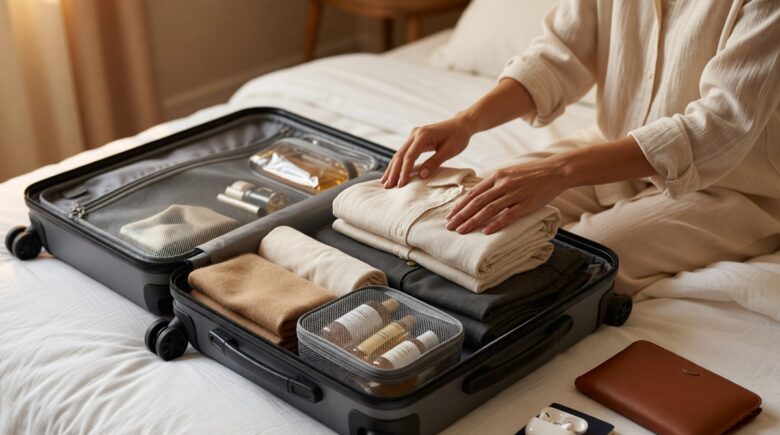
To pack a carry-on for two weeks, choose a bag under 22 x 14 x 9 inches, build a capsule wardrobe of 9–12 mix-and-match pieces, use packing cubes to compress clothing, and follow TSA’s 3-1-1 liquids rule. Most travelers can comfortably fit 14 days of outfits in a single carry-on by planning outfits in advance and doing one mid-trip laundry session.
Updated August 2026
Packing a carry-on for two weeks isn’t about cramming everything in. It’s about making deliberate choices. The right bag, a tight clothing plan, and smart organization keep you light and efficient. TSA guidelines cap most carry-on bags at 22 x 14 x 9 inches, and airlines are enforcing size limits more strictly than ever. A bag that barely fits today might get rejected tomorrow, especially at the gate.
Checked baggage fees have climbed sharply. U.S. airlines collected over $7.3 billion in baggage fees in a recent year, according to the Bureau of Transportation Statistics. That money flows straight into airline profits, not passenger convenience. Beyond the cost, checked bags get lost, airlines misplace a bag every 100 flights on average, costing the industry $6.3 billion annually and passengers hours of stress, according to SITA’s 2025 Baggage IT Insights. Skip the checked bag and you skip the lost luggage risk, the slow airport moves, and the loss of control over your own gear.
This guide is for travelers planning a two-week trip who want to pack light without sacrificing essentials. You’ll learn what to pack, how to organize it, and which tools make the real difference. It’s not for everyone. Some trips demand more flexibility than a carry-on allows.
Key Takeaways
- Most major airlines allow carry-on bags up to 22 x 14 x 9 inches, though some budget carriers set stricter limits, always verify with your specific airline before packing, according to TSA’s official carry-on guidelines.
- Travelers who use packing cubes reduce packing time by up to 30% and consistently report fitting more clothing into less space, based on consumer testing by Wirecutter’s packing cube review.
- A capsule wardrobe of 9–12 pieces can generate over 20 distinct outfits through layering and mix-and-match combinations, eliminating the need to overpack for a 14-day trip.
- TSA’s 3-1-1 liquids rule limits each container to 3.4 oz (100ml), all fitting in one quart-sized clear bag, violating this is the number-one reason travelers are flagged at security checkpoints, per TSA’s liquids rule page.
- Doing one mid-trip laundry session, typically on day 6 or 7, effectively doubles your wardrobe capacity, making a two-week carry-on trip entirely achievable without overstuffing your bag.
- Travelers who pack carry-on only save an average of $60–$120 per round trip in checked baggage fees on U.S. carriers, based on current fee schedules published by major airlines including American, Delta, and United.
In This Guide
- What’s the best carry-on size for a two-week trip?
- How do I build a capsule wardrobe for two weeks?
- How do packing cubes help with space and organization?
- How do I pack toiletries without breaking TSA rules?
- Where should I pack electronics and valuables?
- How do I fit everything and stay under weight?
- Frequently Asked Questions
What’s the best carry-on size for a two-week trip?
Start by picking a bag that fits airline size limits and matches your travel style. The standard max for most U.S. carriers is 22 x 14 x 9 inches, including handles and wheels. The International Air Transport Association (IATA) suggests 56 × 45 × 25 cm (22 × 18 × 10 in), though individual airlines often set tighter rules. Choosing a bag that fits within these specs before you pack is the single most important step you’ll take.
How to Do This
You’ve got choices: a hard-shell spinner, a soft-sided rolling bag, or a travel backpack. Hard-shell bags from Away or Rimowa offer solid protection and a clean look. Soft-sided models from Osprey or Eagle Creek compress slightly in tight overhead bins and often have external pockets for quick access.
For backpack-style carry-ons, look for bags that fit within airline overhead bin limits and open like a clamshell. The Wirecutter carry-on luggage guide consistently recommends clamshell designs because they make packing and unpacking much easier at hotels and Airbnbs.
What to Watch Out For
Budget airlines like Spirit, Frontier, and Ryanair have much smaller carry-on allowances, sometimes as small as 18 x 14 x 8 inches. Always check your airline’s website before buying. A bag that works on Delta might not qualify on a European low-cost carrier.
Some airlines now use physical sizing boxes at the gate. If your bag doesn’t fit, you’ll be charged a gate-check fee, often $50 or more. Don’t buy a bag that’s right at the limit. Pick one with a little room to spare.
Keep in mind: this approach works best on trips with predictable routines. If you’re attending multiple events that require formal wear, or traveling with gear like skis or a camera setup, a carry-on won’t suffice. You’ll hit space limits, and the risk of gate-checking goes up fast.
How do I build a capsule wardrobe for two weeks?
Plan a capsule wardrobe, a small set of neutral, mix-and-match clothes that create multiple outfits. For a two-week trip, aim for 9–12 clothing items, plus one mid-trip laundry session. It’s achievable, but it’s not for everyone.
How to Do This
Use the 5-4-3-2-1 rule: 5 tops, 4 bottoms, 3 layers, 2 pairs of shoes, 1 dress or versatile outfit. Stick to two or three colors. Merino wool from brands like Unbound Merino or Icebreaker resists odor, dries fast, and stays presentable for multiple days.
Plan outfits on paper. Lay out combinations. If a top doesn’t pair with at least two bottoms, take it out. This step alone cuts four to six items from most people’s lists.
Don’t pack for worst-case scenarios. Pack for what’s likely. If you’re going to Paris in summer, a lightweight rain shell under half a pound covers almost all weather changes.
What to Watch Out For
Don’t pack “just in case” items. Every extra item pushes out something useful. If a situation arises, most destinations have stores where you can buy what you need. This strategy fails if you’re traveling to remote areas with limited retail access.
Adjust the 5-4-3-2-1 formula based on the climate. A beach trip means lighter clothes and fewer layers. A cold-weather trip needs thermal base layers, and those take up more space. Pair this approach with insights from our guide on slow travel techniques that help you maximize each destination.
One real limitation: this method doesn’t work well for trips involving physical activities like hiking, climbing, or competitive sports. You’ll need specialized gear that doesn’t compress easily and can’t be mixed and matched. It also doesn’t suit travelers who rely on frequent wardrobe changes for comfort or confidence, especially in professional settings.
Wear your bulkiest outfit on travel days. Put on your heaviest shoes, your thickest jeans, and your chunkiest sweater. This frees up 20–30% of space without removing anything from your list.
How do packing cubes help with space and organization?
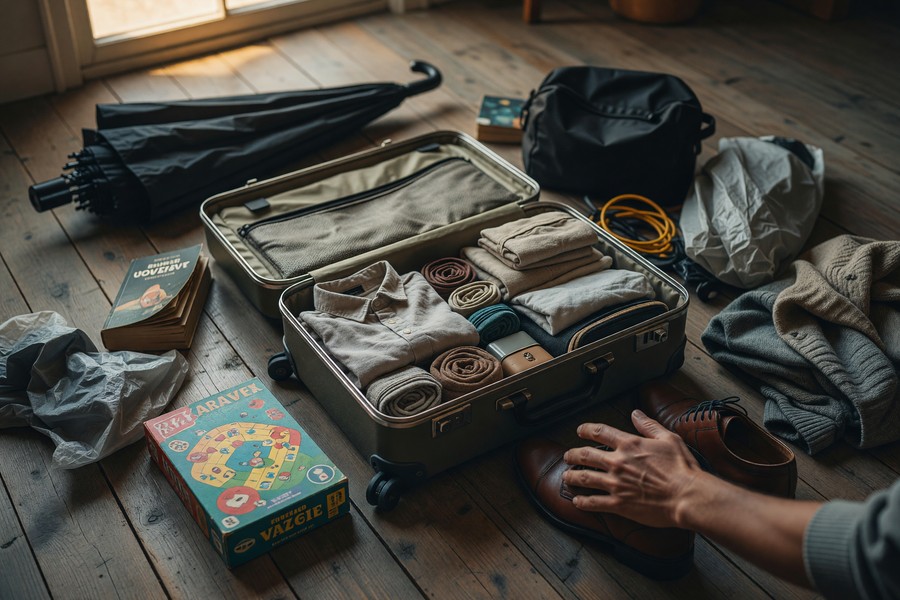
Packing cubes are one of the few tools that actually deliver. They compress clothes, keep items separated, and let you find things without unpacking everything. A set of three to four compression cubes is standard for a two-week trip.
How to Do This
Assign one cube per category: tops, bottoms, underwear and socks, and one for layers or sleepwear. Eagle Creek and Osprey make compression cubes with a secondary zipper that reduces volume when sealed. Roll clothes before placing them in the cube, since rolling reduces wrinkles and compresses better than folding.
Place the heaviest cube at the bottom of the bag (near wheels or against your back in a backpack). Lighter cubes and accessories go on top. This weight balance makes the bag easier to lift at the gate.
What to Watch Out For
Over-compressing can wrinkle dress shirts or structured fabrics. If you need a crisp shirt for a meeting, fold it flat and place it on top of the cubes, not inside.
Travelers using compression packing cubes report fitting significantly more clothing into the same bag volume compared to unpacked tossing, according to consumer testing published by Wirecutter’s packing cube review.
| Packing Method | Space Efficiency | Wrinkle Risk | Best For |
|---|---|---|---|
| Compression Cubes + Rolling | Highest, up to 60% compression | Low for casual clothes | T-shirts, jeans, activewear |
| Flat Folding (no cubes) | Moderate, standard volume | Moderate | Structured items, blazers |
| Bundle Wrapping | High, interlocked pieces | Very low | Dress clothes, formal wear |
| Vacuum Bags | Very high compression | High on delicates | Bulky sweaters, down layers |
| Stuff Sacks (uncompressed) | Low, wastes air space | High | Not recommended for carry-on |
For travelers using points or miles, our breakdown of the best travel credit cards for frequent flyers can help offset baggage costs even further.
How do I pack toiletries without breaking TSA rules?
TSA’s 3-1-1 liquids rule is simple: each liquid container must be 3.4 oz (100ml) or smaller, all of them must fit in one quart-sized clear zip-top bag, and each passenger gets only one bag. Getting this wrong is the most common reason travelers get flagged at security.
How to Do This
Switch to solid alternatives. Solid shampoo bars from Lush or HiBar last as long as liquid, take up no liquid space, and are easier to carry. The same goes for solid conditioner, sunscreen, and toothpaste tablets. For liquids you can’t avoid, use small silicone squeeze bottles. Sets from Humangear or GoToob cost under $20.
Decant only what you need. For a two-week trip, 2 oz of shampoo is usually enough for most hair types. Label each bottle clearly, so you don’t confuse them at security or in a dark hotel bathroom.
What to Watch Out For
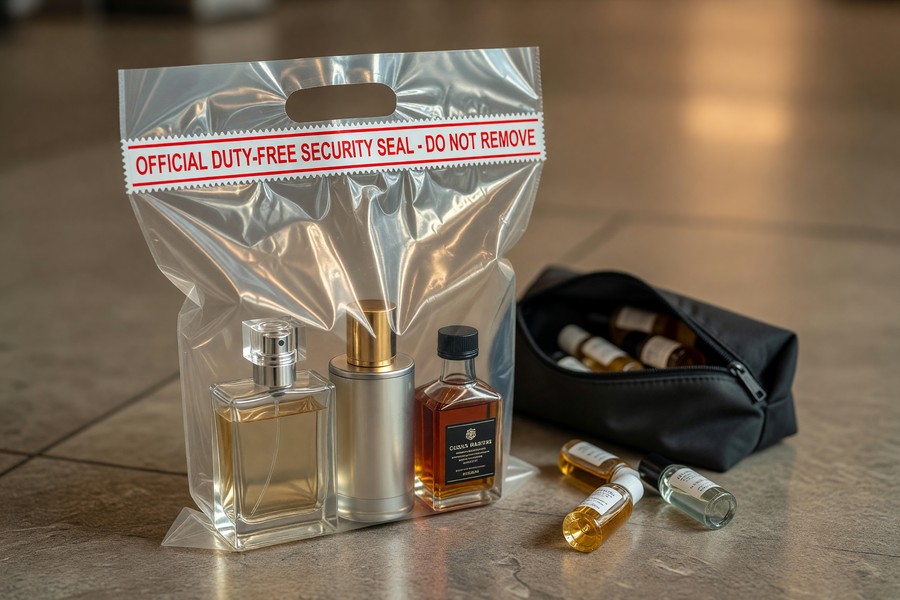
Duty-free liquids bought in international airports are exempt from 3-1-1 rules if they stay in the sealed, tamper-evident bag. But if you transfer flights through a country with its own security screening, that exemption may not apply. Rules vary by country. Check ahead.
TSA screeners confiscate millions of liquid items annually. The most common mistakes? Full-size shampoo bottles and water bottles that aren’t empty. Medications and baby formula are exempt, they just need to be declared at the checkpoint. See TSA’s full list of permitted and prohibited items.
Where should I pack electronics and valuables?
Electronics and valuables should always travel in your carry-on. That’s both a security rule and a practical one. The best way to handle tech is to organize cables and devices so you’re not digging through your bag at security.
How to Do This
Use a dedicated electronics organizer pouch. Brands like Cocoon and Nomatic make flat, accordion-style pouches that hold cables, adapters, a portable charger, and earbuds in separate sections. Keep it in the top layer or an external pocket so you can pull it out fast.
Laptops and tablets must be removed at TSA checkpoints unless you have TSA PreCheck. A five-year membership costs a low fee and lets you keep your laptop in your bag. The TSA PreCheck enrollment page covers eligibility and how to apply.
If your trip involves managing money across multiple currencies, consider reviewing top budgeting apps that work offline and track spending in different currencies.
What to Watch Out For
Lithium-ion batteries, including power banks, are banned in checked baggage. They must be in your carry-on. Batteries over 100Wh require airline approval. Check your power bank’s watt-hour rating, most consumer models are under 100Wh, but large laptop batteries may not be.
Your passport, medications, laptop, and other irreplaceable items belong in your carry-on. Once a bag is checked, you lose control of it.
One downside: if you’re traveling to a region with high theft risk or unstable security, keeping all valuables in one bag increases the risk of loss if your bag is stolen. In those cases, splitting essentials across multiple bags or using hidden pockets may be the safer bet.
Use a universal travel adapter with built-in USB-A and USB-C ports. It replaces four to six individual adapters and takes up the space of one deck of cards.
How do I fit everything and stay under weight?
Once your clothes, toiletries, and electronics are organized, the final step is packing efficiently and checking weight. Most carry-on weight limits range from 15 to 22 lbs (7–10 kg), depending on the airline. Some budget carriers weigh bags at the gate.
How to Do This
Pack the bag completely, then weigh it at home with a luggage scale. A handheld digital scale costs under $15 and is one of the most useful travel tools you can own. If you’re over, pull out “just in case” items, duplicate toiletries, or heavy items you could just buy at your destination.
Use this packing order for balance and ease:
- Heaviest cube (bottoms, jeans) at the bottom near wheels or back
- Medium cubes (tops, layers) in the middle
- Electronics and toiletry bag on top or in top compartment
- Shoes stuffed with socks, placed in a shoe bag along one side
- Small personal items (wallet, passport, book) in an external pocket
What to Watch Out For
Airlines may treat your personal item as their fallback plan. If your carry-on looks full, gate agents might ask you to check it. Your personal item then becomes your only free bag. Keep it small and compressible, something that fits easily under the seat.
For international trips with multiple flights, weight matters beyond fees. Unexpected costs can add up fast. Read our guide on hidden travel costs including transfers and insurance to plan ahead.
One real trade-off: this method assumes access to laundry services. If you’re staying in a remote cabin, a rural lodge, or a country with no reliable laundry, you’ll need to pack extra clothes. There’s no substitute for a second set of basics if you can’t wash in between.
Plan a laundry day on day six or seven. Most hotels offer laundry services, and laundromats are available in virtually every city. One wash cycle doubles your wardrobe, no more panic about running out of clean clothes.
If you’re building your travel strategy around maximizing points and minimizing costs, our analysis of how to use travel reward points for maximum value pairs directly with a carry-on-only approach, fewer bags mean fewer fees eating into your rewards.
Frequently Asked Questions
Can I really pack for two weeks in just a carry-on bag?
Yes, many travelers do. It’s not easy, but it’s doable with a 9–12 piece capsule wardrobe, compression cubes, and one mid-trip laundry session. Thousands of long-term travelers, including digital nomads, use a single carry-on for months. It doesn’t work for everyone, though. If you’re traveling for a formal event, carrying sports gear, or visiting remote destinations with no laundry access, you’ll hit limits.
What is the best carry-on size for international travel?
The safest size is 21–22 inches tall. It fits most U.S. carriers and European full-service airlines. But budget carriers like Ryanair or easyJet have smaller limits. Ryanair, for example, caps priority carry-ons at 55 x 40 x 20 cm, smaller than the U.S. standard. Always check your airline’s website.
How do I avoid wrinkles when packing a carry-on for a long trip?
Use the bundle wrapping method for dress clothes: layer garments around a central item, wrap sleeves and legs around each other to hold shape. For casual items, rolling tightly in packing cubes reduces wrinkles compared to folding. A small travel-size wrinkle release spray, under 3.4 oz to comply with TSA, can handle any remaining creases.
Should I check a bag or carry-on only for a two-week international trip?
Carry-on only is better for most trips. You save $60–$120 per round trip in fees, avoid lost luggage, and move through airports faster. The exceptions are trips with sports equipment, formal attire for multiple events, or remote destinations with strict weight limits on small flights.
What carry-on packing tips work best for cold-weather destinations?
Focus on layering, not bulk. Pack one merino wool base layer, one mid-layer fleece, and one packable down jacket, all of which compress into a single cube. Wear your heaviest outer layer and boots on travel days. A heavy wool coat takes up space and is harder to manage than a layered system.
How do I handle shoes in a carry-on for a two-week trip?
Stick to two pairs of shoes: one versatile pair for walking, sightseeing, and casual dining, like clean sneakers or leather walking shoes, and one pair suited to your specific activities, sandals for the beach or boots for hiking. Wear the heavier pair on travel days. Pack the smaller pair in a shoe bag along one side.
What if my carry-on gets gate-checked, what should I take out first?
If a gate agent checks your bag, immediately remove your laptop, medications, passport, travel documents, and any lithium-ion batteries. These items are either banned from cargo holds or irreplaceable if lost. Gate-checking is free, but it exposes your bag to the same loss risks as checked luggage. Pulling these essentials into your personal item is critical.
Can I bring a personal item in addition to my carry-on, and what fits in it?
Yes, nearly all airlines allow one personal item, something that fits under the seat. A slim daypack or structured tote bag works best. Use it for your laptop, headphones, snacks, and anything else you’ll want during the flight, like a travel journal or e-reader. If you’re using points, see our guide on strategies to save money on flights and hotels to maximize every dollar.
What are the most common carry-on packing mistakes for long trips?
Packing for every possible scenario, choosing a bag that’s too big for your airline, and ignoring the 3-1-1 liquids rule until you’re standing at security. Another frequent error: underestimating how much a mid-trip laundry session extends your wardrobe. A close second? Wearing your lightest shoes to the airport instead of your heaviest, a simple swap that frees up significant space.
Do I need travel insurance if I am only flying carry-on?
Yes, travel insurance is still valuable. It covers trip cancellations, medical emergencies, travel delays, and even lost or stolen gear, even if it’s in your carry-on. Medical evacuation alone can cost thousands, especially for international trips. For a clear breakdown of what policies cover and whether they apply to your trip, our guide to what travel insurance covers and whether you need it covers the key points.
Sources
- TSA, 3-1-1 Liquids Rule for Carry-Ons
- TSA, PreCheck Program Overview and Enrollment
- Bureau of Transportation Statistics, Airline Baggage Fee Revenue Data
- Wirecutter (New York Times), Best Carry-On Luggage
- Wirecutter (New York Times), Best Packing Cubes
- U.S. Department of Transportation, Fly Rights: Passenger Protections
- FAA, Lithium Battery Regulations for Air Travel
- SITA, Baggage IT Insights 2025
- IATA, Passenger Baggage Rules
- TSA, What Can I Bring? All Items List
- TSA, Liquids, Aerosols, and Gels Rule