Updated July 2026

Key Takeaways
- Open banking lets you securely share your financial data with apps and services through regulated APIs, without handing over your bank password.
- The CFPB’s Section 1033 rule gives you the legal right to your financial data and the power to share it with whoever you choose.
- Practical benefits include better rate shopping, automated savings, smarter budgeting apps, and faster loan approvals, all powered by real-time data access.
- You stay in control. Open banking requires your explicit consent, and you can revoke access to any connected app at any time.
In This Article
What Open Banking Actually Means (in Plain English)
You’ve probably been through this drill before. You sign up for a budgeting app, and it asks for your bank username and password. You type it in, maybe with a little cringe, because how else is the thing supposed to see your transactions? That method is called screen scraping, and it’s been the duct-tape solution for financial data sharing for well over a decade. It works, sort of. But it’s clunky, breaks constantly when your bank updates their website, and, let’s be honest, handing your actual bank login to a third-party app has always been a terrible idea from a security standpoint.
Open banking replaces that mess with something dramatically cleaner. Instead of giving an app your actual credentials, your bank provides a secure pipeline, an API, that shares specific data with your explicit permission. Think of it like a hotel key card versus handing someone a copy of your house key. The card only opens certain doors, works for a limited time, and can be killed instantly if something feels wrong.
In the US, this shift got a massive regulatory push when the CFPB finalized its Section 1033 rule, establishing that your financial data belongs to you and you have the right to share it through secure, standardized channels. Banks are now required to build these pipelines. That’s a big deal, and it’s going to reshape how you interact with pretty much every financial product over the next few years.
It’s worth looking at what happens when a country runs this system for a while. The UK has had open banking rules in place longer than the US, and the numbers give a sense of scale rather than novelty. By December 2025, the UK had reached 16.5 million open banking user connections, and the system processed 351 million open banking payments over the course of 2025, backed by 24 billion successful API calls that year (Open Banking, 2025). That’s not a pilot program anymore. It’s plumbing that a meaningful share of a country’s banking activity now runs through daily, which is roughly where the US is headed as Section 1033 rolls out across banks of different sizes.
Key Takeaways
- The CFPB’s Section 1033 rule legally establishes that consumers own their financial data, requiring banks to build secure sharing channels (CFPB).
- FDX, the Financial Data Exchange, is the shared technical standard that major banks like Chase, Wells Fargo, and Bank of America use to pass data to apps (FDX).
- Screen scraping, the older method, requires handing an app your actual bank password; open banking replaces that with a revocable, tokenized connection instead.
- Some mortgage brokers using open banking data have cut approval timelines from weeks down to days by pulling verified financial data instantly.
- The Federal Reserve requires that bank API connections meet security standards including tokenized access, end-to-end encryption, and regular third-party audits (Federal Reserve).
- You can review and revoke any connected third-party app directly from your bank’s security settings at any time.
How the Technology Works Under the Hood
You don’t need to understand APIs to benefit from open banking. But a basic mental model helps you make smarter calls about which apps deserve your trust. So here’s the simplified version of what happens when you connect an app to your bank.
Three steps. First, the app redirects you to your bank’s actual secure website, not a copycat, your real bank’s login page. You authenticate there and authorize exactly what data the app can access: maybe transaction history from one checking account, nothing else. Second, your bank generates a token, basically a temporary digital pass, that the app uses instead of your password. Third, the app pulls data through an encrypted connection. It never sees your credentials. It only sees what you specifically authorized.
The key technical standard driving this in the US is FDX, the Financial Data Exchange. It’s essentially the shared language that banks and fintech apps speak when passing data back and forth. Major institutions including JPMorgan Chase, Wells Fargo, and Bank of America all participate. The FDX consortium maintains the specifications that keep the whole system reliable and interoperable.
If you’ve been using Plaid-powered budgeting tools for years, the front end probably won’t look radically different. But behind the scenes, connections are becoming faster, more stable, and far more secure. The old screen-scraping approach broke every time your bank tweaked their website, sometimes locked your account because of suspicious login patterns, and gave third parties blanket access to everything in your account whether they needed it or not. Good riddance.
How open banking compares to traditional and screen-scraping methods of financial data sharing.
Real Ways Open Banking Saves You Money
Enough theory, let’s talk about actual dollars. Where does this stuff put money back in your pocket?
Better loan and mortgage rates. When lenders can pull your complete financial picture instantly, income patterns, spending, existing debts, savings history, they underwrite faster and with more precision. That speed creates competition, and competition pushes rates down. Some mortgage brokers using open banking data have slashed approval timelines from weeks to days. Our guide on how interest rates affect loans and mortgages digs into why even small rate differences compound into massive savings over a 30-year term.
Here’s what that speed can look like for a real borrower. Say you have a 680 credit score and need a $15,000 personal loan to consolidate credit card debt, and you’re deciding between two lenders. Lender A still relies on manually uploaded bank statements and takes 12 days to verify your income and approve the loan. Lender B uses open banking data to pull verified income and transaction history in real time and approves in 2 days. If you’re carrying that debt on a card at a high rate in the meantime, those extra 10 days aren’t just an inconvenience: at a rough 24% APR on $15,000, interest accrues at roughly $9.86 a day, so waiting the additional 10 days for Lender A costs you close to $99 in extra interest compared to closing with Lender B. It’s not a fortune, but it’s a real number, and it adds up further if your application gets delayed a second time for missing paperwork, which is the kind of friction open banking data is specifically designed to remove.
Budgeting that reflects what’s actually happening right now. When your app gets real-time transaction data instead of a delayed, scraped snapshot from three days ago, you see an accurate picture of where you stand today. That’s the difference between catching an overspend while you can still course-correct versus discovering it after the damage is done. We reviewed the best expense tracking apps for 2026, several have already upgraded to open banking connections.
Automated savings that actually match your cash flow. Apps like Qapital and Digit analyze your spending patterns through open banking data and sweep small amounts into savings when your balance can handle it. Because they’re working off real-time numbers, the risk of accidentally overdrafting you is dramatically lower than with older tools that relied on stale data.
Lower fees across the board. When your bank data is portable and switching institutions takes hours instead of weeks, banks lose their biggest leverage: inertia. The era of paying $12 a month for a basic checking account because moving felt like too much hassle? That’s ending. Open banking makes switching painless, and banks are adjusting their fee structures to keep customers from walking.

Privacy and Security: What You Need to Know
The question I get most often about open banking: “Doesn’t this make my data less safe?” I understand the instinct, but the reality is almost exactly backwards. Open banking is a privacy upgrade over what most people have been doing for years.
Under screen scraping, you literally handed apps your bank password. They could see everything, every transaction across every account, regardless of what they actually needed. If that app got breached? Attackers had your bank login. Think about that for a second. Millions of people were doing this routinely with budgeting apps and nobody batted an eye.
Open banking flips the dynamic entirely. You authorize granular access, maybe read-only transaction data from one specific checking account, nothing else. The app never touches your password. You revoke access from your bank’s dashboard anytime you want. And the CFPB’s rule explicitly requires that apps can only request data they genuinely need for the service they’re providing. No more grabbing everything just because they can.
The Federal Reserve has reinforced that banks must ensure API connections meet rigorous security standards, tokenized access, end-to-end encryption, regular third-party audits. The system isn’t flawless, and not every app automatically deserves your trust. But the framework is lightyears safer than what it replaced.
Open banking isn’t a good fit for everyone right now, and it’s worth being honest about the limits. If you use a small community bank or credit union that hasn’t finished building compliant APIs yet, you may still be stuck with screen scraping or manual statement uploads for a while longer, since smaller institutions are rolling this out on a slower timeline than the big national banks. And if you’re simply uncomfortable connecting any third-party app to your accounts, even a secure, tokenized one, there’s no rule saying you have to. Sticking with manual statement downloads is slower and more tedious, but it’s a legitimate choice if minimizing any data sharing matters more to you than convenience.
💡 Pro Tip
Review which apps have access to your bank data periodically, most banks now list connected third-party services in their security settings. Revoke anything you’ve stopped using, the same way you’d clean up app permissions on your phone.
Apps and Services Already Using Open Banking
This isn’t some future technology that requires you to wait around. Open banking is already woven into tools millions of people use daily. Budgeting apps like Monarch Money, Copilot, and YNAB use Plaid and MX connections that are migrating to full open banking standards. Lending platforms including SoFi and LendingClub pull real-time data for faster, more accurate approvals. Investment platforms like Wealthfront aggregate data across institutions so you see your true net worth in one place.
The next wave of apps being built natively on open banking is where things get genuinely exciting. Picture services that scan your accounts and automatically find you a higher savings rate. Or tools that flag subscriptions you forgot about, catch duplicate charges, and negotiate lower bills, all running on secure, real-time access to your data with your permission.
Already using fintech tools? Check whether yours has migrated from screen scraping to API connections. The signs are obvious: fewer broken connections, no more “please re-enter your bank password” pop-ups every other week, and transactions showing up within hours instead of days. For a wider look at the fintech landscape, our guide on digital banking trends covers the broader shifts happening alongside open banking.
💡 Pro Tip
If an app still asks for your bank username and password directly, rather than redirecting you to your bank’s own login page, that’s a red flag. It means they’re screen scraping, not using open banking APIs. Consider switching to an alternative that uses proper API connections.
How to Get Started Without Getting Overwhelmed
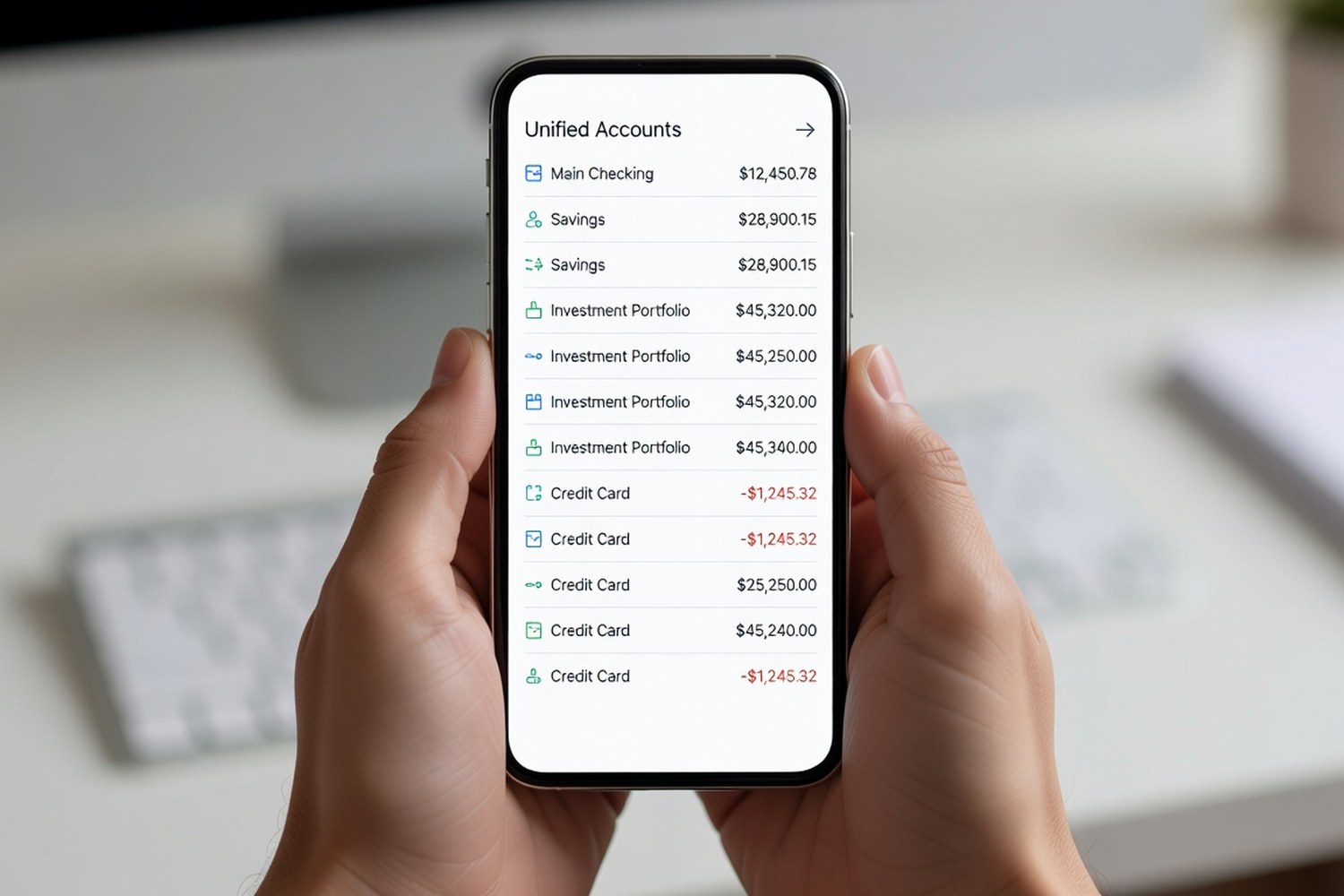
You don’t need to rip out your entire financial stack and rebuild it overnight. Start with one app that solves one specific problem you actually have. Maybe that’s a budgeting tool that gives you a unified view of your accounts. Maybe it’s a savings optimizer that sweeps spare cash automatically. Use it for a month. See if the real-time data access meaningfully changes your behavior or saves you money. Then decide whether to expand from there.
When evaluating any app that wants access to your financial data, run it through three questions. First: does it use open banking APIs or old-school screen scraping? (If it redirects you to your bank’s site to authenticate, that’s a good sign.) Second: what specific data does it request, and is that reasonable for the service it provides? A budgeting app needs transactions; it doesn’t need your Social Security number. Third: can you revoke access easily, and does the company commit to deleting your data when you disconnect?
The CFPB’s consumer tools page has growing guidance on your data rights and how to exercise them. Bookmark it, as the open banking ecosystem matures over the next few years, staying informed about your rights will matter just as much as choosing the right apps.
And if getting your spending under control is the problem you actually need solved first, our zero-based budget guide walks through a system that pairs perfectly with the real-time data these open banking tools provide. There’s also our guide to automated savings apps if you’d rather let technology handle the discipline part for you.
Frequently Asked Questions
What is open banking in simple terms?
Open banking is a system that lets your bank securely share your financial data with apps and services you approve, using encrypted digital connections instead of your actual password. You grant specific permissions, like transaction history from one account, and the app never sees your login credentials.
Is open banking safe?
Yes, generally safer than the screen-scraping method it’s replacing. Bank APIs use tokenized access, end-to-end encryption, and regular security audits, standards reinforced by the Federal Reserve, and you can revoke access to any app at any time from your bank’s settings.
Is open banking mandatory in the US?
Banks are now required to build secure data-sharing pipelines under the CFPB’s Section 1033 rule, but you as a consumer are never required to use open banking. Whether to connect any given app to your bank data remains entirely your choice.
What’s the difference between open banking and screen scraping?
Screen scraping requires you to hand an app your actual bank username and password, giving it broad access to everything in your account. Open banking uses a secure token issued directly by your bank, limiting the app to only the specific data you authorized.
Can I revoke an app’s access to my bank account?
Yes. Most banks now list every connected third-party app in their online or mobile security settings, and you can cut off access with a few clicks. It’s worth reviewing this list periodically the same way you’d audit app permissions on your phone.
Which banks support open banking in the US?
Major institutions including JPMorgan Chase, Wells Fargo, and Bank of America already participate in the FDX standard, and the CFPB’s Section 1033 rule is pushing broader adoption across the industry. Smaller community banks and credit unions are rolling out compliant APIs on a slower timeline.
Does open banking cost money to use?
No, connecting your accounts through open banking APIs doesn’t carry a direct fee for consumers. The apps you connect to may charge their own subscription costs, but the data-sharing connection itself is free.
What happens if an app I’ve connected gets hacked?
Because open banking uses tokens instead of your actual password, a breach at a connected app does not expose your bank login. The exposure is limited to whatever specific data you authorized that app to access, which is one of the main security advantages over screen scraping.
Do I need open banking to use budgeting apps like YNAB or Monarch Money?
Not strictly, but most major budgeting apps are already migrating their Plaid and MX connections toward open banking standards. If your app still asks for your bank password directly instead of redirecting you to your bank’s login page, that’s a sign it hasn’t made the switch yet.
How does open banking affect getting approved for a loan or mortgage?
Lenders can pull a verified, real-time picture of your income, spending, and existing debts instead of waiting on manually submitted statements, which speeds up underwriting. Some mortgage brokers using this data have cut approval timelines from weeks down to days.
References
- Consumer Financial Protection Bureau. (2025). “Personal Financial Data Rights (Section 1033).” https://www.consumerfinance.gov
- Financial Data Exchange. (2026). “FDX Technical Standards.” https://financialdataexchange.org
- Federal Reserve. (2025). “Open Banking and Consumer Data Security.” https://www.federalreserve.gov
- Open Banking. (2025). “Open Banking in 2025: Now Part of the UK’s Everyday Financial Life.” https://www.openbanking.org.uk/insights/open-banking-in-2025-now-part-of-the-uks-everyday-financial-life/
Keep Reading
If you found this guide helpful, check out these related articles:






