Fact-checked by the ZeroinDaily editorial team
Quick Answer
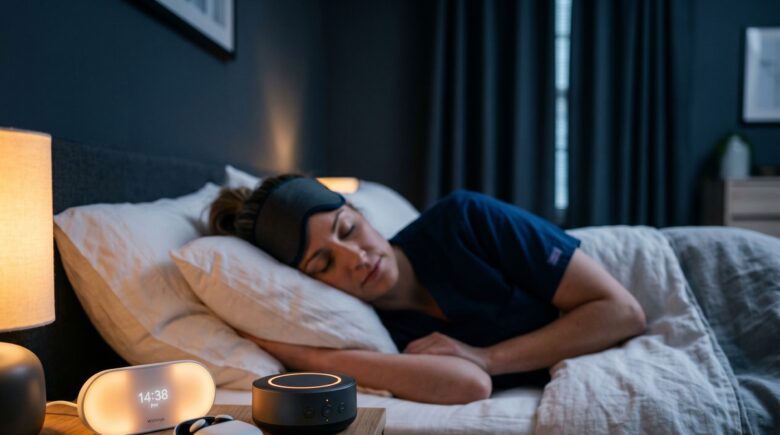
The best sleep tech gadgets night shift workers rely on include smart blackout solutions, light therapy devices, white noise machines, and wearable sleep trackers. As of July 2025, studies show that over 15 million Americans work night shifts, and targeted sleep technology can improve daytime sleep quality by up to 30%. Start with light control, then layer in sound masking and tracking.
Finding the right sleep tech gadgets night shift workers need starts with understanding why daytime sleep is biologically harder — and which technologies directly counter that challenge. According to the CDC’s research on shift work and circadian disruption, night shift workers are three times more likely to suffer from chronic sleep disorders than day workers. In July 2025, the market for sleep technology has expanded dramatically, giving shift workers more targeted, evidence-backed tools than ever before.
The urgency is real. The Sleep Foundation reports that shift work disorder affects between 10% and 38% of night shift employees, increasing risks of cardiovascular disease, metabolic syndrome, and cognitive decline. New generations of sleep gadgets — from AI-driven sleep trackers to smart light therapy glasses — have been specifically engineered to address the unique circadian challenges of working against the clock.
This guide is written for nurses, factory workers, security professionals, paramedics, and anyone who regularly works between 10 PM and 6 AM. By the end, you will know exactly which devices to buy, how to use them in sequence, and how to avoid the most common purchasing mistakes.
Key Takeaways
- 15.3 million Americans work permanent night shifts, making targeted sleep technology one of the fastest-growing personal health categories, according to the Bureau of Labor Statistics.
- Light therapy devices emitting 10,000 lux can reset the circadian rhythm in as few as 3 to 5 days of consistent use, per the Sleep Foundation.
- White noise machines reduce sleep-disrupting sound events by up to 75%, helping night shift workers maintain deeper sleep stages during daytime hours, according to research published in PLOS ONE.
- Wearable sleep trackers like the Oura Ring Gen 4 and Fitbit Sense 2 have shown accuracy rates of 80% to 90% for sleep stage detection compared to clinical polysomnography in recent independent reviews.
- Smart cooling mattress pads that maintain a body temperature of 65 to 68 degrees Fahrenheit can reduce the time to fall asleep by an average of 18 minutes, per thermal comfort research cited by the Sleep Foundation.
- Combining at least three sleep tech interventions (light control, sound masking, and temperature regulation) produces significantly better outcomes than any single gadget alone, based on shift work sleep optimization studies.
In This Guide
- Step 1: Why Is Night Shift Sleep So Much Harder to Get?
- Step 2: Which Light Therapy Devices Work Best for Night Shift Workers?
- Step 3: What Blackout and Sound Masking Gear Do You Actually Need?
- Step 4: Which Wearable Sleep Trackers Are Worth It for Shift Workers?
- Step 5: How Do Temperature-Control Gadgets Improve Daytime Sleep?
- Step 6: Which Smart Alarm and Wake-Up Tools Work for Shift Workers?
- Frequently Asked Questions
Step 1: Why Is Night Shift Sleep So Much Harder to Get?
Night shift sleep is harder because it directly conflicts with your body’s circadian rhythm — the internal 24-hour biological clock governed primarily by light exposure. Your brain releases melatonin in response to darkness, signaling sleep, but morning light after a night shift suppresses that melatonin release and triggers wakefulness instead.
The Core Biological Problem
The suprachiasmatic nucleus (SCN), a cluster of neurons in the hypothalamus, controls your circadian rhythm. It responds to light signals from the eyes, making it nearly impossible to feel deeply sleepy when sunlight is streaming through windows. Night shift workers trying to sleep at 8 AM are fighting millions of years of evolutionary programming.
Compounding the issue, social noise — garbage trucks, children, daytime traffic — peaks exactly when shift workers need silence. Most people average just 5 to 6 hours of sleep per day when working night shifts, compared to the recommended 7 to 9 hours, according to the CDC’s sleep guidelines.
What to Watch Out For
Many night shift workers mistakenly try to “flip” to a normal schedule on days off. This inconsistency makes circadian disruption worse, not better. A consistent sleep schedule — even on weekends — is the foundation before any gadget will deliver its full benefit.
Night shift workers are 33% more likely to develop type 2 diabetes and 23% more likely to experience a major depressive episode, according to epidemiological data reviewed by the American Academy of Sleep Medicine. These risks are directly tied to chronic sleep deprivation, not just the shift itself.
Step 2: Which Light Therapy Devices Work Best for Night Shift Workers?
Light therapy devices are the single most evidence-backed sleep tech gadgets night shift workers can use. By using a 10,000-lux light therapy lamp strategically before a night shift — and blocking light aggressively after it — you can begin training your circadian rhythm within days.
How to Use Light Therapy Correctly
Timing matters more than intensity. Use a bright light lamp for 20 to 30 minutes about 2 to 3 hours before your night shift begins. This signals your brain to delay its “sleep window.” Top-rated devices for shift workers include the Verilux HappyLight Luxe (10,000 lux, UV-free), the Carex Day-Light Classic Plus, and the Lumie Vitamin L SAD lamp.
For workers who commute home in morning light, light-blocking glasses are equally critical. The Uvex Skyper blue-blocking glasses filter 98% of blue-spectrum light, preventing the morning commute from resetting your circadian clock before you can sleep.
What to Watch Out For
Do not use a bright light lamp immediately after your shift. Using it at the wrong time can shift your rhythm in the wrong direction. Always count backward from your intended sleep time to find the correct usage window. If you work rotating shifts, consult a chronobiology app like Circadian (iOS) to calculate your optimal light exposure schedule automatically.
“Properly timed light exposure is the most powerful non-pharmacological tool we have for resetting the circadian clock in shift workers. The key word is ‘timed’ — used incorrectly, the same light that helps can actively harm sleep.”
Pair your light therapy lamp session with a pre-shift meal and caffeine intake. This creates a behavioral “anchor” that reinforces the circadian signal you are sending with the light, speeding up adaptation by up to 40% compared to light alone.
Step 3: What Blackout and Sound Masking Gear Do You Actually Need?
After light therapy positions your circadian rhythm, blackout curtains and white noise machines lock in the environment needed for deep, restorative daytime sleep. These are the most cost-effective sleep tech gadgets night shift workers can deploy immediately.
Blackout Solutions That Actually Work
Standard “blackout curtains” sold at most retailers block only 85% to 90% of light, leaving enough ambient light to suppress melatonin. Night shift workers need total blackout. The best options include the Arlo Blanco Thermal Blackout Curtains, which use triple-weave fabric rated for 99.9% light blocking, and blackout window film (such as the BDF S05 Window Film) applied directly to the glass for permanent, full-spectrum blocking.
For travel or rental situations where permanent installation is not possible, the Manta Sleep Mask Pro — with its contoured eye cups — creates a blackout environment regardless of room conditions and scores consistently high in independent sleep mask reviews.
White Noise and Sound Masking
White noise machines create a consistent audio backdrop that masks variable sounds — the most disruptive type of noise for sleep. The LectroFan Classic and Yogasleep Dohm Elite are the most recommended devices among shift worker communities on Reddit’s r/nightshift forum, with tens of thousands of verified user reviews.
Research published in PLOS ONE found that white noise reduced nighttime awakenings by 38% in a hospital setting — an environment acoustically similar to the daytime residential noise a night shift worker faces. Place the device 3 to 5 feet away from the bed at a volume of 50 to 65 decibels for maximum effect without hearing risk.
What to Watch Out For
Avoid using fans as white noise substitutes in winter — temperature fluctuation from the airflow disrupts sleep more than the noise benefit helps. A dedicated white noise machine with non-mechanical digital sound is cleaner and more consistent.
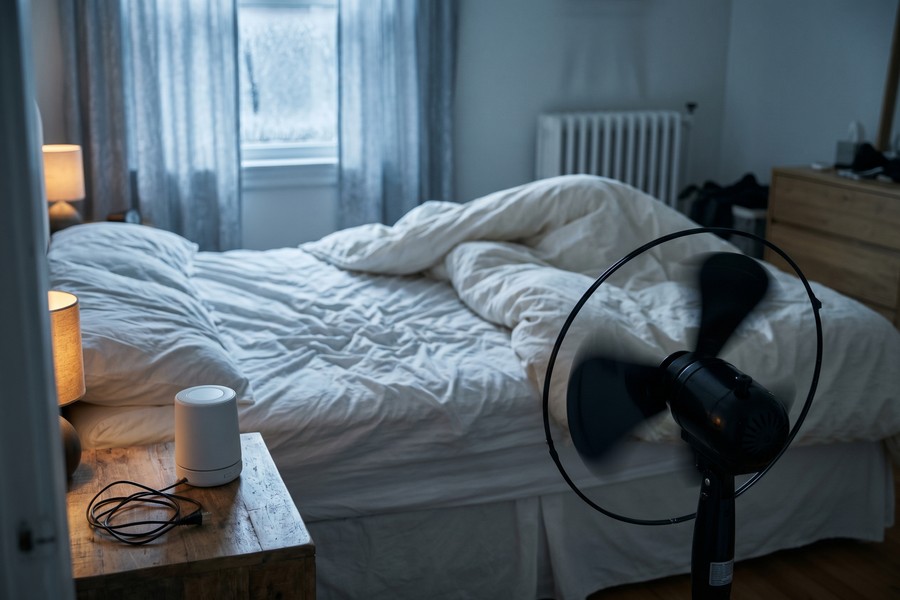
The human brain continues to process sound during sleep, particularly sounds it categorizes as novel or threatening. White noise works not by eliminating sound, but by reducing the acoustic contrast that causes the brain to flag an intrusion as worth waking up for.
| Device | Type | Price (USD) | Best For | Key Spec |
|---|---|---|---|---|
| LectroFan Classic | White Noise Machine | $55 | Apartment/suburban noise | 20 sound options, 0–85 dB range |
| Yogasleep Dohm Elite | Mechanical White Noise | $65 | Natural fan-like tone preference | Dual-speed motor, adjustable tone |
| Verilux HappyLight Luxe | Light Therapy Lamp | $60 | Circadian reset before shifts | 10,000 lux, UV-free |
| Carex Day-Light Classic Plus | Light Therapy Lamp | $70 | Larger work surface use | 10,000 lux at 12 inches, tilted face |
| Manta Sleep Mask Pro | Sleep Mask | $35 | Travel and rental properties | 100% blackout, eye cup design |
| Eight Sleep Pod 4 | Smart Mattress Cover | $2,295 | Full thermal + tracking system | 55–110°F range, AI scheduling |
| Oura Ring Gen 4 | Wearable Tracker | $349 + $5.99/mo | Detailed sleep stage analysis | REM/deep/light tracking, HRV |
Step 4: Which Wearable Sleep Trackers Are Worth It for Shift Workers?
Wearable sleep trackers help night shift workers identify exactly what is and is not working in their sleep regimen — making them the analytical backbone of any sleep tech gadgets night shift strategy. The best trackers go far beyond step counting, delivering HRV (heart rate variability), REM sleep percentage, and readiness scores each morning.
How to Choose the Right Tracker
For night shift workers, the most critical tracker features are: automatic sleep detection (so the device recognizes non-standard sleep windows), daytime sleep mode, and integration with shift scheduling apps. The Oura Ring Gen 4 leads this category with its passive ring form factor — no screen to catch light — and its Readiness Score algorithm specifically accounts for sleep timing relative to circadian norms.
The Fitbit Sense 2 ($299) offers skin electrodermal activity (EDA) sensing for stress tracking, which matters because cortisol dysregulation is a primary driver of poor daytime sleep in shift workers. The Garmin Fenix 8 ($899) is preferred by workers in physical roles who also need activity monitoring, while the Whoop 4.0 ($239/year) focuses exclusively on recovery rather than activity metrics.
How to Use Tracker Data Effectively
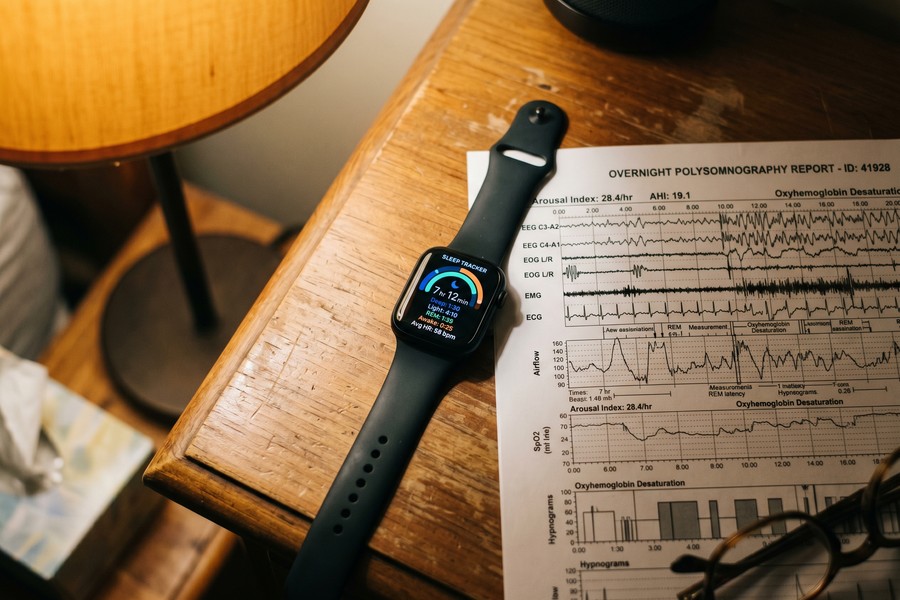
Review your REM sleep percentage weekly. Healthy adults achieve 20% to 25% REM per total sleep time. If yours consistently falls below 15%, adjust your sleep environment first (temperature, sound, light) before considering other interventions. Track trends over 2-week periods — single nights are too variable to draw conclusions from.
What to Watch Out For
No consumer wearable matches clinical polysomnography accuracy. Use tracker data as directional guidance, not medical diagnosis. If your tracker consistently shows poor sleep despite optimization efforts, consult a sleep specialist — shift work sleep disorder (SWSD) is a recognized clinical condition that sometimes requires medical treatment beyond gadgets.
Export your Oura or Fitbit sleep data as a CSV file every month and compare it against your shift schedule. Pattern-matching your worst sleep nights to specific shift types (overtime, back-to-back nights, rotating shifts) helps you identify exactly which schedule patterns need the most technological support.
Step 5: How Do Temperature-Control Gadgets Improve Daytime Sleep?
Temperature-control gadgets improve daytime sleep by mimicking the natural drop in core body temperature that signals the brain to initiate deep sleep — a drop that the body expects to happen at night, not midday. Manipulating your sleep environment temperature is one of the most underused sleep tech gadgets night shift workers can leverage.
The Ideal Sleep Temperature Range
Research consistently identifies 65 to 68 degrees Fahrenheit (18 to 20 degrees Celsius) as the optimal bedroom temperature for deep sleep. For daytime sleeping in summer months, this requires active cooling — not just an open window. The Eight Sleep Pod 4 smart mattress cover is the most advanced solution, using water-based thermal regulation to keep your sleep surface at a precise temperature throughout the night, controlled via smartphone app and informed by biometric data from its integrated sensors.
A more affordable alternative is the BedJet 3 ($499), which uses forced-air technology to cool or heat your bed zone independently. For budget-conscious shift workers, a cooling mattress topper using gel-infused memory foam — such as the Tempur-Pedic TEMPUR-Adapt + Cooling — provides passive temperature regulation at a fraction of the cost.
Humidification and Air Quality
Daytime air tends to be drier and carries more particulate matter. A smart air purifier — particularly the Dyson Purifier Hot+Cool Formaldehyde or the Coway AP-1512HH Mighty — removes airborne irritants that cause micro-awakenings. Pairing air purification with a ultrasonic humidifier at 40% to 60% relative humidity maintains the optimal respiratory environment for uninterrupted sleep.
What to Watch Out For
Avoid cooling the room aggressively with air conditioning set below 60 degrees Fahrenheit. Temperatures that are too cold trigger thermogenic (heat-generating) responses that paradoxically fragment sleep. The goal is steady, moderate coolness — not cold.
Smart mattress systems like the Eight Sleep Pod 4 require a Wi-Fi connection and a monthly subscription for full AI features. Check your router’s signal strength in the bedroom before purchasing — a dropped connection can disable temperature scheduling and wake you up.
Step 6: Which Smart Alarm and Wake-Up Tools Work for Shift Workers?
Smart alarms and wake-up lights are the final layer of the sleep tech gadgets night shift toolkit, and they are critically underestimated. Waking abruptly from deep sleep — sleep inertia — impairs cognitive performance for up to 30 minutes, which is dangerous for workers in patient care, transportation, or security roles.
How Smart Alarms Work
Smart alarms use wearable or mattress sensor data to identify a light sleep window within a set wake-up range (typically a 30-minute window before your alarm time) and trigger the alarm when you are naturally closest to wakefulness. The Oura Ring, Withings Sleep Analyzer, and Sleep Cycle app (available on iOS and Android) all offer this functionality.
The Withings Sleep Analyzer ($129) is a mat that slides under your mattress and requires no wearable at all — making it ideal for workers who find wristbands uncomfortable during sleep. It detects breathing rate, heart rate, and body movement to determine sleep stages without skin contact.
Wake-Up Light Alarms
For night shift workers who must wake at unusual hours, a sunrise simulation alarm clock — such as the Philips SmartSleep Wake-Up Light HF3520 or the Lumie Bodyclock Glow 150 — gradually increases light intensity over 20 to 30 minutes before the alarm, mimicking dawn. This reduces sleep inertia and cortisol spikes associated with abrupt alarm sounds.
These devices are especially valuable for shift workers who must wake in complete darkness. Studies from the Sleep Foundation on sleep inertia show that gradual light waking improves alertness scores by up to 25% in the first 20 minutes after waking compared to sound-only alarms.
What to Watch Out For
Do not use your smartphone as your primary alarm if it is also your entertainment device. The temptation to scroll social media before sleep is one of the most effective sleep-disrupting behaviors documented in sleep research. A dedicated smart alarm device keeps the bedroom screen-free.
“Sleep inertia after forced, abrupt awakening is a genuine safety hazard for shift workers operating heavy machinery, driving, or making clinical decisions. Smart alarm technology that uses physiological data to find natural waking windows is not a luxury — it is a risk mitigation tool.”
If you find yourself also exploring technology tools to optimize other aspects of your productivity and time management, the AI tools that are actually saving small businesses time in 2026 covers several platforms relevant to shift-based work scheduling and automation.
The Japanese term “inemuri” — strategic napping while ostensibly present — is practiced in some shift-based industries as a recognized productivity tool. Modern nap pods using sleep tracking technology like the MetroNaps EnergyPod are increasingly found in hospitals and transportation hubs to support shift workers between rotations.
Technology adoption in health and workplace environments is accelerating broadly. For context on how AI-powered tools are reshaping professional workflows in ways that intersect with shift work management, the analysis of how AI finance assistants save time and boost productivity illustrates parallel adoption patterns across industries.
Managing your health toolkit — including sleep tech subscriptions and device purchases — adds up. Tracking those costs alongside other recurring expenses is easier with the best expense tracking apps of 2026, several of which include subscription management features that help shift workers on variable-pay schedules stay financially organized.
Budgeting for premium sleep gadgets like the Eight Sleep Pod 4 or Oura Ring requires financial planning. The best budgeting apps for 2026 can help you set a realistic sleep tech budget and track progress toward it without sacrificing other financial goals.
Related reading: night shift nurse phoenix uses.
Frequently Asked Questions
What is the best sleep gadget for night shift nurses specifically?
The best single gadget for night shift nurses is the Oura Ring Gen 4, because it tracks sleep stages passively without a screen or charger interruption, integrates with hospital shift scheduling apps, and provides a daily Readiness Score that helps nurses gauge when they are at cognitive risk before a patient-facing shift. Pair it with total blackout curtains and a 10,000-lux light therapy lamp used 2 hours before the start of each shift for the most complete system.
How many hours should a night shift worker try to sleep?
Night shift workers should target 7 to 9 hours of sleep per 24-hour period — the same recommendation as day workers, per the CDC’s sleep guidelines. In practice, most night shift workers get only 5 to 6 hours due to daytime noise and light exposure. Split sleeping (a 5-hour anchor sleep plus a 1 to 2-hour nap before the shift) is a clinically accepted alternative when a full block is not possible.
Does melatonin actually help night shift workers sleep during the day?
Melatonin supplements can help night shift workers fall asleep faster during daytime, but timing is critical. Taking 0.5 mg to 3 mg of melatonin approximately 30 minutes before your intended sleep time — not your normal nighttime hour — produces the strongest results. Higher doses (5 mg to 10 mg) do not improve sleep quality and can cause grogginess, according to research reviewed by the Sleep Foundation. Melatonin complements sleep tech gadgets but does not replace environmental optimization.
Are sleep tech gadgets night shift workers buy actually worth the money?
Yes, when selected strategically. Entry-level investments — blackout curtains ($30 to $60) and a white noise machine ($50 to $70) — deliver measurable improvements in daytime sleep duration for most shift workers within the first week. Premium gadgets like the Eight Sleep Pod 4 carry a steep upfront cost ($2,295) but pay dividends in alertness, safety, and long-term health risk reduction. Start with environmental basics before spending on wearables or smart mattress systems.
Can blue-light blocking glasses help me sleep better after a night shift?
Blue-light blocking glasses worn during the commute home after a night shift prevent morning sunlight from suppressing melatonin production, making it significantly easier to fall asleep upon arrival. The Uvex Skyper model blocks 98% of blue spectrum light at under $15 and is the most cost-effective single purchase for any night shift worker. Wear them from approximately 60 minutes before your planned sleep time through your commute and morning routine.
What should I do if I work rotating shifts instead of fixed night shifts?
Rotating shift workers face the hardest sleep challenge because their circadian rhythm never fully stabilizes. The most effective strategy is to use a chronobiology app — such as Circadian or Entrain (developed by University of Michigan researchers) — which inputs your upcoming schedule and outputs a precise, day-by-day light exposure and sleep timing plan. Combine this with a wearable tracker to monitor whether the plan is producing measurable improvement in REM and deep sleep percentages over each rotation cycle.
Is the Oura Ring or Fitbit better for night shift sleep tracking?
The Oura Ring Gen 4 is better for night shift sleep tracking because its passive ring form factor produces less skin irritation during long sleep periods, its algorithms handle non-standard sleep windows better, and its Readiness Score explicitly factors in circadian misalignment. The Fitbit Sense 2 is a strong alternative for workers who also want daytime activity tracking integrated into the same device. Both produce clinically useful directional data, though neither replaces a clinical sleep study for diagnosing SWSD.
How long does it take for sleep tech to actually improve my sleep quality?
Most night shift workers notice measurable improvements within 7 to 14 days of consistently using a combined setup (light therapy, blackout, white noise). Light therapy devices can begin resetting the circadian rhythm in as few as 3 to 5 days. Wearable trackers take 2 to 4 weeks to accumulate enough data for meaningful pattern analysis. Full circadian adaptation — if you work a fixed night schedule — typically requires 4 to 6 weeks of consistent behavior and environmental management.
What is the cheapest sleep tech setup for a night shift worker on a tight budget?
The most effective budget setup costs under $100 total: Uvex Skyper blue-blocking glasses ($12), DIY blackout window film or a $30 blackout curtain, the free Sleep Cycle app (uses your phone’s microphone to detect sleep stages), and a LectroFan Classic white noise machine ($55). This combination addresses the three most critical factors — light blocking, sound masking, and sleep monitoring — without spending on premium hardware. Add a melatonin supplement ($10 to $15) for a complete starter system under $115.
Sources
- CDC NIOSH — Shift Work and Sleep Disorders
- Sleep Foundation — Shift Work and Sleep
- Sleep Foundation — Light Therapy for Sleep
- Sleep Foundation — Best Temperature for Sleep
- Sleep Foundation — Sleep Inertia
- Sleep Foundation — Melatonin for Sleep
- PLOS ONE — White Noise and Sleep Disruption Reduction Study
- CDC — How Much Sleep Do I Need?
- Bureau of Labor Statistics — Shift Work Statistics in the U.S.
- American Academy of Sleep Medicine — Clinical Guidelines for Shift Work Disorder
- National Institutes of Health — Circadian Rhythms and Sleep Research






