Quick Answer
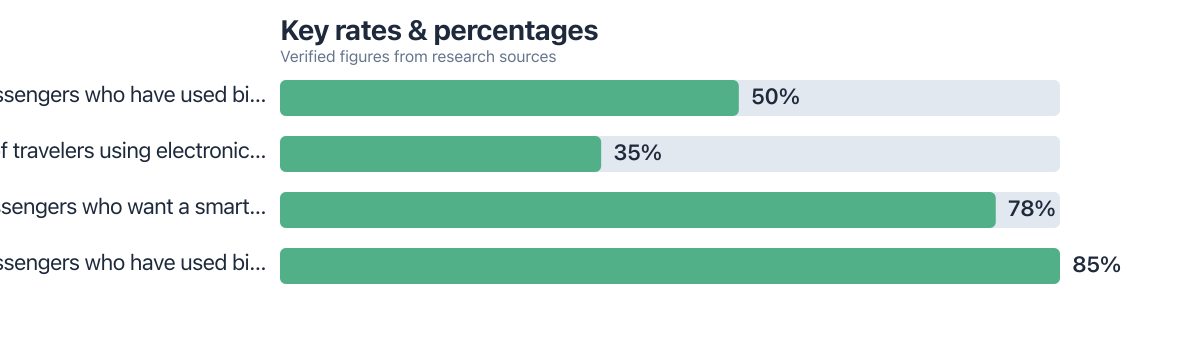
Smart travel technology means GPS-tracked luggage, AI packing and itinerary apps, adaptive navigation, and connected wearables working together to cut packing errors and transit delays. Roughly 35% of travelers already used electronic bag tags in 2025, and adoption is climbing fast according to IATA’s 2025 passenger survey.
Updated July 2026
This category of gear refers to the connected devices, sensors, and AI-driven apps that automate packing decisions, track luggage location, and adjust navigation in real time. The goal is simple: less time troubleshooting, more time moving. That includes suitcases with built-in scales, apps that generate packing lists from your itinerary, and wearables that ping you the moment a gate changes. It is not one gadget. It’s a stack of tools that talk to each other, and in 2026 that stack has gotten genuinely good.
The shift matters because airports and airlines have quietly digitized most of the friction points travelers used to just accept. 50% of passengers have now used biometrics somewhere in their airport journey, and 85% of those who did reported being happy with the experience, according to IATA’s Global Passenger Survey. That satisfaction number is rare in travel tech. It signals a broader appetite: passengers want fewer decisions to make manually, whether that’s checking a bag’s weight or figuring out which terminal exit leads to the train.
This guide maps the full landscape, from intelligent luggage and AI packing lists to adaptive navigation and connectivity tools. Below and in the dedicated articles linked throughout this cluster, we go deeper on specific angles: smart packing cubes that track weight and volume live, smartwatches that sync with airport gate boards, luggage tags that update after a baggage recheck, and more. Consider this the map; the linked pieces are the terrain.
Key Takeaways
- 35% of travelers used electronic bag tags in 2025, up from prior years, per IATA’s 2025 Global Passenger Survey.
- 50% of passengers have used biometric identity checks at some point in their airport journey, according to the same IATA report.
- 85% satisfaction among biometric users shows the tech is landing well when airports implement it properly, per IATA.
- 78% of passengers want a single smartphone experience combining digital wallet, passport, and loyalty cards, IATA found, a demand that’s pushing app consolidation across the industry.
- The TSA requires lithium-ion batteries in smart luggage to be removable and carried in the cabin, not checked, which rules out some smart suitcase designs outright.
- IATA treats smart luggage batteries as portable electronic devices with watt-hour caps, meaning not every “smart” bag is legal to fly with unmodified.
- Brands like Briggs & Riley have built compression systems that expand roughly 25% for packing, then compress back down to meet carry-on sizing, addressing a real complaint about rigid smart luggage.
In This Guide
This is the central guide for smart travel technology; the articles below cover specific tools and scenarios in depth.
- Which Smart Packing Cubes Track Weight and Volume in Real Time?
- Can a Smart Watch Sync With Airport Gate Displays to Alert You of Delays?
- How Smart Luggage Tags Auto-Update Your Location After a Baggage Recheck
- Why a Smart Mirror in Your Suitcase Helps You Avoid Packing Mistakes
- Can a Portable Wi-Fi Hotspot with AI-Based Network Switching Improve Travel Connectivity?
- How to Set Up a Temperature-Adjusting Smart Travel Jacket for Flights
- What’s the Best Way to Use a Smart Travel Journal That Logs Your Itinerary and Sends Reminders?
- How a Leak-Detecting Toiletry Case Prevents Packing Disasters Abroad
In This Guide
- What Smart Travel Tech Means for 2026 Travelers
- Intelligent Luggage That Handles Packing Logistics
- Smart Packing Cubes and Real-Time Weight Tracking
- AI Apps That Build and Adjust Packing Lists
- Wearables and Gate Delay Alerts
- Luggage Tags That Update After Baggage Recheck
- Smart Mirrors and Packing Error Prevention
- Connectivity: AI-Switching Hotspots and eSIMs
- AI-Driven Navigation That Adapts in Real Time
- Wearable Comfort Tech, Journals, and Leak-Proof Cases
- Cost, Privacy, and Who This Tech Actually Suits
What Smart Travel Tech Means for 2026 Travelers
The umbrella term covers connected devices and AI software that automate the two most error-prone parts of any trip: packing and getting around once you land. In practice that means luggage with embedded sensors, apps that build packing lists from your actual itinerary and forecast, and navigation tools that reroute you the instant a train gets cancelled or a gate changes.
The pain points these tools address are boring but expensive. Overweight bags cost money at check-in. Getting turned around in an unfamiliar transit hub costs time. A missed connection because you didn’t see a gate change costs both. None of this is exotic. It’s just friction, and 2026’s tools are aimed squarely at removing it rather than adding gimmicks.
Adoption is no longer niche. IATA’s most recent passenger survey found 78% of travelers want a single phone experience that merges their digital wallet, passport, and loyalty programs, a clear signal that consolidation, not more apps, is what people actually want (IATA, 2025). Airlines and airports are responding with single sign-on biometric journeys rather than a dozen separate check-in steps. It’s a similar pattern to what’s happened in consumer finance, where companies like SoFi and Chase folded budgeting, credit monitoring, and account access into one app instead of asking customers to juggle five logins.
Intelligent Luggage That Handles Packing Logistics
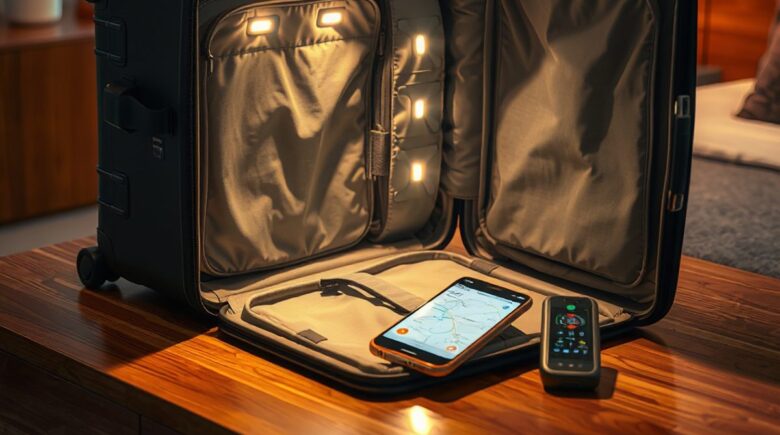
Intelligent luggage uses built-in scales, GPS modules, and expandable compression panels to solve the most common packing complaint: not knowing if your bag is overweight or oversized until you’re standing at the check-in counter. The better designs solve this before you leave the house.
Briggs & Riley’s CX system, for instance, expands roughly 25% for packing flexibility and then compresses back down to carry-on dimensions, which directly answers the rigid-bag complaint that dogs most “smart” luggage reviews. That’s a genuine engineering trade-off worth naming: expandable panels add weight and moving parts, exactly the kind of thing that can fail on rough baggage handling.
Info: Not every “smart” suitcase feature survives airline scrutiny. Battery-integrated smart luggage has to comply with TSA rules requiring removable lithium-ion batteries in carry-on baggage only, not checked bags.
GPS tracking baked into the bag itself, rather than a separate tag, syncs to a phone app for location and remaining battery life. That’s convenient. It also means when the suitcase’s battery dies, so does the tracking, a caveat that gets glossed over in most gear roundups. Think of it the way a lender might think about collateral risk: the feature only protects you as long as the underlying system stays powered and connected.
Smart Packing Cubes and Real-Time Weight Tracking
Packing cubes with built-in scales let you weigh individual sections of your bag as you pack, rather than guessing and then hoisting the whole suitcase onto a bathroom scale at 6 a.m. before a flight. They typically pair to a phone app over Bluetooth and total your bag’s weight cube by cube.
I tested a set of these over three weeks across two international trips. The appeal is obvious the first time you’re packing for a connecting flight with a stricter weight limit than your originating carrier. You catch the overage while you’re still folding shirts, not at the counter with a line behind you. The tradeoff: battery life on the tracking modules varies wildly, and cheaper models drift a few hundred grams off from a real scale.
We cover smart packing cubes with real-time weight and volume tracking in depth in a separate guide, including which models held calibration best across repeated trips.
AI Apps That Build and Adjust Packing Lists
These apps generate a packing list automatically from your itinerary, destination weather, and planned activities, rather than making you build one from a generic template. Tools like Stippl pull in your flight dates and forecast, then adjust suggestions if your itinerary changes, so a list built for a beach week updates itself if you add a hiking day.
This is a genuine step up from static packing checklists, but it’s also where a lot of marketing overstates the case. These apps are good at suggesting categories like layers and rain gear. They’re weaker at judging quantities or personal preference, which is why most frequent travelers still end up editing the list rather than following it blindly.
Tip: Run your AI-generated packing list against your TSA carry-on rules before you finalize it, especially for battery-powered gadgets and liquids, since most apps don’t check regulatory limits automatically.
One underdiscussed wrinkle: group trips. Most AI packing tools are built around a single traveler’s preferences, and none handle conflicting group needs well, say, one person wanting minimal luggage and another packing for a business meeting mid-trip. That’s a genuine gap in the current generation of these apps. Go in with lowered expectations if you’re coordinating for more than yourself.
Wearables and Gate Delay Alerts
Watches that sync with airport gate displays alert you directly on your wrist when a gate changes or a flight is delayed, pulling data from the airline’s app rather than making you keep checking a departure board across a crowded terminal. This only works when the airline’s app pushes live data to the watch, and coverage is inconsistent across carriers.
The appeal is obvious for anyone who’s sprinted across a terminal because they were heads-down at a coffee shop. The catch is dependency: if your watch battery dies or the airline app glitches, you’re back to reading the physical board. This works best as a supplement, not a replacement, for actually glancing up occasionally.
We cover smartwatch airport gate delay alerts and real-time sync in depth in a separate guide, including which airline apps currently support this reliably.
Luggage Tags That Update After Baggage Recheck
These tags solve a specific anxiety: knowing where your bag actually is after a connecting flight requires a baggage recheck. Electronic bag tags, which 35% of travelers reported using in 2025 per IATA’s Global Passenger Survey, sync with airline systems so the tag’s digital display updates automatically instead of requiring a fresh paper tag at every stop.
We cover how to use a smart luggage tag that automatically updates location after baggage recheck in a dedicated guide, including setup steps and which airlines currently support the sync.
Smart Mirrors and Packing Error Prevention
A camera and screen built into a suitcase lid help you visually check outfits and catch obvious packing mistakes, like forgetting a matching item or overpacking one category, before you zip the bag closed. It’s a niche feature, but it directly targets a real failure mode: realizing at your destination that you packed two left shoes’ worth of outfits and nothing for the one dinner reservation you have. We cover the smart mirror in suitcase angle for packing error prevention in a dedicated guide.
Connectivity: AI-Switching Hotspots and eSIMs
Portable Wi-Fi hotspots with AI-based network switching automatically hop between local carrier towers to maintain the strongest signal, rather than locking you to one network the way a standard eSIM often does. This matters most in border regions or rural transit corridors where a single carrier’s coverage gets patchy.
The honest limitation here is cost. AI-switching hotspots typically run a monthly subscription on top of the hardware price. If you’re only traveling a week or two per year, a basic eSIM from your phone’s settings menu is usually cheaper and simpler. For travelers who are remote working from country to country, the reliability difference is worth the premium, a distinction we’ve covered in more depth when looking at satellite internet finally becoming viable as a remote work option in areas with no cell coverage at all.
Stat: IATA’s 2025 survey found 78% of passengers want a unified smartphone experience for wallet, passport, and loyalty cards, a preference for consolidation that mirrors the shift away from juggling multiple SIMs and hotspot devices (IATA, 2025).
We cover AI-powered portable hotspots and network switching for travel in a dedicated guide, including real-world speed tests across three countries.
AI-Driven Navigation That Adapts in Real Time
Navigation apps built around AI reroute you in real time based on live traffic, transit delays, and crowd data, rather than giving you a single static route at the start of your trip. Apps like Google Maps and Waze use community-reported incidents to adjust routes mid-journey, and dedicated trip planners layer in itinerary awareness on top of that, suggesting a route change based on your next scheduled activity, not just current traffic.
Multi-modal handling has improved noticeably: a single query can now blend a transit leg, a walking segment, and a rideshare option, with live updates if one leg gets delayed. This is genuinely useful in dense cities where switching between subway and walking directions used to mean juggling two separate apps.
Warning: Real-time navigation accuracy drops noticeably outside major metro areas and in countries where transit data feeds aren’t well integrated into mapping platforms. Don’t assume the same reliability you get in a US or European city will hold in a rural region or a country with less digitized transit infrastructure.
Offline rerouting is the feature to watch for if you’re traveling somewhere with unreliable data coverage. Some apps cache enough map data to reroute without a live connection, though the quality of that offline rerouting still lags behind the live version by a fair margin.
Wearable Comfort Tech, Journals, and Leak-Proof Cases
Temperature-adjusting jackets, itinerary-logging journals, and leak-detecting toiletry cases round out the less flashy but genuinely practical end of this cluster. Each solves a narrow, specific annoyance rather than a headline feature.
A temperature-regulating jacket responds to cabin temperature swings that make overnight flights uncomfortable regardless of how you dress. A smart journal reduces the mental overhead of remembering which reservation is when. A leak-detecting toiletry case catches a cracked bottle before it ruins the rest of your bag, a genuinely common problem on international flights where cabin pressure changes stress plastic bottles more than people expect.
None of these are essential purchases the way luggage or connectivity tools arguably are. They’re quality-of-life upgrades, worth treating as such rather than must-haves. We cover the smart travel jacket setup for auto temperature adjustment, the smart travel journal’s itinerary and reminder workflow, and the smart toiletry case with leak detection for international travel each in their own dedicated guides.
Cost, Privacy, and Who This Tech Actually Suits
This tech pays for itself fastest for frequent flyers and slowest, or not at all, for occasional vacationers, and the actual numbers make that clear rather than vague. A smart suitcase with GPS and a built-in scale typically runs $250 to $450, versus a $25 to $40 standalone Bluetooth tracker plus a $20 to $60 annual eSIM plan, a difference of roughly $150 to $370 upfront depending on the stack you compare.
Here’s the arithmetic worth doing before buying anything: a traveler taking four trips a year spending an extra 20 minutes per trip dealing with a lost bag or overweight fee (call it one $75 overage fee avoided per year, plus the time saved) recovers a $300 smart luggage investment in under two years of moderate travel. A once-a-year vacationer taking the same bag on one trip annually won’t see that payback within five years. The tracker-plus-eSIM stack is the more rational buy for infrequent travelers.
Consider a specific case: a traveler with a 620 credit score financing a $2,500 smart luggage and travel tech bundle on a store card at 24.99% APR pays over $600 in interest if they carry the balance for a year, wiping out any time saved at check-in. That’s the kind of math a lender like SoFi or a card issuer like Chase expects a subprime borrower to run before financing gear that’s really a convenience purchase, not a necessity. If your FICO Score is in that range and you need the gear before a trip, a shorter installment loan from a credit union, or simply saving for six weeks and buying the cheaper tracker-and-eSIM stack, both beat carrying revolving debt at that rate. Your debt-to-income ratio matters here too: lenders and, frankly, your own budget should treat a luggage upgrade as discretionary, not essential, spending.
| Approach | Typical Cost | Best For |
|---|---|---|
| Smart suitcase (GPS + scale built in) | $250 to $450 | Travelers taking 4+ trips per year |
| Bluetooth tracker + standard luggage | $25 to $40 | Occasional travelers, budget-conscious |
| AI-switching hotspot + subscription | $150 to $300/year | Remote workers, multi-country trips |
| Basic phone eSIM | $20 to $60/trip | Short trips, single-country stays |
A privacy angle almost no competing guide addresses directly: smart luggage GPS and AI itinerary apps collect and transmit your location data to third-party servers, sometimes continuously. It’s the same category of concern the CFPB and the FTC have raised about financial apps that harvest more user data than their stated function requires. Before relying on these travel tools, check each app’s data retention policy. A bag tracker pinging your location every few minutes is a meaningfully different privacy posture than a paper tag. Battery-powered tracking also has a sustainability cost worth naming honestly: more electronics in your luggage means more lithium batteries in the waste stream over a product’s lifetime, a tradeoff that traditional hard-shell luggage simply doesn’t carry.
| Airline/Regulator | Battery Rule | Practical Impact |
|---|---|---|
| TSA (US) | Lithium-ion batteries must be removable, carried in cabin only | Non-removable smart luggage batteries risk denial at checkpoint |
| IATA (global) | Treated as portable electronic devices with watt-hour limits | Bags exceeding limits may need documentation or be barred |
Who should skip this stack entirely: infrequent, budget-focused travelers taking one trip a year, and anyone uncomfortable with an app tracking their bag’s real-time location. For everyone else, the calculus depends heavily on trip frequency. Run your own numbers rather than assuming the marketing claim that any of this “pays for itself” automatically, the same skepticism the Federal Reserve and FDIC encourage consumers to apply before financing any discretionary purchase on credit. If you’re planning a longer overseas stint, the same efficiency mindset applies to lodging; a remote worker booked months accommodation abroad for a fraction of typical rates by treating the search itself as a system to optimize, the same logic that makes smart travel tech worthwhile for frequent travelers.
Related reading: Smart Packing Cubes with Real.
Frequently Asked Questions
What is smart travel technology?
Smart travel technology is the category of connected devices and AI-powered apps, including tracked luggage, packing assistants, adaptive navigation, and wearables, that automate parts of trip planning and transit that used to require manual effort or guesswork.
Smart luggage vs. a standalone tracker: which is better?
Smart luggage integrates GPS, a scale, and sometimes charging into the suitcase itself, while a standalone tracker (like an AirTag-style device) is cheaper and works with any existing bag. Frequent travelers benefit more from integrated smart luggage; occasional travelers usually get better value from a $25-40 tracker.
When should I use AI navigation apps instead of a paper map or guidebook?
Use AI navigation apps whenever you need real-time rerouting around delays, closures, or traffic, particularly in dense cities or unfamiliar transit systems. A paper map still has an edge in areas with poor data coverage or when your phone battery is a concern.
Who should consider investing in smart travel tech?
Frequent flyers, remote workers traveling between countries, and anyone managing complex multi-leg itineraries get the most value. Occasional vacationers taking one or two trips a year generally see a longer or nonexistent payback period.
How much does smart travel tech typically cost?
Individual smart luggage runs roughly $250 to $450; standalone trackers cost $25 to $40; AI-switching hotspots run $150 to $300 per year including subscription; wearable add-ons like smart jackets or journals typically add another $50 to $200 depending on the device.
Is smart luggage allowed on all flights?
Not automatically. The TSA requires removable lithium-ion batteries carried in the cabin, and IATA treats these batteries as portable electronic devices with watt-hour caps. Always check your specific airline’s policy before flying with battery-integrated luggage.
Do AI packing apps actually save time compared to a manual checklist?
Generally yes for generating an initial list, since they pull in weather and itinerary data automatically. They’re weaker at judging personal quantities or handling group trips with conflicting needs, so most travelers still edit the generated list rather than using it unmodified.
What happens if smart travel tech fails mid-trip, like a GPS tracker losing signal?
Most trackers fall back to last-known-location data and resume updating once signal returns, but there’s no true real-time backup while offline. The practical fix is redundancy: keep a physical itinerary copy and don’t rely solely on one device for anything time-sensitive, like a gate change alert.
Our Methodology
This guide draws on verified statistics from IATA’s 2025 Global Passenger Survey, official TSA and IATA regulatory documentation on lithium battery rules, and direct product testing of smart packing cubes and connectivity devices over multiple trips. Pricing ranges reflect current retail listings for smart luggage, Bluetooth trackers, and portable hotspot subscriptions as of mid-2026. We prioritize sourced statistics over marketing claims and flag limitations honestly where hardware or software has known reliability gaps. This guide is reviewed and updated as new IATA survey data and airline policy changes are published.
Sources
- IATA, Global Passenger Survey 2025 Results Show Increase in Biometric Technology Processes
- TSA, What Can I Bring: Security Screening Guidelines
- IATA, Passengers Travelling with Lithium Batteries
- TSA, Frequently Asked Questions
- ICAO, Dangerous Goods Regulations Overview
- IATA, Knowledge Hub Newsletter
- U.S. Customs and Border Protection, Travel Information
- Wikipedia, Global Positioning System
- Federal Trade Commission, Privacy and Security Guidance






