Fact-checked by the ZeroinDaily editorial team
Quick Answer
For most consumers, buying a flagship lithium-ion smartphone or laptop now is the right call. Mainstream solid-state battery devices are realistically 4–6 years away at non-premium pricing. EV buyers who can wait until 2028–2030 may benefit more from the transition, but even there, the fuel and maintenance savings from a 2025–2026 purchase typically outweigh the cost of waiting for first-generation solid-state models.
Your phone is dead at 34% battery. Again. You plugged it in last night, it charged to 100%, and somehow by noon it’s gasping for power. If you’ve ever cursed your device mid-commute or watched a laptop die during a crucial meeting, you already understand why solid-state battery devices are generating some of the most intense excitement, and hype, in consumer technology right now.
Here’s the scale of the problem with current lithium-ion technology: the global rechargeable battery market was valued at over $44 billion in 2023, yet degradation rates mean the average smartphone battery retains only about 80% of its original capacity after 500 full charge cycles, roughly two years of typical use. Laptop batteries fare worse, with thermal runaway events causing over 25,000 fires annually in the United States alone according to data tracked by the Consumer Product Safety Commission. Consumers are locked into a two-to-three-year planned obsolescence cycle partly driven by battery chemistry limitations.
This guide cuts through the marketing noise and gives you a clear, data-backed picture of where solid-state battery technology actually stands today, what it means for the devices you buy in 2025 and 2026, which manufacturers are closest to shipping real products, and, critically, whether you should hold off on your next smartphone, laptop, or EV purchase. You’ll leave with a concrete action plan for making the smartest buying decision based on your timeline and budget.
Key Takeaways
- Solid-state batteries can theoretically deliver 2-10x the energy density of current lithium-ion cells, translating to smartphones that last 3+ days on a single charge.
- The global solid-state battery market is projected to grow from $560 million in 2023 to over $8 billion by 2031, a compound annual growth rate of approximately 39%.
- Toyota has publicly committed to launching a solid-state battery EV by 2027-2028, with an estimated range of 745 miles per charge, nearly double today’s best electric vehicles.
- Current manufacturing costs for solid-state cells are estimated at $800-$1,200 per kWh, compared to roughly $130-$150 per kWh for mature lithium-ion production.
- Samsung, Solid Power, and QuantumScape have all filed patents or announced consumer device timelines between 2025 and 2028, but mass-market pricing remains a major barrier.
- Consumers who purchase a flagship lithium-ion device in 2025 can realistically expect solid-state consumer electronics to command a 30-50% price premium for at least 3-4 years after launch.
In This Guide
- What Is a Solid-State Battery, Exactly?
- The Real Limitations of Lithium-Ion Technology
- Key Advantages of Solid-State Battery Devices
- Why Solid-State Batteries Are So Hard to Make
- Who Is Leading the Solid-State Battery Race?
- Realistic Timeline for Consumer Solid-State Battery Devices
- EVs vs. Consumer Electronics: Who Gets Solid-State First?
- Cost Analysis: What Will You Actually Pay?
- Should You Buy Now or Wait?
- Environmental and Safety Impact of the Switch
What Is a Solid-State Battery, Exactly?
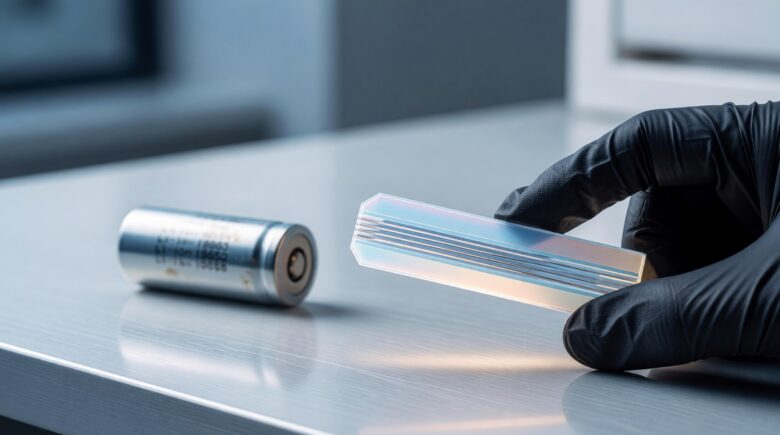
A solid-state battery replaces the liquid or gel electrolyte found in conventional lithium-ion cells with a solid material, typically ceramic, glass, or a polymer compound. This single structural change has cascading effects on safety, energy density, charge speed, and longevity.
In a standard lithium-ion battery, lithium ions travel through a liquid electrolyte between the anode and cathode during charging and discharging. That liquid is flammable, degrades over time, and imposes physical limits on how densely energy can be packed. Swap it for a solid, and most of those constraints shift dramatically.
The Three Main Solid Electrolyte Types
Not all solid-state batteries are the same. Researchers and manufacturers are pursuing three primary electrolyte approaches, each with distinct trade-offs.
| Electrolyte Type | Ionic Conductivity | Key Advantage | Key Challenge |
|---|---|---|---|
| Oxide Ceramic | Medium | High chemical stability | Brittle, hard to manufacture thin |
| Sulfide-Based | Very High | Best ionic conductivity, compatible with Li-metal anodes | Reacts with moisture, toxic H2S gas risk |
| Polymer | Low-Medium | Flexible, easier to manufacture | Requires elevated temperature to function well |
The sulfide-based approach is currently the frontrunner for high-performance applications like EVs, while polymer electrolytes are gaining ground in wearables and smaller consumer electronics where flexibility matters more than peak energy density.
How Solid-State Differs at the Atomic Level
The anode is where solid-state technology makes its most dramatic leap. Conventional lithium-ion batteries use graphite anodes, which physically expand and contract with each charge cycle, a process that causes microscopic cracking and gradual capacity loss. Solid-state designs can use a pure lithium-metal anode, which holds roughly 10 times more lithium per unit volume than graphite. That’s not a typo: 10x the theoretical storage capacity in the same footprint.
Pure lithium-metal anodes have a theoretical specific capacity of 3,860 mAh/g, compared to graphite’s 372 mAh/g, more than 10 times greater energy storage potential per gram of material.
The practical challenge is that lithium metal is extremely reactive. In liquid electrolyte systems, it causes dangerous dendrite growth, needle-like lithium structures that can pierce the separator and cause short circuits or fires. A solid electrolyte physically suppresses dendrite formation, making the lithium-metal anode viable for the first time at commercial scale.
The Real Limitations of Lithium-Ion Technology
Lithium-ion batteries have powered the mobile revolution since Sony commercialized them in 1991. But after more than three decades of incremental improvements, the technology is approaching fundamental physical limits. Energy density gains have slowed to roughly 3-5% per year over the past decade.
The performance ceiling carries genuine safety consequences. Thermal runaway, where a damaged or overcharged cell generates heat faster than it can dissipate it, causes spectacular failures. The FAA banned certain Samsung Galaxy Note 7 devices from all U.S. flights in 2016 after 35 reported fires, a single product recall that cost Samsung an estimated $5 billion.
Capacity Degradation: The Real Cost of Ownership
Most consumers don’t realize how aggressively lithium-ion batteries degrade. Apple’s official battery information page acknowledges that iPhone batteries are designed to retain 80% of their original capacity at 500 complete charge cycles. For a user who charges daily, that’s roughly 18 months before noticeable degradation begins.
Battery replacement costs add up. An out-of-warranty iPhone battery replacement costs $99. A laptop battery swap ranges from $80 to $200 depending on the model. Multiply that across a household with 4-6 devices and you’re looking at $300-$800 in battery-related costs every two to three years.
Americans discard approximately 180,000 tons of lithium-ion batteries annually. Less than 5% are formally recycled, according to data from the Environmental Protection Agency.
Temperature Sensitivity and the Cold Weather Problem
Lithium-ion performance degrades sharply in cold conditions. At 32°F (0°C), a lithium-ion battery can lose 20-40% of its usable capacity. At -4°F (-20°C), some cells are essentially non-functional. If you’ve ever watched your phone battery percentage plummet on a winter day, that’s liquid electrolyte viscosity at work.
Ceramic and sulfide-type solid-state electrolytes are far less temperature-sensitive. Some solid-state designs maintain over 90% capacity at temperatures where lithium-ion cells would be effectively dead, a critical advantage for outdoor devices, drones, and cold-climate EV users.
Key Advantages of Solid-State Battery Devices
The performance gap between solid-state and lithium-ion is not marginal. In laboratory conditions, solid-state cells have demonstrated energy densities of 500-1,000 Wh/kg, compared to 150-300 Wh/kg for the best commercial lithium-ion cells. That’s a 3-4x real-world improvement once engineering constraints are accounted for.
For a flagship smartphone, this could translate from a 4,000 mAh battery today to an effective 12,000-16,000 mAh equivalent, meaning three to four days of typical use between charges. For laptops, it could mean all-day-and-night battery life in a chassis thinner than anything available today.
Charge Speed: The Solid-State Promise
Theoretically, solid-state batteries can support much faster charging without the degradation penalty that plagues lithium-ion cells. Fast charging in current devices stresses the liquid electrolyte and accelerates dendrite formation, which is why phone manufacturers recommend avoiding frequent fast charging. Solid-state designs can sustain high charge rates without the same structural damage.
QuantumScape, one of the most closely watched solid-state startups, has published data showing their cells can charge from 10% to 80% in approximately 15 minutes across more than 1,000 charge cycles with minimal capacity loss. That’s a charge speed and longevity combination that no commercial lithium-ion product currently achieves simultaneously.
Longevity: The End of the Two-Year Replacement Cycle?
Solid-state cells have demonstrated cycle life of 5,000-10,000 full charge cycles in laboratory settings, 10 to 20 times longer than a typical lithium-ion cell. If that performance translates to consumer devices, the smartphone replacement cycle driven by battery degradation could extend from two years to a decade or more.
This has profound implications for device economics and sustainability. It also raises a pointed question: if solid-state battery devices last a decade, will manufacturers adjust their software support cycles to match? The answer from Apple and Google is unclear, but it’s a conversation the industry will be forced to have.
QuantumScape’s solid-state cells completed 800 charge cycles in testing while retaining over 80% capacity, but under conditions far more demanding than typical lithium-ion, including 4C fast charging rates that would destroy most consumer batteries.
Why Solid-State Batteries Are So Hard to Make
If solid-state batteries are so clearly superior, why aren’t they already in your phone? The honest answer is that building them at scale is extraordinarily difficult, and the gap between laboratory demonstration and factory production is larger than almost any other manufacturing challenge in modern electronics.
The core problem is the solid electrolyte layer. To maximize energy density, it needs to be microscopically thin, ideally under 10 microns, roughly one-tenth the diameter of a human hair. Producing a defect-free layer at that thickness, consistently, across millions of cells, is a manufacturing challenge that has eluded every major attempt at mass production so far.
The Interface Problem
Even when the electrolyte layer is successfully produced, maintaining clean contact between it and the electrodes is profoundly difficult. In liquid electrolyte systems, the liquid naturally conforms to the electrode surface. Solid-to-solid contact is inherently imperfect, creating microscopic gaps that increase resistance and reduce performance.
Researchers at Stanford and MIT have made progress using pressure-assisted cell designs and novel surface coatings, but translating these lab solutions to high-volume manufacturing remains a major bottleneck. The precision required rivals semiconductor fabrication, which is why many analysts draw comparisons to the early years of chip manufacturing in the 1970s.
Several companies have announced “solid-state battery breakthroughs” that later proved to be semi-solid or solid-liquid hybrid designs. These offer some benefits but don’t deliver the full safety and energy density improvements of true all-solid-state cells. Read press releases carefully.
Scaling Production: The $1 Billion Factory Problem
Building a gigafactory capable of producing solid-state batteries at cost-competitive scale requires fundamentally different equipment than existing lithium-ion plants. A typical lithium-ion gigafactory costs $1-2 billion to build. Solid-state production lines, which require ultra-dry rooms, precision deposition equipment, and new assembly processes, could cost 2-3x more per unit of capacity.
This capital intensity explains why even well-funded startups like Solid Power and QuantumScape are years away from commercial-scale production. It also explains why legacy battery manufacturers like Panasonic and CATL are moving cautiously, they have billions invested in existing lithium-ion infrastructure that solid-state would make obsolete.

Who Is Leading the Solid-State Battery Race?
The competitive field for solid-state battery development spans startups, legacy manufacturers, and Big Tech, each pursuing different chemistries and target applications. Understanding who is ahead matters if you’re trying to assess realistic timelines for consumer products.
| Company | Target Application | Key Milestone | Projected Commercial Date |
|---|---|---|---|
| Toyota | EVs | Prototype cells with 745-mile range demonstrated | 2027-2028 |
| QuantumScape | EVs (Volkswagen partnership) | 1,000+ cycle data published | 2026-2027 pilot, 2028 mass market |
| Solid Power | EVs (BMW, Ford) | Pilot line cells delivered to OEMs | 2026 pilot production |
| Samsung SDI | Consumer electronics + EVs | All-solid-state prototype announced 2023 | 2027 small-scale, 2030 mass market |
| Panasonic | EVs (Tesla supply) | Solid-state R&D lab operational | 2030 targeted |
| Apple (rumored) | iPhone/iPad | Battery technology patents filed 2023-2024 | Unknown, speculation only |
Toyota’s All-In Strategy
Toyota has made solid-state batteries a cornerstone of its EV strategy. The Japanese automaker claims to have solved a key durability problem, solid electrolyte cracking under repeated expansion and contraction, using a proprietary sulfide-based chemistry. Toyota is targeting a 10-minute charge to 80% and a 1,200km (745 miles) range, which would make their first solid-state EV the longest-range battery vehicle ever sold.
Toyota is investing over ¥1.5 trillion (approximately $10 billion) in battery technology through 2030, with solid-state as the centerpiece. Whether their timeline holds is another question, Toyota has pushed back solid-state commercialization dates multiple times since 2017.
QuantumScape and the Volkswagen Connection
QuantumScape, a Volkswagen-backed startup spun out of Stanford University research, is perhaps the most technically transparent solid-state company. They’ve published peer-reviewed data on their cells and have a supply deal with Volkswagen worth up to $100 million. Their lithium-metal, oxide ceramic separator approach is considered one of the most promising for automotive applications.
“We have demonstrated a cell that can charge to 80% in 15 minutes and retain more than 80% capacity after 1,000 cycles. That’s better than what most lithium-ion cells deliver after 300 cycles.”
The caveat: QuantumScape’s published results are from single-layer pouch cells under laboratory conditions. Scaling to multi-layer cells, required for real-world energy capacity, has proven challenging. Their own filings indicate commercial automotive cells require 40+ layers, and yield rates at that scale remain unpublished.
Realistic Timeline for Consumer Solid-State Battery Devices
The gap between “we demonstrated this in a lab” and “you can buy this at Best Buy” is typically 5-10 years in battery technology. History supports skepticism: lithium-iron-phosphate (LFP) chemistry was discovered in 1996 and didn’t appear in mainstream consumer products until the mid-2010s.
With that historical context, here’s the most realistic timeline for when solid-state battery devices will reach different market segments, based on current manufacturing readiness and announced commercial commitments.
| Year Range | Expected Development Stage | Consumer Impact |
|---|---|---|
| 2025-2026 | Pilot production; limited EV integration; wearable prototypes | No mainstream consumer products yet |
| 2027-2028 | First commercial EV models; premium smartphone experimentation | Early adopter EV buyers; no mass-market phones |
| 2029-2031 | Smartphone and laptop integration begins at premium tier | Solid-state flagship phones at 30-50% premium |
| 2032+ | Cost parity with lithium-ion approaches; broader adoption | Mainstream availability; prices normalize |
Wearables: The Likely First Consumer Category
Wearables, smartwatches, fitness trackers, hearing aids, AR glasses, are actually the most likely first consumer category for solid-state cells. They require tiny, thin batteries where the manufacturing challenges are less severe, the premium pricing is more tolerable, and the safety benefits are most visible.
Murata and TDK have both shipped small-format solid-state cells for IoT devices and medical wearables. These are not high-energy-density consumer batteries, but they represent true commercial solid-state manufacturing at small scale. The technology is real, it’s the economics and scale that haven’t arrived yet for mainstream solid-state battery devices.
If you’re evaluating a new wearable device purchase in 2025-2026, ask specifically whether it uses a solid-state cell. Some premium hearing aids and medical-grade wearables already do, and the battery longevity difference is measurable.
EVs vs. Consumer Electronics: Who Gets Solid-State First?
Counterintuitively, electric vehicles, not smartphones, are likely to be the first mass-market application for solid-state batteries. This surprises many consumers who assume smaller devices would be easier to convert first.
The reason is economics. EV manufacturers can justify a significant per-kWh cost premium if it delivers a competitive range and charging advantage. A consumer is willing to pay $5,000-$10,000 more for an EV that charges in 10 minutes and goes 700 miles. Paying $300 more for a smartphone with better battery life is a harder sell at mass-market scale.
The iPhone Solid-State Question
Apple holds multiple solid-state battery-related patents, and analysts have speculated about solid-state integration in iPhones since 2021. The honest assessment: Apple is doing the research, but there is no confirmed timeline for a solid-state iPhone. The company’s supply chain constraints, primarily its reliance on external battery suppliers, make a 2026 or 2027 solid-state iPhone highly unlikely.
Samsung is more explicit. Samsung SDI, the group’s battery division, has stated a goal of shipping solid-state cells for consumer electronics by 2027, with mass production targeting 2030. Even Samsung’s aggressive timeline represents a small-scale, premium-tier introduction rather than across-the-board replacement of lithium-ion in the Galaxy lineup.
The global EV solid-state battery market alone is projected to reach $6.3 billion by 2030, while the consumer electronics segment is expected to reach just $1.4 billion in the same period, reflecting where investment and production priority will flow first.
What This Means for Your Next Car Purchase
If you’re considering an EV purchase in 2025, the solid-state calculus is more relevant than for a phone. A 2025 EV purchase locks you into lithium-ion technology for 8-12 years. The first solid-state EVs may reach market by 2027-2028, but at prices significantly higher than comparable lithium-ion models. The sweet spot for mainstream solid-state EV pricing is more likely 2030-2032.
The decision framework is similar to choosing between buying a flat-screen TV in 2003 versus waiting. Early adopters paid $5,000-$10,000 for 42-inch plasmas. By 2008, 50-inch LEDs cost under $1,500. The technology trajectory for solid-state batteries suggests a similar cost compression, but probably over a longer timeframe. For more on how emerging technology intersects with financial planning, the discussion of AI-powered investment platforms offers useful context on evaluating when to adopt emerging tech for financial decisions.

Cost Analysis: What Will You Actually Pay?
The most important practical question for consumers is how much more solid-state devices will cost, and for how long the premium will persist. That nearly everyone in the field agrees solid-state is technically superior doesn’t change the pricing reality consumers will face at retail.
Current production cost estimates for solid-state cells range from $800 to $1,200 per kWh in pilot production. Lithium-ion cells from mature manufacturers like CATL and Panasonic are currently produced at approximately $130-$150 per kWh. That’s a 6-8x cost differential that doesn’t disappear overnight regardless of how much investment flows into the sector.
The Learning Curve Projection
Battery manufacturing follows a well-documented learning curve: costs typically drop 20-30% for every doubling of cumulative production volume. Lithium-ion batteries have benefited from this curve for 30+ years. Solid-state manufacturing is starting from scratch, meaning the first several years of production will carry enormous cost premiums.
BloombergNEF projects solid-state battery costs could reach $200-$250 per kWh by 2030, still 50-70% above current lithium-ion pricing. True cost parity is most credibly projected for the mid-2030s. For consumers, this means solid-state premium devices will carry a 30-50% price premium for at least the first five years of mainstream availability.
Be skeptical of companies claiming imminent solid-state production at lithium-ion price parity., no manufacturer has published verified cost data showing solid-state cells within 2x of lithium-ion production costs at any meaningful volume. Such claims often involve semi-solid or hybrid chemistries.
Hidden Value: The Total Cost of Ownership Argument
A solid-state battery device may cost 30-50% more at point of sale, but could eliminate 2-3 battery replacement cycles over its lifetime. At $99-$200 per replacement, that’s $200-$600 in avoided costs over 10 years, partially offsetting the initial premium.
Longer device life also means delayed repurchase. A smartphone that maintains 95% battery capacity for seven years instead of two pushes back the upgrade cycle significantly. For budget-conscious consumers, this could represent meaningful savings over time. Tools for tracking these kinds of technology investment decisions are covered in our guide to best expense tracking apps for 2026.
Should You Buy Now or Wait?
This is the central question, and the honest answer depends entirely on your device type, budget, and timeline. There is no universal right answer, but the data points clearly in certain directions for different consumer situations.
For smartphones and laptops in 2025: buy now if your current device needs replacement. Mainstream solid-state phones are at minimum 4-5 years away at non-premium pricing. Waiting means using an inadequate device for years to save money you’ll still spend, just later, and at a higher price point for the privilege of being early.
The Case for Buying a Lithium-Ion Device Now
Current flagship smartphones and laptops are genuinely excellent. The iPhone 16 Pro and Samsung Galaxy S25 Ultra both use advanced lithium-ion cells with sophisticated battery management systems that meaningfully extend useful life. A well-maintained 2025 flagship should remain capable for 3-4 years, which is right at the edge of when first-generation solid-state consumer devices might appear at premium pricing.
For laptops specifically, manufacturers like Apple (M-series chips) and Qualcomm (Snapdragon X) have made such dramatic efficiency improvements in their processors that battery life has improved substantially even without changing battery chemistry. A 2025 MacBook Pro can achieve 18-22 hours of real-world use, a figure that would have seemed impossible five years ago.
The Case for Waiting (In Specific Scenarios)
There are scenarios where waiting makes strategic sense. If you’re considering an EV purchase and can reasonably wait until 2027-2029, the solid-state value proposition is significantly stronger in that category. The range and charging speed improvements for EVs are more transformative than for smartphones, and the price delta is proportionally smaller relative to total vehicle cost.
Similarly, if you’re a professional who relies on a laptop for 8-10 hours of intensive work and your current machine is adequate, waiting for 2028-2029 laptop releases, which may incorporate first-generation solid-state cells, could offer a genuinely step-change improvement. The key phrase is “if your current machine is adequate.” Don’t suffer for years on a dying device in hopes of marginal future gains.
Samsung’s Galaxy Ring, launched in 2024, uses a more advanced cell chemistry than standard Galaxy phones, demonstrating how wearables are already serving as a testing ground for next-generation battery technology before smartphone integration.

Environmental and Safety Impact of the Switch
Beyond raw performance metrics, solid-state batteries offer meaningful environmental and safety advantages that are increasingly relevant to regulators, insurers, and consumers who factor sustainability into purchasing decisions.
The elimination of liquid electrolyte removes one of the primary fire hazards in current batteries. Aviation authorities, including the FAA and EASA, have imposed increasingly strict regulations on lithium-ion battery shipment because of thermal runaway risk. Solid-state cells significantly reduce, though don’t eliminate, this risk, which has implications for product insurance, shipping costs, and device design.
Reduced Cobalt Dependency
Many solid-state designs use lithium-metal anodes instead of graphite, and some cathode formulations that reduce or eliminate cobalt, a mineral with well-documented supply chain ethics concerns, particularly around artisanal mining in the Democratic Republic of Congo. Reducing cobalt dependency is both an ethical and a geopolitical supply chain advantage.
CATL’s sodium-ion batteries, while not solid-state, have demonstrated that alternative chemistries can dramatically reduce precious mineral dependency. The solid-state transition offers an opportunity to redesign battery supply chains from the ground up with more ethical and geographically diversified sourcing.
End-of-Life Recycling Considerations
Solid-state batteries present new recycling challenges. The ceramic and sulfide materials used in solid electrolytes are different from existing lithium-ion recycling infrastructure. The U.S. Department of Energy’s Battery Recycling Prize has specifically funded research into solid-state recycling processes, recognizing that the infrastructure doesn’t yet exist at scale.
Counterbalancing this concern: if solid-state battery devices genuinely last 10+ years instead of 2-3, the total volume of batteries entering the waste stream could decrease significantly even with more complex recycling requirements. Longevity may be the biggest environmental win of all. This intersection of technology and sustainability is also reshaping financial services, much like the developments described in our overview of digital banking trends that are changing money management.
“The environmental benefits of solid-state aren’t just about eliminating flammable electrolytes. If these batteries genuinely last a decade, we’re talking about a 70-80% reduction in battery waste volume from consumer devices alone.”
The U.S. Department of Energy estimates that widespread adoption of solid-state batteries in EVs alone could reduce lithium-ion battery pack weight by 30-40% and increase energy density enough to add 200+ miles of range to current designs without increasing vehicle weight.
For consumers who integrate technology decisions into broader financial planning, similar to the way AI tools are reshaping business efficiency described in our coverage of AI tools saving small businesses time, understanding the total cost of ownership for solid-state devices is increasingly relevant to household budget planning.
Real-World Example: Marcus and the EV Timing Decision
Marcus, a 38-year-old software engineer in Austin, Texas, was ready to buy his first EV in early 2024. His daily commute was 45 miles round trip, and he’d budgeted $55,000 for a vehicle. The frontrunner was a Tesla Model Y Long Range at $52,990, rated at 330 miles of EPA-estimated range. Marcus had also read about Toyota’s solid-state battery announcements and wanted to know if waiting two to three years made financial sense.
Running the numbers: Marcus calculated his current gas spending at approximately $2,400 per year. Switching to the Model Y would save roughly $1,800 annually in fuel costs after accounting for home charging electricity. Over a projected 3-year wait for solid-state EVs, that’s $5,400 in foregone savings, plus the intangible benefit of 3 years of reduced emissions and maintenance costs. On the other side of the ledger: Toyota’s first solid-state EV is rumored to carry a $20,000-$30,000 premium over comparable lithium-ion models at launch, and initial production would be limited.
Marcus decided to purchase the Model Y in April 2024. His reasoning: $5,400 in 3-year savings, combined with the high probability that first-generation solid-state EVs would cost $70,000-$80,000 minimum, made the immediate purchase clearly superior. He plans to reassess the market in 2030, when solid-state EV pricing should be significantly more competitive and the technology more mature.
The lesson is generalizable. For smartphones, the gap between “solid-state available” and “solid-state affordable” will span several years. Marcus’s framework, calculate the cost of waiting against the likely premium for early access, is the right model for any consumer evaluating solid-state battery devices against today’s best lithium-ion options.
Your Action Plan
-
Audit your current device battery health right now
On iPhone, go to Settings > Battery > Battery Health and Charging. On Android, use AccuBattery or check manufacturer diagnostics. On Mac, hold Option and click the battery icon. If your device is above 80% capacity, you likely have 12-18 months before degradation becomes noticeable, which changes your replacement calculus significantly.
-
Identify which device category matters most to your timeline
Rank your devices by how much battery performance affects your daily life. Most people find smartphones first, laptops second, wearables third. EV owners should treat the vehicle as a separate category with a completely different solid-state timeline (2027-2030 for realistic commercial availability at non-luxury pricing).
-
Set a realistic “solid-state availability” benchmark for your category
Use the timeline table in this article. For mainstream smartphones, pencil in 2029-2031 for non-premium solid-state options. For EVs, 2028-2030. For wearables, watch for announcements in 2026-2027. Do not make current purchase decisions based on launch announcements, wait for actual retail availability data.
-
If you need a new device now, maximize your lithium-ion device’s lifespan
Keep your battery charged between 20% and 80% when possible. Avoid leaving devices at 100% overnight (use optimized charging features). Avoid extreme temperatures, both heat and cold accelerate degradation. These habits can extend your battery’s useful life by 30-40%, buying you more time before the solid-state transition makes practical sense.
-
Watch for semi-solid hybrid devices as a middle-ground option
Companies like SES AI and ProLogium are shipping semi-solid batteries, hybrid designs that offer improved safety and modest performance gains over pure lithium-ion without the full manufacturing complexity of all-solid-state. These may appear in premium laptops and EVs by 2026-2027 and could represent a worthwhile intermediate upgrade if you need a device during that window.
-
For EV buyers: run a 3-year cost-of-waiting analysis
Calculate your current annual fuel and maintenance costs. Multiply by 3. Compare that figure against the estimated $15,000-$25,000 premium that first-generation solid-state EVs are likely to carry at launch. In most cases, purchasing a high-quality lithium-ion EV now saves money, unless you can genuinely wait until 2030+ for pricing to normalize.
-
Follow the right sources for accurate solid-state progress updates
Bookmark MIT Technology Review’s energy section, BloombergNEF’s battery cost tracker, and Argonne National Laboratory’s BatPaC model publications. These sources publish verified, peer-reviewed data rather than manufacturer press releases. Set a quarterly reminder to check for manufacturing cost updates, that metric is your most reliable signal of when mass-market solid-state battery devices are genuinely approaching.
-
Factor battery technology into your total cost of device ownership budgeting
Include projected battery replacement costs when comparing device options. A device at $200 less that requires a $99 battery replacement after 18 months isn’t actually cheaper. Use a 3-year total cost of ownership model, purchase price plus expected maintenance plus opportunity cost of performance degradation, for all major device purchases. Pairing this with smart money management tools, like those covered in our guide to best budgeting apps for 2026, helps you make technology spending decisions within a broader financial plan.
Frequently Asked Questions
Are solid-state batteries available in any consumer products today?
True all-solid-state batteries are available in a very limited number of consumer products, primarily in the medical device and hearing aid space. Companies like Murata and TDK manufacture small-format solid-state cells for IoT and medical wearables. However, these are not the high-energy-density solid-state batteries that generate consumer excitement, they use different chemistries and are optimized for small size and safety rather than maximum energy storage. No mainstream smartphone, laptop, or EV currently uses a true all-solid-state battery.
Is it safe to buy a new lithium-ion phone in 2025 given solid-state is coming?
Absolutely. Current flagship lithium-ion smartphones are excellent products with sophisticated battery management systems that meaningfully reduce degradation. The 2025 iPhone 16 series and Samsung Galaxy S25 series represent the best lithium-ion technology available. Given that mainstream solid-state consumer devices are realistically 4-6 years away at non-premium pricing, replacing a failing device now with a quality lithium-ion product is a sound decision for the vast majority of consumers.
What is the biggest technical barrier preventing solid-state batteries from mass production?
The most significant barrier is manufacturing the solid electrolyte layer at the required thinness (under 10 microns) with near-zero defect rates, consistently, at high volume. A single pinhole defect in the solid electrolyte layer can cause a short circuit and cell failure. Secondary challenges include maintaining solid-to-solid interface contact between the electrolyte and electrodes across thousands of charge cycles, and doing all of this at a cost that approaches current lithium-ion manufacturing economics.
Will solid-state batteries explode or catch fire?
Solid-state batteries are substantially safer than lithium-ion in terms of fire risk. The elimination of flammable liquid electrolyte removes the primary fuel source for thermal runaway events. However, “substantially safer” does not mean “impossible to fail.” Lithium-metal anodes are still highly reactive materials, and catastrophic failure under extreme abuse conditions remains possible. The solid-state advantage is most significant in scenarios involving physical damage, overcharging, or manufacturing defects, all common causes of current lithium-ion fires.
How much longer will solid-state batteries last compared to lithium-ion?
Laboratory data suggests solid-state cells can sustain 5,000-10,000 charge cycles while maintaining over 80% capacity, compared to approximately 300-500 cycles for typical lithium-ion consumer cells. In practical terms, a smartphone with a solid-state battery charged daily could theoretically maintain its original performance for 15-25 years. Real-world performance will likely be lower than laboratory ideals, but even at half the theoretical cycle life, solid-state would represent a 5-7x improvement over current technology.
Will solid-state batteries make my device lighter?
Potentially, yes, but the relationship is complex. Higher energy density means you could achieve the same battery capacity with less material weight. However, manufacturers may choose to keep battery size (and device weight) the same while dramatically increasing capacity, rather than making thinner, lighter devices. Apple’s design choices with the MacBook Pro suggest they would likely use solid-state to improve performance (more battery capacity in the same space) rather than purely reduce weight.
Which company is most likely to ship the first mass-market solid-state battery device?
Toyota is the most credible candidate for first mass-market commercial solid-state battery products, targeting an EV launch in 2027-2028. For consumer electronics, Samsung SDI is the most explicit about timelines, targeting small-scale solid-state consumer battery production by 2027 with broader deployment around 2030. However, announced timelines in the battery industry have been consistently optimistic, real commercial launches tend to run 2-3 years later than initial projections.
Do solid-state batteries charge faster than lithium-ion?
In theory, yes, and significantly so. QuantumScape’s published data demonstrates 10-15 minute charging to 80% across 1,000+ cycles without the degradation penalty that causes lithium-ion batteries to slow charge rates over time. The mechanism is that solid electrolytes can support higher ionic current without the dendrite formation and electrolyte decomposition that limits fast charging in liquid systems. First-generation commercial cells may not achieve peak theoretical charge speeds due to engineering trade-offs, but even 20-30 minute full charges would represent a dramatic improvement over today’s best lithium-ion devices.
Should I wait to buy an electric vehicle because of solid-state batteries?
For most buyers, no. The economics of waiting, especially the fuel and maintenance savings foregone, typically outweigh the benefits of first-generation solid-state EVs, which will carry significant price premiums. If you can wait until approximately 2030 without financial hardship, the solid-state EV value proposition will be substantially better than what launches in 2027-2028. But if you need a vehicle or want to transition from gas now, purchasing a quality lithium-ion EV in 2025-2026 is a defensible and financially sound choice for most households.
How will solid-state battery devices affect the used device market?
The impact on the used device market could be significant and counter-intuitive. If solid-state devices genuinely last 10 years with minimal degradation, the premium used device market could strengthen, a 5-year-old solid-state phone might sell for a meaningfully higher fraction of its original price than today’s 2-year-old lithium-ion handsets. Conversely, the introduction of solid-state devices could sharply depreciate used lithium-ion inventory as consumers become aware of the performance gap. Early generations of solid-state products will likely create a two-tier market for several years.
How does the solid-state battery transition compare to other major technology shifts in terms of adoption speed?
It most closely resembles the transition from nickel-metal hydride (NiMH) to lithium-ion batteries in the early 2000s, a shift that took roughly a decade to reach mainstream consumer pricing after early commercial deployment. The solid-state transition faces steeper manufacturing hurdles than that earlier shift did, so a 10-15 year window from first commercial products to widespread affordability is a reasonable historical analogy. Unlike software-driven transitions, battery chemistry changes require entirely new physical production infrastructure, which is why the pace is measured in years rather than months.
Sources
- Apple, Why Lithium-Ion Batteries
- Amnesty International, Child Labour Behind Smartphone and Electric Car Batteries
- U.S. Consumer Product Safety Commission, Samsung Galaxy Note 7 Recall
- BloombergNEF, Electric Vehicle Outlook Report
- U.S. Department of Energy, Vehicle Battery Research
- QuantumScape, Solid-State Battery Technology Overview
- U.S. Environmental Protection Agency, Used Lithium-Ion Battery Recycling






