
Updated July 2026
Fact-checked by the ZeroinDaily editorial team
You’ve arrived at the airport two hours early. You’ve queued through security, removed your shoes, surrendered your water bottle, and now you’re sitting in a departure lounge eating a six-euro sandwich. By the time you land, collect your bag, and take a taxi to the city center, four hours have evaporated, for a journey that showed up on Google Flights as “1h 10m.” The train vs plane Europe debate is about what actually happens to your time, your money, and your stress levels from door to door.
The numbers are starker than most travelers realize. According to the European Organisation for the Safety of Air Navigation (EUROCONTROL), roughly 30% of all flights within Europe cover distances under 500 kilometers, routes where high-speed rail routinely competes or outright wins on total journey time. In 2024, EU rail networks carried 8.3 billion national passengers and 150 million international passengers, according to Eurostat. For every international rail journey in the EU, there were roughly 55 domestic trips. That ratio shows how deeply rail is woven into daily life within countries, not just for cross-border tourism. A 2023 study by the European Consumer Organisation (BEUC) found that on routes like Paris–Brussels and London–Amsterdam, trains arrived at the city center faster than planes in 8 out of 10 tested scenarios once airport time was factored in. Yet millions of travelers still default to flying out of habit, algorithmic bias in search results, or a misread of what “cheap” actually means.
This guide cuts through the noise with hard data and route-specific analysis. You’ll learn exactly which European routes favor the train, which ones genuinely favor the plane, how to calculate real door-to-door cost (including the hidden fees airlines bury in the booking flow), and how to make a confident, optimized decision for your next European trip. No vague generalizations, just a framework you can apply in under ten minutes before you book.
Key Takeaways
- On routes under 500 km, trains beat planes on total door-to-door time in approximately 80% of tested scenarios when airport transit time is included.
- The average European low-cost airline adds €23–€47 in mandatory fees (baggage, seat selection, airport check-in) on top of the advertised fare.
- A return Paris–Amsterdam Thalys/Eurostar train ticket booked 30 days out averages €120–€160, versus €80–€220 all-in by air once bags and transfers are counted.
- Flying emits roughly 255g of CO2 per passenger-kilometer on short-haul European routes, compared to 14g per passenger-kilometer on electrified high-speed rail.
- Night trains across Europe are experiencing a 37% ridership increase year-over-year (2022–2024), driven by new routes from operators like ÖBB Nightjet and SNCF.
- On routes over 1,000 km with no direct train, flying saves an average of 4–6 hours even after including airport time, making it the practical winner for distance travel.
In This Guide
- The Time Illusion: Why Flight Durations Lie
- The True Cost Comparison: Fares, Fees, and Hidden Charges
- Which Routes Favor the Train?
- When Flying Is the Smarter Choice
- The Carbon Footprint Factor
- Night Trains: The Sleeper Option That Changes the Math
- How to Book for the Best Price
- Comfort, Productivity, and the Traveler Experience
- Country-by-Country Rail Quality Guide
The Time Illusion: Why Flight Durations Lie
Airlines list flight duration as “wheels up to wheels down.” That figure excludes everything: the commute to the airport, check-in, security, boarding, taxiing, deplaning, baggage claim, and ground transport to your destination. On a short-haul European flight, those hidden time costs frequently exceed the flight itself.
Transport researchers at the International Transport Forum (OECD) developed a “door-to-door” methodology that captures total journey time. On the Paris–London route, the Eurostar clocks 2h 20m city center to city center. Flying the same route, accounting for Heathrow or CDG access, check-in, and an average 25-minute taxi delay, produces a real-world figure of 4h 45m to 5h 30m. The train is twice as fast when measured honestly.
The Airport Buffer Problem
Most European aviation authorities recommend arriving 2 hours before a domestic or short-haul international departure. In practice, travelers who cut it to 90 minutes frequently miss flights at congested hubs like Amsterdam Schiphol, Frankfurt, or Rome Fiumicino. That 2-hour buffer is a fixed cost baked into every short flight.
Train stations, by contrast, are typically in city centers. Paris Gare du Nord, Amsterdam Centraal, Brussels Midi, and Zürich HB are all directly served by metro lines. Most high-speed trains require just 10–15 minutes of pre-departure time. The effective time saving on a 90-minute train journey versus a 60-minute flight is often 2 full hours or more.
Flight Delays vs. Train Delays
European flight punctuality data from EUROCONTROL’s CODA Digest 2023 shows that 28.4% of European flights departed with a delay of 15 minutes or more. Knock-on delays, where one late arrival causes the next departure to slip, amplify this figure across the network. Short-haul flights are disproportionately affected because they rely on fast turnarounds that rarely happen on schedule.
Rail delay statistics vary by country, but Eurostar reported an on-time performance of 84% in 2023. High-speed operators like TGV and Thalys typically achieve 85–92% punctuality on their flagship routes. A 10-minute train delay rarely cascades into a missed connection the way a 40-minute flight delay does.
According to the International Transport Forum, on European routes under 700 km, the average door-to-door time advantage of high-speed rail over aviation is 47 minutes, even before accounting for flight delays. When delays are factored in, the gap widens to 1 hour 22 minutes on average.
The True Cost Comparison: Fares, Fees, and Hidden Charges
The €19.99 Ryanair fare is a masterclass in anchoring psychology. It grabs attention, drives clicks, and then quietly doubles or triples during checkout. Understanding the real cost structure of both modes is the single most important step in any train vs plane Europe calculation.
Low-cost carriers (LCCs) in Europe have built their revenue models around ancillary fees. According to IdeaWorks Company’s 2023 ancillary revenue report, Ryanair earned €2.49 billion from ancillary charges alone, an average of €24.60 per passenger. Wizz Air averaged €36.10 per passenger in ancillary revenue. These charges include checked baggage (€10–€40 per bag), priority boarding (€5–€14), seat selection (€4–€20), and airport check-in fees of up to €55 if you miss the online window.
Breaking Down the Full Price of a Budget Flight
| Cost Component | Train (Paris–Amsterdam) | Budget Airline (Paris–Amsterdam) |
|---|---|---|
| Base Fare | €59–€120 | €19–€79 |
| Checked Bag (23kg) | Included | €20–€40 |
| Seat Selection | Included or €5 | €8–€20 |
| Airport Transfer (each end) | €0 (city center) | €15–€35 per end |
| Airport Parking / Taxi | N/A | €20–€50 one way |
| Food & Drink at Airport | Minimal | €10–€20 average |
| Realistic Total (one way) | €64–€125 | €92–€244 |
The train’s price advantage is most pronounced when you travel with luggage and from a city center. If you’re flying carry-on only between two well-connected airports, the gap narrows considerably. But for most leisure travelers, with a suitcase, a preference for a decent seat, and a departure from outside the city, the train frequently wins on cost.
Rail Booking Fees and Dynamic Pricing
Rail operators aren’t without their own pricing complexities. Eurostar, Thalys (now Eurostar International), and SNCF all use yield management systems that raise prices as trains fill up. Booking 60–90 days in advance typically secures the lowest “Promo” fares, which can be 40–60% cheaper than same-week prices. Last-minute rail fares can rival air prices, so early booking discipline is critical.
Rail passes like the Interrail Global Pass or Eurail Pass change the economics dramatically for multi-city trips. A 7-day Global Pass costs €303–€395 for adults (2024 pricing) and covers unlimited travel across 33 countries. For travelers hitting 4 or more destinations in two weeks, a rail pass typically undercuts the equivalent flight costs by €150–€400 once bags and transfers are included. If you’re planning a multi-destination European adventure, pairing a rail pass with the right travel credit card can stack additional savings through points and travel insurance perks.
France introduced a “slow train” tax in 2023 that bans domestic flights on routes where a direct train journey takes under 2.5 hours. Three routes were immediately affected: Paris–Lyon, Paris–Nantes, and Paris–Bordeaux. Other EU countries are debating similar legislation.
Which Routes Favor the Train?
Not every route is a toss-up. On a well-defined set of European corridors, the train wins by such a wide margin that flying is objectively the wrong choice for most travelers. The key variables are distance (under 700 km), quality of rail infrastructure, and the absence of a convenient city-center airport.
The Definitive Train-Wins Route List
| Route | Train Time (city to city) | Effective Air Time (door to door) | Train Winner? |
|---|---|---|---|
| Paris – London | 2h 20m (Eurostar) | 4h 45m–5h 30m | Yes, by 2+ hours |
| Paris – Brussels | 1h 22m (Thalys) | 3h 30m–4h 15m | Yes, by 2+ hours |
| Amsterdam – Brussels | 1h 49m (Thalys) | 3h 15m–4h 00m | Yes, clearly |
| Barcelona – Madrid | 2h 30m (AVE) | 3h 45m–4h 30m | Yes, clearly |
| Paris – Lyon | 2h 00m (TGV) | 3h 30m–4h 15m | Yes, flight banned |
| Frankfurt – Cologne | 1h 05m (ICE) | 3h 00m–4h 00m | Yes, decisively |
| Zürich – Basel | 55m (SBB) | 3h 00m+ | Yes, no contest |
The Barcelona–Madrid corridor is one of the great rail success stories in Europe. Since Spain’s AVE high-speed network launched, Iberia and Vueling’s combined market share on that route dropped from 65% to under 10%. Renfe’s high-speed trains now carry over 9 million passengers per year on that single corridor alone.
The Brussels Effect
Brussels sits at the geographic center of northwestern Europe’s high-speed network. From Brussels Midi, you can reach London in 2h, Paris in 1h 22m, Amsterdam in 1h 49m, and Cologne in 1h 47m, all on direct high-speed trains. No European city is better served by rail relative to its size, which makes flying to or from Brussels for any of those destinations a near-irrational choice on time and cost grounds.
Researchers at the International Transport Forum have found that on routes under 600 kilometers, rail often outperforms aviation on total journey time once door-to-door factors are accounted for. The perception that flying is faster is largely a product of how timetable data is displayed and compared.
When Flying Is the Smarter Choice
Intellectual honesty demands acknowledging where flying genuinely wins. For long distances, island routes, or corridors where rail infrastructure is poor or absent, the plane is often the only practical option, and sometimes the cheapest one too.
Distance Thresholds and the 700 km Rule
Beyond approximately 700 km, the time advantage of high-speed rail erodes. A Paris–Rome journey by TGV and Frecciarossa takes around 11 hours with a connection. Flying takes 2h 10m in the air, or about 5h 30m door to door. That’s still a meaningful gap. For distances over 1,000 km, flying typically saves 4–6 hours even with full airport processing time included.
| Route | Best Train Time | Door-to-Door Air Time | Verdict |
|---|---|---|---|
| London – Rome | 14h+ (with changes) | 5h 30m–6h 30m | Fly, clear winner |
| Paris – Lisbon | 10h+ (with change) | 4h 30m–5h 30m | Fly |
| Amsterdam – Athens | 30h+ (multiple changes) | 5h 30m–6h 30m | Fly, no contest |
| Berlin – Warsaw | 5h 40m (EC train) | 4h 30m–5h 30m | Close, fly or train |
| Any mainland – Island | Not applicable | Varies | Fly (or ferry) |
Island destinations, the Canary Islands, Balearics, Greek islands, Sardinia, Sicily, Malta, have no rail alternative. Ferries exist but are typically overnight journeys of 8–24 hours, which suit slow travelers but not those on limited time. For these routes, flying is not just convenient, it’s functionally necessary for most travelers.
When Budget Airlines Actually Beat Rail on Price
Carry-on-only travelers booking 4–8 weeks ahead on certain routes can still find fares where budget airlines undercut rail. A Wizz Air Budapest–London fare of €35 carry-on, for example, is hard to beat even after adding a €25 airport bus. The train alternative, a complex journey through Vienna, Munich, and Paris, costs over €150 even with advance booking and takes 22+ hours. The plane wins completely.
Budget airline routes into secondary airports can make the “cheap flight” far more expensive than it appears. London Stansted is 65 km from central London. Beauvais Airport (marketed as “Paris”) is 85 km from Paris. Always calculate the transfer cost before comparing fares, a €35 flight plus a €25 bus plus 2 hours of travel time can easily be outpaced by a €70 direct rail ticket.
The Carbon Footprint Factor
For a growing segment of European travelers, sustainability is a genuine decision factor, not just a talking point. The emissions gap between rail and aviation on short-haul European routes is not marginal. It is enormous, and the data is unambiguous.
According to data compiled by Our World in Data, short-haul flights produce approximately 255 grams of CO2 equivalent per passenger-kilometer. Electrified high-speed rail, which covers the majority of the routes discussed in this article, produces approximately 6–14 grams per passenger-kilometer depending on the national grid’s energy mix. On the Paris–London route alone (496 km), flying generates roughly 126 kg of CO2 per passenger. Taking the Eurostar generates approximately 6 kg. That is a 21-fold difference.
The Radiative Forcing Multiplier
Aviation’s climate impact is further amplified by high-altitude contrails and NOx emissions, which climate scientists account for through a radiative forcing multiplier. The EU’s scientific body estimates this multiplier at 2–4x for short-haul flights, meaning the actual warming impact of a short European flight may be 4 to 8 times greater per kilometer than its raw CO2 figure suggests. Rail has no equivalent altitude-based amplification effect.
Sweden coined the term “flygskam” (flight shame) in 2018, and it genuinely moved behavior. Swedish domestic air travel dropped 8% in 2019 while rail ridership grew 6%. The cultural shift spread to Germany, France, and the Netherlands, where “train bragging”, posting rail boarding passes on social media, became a recognized travel trend.
For travelers who care about minimizing their environmental impact, and want to understand the full picture of travel costs, it’s worth reading about the hidden costs of travel including transfers and insurance, which often have environmental as well as financial dimensions that go unaccounted in standard booking comparisons.
Night Trains: The Sleeper Option That Changes the Math
Night trains deserve their own section because they alter the time-cost equation entirely. Instead of paying for both travel time and accommodation, a night train serves as both simultaneously. You depart at 10pm, sleep (somewhat), and arrive at 7am, having saved a night’s hotel bill while covering 600–1,200 km.
The night train revival in Europe is real and accelerating. ÖBB Nightjet, Austria’s state railway operator, expanded its network from 12 routes in 2020 to over 23 routes by 2024, including new services connecting Vienna to Paris, Brussels, and Amsterdam. SNCF relaunched the Paris–Nice overnight service in 2021 after a decade’s absence. Ridership on ÖBB Nightjet services grew 37% between 2022 and 2024.
Night Train Economics
A Nightjet couchette (6-berth compartment) from Vienna to Paris costs €59–€99 per person booked in advance. A private sleeper cabin costs €150–€220 per person. Compare that to a €50–€80 budget flight plus a €80–€150 city-center hotel, and the night train frequently wins outright on combined cost, while eliminating an entire day of transit.
| Option | Vienna to Paris Cost | Travel Time Lost | Accommodation Needed? |
|---|---|---|---|
| Nightjet Couchette | €59–€99 | 0 (overnight) | No, included |
| Nightjet Private Sleeper | €150–€220 | 0 (overnight) | No, included |
| Budget Flight + Budget Hotel | €130–€230 combined | 3–4 hours daytime | Yes, extra cost |
| Day Train (with changes) | €89–€160 | 13–15 hours | Yes |
Night trains aren’t for everyone. Light sleepers, those with tight arrival schedules, or travelers on routes with limited overnight options may find them impractical. But for the right traveler on the right route, they represent one of the best value propositions in European travel. This connects naturally with the philosophy behind slow travel, seeing more by moving less, which often reveals that the journey itself can be as rewarding as the destination.
Book Nightjet sleeper cabins on the ÖBB website directly, not through third-party booking engines. ÖBB’s own platform offers exclusive “Sparschiene” promotional fares that can cut the couchette price to as low as €29 per person on select dates, a price no flight can realistically beat once transfers and accommodation are included.
How to Book for the Best Price
The difference between a well-planned and a spontaneous European journey can be hundreds of euros. Both rail and aviation use dynamic pricing algorithms that respond to demand signals. Understanding those signals, and working with them rather than against them, is how smart travelers consistently pay 30–50% less than the average.
Rail Booking Windows by Operator
European rail operators release advance tickets at predictable intervals. SNCF (France) and Eurostar open bookings 90–120 days ahead. Renfe (Spain) goes 60–90 days. ÖBB (Austria) opens 180 days for Nightjet reservations. The cheapest fares, often 50–65% below peak-week pricing, are released at these opening windows. Set a calendar reminder for your travel date minus 90 days and check all relevant operators simultaneously.
For multi-country trips, platforms like Trainline, Rail Europe, and Omio aggregate multiple operators but charge a booking fee of €1.50–€3.00 per ticket. For single-operator journeys, booking directly on the operator’s website avoids the fee and sometimes unlocks exclusive promotional fares. If you want to track whether your travel spending is staying on budget, expense tracking apps can help you monitor rail and accommodation costs in real time across your trip.
Flight Booking Optimization
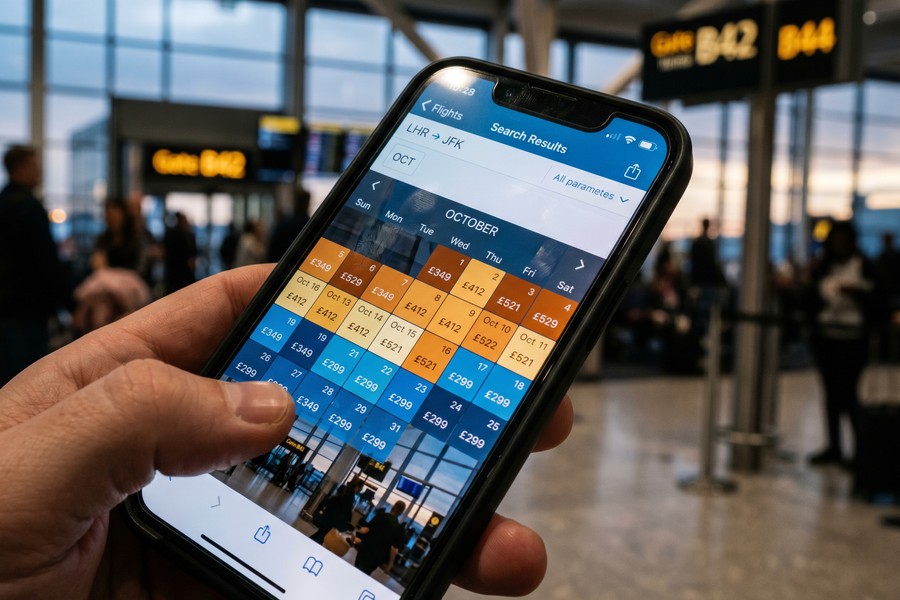
For routes where flying does make sense, the rules are different. Budget airline fares are typically cheapest 4–8 weeks before departure on leisure routes, and 2–3 weeks ahead on business-heavy routes. Tuesday and Wednesday departures are consistently 10–15% cheaper than Friday–Sunday on European short-haul. Clearing browser cookies or using incognito mode before searching is an old tactic that may no longer move prices significantly, but using multiple booking platforms simultaneously (Google Flights, Skyscanner, Kayak) still uncovers meaningful discrepancies.
Transport & Environment’s analysis shows that rail wins the cost comparison on a majority of sub-700 km routes in Western and Central Europe when luggage and transfers are included. The biggest mistake European travelers make is comparing the headline rail fare to the headline air fare without standardizing for luggage, transfers, and realistic check-in time.
Comfort, Productivity, and the Traveler Experience
Beyond time and money, there’s a qualitative dimension to the train vs plane Europe comparison that frequent travelers consistently cite: what you can actually do during the journey. This matters enormously for remote workers, business travelers, and anyone who values productivity or relaxation over mindlessly scrolling through a seat-back screen.
Working on the Train
Modern European high-speed trains, TGV, ICE, AVE, Eurostar, Thalys, offer power outlets at every seat, reliable (though imperfect) 4G/5G connectivity through tunnels and on open track, and fold-down tables wide enough for a laptop. The sitting position is upright and ergonomic. You can make calls, hold video meetings, write documents, and conduct real work for the full journey duration. A 2h 20m London–Paris Eurostar journey is a productive work session. A 2h 20m flight involves 40 minutes of taxi and climb, a tray table the size of a paperback, and spotty connectivity for a narrow window in between.
The Stress Variable
Airport stress is a genuine, measurable phenomenon. Studies in aviation psychology show elevated cortisol levels and reduced cognitive performance in passengers who have experienced security queues, gate changes, or boarding delays. Train boarding, walk in, find your seat, depart, eliminates most of these stressors entirely. For business travelers making back-to-back commitments, arriving mentally fresh at a city-center rail terminus rather than frazzled at a distant airport has real professional value.
A 2023 traveler satisfaction survey by Which? Travel found that 74% of respondents rated their most recent European train journey as “relaxing or very relaxing,” compared to 31% who said the same about a short-haul flight. The single biggest driver of dissatisfaction for air travelers was security queuing, cited by 68% of respondents.
Country-by-Country Rail Quality Guide
One crucial variable in any train vs plane Europe decision is the quality of the rail network in the countries involved. A Switzerland–Germany journey is a different experience from a Romania–Bulgaria journey. Not all European rail is equal.
Tier 1: World-Class High-Speed Networks
France, Spain, Germany, Switzerland, and the Netherlands operate rail networks that are unambiguously competitive with aviation on time, cost, and comfort for most domestic and cross-border routes. France’s TGV network covers over 2,800 km of high-speed track. Spain has the longest high-speed network in Europe at over 3,900 km. Switzerland’s SBB is legendary for punctuality, achieving over 92% on-time performance consistently.
Tier 2: Good But Improving Networks
Italy, Belgium, Austria, and the Czech Republic have solid intercity rail but more limited high-speed coverage outside their major corridors. Italy’s Frecciarossa (Milan–Rome–Naples) is excellent. Austria’s Railjet network is reliable and comfortable. But cross-border journeys involving these countries often require connections that introduce time buffers absent on Tier 1 routes.
Tier 3: Rail Is Often Not Competitive
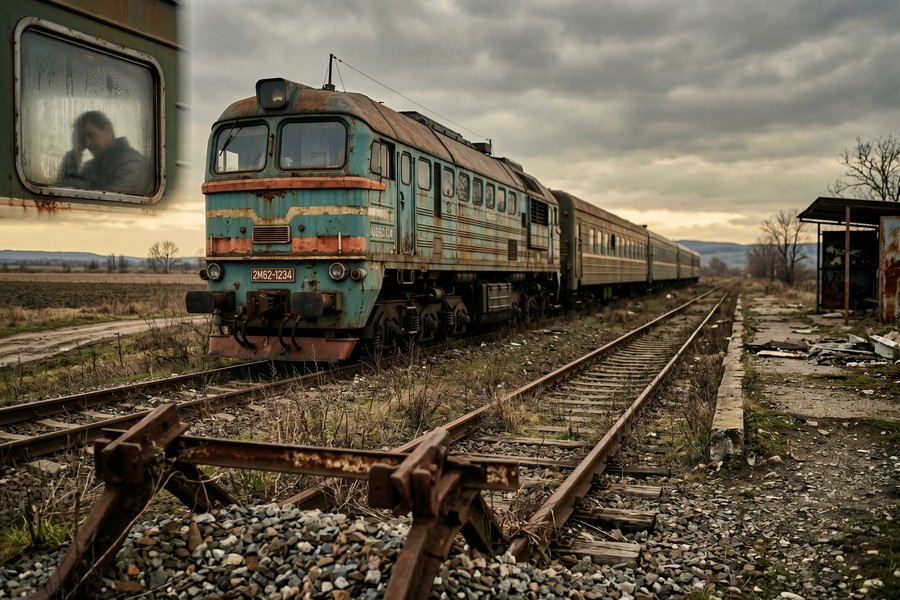
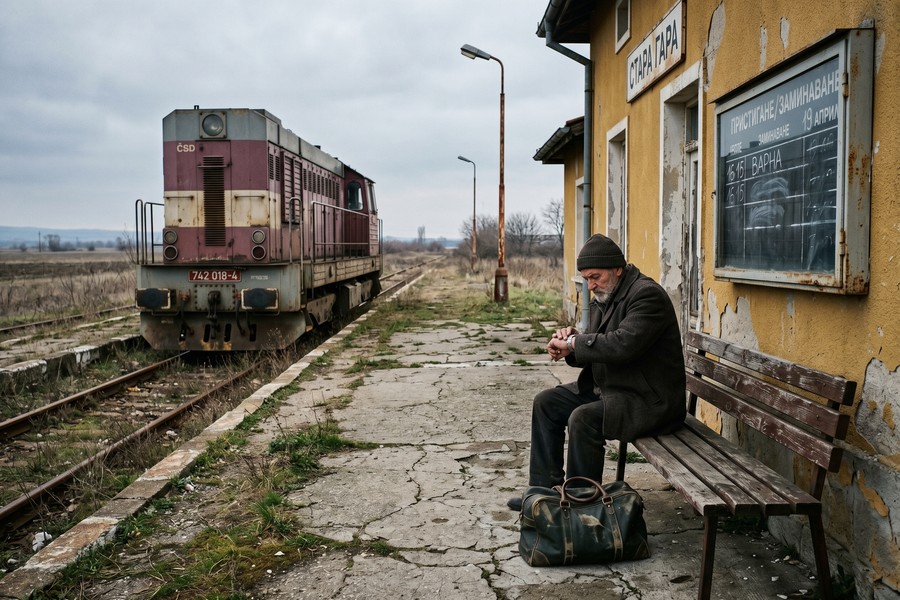
In much of Eastern Europe, including Romania, Bulgaria, and the Western Balkans, rail infrastructure investment has lagged significantly. Journey times on key intercity routes can be 3–5 times longer by train than by air, stations are remote, and booking systems can be difficult for non-native speakers. On these routes, flying is often the practical choice for international travelers, though the situation is improving as EU cohesion funds flow into infrastructure upgrades.
This guide’s train-vs-plane framework is built for Western and Central Europe’s dense, fast networks. If your itinerary runs through the Balkans or the Baltic states, where rail services remain sparse and slow, the math shifts heavily toward flying. On those corridors, the train simply cannot compete on time, and the cost comparisons here won’t hold. Recognizing that limitation up front will save you from forcing a rail itinerary that doesn’t fit the region.
The EU’s Trans-European Transport Network (TEN-T) policy commits €100 billion to rail infrastructure by 2030, with the explicit goal of making high-speed rail the dominant mode for journeys under 1,000 km. When fully implemented, the network will add 25,000 km of high-speed rail, connecting 424 major European cities with faster, more frequent services.
For travelers planning extended trips that span multiple countries, particularly those exploring budget-friendly destinations, understanding rail quality by country is as important as understanding pricing. Our guide to the best European cities for budget solo travel includes rail accessibility as a key factor in each city’s ranking.
The EU’s TEN-T policy aims to make high-speed rail dominant for journeys under 1,000 km, reflecting the infrastructure competitiveness that countries like France and Spain have demonstrated. Europe’s rail renaissance is not simply an environmental story, it is an infrastructure competitiveness story, with measurable reductions in domestic aviation market share and genuine improvements in regional economic connectivity.
Before booking any European trip, use the Rome2rio website to run a quick multimodal comparison across all transport options for your specific city pair. It won’t capture the full hidden fee breakdown, but it gives you a fast starting framework for door-to-door time estimates across rail, bus, ferry, and air, with live pricing links to major booking platforms.
Seat reservations on European trains are mandatory on most high-speed services even if you hold an Interrail or Eurail pass. The reservation fee is typically €10–€20 per leg and is not included in pass prices. Travelers who discover this at the station often find reservations sold out on popular trains. Always book mandatory reservations at the same time you activate your pass, not on the day of travel.
Real-World Example: The London–Barcelona Dilemma
In April 2024, Sophie, a freelance graphic designer based in London, planned a two-week trip through Barcelona, Lyon, and Paris. Her initial instinct was to fly London–Barcelona (the longest leg), then take trains within France. She found a Ryanair fare of £38 outbound from Stansted. But when she added the Stansted Express (£20), a checked bag (£35), airport food (£12 estimated), and a €35 bus from Barcelona El Prat to the city center, the real cost of that “£38 flight” reached £136, and consumed nearly 7 hours of her travel day.
On researching further, Sophie found that a Eurostar to Paris (£59 advance fare, St. Pancras to Gare du Nord) followed by a TGV to Barcelona (€65 booked via SNCF) totaled £124, cheaper overall, with both tickets in the city-center-to-city-center category. The rail journey was fully productive: she worked for four hours across the two legs and arrived at Barcelona Sants at 6pm, refreshed enough to meet a client for dinner at 8pm, something she would never have risked after the mental toll of a budget airline day.
Over the full two-week trip, Sophie used trains for every leg: London–Paris (Eurostar), Paris–Lyon (TGV), Lyon–Barcelona (TGV Lyria). Her total rail spend was £308. Her initially estimated flights-for-everything budget had been £340, before adding any of the hidden fees she’d identified. She saved approximately £80 net, avoided three separate airport ordeals, and estimated she gained roughly 9 productive work-hours compared to the aviation-based itinerary.
The lesson wasn’t that trains are always better, it was that Sophie had never run the real math before. Once she did, the train vs plane Europe decision became straightforward on every leg she analyzed in Western Europe. She now uses a simple spreadsheet to compare door-to-door costs and times before booking any European journey, and says she hasn’t flown within Western Europe since.
Your Action Plan
-
Calculate the door-to-door time for both options
Never compare flight duration to train duration directly. For flying, add: travel to departure airport, check-in buffer (90–120 min), boarding and taxi time (30 min), flight duration, deplaning and baggage (20–30 min), and travel from arrival airport to city center. For trains, add: travel to station (typically 15–30 min) and pre-departure time (10–15 min). The difference is often 2 hours or more on routes under 700 km.
-
Build the full cost for both modes
Use the framework in this article’s cost comparison section. For flights, add: checked bag, seat selection, airport transfer costs at both ends, and a realistic food/drink buffer of €15. For trains, check whether seat reservations are mandatory (they often are on high-speed services) and add that fee to the ticket price. Compare like-for-like, same luggage weight, same comfort class.
-
Check the distance and rail quality tier
Under 700 km on a Tier 1 network (France, Spain, Germany, Switzerland, Netherlands, Belgium), the train is almost certainly your best option on both time and cost. Over 1,000 km or on a Tier 3 network, flying is likely the practical winner. Between 700–1,000 km, run the full analysis; the answer varies significantly by specific route.
-
Explore night train options for long corridors
For routes over 600 km that have a Nightjet or equivalent overnight service, always price the night train as a combined transport-plus-accommodation option. Compare it to the cost of a flight plus one night in a budget hotel. On many Central European routes, the night train wins outright or comes within €20–€30 of the alternative while saving a full day of travel time.
-
Book rail tickets at the earliest available window
Check operator booking-open dates for your travel dates and set calendar reminders. SNCF, Eurostar, and ÖBB all open advance booking 90–180 days ahead. The cheapest promotional fares, often 50% below standard prices, sell out within days of release. Booking early is the single most effective way to reduce rail costs.
-
Evaluate a rail pass for multi-city trips
If you’re visiting 4 or more cities in 10–14 days, price an Interrail or Eurail Global Pass against individual point-to-point tickets. Include mandatory reservation fees in your rail pass calculation (€10–€20 per high-speed leg). For many Western European multi-city itineraries, the pass becomes cost-effective at 4+ legs. For budget tracking across your whole trip, consider using one of the best budgeting apps of 2026 to monitor your rail spending in real time.
-
Factor in carbon cost if it matters to you
Use the ICAO Carbon Emissions Calculator or Atmosfair to get a CO2 estimate for any flight you’re considering. Compare it to the rail emissions figure from your operator’s website. If you’re trying to meet a personal carbon budget for travel, this data point may settle the decision on borderline routes, particularly given that a single short-haul European flight can emit 10–20 times more CO2 per passenger than the equivalent train journey.
-
Protect your investment with the right travel insurance
Rail delays and cancellations can disrupt carefully planned itineraries just as flight disruptions can. Ensure your travel insurance covers rail delays, missed connections, and trip interruption, not just flight cancellations. For a full breakdown of what to look for, this guide to travel insurance explains the coverage types that matter most for European interrail travel.
Frequently Asked Questions
Is the train always cheaper than flying in Europe?
No, and that’s an important distinction. Budget airlines can offer carry-on-only fares that undercut rail on certain routes, particularly long-haul European routes where rail infrastructure is poor or where travel is between secondary cities without direct rail links. The train wins on total cost most reliably on short-to-medium routes (under 700 km) in Western Europe, and especially when you’re traveling with checked luggage.
Always compare full door-to-door costs, not just base fares. Once baggage fees, airport transfers, and ancillary charges are included, the train’s price competitiveness improves dramatically on routes where it already has a time advantage.
What is the fastest train route in Europe?
Spain’s AVE operates at up to 310 km/h and holds multiple records for the fastest scheduled European services. The Madrid–Barcelona AVE is the busiest and fastest long-distance route. France’s TGV network also operates at up to 320 km/h in commercial service. Germany’s ICE network tops out at 300 km/h. The absolute fastest experimental run in Europe was the French TGV record of 574.8 km/h set in 2007, though commercial services run at far lower speeds.
Do I need to book train tickets in advance in Europe?
For high-speed trains, yes, strongly recommended. Eurostar, TGV, AVE, and Thalys trains all have mandatory seat reservations, and popular routes sell out weeks in advance. Walk-up tickets are possible but expensive: last-minute Eurostar fares can reach £250+ one way. For regional and intercity trains that don’t require reservations (common in Switzerland, Germany, and the UK on many routes), turn-up-and-go travel is feasible but still benefits from advance pricing.
Is the train vs plane Europe decision purely about speed?
No. While speed is a factor, the decision also involves cost, comfort, productivity, environmental impact, and the quality of rail infrastructure on your specific route. The train often wins on total door-to-door time for journeys under 700 km on Tier 1 networks. But on longer routes or in regions with poor rail infrastructure, flying is faster and sometimes cheaper. The key is to run the full comparison across time, cost, and personal priorities for each specific city pair you plan to travel.
How do I know if my route is under 700 km?
Use a distance calculator like Rome2rio or Google Maps to measure the straight-line or road distance between your origin and destination city centers. If the distance is under 700 km and you’re traveling in Western or Central Europe, the train is likely competitive or superior on total journey time. Between 700 and 1,000 km, the outcome varies by route. Over 1,000 km, flying typically saves 4–6 hours even after airport processing. A useful threshold: if the train journey exceeds 5.5 hours city center to city center, flying usually wins on time for most travelers.
In 2024, EU rail networks carried 8.3 billion national passengers and 150 million international passengers, according to Eurostat. The sheer volume of domestic rail travel, 55 times higher than international rail, confirms that Europe’s rail networks are built for intra-country mobility first. For cross-border travelers, the quality of the connection depends heavily on whether the countries involved sit in Tier 1 or Tier 2 of the rail quality tiers outlined above.
If your route is under 700 km, on a Tier 1 network, and you’re traveling with a checked bag, the train wins on combined time and cost in roughly 8 out of 10 cases. The exceptions are typically when you’re flying carry-on only between two airports with fast city-center rail links (like Amsterdam Schiphol to Paris CDG, both with direct train connections). In those edge cases, the door-to-door time gap shrinks to under 30 minutes, and cost becomes the tiebreaker. Run the full calculation before assuming either mode is the default.
| Scenario | Train Wins? | Plane Wins? | Key Condition |
|---|---|---|---|
| Paris–London, checked bag, city-center start | Yes, by 2+ hours and €40–€80 | No | Eurostar direct, 2h20m |
| Barcelona–Madrid, carry-on only, airport-adjacent start | Yes, by 1+ hour | Close on cost | AVE direct, 2h30m |
| London–Rome, any luggage scenario | No | Yes, by 8+ hours | Flight 2h10m air time |
| Vienna–Paris, overnight, budget-conscious | Yes, Nightjet couchette saves €30–€70 | No | Combined transport + hotel |
| Budapest–London, carry-on only, price-sensitive | No | Yes, by €100+ and 20+ hours | Wizz Air direct |
This table distills the framework into five common real-world scenarios. The train wins decisively on short, well-connected corridors where the rail journey stays under 3 hours. The plane wins on long hauls, island routes, and Eastern European corridors where rail infrastructure is thin. Between those poles, the answer depends on your luggage, your starting point, and how much you value productive time over airport friction.






