Fact-checked by the ZeroinDaily editorial team
Quick Answer
Edge computing processes data at or near its source, on local devices, sensors, or regional servers, rather than sending it to a centralized cloud. MarketsandMarkets (2025) pegs the global edge computing market at 87.81 billion for 2025, a figure that signals strong momentum across manufacturing, healthcare, and autonomous systems where real-time processing isn’t optional.
Updated August 2026
Move data processing close enough to where data is born and you eliminate two problems at once: the latency of a long round trip to a remote server, and the bandwidth bill that comes with sending every raw byte across the network. That’s the core promise of edge computing. Numbers back up the shift. MarketsandMarkets (2025) puts the global edge computing market at 87.81 billion for 2025, evidence that this architecture has moved well past niche infrastructure status into mainstream enterprise strategy.
Billions of connected devices, from industrial sensors to autonomous vehicles, generate data that cannot afford a round trip to a remote data center. This guide covers how the technology works, why businesses are adopting it so quickly, how it compares to cloud computing, and which industries are leading the charge.
Key Takeaways
- The global edge computing market size reached 87.81 billion in 2025, according to MarketsandMarkets (2025).
- Edge computing reduces network latency to as low as 1 millisecond, compared to an average of 100+ milliseconds for centralized cloud processing (IBM Edge Computing Overview).
- Gartner projects that 75% of enterprise-generated data will be created and processed outside a traditional centralized data center by 2025, a sharp increase from earlier years.
- Manufacturing is among the top sectors for edge computing deployments, driving significant adoption across industrial settings, according to IDC’s Worldwide Edge Spending Guide.
- Businesses deploying edge infrastructure report bandwidth cost reductions of up to 40% by processing data locally before transmitting summaries to the cloud, according to Cisco’s edge computing solutions.
- ZEDEDA (2025) found that 97% of U.S. CIOs have edge AI already deployed or on their roadmap.
- As of early 2025, 90% of organizations are increasing their edge AI budgets, per the same ZEDEDA (2025) survey.
In This Guide
What Is Edge Computing?
Edge computing distributes processing to where data is created, on a local device, gateway, or micro data center, instead of shuttling everything to a far-off cloud. Strip out the lag of long-distance transmission and you also shrink the volume of data that has to travel across networks in the first place. IBM’s edge computing overview notes that this approach can drop latency to under 1 millisecond, compared to the 100+ milliseconds typical of remote cloud processing.
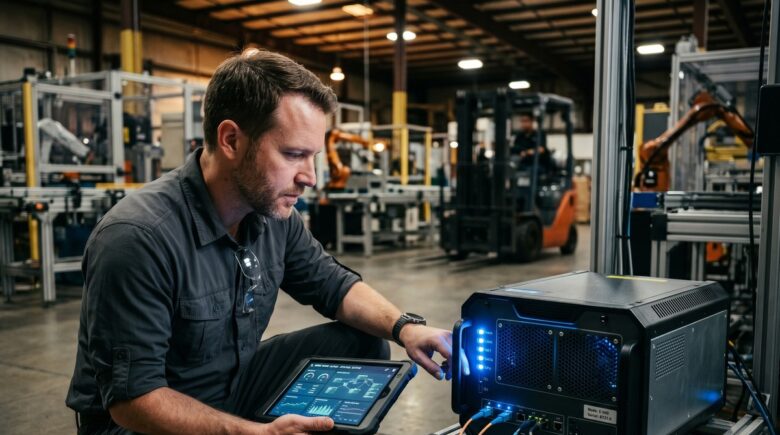
Picture a factory floor with hundreds of sensors monitoring machine temperature. In a traditional cloud model, every sensor reading travels to a remote data center for analysis, then returns a response. Put a local edge server on-site instead, and those readings get processed instantly. Alerts fire in milliseconds, no external network dependency, no cloud round trip required.
The Three-Layer Edge Architecture
A standard deployment involves edge devices (cameras, sensors, IoT hardware) feeding data to edge nodes, local gateways or micro servers that do the actual processing, with the centralized cloud receiving only summarized, actionable results. Each tier handles a distinct job.
The edge node, sometimes called a Mobile Edge Computing (MEC) server, is the piece that matters most. It runs analytics, machine learning inference, and real-time decision logic locally. Only aggregated results, exceptions, or compliance logs get forwarded upstream to platforms like Microsoft Azure, Amazon Web Services (AWS), or Google Cloud.
A single autonomous vehicle generates between 1 and 19 terabytes of data per day from cameras, lidar, and radar sensors. Sending all of that to a remote cloud in real time just isn’t feasible, technically or financially. Edge computing is what makes onboard decision-making possible.
Edge vs. Cloud Computing
These two technologies complement each other rather than compete. Cloud computing centralizes storage and processing in large, remote data centers; edge computing decentralizes it by pushing workloads out to the network’s periphery. Most enterprise deployments today run both in a hybrid model.
Latency is the critical distinction. Cloud processing typically introduces 80–150 milliseconds of round-trip delay depending on geographic distance. Edge processing can cut that to under 5 milliseconds, which matters for robotic surgery, real-time fraud detection, or autonomous vehicle navigation. As a rule of thumb: if an application demands consistent response times under 5 milliseconds, edge computing stops being optional. Cloud-only architectures can’t hit that bar.
Edge vs. Cloud vs. Fog Computing
Fog computing is a related concept introduced by Cisco that extends cloud intelligence to the network edge, acting as an intermediary layer between edge devices and the cloud. The terms get used interchangeably sometimes, but fog computing generally refers to the network infrastructure layer, while edge computing refers to the compute resources sitting at the device or gateway level.
| Attribute | Cloud Computing | Edge Computing | Fog Computing |
|---|---|---|---|
| Latency | 80–150 ms | 1–5 ms | 10–20 ms |
| Data Location | Centralized data center | On-device or local node | Network gateway layer |
| Bandwidth Usage | High (full data transmission) | Low (local processing) | Medium (filtered data) |
| Scalability | Near-unlimited | Limited by local hardware | Moderate |
| Best Use Case | Long-term storage, analytics | Real-time decisions | Large IoT deployments |
| Security Control | Provider-managed | Locally managed | Shared management |
Businesses sizing up infrastructure costs should draw the parallel to storage decisions too. Our guide on cloud storage for small businesses breaks down how centralized cloud costs stack up across providers, useful context when figuring out where edge fits into a broader IT budget.
Why Businesses Are Adopting Edge Computing
Three forces are converging to make cloud-only architectures inadequate for modern workloads: the explosion of IoT (Internet of Things) devices, the rollout of 5G networks, and increasingly strict data sovereignty rules. Any single one of these would push enterprises toward distributed processing on its own. Stacked together, the shift starts to feel less like a trend and more like an obligation.
Connected device counts keep climbing. A 2024 survey by ZEDEDA found that 97% of U.S. CIOs have edge AI already deployed or on their roadmap, which points to strategic commitment rather than curiosity. This isn’t confined to pilot programs, it reflects real budget and real integration work.
Cost Efficiency and Data Sovereignty
Shipping raw data to a central cloud gets expensive fast. Businesses report bandwidth savings of up to 40% when edge nodes filter and compress data before transmission, according to Cisco’s edge computing solutions. That saving matters most in data-heavy sectors like retail surveillance or industrial monitoring, where camera feeds and sensor streams pile up fast.
Here’s what the numbers look like in a real operational setting. A mid-sized logistics company with 200 connected cameras across 15 depots might generate 5 terabytes of daily footage. Streaming all of it directly to AWS S3 at typical US-East data transfer rates (around $0.09 per GB) would cost roughly $450 per day, or $13,500 a month. Run edge inference locally and send only the relevant incident clips, though, and the same firm could shrink its daily transfer volume to under 1 terabyte, dropping the monthly bandwidth bill to $2,700. That single line item often covers the hardware lease cost within the first year.
Take a regional hospital network with 12 clinics and a central data center as another example. Say they need AI diagnostics on MRI scans within 2 seconds to keep clinical workflows moving. Sending scans to the cloud adds 150 ms latency per image on its own, which sounds fine, but the real bottleneck shows up as network congestion during peak hours. Place an edge server at each clinic instead, and inference completes locally in under 1 second, with only anonymized metadata heading to the cloud for population health analytics. Hardware runs about $5,000 per node, and the bandwidth savings from skipping full-resolution scan transmission pay that back in roughly 14 months.
Data sovereignty laws pile on more pressure. The EU’s GDPR, India’s Digital Personal Data Protection Act, and China’s Data Security Law all require certain categories of data to stay within national borders. Processing and storing regulated data locally cuts compliance risk without giving up analytical power. For multinational companies, that trade-off is hard to argue against.
Consider a European auto parts supplier with a credit score equivalent in the mid-600s range seeking roughly €8,000 in equipment financing to pilot edge nodes across three factories. A lender comfortable with the firm’s distributed infrastructure may approve terms that a risk-averse bank would decline, precisely because edge deployments demonstrate operational modernization. The decision to invest in edge hardware can shift a financing conversation from “maybe” to “yes” when the business can show a clear path to cutting downtime costs by at least 30% within the first year.
Gartner projects that 75% of enterprise data will be processed outside centralized data centers by 2025, a sharp jump from earlier years. That single metric says a lot about how fast edge infrastructure is reshaping enterprise IT.

Industries Leading Edge Adoption
Manufacturing, healthcare, retail, and telecommunications account for most current deployments. Each sector has real-time processing demands that centralized cloud infrastructure just can’t meet reliably.
In manufacturing, the technology powers predictive maintenance: machine learning models running locally on factory equipment flag failures before they happen. Siemens and General Electric both run large-scale deployments on industrial assembly lines, cutting unplanned downtime by up to 50%, according to GE Digital’s industrial IoT research. A mid-sized auto parts plant running three shifts with roughly 200 CNC machines can often justify the hardware investment if annual downtime already tops 120 hours. Below that threshold, though, maintenance savings alone may not cover the upfront cost of sensors and edge gateways within a reasonable payback window.
Healthcare and Retail Applications
In healthcare, processing happens at the device level, so it doesn’t depend on hospital network stability. Remote cardiac monitors and continuous glucose sensors analyze data locally, flagging clinicians within milliseconds of an anomaly. When a network outage could turn life-threatening, that local autonomy isn’t a nice-to-have.
Retailers including Walmart and Amazon lean on this infrastructure for cashierless checkout, real-time inventory tracking, and personalized in-store promotions. Edge nodes tucked into shelf sensors and cameras process visual data on-site, making decisions in under 100 milliseconds without ever sending customer imagery to an external server.
IDC’s Worldwide Edge Spending Guide shows manufacturing as a leading sector for edge deployments, while retail and services account for nearly 28% of global edge spending in 2025. Telecommunications is closing the gap fast as carriers build compute directly into 5G base station infrastructure.
The same digital transformation mindset shows up across other technology categories too. Businesses exploring complementary tools should check our coverage of AI tools that are saving small businesses time in 2026; many of them rely on edge inference under the hood to run faster and work offline.
Key Players in Edge Computing
The ecosystem is led by a mix of cloud hyperscalers, network equipment vendors, and specialist hardware companies, each racing to own the infrastructure layer closest to where data actually gets created.
Amazon Web Services (AWS) offers AWS Outposts and AWS Wavelength, extending AWS infrastructure to on-premises sites and 5G networks respectively. Microsoft answers with Azure Stack Edge, a line of AI-enabled hardware appliances built for factories and hospitals. Google brings Google Distributed Cloud to air-gapped and edge environments.
Hardware and Networking Vendors
NVIDIA has made its Jetson platform the go-to AI inference chip for edge devices, showing up in everything from autonomous robots to smart cameras. Intel competes with its OpenVINO toolkit and edge-optimized processors. On the networking side, Ericsson and Nokia are building edge compute directly into 5G base station hardware. Every cell tower starts looking like a micro data center once that’s done.
Understanding how these platforms connect to broader digital finance and technology infrastructure matters for anyone planning ahead. Our article on how blockchain technology is changing personal finance covers another distributed technology reshaping enterprise architecture right alongside edge computing.
When evaluating edge computing vendors, prioritize platforms that integrate natively with your existing cloud provider’s ecosystem. An AWS Outpost or Azure Stack Edge device cuts operational complexity and security overhead compared to bolting on a separate, standalone edge platform.
Challenges of Implementing Edge Computing
Real operational complexity comes with any edge deployment. Security and management at scale top the list of challenges. Neither one gets solved by accident; both need deliberate strategy before a single node goes live.
Security gets cited most often. Unlike a centralized data center with a defined perimeter, an edge deployment can span hundreds or thousands of physical locations, and each node is its own potential attack surface. NIST’s cybersecurity frameworks recommend zero-trust architecture for edge deployments, so no device gets trusted by default no matter where it sits.
Skills Gap and Management Complexity
Managing distributed edge infrastructure takes expertise in both networking and cloud operations, a combination that’s currently in short supply. CompTIA’s 2024 workforce research found that a significant share of IT departments admit they lack the internal expertise to manage edge deployments without outside help.
Physical hardware maintenance catches a lot of organizations off guard. Unlike cloud services, edge hardware sits in warehouses, retail floors, and remote sites. Firmware updates, hardware failures, and environmental wear (heat, dust, vibration) demand on-site management protocols most IT teams have never had to run at scale.
It’s worth being blunt about who edge computing isn’t a fit for. Small businesses without dedicated IT staff, companies whose workloads don’t need sub-10-millisecond response times, and organizations already well-served by a single-region cloud setup will likely struggle to justify the added complexity and hardware overhead. The bandwidth savings are real, but they add up meaningfully at scale, dozens of locations, thousands of sensors, high-volume video processing. A single-site retail shop or a service business with light data needs will get better cost and simplicity out of a well-configured cloud setup. If your annual cloud data transfer bill runs below $15,000, the hardware cost of a dedicated edge node typically wipes out any bandwidth savings for at least two years.
One downside that gets overlooked: edge nodes can create data silos. If local processing keeps valuable data from ever reaching a central analytics system, the organization loses its ability to run cross-site trend analysis. Companies leaning on centralized business intelligence need to design their edge pipelines carefully so they don’t starve their own data lake.
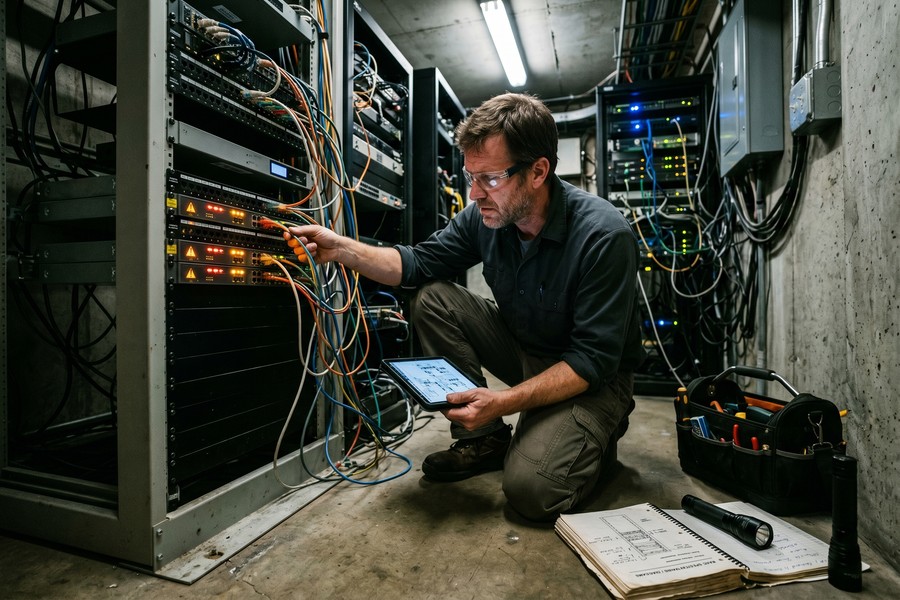
The average enterprise edge deployment spans numerous physical locations, according to IDC research. Keeping firmware, security patches, and hardware current across dozens of sites at once is one of the most underestimated parts of running an edge deployment.
The Future of Edge Computing
Two trends will define the next five years: deeper integration with 5G networks and the rise of AI inferencing at the edge. Standardized edge management platforms will follow once the market matures, making large deployments less painful to operate.
5G’s ultra-low latency and high bandwidth were practically built for edge use cases. As coverage spreads globally, mobile edge computing will unlock connected vehicles, smart cities, and augmented reality applications that simply don’t work on 4G. Ericsson forecasts that 5G will cover 60% of the global population by 2026, which dramatically widens the market for edge applications.
AI at the Edge
Edge AI, running machine learning inference directly on edge hardware, is arguably the most transformative near-term shift. Instead of shipping data off to a cloud-based AI model, chips from NVIDIA, Qualcomm, and Apple (via its Neural Engine) process models locally in real time. That keeps AI-driven decisions working even where there’s no internet connection at all.
ZEDEDA (2025) found that 97% of U.S. CIOs have edge AI already deployed or on their roadmap. The same survey found 90% of organizations are increasing their edge AI budgets for 2025, a sign of commitment, not just interest.
Businesses trying to keep pace with this technology increasingly lean on smarter tools to stay ahead of it. Our guide to digital banking trends reshaping money management covers how edge-enabled fintech platforms apply these same architectural ideas to financial services.
Step back far enough, and the infrastructure layer that makes real-time intelligence ubiquitous is already being built. It’s embedded in devices, scattered across locations, and spreading into nearly every major industry. Businesses building edge capability now will likely carry a structural performance and cost edge over those who wait.
Related reading: Why Travelers Are Switching to Magnetic Packing Cubes in 2025.
Frequently Asked Questions
What exactly is edge computing?
Edge computing is the practice of processing data close to where it is generated, on local devices, gateways, or regional servers, rather than sending it to a centralized cloud. This reduces latency and bandwidth use, enabling faster decisions.
How does edge computing differ from cloud computing?
Cloud computing centralizes processing in remote data centers, while edge computing pushes computation to the network’s edge. They are complementary: most enterprises use a hybrid model, leaning on cloud for long-term storage and edge for real-time decisions.
Why are businesses investing in edge AI now?
According to a 2025 survey by ZEDEDA, 97% of U.S. CIOs have edge AI already deployed or on their roadmap, and 90% are increasing their budgets for it. This reflects a strategic shift toward real-time, on-device intelligence across industries.
Which industries are leading edge computing adoption?
Manufacturing is a top adopter, with healthcare, retail, telecommunications, and transportation following. Retail and services alone capture nearly 28% of global edge spending, according to IDC. Use cases range from predictive maintenance to cashierless checkout and autonomous systems.
Is edge computing secure?
Yes, but only with proper design. Distributed hardware increases attack surfaces. Best practices include zero-trust architecture, encrypted data, and automated patching. NIST provides detailed guidance for securing edge deployments.
How does 5G support edge computing?
5G’s low latency and high bandwidth make real-time edge applications feasible. Carriers like Ericsson and Nokia are embedding edge compute nodes into 5G base stations, turning towers into micro data centers and enabling applications like smart cities and connected vehicles.
Can small businesses benefit from edge computing?
Most small businesses don’t need dedicated edge infrastructure. However, modern devices like POS systems, security cameras, and inventory scanners often use edge processing internally. The benefits are baked into tools already in use.
What role does AI play in edge computing?
AI at the edge, running inference locally on devices, enables real-time decisions without internet connectivity. Chips from NVIDIA, Apple, and Qualcomm power this, allowing applications like autonomous robots and remote health monitors to function reliably even offline.
How is the edge computing market growing?
The global edge computing market size reached 87.81 billion in 2025, according to MarketsandMarkets. This growth is driven by rising demand for low-latency processing, the expansion of 5G, and increased investment in AI and IoT.
What are the biggest challenges of edge computing?
Managing security across thousands of distributed nodes, maintaining hardware in remote locations, and finding skilled personnel are top challenges. Organizations must plan for ongoing operations, not just initial deployment.
Sources
- MarketsandMarkets, Global Edge Computing Market Size, 2025
- Gartner, Edge Computing Market Data, 2025
- Statista, IoT Connected Devices Worldwide, 2024
- IBM, What Is Edge Computing?
- NIST, Cybersecurity Framework and Edge Security Guidance
- CompTIA, 2024 IT Workforce and Cybersecurity Trends Research
- ZEDEDA, 2025 CIO Survey on Edge AI Adoption and Budgets






