
Fact-checked by the ZeroinDaily editorial team
You’ve just touched down at some massive international hub with six hours to burn before your connecting flight. The terminal food court looks depressing, every lounge seat has someone’s jacket claiming it, and your phone is gasping at 12%. Sound familiar? Long layover travel tips are among the most searched travel queries online, and honestly, that makes complete sense. According to the U.S. Bureau of Transportation Statistics, over 45% of international itineraries now include a connection of three hours or more, meaning millions of travelers face this exact scenario every single week.
The financial and psychological cost of wasted layovers is genuinely staggering. A 2023 study by travel analytics firm OAG found that more than 800 million connecting passengers pass through the world’s top 50 hub airports annually. Roughly 60% of those travelers, nearly 480 million people, report doing nothing productive during stops longer than four hours. At an average airport food-and-beverage spend of $28 per person, that’s billions of dollars evaporating into mediocre terminal sandwiches when those same travelers could have been walking actual city streets, eating real food, and spending considerably less. Meanwhile, airports like Singapore’s Changi, Dubai International, and Amsterdam Schiphol have invested billions in transit tourism infrastructure precisely because they understand what layover travelers are leaving on the table.
This guide gives you what you actually need to flip that script. Seven concrete, road-tested strategies for turning any stopover of three hours or more into a genuine mini trip, time budgets, cost breakdowns, visa considerations, the works. Whether you’ve got a tight four-hour window in Frankfurt or a luxurious twelve hours in Tokyo, these long layover travel tips will make sure you never waste another airport hour again.
Key Takeaways
- Layovers of 4+ hours are long enough for a city excursion in over 35 major hub airports worldwide, saving an average of $22 compared to eating and drinking in the terminal.
- More than 60 countries offer free or low-cost transit visas, with programs like Singapore’s 96-Hour Visa-Free Transit requiring zero paperwork and zero fees.
- Airport lounge day passes average $45–$65, but credit card holders with Priority Pass access can enter free, reducing layover costs by up to 78%.
- Travelers who pre-book city excursions spend an average of 31% less than those who improvise, according to a 2023 Viator booking data report.
- Left-luggage storage at major hubs costs $6–$15 per bag per day, freeing you to explore without carry-on weight, a step skipped by 74% of layover travelers.
- Booking flights with intentionally long layovers, known as “hacker fares”, can cut total itinerary costs by 15–40% compared to direct routes on identical date pairs.
In This Guide
- Know Your Layover Window: Time Math That Matters
- Visa and Transit Rules: What You Must Check First
- The City Escape Strategy: Getting Out of the Airport
- Lounge Access Hacks: Rest, Recharge, and Save
- Luggage Storage Solutions: Travel Light, Explore More
- The Best Layover Cities in the World Right Now
- Budget and Tech Tools for the Smart Stopover
- Safety, Health, and Comfort During Long Layovers
Know Your Layover Window: Time Math That Matters
The single biggest mistake layover travelers make is overestimating how much time they actually have. A six-hour layover is not six hours of free time. Not even close. You have to work backwards from your boarding gate close, typically 45 minutes before departure for international flights, and account for every transit minute in between.
A realistic time audit isn’t optional here. At large hub airports like London Heathrow or Los Angeles International, re-clearing security after a city excursion can eat up 40–75 minutes during peak hours, according to TSA checkpoint data. Stack on 30–60 minutes for transit to and from the city center, and that “six-hour layover” becomes two to three hours of usable exploration time. Maybe.
The 4-Hour Rule
Most experienced long-haul travelers swear by the 4-Hour Rule as a baseline: under four hours, stay put. Between four and seven hours, a quick neighborhood visit becomes feasible. Eight hours or more? Now you’re talking proper half-day territory, museums, a real meal, maybe even a scenic detour.
This aligns with what major travel networks have been saying for years. The Lonely Planet community consistently recommends budgeting at minimum 90 minutes of buffer time on either side of any city excursion. Do that math: a four-hour layover yields just 60–90 minutes of actual ground time. Which is still worth it, if you plan it right.
One honest caveat: this math assumes normal airport operations. If your inbound flight arrives late, even by 30 minutes, a tight city excursion collapses fast. The 4-Hour Rule is a floor, not a guarantee. Build in extra buffer whenever possible rather than trusting the schedule to hold.
Transit Time Calculator: Airport to City Center
| Airport | Transit Option | Avg. Transit Time | Cost (One Way) |
|---|---|---|---|
| Singapore Changi (SIN) | MRT Train | 30 min | $1.50 SGD |
| Amsterdam Schiphol (AMS) | Train (Intercity Direct) | 17 min | €5.90 |
| Dubai (DXB) | Metro Red Line | 35 min | $3 AED 11 |
| Tokyo Narita (NRT) | Narita Express (N’EX) | 60 min | ¥3,070 |
| London Heathrow (LHR) | Elizabeth Line | 42 min | £13.10 |
| Frankfurt (FRA) | S-Bahn S8/S9 | 15 min | €5.40 |
Frankfurt and Amsterdam are objectively the two best “quick escape” airports for one simple reason: both get you into the city in under 20 minutes. If your routing includes either hub, even a four-hour layover becomes genuinely worthwhile.
Amsterdam Schiphol Airport sits partially on reclaimed land below sea level, and the city center is just 17 minutes away by direct train, making it statistically the fastest airport-to-city connection among Europe’s top 10 hubs.
Visa and Transit Rules: What You Must Check First
Visa rules are the most commonly overlooked element in layover planning, and getting them wrong isn’t just inconvenient. It can mean being detained at the airport, missing your onward flight, or facing fines you absolutely didn’t budget for. Before you plan any city excursion, verify whether your passport nationality requires a transit visa for the connecting country.
The rules vary enormously. Citizens of 62 nationalities can transit through China’s major airports under the 144-Hour Visa-Free Transit Policy, covering cities like Beijing, Shanghai, and Guangzhou. Singapore offers a 96-Hour Visa-Free Transit for most passport holders. Meanwhile, some nationals still need a full Schengen visa just to transit through EU airports without even leaving the international zone.
Airside vs. Landside Transit
Airside transit means staying within the secured international zone, no customs, no immigration. Landside transit means actually exiting the airport, going through immigration, and entering the country. Only landside gets you into the city. Always confirm which type your passport allows before you book anything.
The IATA Travel Centre’s TIMATIC database is the authoritative tool airlines themselves use. It gives you up-to-the-minute visa and transit requirements based on your specific passport and routing. Use it before every trip, not just for layovers.
Transit visa rules change frequently. Several countries updated their policies post-2020, and what applied to your last trip may no longer be valid. Always check the IATA TIMATIC database or your country’s official foreign ministry website within 30 days of travel.
Countries with the Best Layover Visa Policies
| Country | Program Name | Max Stay | Eligible Nationalities |
|---|---|---|---|
| Singapore | Visa-Free Transit Facility | 96 hours | Most passport holders |
| China | 144-Hour Visa-Free Transit | 144 hours | 62 nationalities |
| UAE (Dubai) | Transit Visa on Arrival | 96 hours | Select nationalities |
| South Korea | Transit Without Visa (TWV) | 24 hours | Most passport holders |
| Schengen Zone | Short Stay Visa (C) | 90 days/180 days | Varies widely by nationality |
If you travel frequently and want to maximize layover opportunities, consider how your best travel credit cards for frequent flyers can also help offset visa-on-arrival fees, which range from $20 to $75 per entry at major hubs.
The City Escape Strategy: Getting Out of the Airport
Getting out of the airport is the whole point. The logistics are simpler than most people assume, but only if you plan ahead. Know your transit route, pre-book your activity, and set hard turnaround times you’ll actually honor.
Pre-booking matters more than most people realize. Viator’s 2023 booking analytics showed that travelers who pre-book layover tours spend 31% less than those who improvise at the destination. Improvised decisions almost always lead to overpriced taxis, touristy restaurants near the main square, and admission queues that quietly devour your ground time.
The 3-Stop Layover Itinerary Formula
For layovers of six to eight hours, the most efficient city structure is the 3-Stop Formula: one landmark or viewpoint (free or under $15), one local meal (budget $12–$25), and one neighborhood walk or market (free). This fills roughly 2.5–3 hours of ground time while staying financially lean and logistically safe.
Amsterdam’s Jordaan neighborhood, Frankfurt’s Sachsenhausen quarter, and Singapore’s Chinatown are all built for exactly this approach, dense, walkable, and within 30 minutes of their respective airports. If you enjoy this style of low-cost immersive exploration, our guide to slow travel and seeing more by moving less offers deeper strategies for the same philosophy applied to longer trips.
Set two alarms before leaving the airport: one for your “latest possible departure from city center” and one 20 minutes earlier as a warning. Treat the first alarm as non-negotiable, missing a flight because of a layover excursion is both expensive and entirely avoidable.
Guided Layover Tours: Are They Worth It?
Several specialized companies now offer layover tours, pre-packaged city excursions designed specifically around tight connection windows. Companies like Layover Tours (operating in Seoul and Istanbul), Stopover Tours Singapore, and various Viator operators offer 2–4 hour itineraries ranging from $35 to $120 per person.
The main advantage is time efficiency. A guided tour eliminates navigation stress entirely, includes round-trip airport transfers, and is guaranteed to get you back with buffer time before boarding. For first-time visitors to cities with genuinely complex transit systems, Tokyo, Seoul, Istanbul, that $35–$80 premium is often completely worth it. No second-guessing, no wrong trains, no panic.
That said, guided layover tours are not a good fit for everyone. Solo travelers who move quickly and already know a city well are often better served just taking the train in on their own. The tour premium buys certainty, not necessarily a better experience. If you’re confident in the local transit and have been to the city before, save the money.
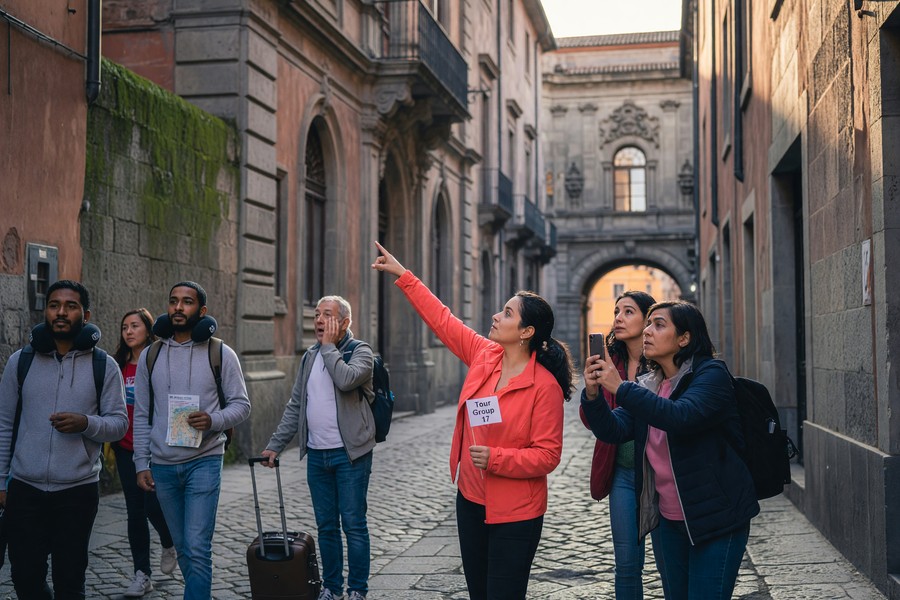
Research from Cranfield University’s aviation tourism program has found that layover travelers consistently have the curiosity and spending capacity to benefit from city excursions, but lack confidence in pulling it off safely within their connection window. A clear framework, fixed transit route, pre-booked activity, hard alarm times, resolves that hesitation for most travelers. Once those variables are locked in, the decision to exit the terminal becomes much easier to make.
Lounge Access Hacks: Rest, Recharge, and Save
Not every long layover needs a city adventure. Sometimes you’re exhausted, you’ve got a toddler in tow, or your layover falls somewhere between midnight and 6 a.m. when the city isn’t exactly welcoming. In those cases, accessing an airport lounge is the single highest-ROI move available to you. We’re not just talking comfortable chairs, we mean hot food, actual showers, reliable Wi-Fi, and surfaces you can genuinely sleep on.
Standard day-pass lounge access costs $45–$65 at most major airports, according to Priority Pass’s 2024 rate card. Compare that to what international passengers typically spend on terminal food and coffee, $28–$42 during a four-hour layover, and the math already starts shifting. Throw in shower access (valued at $15–$25 at standalone airport facilities) and the lounge suddenly looks like a very reasonable decision.
Free and Low-Cost Lounge Access Methods
The most reliable free access method is a Priority Pass membership, included with many premium travel credit cards at no additional cost. Cards like the Chase Sapphire Reserve, American Express Platinum, and Capital One Venture X all include Priority Pass Select, granting access to 1,400+ lounges worldwide.
Beyond Priority Pass, some airlines offer free lounge access to economy passengers during delays of two hours or more, a policy that’s rarely advertised but consistently honored when you actually ask at the service desk. Worth trying. Amex Centurion Lounges and Alaska Airlines Board Rooms can be accessed for a $50 single visit fee or included with the issuing card. Our roundup of the best travel credit cards for frequent flyers breaks down exactly which cards offer the most generous lounge benefits for 2026.
Travelers with Priority Pass access save an average of $34 per layover visit compared to buying terminal food and beverages, and those who use airport showers report a 67% improvement in arrival-day productivity, according to a 2023 Collinson Group survey.
Lounge Comparison: What You Actually Get
| Lounge Type | Average Day Pass | Food Included | Shower Access | Sleep Pods |
|---|---|---|---|---|
| Priority Pass Partner | $45–$65 | Yes (buffet) | Some locations | Rare |
| Amex Centurion | Free (card) / $50 | Yes (full menu) | Yes | No |
| Airline Business Lounge | $60–$100 | Yes (hot meals) | Yes | Some |
| Plaza Premium (standalone) | $35–$55 | Yes (buffet) | Yes | Yes (paid add-on) |
Plaza Premium Group lounges, present in 75+ airports globally, are particularly strong for long overnight layovers, offering sleep rooms from $25/hour as a paid add-on to standard lounge access. Traveling with kids? Many locations include children’s play areas at no extra charge, which is worth more than any buffet spread.
Luggage Storage Solutions: Travel Light, Explore More
There’s a particular kind of misery in dragging a rolling carry-on through cobblestone streets or squeezing onto a packed metro with a bag hitting everyone’s shins. It transforms what should be an enjoyable city walk into an exhausting slog. Luggage storage services fix this completely, yet 74% of layover travelers skip this step entirely, according to a 2022 Bounce luggage storage customer survey.
Every major international airport offers left-luggage facilities. Costs range from $6 to $15 per bag for a 24-hour period. At city-center locations, train stations, dedicated luggage storage shops, hotel concierge services, prices often run lower, around $4–$10 per bag for a half-day.
Airport vs. City Storage: Which Is Better?
Storing your bags at the airport before you exit is the safest, most time-efficient option for layovers under six hours. You clear security once on departure, and your bags are already inside the terminal waiting for you. For layovers of eight hours or more, especially if you’re taking the train into a city, storing bags at the main train station is often more convenient and 30–40% cheaper.
Apps like Bounce and Stasher let you pre-book luggage storage at shops and hotels near the airport or city center, with prices starting at $3.90 per bag per day. Both apps offer instant confirmation and insure stored bags for up to $3,000, genuinely important peace of mind when your bags contain a laptop, a camera, or anything else you’d rather not replace mid-trip.
The Bounce luggage storage network spans over 10,000 locations in 90+ countries. Most partner locations are open 24 hours and can be booked in under two minutes via the app, with no cancellation fee if your plans change.
The Best Layover Cities in the World Right Now
Not all layover cities are equal. The best ones combine fast airport-to-center transit, favorable visa policies, walkable neighborhoods, and a cost structure that doesn’t punish you for showing up with only a few hours to spend. Below are the top performers across three tiers of layover window length.
These rankings draw from the Sleeping in Airports annual survey, Skytrax World Airport Awards data, and OAG transit traffic statistics, three of the most cited sources in airport quality research.
Top Layover Cities by Window Length
| Window Length | Best City | Why It Works | Recommended Activity |
|---|---|---|---|
| 4–6 Hours | Amsterdam | 17-min train, compact center | Jordaan walk + canal-side lunch |
| 4–6 Hours | Frankfurt | 15-min S-Bahn, walkable old town | Römerberg square + apple wine tavern |
| 6–10 Hours | Singapore | 30-min MRT, visa-free transit | Gardens by the Bay + hawker center |
| 6–10 Hours | Istanbul | 45-min metro, rich history | Sultanahmet district + Bosphorus view |
| 10–14 Hours | Tokyo (Narita/Haneda) | Deep culture, excellent transit | Shibuya or Asakusa + ramen lunch |
| 10–14 Hours | Seoul (Incheon) | AREX train, strong neighborhoods | Insadong district + Korean BBQ |
Seoul’s Incheon Airport deserves a special callout here. It operates a free overnight accommodation program for transit passengers with connections of more than 10 hours, including free showers, rest areas, and live cultural performance shows inside the terminal. By multiple measures, it’s the most transit-passenger-friendly airport on the planet.
Singapore’s investment in transit tourism illustrates a straightforward economic logic: by making it easy and cheap for connecting passengers to exit Changi Airport, Singapore captures retail, hospitality, and food-and-beverage spending that would otherwise never enter the local economy. The 96-Hour Visa-Free Transit Facility costs the government almost nothing to administer and returns significantly more than it gives up. Other hub airports, particularly those in the Middle East and Northeast Asia, have studied and replicated this model closely.
If budget is a key factor in your layover planning, our guide to the best European cities for budget solo travel includes several cities also served by major hub airports, making them natural candidates for longer stopovers.

Budget and Tech Tools for the Smart Stopover
Turning a layover into a mini trip is as much a logistics puzzle as it is a mindset shift. The right apps cut planning time from hours to minutes, and they’re mostly free. Knowing which tools to have loaded before you land is one of the most underrated long layover travel tips out there, because the arrivals hall is not the place to start figuring this out.
Five essential app categories cover everything a layover traveler needs: transit navigation, luggage storage, lounge access, currency conversion, and offline maps. Together, they handle every operational need from airport exit to city return.
Essential Apps for Layover Travelers
- Google Maps offline: Download the city map before you land, free, no data needed.
- Bounce or Stasher: Pre-book luggage storage, from $3.90/bag per day.
- LoungeBuddy: Checks your lounge access eligibility based on your credit card and ticket class.
- Rome2rio: Shows every transit option between airport and city with real-time cost comparisons.
- XE Currency: Offline exchange rate calculator, critical for cash decisions at arrival.
- FlightAware: Real-time gate and delay tracking so you can adjust city time dynamically.
For travelers who want to squeeze maximum value from every dollar spent on the road, our article on budget travel hacks that still work pairs well with this layover strategy guide, covering flight booking, accommodation, and daily spend techniques that compound your savings across an entire trip.
Using Reward Points to Upgrade Your Layover
Airline miles and hotel points can dramatically improve a long layover at near-zero cash cost. Many hotel chains, including Marriott Bonvoy, Hilton Honors, and IHG One Rewards, offer day-use rates at airport properties for 5,000–15,000 points per half-day booking. A day-use room means shower access, a bed for a few hours, and often complimentary breakfast. Not bad for what is technically just a connection.
Similarly, airline co-branded credit cards frequently include companion lounge passes or one-time guest passes. Chase Sapphire Reserve cardholders, for example, receive unlimited Priority Pass visits plus up to $300 in annual travel credits that can be applied directly to transit costs during layovers. Understanding how to get the most from these benefits is covered in depth in our guide to using travel reward points for maximum value in 2026.
Travelers who redeem hotel points for day-use rooms during layovers report saving an average of $85–$140 compared to purchasing equivalent rest and shower services outright, based on 2023 redemption data from Marriott Bonvoy’s member survey.
Safety, Health, and Comfort During Long Layovers
The city excursion adventure comes with real risk if you’re not prepared. Lost passports, missed connections, petty theft, these are all disproportionately common among layover travelers, largely because they’re moving through unfamiliar environments under serious time pressure. It’s a recipe for mistakes.
Keep your passport and boarding pass in a RFID-blocking travel wallet secured to your body. Not in a bag. Not in your jacket pocket. On your body. Photograph your passport’s bio page and store it in your email drafts, accessible offline if your phone gets stolen. Two minutes of prep. Matters enormously if things go sideways.
Travel Insurance for Layover Travelers
Here’s something a surprising number of travelers don’t know: standard travel insurance policies often exclude city excursions during layovers unless the policy explicitly covers “transit stops.” Read the fine print before you leave home. A missed connection caused by a city excursion running long is generally not covered under basic policies, but policies from providers like World Nomads or Allianz that include connection miss coverage for transit-related incidents are an available upgrade.
The cost difference between basic and a policy with connection miss coverage is typically $15–$40. Compare that to the average cost of rebooking a missed international connection, $350–$1,200 depending on route and airline, and the upgrade starts looking obvious. For a full breakdown of what to look for, our guide on what travel insurance is and whether you really need it covers every policy type in plain language.
If your outbound flight is delayed and you miss your connection through no fault of your own, the airline is legally required to rebook you at no cost. However, if you miss your connection because you were on a self-arranged city excursion, the airline has no obligation to assist. Always confirm your transit is airline-approved before leaving the airport.
Health and Hydration During Long Connections
Cabin air humidity averages just 10–20%, far below the 30–60% comfortable range, which means passengers arrive at layover airports already dehydrated before the connection even starts. Drinking 500ml of water per hour of flight, then maintaining hydration during the layover, measurably reduces jet lag symptoms and cognitive impairment. Worth taking seriously, not just as an afterthought.
Many long-haul travelers also use compression socks ($12–$35) during multi-leg journeys to reduce the risk of deep vein thrombosis (DVT), which the NHS estimates affects 1 in 1,000 long-haul travelers annually. A short walk during a layover, even just 30 minutes through a city neighborhood, provides equivalent circulatory benefit to a full hour of in-seat exercises. That’s reason enough to leave the terminal.

Seoul’s Incheon Airport offers free overnight rest areas, showers, and cultural performances for transit passengers with connections longer than 10 hours, making it one of the few airports in the world where a long layover is genuinely comfortable at zero added cost.
Frequently Asked Questions
How long does a layover need to be before it’s worth leaving the airport?
Four hours is the practical minimum. Below that, the math rarely works: you need to account for deplaning, transit to the city, ground time, transit back, and re-clearing security, which can consume the entire window. With four to five hours total, you realistically get 60–90 minutes of actual city time, tight but worthwhile at airports like Frankfurt (15-min S-Bahn) or Amsterdam (17-min train).
Do I need a visa to leave the airport during a layover?
It depends on your passport nationality and the connecting country. Staying in the international zone (airside) typically requires no visa, but exiting the airport (landside) means going through immigration, which may require a transit visa or visa on arrival. Check the IATA TIMATIC database before every trip, as rules change and vary significantly by nationality.
What is the safest way to store luggage during a layover city excursion?
For layovers under six hours, storing bags at airport left-luggage facilities is the most time-efficient option, since your bags will already be inside the secure terminal when you return. For longer layovers, apps like Bounce and Stasher let you pre-book storage at city locations for $3.90–$10 per bag per day, with insurance up to $3,000 per booking.
What airports offer the best facilities for overnight layovers?
Seoul’s Incheon Airport ranks at the top of most independent surveys, offering free overnight rest areas, showers, and cultural performances for transit passengers. Singapore Changi and Doha’s Hamad International are also strong choices, with free sleep zones, garden areas, and 24-hour food options inside the terminal. Changi’s Jewel complex, an indoor rainforest with a 40-meter waterfall, requires no ticket to enter during a transit.
Are airport lounge day passes worth buying if you don’t have a travel credit card?
Generally yes, for layovers of four hours or more. A Priority Pass day pass costs $45–$65 and includes hot food, reliable Wi-Fi, and often shower access. That typically undercuts what you’d spend on terminal meals and beverages over the same period. For shorter layovers, two hours or less, it’s harder to justify the entry cost.
What is a “hacker fare” and how does it work for layovers?
A hacker fare is a booking approach where you intentionally select a routing with a long layover, sometimes 8–24 hours, because that connection combination is priced lower than a direct flight on the same dates. Tools like Google Flights, Kiwi.com, and Skyscanner surface these routings. The savings range from 15% to 40% versus a direct ticket, but you accept the tradeoff of a longer total journey time.
What travel credit cards give the most useful layover benefits?
The Chase Sapphire Reserve includes Priority Pass Select (1,400+ lounges), up to $300 in annual travel credits, and trip delay coverage. The American Express Platinum adds access to Amex Centurion Lounges and Delta Sky Clubs when flying Delta. Capital One Venture X includes Priority Pass and a $300 annual travel credit. All three cover lounge access for the primary cardholder at no per-visit fee.
Can airlines be held responsible if I miss my connection because I left the airport?
No. If you leave the airport on a self-arranged excursion and miss your connection as a result, the airline has no legal obligation to rebook you or cover costs. Responsibility shifts entirely to you the moment you clear immigration. This is why travel insurance with explicit transit stop and connection miss coverage matters, and why hard alarm times are non-negotiable before any city excursion.
What are the health benefits of leaving the airport during a long layover?
Even a 30-minute walk through a city neighborhood provides circulatory benefits equivalent to roughly an hour of in-seat exercises, which is meaningful on multi-leg long-haul trips where DVT risk rises. The NHS estimates DVT affects approximately 1 in 1,000 long-haul travelers. Beyond circulation, exposure to natural light during a layover can help reset circadian rhythm and reduce jet lag symptoms at the final destination.
Is this approach realistic for families with young children?
It depends heavily on the layover length and the airport. For families, a city excursion with kids under 5 on a layover shorter than eight hours is rarely worth the stress, the logistics of transit, luggage, strollers, and timing eat up most of the buffer. A better bet is a lounge with a children’s play area (Plaza Premium Group locations offer this in 75+ airports), or airports like Incheon and Changi where the terminal itself has enough to occupy kids for hours without exiting.
Sources
- IATA Travel Centre, TIMATIC Visa and Travel Requirements Database
- U.S. Transportation Security Administration, Security Screening Information
- OAG Aviation Worldwide, Airline and Airport Traffic Reports
- Incheon International Airport, Transit Service and Stopover Programs
- NHS UK, Deep Vein Thrombosis (DVT): Causes and Risk Factors
- Bounce, Luggage Storage Locations and Booking Platform
- Stasher, Luggage Storage Network and App