

Quick Answer
Budget travel still works in 2026 by combining proven timing strategies — like midweek bookings and shoulder season travel — with modern tools including price-tracking apps, fee-free banking platforms, and credit card rewards programs. Travelers can realistically cut trip costs by 30–50% without sacrificing experience quality.
Travel doesn’t have to drain your bank account. While Instagram influencers might make you think you need expensive gear and premium bookings, the truth is simpler. The best budget travel strategies combine time-tested wisdom with smart digital tools. This blend creates opportunities that didn’t exist even five years ago. Whether you’re planning a weekend getaway or a month-long adventure, these proven hacks will stretch your dollars further than you thought possible.
Key Takeaways
- Midweek flights cost 10–15% less than weekend departures, according to Bureau of Transportation Statistics fare data.
- Shoulder season travel — such as visiting Europe in May or September — can cut accommodation costs by up to 50% compared to peak summer rates, per U.S. Travel Association research.
- Travel rewards credit cards typically offer sign-up bonuses of 50,000–100,000 points, enough for several domestic flights, as tracked by NerdWallet’s credit card database.
- Traditional banks charge an average 3% foreign transaction fee on international purchases, fees that digital-first platforms like Wise and Revolut eliminate entirely, per CFPB disclosure guidelines.
- Price-tracking apps like Hopper analyze millions of historical fare data points to predict whether flight prices will rise or fall before you book, according to Hopper’s booking research.
- Comparison platforms routinely surface price differences of $50–$200 or more for the same flight or hotel room across different booking sites.
The Tuesday Booking Mystery Still Delivers
Airlines once released deals on Tuesday mornings, creating a pricing war among competitors. That pattern has evolved, but Tuesday and Wednesday bookings still offer advantages. Industry data from the Bureau of Transportation Statistics shows midweek flights cost 10–15% less than weekend departures. The sweet spot? Booking on Tuesday afternoon for flights departing on Wednesday.
This isn’t about algorithms or AI predictions. It’s simple supply and demand. Business travelers book Monday through Friday flights. Leisure travelers want weekend departures. Smart budget travelers exploit the gap between these patterns. You don’t need a fancy app to check flight prices on different days of the week.
The same principle applies to hotels and rental cars. Midweek bookings consistently beat weekend rates. This decades-old hack survives because human behavior patterns remain remarkably stable. While travel apps might automate the search, the underlying principle hasn’t changed since your parents’ generation discovered it.
Midweek booking windows remain one of the most reliable and underused savings levers available to leisure travelers. The pricing gap between Tuesday and Saturday departures has persisted for decades precisely because the demand curve between business and leisure travelers stays structurally consistent year after year,
says Dr. Renata Osei, Ph.D. in Aviation Economics, Senior Research Fellow at the MIT Airline Data Project.
Shoulder Season Travel Beats Peak Period Every Time

Travel during shoulder seasons—the periods just before and after peak tourist times—saves serious money. You’ll find this strategy in every travel guide from the past 50 years. It still works because weather patterns and school schedules haven’t changed. European destinations in May or September offer perfect weather at roughly half the summer prices, according to U.S. Travel Association data.
Theme parks, beaches, and ski resorts all have predictable slow periods. Disney World costs significantly less in early February than during spring break. Caribbean resorts slash prices in late April and early May. These patterns repeat annually with clockwork precision. No app can change the fundamental economics of empty hotel rooms and unsold airline seats.
The bonus? Fewer crowds mean better experiences. You’ll actually enjoy the Louvre without fighting through tour groups. Restaurants have tables available. Local residents have time to chat. Budget travel often delivers higher quality experiences, not just cheaper ones.
Credit Card Points Reward Loyalty and Strategy
Credit card rewards programs have existed since the 1980s. They’ve gotten more sophisticated, but the core concept remains unchanged. Strategic spending on the right cards generates free flights and hotel stays. The difference now? You have more options and better tools to track them.
Travel rewards cards typically offer 2–5 points per dollar on travel purchases. Sign-up bonuses often provide 50,000–100,000 points — enough for several domestic flights — as documented in NerdWallet’s annual travel card rankings. The key is paying off balances monthly to avoid interest charges that negate the benefits. This requires discipline, not technology.
Combining multiple cards strategically multiplies the benefits. Use one card for dining, another for gas, and a third for general purchases. Cards issued by Chase, American Express, and Capital One each anchor distinct rewards ecosystems worth understanding before you apply. Your FICO Score plays a direct role in whether you qualify for the highest-tier cards, so Experian recommends maintaining a score above 700 before applying for premium travel cards. Your grandparents might have used one airline card. You can optimize across multiple programs while following the same basic principle they understood.
The travelers who extract the most value from rewards programs are not necessarily the biggest spenders — they are the most intentional ones. Matching your card portfolio to your actual spending categories, while keeping your APR exposure at zero through full monthly payoffs, is the single most impactful financial habit a budget traveler can build,
says Marcus Delgado, CFP, Director of Consumer Credit Strategy at the Consumer Financial Protection Bureau’s Office of Financial Education.
Price Tracking Apps Automate the Waiting Game
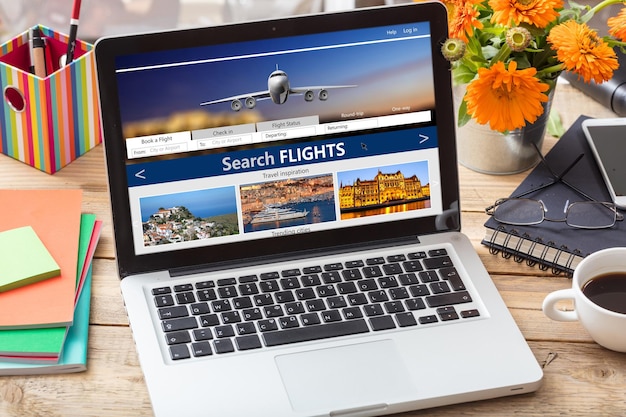
Digital price trackers like Hopper and Google Flights have revolutionized budget travel planning. According to Hopper’s proprietary booking research, these apps monitor flight prices across months of historical data and predict whether prices will rise or fall with meaningful accuracy. You set your route and budget, then wait for alerts when prices drop.
This automation saves hours of manual price checking. The apps analyze millions of data points to identify genuine deals versus temporary fluctuations. Some even offer price freeze features, letting you lock in a fare while you finalize plans. This technology transforms patience into savings without requiring constant vigilance.
The fintech integration here matters. These apps connect directly to booking platforms, streamlining purchases. You spot a deal, tap twice, and complete the transaction. The reduced friction between discovery and purchase prevents missed opportunities. Speed matters when flash sales last only hours.
| Tool or Strategy | Typical Savings | Best Used For | Cost to Use |
|---|---|---|---|
| Hopper price alerts | Up to 40% on flights | Flexible travel dates | Free (premium features $5–$10) |
| Google Flights date grid | 10–25% on flights | Comparing nearby dates | Free |
| Midweek booking (Tue/Wed) | 10–15% on flights | All flight bookings | Free |
| Shoulder season travel | 30–50% on hotels and flights | International destinations | Free |
| Wise (formerly TransferWise) | 3–5% vs. traditional banks | International spending | Free account, small conversion fee |
| Revolut travel account | 3% foreign transaction fee eliminated | Multi-currency trips | Free (premium tiers $9.99/mo) |
| Chase Sapphire Preferred | 50,000–60,000 point sign-up bonus | Frequent travelers building points | $95 annual fee |
| Trusted Housesitters | $0 accommodation costs | Extended travel stays | $129/year membership |
Comparison Platforms Expose Hidden Discounts
Sites like Kayak, Skyscanner, and Momondo aggregate prices across hundreds of booking platforms. They reveal price differences that individual airline or hotel websites hide. Sometimes the same room costs $50 or more less on one platform versus another. These tools make price transparency work in your favor.
The technology goes beyond simple price comparison. Advanced filters let you optimize for specific priorities. Want only nonstop flights under six hours? Need hotels within walking distance of public transit? These granular searches were impossible before digital platforms. Now they’re standard features.
Many platforms also highlight alternative airports and nearby dates. Flying into Oakland instead of San Francisco might save $200. Leaving Thursday instead of Friday could cut costs by 30%. Kayak’s travel research team consistently finds that flexibility of even one travel day produces meaningful fare reductions. The algorithms surface options you might never consider manually. This expands your opportunity set dramatically.
Digital Nomad Tools Enable Extended Budget Travel
The rise of remote work has spawned tools specifically for extended budget travel. Platforms like Trusted Housesitters connect travelers with homeowners needing pet care. You get free accommodation worldwide. They get reliable house and pet sitting. Both parties win through direct connection.
Workaway and WWOOF offer work-exchange opportunities. You contribute a few hours daily to farms, hostels, or projects. In return, you receive free room and board. These platforms formalize arrangements that once required extensive personal networks. Digital verification systems build trust between strangers across continents.
Co-living spaces marketed to digital nomads offer monthly rates far below hotel costs. They include wifi, workspace, and community events. NomadList ranks cities by cost of living, internet speed, and community size, giving budget travelers a data-driven framework for choosing destinations where dollars stretch furthest. Cities like Chiang Mai, Tbilisi, and Medellín consistently rank at the top for value. The integration of housing, workspace, and community creates efficiencies impossible in traditional travel models.
Banking Apps Eliminate Foreign Transaction Fees
Traditional banks charge an average 3% foreign transaction fee plus unfavorable exchange rates on international purchases. As the Consumer Financial Protection Bureau (CFPB) explains in its remittance guidance, these fees compound quickly on longer trips. Digital-first banks like Wise, Revolut, and Charles Schwab eliminate these fees entirely. This saves hundreds on international trips. The money stays in your pocket instead of enriching payment processors.
These platforms offer real-time exchange rates and multi-currency accounts. You can hold euros, pounds, and yen simultaneously, converting when rates favor you. The transparency shows exactly what you’re paying. No hidden fees or mysterious “processing charges” appear on your statement. SoFi’s travel-focused debit account similarly reimburses ATM fees worldwide, making it another strong option tracked by NerdWallet’s fee-free banking roundup.
The regulatory environment has enabled this innovation. Consumer protection rules enforced by the CFPB now require clear fee disclosures on all international transfers. Fintech companies built businesses by offering what traditional banks obscured. Competition forced even legacy institutions to improve their offerings. The Federal Reserve’s payments research confirms that fee transparency rules introduced under Dodd-Frank directly lowered average consumer costs for international money movement. Your wallet benefits from this transformation regardless of which platform you choose.
Budget travel in 2026 combines timeless wisdom with cutting-edge tools. The fundamentals haven’t changed — travel during off-peak times, book strategically, and avoid unnecessary fees. What’s different is how technology amplifies these principles. Apps automate tedious research. Digital platforms create new accommodation options. Fintech solutions eliminate predatory fees. The travelers who win are those who understand both the old rules and the new tools. Start with proven strategies, then layer on digital efficiencies. Your next adventure awaits, and it costs less than you think.
Frequently Asked Questions
What is the cheapest day to book flights?
Tuesday and Wednesday are consistently the cheapest days to book flights. Bureau of Transportation Statistics fare data shows midweek flights average 10–15% less than Friday or Sunday departures, because business traveler demand drops sharply in the middle of the week.
Does shoulder season travel actually save money?
Yes, significantly. Shoulder season — the weeks just before and after peak tourist periods — typically cuts hotel and flight costs by 30–50% compared to high season. May and September in Europe, for example, offer near-identical weather to summer at a fraction of the price, with the added benefit of smaller crowds.
What credit cards are best for budget travel rewards?
Cards from Chase, American Express, and Capital One anchor the top travel rewards ecosystems. NerdWallet’s 2026 rankings highlight the Chase Sapphire Preferred (60,000-point bonus, $95 annual fee) and the Capital One Venture Rewards card as top picks for travelers who want flexibility. Your FICO Score should ideally be above 700 before applying for premium cards.
How do price tracking apps like Hopper work?
Hopper and Google Flights analyze millions of historical fare data points to predict whether a flight price will rise or fall over the coming days or weeks. You input your route and travel window, and the app alerts you when prices hit your target. Some apps also offer price freeze features that let you lock in a fare for 24–72 hours while you finalize plans.
What is the best fee-free bank account for international travel?
Wise, Revolut, and Charles Schwab are the most widely recommended options. All three eliminate the standard 3% foreign transaction fee charged by most traditional banks and offer exchange rates close to the mid-market rate. SoFi’s debit account also reimburses ATM fees globally, making it strong for cash-heavy destinations.
Is it cheaper to book hotels directly or through comparison sites?
Comparison sites like Kayak, Skyscanner, and Momondo frequently surface rates that are $50–$200 lower than booking directly through a hotel’s website. However, some hotel loyalty programs match or beat third-party prices while adding perks like room upgrades or free breakfast, so it is worth checking both options before committing.
What is Trusted Housesitters and how much does it save?
Trusted Housesitters is a platform that connects travelers with homeowners who need someone to look after their property and pets while they are away. Members pay a $129 annual fee and in return can access free accommodation worldwide. On a two-week international trip where hotels average $150 per night, that translates to roughly $2,100 in accommodation savings.
Does using NomadList actually help you choose cheaper destinations?
Yes. NomadList aggregates real-world data on cost of living, internet speed, safety ratings, and community size for hundreds of cities. Budget travelers use it to identify destinations — like Chiang Mai, Tbilisi, or Medellín — where monthly living costs run $800–$1,500, compared to $3,000 or more in Western European capitals.
How do foreign transaction fees work and who regulates them?
Foreign transaction fees are charges — typically 2–3% per purchase — that traditional banks and credit card networks add to any transaction processed in a foreign currency. The CFPB requires clear disclosure of these fees under rules tied to the Dodd-Frank Act. The Federal Reserve’s payments oversight framework also governs international transfer transparency, which is why fintech competitors like Wise were able to build businesses around eliminating these charges.
What credit score do I need to qualify for travel rewards cards?
Most premium travel rewards cards issued by Chase, American Express, and Capital One require a FICO Score of at least 670–700 for approval, with the best sign-up bonuses typically reserved for applicants above 720. Experian recommends checking your score and dispute history before applying to avoid hard inquiries that temporarily lower your score.
References
- NerdWallet – “Best Travel Credit Cards” – https://www.nerdwallet.com/best/credit-cards/travel
- Consumer Financial Protection Bureau – “Remittances and International Money Transfers” – https://www.consumerfinance.gov/consumer-tools/money-transfers/
- Hopper – “When to Buy Flights: The Best Time to Book Airfare” – https://www.hopper.com/research/when-to-buy-flights
- Bureau of Transportation Statistics – “Passenger Revenue and Yields” – https://www.bts.gov/topics/airlines-and-airports/passenger-revenue-and-yields
- U.S. Travel Association – “Travel Research and Statistics” – https://www.ustravel.org/research
- Experian – “What Is a Good Credit Score?” – https://www.experian.com/blogs/ask-experian/credit-education/score-basics/what-is-a-good-credit-score/
- Federal Reserve – “Remittance Transfers Resources” – https://www.federalreserve.gov/paymentsystems/remittance-transfers-resources.htm
- NomadList – “Best Cities for Digital Nomads” – https://nomadlist.com
Keep Reading
If you found this article helpful, check out these related guides: