
Quick Answer
Online money management tools automate budgeting, track spending, and uncover savings by securely linking to your financial accounts. Apps like YNAB, Rocket Money, and SoFi Relay use AI and real-time data to help you stick to a budget, cut wasted subscriptions, and build savings with minimal effort.
Updated July 2026
Managing money used to mean sitting down with a calculator, a stack of receipts, and a ledger book you probably kept in a kitchen drawer. Digital tools changed that. Today’s apps use automation, artificial intelligence, and live account data to show you exactly where your money goes, often before you’ve even noticed the pattern yourself.
For millennials juggling student loans, retirement planning, and everyday expenses, these tools have become something like a shortcut to financial order. Swap manual entry for automation and you cut out the busywork that derails most budgets within a few weeks. That single change is reshaping how an entire generation handles money. Federal resources like MyMoney.gov’s free calculators and worksheets still give you a decent starting point, but mobile apps go further because they remove the effort almost entirely.
Key Takeaways
- Users of automated budgeting tools are 2.5 times more likely to stick to their financial plans compared to those using manual methods, according to the Financial Health Network’s Trends Report.
- Reputable budgeting platforms use bank-level 256-bit encryption and read-only access, meaning they can view transactions but cannot move funds, as outlined by the Consumer Financial Protection Bureau (CFPB).
- AI-powered apps like Cleo, Trim, and Rocket Money use machine learning to identify recurring charges, negotiate bills, and flag budget overruns before they happen.
- Open banking APIs now allow budgeting tools such as YNAB, PocketGuard, and Albert to sync directly with major institutions including Chase, SoFi, and regional banks, delivering real-time transaction data without manual entry.
- Tax integration between budgeting apps and platforms like TurboTax or H&R Block can reduce manual data entry errors and is especially valuable for freelancers and gig workers tracking deductible expenses year-round.
Why Digital Tools Beat Spreadsheets for Budgeting
Spreadsheets served us well for decades. They gave people flexibility and a sense of control that felt genuinely useful at the time. But they demand constant upkeep. You have to update them manually, fix broken formulas, and maintain a level of discipline that most of us can’t hold onto for more than a month or two. Forget to log one transaction, miscategorize a coffee run, and suddenly the whole budget is unreliable. Sites like consumer.gov offer printable budget worksheets, and they’re fine as a template, but they still rely entirely on you to keep them current.
Digital budgeting tools remove that friction through automatic bank connections. Mint, YNAB (You Need A Budget), and PocketGuard sync directly with checking accounts, credit cards, and investment platforms. They pull transaction data in real time, sort expenses into categories on their own, and update your budget without you touching a keyboard. You end up working with numbers that are accurate right now, not numbers you typed in last Sunday from memory. This gap matters most when you’re tracking several accounts spread across different institutions, including ones held at major banks like Chase or credit unions backed by the FDIC.
Consider someone sitting on a 620 credit score who needs about $8,000 to replace a failed transmission and cover a month of rent. A spreadsheet tells them what they spent last week. A tool like YNAB or PocketGuard shows them, down to the dollar, how much free cash flow they actually have after fixed bills, spots the three subscriptions they forgot about, and builds a repayment timeline tied to their real pay schedule. That shifts a decision from guesswork to something a lender or a landlord can actually work with.
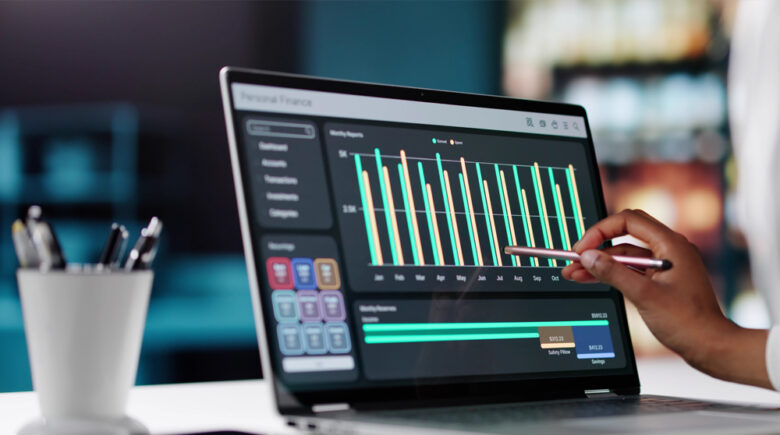
Modern budgeting platforms also do something spreadsheets simply can’t match without a lot of extra effort: visualization. Interactive charts, spending trend lines, progress bars that fill up as you get closer to a goal. That kind of feedback makes financial data easy to absorb at a glance. You can see how much of your dining budget is left this month without opening a single formula. Numbers in cells rarely change behavior on their own; visual cues do. Users of automated budgeting tools are 2.5 times more likely to stick to their financial plans compared to those using manual methods, according to the Financial Health Network’s U.S. Financial Health Pulse Trends Report.
The Consumer Financial Protection Bureau’s Your Money, Your Goals toolkit makes basically the same point: manual tracking wears people down over time. When your data updates on its own, you spend less time on bookkeeping and more time actually deciding what to do with your money.
The Security Advantage of Modern Platforms
A lot of people hesitate to connect their bank account to a third-party app, and that hesitation makes sense on the surface. It’s also somewhat outdated. Reputable budgeting platforms use bank-level encryption paired with read-only access. The app can see your transactions. It can’t move a dollar of your money or change anything on the account.
The Consumer Financial Protection Bureau (CFPB) has set clear rules for companies that aggregate financial data, and those rules force firms handling your information to keep strict security protocols in place. Plenty of budgeting apps actually protect your data better than the spreadsheet sitting in your cloud storage or on a laptop that could get stolen from a coffee shop. Two-factor authentication, biometric login, automatic logout after inactivity: these are layers Excel never gave you. Institutions insured by the FDIC and apps that follow CFPB data-sharing standards sit near the top of the list for trustworthiness in fintech right now.
These platforms watch for suspicious activity around the clock. Someone tries to log in from an unrecognized device, and you get an alert within seconds. That real-time monitoring functions as an extra safety net most people don’t think to ask for. A spreadsheet offers nothing like it. Lose the laptop, and the file is just gone.
Top Online Money Management Tools Compared
| Tool | Monthly Cost | AI Features | Bank Sync | Best For | Tax Integration |
|---|---|---|---|---|---|
| YNAB (You Need A Budget) | $14.99 | Spending forecasts, goal tracking | Yes, direct import | Zero-based budgeting | No |
| PocketGuard | $12.99 | Overspending alerts, bill tracking | Yes, real-time | Limiting overspending | No |
| Rocket Money | $4–$12 | Subscription detection, bill negotiation | Yes, automated | Subscription management | No |
| Albert | $16.99 | Auto-savings, personalized coaching | Yes, real-time | Hands-off saving | No |
| Cleo | $5.99 | Conversational AI, spending analysis | Yes, read-only | Millennials and Gen Z | No |
| TurboTax (with linked apps) | $0–$89 | Deduction finder, audit support | Via partner apps | Tax filing and deductions | Yes, full integration |
| SoFi Relay | $0 | Net worth tracking, credit score monitoring | Yes, multi-institution | Holistic financial overview | No |
How AI-Powered Apps Track Your Spending
Artificial intelligence isn’t some future concept anymore; it’s already sitting in your pocket. AI-powered financial apps dig through your spending patterns and surface things you’d probably never notice on your own. They scan thousands of transactions to spot trends, forecast upcoming expenses, and flag anything that looks like fraud or a budget about to blow past its limit. The CFPB’s toolkit for financial educators makes a similar case for catching problems early rather than after the fact.
Adoption is climbing fast. According to Experian, 67% of Gen Z adults and 62% of millennials have already used artificial intelligence to help manage their money. That’s a strong signal that AI-driven money management is turning into the default, not some niche experiment. The CFPB also recommends using bank and credit union mobile apps for tracking expenses, paying bills, and setting spending alerts, which reflects how much trust these automated tools have earned.
Cleo and Trim run on machine learning models that get to know your financial habits. They notice you spend more on groceries in the first week of the month, or that your utility bill jumps every July. That pattern recognition is what lets them warn you before you go over budget in a category, not after your bank statement arrives. You get to course-correct while it still matters instead of realizing the damage weeks later. The Federal Reserve’s research on household financial decision-making keeps finding the same thing: timely feedback, exactly what these AI tools deliver, is one of the strongest drivers of better saving behavior.
The predictive side of AI stretches into bill negotiation and subscription cleanup too. Rocket Money scans your transactions for recurring charges and turns up subscriptions you forgot you were even paying for. It can call your cable or phone provider on your behalf and try to knock the rate down. It’s less a piece of software at that point and more a financial assistant working quietly in the background. Americans regularly lose meaningful amounts to forgotten subscriptions, according to NerdWallet’s analysis of budgeting app data, and that’s money AI tools are actively clawing back. Keeping an eye on your FICO Score through platforms like Experian alongside these apps helps connect the dots between your spending choices and your overall creditworthiness.
What Personalized Financial Coaching Looks Like Now
Traditional financial advisors charge hundreds, sometimes thousands, of dollars for advice tailored to your situation. AI-powered apps offer a version of that same expertise for a fraction of the price. These digital coaches look at your whole financial picture and hand you recommendations built around your actual numbers and goals, not a generic template.
Albert and Qapital use AI to figure out how much you can safely tuck away without disrupting your daily spending. They study your income patterns, your bill schedule, and your spending habits, then shuttle small amounts into savings on their own. It’s a “set it and forget it” system that takes willpower out of the equation entirely. The AI keeps recalculating as your situation shifts, so you’re not going to overdraft while it quietly grows your emergency fund. SoFi pushes this further by pairing automated savings with debt-to-income (DTI) ratio analysis, helping users see how their borrowing measures up against their earnings. Lenders use that exact metric when evaluating loan applications, and it directly affects your APR on new credit products.
The conversational tone of these apps makes financial advice feel approachable instead of intimidating. Ask a question in plain English, get a straightforward answer built from your real data. That removes some of the embarrassment people feel about gaps in their own financial literacy. The technology meets you where you are and offers steps forward without any judgment attached. As fintech keeps advancing, expect these AI features to get sharper and more personal. The CFPB has flagged fintech-driven financial coaching as one of the more promising ways to close the financial literacy gap in underserved communities.
Integration with the Broader Financial Ecosystem
Modern money management tools don’t operate in a bubble. They connect to your whole financial life: banking apps, investment platforms, tax software. That connectivity gives you a full picture of your financial health, something that was nearly impossible to piece together just a few years back.
Plenty of banks now offer APIs that let third-party apps pull your data securely. This push toward open banking, backed by the CFPB’s Personal Financial Data Rights rule, means your budgeting app can talk directly to your bank’s systems instead of scraping a login screen. The payoff is faster updates, tighter security, and categorization that actually makes sense. Some banks, including Chase and regional institutions overseen by the Federal Reserve, have built AI-powered budgeting straight into their own mobile apps, because customers are asking for it. Credit monitoring from bureaus like Experian, Equifax, and TransUnion is showing up inside these platforms too, so users get their FICO Score sitting right next to their spending history.
Tax season gets a lot less painful once your budgeting app talks to TurboTax or H&R Block. Categorized expenses flow straight into the right forms, which cuts down on manual entry and the errors that come with it. Freelancers and gig workers get the most out of this, since tracking deductible expenses all year beats trying to reconstruct twelve months of receipts in April. The time saved alone covers the cost of most budgeting subscriptions several times over. According to TurboTax’s self-employment tax guidance, gig workers who track business expenses consistently throughout the year end up claiming substantially more in deductions than those who scramble to piece it together at filing time.
Personal finance has gotten a lot more manageable thanks to this shift. Online tools cut out the tedious manual work that used to sink so many budgets within weeks. AI-powered insights now offer the kind of guidance that once meant paying an advisor by the hour. For millennials trying to make sense of a complicated financial picture, these tools solve real, everyday problems. Finding the right combination for your situation is really the first step, and it doesn’t have to happen all at once. Pick one platform, get familiar with what it does well, then add pieces as you need them. Your future self will probably appreciate the head start.
Frequently Asked Questions
What are the best online tools for managing money in 2026?
The top-rated online money management tools in 2026 include YNAB, PocketGuard, Rocket Money, Albert, Cleo, and SoFi Relay. Each serves a slightly different need: YNAB excels at zero-based budgeting, Rocket Money targets subscription waste, and SoFi Relay offers a free holistic net-worth dashboard. The best choice depends on whether your priority is controlling spending, automating savings, or monitoring your overall financial health including your FICO Score.
Is it safe to connect my bank account to a budgeting app?
Yes, when you use a reputable app it is generally safe. Established platforms use 256-bit bank-level encryption and read-only access, which means the app can view your transactions but cannot initiate transfers or make changes. The CFPB’s consumer protection standards also give you the legal right to control how your financial data is shared with third parties, adding a regulatory layer of protection.
How do AI-powered budgeting apps work?
AI-powered budgeting apps use machine learning to analyze your transaction history, identify spending patterns, predict upcoming expenses, and generate personalized recommendations. Apps like Cleo and Albert continuously recalibrate their suggestions based on changes to your income, fixed costs, and discretionary spending, functioning as a real-time financial coach available around the clock. According to Experian, 67% of Gen Z and 62% of millennials have already used AI for personal finance.
Can budgeting apps really help me save more money?
Yes. Users of automated budgeting tools are 2.5 times more likely to stay on track with their financial plans, according to the Financial Health Network. Apps that automate micro-savings, moving small amounts into savings based on real-time cash flow analysis, help users build emergency funds without needing to make a deliberate decision each time. The behavioral science behind removing friction from saving is well-documented by the Federal Reserve’s consumer finance research.
What is the difference between YNAB and Mint?
Mint focused on passive tracking, categorizing transactions automatically after the fact, while YNAB uses a proactive zero-based budgeting method that requires you to assign every dollar a job before you spend it. Mint shut down its consumer budgeting service in January 2024, making YNAB one of the most recommended active replacements. YNAB costs $14.99 per month and offers direct bank import, goal tracking, and spending forecasts.
Do budgeting apps affect my credit score?
Simply connecting your accounts to a budgeting app does not affect your FICO Score or credit report. Budgeting apps use read-only access and do not perform credit inquiries. However, some apps like SoFi Relay include credit monitoring features that display your score; these use soft pulls, which also do not impact your credit. Hard inquiries only occur when you formally apply for new credit products like loans or credit cards. You can learn more about how scores work at Experian’s guide to good credit scores.
How do these tools help with debt-to-income ratio (DTI)?
Platforms like SoFi incorporate DTI calculations directly into their dashboards. DTI is the percentage of your gross monthly income that goes toward debt payments, and lenders, including banks and mortgage providers regulated by the Federal Reserve, use it as a key qualification metric. By tracking your monthly debt obligations and income in one place, these tools help you understand how close you are to the DTI thresholds that affect your APR on new loans.
Can freelancers and gig workers benefit from these tools?
Freelancers benefit significantly because tools that integrate with TurboTax or H&R Block automatically categorize deductible business expenses throughout the year. This eliminates the end-of-year scramble of reconstructing records and reduces the risk of missing deductions. According to TurboTax’s self-employment guidance, gig workers who track expenses consistently claim substantially more deductions than those who reconstruct at filing time.
What is open banking and why does it matter for budgeting apps?
Open banking refers to the use of secure APIs that allow third-party financial apps to access your bank data with your permission. The CFPB’s Personal Financial Data Rights rule, finalized in 2024, formally established open banking standards in the United States. For budgeting apps, this means faster syncing, more accurate data, and reduced dependence on screen-scraping methods that were slower and less secure. Major institutions including Chase have expanded their API access in response to these regulations.
Are there free money management tools that are actually good?
Yes. SoFi Relay is completely free and offers multi-institution account aggregation, net worth tracking, and credit score monitoring. Goodbudget offers a free tier based on the envelope budgeting method. Many banks, including those overseen by the FDIC and the Federal Reserve, now include free built-in budgeting dashboards in their mobile apps. For users who want AI-driven features like auto-savings or bill negotiation, paid tiers starting as low as $4 per month with Rocket Money offer substantial value relative to cost.
One Important Caveat
Not everyone benefits from handing their budget over to an app. If you like full control over your financial data, or you’re just not comfortable with third-party access no matter how much encryption is involved, these tools can feel more like an intrusion than a help. Anyone juggling multiple foreign accounts, irregular income, or banking relationships outside the U.S. system may find that automation underperforms or flat-out misclassifies transactions. Convenience always comes with a trade-off, and here it’s reduced oversight. If you actually enjoy reviewing every transaction by hand, or your financial life doesn’t fit neatly into standard categories, a budgeting app might not simplify anything. It could just add another layer between you and your money. There’s no single tool that fits every situation.
Keep Reading
If you found this article helpful, check out these related guides:
- How AI Finance Assistants Save Time And Boost Productivity
- Fintech Apps That Help You Save Without Thinking About It
- Tech Tools That Actually Boost Productivity in 2026
Sources
- Consumer Financial Protection Bureau (CFPB), Consumer Access to Financial Records
- Financial Health Network, U.S. Financial Health Pulse: 2023 Trends Report
- FDIC, Money Smart Financial Education Program
- Experian, What Is a Good FICO Credit Score?
- YNAB, The Four Rules of Zero-Based Budgeting
- FDIC, Bank Insurance and Consumer Protections
- Experian, Americans Are Embracing Gen AI to Make Smart Money Moves
- CFPB, Your Money, Your Goals Toolkit
- CFPB, Money Management Apps for Servicemembers
- MyMoney.gov, Government Budgeting Tools and Worksheets
- consumer.gov, Make a Budget Worksheet