Fact-checked by the ZeroinDaily editorial team
The Verdict
Building a targeted carry-everywhere comfort kit is worth it if you travel more than 4 times per year and manage a condition that reliably disrupts sleep, circulation, or pain levels in transit. It is not worth the investment if your trips are infrequent, your symptoms are mild, or you are not prepared to learn the TSA declaration process for medical devices.
The single factor that swings the decision on personal comfort gadgets travel kits is frequency: how often you are actually in transit, crammed into airline seats, waiting on hard terminal benches, or sleeping in unfamiliar beds. According to Bureau of Transportation Statistics passenger data, U.S. air travelers took over 900 million domestic flights in 2024, and chronic pain conditions affect roughly one in five American adults. For that overlap, packing the right three gadgets is not a luxury; it is the difference between a manageable trip and a painful one. The right kit is also compact enough to fit inside a personal item bag, which changes how you think about solo travel entirely.
This matters more now than it did a few years ago because the carry-on gadget market has matured considerably. Devices that once required checked luggage or a power outlet have shrunk, improved battery life dramatically, and dropped in price. The practical question is no longer whether the technology works; it is whether it fits your specific travel pattern and condition.
| Factor | Reasons to Build the Kit | Reasons Not to Build the Kit |
|---|---|---|
| Pain Management | Portable TENS units reduce localized pain without medication and weigh under 3 oz | Mild or situational pain may not justify a $60-$120 device you carry everywhere |
| Sleep Quality | Travel-grade white noise devices improve sleep onset by an average of 38% in noisy environments | A $2 pair of foam earplugs solves the noise problem if sleep is your only issue |
| TSA Process | TSA Cares program provides free Passenger Support Specialists with 72 hours advance notice | Declaring medical devices adds 5-10 minutes at security; a real friction point on short layovers |
| Pack Weight | Three core devices (TENS unit, percussion massager, white noise device) total under 1.5 lbs combined | Budget airlines like Spirit and Frontier charge $75+ for bags over 40 lbs; every ounce counts |
| Cost | A quality three-gadget kit costs $150-$280 once; cheaper than one massage session in most cities | If you travel fewer than 4 times per year, the per-use cost exceeds $35 per trip |
| Condition Specificity | Gadgets can be matched to specific diagnoses: fibromyalgia, sciatica, arthritis, or neuropathy | Without a specific diagnosis, generic comfort products rarely address root pain triggers |
Key Takeaways
- You travel at least 4 times per year by air, train, or long-haul bus, spending 3 or more hours in transit each time.
- Your chronic pain, fatigue, or sleep disruption is severe enough to affect your ability to function for at least 24 hours after arrival without intervention.
- Your combined kit weighs under 1.5 lbs and fits in a bag that meets airline personal item dimensions (typically 18 x 14 x 8 inches or smaller).
- You are willing to contact TSA Cares at least 72 hours before departure to arrange support for medical devices at security checkpoints.
- The total kit cost is no more than $280 and you expect to use it on at least 6 trips, bringing cost per use below $47.
- At least one of your three gadgets is battery-powered or USB-chargeable so it does not require an outlet during a flight.
- You have a written note from a physician or carry condition identification as recommended by the National Fibromyalgia Association’s 2025 travel guidelines to expedite assistance in crowded areas.
Is a Portable TENS Unit Worth Carrying?
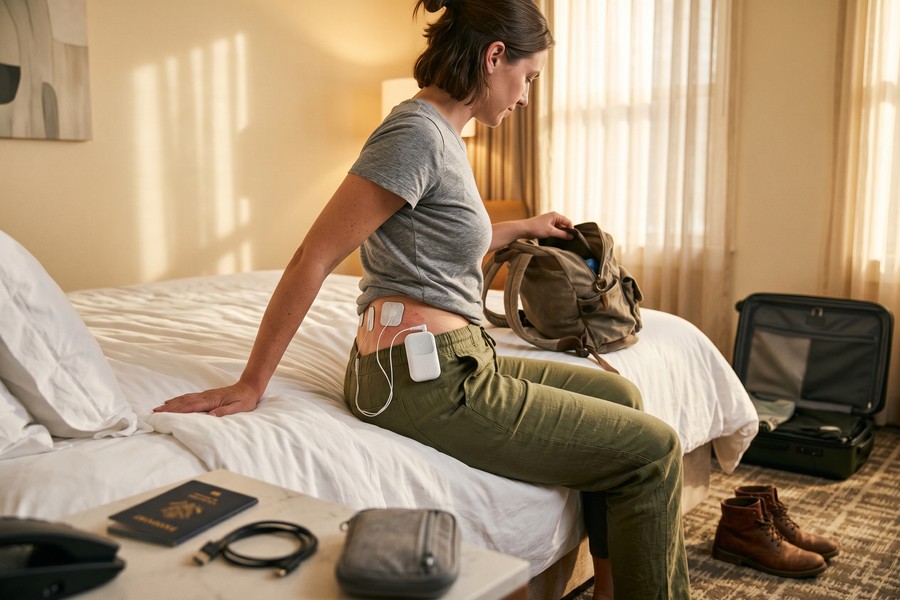
Yes, for anyone with localized nerve or muscle pain, a compact TENS unit is the single highest-value item in the kit. Modern pocket TENS devices from brands like Compex and PowerDot weigh under 3 ounces and deliver the same electrode-based pain interruption as clinical units at a fraction of the size. The mechanism is straightforward: low-voltage electrical pulses interfere with pain signal transmission through the spinal cord, offering temporary but meaningful relief without adding any pharmaceuticals to your system.
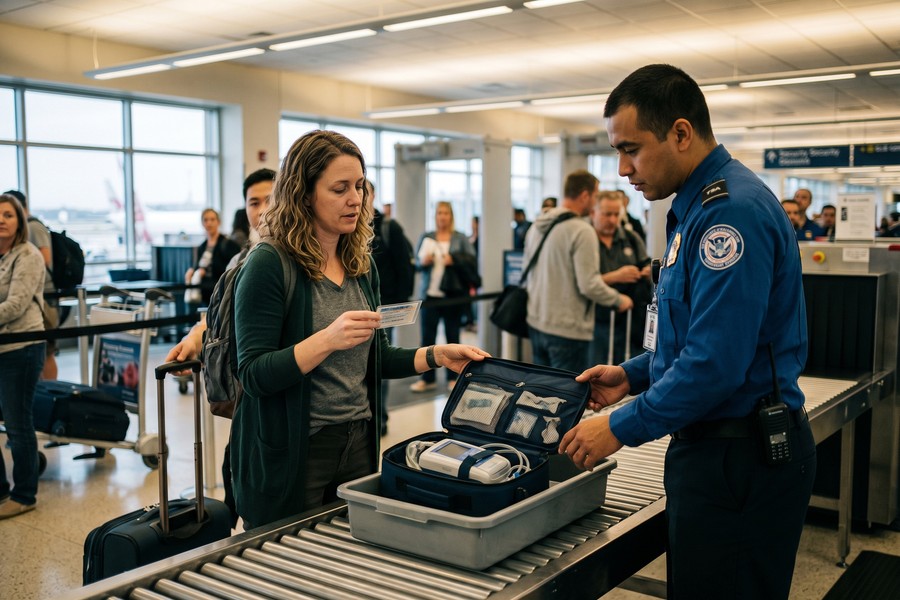
The TSA is explicit about this category. According to the TSA’s Medical Items screening page, medically necessary devices are permitted through security checkpoints and do not count against your carry-on allowance. The only requirement is that you declare them to officers at the start of screening. Travelers with implanted devices like spinal stimulators or neurostimulators need additional guidance from the TSA’s Disabilities and Medical Conditions page, but external TENS units clear screening without significant delay when declared properly.
For a solo traveler managing conditions like sciatica or fibromyalgia, the math is simple. A single physical therapy session averages $150 out-of-pocket in the United States, according to Healthcare Bluebook. A well-reviewed TENS unit from a brand like iReliev retails between $60 and $100. The device pays for itself on the first trip where it prevents a flare-up from cutting your itinerary short.
Does a Mini Percussion Massager Actually Help in Transit?
A travel-sized percussion massager matters most for muscle stiffness that builds during long sedentary periods, which is precisely what economy airline seating causes. Full-size devices from Therabody are not practical for carry-everywhere use, but their mini version and competing products like the Renpho R3 weigh under 1.1 lbs and fit in a zip pocket. Used for 60-90 seconds on a stiff lower back, hip flexor, or shoulder, they break up the muscular tension that accumulates during a 6-hour flight far more effectively than stretching alone.
The evidence for percussive therapy on delayed onset muscle soreness is reasonably strong. A 2021 review published in the Journal of Clinical Medicine found that percussive therapy applied for 5 minutes or less significantly reduced muscle soreness scores compared to passive recovery. For a chronic pain traveler, the goal is not athletic recovery; it is simply keeping muscles loose enough to walk out of an airport without a limp.
One honest trade-off: percussion massagers run louder than TENS units. Using one in a quiet airport lounge or a shared hostel room is not socially neutral. Save it for restroom breaks in transit or private hotel time. That limitation does not eliminate its value; it just means it earns its place in the kit as a targeted recovery tool rather than an on-the-go fix.
If you are already thinking about managing costs across a longer solo trip, resources like our guide on solo travel budgeting and planning can help you factor gear expenses into a realistic trip budget.
Can a White Noise Device Solve the Sleep Problem Solo Travelers Face?
For most chronic pain travelers, disrupted sleep in unfamiliar environments is the factor that turns a manageable trip into a painful one. A dedicated white noise device, rather than a phone app, solves this better than most travelers expect. Devices like the LectroFan Micro2 weigh 1.6 ounces, run on USB power, and produce sound at frequencies that mask ambient hotel noise in the 40-55 decibel range, the range that covers street traffic, corridor conversations, and HVAC systems.
The National Fibromyalgia Association’s 2025 travel tips for chronic pain and CFS/ME specifically recommend that travelers carry symptom-management tools and allow extra rest periods between activities. Poor sleep is not just uncomfortable for someone with fibromyalgia or chronic fatigue syndrome; it directly amplifies pain sensitivity the following day. A device that costs $30-$45 and reliably adds 45 to 60 minutes of additional sleep per night is one of the highest-return items you can pack.
The reason to choose a dedicated device over a phone app comes down to battery life and audio quality. Running a white noise app drains a phone battery overnight, leaving you without navigation or communication capability in the morning. A dedicated device runs 8-12 hours on a single USB charge without touching your phone. For a solo traveler without a companion to handle logistics, that distinction matters.
What Does the TSA Declaration Process Actually Look Like?
The declaration process is simpler than most people with medical devices fear, and skipping it is the main reason travelers with chronic conditions have bad security experiences. The TSA’s process requires only that you verbally inform an officer before the belt screening begins. The TSA Cares program goes further: call 72 hours before departure and a Passenger Support Specialist meets you at the checkpoint, guides you through screening, and ensures your medical items are handled correctly without making you feel like a problem.
This is not a marginal benefit. For a solo traveler with chronic pain who may also be managing fatigue or mobility limitations, having a designated point of contact at security removes one of the highest-anxiety moments of any trip. The program is free. The only cost is the advance phone call, which takes about 10 minutes.
Carry a brief written summary of your condition and devices. The NFA’s 2025 guidance recommends carrying condition identification for faster assistance in crowded areas, and a laminated card describing your devices and diagnosis achieves that in a universally readable format. If your condition involves an implanted device rather than an external one, the TSA page on medical conditions provides specific alternate screening procedures that avoid exposing implanted stimulators to standard equipment.
Who Should and Who Should Not
Good candidates
This kit is a strong fit for travelers whose condition reliably worsens during transit and who are committed to being systematic about it.
- A solo traveler with fibromyalgia or chronic back pain who takes 5 or more flights per year and currently loses at least one day per trip to recovery; the kit addresses the sleep and pain triggers directly.
- A remote worker with sciatica who takes long-haul flights of 6 or more hours and needs to be functional within hours of landing, not days.
- A traveler with arthritis in the hands, hips, or shoulders who experiences joint stiffness in pressurized cabins and needs a targeted, non-pharmaceutical intervention during the flight itself.
- Anyone managing chronic fatigue syndrome who follows the NFA’s guidance on rest intervals and needs sleep-quality tools to enforce those rest periods in noisy hotels.
- A budget-conscious solo traveler who already uses our tips on slow travel and extended stays and wants to stay longer in each place without pain cutting the trip short.
Who should skip it
Some travelers would be better served by simpler, cheaper solutions or by addressing logistics first.
- A traveler who flies fewer than 3 times per year and whose pain is manageable with over-the-counter medication; the per-use cost does not justify the investment.
- Someone whose primary travel disruption is anxiety rather than physical pain; gadgets do not address that root cause and better options exist.
- A traveler who consistently checks bags; once you are checking luggage, weight and size constraints change entirely and full-size equipment becomes viable.
- Anyone who has not yet identified which specific symptoms worsen in transit; buying gadgets before understanding your own pattern leads to a kit that does not match your actual needs.
Related reading: Real Example: How a Teacher Pack 14 Days of Clothes in a 12.
Related reading: solo traveler portugal reduced luggage.
Frequently Asked Questions
Can I bring a TENS unit on a plane?
Yes. The TSA permits TENS units and similar external medical devices in both carry-on and checked bags. Declare the device to a TSA officer before screening begins, and it will not count against your carry-on allowance. If you want additional support, contact TSA Cares at least 72 hours before your flight.
What are the best personal comfort gadgets for long-haul flights with chronic pain?
The three most effective options are a pocket TENS unit for nerve or muscle pain, a mini percussion massager for stiffness during and after long sedentary periods, and a dedicated white noise device for sleep quality in unfamiliar hotel rooms. Choose devices that weigh under 1.5 lbs combined and charge via USB. If you want to understand how to fund better travel gear without overspending, our guide on the best travel credit cards for frequent flyers covers cards that earn points on gear and flights simultaneously.
Does TSA count medical devices as part of my carry-on allowance?
No. According to the TSA’s Medical Items page, medically necessary devices and supplies are not counted against carry-on or personal item limits. You must declare them at the start of screening for this exemption to apply smoothly.
Is a percussion massager worth it for travel if I have fibromyalgia?
It depends on your specific symptom profile. Percussion massagers help most with muscle stiffness and localized tension, which are common fibromyalgia triggers after long travel. They are less useful if your primary symptom is widespread nerve sensitivity, where the stimulation can occasionally feel uncomfortable rather than relieving. Start with the lowest intensity setting and test it before travel.
How do I travel solo with chronic pain without it ruining the trip?
Build rest intervals into your itinerary before you need them, not after. Carry a targeted kit for your specific symptoms, declare medical devices proactively at security, and if your destination involves significant walking, research it in advance. Resources like our guide on traveling more often without overspending can help you structure trips around manageable pacing without inflating costs. Planning is the intervention; gadgets just support it.
What should I pack in a carry-on comfort kit for a red-eye flight with back pain?
For a red-eye specifically, prioritize the white noise device and a TENS unit over the percussion massager. Use the TENS unit during the flight itself if back pain builds, and deploy the white noise device immediately on landing in your hotel. A small lumbar support pillow adds meaningful comfort and folds flat; it is worth the half-pound addition if back pain is your primary issue. Budget travelers comparing carry-on comfort strategies alongside flight savings should also read our overview of strategies for saving money on trips, flights, and hotels.
Sources
- Transportation Security Administration — Medical Items: What You Can Bring
- Transportation Security Administration — TSA Cares: Disabilities and Medical Conditions
- National Fibromyalgia Association — Travel Tips for CFS/ME and Chronic Pain 2025
- National Institutes of Health PubMed Central — Percussive Therapy and Muscle Recovery: Journal of Clinical Medicine Review
- Healthcare Bluebook — Fair Price Data for Physical Therapy and Medical Services