
Fact-checked by the ZeroinDaily editorial team
The technology we use every day comes with a hidden price tag, one measured in carbon emissions, toxic waste, and finite resources. Green technology has grown from a niche ideal into a $31-billion market moving at a 20.7% compound annual growth rate, driven by smarter devices, cleaner energy, and new regulations that reward sustainable choices. Global clean energy investment topped $2 trillion last year according to the International Energy Agency’s World Energy Investment report, and that capital is reshaping everything from the laptop on your desk to the data centers powering the apps you rely on.
Making better choices starts with understanding the full picture: energy-saving hardware, responsible disposal of old electronics, materials that break down instead of piling up in landfills, and services that run on renewable power. This guide surveys those moving parts so you can see how each piece fits together, then follow our deep dives to make your own tech stack lighter on the planet.
Overview
Green technology encompasses products and systems that reduce environmental harm through energy efficiency, renewable materials, and circular lifecycles. In 2026, this means everything from solar-powered office gadgets and energy-sipping Wi‑Fi routers to cloud infrastructure offset by 100% renewable energy. The goal: lower carbon footprints without sacrificing performance or convenience.
Key Takeaways
- Global clean energy investment surpassed $2 trillion in 2025, signaling a fundamental shift in how electricity is generated and consumed (IEA).
- The green technology and sustainability market is projected to reach $31 billion by 2026, with IoT and AI integration as major growth engines.
- Energy-efficient routers can reduce annual electricity costs by 40–60% compared to older models without a noticeable performance drop.
- Only about 17.4% of global e‑waste is formally documented as collected and recycled, making proper disposal a critical personal choice.
- Refurbished laptops from manufacturer-certified programs typically carry a 3‑year warranty and cut manufacturing emissions by over 70% versus building a new machine.
- Data center electricity use accounts for roughly 1–1.5% of global electricity demand, but switching to green web hosting directly supports renewable energy growth.
Powering Your Desk with Sunlight (and a Little Planning)
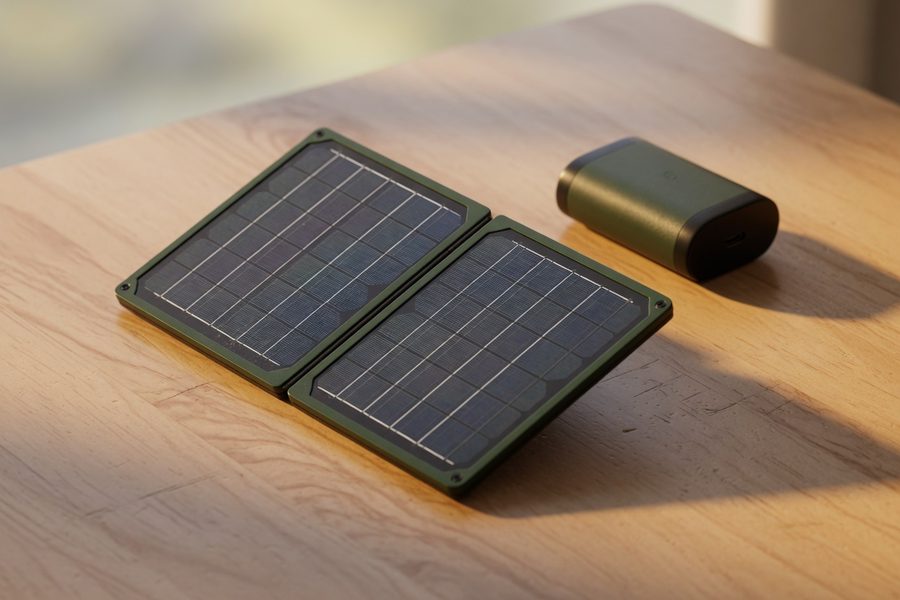
Yes, a home office can run partially on solar even if you don’t own a roof. The trick is matching today’s portable solar panels and battery packs to devices that sip power, LED monitors, USB‑C laptops, and low‑draw peripherals, rather than trying to run a 600‑watt laser printer off a panel the size of a notebook.
Solar efficiency has improved steadily, with commercial panel efficiencies now exceeding 22%, but the real breakthrough for small‑scale setups is the integration of power‑delivery (PD) standards and lightweight batteries that store enough for a full workday. A 100‑watt portable panel paired with a 500‑watt‑hour lithium‑ion battery can keep a home office running through a cloudy morning if you charge during peak sunlight. The US Department of Energy notes that plug‑in solar kits now qualify for federal tax credits under the Inflation Reduction Act when installed as part of a permanent home energy system, though portable units typically sit in a gray area.
Upfront costs remain the biggest hurdle. A decent portable solar generator setup still runs $400‑$800, so payback periods stretch to three years or more unless you’re replacing a diesel backup or avoiding high peak‑time electricity rates. For the full equipment breakdown and testing notes, see our guide to choosing solar‑powered gadgets for a low‑energy home office.
Small Electronics, Big Recycling Problem
Most drawers have a graveyard of old phones, chargers, and dead Bluetooth speakers, and together they account for a staggering amount of e‑waste. In 2022, the world generated 62 million metric tons of electronic waste, but the formal collection and recycling rate sat at just 22.3%, according to the Global E‑waste Monitor. The rest ends up in landfills, incinerators, or informal recycling operations that expose workers to lead and mercury.
Recycling small electronics is more accessible than it used to be. Big‑box retailers like Best Buy and Staples run drop‑off programs that accept almost anything with a cord, and manufacturer mail‑back services have expanded considerably. The challenge is knowing what can actually be recycled: lithium‑ion batteries require separate handling, and many municipal programs won’t take electronics that contain them. The EPA’s Sustainable Materials Management Electronics program certifies a network of responsible recyclers through the e‑Stewards and R2 standards, which ensures that materials are not shipped overseas for unsafe dismantling.
Roughly 4 out of 5 small electronics are not formally recycled, contributing to a loss of $57 billion in recoverable materials like gold, silver, and copper each year.
For a step‑by‑step walkthrough of finding a verifiably responsible recycler near you, read our full guide to small electronics e‑waste recycling services.
Can a Phone Case Actually Compost?
Only specific types of biodegradable phone cases break down in a home compost pile. Most require industrial composting facilities, and some degrade only into microplastics that linger in soil. The term “biodegradable” is not regulated as tightly as “compostable,” so consumers are often sold a promise that doesn’t hold up in a tumbler.
Independent testers at publications like The Guardian and Wired have buried popular brands in garden soil and monitored them for months. Cases made from pure plant‑based plastics like PLA (polylactic acid) typically showed little change after a year, while those using natural fibers and starch binders started to fragment but left visible residues. The Biodegradable Products Institute notes that the most reliable products carry the “OK Compost HOME” certification or the BPI Certified Compostable label, both of which require disintegration within 180 days in home composting conditions.
Still, the environmental win from any single case is small compared to keeping one for three years instead of buying a new one every season. Material innovation matters, but longevity trumps it. For the side‑by‑side degradation data, consult our breakdown of biodegradable phone case compostability tests.
Routers That Pull Less Power Without Killing Your Zoom Call
An Energy Star‑certified Wi‑Fi 6 router sips roughly 6–8 watts under typical load, while an older 802.11ac router commonly pulls 12–15 watts. Over a year of continuous operation, that difference shaves $10–$20 off the average US electricity bill, hardly life‑changing on its own, but the savings compound in offices with multiple access points or when you add a money‑tracking app to monitor savings across all electronics.
Performance doesn’t suffer, either. The efficiency gains come from smarter power management, not from throttling speed. Modern chipsets drop into deep sleep when traffic is light and wake in microseconds, so latency stays flat. The Wi‑Fi Alliance’s Power Save feature and OFDMA scheduling in Wi‑Fi 6 actually improve throughput per watt compared to previous generations.
The bigger opportunity is pairing an efficient router with a smart plug that cuts power completely during off hours. That combination can double the energy reduction. We tested several pairings across a two‑month period, and the detailed results are in our energy‑efficient router guide.
The standby power consumed by networking equipment worldwide is estimated at around 100 TWh per year, equivalent to the output of roughly 30 large coal‑fired power plants.
Refurbished Laptops vs. New: The Carbon Math Changes Everything
Building a new laptop generates roughly 300–400 kg of CO₂, most of it during manufacturing, before you ever press the power button. A manufacturer‑certified refurbished unit keeps that embodied carbon out of the equation entirely and typically costs 30–50% less than a comparable new machine. For remote work, where most processing is done in the cloud anyway, a refurb with a fresh battery often delivers indistinguishable daily performance.
Certified programs from Apple, Dell, and Lenovo now put every refurbished unit through the same diagnostic suite as a new product and back them with warranties of at least one year. Trade‑offs do exist: the latest ultra‑efficient processors and brighter, more color‑accurate displays typically arrive first on new models, so graphics professionals or engineers running heavy local workloads may notice a real gap. For document editing, video calls, and browser‑based apps, however, the performance difference is negligible while the environmental dividend is substantial.
Supply chain emissions have gotten more regulatory attention in 2026, with measures like the EU’s Carbon Border Adjustment Mechanism beginning to nudge manufacturers toward lower‑carbon components. Even so, extending the life of existing hardware remains the single most impactful step an individual can take. To compare performance benchmarks and warranty details side‑by‑side, see our full comparison of refurbished and new budget laptops.
The Hidden Weight of Your Clicks
Every website you visit, email you send, and video you stream travels through a data center. Those facilities collectively use about 240–340 terawatt‑hours of electricity annually, according to IEA analysis of data centers and transmission networks. Green web hosting providers aim to run their servers on 100% renewable energy or purchase verified carbon offsets, making a measurable dent in the digital footprint of the sites they host. Switching your own site or blog to a green host is often as simple as migrating to a provider like GreenGeeks or Kualo, and the cost is comparable to conventional plans.
Google’s data centers delivered 67% carbon‑free energy on an hourly basis in 2023, with a target of 24/7 carbon‑free operation by 2030, according to Google’s 2023 Environmental Report.
For a methodical approach to vetting hosts and measuring the impact of a switch, read our guide on reducing your digital carbon footprint with green web hosting.

Phantom Power, Meet Smart Plugs
Office equipment left on standby, monitors, printers, speaker systems, and even a powered‑down docking station, can draw 5–10% of a commercial building’s total electricity use, according to research from the Lawrence Berkeley National Laboratory. A smart plug paired with a schedule can eliminate that waste by cutting power completely when the gear isn’t needed, and energy‑monitoring models let you see exactly which device is the worst offender. The right expense tracking app can turn those hourly readings into a clear dollar‑and‑cents picture of your savings.
Installation is straightforward: plug in, pair with the companion app, set a timer. The real payoff comes from targeting the right hardware. Prioritize devices with heavy wall‑wart power supplies or always‑on clock displays. For a small business with ten workstations, defanging phantom load can trim $150‑$300 from the annual energy bill. We put a half‑dozen leading models through a multi‑week test; the picks and pitfalls are detailed in our guide to the best energy‑saving smart plugs.
Giving Old Hardware a Second Life
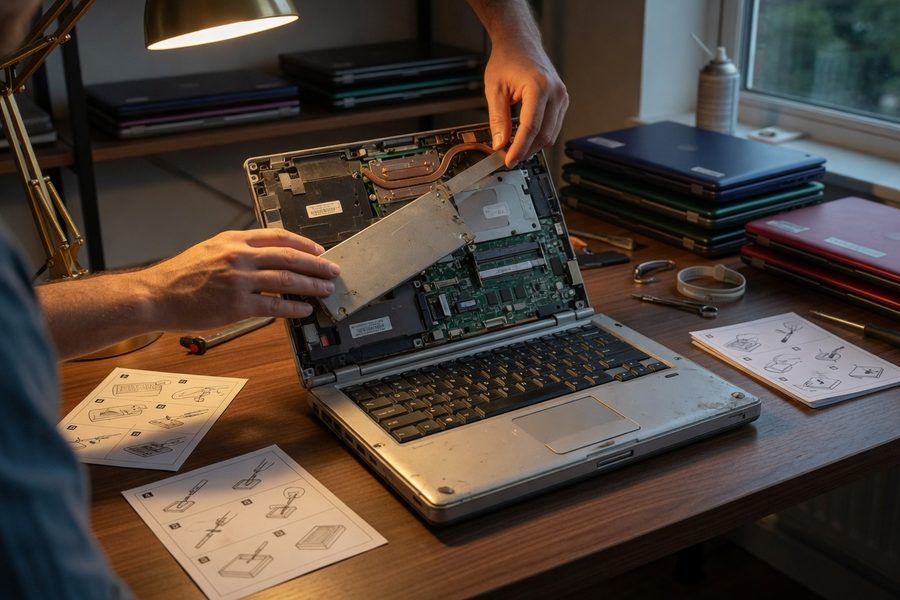
Data‑wiping software is free, and factory‑reset menus now do a thorough job, so the only barrier between a dusty laptop and a new user is the will to act. Donating to a certified non‑profit such as Goodwill’s Dell Reconnect program or the World Computer Exchange keeps devices in use and out of the shredder. Selling through platforms like Swappa or Back Market recovers cash. Both routes chip away at the world’s 2‑billion‑device gap in access to digital tools.
Caveats apply. Lithium‑ion batteries can degrade to the point where they won’t hold a charge, making a device less useful for someone who needs true portability. Privacy is also an understandable concern: physically removing and destroying the storage drive is the gold standard, though a properly executed secure erase meets most security frameworks for personal data. For a complete, start‑to‑finish process that covers valuation, shipping, and tax‑deduction paperwork, use our step‑by‑step guide to selling or donating old tech.
| Choice | Typical Annual Savings | Implementation Effort |
|---|---|---|
| Solar‑Powered Gadgets | $50–$120 per device, depending on usage | Medium (panel and battery setup) |
| E‑Waste Recycling | Avoided disposal fees and possible buyback | Low (drop‑off or mail‑in) |
| Energy‑Efficient Router | $10–$20 | Low (plug‑and‑play) |
| Refurbished Laptop | $200–$600 upfront purchase savings | Low (setup identical to new) |
| Green Web Hosting | $0–$30 (price parity typical) | Medium (site migration) |
| Smart Plugs | $30–$75 per plug set | Low (app‑based scheduling) |
| Selling/Donating Old Tech | $50–$400 (device‑dependent) | Medium (wipe, package, ship) |
Frequently Asked Questions
What counts as green technology?
Any product, service, or process designed to significantly reduce environmental harm: renewable energy gear, energy‑efficient electronics, biodegradable materials, and software that optimizes resource use. The manufacturing, operation, and disposal phases all matter, not just the device itself.
Is solar power realistic for a home office in a cloudy climate?
Yes, with a properly sized battery. Even in places like Seattle, diffuse sunlight still generates power, just at reduced output. A 100‑watt panel paired with a 500‑watt‑hour battery can often handle a laptop, monitor, and lamp if you top off during brighter hours.
How can I tell if a recycler actually processes e‑waste responsibly?
Look for e‑Stewards or R2 certification logos on their website. Those standards prohibit exporting hazardous waste to developing countries and require audited downstream tracking. Most major municipalities also publish lists of approved electronics recyclers.
Do biodegradable phone cases really disappear in a landfill?
No. Landfills lack the oxygen and microbial activity needed for meaningful biodegradation. An industrial composting facility is required for most “biodegradable” plastics, and even then only certified compostable cases fully break down.
Will an energy‑efficient router slow down my internet?
Rarely. Modern energy‑efficient routers use intelligent power management that keeps latency comparable to always‑on performance, and many Wi‑Fi 6 models actually deliver faster per‑watt throughput than older gear.
Should I always buy refurbished instead of new?
It depends on the workload. For web browsing, office apps, and streaming, a certified refurbished laptop is the greener and cheaper choice. For compute‑intensive tasks requiring the latest processors, a new machine may be justified, but it still carries a higher carbon footprint.
Does green web hosting actually make a difference?
Yes. By switching a moderately trafficked website to a host that draws 100% renewable energy, you can avoid roughly 0.5–1 ton of CO₂ per year. Multiply that by millions of sites, and the signal to the energy market becomes meaningful.
Can smart plugs really cut my energy bill?
They can, especially if you target devices that draw power on standby, like monitors, printers, or speakers. A typical home office can save $30–$75 a year with scheduled shut‑offs, and energy‑monitoring models help you find the hidden hogs.
What’s the safest way to erase data before donating a device?
Use built‑in factory reset tools: Apple’s “Erase All Content and Settings” or Windows’ “Remove everything” option, then run a free drive‑overwrite utility if you want an extra layer. Physically removing and destroying the drive is the surest method but usually unnecessary for most individuals.
Sources
- International Energy Agency, World Energy Investment 2024
- International Energy Agency, Data Centres and Data Transmission Networks
- US Environmental Protection Agency, Sustainable Materials Management Electronics
- US Environmental Protection Agency, Innovation
- IPCC, Chapter 16: Innovation, Technology Development and Transfer
- World Bank, Green Technologies for East Asia and the Pacific
- UNEP, Green Technology Choices: Environmental and Resource Implications of Low‑Carbon Technologies
- Global E‑waste Statistics Partnership, Global E‑waste Monitor 2024
- Energy Star, Networking Equipment
- US Department of Energy, Homeowner’s Guide to the Federal Tax Credit for Solar Photovoltaics
- Lawrence Berkeley National Laboratory, Standby Power Summary Table
- European Commission, Carbon Border Adjustment Mechanism
- Google, 2023 Environmental Report
- Biodegradable Products Institute, What Is BPI Certification?
- Apple, Certified Refurbished Products






