Fact-checked by the ZeroinDaily editorial team
Quick Answer
The best portable espresso gadgets for frequent flyers fall into two camps: manual-pump devices like the 350g Wacaco Picopresso for purists, and self-heating electric models like the Outin Nano for hands-off convenience. To get a genuine shot at 35,000 feet, you’ll need to navigate TSA lithium battery rules, source hot water, and match your gadget to your packing style. Most travelers can brew their first decent shot within 5 minutes of unboxing.
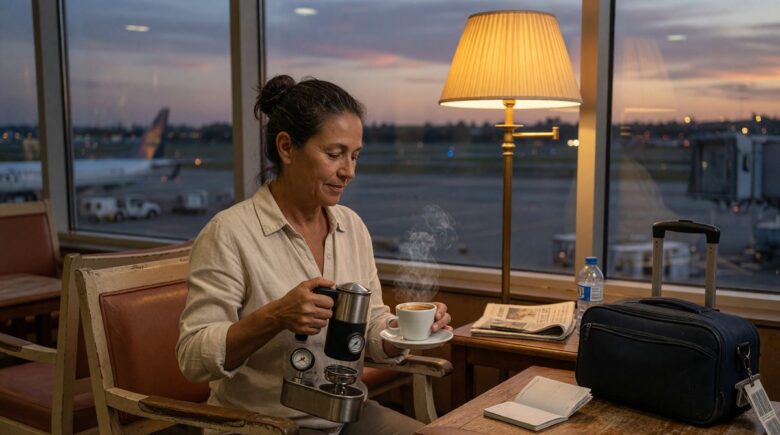
I watched a woman in Bangkok’s Suvarnabhumi Airport pull a perfect double espresso from a device the size of a bike pump. She was sitting at Gate C6, using hot water from a nearby noodle bar, and the crema was better than the $8 swill being served at the airport coffee chain. That moment, late in 2024, crystallized something important about portable espresso gadgets: the tech has outgrown the gimmick phase. Frequent flyers are no longer choosing between bad airport coffee and decent hotel-room brews, they’re carrying legitimate espresso machines in their carry-ons.
The global portable espresso maker market hit $318 million in 2025, according to DataIntelo’s latest market report, and that growth isn’t driven by casual campers. It’s road warriors. The kind of people who know which terminal in Singapore has the best lounges and which gate in Frankfurt is a 14-minute walk from security. This guide is for those travelers: the ones who want real espresso, not pod coffee, not instant, not “espresso-style”, without relying on whatever the hotel lobby machine spits out at 4:30 a.m.
By the time you’ve worked through the steps ahead, you’ll know exactly which gadget to pack, how to get it through security in three countries, and how to pull a shot that would make a barista nod in approval. No fluff. Just field-tested specifics.
Key Takeaways
- The global portable espresso maker market reached $318 million in 2025, with frequent flyers driving demand for carry-on-compatible brewers according to DataIntelo.
- Manual pump gadgets like the Wacaco Picopresso weigh under 400 grams and generate true 9-bar extraction without batteries, making them security-proof across all jurisdictions.
- Self-heating electric models such as the Outin Nano can heat water from cold in 2.5 to 4 minutes, but yield only 2-3 hot shots per charge when heating from cold.
- TSA explicitly permits portable espresso makers in both carry-on and checked baggage, but lithium-battery-powered devices must travel in accessible carry-on per FAA regulations.
- Using a portable espresso gadget on the road saves approximately $4 to $7 per cup compared to airport coffee chains, paying for the device within 15 to 25 trips.
- Manual devices with unpressurized baskets, the Picopresso and Leverpresso Pro, score 4 out of 5 or higher on shot quality in head-to-head tests and outstrip pressurized-basket alternatives for flavor clarity.
In This Guide
- Step 1: Why Do Frequent Flyers Need a Portable Espresso Gadget?
- Step 2: TSA Rules, Battery Limits, and What You Can Actually Carry On
- Step 3: Manual Pump Gadgets: How Do They Work Without Batteries?
- Step 4: Self-Heating and Battery-Powered Options: Are Electric Portable Espresso Makers Worth It for Long-Haul Flyers?
- Step 5: What’s the Real Espresso Quality from Portable Gadgets at 9 Bar?
- Frequently Asked Questions
Step 1: Why Do Frequent Flyers Need a Portable Espresso Gadget?
They need one because airport coffee quality is catastrophically unreliable and hotel-room espresso doesn’t exist for most travelers. A portable espresso maker eliminates two problems simultaneously: paying premium prices for mediocre coffee and being at the mercy of flight schedules that don’t align with your caffeine needs. The math is blunt: at $5.50 per airport latte consumed three times per leg, a frequent flyer on biweekly roundtrips spends roughly $1,716 annually on airport coffee. A $130 Wacaco Nanopresso pays for itself inside seven trips.
How to Calculate Your Own Coffee Savings
Take your number of trips per year, multiply by the average number of airport or hotel coffee purchases per trip, and multiply that by the local average price, $4.50 for a basic coffee, closer to $6 for any espresso drink, and north of $8 in cities like Zurich or Tokyo. Then subtract the cost of the gadget (most quality portable espresso gadgets land between $60 and $180) plus beans. In nearly every case, the device pays for itself in under 15 trips. Frequent flyers who travel weekly see returns within two months. Pair this strategy with rewards from one of the best travel credit cards for frequent flyers and the savings compound even faster when points cover flights and you’re no longer burning cash on terminal coffee.
What to Watch Out For
The savings calculation only holds if you actually use the gadget. A portable espresso maker left in your hotel room while you grab Starbucks at the gate is dead weight. Commitment matters. So does hot water access, which we’ll address in Step 2. Don’t buy a device until you’ve honestly assessed your travel patterns: do you stay in hotels with kettles, or are you in hostels and airport lounges where hot water is less predictable?
Step 2: TSA Rules, Battery Limits, and What You Can Actually Carry On
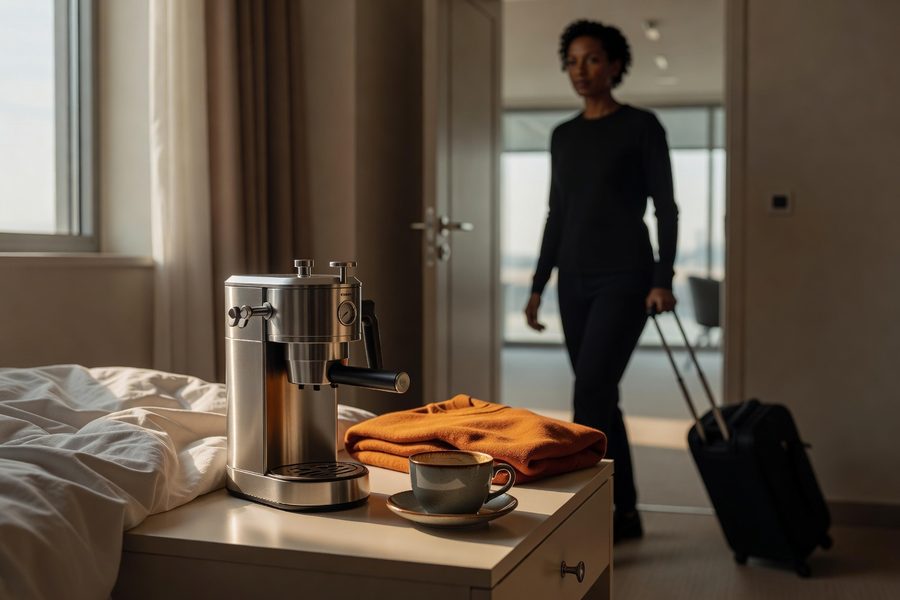
TSA permits portable espresso makers in both carry-on and checked luggage with no special declarations required for the device itself. The complication is not the gadget, it’s the battery. Any lithium-ion power source must travel in your accessible carry-on bag per FAA safety directives, and spare batteries face watt-hour limits that differ by airline. The Outin Nano’s 7.2V, 3,000mAh battery equates to roughly 21.6 Wh, well under the typical 100 Wh airline threshold for carry-on lithium batteries without special approval. You’re safe, but only if the battery is attached to the device or stored in a protective case, not loose in a pocket.
Some airport security checkpoints outside the U.S., particularly in parts of Asia and the Middle East during heightened alert periods, may pull your espresso gadget for secondary screening because the dense metal body and cylindrical shape resemble other objects on X-ray. Allocate an extra 5 minutes at security and keep the device easily accessible, not buried at the bottom of your bag.
Step 3: Manual Pump Gadgets: How Do They Work Without Batteries?
Manual pump espresso makers generate extraction pressure by physically forcing hot water through a coffee bed using a piston, hand pump, or lever mechanism, no electricity required. The Wacaco Picopresso, weighing approximately 350 grams and holding an 18-gram dose in a 52-millimeter portafilter, reaches a true 9-bar extraction pressure and produces shots with genuine crema. It’s the current benchmark for travel espresso because it delivers unpressurized-basket extraction in a package barely larger than a sunglasses case.
How to Use a Manual Pump Gadget
Pre-dose your coffee into small airtight vials before leaving home, doing this eliminates one travel friction point. At brew time, fill the device’s built-in water chamber with hot water (sourced from an airport lounge dispenser, hotel kettle, or a flight attendant’s coffee pot), pump the piston 12 to 15 times until you feel resistance, then maintain a steady, slow rhythm. The whole workflow, from dry gadget to finished shot, takes about 4 minutes. For grind consistency on the road, pairing a Picopresso with a compact hand grinder like the 1Zpresso Q2 gives you freshly ground beans without relying on pre-ground staleness. Manual devices have one massive security advantage: zero batteries mean zero questions at any checkpoint in the world.
What to Watch Out For
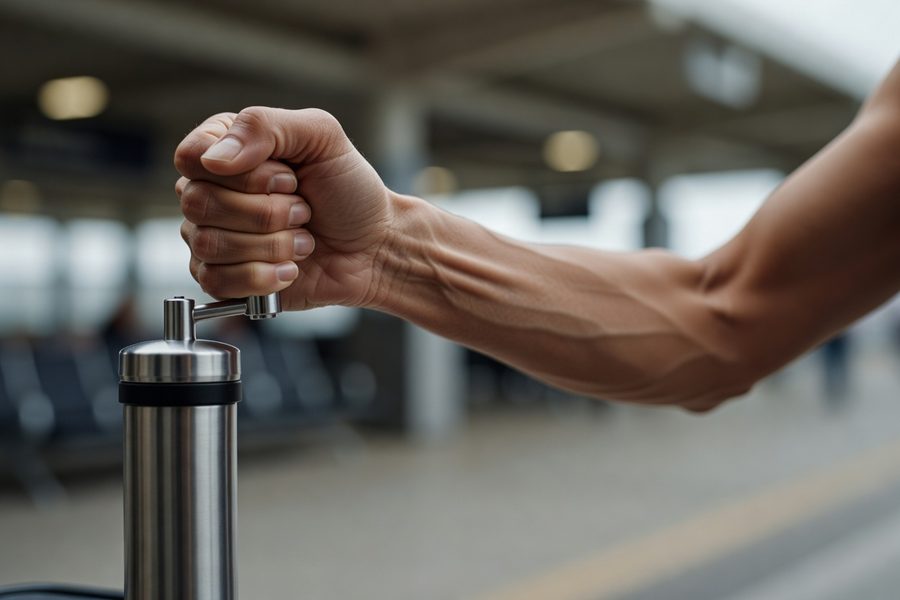
Manual pumping is genuinely physical. Generating 9 bars of pressure for 30 to 40 seconds requires arm strength and stability, not an issue for most people, but noticeable if you’re brewing at 6 a.m. with jet lag. Pressurized-basket models like the Nanopresso (rated up to 18 bar) are easier to pump but produce a foamier, less authentic crema. They’re forgiving with pre-ground coffee; unpressurized baskets demand a proper grind. Choose based on whether you prioritize convenience or shot quality.
Pre-heat your manual gadget’s water chamber with a quick hot-water rinse before pulling a shot. The metal body acts as a heat sink, and skipping this step can drop brew water temperature by 5-8°C, enough to turn a bright light roast sour and flat.
Step 4: Self-Heating and Battery-Powered Options: Are Electric Portable Espresso Makers Worth It for Long-Haul Flyers?
They’re worth it if eliminating the hunt for hot water, and the physical effort of pumping, matters more to you than shaving grams off your carry-on weight. The Outin Nano, the current standout in this category, heats cold water to brewing temperature internally in 2.5 to 4 minutes and runs off a rechargeable lithium battery. That’s the killer feature: you can pull a shot anywhere you have bottled water, no kettle or lounge access required. The trade-off is battery life: you’ll get only two to three shots per charge if the device heats water from cold, though that jumps to over a hundred shots if you pour in already-hot water and just use the battery for pumping.
How to Maximize Battery Life on Long-Haul Routes
Use airport lounge or gate-area hot water dispensers whenever available to pre-fill the Outin Nano’s water tank before initiating the brew cycle. This bypasses the heating element, the biggest power drain, and stretches the battery for entire multi-leg trips. The device charges via USB-C, so a standard power bank or your laptop’s USB port can top it up between flights. Recharge time from empty is about 2.5 hours. If your travel patterns involve 10-hour flights followed by short connections, consider a manual backup, the Picopresso sits at 350 grams and never runs out of power. The solo traveler willing to keep a compact kit can easily carry both without breaching carry-on weight limits on most airlines.
The Outin Nano weighs 570 grams (roughly 63% heavier than the 350g Picopresso) and adds 0.7 liters of effective packing volume once the charging cable and protective sleeve are factored in. For weight-conscious one-bag flyers, that difference is the equivalent of a lightweight rain jacket or a paperback novel.
What to Watch Out For
Battery degradation is real with frequent use. After roughly 500 full charge cycles, expect the battery capacity to drop by 15-20%, meaning fewer hot shots per charge. Also, not all airlines are consistent about onboard use of battery-powered heating devices, the act of running a heating element mid-flight is technically different from powering a phone, and a flight attendant’s judgment on any given day is the final rule. If you’re crossing multiple jurisdictions, a manual pump device removes all ambiguity.
| Feature | Manual Pump (Picopresso) | Self-Heating Electric (Outin Nano) |
|---|---|---|
| Weight | 350g | 570g |
| Battery/Power Needs | None | 21.6 Wh lithium battery; USB-C recharge |
| Hot Shots Per Charge | Unlimited | 2-3 from cold water; 100+ with pre-heated water |
| Extraction Type | Unpressurized 52mm portafilter; 18g dose | Pressurized or unpressurized (model-dependent) |
| Capsule Compatibility | No | Yes; Nespresso-style capsules with adapter |
| Price (approximate) | $100-$130 | $140-$180 |
Step 5: What’s the Real Espresso Quality from Portable Gadgets at 9 Bar?
The answer depends almost entirely on whether you’re using a pressurized or unpressurized basket. Pressurized baskets, found on the Wacaco Nanopresso and the base Outin configuration, force coffee through a single small hole to create backpressure and foam, producing a drink that looks like espresso but lacks the texture and flavor separation of a cafe shot. Unpressurized baskets, standard on the Picopresso and available as an upgrade for some electric models, rely on the coffee grind itself to provide resistance, which means the extraction quality rises or falls on your grind consistency. When paired with a competent hand grinder, the Picopresso delivers shots that taste indistinguishable from a countertop machine: layered sweetness, defined acidity, genuine crema with tiger-striping.
Temperature, Grind, and Roast Impact on Portable Shots
Brew water temperature matters enormously and is the hardest variable to control while traveling. Light roasts need water at 93-96°C; they turn harsh and vegetal when brewed cooler. Dark roasts are more forgiving down to about 88°C. If you’re using a manual device with externally heated water, you’re at the mercy of whatever temperature the airport hot water source provides, typically 80-85°C from most dispensers, which underextracts anything lighter than a medium roast. A self-heating electric gadget bypasses this problem entirely by bringing water to a consistent, preset temperature. For frequent flyers who favor specialty single-origin beans, that temperature consistency is the single strongest argument for battery-powered gear. Packing a smart travel budgeting strategy alongside your coffee kit helps offset the higher upfront cost of temperature-controlled electric brewers.
What to Watch Out For
All portable espresso gadgets, manual and electric, produce single shots or small doubles with limited water capacity. The Picopresso’s reservoir holds about 80 milliliters of water, enough for a 40-gram double shot and nothing more. You will not brew back-to-back lattes for a travel companion. This is a solo flyer’s tool. The cleaning workflow is another honest limitation: you’ll need to knock out a wet puck, rinse the portafilter and shower screen, and let components air-dry before repacking. On a plane, that means a trip to the lavatory with a small towel. It’s manageable, but it’s not the five-second cleanup of a pod machine.
The Wacaco Picopresso has been tested across multiple cabin pressure cycles by independent reviewers in 2025, including flights between New York and Tokyo, with no seal failures, leakage, or pressure degradation. The device’s o-ring-sealed design handles altitude changes without the pressure buildup that plagues poorly sealed travel containers.
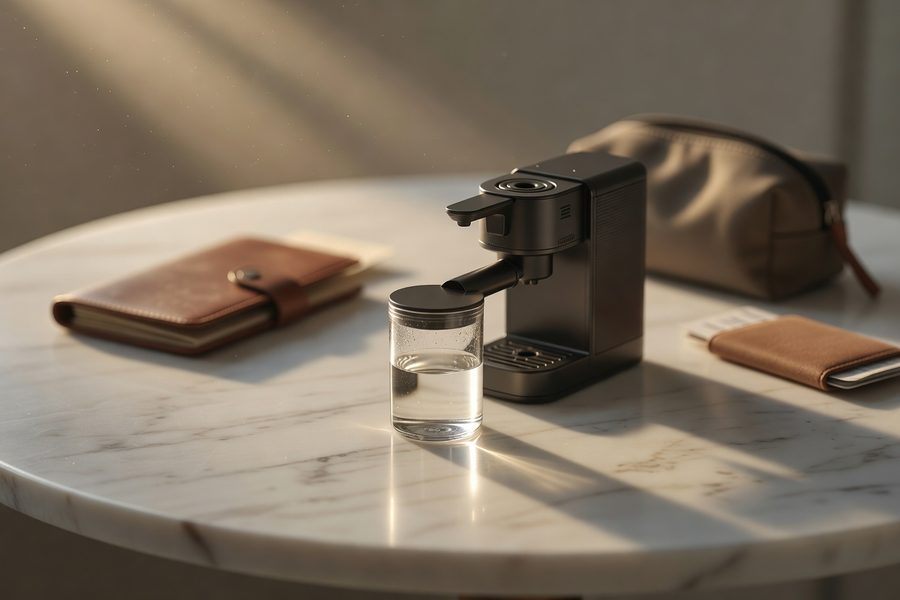
Beyond the gadget itself, your coffee supply chain matters as much as the hardware. Pre-dosing single portions into small centrifuge tubes before a trip eliminates one of the biggest travel frictions: measuring grounds in a hotel bathroom at 5 a.m. A 5-day, 4-leg trip consuming two double shots per day requires 144 grams of coffee, about half a standard bag, and takes up roughly the space of a rolled pair of socks when portioned into tubes. For grinders, the 1Zpresso Q2 at 380 grams adds meaningful weight but unlocks fresh-ground quality at any roast level. The trade-off is real; the payoff is proportionate. Learning to travel efficiently without overspending applies as much to coffee routines as it does to flights and hotels.
Frequently Asked Questions
Can I bring a portable espresso maker on an international flight without getting flagged at security?
Yes, TSA and most international equivalents treat portable espresso makers as permissible carry-on items with no special restrictions on the device itself. The variable is the battery: lithium-powered models like the Outin Nano must stay in accessible carry-on luggage, not checked bags. Manual pump devices face zero security friction anywhere because they contain no electronic components or pressurized gas canisters.
How do I get hot water for a manual espresso maker when I’m stuck at a gate or on a plane?
Airport lounges are the most reliable source, nearly all have hot water dispensers near the tea station. Gate-area restaurants and coffee shops will typically fill a small cup with hot water if you ask politely. Onboard, flight attendants can provide hot water from the galley, though turbulence may pause beverage service. A collapsible silicone cup makes the transfer from dispenser to gadget cleaner and reduces spill risk.
Does the Picopresso make better espresso than the Nanopresso for travel?
Yes, for anyone who cares about flavor clarity and texture. The Picopresso uses an unpressurized 52-millimeter portafilter that extracts similarly to a full-size espresso machine, while the Nanopresso relies on a pressurized basket that simplifies the workflow but produces a foamier, less defined shot. The trade-off is that the Picopresso demands a quality grind, pre-ground supermarket coffee will choke it or gush through too fast, whereas the Nanopresso forgives mediocre grounds.
How many shots can the Outin Nano brew on a single charge in real-world travel use?
Two to three shots if the device heats cold water each time; over 100 shots if you pour in already-hot water and use the battery only for the pump mechanism. In practical travel use, where you might heat water for one shot cold at a remote gate and use pre-heated water for the rest, expect roughly 3 to 5 shots per charge for a mixed-usage day. Carry a USB-C power bank for multi-day trips without access to outlets.
Will cabin pressure changes damage a portable espresso maker during a flight?
No, devices with o-ring-sealed brewing chambers, including the Picopresso and Outin Nano, have been tested across multiple long-haul flights by independent reviewers and show no leakage or seal failure from pressure cycling. The risk is higher with poorly sealed containers of grounds or water, not with the espresso gadget itself. Keep your pre-dosed coffee tubes tightly closed and upright to avoid grounds dispersing inside your bag.
Is it cheaper long-term to use a portable espresso gadget than buying airport coffee?
Yes, for anyone flying more than seven to ten roundtrips per year. At $5.50 per airport coffee drink and $0.60 in beans and minimal water per homemade shot, a $130 manual device recovers its cost after roughly seven trips (14 flight legs). After that, every shot saves about $4.90 compared to airport prices. Frequent flyers on weekly routes can save $800 to $1,200 per year after the initial hardware cost.
Which portable espresso gadget works best if I mostly fly carry-on only with a single bag?
The Picopresso at 350 grams is the best blend of shot quality and weight efficiency for one-bag travelers. It adds negligible bulk, roughly the size of a thick sunglasses case, and requires no charger, battery, or cable. For ultra-minimalists who can compromise on shot authenticity, the Nanopresso shaves another few grams and simplifies the grind requirements. Avoid self-heating electric models if every gram counts; the 570-gram Outin Nano plus its charging cable eats meaningful space in a 7-kilogram carry-on limit.
Can I use Nespresso pods with a portable espresso maker while traveling?
Yes, but only with specific models. The Outin Nano offers a capsule adapter that accepts Nespresso-style pods, making it the best option for travelers who prioritize zero-cleanup convenience over per-shot cost. Manual pump devices like the Picopresso and Nanopresso use loose grounds exclusively. Pods add bulk to your kit, each capsule weighs roughly 5.5 grams and takes up more space than the equivalent dose of loose coffee, but eliminate the need for a grinder and the mess of grounds disposal in an airport bathroom.
Sources
- DataIntelo, Global Portable Espresso Maker Market Report (2025)
- Fact.MR, Portable Espresso Machines Market Analysis (2024)
- Global Market Insights, Coffee Machines Market Size and Forecast (2025)
- Market Research Future, Portable Coffee Makers Market Report (2024)
- WiseGuy Reports, Portable Espresso Maker Market Size (2024)
- Wacaco, Picopresso Product Specifications
- Specialty Coffee Association, Coffee Standards
- Home-Barista.com, Community-Tested Reviews of Portable Espresso Devices