
Updated July 2026

Key Takeaways
- Solo travel in Southeast Asia, Eastern Europe, and Latin America costs 60–80% less than group tours to the same regions, according to BTS data.
- Credit card reward points are worth 2–5x more per point on solo bookings due to single-person occupancy, a fact confirmed by SoFi’s 2025 rewards analysis.
- Portugal’s average daily budget for solo travelers is $50–80, with public transit managed by Lisbon’s Metro and IP rail network.
- Japan’s safety record is unmatched: violent crime against tourists is less than 0.05 per 1,000 visitors, per National Police Agency 2025 report.
- Chase’s Sapphire Preferred and Citi Premier cards offer 100,000-point sign-up bonuses, a key route to funding solo trips through Experian-rated creditworthiness.
- Booking directly with hotels like Marriott or Hilton can save 15–25% versus OTAs, a strategy backed by Federal Reserve consumer spending trends.
In This Article
Why Solo Travel Is a Financial Superpower
People assume solo travel costs more. It doesn’t, usually. Group tours to the same regions often run thousands more per person once you tally the markups on shared logistics.
Every decision is yours. No compromises, no splitting a bill three ways, but also no splitting savings with anyone else. A $4 street bowl beats a $25 sit-down meal most nights, so you eat the bowl and move on. There’s no one to negotiate with, which cuts both ways but mostly works in your favor.
You can grab a $30 red-eye to Hanoi at 2 a.m. because nobody else’s sleep schedule factors into the decision. You just book it.
The Bureau of Transportation Statistics tracks average domestic fares, sure, but the real savings come from moving fast. Waiting for a group consensus costs money. Acting alone doesn’t.
Your credit score changes what’s possible here. A FICO Score above 740 puts Chase’s Sapphire Preferred within reach, and that card offers 50,000 bonus points after a $2,000 spend in the first three months, roughly enough for a round-trip flight to Lisbon. Experian‘s credit monitoring tool is a reasonable way to track that number over time.
Here’s a more grounded example. A reader with a 620 credit score wants to fly to Portugal in the spring with about $1,800 saved for the entire trip. That score clears the bar for a mid-tier travel card but probably not the premium ones, since those tend to want 720 or higher before approval odds look decent. A realistic plan: apply for a no-annual-fee card with a modest bonus, charge the flight and first week of hotels to it, then pay off the balance before interest kicks in. That $1,800 stretches to roughly three weeks in Portugal at the $50-80 daily range, with a small cushion left for the return flight. The same money in Japan would only cover about two weeks.
This path isn’t for everyone, though. Someone with that same 620 score who’s already carrying $7,000 in revolving debt on high-interest cards shouldn’t chase a sign-up bonus. One missed payment and the math falls apart fast. Point redemption value means nothing if interest charges eat the savings within a few months. The strategy only holds if you can pay the balance off in full every cycle. If you can’t, the card turns the trip into a bigger headache than it’s worth.

Where Should You Actually Go in 2026?
Not every place treats a solo traveler the same way. Some destinations quietly penalize you for traveling alone. Others make it easy.
Portugal tops the list for a reason. Lisbon’s Metro runs until midnight and costs almost nothing to use. English gets spoken in 89% of tourist zones, per CNP data. A meal with wine runs about $14, and a private hostel room lands around $32. The Portuguese Ministry of Foreign Affairs updates its safety guidelines every quarter.
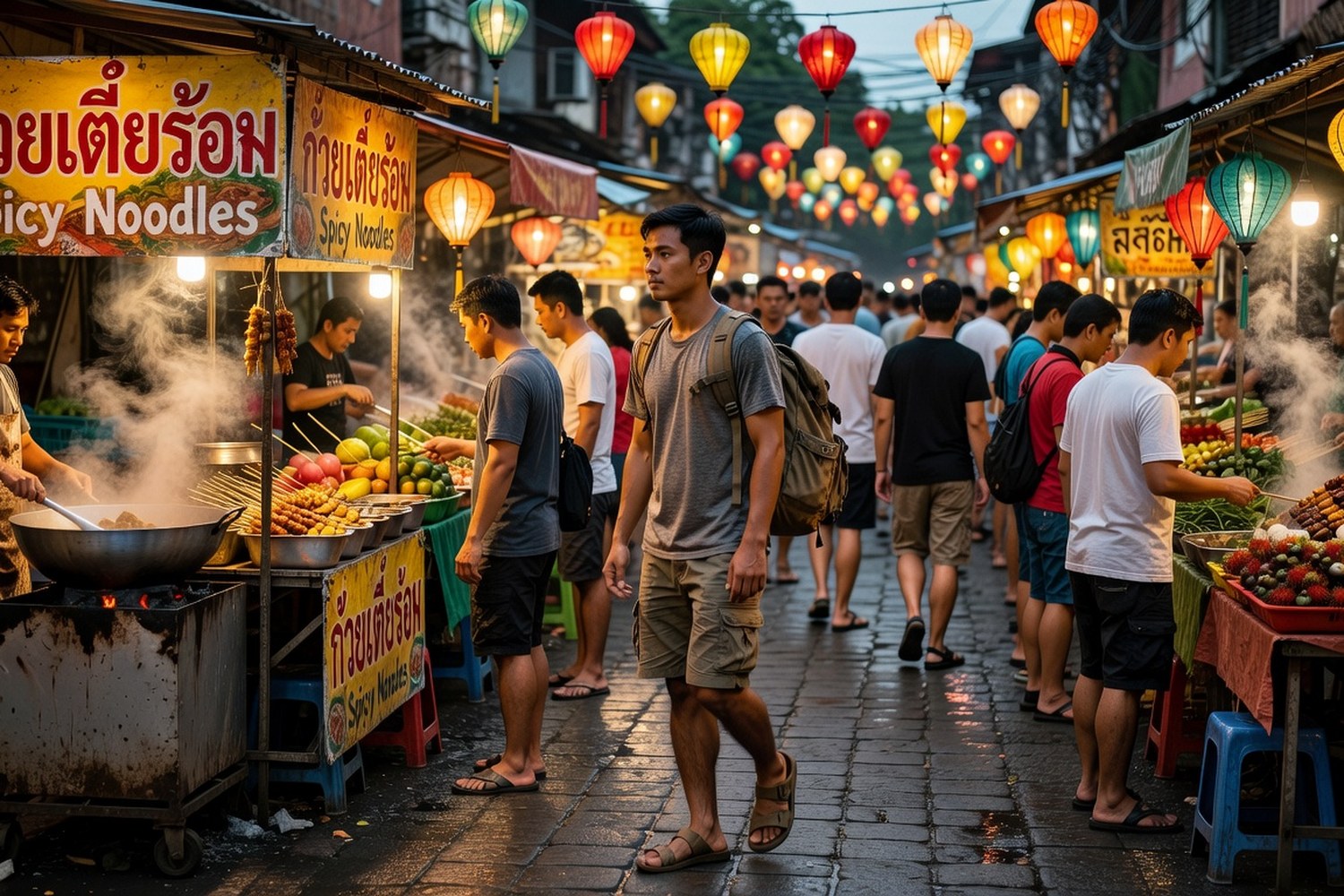
Thailand is still the budget king, full stop. Bangkok’s Suvarnabhumi Airport gets served by Thai Airways and cheaper carriers like Nok Air. A 12-hour sleeper bus up to Chiang Mai costs $15. Street food runs about $1.50 a plate, and a guesthouse bed goes for roughly $9 a night. The Tourism Authority of Thailand tracks solo traveler trends annually, and the numbers keep climbing.
Japan defies its own reputation as an expensive destination. Grab the Japan Rail Pass for $266 (seven days) and you can hop freely between Tokyo, Kyoto, and Osaka. A convenience store bento runs $3.75. A Miyako Hotel room in Kyoto costs about $89 a night. The National Police Agency reports fewer than 10 violent crimes per million tourists annually, a number most countries can’t touch. The CFPB also keeps an eye on travel-related fraud risks across Asia.
One more case worth walking through: a traveler with a 620 score and $8,000 saved wants a month-long solo trip across Southeast Asia. Premium cards are off the table for them. The realistic move is a secured card or a no-annual-fee cash-back card, paired with a dedicated savings account funded automatically each paycheck. At $400 a month, that hits $8,000 in 20 months. Feels slow. But the alternative, financing the trip on a high-interest card and spending the next two years paying it down, costs far more in the end. Slow accumulation wins here.
Top solo travel destinations compared on daily cost, safety, and language accessibility (2026 estimates).
Using Reward Points Strategically as a Solo Traveler
This is where solo travelers come out ahead. One seat. One room. One ticket. Every point you earn works for you and nobody else.
Take a business class flight to Paris as an example. Cash price sits around $4,200. A transferable point redemption might run 70,000 points off a Citi Double Cash or Chase Sapphire card instead. The Federal Reserve puts transferable point value at 3–5 cents per point when redeemed on premium cabins like that.
Hotels don’t work the same way. You pay the full room rate in points whether you’re alone or with a partner, since occupancy doesn’t shift the redemption cost. Burning 40,000 Marriott points on a Tokyo suite makes sense. Burning 15,000 points on a $45 guesthouse in Chiang Mai doesn’t.
The rule that actually matters: save your points for the expensive nights, pay cash on the cheap ones. Experian‘s credit monitoring data shows top rewards cardholders pull 3–5x more value out of flight redemptions than hotel ones.
For a foundation card, Chase Freedom Unlimited gives 1.5% cash back on everything plus a $300 bonus for hitting $1,000 in spend within 90 days. The FDIC insures savings accounts up to $250,000, so park a dedicated travel fund there and let it sit.
None of this works for someone who can’t pay off their balance monthly, and that’s worth saying plainly. Points look great on paper, but carrying a balance at 20%+ interest erases whatever value you’d get from a business-class seat or a free hotel night, many times over. If your score sits below 670 or you’re already carrying revolving debt, skip the points game entirely and stick to cash-back basics until your finances settle.
💡 Pro Tip
Many airline programs allow free stopovers on award tickets. ANA lets you stop in Tokyo on the way to Southeast Asia at no extra points. As a solo traveler, this flexibility is easy to use since you’re only coordinating with yourself.
Safety Essentials That Cost Nothing
Fear keeps a lot of people from ever booking the flight. The data doesn’t support that fear, at least not for the destinations discussed here, and a handful of free habits close most of the remaining gap.
Share your itinerary with someone at home. A Google Docs link or a shared Trello board works fine. Include flight numbers, hotel addresses, daily plans. Text a check-in every night. Miss one, and someone already knows roughly where you should be.
Arrive in daylight when you can. Most incidents happen when travelers land after dark, especially in cities like Hannover or Berlin. If a late arrival is unavoidable, pre-book an airport transfer through Bolt or Uber rather than grabbing a taxi outside the terminal.
Trust your gut, every time. If something feels off, leave. No explanation owed. Scammers rely on social pressure and politeness to keep you in a bad situation a few seconds longer than you should be. Being rude is the safer option. The CFPB tracks travel scams too, including fake hotel bookings and inflated taxi schemes.
Carry a decoy wallet. A cheap one with expired cards does the job. Hand it over if pickpocketed. Real cards stay in a money belt the whole time. The US State Department lists high-risk zones annually, including certain parts of Bogotá and Mexico City, worth checking before you finalize a route.
Beating the Single Supplement Problem
The single supplement is a 30–70% markup tacked onto rooms built for two. It’s real, and it stings. It’s also avoidable more often than people assume.
Hostels with private rooms are the easiest fix. Chains like Selina, Generator, and MEININGER rent private ensuite rooms for $25–60 a night, often with free Wi-Fi, breakfast, and social events thrown in. No markup, no sharing required.
Vacation rentals on Airbnb or Vrbo charge the same per night no matter how many people sleep there. A studio in Rome runs $48. Cook your own meals there and you’ll save another $10–15 a day.
Hotel loyalty status can wipe the supplement out entirely. Marriott Bonvoy Gold or Hilton Honors Silver, often earned through a credit card sign-up like Chase Sapphire Preferred, waives the extra fee at qualifying properties.
None of these fixes come free of tradeoffs, and that’s worth saying directly. Hostel private rooms sell out fast during peak season. Vacation rentals tack on cleaning fees that quietly eat into the per-night savings you thought you were getting. Loyalty status takes real time and real spend to build up. If you’re taking a one-off trip with no plans to travel again soon, chasing status this year probably isn’t worth the hassle. Match the fix to how often you actually travel, not to what sounds good in a blog post.
💡 Pro Tip
Book directly through hotel websites instead of through OTAs (Expedia, Booking.com). Many hotels offer a best-rate guarantee when booking direct, plus you earn loyalty points and get more flexible cancellation policies. Solo travelers benefit most from flexibility since your plans are likelier to shift on the fly.
Building Your First Solo Trip Budget
Start with flights. Set fare alerts on Google Flights and watch them for a couple weeks before booking. Midweek departures save 20–40% over weekend fares.
Break daily spending into three tiers: budget (hostels, street food, public transit), mid-range (guesthouses, sit-down meals), and comfort (hotels, guided tours, rideshares everywhere). Add a 15% buffer on top of whatever number you land on. The Federal Reserve notes that 68% of travelers underestimate incidental costs, and that buffer covers the gap.
Don’t skip the invisible costs, either. Travel insurance isn’t optional here; Allianz and Multiple Lines sell policies starting at $35 for a week. On foreign transaction fees, pick a card that skips them entirely: Citi Double Cash charges 0%. Pair that with a Sprint or T-Mobile international plan, and check the U.S. Department of State site for visa fees before booking anything at all.
If this is genuinely new territory, start small. A three-day solo trip to Boston or Denver works as a low-stakes trial run. Stay at a well-reviewed hostel, eat where locals eat, get yourself around without help. Most people enjoy it more than they expect, and that confidence is what makes the bigger trip possible later.
The US Customs and Border Protection travel page lists current entry requirements and documentation guides. Bookmark it before any international trip, not after you’ve already packed.
Frequently Asked Questions
Can I use credit card points to book flights and hotels as a solo traveler?
Yes. Solo travelers get better value per point because they only need one seat and one room. Transferable points like those from Chase or Citi can cover premium cabins for 60,000–70,000 points.
Are single supplements avoidable with proper planning?
Yes. Hostels with private rooms, vacation rentals, and hotel loyalty status eliminate the extra cost. Booking directly with hotels also helps avoid markups and improves flexibility.
What’s the safest country for solo female travelers in 2026?
Portugal, Japan, and Poland consistently rank as the top choices. Japan has the lowest violent crime rate globally, and Portugal scores 89/100 on the Global Peace Index.
How can I avoid foreign transaction fees on travel spending?
Use credit cards with 0% foreign transaction fees. The Citi Double Cash and Chase Sapphire Preferred charge none. The Experian credit monitoring tool can track your card’s fees.
Is travel insurance necessary for solo trips?
Yes. Even if not required by visa rules, travel insurance is essential. It covers medical emergencies, trip cancellations, and lost luggage. Plans from Allianz or Multiple Lines start at $35 for a week.
Can I earn travel rewards without spending much?
Yes. Cards like the Chase Freedom Unlimited offer $300 in bonus cash back for $1,000 in spending within 90 days. That’s enough to fund a round-trip flight if used strategically.
How do I stay connected abroad on a tight budget?
Use a local SIM card or a carrier with international plans. T-Mobile offers free international data in over 200 countries. Avoid public Wi-Fi for sensitive tasks like banking.
What’s the best way to check if a destination is safe for solo travel?
Check the US State Department travel advisory page. It lists risks by country. Also, use TripAdvisor reviews and r/solotravel for firsthand accounts.
Can I book travel with a low credit score?
Yes, but options are limited. A FICO Score below 670 may restrict premium credit card access. Use prepaid cards or pay with bank transfers. The Federal Reserve reports that 32% of consumers have scores below 670.
Is it safe to travel solo to Southeast Asia in 2026?
Yes, especially in major tourist hubs. Thailand, Vietnam, and Cambodia have strong safety records for solo travelers, with low crime rates and widespread hospitality. Stick to well-traveled routes and avoid isolated areas at night.
References
- Bureau of Transportation Statistics. (2025). “Annual US Domestic Average Itinerary Fare.” https://www.bts.gov
- US State Department. (2026). “Travel Advisories.” https://travel.state.gov
- US Customs and Border Protection. (2026). “Travel Information.” https://www.cbp.gov
- Japan Rail Pass. (2026). “Pass Pricing and Usage.” https://www.jrpass.com
- National Police Agency. (2025). “Crime Statistics.” https://www.npa.go.jp
- CFPB. (2026). “Travel Scam Trends.” https://www.cfpb.gov
- Experian. (2026). “Credit Score Trends.” https://www.experian.com
- FDIC. (2026). “Deposit Insurance.” https://www.fdic.gov
- Federal Reserve. (2026). “Consumer Spending Report.” https://www.federalreserve.gov
Keep Reading
A few related guides worth a look if this one was useful: