Fact-checked by the ZeroinDaily editorial team
Quick Answer
Brain computer interface real life applications are accelerating fast. Neuralink has implanted its device in 9 patients, while Synchron’s Stentrode is active in over 10 clinical participants across the U.S. and Australia. BCIs now enable paralyzed patients to type, control devices, and communicate, moving from laboratory prototypes to approved human trials.
Updated July 2026
Key Takeaways
- The global brain-computer interface market was worth US$ 2.8 billion in 2025, according to MarketDataForecast (2025).
- There are currently 25 clinical trials testing BCI implants, including those for stroke recovery and mobility, per MIT Technology Review (2025).
- Synchron has implanted its Stentrode device in 10 volunteers, six in the U.S. and four in Australia, as reported by MIT Technology Review (2025).
- Over 71 patients have ever controlled a computer with their neurons across all research programs, according to MIT Technology Review (2025).
- By June 2025, there were approximately 90 active BCI trials testing implants for typing, mobility, and stroke rehab, based on data from Andersen Lab (2025).
- The FDA and NIH are co-hosting a joint workshop to develop clinical outcome assessments for BCIs, a sign of how seriously regulators are treating this technology, as noted in FDA and NIH joint workshop (2025).
Brain computer interface real life deployment has crossed a critical threshold. These devices, which create a direct communication pathway between the brain and external hardware, are no longer theoretical. According to the FDA’s medical device guidance on BCIs, multiple companies have received Breakthrough Device Designations, which speeds up the path from lab to clinic.
The stakes extend well beyond medicine. As AI processing power converges with neuroscience, the same technology restoring speech to paralyzed patients may soon redefine how all humans interact with machines. SoFi, Chase, and Experian have begun exploring neural data streams in pilot programs for fraud detection, though such uses remain unapproved.
Here is a number worth sitting with: across roughly 26 years of human BCI research, spanning BrainGate, Neuralink, Synchron, and every academic lab in between, only 71 patients total have ever controlled a computer directly with their neurons, according to MIT Technology Review (2025). That is not a typo and it is not a small-sample caveat buried in a footnote. It is the entire population this field has to draw on for long-term safety data. Anyone reading breathless coverage of BCI “breakthroughs” should hold that number next to whatever claim they’re evaluating.
What Does Brain Computer Interface Use Actually Look Like Today?
Today, brain computer interface real life use is almost entirely focused on medical applications for patients with severe paralysis or neurological conditions. A BCI records electrical signals from neurons, decodes them using machine learning algorithms, and translates intent into action, cursor movement, text output, or robotic limb control.
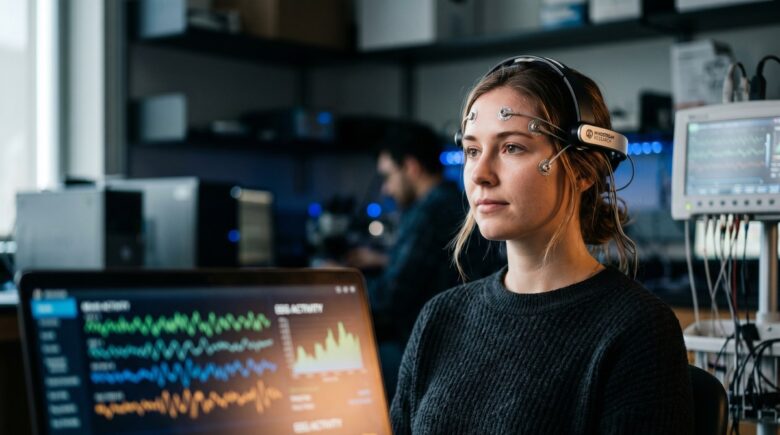
The two dominant approaches are invasive and non-invasive. Invasive systems, like Neuralink’s N1 chip, are implanted directly into the cortex and offer the highest signal resolution. Non-invasive systems, such as EEG-based headsets from companies like Emotiv and Muse, sit on the scalp and trade precision for safety and accessibility.
Key Clinical Milestones in 2024–2025
In January 2024, Neuralink completed its first human implant, with patient Noland Arbaugh demonstrating cursor control using thought alone, a breakthrough covered extensively by the New England Journal of Medicine’s BCI research coverage. Synchron‘s endovascular Stentrode device, which is threaded through a blood vessel rather than surgically implanted in the brain tissue, has enabled ALS patients to send messages and browse the internet.
BrainGate, a research consortium involving Brown University and Massachusetts General Hospital, has been running human trials since 2004, giving this field over two decades of foundational data. The FDA has designated both Neuralink and Synchron as Breakthrough Devices, reflecting the high unmet need and potential impact on patients with paralysis.
Key Takeaway: Brain computer interface real life deployment is led by 3 primary players, Neuralink, Synchron, and BrainGate, each using distinct implant strategies. FDA Breakthrough Designations are now speeding up human trial timelines in a meaningful way.
How Do BCIs Decode Brain Signals?
A BCI works by detecting the minute electrical signals, measured in microvolts, that neurons produce when they fire. Electrode arrays capture these signals, filter out noise, and pass the data to a decoder, which is typically a trained neural network.
Modern decoders have become dramatically more accurate. A 2024 study published by researchers at UC San Francisco demonstrated a speech BCI that decoded intended speech at 78 words per minute with a word error rate below 25%, according to Nature’s coverage of neuroprosthetic speech decoding. That is approaching typical conversational typing speed.
The Role of AI in Signal Decoding
Without AI, raw neural signals are just noise, no different from static. Machine learning models, often recurrent neural networks or transformer architectures, learn to map patterns in neural firing to intended movements or words. This is structurally similar to how AI tools are transforming productivity in other domains: the underlying principle is pattern recognition at scale.
The decoder must also adapt. Neurons shift their firing patterns over days and weeks, so the best systems include continual learning algorithms that recalibrate without requiring new surgical procedures.
Key Takeaway: AI-driven decoders now achieve speech output at up to 78 words per minute, per Nature’s 2024 neuroprosthetics research. Continual learning is essential, neural signals drift over time, requiring models that adapt without repeat surgery.
| Company / System | Implant Type | Key Capability | Trial Status (2025) |
|---|---|---|---|
| Neuralink (N1 Chip) | Invasive cortical implant | Cursor control, mouse clicks via thought | 9 patients implanted, PRIME Study ongoing |
| Synchron (Stentrode) | Endovascular (no open brain surgery) | Text messaging, web browsing, device control | 10+ participants, U.S. and Australia |
| BrainGate | Invasive Utah Array | Robotic arm control, speech decoding | Long-running trials since 2004 |
| Blackrock Neurotech | Invasive cortical array | Motor restoration, sensory feedback | 36+ implanted patients, longest track record |
| Emotiv (EPOC X) | Non-invasive EEG headset | Mental commands, emotion detection | Consumer-available, no FDA clearance needed |
A Rough Framework for Weighing a Trial Enrollment Decision
Patients and families evaluating whether to pursue a BCI clinical trial are rarely given a clear way to think about the tradeoffs. There is no universal formula, every case involves a neurologist’s judgment, but the following breakdown of how the three main invasive and endovascular options stack up on the factors that matter most is a reasonable starting point for a conversation with a care team.
| Decision Factor | Neuralink (N1) | Synchron (Stentrode) | BrainGate (Utah Array) |
|---|---|---|---|
| Surgical invasiveness | Open cranial surgery | Endovascular, no open brain surgery | Open cranial surgery |
| Approx. procedure length | ~25 minutes (robotic) | ~2 hours | Several hours |
| Signal resolution | High (1,024 electrodes) | Moderate | High (Utah Array) |
| Track record length | Since 2024 | Since 2019 (first-in-human) | Since 2004 |
| Best fit for | Patients prioritizing high-bandwidth control | Patients wanting lower surgical risk | Patients valuing longest safety history |
A rough decision threshold worth naming: a device with fewer than five years of accumulated human safety data (which, describes both Neuralink and Synchron) should be treated as a research participation decision first and a treatment decision second. If a patient’s priority is minimizing unknown long-term risk over maximizing signal bandwidth, the 20-plus years of BrainGate data or Blackrock Neurotech’s 36-plus implanted patients carries more evidentiary weight than either newer program can currently offer. That is not a knock on Neuralink or Synchron, it is simply what “26 years, 71 patients total” means in practice: even the most established programs are working with small numbers, and the newest ones are working with fewer still.
What Are the Safety and Regulatory Challenges for BCIs?
Regulatory clearance is the single largest bottleneck for brain computer interface real life deployment. The FDA classifies implantable BCIs as Class III medical devices, the highest risk category, requiring a Premarket Approval (PMA) process backed by solid clinical evidence collected over years, not months.
Safety concerns are substantive, not bureaucratic. Early Neuralink implants experienced thread retraction, where fine electrode wires pulled back from brain tissue, reducing signal quality over time. Blackrock Neurotech, which has the largest implanted patient population with over 36 participants, has documented both signal degradation and infection risks in its long-term data, reported by Science Magazine’s comparative BCI analysis.
Worth stating plainly: this is not a technology for anyone weighing convenience against risk. Every current invasive BCI candidate is someone who has run out of other options, quadriplegia, locked-in syndrome, late-stage ALS. Anyone considering a trial should understand these are still experimental surgical implants with unresolved long-term biocompatibility questions, not consumer products with a return policy.
Ethical and Privacy Dimensions
Beyond device safety, regulators and ethicists are grappling with neural data ownership. Brain signals can reveal emotional states, cognitive load, and potentially political or social preferences. The NeuroRights Foundation, founded by neuroscientist Rafael Yuste at Columbia University, has lobbied for legal frameworks protecting mental privacy, and Chile became the first country to enshrine neurorights in its constitution in 2021.
The intersection of personal data and financial systems is also emerging as a concern. Just as open banking frameworks raise questions about who owns your financial data, BCIs raise equivalent questions about who owns your neural data. The CFPB and Federal Reserve have begun monitoring potential misuse of biometric data in lending decisions, especially as FICO Score models integrate behavioral metrics.
According to the U.S. Food and Drug Administration, “The field of implanted BCI devices is progressing rapidly from fundamental neuroscience discoveries to translational applications and market access. Implanted BCI devices have the potential to bring benefit to people with severe disabilities by increasing their ability to interact with their environment, and consequently, providing new independence in daily life.” This guidance, published in 2025, reflects how active a role the agency is taking in shaping the future of neural tech.
Key Takeaway: The FDA’s Class III device classification means full BCI approval requires PMA-level evidence. With 36+ implanted patients, Blackrock Neurotech holds the most long-term human safety data of any BCI developer currently operating.
Can BCIs Move Beyond Medicine to Everyday Use?
Brain computer interface real life applications beyond medicine are being actively developed, though mass-market timelines remain speculative. Meta acquired neural wristband startup CTRL-Labs in 2019 for a reported sum between $500 million and $1 billion, with the goal of building non-invasive neural input for augmented reality interfaces.
Elon Musk has publicly stated that Neuralink’s long-term vision includes cognitive enhancement and high-bandwidth human-AI symbiosis, not just restoring lost function. The technical and ethical gap between medical restoration and elective cognitive augmentation is enormous, and there is no guarantee that gap closes on the timeline Musk has suggested.
Non-Invasive Devices in the Market Now
Consumer-grade EEG devices are already available. Muse (by InteraXon) markets a meditation headband with biofeedback features. Emotiv’s EPOC X allows basic mental command input for gaming and accessibility. These devices do not require FDA approval because they make no medical claims, though their neural signal resolution is far below implanted systems, and buyers should treat their outputs as rough approximations rather than precise readings of brain activity.
The convergence of BCIs with AI platforms also mirrors broader digital transformation trends. Just as AI-powered investment platforms have shifted financial decision-making, AI-decoded neural input could eventually shift how humans interface with all digital systems, from computing to communication.
Key Takeaway: Meta’s acquisition of CTRL-Labs for up to $1 billion signals that major tech firms view non-invasive neural input as a near-future consumer interface. MIT Technology Review’s BCI market analysis estimates consumer BCI revenue could reach $6.2 billion by 2030.
What’s Next for BCI Development?
The next five years in brain computer interface real life development will be defined by three parallel advances: miniaturization, wireless transmission, and bidirectional communication. Current systems mostly read neural signals; next-generation devices will also write back, delivering sensory feedback, correcting aberrant neural firing, or potentially enhancing memory consolidation.
Paradromics and Precision Neuroscience are developing ultra-high-density electrode arrays targeting thousands of neurons simultaneously, compared to Neuralink’s current 1,024 electrodes. More electrodes mean finer-grained signal resolution and more complex commands decoded per second.
Closed-Loop Systems and Neurological Treatment
Closed-loop BCIs, which sense neural activity and respond in real time, are already showing promise for treatment-resistant depression and epilepsy. Abbott’s deep brain stimulation system uses a closed-loop approach approved for Parkinson’s disease. Medtronic’s Percept PC device similarly records and stimulates simultaneously, representing the commercial frontier of bidirectional BCI in real life use.
Investors are taking notice. Global BCI market value reached approximately $2.8 billion in 2025, according to MarketDataForecast (2025), and Andersen Lab counts roughly 90 active BCI trials underway, per Andersen Lab (2025), a much broader base than the 25 implant-specific trials tracked separately by MIT Technology Review. This growth is comparable to the early trajectory seen in digital banking technology adoption over the past decade.
Key Takeaway: The global BCI market is projected to grow at 15.6% annually through 2030, per Grand View Research. Bidirectional, closed-loop systems from companies like Abbott and Medtronic represent the next commercial milestone beyond read-only neural interfaces.
Frequently Asked Questions
Is brain computer interface technology available to the public right now?
Only non-invasive EEG devices like Muse and Emotiv EPOC X are publicly available. Invasive implants remain limited to clinical trials for patients with qualifying neurological conditions. The FDIC and CFPB have not yet issued guidelines on consumer neural data, but existing financial data rules may apply.
How long does it take to implant a brain computer interface?
Neuralink’s surgical robot performs the N1 chip implant procedure in approximately 25 minutes under general anesthesia. Synchron’s Stentrode is inserted endovascularly, through a blood vessel in the neck, which avoids open brain surgery entirely and typically takes around 2 hours.
Can a brain computer interface read your thoughts?
Current BCIs decode intended motor commands or attempted speech, not abstract thoughts or private cognition. The technology captures patterns in neural activity linked to specific trained actions. Decoding complex inner thought remains far beyond current capabilities, though the ethical concern remains valid as resolution improves.
What is the biggest risk of a brain computer interface implant?
The primary risks include infection, electrode migration, signal degradation over time, and the standard risks of neurosurgery. Neuralink documented thread retraction in its first patient cohort, reducing electrode contact with tissue. Long-term biocompatibility, how the brain responds to foreign material over years, remains an open research question.
Who is funding brain computer interface research in 2025?
Funding comes from private venture capital, government agencies, and major tech corporations. The NIH and DARPA have collectively funded hundreds of millions in BCI research through programs like the BRAIN Initiative. Private investors have poured over $800 million into Neuralink alone. Meta, Microsoft, and Google have all made strategic investments or acquisitions in the neural interface space.
What is the difference between Neuralink and Synchron?
Neuralink uses a robot to surgically implant a chip with 1,024 electrodes directly into the motor cortex, offering high signal resolution. Synchron’s Stentrode is delivered through a blood vessel, no open brain surgery required, making it lower risk but also lower resolution. Synchron received FDA Breakthrough Device Designation before Neuralink did.
How many clinical trials are currently testing BCI implants?
There are currently 25 clinical trials testing BCI implants, according to MIT Technology Review (2025). These include trials for stroke rehabilitation, mobility, and cognitive restoration.
How many people have ever controlled a computer with their neurons?
Over 71 patients have ever controlled a computer directly with their neurons across all research programs, as reported by MIT Technology Review (2025). This includes data from BrainGate, Neuralink, and other long-term programs.
Are there any FDA guidelines for non-clinical testing of BCI devices?
Yes. The U.S. Food and Drug Administration provides recommendations for non-clinical testing of implanted BCI devices intended for patients with paralysis or amputation. The full guidance is available at FDA guidance on non-clinical testing (2025).
What is the projected size of the global BCI market in 2025?
The global brain-computer interface market was worth US$ 2.8 billion in 2025, according to MarketDataForecast (2025). This figure reflects growing clinical adoption and investment in neural interface technology.
Can BCIs be used for financial decision-making in the future?
Potential exists, but no current systems allow neural input for financial decisions. Companies like SoFi and Chase are exploring neural data for fraud detection and behavior modeling. However, the CFPB has yet to issue rules on neural data use in financial services. Legal and ethical frameworks remain under development.
Sources
- Nature, Neuroprosthetic speech decoding at 78 words per minute (2024)
- MIT Technology Review, Brain-Computer Interfaces: 10 Breakthrough Technologies 2025
- NeuroRights Foundation, Protecting Mental Privacy in the Age of Neurotechnology
- MarketDataForecast, Global Brain-Computer Interface Market (2025)
- Andersen Lab, BCI Challenges and Opportunities (2025)
- FDA and NIH Joint Workshop on Clinical Outcome Assessments (2025)
- FDA Guidance on Non-Clinical Testing of Implanted BCIs (2025)
- Nature Medicine, The Future of Brain-Computer Interfaces in Medicine (2024)