Fact-checked by the ZeroinDaily editorial team
Quick Answer
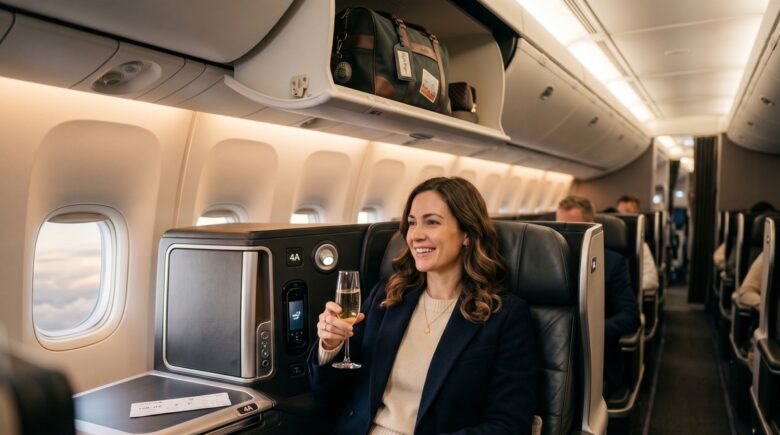
Budget travelers can score business class upgrades in July 2025 by combining elite status strategies, co-branded credit card perks, and precise timing. Airlines upgrade eligible passengers as early as 72 hours before departure, and travelers using airline-branded credit cards receive upgrade priority on over 80% of major U.S. carriers. No extra spending required.
Flight upgrade hacks are not reserved for frequent flyers with six-figure travel budgets. According to the U.S. Department of Transportation’s Fly Rights guide, airlines are not required to upgrade passengers — but they routinely do so based on loyalty status, fare class, and seat availability. Knowing how these systems work gives budget travelers a genuine, repeatable edge.
With airfare prices rising and premium cabins expanding on long-haul routes, the gap between economy and business class comfort has never been wider — or more worth closing for free.
How Do Airline Upgrade Priority Lists Actually Work?
Airlines rank upgrade candidates using a tiered priority system, not a random selection process. Your position on that list is determined by loyalty tier, fare class purchased, check-in time, and in some cases, co-branded credit card ownership.
Most major U.S. carriers — including American Airlines, Delta Air Lines, and United Airlines — open complimentary upgrade windows 72 to 100 hours before departure for elite members. Non-elite passengers enter the list much later, often only at the gate. Knowing this window lets you time your check-in and seat selection strategically.
Fare Class and Its Hidden Role
Not all economy tickets are treated equally. Airlines assign each ticket a booking class code — a single letter like Y, B, or M — that directly affects upgrade eligibility. Full-fare economy tickets (Y class) are nearly always upgrade-eligible, while deeply discounted basic economy fares (N or O class) are typically excluded. Paying a modest fare difference to book a higher booking class can move you from last to first on the upgrade list.
Key Takeaway: Airlines use a structured priority system, not luck. Upgrade windows open 72 to 100 hours before departure for elite members, according to DOT consumer guidance. Booking a higher fare class code can dramatically improve your upgrade position without purchasing a business class ticket.
Which Credit Cards Actually Deliver Free Upgrades?
Co-branded airline credit cards are the single most reliable flight upgrade hack for non-elite travelers. Holding the right card can place you ahead of other economy passengers on the upgrade list, even without elite status.
Cards like the Delta SkyMiles Reserve American Express Card, the United Club Infinite Card, and the Citi / AAdvantage Executive World Elite Mastercard all include complimentary upgrade waitlist positioning as a stated cardholder benefit. According to The Points Guy’s airline card analysis, cardholders on these products receive upgrade consideration on 80% or more of their respective carriers’ domestic routes. Pairing a card benefit with a full-fare economy ticket compounds your upgrade odds significantly.
For a deeper breakdown of which cards deliver the best return on travel spending, see our guide to the best travel credit cards for frequent flyers in 2026.
“The passengers who consistently get upgraded are not necessarily the ones who spend the most — they’re the ones who understand the rules of each airline’s upgrade system and position themselves accordingly, often months before departure.”
Key Takeaway: Co-branded airline credit cards grant upgrade waitlist priority on over 80% of domestic routes for major U.S. carriers, per The Points Guy. This benefit costs nothing beyond the annual card fee and stacks with other upgrade strategies.
When Should You Request an Upgrade — and How?
Timing and method matter as much as eligibility. The highest-probability upgrade windows are 72 hours before departure (elite window opens), at online check-in (24 hours out), and at the gate on the day of travel.
Airlines including Southwest Airlines, Alaska Airlines, and JetBlue Airways allow passengers to bid on upgrades through their apps or email campaigns. Alaska’s upgrade bidding system, for example, lets economy passengers submit bids starting as low as $25 per segment, with acceptance rates highest on routes with low premium cabin demand. Researching route-specific load factors using tools like ExpertFlyer’s seat and upgrade alert service lets you target flights where business class is likely underbooked.
The Gate Agent Approach
Gate agents have discretionary authority to upgrade passengers, particularly on oversold flights or when an aircraft is swapped to a smaller configuration. Arriving early, dressing professionally, and politely asking — not demanding — remains one of the most underused flight upgrade hacks. Agents are more likely to help passengers who are calm, prepared, and flexible with seating preferences.
Key Takeaway: Upgrade bids on Alaska Airlines start as low as $25 per segment, and gate agents retain discretionary upgrade authority. Using ExpertFlyer to target low-load routes significantly increases acceptance rates for both bid and complimentary upgrades.
| Upgrade Method | Cost to Traveler | Success Rate Estimate |
|---|---|---|
| Elite Status (Gold/Platinum) | $0 (status-based) | 40–65% on domestic routes |
| Co-Branded Credit Card Benefit | Annual fee ($95–$695) | 25–45% on eligible routes |
| Bid/Auction Upgrade | $25–$300 per segment | 30–55% (route-dependent) |
| Mileage/Points Redemption | 5,000–25,000 miles | 60–80% when award space confirmed |
| Gate Agent Request | $0 | 5–15% (highly situational) |
How Do Miles and Points Unlock Business Class Upgrades?
Redeeming miles for confirmed business class upgrades — rather than waitlisted complimentary ones — is the most reliable flight upgrade hack available to any traveler regardless of status. Confirmed award upgrades are processed before the upgrade list even opens.
Programs like United MileagePlus, American AAdvantage, and Delta SkyMiles all allow mile-based upgrades on domestic and some international routes. Upgrade costs range from 5,000 to 25,000 miles per segment depending on distance and cabin. According to ValuePenguin’s travel rewards research, travelers who redeem miles for confirmed upgrades rather than economy cash tickets capture an average value of 1.5 to 2.2 cents per mile — significantly above the typical breakeven threshold.
Points earned through everyday spending on travel rewards cards can accelerate this process. For a full strategy on extracting maximum value from accumulated points, our guide on how to use travel reward points for maximum value in 2026 covers the most effective redemption paths by program.
Pairing mile redemptions with flexible date searches — using tools like Google Flights’ calendar view or airline award calendars — surfaces low-cost upgrade windows that fixed-date searches miss entirely. Budget travelers who plan 3 to 6 months in advance consistently find more confirmed business class availability than last-minute searchers.
Key Takeaway: Confirmed mile-based upgrades yield an average value of 1.5 to 2.2 cents per mile according to ValuePenguin, and bypass the standard upgrade waitlist entirely — making them the most reliable path to business class for budget-conscious travelers.
What Behaviors Consistently Increase Your Upgrade Chances?
Beyond status and cards, specific traveler behaviors measurably shift upgrade odds. These are systematic habits, not one-time tricks.
Booking directly through the airline — not a third-party OTA like Expedia or Kayak — ensures your loyalty number is correctly attached to your reservation. Third-party bookings are frequently mislinked, which can remove you from the upgrade list entirely. According to the Bureau of Transportation Statistics, direct bookings account for over 60% of all airline ticket purchases — and carriers prioritize these passengers in service recovery and upgrade situations.
Flying during off-peak hours and on less-popular travel days — Tuesday and Wednesday departures specifically — correlates with higher premium cabin vacancy. The more empty business class seats available, the more upgrade candidates the airline will clear from the list. Combining off-peak travel with the other flight upgrade hacks covered here creates a compounding advantage.
Budget travelers who want a broader framework for keeping travel costs low without sacrificing experience should also read our overview of budget travel hacks that still work and our detailed resource on strategies to save money on trips, flights, and hotels.
Key Takeaway: Direct bookings represent over 60% of airline ticket purchases per BTS data, and carriers systematically prioritize these passengers for upgrades and service recovery. Flying Tuesday or Wednesday further increases available premium seats.
Frequently Asked Questions
What is the best flight upgrade hack for someone with no elite status?
The best option for non-elite travelers is a co-branded airline credit card, which provides upgrade waitlist priority on most major carriers. Pairing this with a full-fare economy (Y-class) ticket and checking in exactly at the 24-hour mark maximizes your position on the list.
How far in advance should I request an upgrade?
Elite members should monitor upgrade availability from 72 to 100 hours before departure, when the complimentary upgrade window opens. Non-elite travelers should check in at exactly 24 hours and arrive at the gate early on the day of travel for the best chance of a gate agent upgrade.
Can you get a business class upgrade for free without any credit card?
Yes, but it is less reliable. Gate agent discretionary upgrades, airline mistake fares, and operational upgrades (when a flight is overbooked in economy or equipment is changed) can result in a free business class seat. These are unpredictable and cannot be engineered consistently without a card or status.
Do upgrade bids actually work?
Yes. Airlines including Alaska Airlines, Lufthansa, and Air Canada run active upgrade bidding programs. Success rates depend on route demand, but bids on less-traveled routes frequently succeed at the minimum bid price. Setting a bid at 10 to 20% above the minimum has been reported by frequent travelers as the sweet spot for acceptance.
Which airline is the easiest to get upgraded on?
Alaska Airlines and United Airlines are widely cited as having the most accessible upgrade systems for non-elite passengers, due to their mileage-based and bid-based programs. Alaska in particular offers upgrade bids on nearly all routes with premium cabin seating.
Does dressing well at the airport actually help you get upgraded?
There is no airline policy that rewards appearance, but gate agents and ground staff have discretionary authority. Presenting professionally and being polite, prepared, and patient creates a positive impression that can work in your favor when agents are deciding among eligible upgrade candidates at the gate.
Sources
- U.S. Department of Transportation — Fly Rights: Air Travel Consumer Guide
- The Points Guy — Best Airline Credit Cards and Upgrade Benefits
- ValuePenguin — Travel Rewards Points and Miles Research
- ExpertFlyer — Seat Alerts and Upgrade Availability Tool
- Bureau of Transportation Statistics — Airline On-Time Performance and Booking Data
- NerdWallet — How to Get a Flight Upgrade
- View from the Wing — Aviation Analysis by Gary Leff