Fact-checked by the ZeroinDaily editorial team
Quick Answer
To book last-minute accommodation as a backpacker without getting burned, use apps like Hostelworld, Booking.com, and HotelTonight within 24–48 hours of arrival, verify reviews posted within the last 90 days, and always confirm your booking directly with the property. As of July 2025, last-minute hostel beds can be found for as little as $8–$15 per night in Southeast Asia and Eastern Europe.
Booking last-minute accommodation as a last minute accommodation backpacker is entirely manageable in July 2025 — if you know which platforms to use and which red flags to avoid. According to Statista’s online travel market data, more than 65% of budget travelers now finalize their accommodation bookings within 72 hours of check-in, driven by flexible itineraries and real-time availability tools.
The rise of AI-powered travel apps and last-minute deal engines has made spontaneous travel more viable than ever. At the same time, scam listings and misleading photos have also proliferated, making it critical to know exactly how to vet a property before handing over your passport at the door.
This guide is written for solo backpackers, gap-year travelers, and budget adventurers who want a repeatable, safe process for locking down a bed — whether they’re arriving in Bangkok at midnight or changing plans in Lisbon on a Tuesday afternoon. Follow these steps and you’ll never be stuck sleeping in an airport again.
Key Takeaways
- Over 65% of budget travelers book accommodation within 72 hours of check-in, according to Statista’s 2024 online travel report.
- Hostelworld lists more than 36,000 properties across 180 countries, making it the largest dedicated backpacker booking platform available in 2025.
- Last-minute hostel dorm beds average $12–$18 per night in Southeast Asia and Central America, compared to $40–$80 for budget private rooms in Western Europe.
- HotelTonight reports that its same-day deals are on average 20–30% cheaper than standard advance rates for equivalent properties.
- Properties with a review score below 7.5 out of 10 on Hostelworld or Booking.com carry significantly higher rates of reported safety and cleanliness issues, per traveler review analysis.
- Using a travel rewards credit card for accommodation bookings can earn points equivalent to 1–3% back on every stay, reducing overall travel costs.
In This Guide
- Step 1: Which Apps and Sites Actually Work for Last-Minute Hostel Bookings?
- Step 2: How Do I Spot Fake or Scam Listings Before I Get There?
- Step 3: What Should I Check Before Confirming a Last-Minute Booking?
- Step 4: Can I Negotiate a Better Rate by Walking In Without a Reservation?
- Step 5: What Do I Do If Everything Is Fully Booked or Falls Through?
- Step 6: How Do I Stay Safe When Booking Accommodation at the Last Minute?
- Frequently Asked Questions
Step 1: Which Apps and Sites Actually Work for Last-Minute Hostel Bookings?
The best platforms for last-minute accommodation backpacker searches are Hostelworld, Booking.com, HotelTonight, and HostelBookers — each with distinct strengths depending on your destination and timing. Using two or three simultaneously gives you the widest real-time inventory.
How to Do This
Open Hostelworld first and filter by “Available Tonight” or within your arrival window. Hostelworld’s app shows live bed availability and allows instant booking with a small deposit, typically 10–15% of the total cost. For same-day private rooms, HotelTonight often beats standard rates — the app releases unsold inventory from hotels at steep discounts, with deals going live daily at noon local time.
Booking.com’s “Tonight Only” filter surfaces both hostels and budget hotels. It also shows the free cancellation flag clearly, which is critical when plans are fluid. For travelers in Southeast Asia specifically, Agoda frequently has deeper discounts than global platforms due to regional partnerships.
What to Watch Out For
Avoid booking through unofficial social media groups or WhatsApp contacts promising “special deals.” These are the most common vectors for accommodation scams targeting backpackers. Always book through a platform that holds payment securely and offers a dispute process.
Download Hostelworld, Booking.com, and HotelTonight before you leave home and enable location permissions. When you land, the apps will automatically surface options near your current location — saving critical time when you’re tired and carrying a pack.
Step 2: How Do I Spot Fake or Scam Listings Before I Get There?
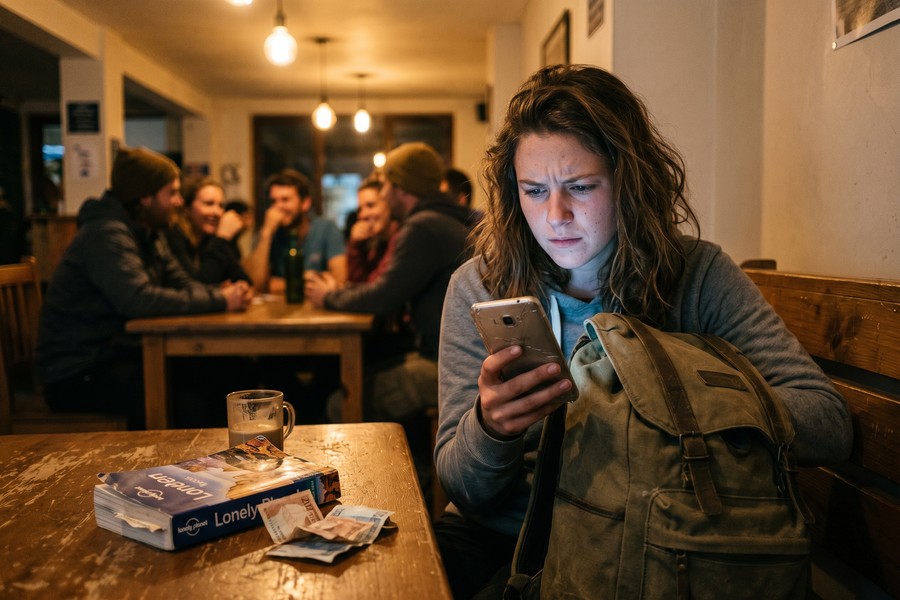
You can identify a fraudulent or dangerously misleading listing by checking four things: review recency, photo consistency, address verification, and platform history. A legitimate property will have reviews posted within the last 60–90 days and a verifiable street address that appears on Google Maps.
How to Do This
Sort reviews by “Most Recent” on any platform and read the last 10. Look for consistent complaints about cleanliness, security, or location discrepancy. If the most recent review is older than 90 days, the property may have changed ownership or quality. Reverse-image-search the main listing photos using Google Images — stolen photos from other properties are a reliable scam indicator.
Cross-reference the property’s address in Google Street View. A hostel claiming to be “beachfront” in Koh Samui should look like it when you drop the pin. If the Street View shows a construction site or empty lot, walk away immediately.
What to Watch Out For
Be especially cautious with listings that have a large number of five-star reviews and zero negative ones — this pattern often indicates purchased or fabricated reviews. A healthy property typically has a review distribution that includes some three- and four-star ratings alongside the positives.
Never pay a full stay in cash to a third party who meets you at an airport or train station. Legitimate hostels do not use agents to collect payment outside their property. This is one of the most common scams targeting first-time backpackers in tourist-heavy cities.
Step 3: What Should I Check Before Confirming a Last-Minute Booking?
Before you confirm any last-minute accommodation booking, verify six critical details: check-in time, cancellation policy, exact location, locker or storage availability, bathroom ratio, and whether the price includes taxes and fees. Missing even one of these can turn a bargain into a nightmare.
How to Do This
Check the listed check-in window carefully. Many budget hostels have a cut-off time — commonly 11 PM or midnight — after which staff leave and no one can let you in. If your arrival is late, call or message the property directly through the platform’s messaging system before booking to confirm late check-in is possible.
Read the cancellation policy word-for-word. Booking.com labels policies as “Free cancellation,” “Non-refundable,” or “Partially refundable” — but the exact cut-off time varies by property. A booking that looked cheap can become a total loss if plans change and you’re locked into a non-refundable rate. This is also where having travel insurance that covers accommodation cancellations can save you real money.
What to Watch Out For
Watch for “price on platform” versus “price at property” discrepancies. Some hostels charge mandatory fees — linen, towel rental, city tax, or breakfast — that are listed in fine print but not included in the headline price. The true cost can be 20–40% higher than advertised.
According to Booking.com’s traveler research, 41% of budget travelers report being surprised by additional fees at check-in that were not clearly shown in the original listing price.
| Platform | Best For | Average Booking Lead Time | Cancellation Flexibility | Typical Deposit |
|---|---|---|---|---|
| Hostelworld | Dorm beds, backpacker hostels | Same-day to 48 hours | Varies by property | 10–15% upfront |
| Booking.com | Mix of hostels and budget hotels | Same-day | Often free cancellation available | 0–100% (varies) |
| HotelTonight | Same-day budget hotel deals | Same-day only | Limited — same-day bookings often final | Full payment at booking |
| Agoda | Asia-Pacific region specifically | Same-day to 72 hours | Free cancellation on select rooms | Varies; often full prepay |
| Couchsurfing | Free stays, social connection | 24–72 hours minimum | No payment — mutual agreement | Free (membership optional) |
Step 4: Can I Negotiate a Better Rate by Walking In Without a Reservation?
Yes — walking in without a reservation can secure you a lower rate, particularly after 4 PM when properties know they have unsold beds for the night. Hostels and small guesthouses would rather fill a bed at a reduced price than leave it empty, giving you genuine negotiating leverage.
How to Do This
Approach the front desk confidently and ask: “Do you have any beds or rooms available for tonight, and is there a walk-in rate?” This signals you are flexible on price. In destinations like Chiang Mai, Sarajevo, or Medellin, it is common to negotiate 10–25% off the listed rack rate for a direct cash payment, since the property avoids platform commission fees (typically 15–18% of booking value).
Mention that you’re planning to stay multiple nights if that’s true — even two nights can unlock a small discount. Avoid negotiating during morning check-in hours when staff are busiest and the property has the most leverage.
What to Watch Out For
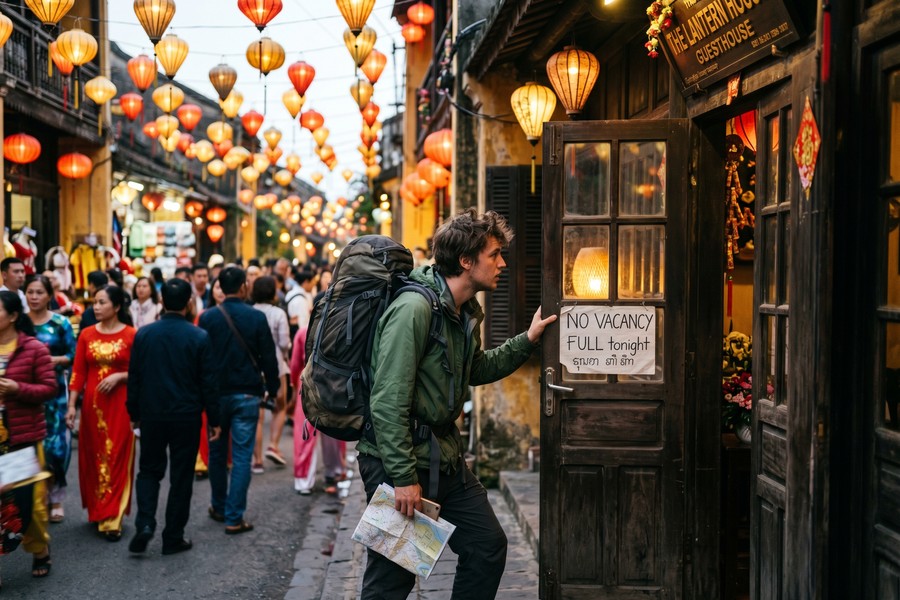
Walking in without a booking carries real risk during peak season, public holidays, or festival periods. In cities like Barcelona during La Mercè, or Hoi An during the Lantern Festival, occupancy across budget properties can hit 95–100% citywide. Know your destination’s event calendar before going strategy-free.
“The sweet spot for walk-in negotiations is between 3 PM and 6 PM local time. Staff have a clear picture of that night’s occupancy and are motivated to fill empty beds before end-of-day. Be polite, be direct, and always ask — the worst they can say is no.”
For travelers who want to stretch their accommodation budget further, pairing smart booking habits with strategies from our guide on saving money on trips, flights, and hotels can compound your savings significantly.
Before walking in, check what the property is listing on Booking.com or Hostelworld on your phone. This gives you a firm anchor price to negotiate from. If the platform rate is $18 per night, you can reasonably ask for $14–$15 in cash, saving the property the commission while saving you money.
Step 5: What Do I Do If Everything Is Fully Booked or Falls Through?
If standard platforms show no availability, use five backup options in order: contact properties directly by phone, check Couchsurfing for emergency hosts, look for capsule hotels or overnight trains, use airport or transit lounge facilities as a short-term base, and as a last resort, book a 24-hour cafe or co-working space. Running out of options is genuinely rare if you work through this list systematically.
How to Do This
Call properties directly — many hold back a small number of walk-in beds that never appear on booking platforms. A 2-minute phone call can surface inventory that apps simply don’t show. Use Google Maps to find hostels within a 1-kilometer radius of your target area and call them in order of review rating.
Couchsurfing has over 14 million members in 200,000 cities globally. While requests with less than 24 hours’ notice are less likely to be accepted, many hosts in backpacker-heavy cities specifically welcome last-minute travelers. Send a personalized, specific request — not a copy-paste message — to improve your acceptance rate. If you’re planning an extended journey, our guide on planning a gap year abroad without going broke covers longer-term accommodation strategies in depth.
What to Watch Out For
Overnight trains and buses are a legitimate last-minute solution in countries like Vietnam, Thailand, and across Europe — but they require a ticket reservation, not just showing up. Use 12Go.Asia for Southeast Asian routes and Trainline for Europe, both of which offer same-day bookings on many routes.
Several international airports — including Singapore Changi, Tokyo Narita, and Amsterdam Schiphol — offer landside hotels or sleep pods bookable for as little as 4-hour blocks, giving stranded backpackers a safe, clean rest option without leaving the terminal.
Step 6: How Do I Stay Safe When Booking Accommodation at the Last Minute?
Staying safe as a last minute accommodation backpacker comes down to three non-negotiable rules: always share your location with someone you trust, store valuables in a locked facility, and never hand over your passport as a deposit. These three practices eliminate the majority of security incidents reported by solo backpackers.
How to Do This
Before checking in anywhere, drop a pin in Google Maps or WhatsApp and send it to a contact at home. Do this every time — it takes under 30 seconds and creates a record. Apps like bSafe and Life360 allow real-time location sharing with a trusted contact and include an emergency alert function.
Use the property’s storage lockers for your laptop, passport copy, and extra cash — most hostels provide padlocked lockers as standard, but bring your own small padlock (TSA-approved if flying) since many properties charge $1–$3 to rent one. Never leave valuables visible in an open dorm. For deeper guidance on protecting yourself from theft and scams while traveling, see our breakdown of protecting yourself from financial scams and identity theft.
What to Watch Out For
Be cautious about hostels that do not ask for ID at check-in — this is not a sign of a relaxed vibe, it’s a sign of poor security practices. A property that doesn’t verify guest identity at check-in has no record of who is sleeping in your dorm. This is a genuine safety risk, not an inconvenience.
“The single most effective safety practice for solo backpackers is consistent location-sharing with a trusted contact. In over a decade of reporting on traveler safety incidents, the cases that ended badly almost always involved someone who hadn’t told anyone where they were.”
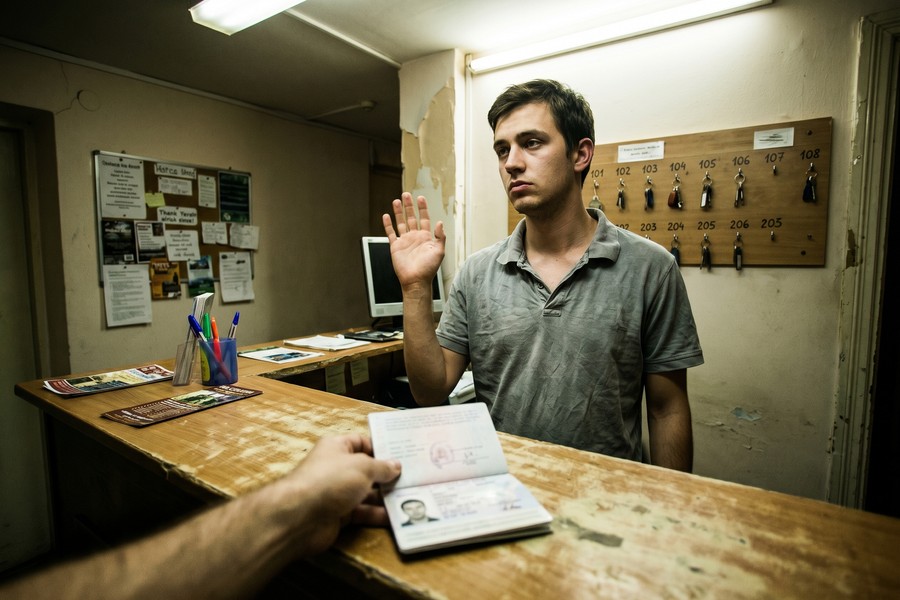
Some budget properties in tourist zones still request passport retention as a “deposit.” This is illegal in many countries, including Thailand, and leaves you without your primary identity document. Always offer a passport photocopy or a secondary ID card instead — legitimate properties will accept this.
Savvy backpackers also reduce their overall travel costs by combining smart accommodation habits with tools like budget travel hacks that still work in 2025 and monitoring spending with a dedicated expense tracking app to stay within their daily budget.
Frequently Asked Questions
How far in advance should I book accommodation as a backpacker?
Most backpackers can safely book 24–48 hours in advance outside of peak season. During major holidays, festivals, or school vacation periods, booking 3–7 days ahead is strongly recommended to avoid full properties. As a rule, check availability on your target date as soon as you know your itinerary — the earlier you check, the more options you have, even if you book last-minute.
What is the cheapest way to find last-minute accommodation while backpacking?
The cheapest last-minute option is typically a walk-in negotiation with a small hostel after 4 PM, combined with a cash payment that allows the property to skip platform commission fees. Couchsurfing is the cheapest option overall (free), but requires a request lead time of at least 12–24 hours and a personalized message to have a realistic acceptance rate. HotelTonight’s same-day deals frequently undercut standard rates by 20–30% for budget hotel private rooms.
Is it safe to book a hostel on the same day I arrive?
Yes — same-day hostel booking is safe when done through verified platforms like Hostelworld or Booking.com with a review score above 7.5 out of 10. The key risk is not fraud but availability: popular hostels in high-traffic cities fill quickly, so check as early as possible on the day of arrival. Always confirm your booking via the platform’s messaging system before arriving.
What should I do if my last-minute booking turns out to be a scam?
Report the listing immediately through the platform’s dispute system — Booking.com and Hostelworld both have 24/7 customer support and documented fraud resolution processes. If you paid by credit card, contact your card provider to initiate a chargeback under Section 75 of the Consumer Credit Act (UK) or Regulation Z (US), which provides protection for transactions over $50. Take screenshots of all correspondence and the listing before the property is removed.
Are walk-in rates at hostels actually cheaper than online prices?
Walk-in rates can be 10–25% cheaper than online rates when approached in the late afternoon on a weekday, because the property avoids paying a platform commission of 15–18%. However, during peak season or in small properties with few beds, online rates may actually be lower due to promotional pricing. Always check the current online rate before walking in so you have a fair reference point for negotiation.
Which countries have the best last-minute accommodation options for backpackers?
Southeast Asia — particularly Thailand, Vietnam, Cambodia, and Indonesia — consistently offers the best last-minute availability and prices, with dorm beds available for $5–$15 per night even on short notice. Eastern Europe, including cities like Budapest, Krakow, and Sarajevo, offers strong last-minute value in Western-quality hostels for $10–$20 per night. South America, especially Colombia, Peru, and Argentina, is increasingly competitive for last-minute budget beds.
Can I use travel rewards points to pay for last-minute hostel stays?
Most major hostel chains and budget properties do not participate in traditional hotel loyalty programs like Marriott Bonvoy or Hilton Honors. However, some Booking.com properties allow payment with Booking.com Genius credits, and credit card travel portals (Chase Travel, Amex Travel) let you redeem points for hostel and budget hotel bookings at a fixed rate. For a full breakdown of maximizing point value on travel, see our guide on using travel reward points for maximum value in 2026.
What do I need to check in to a hostel as a last-minute backpacker?
You will need a valid government-issued photo ID (passport is standard internationally, though a national ID card is accepted within the EU), a confirmed booking reference or a willingness to pay in full at the door, and in some countries a completed arrival card. Some hostels also require a credit card on file for incidental damages, even if your stay is prepaid. Bring a card rather than relying solely on cash to avoid being turned away.
How do I find last-minute accommodation in a city during a major festival or event?
During major events — such as Carnival in Rio, Oktoberfest in Munich, or Songkran in Chiang Mai — last-minute accommodation becomes extremely difficult. Your best options are booking homestays or private rooms on Airbnb (which often has more capacity than hotels during peak events), checking hostels in neighborhoods 2–3 kilometers outside the event epicenter, or using Couchsurfing with a very personalized, event-specific request sent at least 48 hours in advance.
Is it cheaper to book solo travel accommodation last minute or in advance?
For dorm beds at hostels, last-minute booking is generally equal or slightly cheaper in low-to-mid season, as properties discount unsold inventory. For private rooms and budget hotels, booking 2–4 weeks in advance typically yields better rates, since private room inventory is smaller and fills faster. The exception is HotelTonight’s same-day model, which reliably undercuts standard advance rates by 20–30% for unsold hotel rooms.
Sources
- Statista — Online Travel Market Overview 2024
- Hostelworld — Backpacker Travel Tips and Booking Guide
- Booking.com — Responsible Travel and Transparency Report
- Google Images — Reverse Image Search Tool
- Lonely Planet — How to Stay Safe While Traveling Solo
- UK Foreign, Commonwealth and Development Office — Foreign Travel Advice
- U.S. Department of State — International Travel Information
- Couchsurfing — About the Platform and Community Statistics
- HotelTonight — Last-Minute Hotel Deals and Travel Tips
- Travel Money Guru — Backpacker Safety and Scam Statistics 2024






