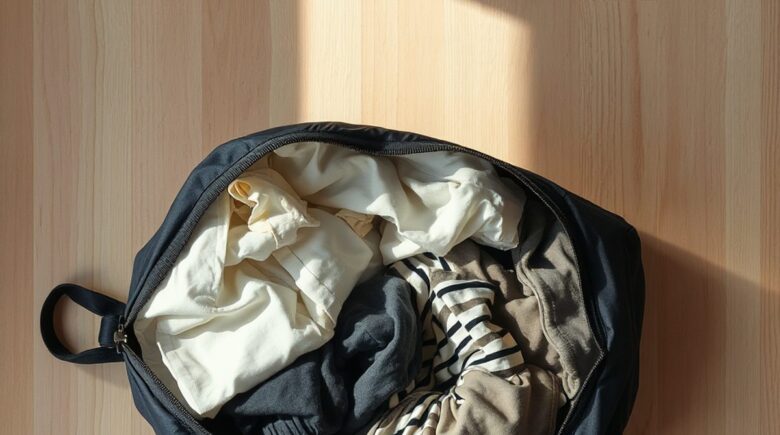
Quick Answer
Most travel laundry bag mistakes come from choosing sealed plastic instead of mesh, overstuffing past capacity, and skipping ventilation for damp clothes. Mold can start growing on wet fabric within 24-48 hours in a sealed bag, and 32% of Gen Z travelers already damage delicates by ignoring basic care steps. Fix it by matching bag material to trip length, loading to roughly two-thirds capacity, and airing damp items before sealing them away.
Updated January 2026
A travel laundry bag seems like the simplest item in your suitcase, which is exactly why so many people get it wrong. The most common travel laundry bag mistakes involve trapping moisture in non-breathable fabric, cramming in more clothes than the bag can handle, and treating every bag the same regardless of trip length or fabric type. Get any one of these wrong and you’re not just dealing with a bad smell, you’re risking permanent mildew stains, faded colors, and stretched-out delicates by the time you unpack at home.
This matters more now than it used to. A recent AO World survey found that Gen Z shoppers are collectively avoiding washing roughly 26.4 million clothing items because they’re unsure how to care for them properly, a confusion that follows people straight into their suitcase. Meanwhile laundry has quietly become the top pre-trip cleaning priority for American travelers, with 77% saying they focus specifically on getting laundry sorted before they leave, according to a New York Post-reported poll. People care about this problem. They just don’t have great information on how to solve it.
This guide is for anyone who has ever unzipped a suitcase to a wall of stale odor, or pulled out a “clean” shirt that somehow picked up a stain from the sock next to it. By the end, you’ll know exactly which bag material fits your trip length, how to load it without wrecking delicate fabrics, and which small habits (a dryer sheet, a separate shoe pouch) actually make a measurable difference.
Key Takeaways
- Sealed, non-mesh bags can let mold begin forming on damp fabric within 24-48 hours at normal travel humidity, turning a quick laundry fix into a ruined garment.
- Mesh laundry bags improve airflow by as much as 300% compared to solid nylon equivalents, based on manufacturer lab testing of comparable products.
- 32% of Gen Z travelers admit to throwing delicate clothing straight into the wash without protection, a habit that starts with how they pack it, according to AO World’s 2025 research.
- 26% of Gen Z respondents have already stretched or shrunk delicate items in the wash, a risk that compounds when those same clothes are also compressed too tightly in a travel bag, per AO World.
- Silver-ion antimicrobial treatments in modern laundry bags cut odor-causing bacteria by up to 99% for as many as 50 wash cycles, based on textile industry standards.
- Zipper failures are the single most frequently reported cause of damage to delicate garments packed in travel bags, according to packing forums and luggage brand return data.
In This Guide
- Step 1: How Do I Pick the Right Travel Laundry Bag Material?
- Step 2: How Much Should I Actually Pack Into a Laundry Bag?
- Step 3: Why Do Zippers Ruin More Clothes Than People Realize?
- Step 4: Should I Worry About Ventilation and Odor Control?
- Step 5: Am I Separating Dirty Clothes the Right Way?
- Step 6: Can I Wash Clothes Directly Inside the Bag?
- Step 7: What Do I Do With Silk, Leather, or Tech-Integrated Clothing?
Step 1: How Do I Pick the Right Travel Laundry Bag Material?
Match the bag material to your trip length and climate, not the cheapest option on Amazon. Solid plastic or vinyl bags trap moisture against fabric, creating conditions where mold spores can begin growing on damp clothes within 24-48 hours at typical travel humidity levels. Mesh, on the other hand, lets air move through the bag continuously, which is the entire difference between clothes that smell fine after a week and clothes you have to throw away.
Waterproof bags aren’t useless, they just serve a different purpose. They’re good for short hops between a gym session and a hotel room, where you need to contain moisture for an hour or two, not for a ten-day trip where damp gym clothes sit for days. Mesh laundry bags improve airflow by as much as 300% compared to solid nylon equivalents in manufacturer lab testing, which matters enormously in humid climates like Southeast Asia or coastal Florida, where a sealed bag becomes a small greenhouse.
How to Do This
For trips under five days in a dry climate, a lightweight waterproof pouch works fine as long as you open it daily to air out. For anything longer, or for humid destinations, choose a mesh or mesh-panel hybrid bag. Brands like Eagle Creek and Sea to Summit both sell packing cubes with ventilated panels specifically designed for this purpose.
What to Watch Out For
Cheap mesh can still trap odor if it’s tightly woven rather than open-weave. Check the actual mesh gauge before buying, not just the label that says “breathable.”
Sealed plastic bags create the same closed, humid microclimate that makes bathroom mold grow behind shower curtains, just on a smaller scale, and against your favorite shirt instead of tile.
Step 2: How Much Should I Actually Pack Into a Laundry Bag?
Fill your laundry bag to roughly two-thirds capacity, never all the way. Overstuffing compresses fabric to the point where high-performance materials like merino wool or stretch-blend travel pants lose their shape, and it blocks the airflow that mesh bags are designed to provide in the first place.
Here’s a simple way to size it. A standard 15-liter mesh laundry bag comfortably holds about five to six days’ worth of clothing for one adult, assuming a mix of shirts, underwear, and one pair of pants. For a ten-day trip, you’d need roughly double that volume, either a 30-liter bag or two separate 15-liter bags rotated so neither one ever gets packed past two-thirds full. Cramming ten days of laundry into a single 15-liter bag means compressing nearly double the recommended volume, which is exactly the scenario that stretches out delicate knitwear and locks in odor between fabric layers.
How to Do This
Roll clothes loosely rather than folding them flat; rolled fabric compresses more evenly under pressure and springs back better than folded stacks. If you’re using packing techniques a remote worker booked months accommodation around for extended stays, apply the same two-thirds rule to laundry bags as you would to any packing cube.
26% of Gen Z travelers have already stretched or shrunk delicate items in the wash, according to AO World’s 2025 survey, a risk that only increases when those same items sit compressed in an overstuffed bag for days at a time.
Step 3: Why Do Zippers Ruin More Clothes Than People Realize?
Cheap or misaligned zippers are the most common cause of damage to delicate garments in travel laundry bags, ahead of moisture, staining, or odor combined. A rough zipper track catches on silk blouses, lace trim, or the loose threads on knit sweaters, and once a snag starts, it tends to run.
Zipper snags account for the majority of reported damage to delicates in packing forums and return data from major luggage brands. That’s a striking figure for something so easily avoided. The fix isn’t complicated: load your bag so nothing delicate sits directly against the zipper line, and check the zipper pull itself before you buy, not after you’ve already packed for a trip.
How to Do This
Test the zipper in the store or before your first trip by running it fully closed and open three or four times. If it catches on the mesh itself, it will absolutely catch on silk or lace. Load bulkier, sturdier items like jeans or towels along the zipper edge, and keep anything with buttons, embellishments, or delicate hems toward the center of the bag.
What to Watch Out For
Metal zippers look premium but can corrode faster in humid climates than nylon coil zippers, which then makes them snag even more. If you’re packing for a humid destination, a nylon coil zipper is the safer long-term bet.

Step 4: Should I Worry About Ventilation and Odor Control?
Yes, ventilation is not optional if you’re traveling with athletic or moisture-wicking clothing. Performance fabrics rely on breathability to resist odor, and a bag without mesh panels or antimicrobial treatment traps bacteria against synthetic fibers, which accelerates the smell you’re trying to avoid in the first place.
Modern laundry bags increasingly use silver-ion antimicrobial treatments, which reduce odor-causing bacteria by up to 99% for as many as 50 wash cycles, according to standard textile industry testing. This is a genuine upgrade over the plain nylon pouches that shipped with luggage sets a decade ago, though it’s worth noting these treatments do wear down over time and aren’t a substitute for airing out your bag every few days.
Travelers with sensitive skin or eczema should check the specific antimicrobial agent used, since some silver-ion treatments can cause mild irritation on prolonged contact, particularly on already-compromised skin. This is a gap most laundry bag reviews skip entirely, but it’s worth asking about if you’re buying a bag specifically for its antimicrobial claims.
Lastly, throw a dryer sheet into your dirty laundry cube
How to Do This
A single dryer sheet tucked into your laundry compartment does most of the odor-fighting work of an expensive antimicrobial bag, at a fraction of the cost. Combine that with a mesh bag and you’ve covered both moisture and smell without needing the priciest option on the shelf.
Step 5: Am I Separating Dirty Clothes the Right Way?
Separate your dirty laundry into its own packing cube, away from both clean clothes and your shoes, not just tossed into a generic mesh sack. This single habit prevents the two most common complaints travelers have: clean clothes that smell like dirty ones, and shoe grime transferring onto fabric.
“Keep your dirty laundry in a separate packing cube,” advises Samantha Hamilton, an expert traveler who runs the New England Wanderlust blog and has been traveling for over a decade. Her advice comes from direct experience with the exact problem this guide addresses. She also notes a specific failure mode worth flagging: “The mesh, of course, will allow odors to leak out into the rest of your suitcase, and you definitely don’t want that (a mistake I learned the hard way).”
That might sound contradictory to the earlier advice about mesh improving airflow, but it isn’t. Mesh solves the moisture and mold problem inside the bag; it doesn’t solve odor leakage into the rest of your luggage. The solution is a dedicated, zippered packing cube with mesh panels on the inside only, fully enclosed by solid fabric on the outer shell, so odor stays contained while air still circulates around the clothes themselves.
Shoes deserve their own separate pouch entirely. “I also no longer mix my dirty laundry with my shoe bags, and keep them separate,” Hamilton says, a distinction that matters more than most packing guides admit. Dirt, gravel, and sole residue from shoes can grind against fabric during transit, leaving marks that don’t wash out cleanly.
Step 6: Can I Wash Clothes Directly Inside the Bag?
Only if the bag is specifically labeled as a wash bag, and even then, only for delicates on a gentle cycle. Machine-washing clothes inside a standard travel laundry bag causes abrasion against the mesh weave, and it prevents water and detergent from reaching fabric evenly, which means you end up with incompletely cleaned clothes that still smell faintly of the trip.
There’s also a chemical risk that’s easy to overlook. Bags that haven’t been pre-washed themselves, or aren’t colorfast, can transfer dye onto light-colored clothing during a wash cycle, especially with detergents that use different chemistry than what you’re used to at home. This becomes a real concern internationally, where detergent formulations vary significantly by country and can react unpredictably with dye that seemed stable domestically.
Never assume a laundry bag is machine-washable just because it’s mesh. Check the care label on the bag itself; many are designed only for storage and transport, not for going through a wash cycle with your clothes still inside.
Step 7: What Do I Do With Silk, Leather, or Tech-Integrated Clothing?
Keep silk, leather, and anything with embedded electronics out of your standard laundry bag entirely. These items need dedicated protection: silk and leather because friction and moisture damage them permanently, and heated jackets or other tech-integrated apparel because compression and moisture can damage the wiring or battery components sewn into the fabric.
Silk snags on rough mesh and rough zippers alike, so it needs a soft cotton or satin pouch, never direct contact with a standard nylon bag. Leather reacts badly to humidity trapped in sealed bags, developing mildew spots that are difficult or impossible to remove. Heated jackets and similar gear should travel in a padded, rigid-sided pouch, not a soft mesh bag, since compression can bend internal wiring over repeated trips.
Anyone packing gear alongside sensitive electronics, similar to how someone managing a grad student tracked focus, sleep, stress with a wearable device, should think about laundry bags the same way: dedicated compartments for anything with a battery or circuit board, kept entirely separate from damp fabric.
| Bag Type | Best For | Airflow Rating |
|---|---|---|
| Full Mesh | Trips over 5 days, humid climates | High (up to 300% more than solid nylon) |
| Waterproof Pouch | Short trips under 3 days, gym-to-hotel use | Low, needs daily airing |
| Antimicrobial Mesh | Athletic wear, multi-week trips | High, plus 99% bacteria reduction for ~50 washes |
| Solid Nylon Cube | Odor containment inside luggage | Low internally, contains smell externally |
| Padded Rigid Pouch | Tech-integrated apparel, heated jackets | Moderate, prioritizes compression protection over airflow |
What to Watch Out For
Don’t assume one bag type covers every scenario on a single trip. Travelers juggling multiple fabric types, gym clothes, one nice outfit, and a jacket with heating elements, often need two or three different bag types packed together, not one universal solution.

Keep a spare dryer sheet in your toiletry kit as a backup. If you run out mid-trip, a single sheet in the laundry compartment does more odor control than most travelers expect for the cost.
For travelers managing longer trips who also need to track packing logistics across multiple stops, the same organizational discipline that works for couples travel together without fighting over money and itineraries applies here too: decide on your system before day one, not halfway through the trip when clothes are already tangled together.
Frequently Asked Questions
Can I use a regular plastic grocery bag instead of buying a travel laundry bag?
You can for a single overnight trip, but it’s a poor choice for anything longer since plastic traps moisture and can start growing mold on damp fabric within 24-48 hours. A mesh bag or even a thin cotton pillowcase breathes better and costs about the same.
How do I stop my clean clothes from smelling like my dirty laundry in the same suitcase?
Use a separate, zippered packing cube for dirty clothes rather than a loose mesh sack, since fully enclosed cubes contain odor better while still allowing internal airflow. Adding a dryer sheet inside the dirty laundry compartment further reduces smell transfer, a habit recommended by experienced travelers like Samantha Hamilton of New England Wanderlust.
Should I wash my clothes in the hotel sink instead of packing dirty laundry the whole trip?
Sink-washing works well for underwear and quick-dry fabrics on trips under a week, but it’s impractical for jeans, towels, or anything that needs a full wash cycle. Most travelers use a mix: sink-wash small items daily, and save a proper laundry bag for everything else until they reach a washing machine.
What size laundry bag do I need for a 10-day trip?
Plan for roughly 30 liters of laundry bag capacity for a 10-day trip for one adult, based on the rough estimate that a 15-liter bag comfortably holds five to six days of clothing. Splitting that into two 15-liter bags, rotated so neither is ever packed past two-thirds full, works better than one oversized bag that gets overstuffed.
Will an antimicrobial laundry bag irritate sensitive skin?
It can, in rare cases, since some silver-ion antimicrobial treatments cause mild irritation on prolonged skin contact, particularly for people with eczema or already sensitive skin. If you have known sensitivities, check the specific treatment used or opt for a plain mesh bag with a dryer sheet instead.
Can I put my dirty laundry bag directly into the washing machine?
Only if the bag is specifically labeled as machine-washable, and even then, expect uneven cleaning since the mesh weave can cause abrasion and block water from reaching fabric evenly. Most standard travel laundry bags are meant for storage and transport only, not for going through a wash cycle with clothes left inside.
How often should I air out my laundry bag during a long trip?
Open and air out your laundry bag at least once every two to three days on trips longer than a week, even if it’s a mesh design. This matters most in humid climates, where trapped moisture accelerates odor and mold risk regardless of how breathable the bag material is.
Is it bad to pack a wet swimsuit in my regular laundry bag?
Yes, a wet swimsuit should go in a separate waterproof pouch, not your main laundry bag, since damp fabric against dry clothes accelerates mildew growth across the whole compartment. Once you’re back at your accommodation, transfer the swimsuit into the main mesh laundry bag to dry out properly.
Do I need a different laundry bag for international trips versus domestic ones?
Not usually, but international trips introduce variables like different detergent chemistries and humid climates that make mesh and antimicrobial treatment more valuable than they might be for a short domestic trip. Travelers researching options like train bus travel southeast asia: routes through humid regions should prioritize breathable mesh over sealed plastic almost without exception.
Sources
- AO World, Gen Z Are Avoiding Washing 26.4 Million Clothing Items Due to Laundry Confusion (2025)
- New York Post, Americans’ Top Cleaning Habits Revealed in Poll (2024)
- Thrillist, How to Pack Dirty Laundry While Traveling
- Eagle Creek, Travel Packing Cubes and Organization
- U.S. Environmental Protection Agency, Mold Growth and Moisture Guidance
- Transportation Security Administration, Travel Packing Tips
- Textile World, Industry Standards for Fabric Treatment