Fact-checked by the ZeroinDaily editorial team
Quick Answer
Frequent travelers clear airport security in under 5 minutes by enrolling in TSA PreCheck (average wait: under 10 minutes, often under 2), packing a dedicated carry-on with pre-organized liquids, and dressing for the checkpoint. These habits consistently shave 20–30 minutes off the screening process for enrolled travelers.
Updated July 2026
The fastest way through airport security isn’t about rushing at the checkpoint, it’s about planning weeks in advance. The Transportation Security Administration’s PreCheck program now counts over 20 million active members, according to a recent agency press release. Members bypass the standard lane’s shoe removal, laptop unpacking, and liquid sorting, cutting time dramatically. Standard lanes, in contrast, can stretch to 20–45 minutes during peak travel periods. For frequent flyers, this isn’t a luxury, it’s a routine. The real work happens long before the boarding pass is scanned.
Air travel volume is at a post-pandemic high. The Bureau of Transportation Statistics recorded over 900 million domestic passenger boardings in 2024, the highest figure in U.S. history. Busier airports mean longer lines, making smart preparation more valuable than ever.
This guide is for anyone who travels more than four times a year and wants a repeatable, stress-free process through airport security. Follow these steps and you will move through the checkpoint with the confidence, and the speed, of a road warrior.
Key Takeaways
- TSA PreCheck members wait an average of under 10 minutes, with most reporting under 2 minutes according to TSA’s program data, a dramatic reduction versus standard lanes.
- Global Entry costs $120 for a 5-year membership and includes TSA PreCheck benefits, making it the highest-value trusted traveler program for international flyers per U.S. Customs and Border Protection.
- The TSA’s 3-1-1 liquids rule requires all carry-on liquids to be in containers of 3.4 oz (100ml) or less, placed in a single quart-sized clear bag, violations are the leading cause of checkpoint delays for leisure travelers.
- Travelers wearing metal-free clothing and slip-on shoes clear the physical screening step up to 40% faster than those who need to remove belts, watches, and lace-up boots, according to security flow research cited by Reuters.
- CLEAR, the biometric identity service, is available at over 50 U.S. airports and can eliminate the document-check queue entirely, getting members to the front of the physical screening line per CLEAR’s airport directory.
- Booking a flight with at least 90 minutes of connection time at major hubs eliminates the stress that causes most travelers to rush and make checkpoint mistakes, according to travel efficiency data from The Points Guy.
In This Guide
- Step 1: Should I get TSA PreCheck or Global Entry?
- Step 2: How do I pack a carry-on to sail through security?
- Step 3: What should I wear to get through airport security fast?
- Step 4: How early should I arrive at the airport for a domestic flight?
- Step 5: What’s the fastest way through the security line?
- Step 6: Do I need a Real ID or passport to fly domestically?
- Frequently Asked Questions
Should I get TSA PreCheck or Global Entry?
For most frequent travelers, the single most impactful airport security tip is enrolling in a trusted traveler program, specifically TSA PreCheck or Global Entry. These programs pre-screen applicants through background checks, allowing approved members to use expedited security lanes where they keep their shoes on, laptops in bags, and liquids packed away.
How to Do This
TSA PreCheck requires a one-time enrollment fee for a 5-year membership (check the official TSA site for the most current price, typically under $85) and is available at over 200 U.S. airports. Apply online, complete an in-person enrollment appointment (about 10 minutes), and receive your Known Traveler Number (KTN) within 3–5 days in most cases. Enter your KTN in every airline booking profile.
Global Entry, managed by U.S. Customs and Border Protection (CBP), costs $120 for 5 years and automatically includes TSA PreCheck. It also gives you access to automated kiosks upon returning from international travel, bypassing the standard customs queue. If you travel internationally even once a year, Global Entry is the better value.
Many premium travel credit cards for frequent flyers reimburse the full TSA PreCheck or Global Entry application fee as an annual benefit, effectively making enrollment free.
What to Watch Out For
Your KTN must be entered in your airline profile AND on each individual ticket. If it is missing from a booking, you will not receive PreCheck on that flight, even if your account is active. Always confirm the “TSA Pre” indicator appears on your boarding pass before arriving at the airport.
CLEAR, the biometric screening service, pairs powerfully with TSA PreCheck. CLEAR uses fingerprint or iris scans to verify your identity instantly, moving you past the ID-check queue directly to the PreCheck physical screening lane. Combined, the two programs can reduce your checkpoint time to under 90 seconds at participating airports.
| Program | Cost (5 Years) | Includes PreCheck | International Benefit | Best For |
|---|---|---|---|---|
| TSA PreCheck | ~$78–85 | Yes | No | Domestic-only travelers |
| Global Entry | $120 | Yes | Fast customs re-entry | International travelers |
| NEXUS | $50 | Yes (U.S.) | U.S.-Canada border | U.S.-Canada frequent crossers |
| SENTRI | $122.25 | Yes | U.S.-Mexico border | U.S.-Mexico border crossers |
| CLEAR | $189/year | No (add-on) | No | Biometric ID verification add-on |
The comparison above shows that NEXUS is the most cost-effective option if your travel is primarily between the U.S. and Canada. For all other international travelers, Global Entry’s $35 premium over PreCheck alone is well justified.
TSA PreCheck has enrolled over 20 million members, according to TSA data, and the program is accepted at over 200 airports across 85+ airlines, making it the most widely accepted expedited screening program in the United States.
How do I pack a carry-on to sail through security?
Packing your carry-on with security in mind, not just fit, is one of the most underrated airport security tips. The checkpoint X-ray scanner flags dense, disorganized bags, and TSA agents pull roughly 1 in 10 carry-ons for manual inspection according to security throughput data. A well-organized bag almost never triggers a secondary check.
How to Do This
Follow the TSA’s 3-1-1 liquids rule without exception: liquids, gels, and aerosols must be in containers of 3.4 oz (100 ml) or less, all fitting in a single quart-sized, clear, zip-top bag. Keep this bag in an exterior pocket for immediate removal, even if you have PreCheck and do not technically need to remove it, having it accessible avoids scrambling.
Pack electronics flat and accessible. Laptops and tablets (larger than a cell phone) must be removed and placed in a separate bin in standard lanes. Even in PreCheck lanes, keeping devices in a padded top section of your bag means zero fumbling. Use packing cubes and compression bags to keep contents tidy and scanner-legible.
Remove prohibited items entirely before every trip. The TSA’s prohibited items list includes full-size aerosols, lithium batteries over 100Wh (unless in carry-on for laptops), and any sharp objects. Checking the TSA “What Can I Bring?” tool before packing takes under two minutes and prevents confiscation delays at the checkpoint.
What to Watch Out For
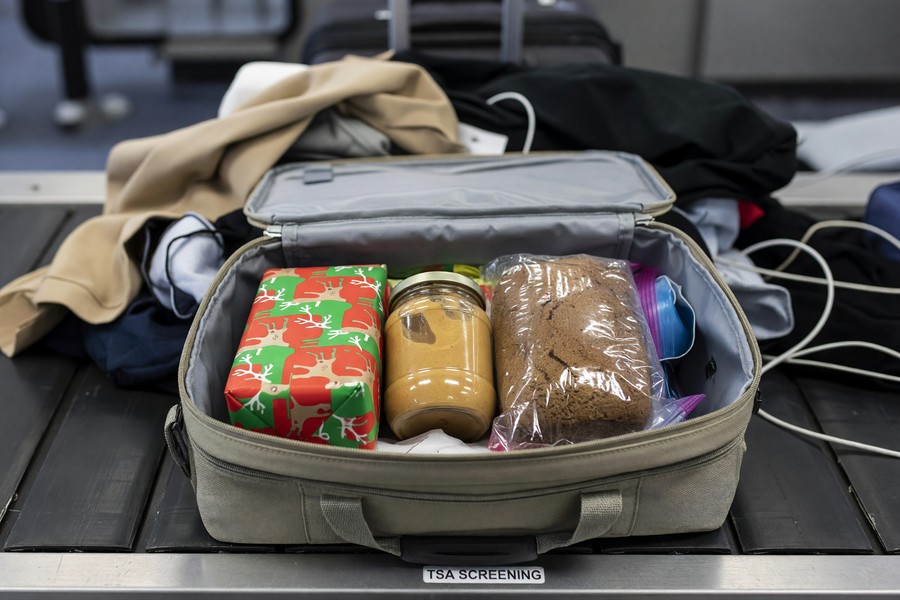
Food items, especially wrapped gifts, jars of peanut butter, and dense baked goods, frequently trigger alarms and cause secondary screenings. Pack all food in clear, resealable bags. Gifts should never be wrapped before your flight; wrapped packages obstruct X-ray imaging and will be opened by TSA agents.
Portable chargers and lithium battery power banks must go in your carry-on, NOT your checked bag. The FAA prohibits loose lithium batteries in checked luggage due to fire risk. Packing one in a checked bag can result in the bag being pulled, a delay for your flight, and potential confiscation of the device.
What should I wear to get through airport security fast?
What you wear directly controls how quickly you move through the physical screening lane, and it is one of the simplest, most overlooked airport security tips. Metal items, thick belts, and lace-up boots all require removal and slow down the conveyor belt for everyone behind you.
How to Do This
Choose slip-on shoes, loafers, sneakers with elastic laces, or boots with side zippers, for any travel day. You will remove them in standard lanes. Wearing shoes you can step out of in under three seconds keeps the line moving. In PreCheck lanes, shoes stay on, but comfort still matters for long travel days.
Avoid metal accessories: belt buckles, heavy watches, large jewelry, and underwire bras can all trigger body scanner alerts. Wear a fabric or leather belt with a small, non-metal buckle or skip the belt entirely. Place your watch, wallet, phone, and keys directly in your bag before you reach the conveyor, not at the bin station, where you become a bottleneck.
What to Watch Out For
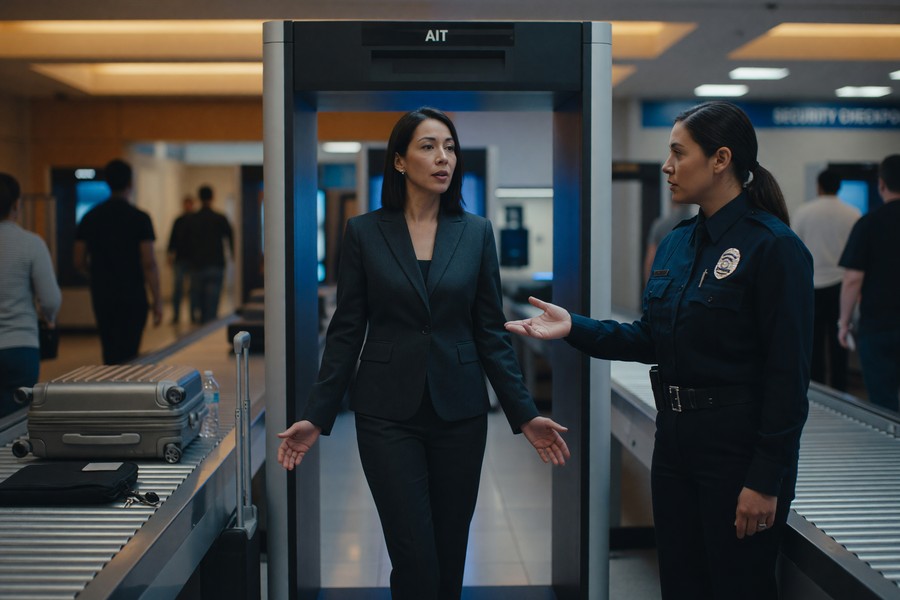
Orthopedic implants, pacemakers, and certain medical devices will trigger the Advanced Imaging Technology (AIT) scanner. If you have an implant, carry documentation from your physician and notify a TSA officer before screening. This triggers a pat-down process that, while handled professionally, does take additional time, so plan accordingly.
It’s also important to recognize that this system works best when travelers are consistent and prepared. It fails for those who rely on last-minute packing, wear restrictive clothing, or skip documentation. If you frequently travel with children, have mobility issues, or carry medical equipment, the efficiency gains may be reduced despite preparation. The system assumes a baseline of physical ease and predictability, which isn’t always possible for everyone.
How early should I arrive at the airport for a domestic flight?
Arriving at the right time, not too early, not dangerously late, is a foundational airport security tip that most casual travelers get wrong. The TSA recommends arriving at least 2 hours before domestic flights and 3 hours before international flights, but PreCheck members traveling with carry-on only can often manage with 60–75 minutes at mid-size airports.
How to Do This
Check the TSA’s airport wait time lookup tool before leaving for the airport. During peak periods, Monday mornings, Friday afternoons, and holiday travel windows, even PreCheck lanes can back up. Arriving 90 minutes before departure gives PreCheck members a comfortable buffer without a two-hour wait.
Use your airline’s app to check in and download a mobile boarding pass the night before your flight. This eliminates the check-in counter queue entirely and gives you one less thing to manage at the airport. Many airlines, including Delta, United, American, and Southwest, send gate change and boarding notifications automatically.
If you are traveling with family, consider the efficiency tips in our guide to international travel with kids on a budget, managing children through security requires additional planning beyond what solo travelers need.
What to Watch Out For
Major U.S. hubs like Atlanta Hartsfield-Jackson (ATL), Los Angeles International (LAX), and Chicago O’Hare (ORD) have notoriously inconsistent security times even in PreCheck lanes. Add an extra 20–30 minutes to your airport arrival time when flying through these airports, especially during summer and holiday peaks.
The TSA processed over 2.9 million passengers on a single day in the summer of 2024, according to the agency’s official figures, a record-breaking volume that caused average standard-lane waits to exceed 45 minutes at the 10 busiest U.S. airports. PreCheck lanes at those same airports averaged under 8 minutes on the same days.
What’s the fastest way through the security line?
At the checkpoint itself, speed comes from preparation, not rushing. The fastest travelers move through the conveyor belt process in a single, fluid sequence because they have already made every decision before reaching the bin station. These in-line airport security tips translate your preparation into consistent, measurable time savings.
How to Do This
When you join the queue, use the wait time to prepare. Move your phone, keys, and wallet into your bag. Unzip your laptop pocket. Confirm your ID or boarding pass is in your hand. By the time you reach the bins, you should need no more than 15 seconds to unload.
In standard lanes, follow this bin sequence for maximum efficiency: shoes in one bin, laptop flat in a second bin, your bag on the belt directly. Do not overload a single bin, items that stack fall over and slow the conveyor. In PreCheck lanes, only your bag goes on the belt; everything else stays packed.
After clearing the scanner, move immediately to the repacking table, not the conveyor belt end. Grab your bins and step aside before reassembling. Standing at the conveyor belt while putting your shoes back on blocks the lane for every traveler behind you.
What to Watch Out For
If the AIT body scanner alarms, remain calm and follow the officer’s instructions. Do not reach for your phone or bag until instructed. Secondary screening by a same-gender TSA officer typically takes under three minutes. Arguing or expressing frustration extends the process significantly.
Choose the left security lane when multiple lanes are open. Research on queue behavior shows that most right-handed travelers instinctively veer right when selecting a lane, meaning left lanes are statistically shorter. At large airports with four or more open lanes, the leftmost lane is often the fastest.
Do I need a Real ID or passport to fly domestically?
As of May 7, 2025, the REAL ID Act is fully enforced for domestic air travel in the United States. Every adult passenger must present a REAL ID-compliant driver’s license, a U.S. passport, or another federally accepted form of identification at the security checkpoint. This is not optional, and non-compliant IDs will result in a denied boarding process that can cost you your flight.
How to Do This
A REAL ID-compliant license is marked with a gold or black star in the upper right corner. Check your license now. If it does not have this star, visit your state’s Department of Motor Vehicles (DMV) with proof of identity, residency, and Social Security number to obtain a compliant ID. Processing times vary by state but typically take 2–4 weeks for the physical card to arrive.
A valid U.S. passport or passport card always satisfies the REAL ID requirement. If you already have a passport, you are covered for both domestic and international flights. For travelers who have not yet renewed an expired passport, the State Department‘s standard processing time is 6–8 weeks, with expedited service available for an additional $60 fee reducing that to 2–3 weeks.
If you travel internationally for leisure, pairing your travel documents with a good rewards card can offset the cost of document renewal. Our comparison of the best travel credit cards for frequent flyers covers cards that reimburse Global Entry, TSA PreCheck, and passport photo fees.
What to Watch Out For
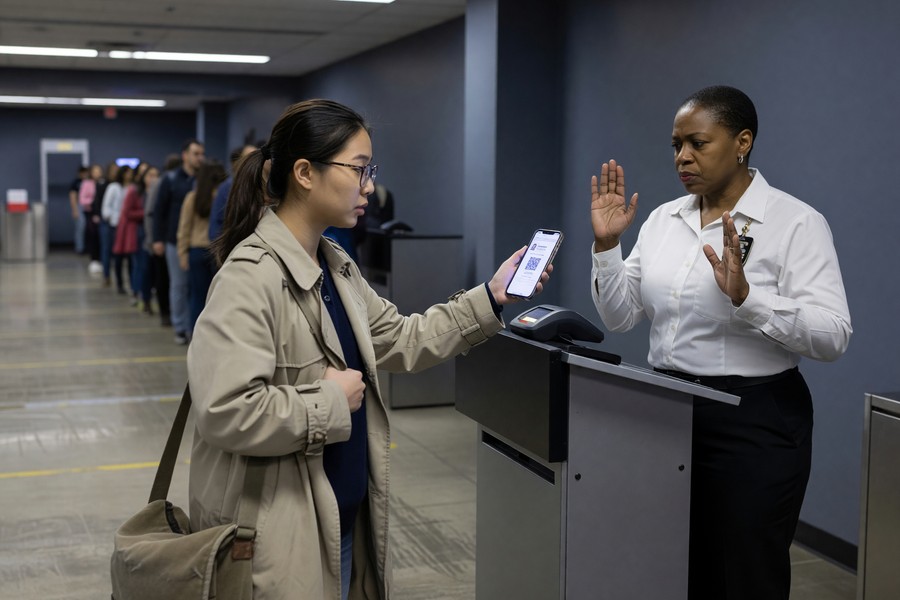
Do not rely on a digital driver’s license (mDL) for airport security unless you have confirmed your specific airport and TSA checkpoint supports it. mDL acceptance is still in a limited pilot phase at select airports. Always carry your physical REAL ID or passport as a backup.
Arriving at the checkpoint without a compliant ID does not mean you will automatically be denied boarding, TSA officers can use an identity verification process involving personal questions and a secondary screening. However, this process takes 30–45 minutes and is not guaranteed to succeed. Never rely on it as a plan B.
Frequently Asked Questions
How long does it actually take to get TSA PreCheck approved after applying?
Most applicants receive their Known Traveler Number (KTN) within 3 to 5 business days of completing their in-person enrollment appointment. The enrollment appointment itself takes about 10 minutes. You can apply online at the TSA PreCheck enrollment portal, choose from multiple enrollment providers including Idemia and Telos, and schedule a convenient appointment near you.
Is TSA PreCheck worth it if I only fly two or three times a year?
Yes, even for travelers who fly just twice a year, TSA PreCheck pays off. At $85 for five years, the membership costs $17 per year. Each checkpoint experience saves an average of 20–30 minutes compared to standard lanes, meaning two trips recoup roughly one hour of time annually. For travelers who value stress-free mornings, the comfort benefit alone justifies the cost.
Can I bring a full-size toiletry bottle in my checked bag and just pack liquids separately for carry-on?
Yes, full-size toiletry bottles are permitted in checked baggage without restriction. The TSA’s 3-1-1 rule applies only to carry-on bags. If you are checking a bag, pack your full-size shampoo, conditioner, and other liquids there and use travel-size containers (3.4 oz or less) in your carry-on. This is the most common workaround serious travelers use to stay compliant without buying expensive travel-size products.
What items do people most commonly get stopped for at TSA security checkpoints?
The most common checkpoint violations, according to TSA enforcement data, are oversized liquids, prohibited sharp objects (including scissors over 4 inches and box cutters), firearms (even legally owned ones not properly declared), and lithium battery power banks in checked bags. Wrapped gifts and dense food items also frequently trigger manual inspections. A quick review of the TSA’s “What Can I Bring?” tool before packing prevents nearly all of these delays.
Does CLEAR work with TSA PreCheck, and is it worth the extra cost?
CLEAR and TSA PreCheck work together. CLEAR handles identity verification, PreCheck handles the physical screening process. Combined, they can reduce total checkpoint time to under 90 seconds. CLEAR costs $189 per year, though discounts are available through Delta SkyMiles, United MileagePlus, and certain credit cards. For business travelers flying weekly through major hubs, the combination is widely considered worth the investment. Casual travelers will find PreCheck alone sufficient.
What happens if my TSA PreCheck doesn’t show up on my boarding pass?
If the “TSA Pre” indicator is missing from your boarding pass, first check that your KTN is correctly entered in your airline frequent flyer profile and that it was applied to your specific ticket. If it is missing, call the airline directly before arriving at the airport, they can add it to your reservation. If you are already at the airport, a gate agent or airline customer service representative can often correct it before you reach security.
How do I get through airport security faster when traveling with kids?
Children under 12 do not need to remove shoes in TSA standard lanes, but adults in the group still follow standard rules. Assign each traveler, including older kids, a specific task before reaching the checkpoint: one person manages IDs, one handles the liquids bag, one oversees stroller breakdown. Practice at home before the trip. Our detailed guide on planning international travel with kids covers security and logistics strategies for family groups.
Can I use my phone as a boarding pass, or do I need a printed copy?
Mobile boarding passes are accepted at virtually all U.S. airports and by all major carriers including Delta, United, American, Southwest, and Alaska Airlines. Download your boarding pass to your phone’s Wallet app the night before, this allows offline access if you lose cell service in the terminal. Always screenshot it as a backup. A printed boarding pass is never required for domestic flights, though it can serve as a useful fallback at international airports with variable digital acceptance.
What is the best airport security tip for someone who flies internationally every month?
For frequent international travelers, the single highest-leverage move is enrolling in Global Entry, which provides both TSA PreCheck domestically and automated U.S. customs processing upon return. Pair it with mobile check-in and a rewards-earning travel card that covers the enrollment fee. The next step is setting up a dedicated travel bag that stays packed with your liquids kit, travel adapters, and documentation pouch, never fully unpacked between trips.
Are there any new TSA security rules I should know about in 2025?
The most significant change in 2025 is the full enforcement of REAL ID, which took effect on May 7, 2025. Any state-issued driver’s license without a gold or black star is no longer accepted at TSA checkpoints for domestic flights. TSA has expanded its use of Credential Authentication Technology (CAT) scanners, which read machine-readable ID chips and verify identity without an officer manually inspecting your document, to over 200 airports, further accelerating the ID-check step for PreCheck members.
Sources
- Transportation Security Administration, TSA PreCheck Program Overview
- U.S. Customs and Border Protection, Global Entry Program
- TSA, What Can I Bring? Prohibited and Permitted Items List
- Bureau of Transportation Statistics, U.S. Airline Passenger Data
- Department of Homeland Security, REAL ID Enforcement Information
- U.S. Department of State, Passport Expedited Processing
- TSA, Newsroom and Enforcement Statistics






