Updated August 2026
Fact-checked by the ZeroinDaily editorial team
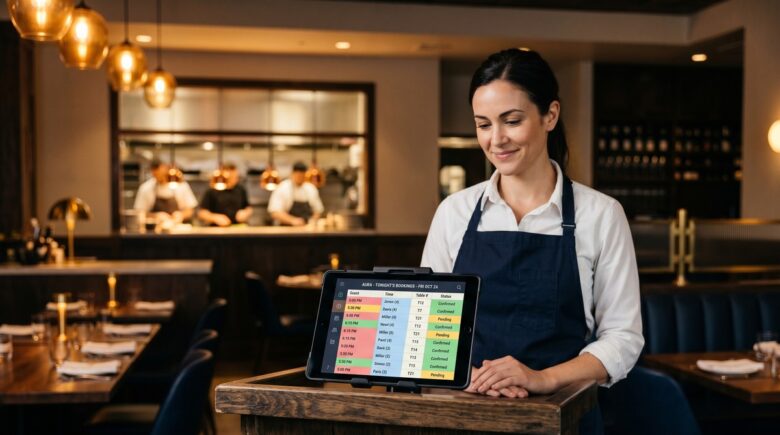
It’s 7:45 on a Friday night. Your host is juggling a 30-minute wait list, your phone rings every three minutes with reservation requests, and a customer just left a scathing one-star review that’s sitting unanswered online. Meanwhile, your kitchen just flagged that you’re nearly out of a key ingredient, and you have no idea when the next supply order is going out. This is the daily reality for most independent restaurant owners, and it’s why AI automation restaurant owners are increasingly turning to is no longer a luxury, it’s a lifeline.
The numbers paint a brutal picture. According to the National Restaurant Association’s State of the Industry Report, 62% of restaurant operators say labor costs are the biggest challenge they face. The average restaurant profit margin sits between 3% and 9%, leaving almost no cushion for inefficiencies. A Cornell University study found that a single unanswered negative review can reduce future revenue by up to 9%, and most owners simply don’t have time to monitor review platforms daily. Add in the fact that food waste costs the U.S. restaurant industry an estimated $162 billion per year, and it’s clear that the operational cracks are turning into chasms. Meanwhile, 47% of restaurant operators anticipate that technology and automation will become more common to address labor shortages, according to the National Restaurant Association.
This guide gives you a data-backed breakdown of exactly how AI automation is solving these three pain points, reservations, reviews, and reorders, for restaurant owners right now. You’ll see which tools are being used, what they actually cost, what results operators are reporting, and a step-by-step action plan to implement these systems in your own restaurant without hiring a single additional staff member.
Key Takeaways
- Restaurants using AI-powered reservation systems report a 30-40% reduction in no-shows, saving an average of $1,200-$2,400 per month in lost table revenue.
- Automated review response tools can cut response time from 48+ hours to under 5 minutes, and restaurants that respond to 100% of reviews see up to 12% higher ratings over 6 months.
- AI-driven inventory and reorder systems reduce food waste by 20-30%, translating to $5,000-$15,000 in annual savings for a mid-size restaurant.
- The average monthly cost for a full AI automation stack (reservations + reviews + reorders) ranges from $200 to $600, far less than the $3,500+ cost of a single part-time hire.
- Operators using AI chatbots for reservation management report saving 15-20 staff hours per week on phone and booking administration alone.
- According to Toast POS data, restaurants that automate at least two operational workflows see a 17% average increase in table turnover efficiency within 90 days.
In This Guide
- The Staffing Math That Makes AI a No-Brainer
- AI Reservation Systems: Ending Phone Tag Forever
- Automated Review Management: Protecting Your Reputation 24/7
- AI Reorder Automation: Smarter Inventory Without the Spreadsheets
- The Top AI Tools Restaurants Are Using Right Now
- Cost vs. ROI: What Restaurants Are Actually Spending and Earning
- Integration and Setup: What It Actually Takes to Get Running
- Common Mistakes Restaurant Owners Make With AI Automation
- The Future of AI in Restaurants: What’s Coming in the Next 24 Months
The Staffing Math That Makes AI a No-Brainer
The labor economics of running a restaurant have never been more unforgiving. The Bureau of Labor Statistics Employment Cost Index shows that wages in food service have risen over 22% since 2020. For a restaurant running 40 hours of front-of-house labor per week, that’s thousands of extra dollars in annual payroll just to stand still.
When you break down where staff time actually goes, the waste becomes visible. A 2023 study by Lightspeed POS found that front-of-house staff spend an average of 2.5 hours per shift on tasks that could be automated, including answering phone reservations, managing waitlists, and logging complaints. That’s nearly 30% of a typical shift consumed by administrative work, not hospitality. A survey from Deloitte found that 82% of restaurant executives plan to increase investments in AI technologies in the next fiscal year, a signal that the industry sees automation not as a fringe experiment but as a structural necessity. (Deloitte, 2025)
The Hidden Cost of Manual Operations
Phone reservation handling alone costs more than most owners realize. A busy restaurant receiving 40 reservation calls per week, at an average call duration of 3 minutes, burns through 2 hours of paid staff time weekly, or roughly 104 hours per year. At $15 per hour, that’s $1,560 in pure labor cost just to accept bookings.
Review management is equally expensive in time. Crafting thoughtful responses to Google, Yelp, and TripAdvisor reviews takes an average of 8-12 minutes per response. A restaurant receiving 20 reviews per month spends nearly 4 hours monthly just on replies, assuming anyone gets to them at all.
Inventory management compounds the problem. The Food Waste Reduction Alliance reports that the average food service establishment wastes 4-10% of total food purchased due to over-ordering or ordering errors. For a restaurant with $30,000 in monthly food costs, that’s $1,200 to $3,000 in inventory walking straight to the dumpster.
The average independent restaurant in the U.S. spends $72,000 to $120,000 per year on front-of-house labor. Automating just 25% of those tasks through AI could save $18,000 to $30,000 annually, without cutting a single employee’s hours. According to the National Restaurant Association, 69% of restaurant operators believe that technology will augment rather than replace human labor, meaning these savings come from redeploying staff to higher-value guest-facing work, not from eliminating positions.
Why Hiring More Staff Isn’t the Answer
The instinct to solve operational chaos by adding headcount is understandable, but the math rarely works. Hiring a part-time administrative staff member to handle reservations and reviews costs $2,800 to $4,200 per month when you factor in wages, payroll taxes, and training time. A full AI automation stack covering the same tasks typically costs $200 to $600 per month.
Beyond cost, humans are unavailable at 2 a.m. when a customer wants to book a birthday dinner. They can’t process 50 simultaneous reservation requests on OpenTable and Google at the same time. They forget to follow up with no-show customers. AI doesn’t have these limitations, and that’s exactly why adoption among independent restaurants grew by 38% in 2023 alone, according to Toast’s Restaurant Technology Report.
AI Reservation Systems: Ending Phone Tag Forever
The modern dining customer expects to book a table the same way they order a ride or stream a movie, instantly, digitally, and without human friction. A 2024 survey by OpenTable found that 83% of diners prefer to make reservations online or via app rather than by phone. Yet millions of restaurant owners still rely primarily on phone-based booking systems.
AI reservation systems close this gap by handling the entire booking workflow automatically. They integrate with your existing POS and floor management tools, sync in real time, send confirmation texts and emails, and even follow up automatically to reduce no-shows. For AI automation restaurant owners are deploying today, this is often the entry point, and the results are immediate.
How AI Reservation Tools Actually Work
Modern AI reservation platforms use a combination of natural language processing (NLP) and machine learning to manage bookings across every channel simultaneously. A customer can text your restaurant’s number, message your Facebook page, or use your website, and the same AI engine handles all three in real time.
The AI captures party size, date, time preferences, and special requests. It checks availability against your floor plan, confirms the booking, and sends automated reminders at 24 hours and 2 hours before the reservation. If a customer cancels, the system automatically opens the slot and can even notify waitlisted parties.
Automated reservation reminders sent via SMS reduce no-show rates by an average of 29%, according to data from Resy. A restaurant with 10 tables that typically sees 3-4 no-shows per weekend can recover $400-$700 in lost revenue weekly just by adding this single automation.
No-Show Reduction: The Biggest Immediate Win
No-shows are a silent killer in the restaurant industry. Industry research from SevenRooms found that no-shows cost U.S. restaurants a collective $8 billion per year. A single no-show table on a busy Friday night can mean $80-$200 in permanently lost revenue for a mid-tier restaurant.
AI systems attack no-shows from multiple angles. Automated reminders reduce forgetfulness. Two-way confirmation texts allow guests to cancel with one click, freeing up the table for someone else rather than leaving it empty. Some platforms, like Tock, have integrated deposit-holding features that the AI enforces automatically, reducing no-shows to near zero for high-demand slots.
| Reservation Method | Average No-Show Rate | Staff Time Required (Weekly) | Cost to Implement |
|---|---|---|---|
| Phone-Only Booking | 15-20% | 3-5 hours | $0 direct, high labor cost |
| Basic Online Form | 12-18% | 1-2 hours | $0-$50/month |
| AI Reservation Platform | 4-8% | 0-0.5 hours | $99-$349/month |
| AI + Deposit Enforcement | 1-3% | 0 hours | $150-$499/month |
The table makes the case clearly. Dropping your no-show rate from 18% to 5% on a 50-seat restaurant that fills twice on a weekend night can recover 6-7 missed covers, worth $350-$500 in a single evening.
Automated Review Management: Protecting Your Reputation 24/7
Online reputation is now a restaurant’s most valuable, and most fragile, asset. A Harvard Business School study found that a one-star increase in a Yelp rating leads to a 5-9% increase in revenue. Conversely, a cluster of unanswered negative reviews can suppress your search ranking, reduce foot traffic, and trigger a negative spiral that’s hard to recover from.
For AI automation restaurant owners are using in this space, the core capability is monitoring every review platform in real time, generating contextually appropriate responses using AI language models, and routing unusual or serious complaints to a human for final approval, all without requiring an owner to check five different platforms every day.
What AI Review Tools Can Do Automatically
Platforms like Podium, Birdeye, and Reputation.com use AI to scan Google, Yelp, TripAdvisor, Facebook, and more on a continuous basis. When a new review appears, the AI generates a draft response that matches your brand voice, references the specific feedback in the review, and follows best practices for reputation management.
For positive reviews, the AI crafts warm, personalized thank-you responses, not generic copy-paste text. For negative reviews, it follows a structured empathy-acknowledge-resolve framework that demonstrates care without admitting liability. Most platforms allow you to set rules: reviews below 3 stars route to a manager for approval before going live.
Train your AI review tool to include your restaurant’s name and at least one specific keyword in every response. Google’s algorithm gives ranking credit to business owners who respond to reviews and naturally include location-relevant terms. This one tweak can improve your local SEO standing within 60 to 90 days.
The SEO Value of Review Automation
Google’s local ranking algorithm actively rewards business owners who respond to reviews consistently and promptly. According to Moz’s Local Search Ranking Factors study, review signals, including volume, velocity, and owner response rate, account for roughly 17% of local pack rankings.
Most restaurant owners respond to fewer than 40% of their reviews. AI automation brings that rate to 95-100% effortlessly. Restaurants that made this switch in a controlled study by BrightLocal saw their Google Maps ranking improve by an average of 1.4 positions within three months, translating directly into more discovery and more covers.
For restaurant owners who are also managing broader business finances and need to track these operational savings, connecting review performance data to your cost management tools matters. Many of the same discipline frameworks that appear in resources about best expense tracking apps can be applied to monitoring your AI tool ROI over time.
Restaurants that respond to 100% of their online reviews average a 4.2-star rating, compared to 3.8 stars for restaurants that respond to fewer than 50%, according to Podium’s 2023 Reputation Management Report. That 0.4-star difference translates to a measurable revenue gap of 5-7% per month.
Sentiment Analysis and Operational Intelligence
The best AI review platforms go beyond just responding. They analyze sentiment trends across all reviews to surface actionable operational data. If 23 reviews in a month mention slow service on Tuesday evenings, the AI flags it as a pattern, information that might otherwise be buried across multiple platforms.
This turns your review data into a real-time operational feedback system. You can identify menu items that get consistent complaints, service windows that generate disproportionate friction, and staff behaviors that are consistently praised or criticized, all without manually reading hundreds of reviews.
AI Reorder Automation: Smarter Inventory Without the Spreadsheets
Inventory management is the operational area where AI delivers some of its most financially significant results. Traditional restaurant inventory runs on a combination of physical counts, chef intuition, and spreadsheets, a system that routinely leads to both costly over-ordering and damaging stockouts.
AI reorder automation changes the model entirely. These systems connect to your POS data, track usage patterns in real time, account for upcoming reservations and seasonality, and automatically generate, or even submit, purchase orders to your suppliers. For AI automation restaurant owners are deploying this year, this is often the highest-ROI implementation.
How AI Learns Your Consumption Patterns
Systems like MarketMan, BlueCart, and Orderly use machine learning trained on your own historical sales data. Within 4-6 weeks of integration, they understand that you sell 40% more salmon on Friday nights, that your weekend brunch drives a spike in egg and avocado usage, and that holidays create predictable demand surges for specific items.
Using that data, the AI calculates optimal par levels, the minimum stock needed to cover projected demand, and generates reorder alerts or automatic orders when inventory drops below that threshold. This eliminates both the over-buying that leads to waste and the under-buying that results in 86ing menu items on a busy night.
One honest limitation: these systems are only as good as the data they digest. If your POS registers “burger” as five different menu-item entries thanks to years of messy overrides, or if your kitchen comps meals without logging them, the AI will build its forecasts on noise. Expect to spend a couple of weekends cleaning up ingredient mappings and sales records before the predictive engine becomes trustworthy. That upfront scrubbing isn’t trivial when your kitchen manager is already pulling double shifts.
| Inventory Method | Food Waste Rate | Stockout Frequency | Time Investment (Weekly) |
|---|---|---|---|
| Manual Counting + Spreadsheets | 8-12% | 2-4 times/month | 5-8 hours |
| Basic POS Tracking | 5-8% | 1-2 times/month | 3-5 hours |
| AI Inventory + Auto-Reorder | 2-4% | 0-1 times/month | 0.5-1 hour |
Supplier Integration and Cost Monitoring
Advanced AI inventory platforms don’t just track what you have, they monitor what you’re paying. These systems can flag when supplier prices deviate from your historical average, alert you to substitute ingredients when prices spike, and even compare quotes across multiple distributors to identify savings opportunities.
BlueCart, for example, integrates directly with distributor catalogs and sends orders electronically to suppliers, eliminating the daily phone or email order process entirely. Restaurants using this system report saving 4-6 hours per week in purchasing administration, time that goes directly back to running the business.
AI reorder systems are only as accurate as the data you feed them. If your POS isn’t tracking item-level usage correctly, or if staff are comping meals and not logging them, the AI will build its models on flawed data. Audit your POS configuration before implementing any AI inventory tool, otherwise you’re automating inaccuracy.
Integration With Reservation Data
The most sophisticated AI platforms now bridge the gap between front-of-house and back-of-house by connecting reservation data to inventory planning. If your reservation system shows 120 confirmed covers for Saturday versus your typical 80, the AI inventory tool automatically adjusts par levels and triggers larger orders, before your chef even starts the prep list.
This predictive capability is what separates modern AI automation from simple rule-based software. The system doesn’t just react to inventory dropping below a threshold, it anticipates demand and prepares proactively. Several restaurant operators who’ve implemented this integration report eliminating 86’d items almost entirely.
The Top AI Tools Restaurants Are Using Right Now
The AI restaurant technology market has expanded rapidly. Choosing the right tools requires understanding what each platform does best, how it integrates with existing systems, and what level of technical setup is required. Here’s a breakdown of the most widely-used platforms across the three key automation areas.
Reservation Automation Tools
| Platform | Best For | Monthly Cost | Key AI Feature |
|---|---|---|---|
| OpenTable | High-volume restaurants | $249-$549 | Smart waitlist + auto reminders |
| Resy | Independent upscale dining | $249-$399 | Predictive no-show scoring |
| SevenRooms | Full guest experience CRM | Custom pricing | Guest preference AI + upsell triggers |
| Tock | Experience-based dining | $199-$699 | Automated deposit collection |
| Yelp Guest Manager | Budget-conscious operators | $99-$249 | Waitlist AI + SMS notifications |
Review Management Tools
For automated review response, the leading platforms vary in scope and sophistication. Podium is particularly strong for multi-location operators, offering centralized review management with AI drafting across all major platforms. Birdeye is favored for its deep analytics and integration with CRM tools. Reputation.com is the enterprise choice, with highly customizable AI response frameworks.
For smaller independent operators on a tighter budget, GatherUp offers AI-assisted review responses starting at around $99 per month per location and includes automated review request campaigns that proactively grow your review volume alongside the response automation.
“Operators should assess operations for automation opportunities like AI-driven analytics for trends and preferences, and use technology to augment rather than replace human labor in areas such as hiring, kitchen efficiency, and inventory to address labor shortages.”
Inventory and Reorder Tools
MarketMan is the most widely adopted AI inventory platform among independent restaurants, with over 6,000 restaurant clients. It integrates with most major POS systems and provides automated recipe costing alongside its reorder features. Pricing starts at $239 per month per location.
BlueCart takes a supply-chain-first approach, connecting restaurants directly to distributors for automated ordering. It’s particularly effective for operators who purchase from multiple vendors and want a single ordering interface. The platform’s AI also flags price anomalies in real time.
If you’re researching AI tools across multiple areas of your small business, not just restaurant operations, the broader landscape of AI tools that are saving small businesses time in 2026 offers useful context for how to prioritize implementation.
Cost vs. ROI: What Restaurants Are Actually Spending and Earning
One of the biggest hesitations restaurant owners express about AI automation is cost. The perception is that sophisticated technology is expensive and complex. The reality in 2025 is very different, these tools are priced for independent operators, and the ROI timelines are often measured in weeks, not years.
Building a Full Automation Stack
A complete AI automation stack, covering reservations, reviews, and reorders, can be assembled for as little as $400-$700 per month for an independent restaurant. That’s less than the cost of 20 additional labor hours at current minimum wages in most U.S. states.
| Automation Area | Budget Tier ($/month) | Mid-Tier ($/month) | Full-Featured ($/month) |
|---|---|---|---|
| Reservation Management | $99-$149 | $249-$349 | $399-$699 |
| Review Automation | $79-$129 | $149-$299 | $350-$599 |
| Inventory / Reorder AI | $99-$179 | $239-$399 | $450-$799 |
| Full Stack (Bundled) | $199-$299 | $399-$699 | $700-$1,200 |
Calculating Your Payback Period
The fastest ROI typically comes from no-show reduction and food waste savings. A restaurant recovering just $500 per week in no-show revenue, a conservative estimate for a 60-seat restaurant, recoups a $400/month AI investment in the first week of operation.
Food waste savings compound over time. A restaurant reducing its waste rate from 8% to 3% on $25,000 monthly food costs saves $1,250 per month, more than covering the entire automation stack in savings from that single category alone.
“We see restaurant operators typically break even on their AI automation investment within 45 to 60 days. After that, it’s pure margin improvement. The operators who hesitate because of the monthly cost are almost always spending far more than that in manual labor and waste without realizing it.”
For restaurant owners who want a disciplined framework for tracking these savings and comparing them to operational costs month over month, applying the same principles covered in guides about budgeting tools for 2026 can help you build a monthly P&L habit around your AI investments.
Integration and Setup: What It Actually Takes to Get Running
The practical question most operators ask isn’t whether AI automation works, it’s whether they can actually implement it without a technical background or a dedicated IT team. The good news is that the onboarding process for most restaurant AI tools has been dramatically simplified in the last two years.
POS Integration: The Foundation
Almost every AI automation tool for restaurants connects to your POS system as its primary data source. The major POS platforms, Toast, Square for Restaurants, Lightspeed, Clover, and TouchBistro, all have native or API integrations with the leading AI tools. Setup typically requires connecting your POS account credentials, which most platforms walk through in a guided onboarding flow.
For inventory AI specifically, the initial onboarding requires uploading your menu items and current recipe costs, a process that takes 2-4 hours upfront but requires minimal ongoing maintenance. Most platforms have support teams dedicated to restaurant onboarding and will do this setup with you in a live session.
Toast POS, used by over 100,000 restaurants in the U.S., has a native integration marketplace with over 200 AI and automation tools, including many reservation, review, and inventory platforms. If you’re already on Toast, your setup time for most AI tools drops to under two hours.
Staff Training and Change Management
The human side of AI implementation is often harder than the technical side. Staff members who have been manually handling reservations for years may feel threatened or skeptical. The key is framing AI as a tool that removes the worst parts of their job, answering the same phone call 40 times a week, not one that replaces their role.
Most restaurant operators report that front-of-house staff become advocates for AI reservation systems within the first two weeks. The ability to focus on guests already in the restaurant, rather than managing phone logistics, consistently improves both job satisfaction and service quality.
The integration and management principles that apply to AI tools in restaurants share a lot with those described in resources about how AI assistants save time and boost productivity more broadly, particularly around building habits around reviewing AI outputs rather than trusting them blindly from day one.
Timeline for Full Implementation
- Week 1: POS audit and data cleanup; select and contract reservation AI tool
- Week 2: Reservation platform goes live; staff briefed and basic workflows set
- Week 3: Review management tool connected and brand voice training completed
- Week 4: Inventory AI integrated; initial par levels and recipe costs loaded
- Week 6-8: AI inventory builds its first full predictive model from real sales data
- Week 10-12: Full stack running; first ROI audit completed
Common Mistakes Restaurant Owners Make With AI Automation
Despite the compelling case for AI automation, the implementation journey isn’t always smooth. Owners who dive in without a clear strategy often end up with tools they don’t fully use, data they don’t understand, or systems that create as many problems as they solve. Knowing the most common pitfalls dramatically improves your odds of a successful rollout.
Mistake 1: Choosing Tools That Don’t Integrate
The biggest technical mistake is assembling an automation stack where the tools don’t communicate with each other. If your reservation AI and your inventory AI can’t share data, you miss the most powerful capability of the combined system, using confirmed bookings to drive demand-based ordering.
Before purchasing any tool, verify its integration list explicitly. Ask the vendor whether it connects natively to your POS, and test the integration in a trial period before committing to an annual contract.
Many AI restaurant tools lock you into annual contracts with early termination penalties of 30-50% of remaining subscription value. Always negotiate a 30-day trial or month-to-month option before committing. The best platforms are confident enough in their results to offer flexible terms.
Mistake 2: Ignoring the AI’s Output Data
AI tools generate extraordinarily valuable operational data, but only if someone reviews it. Operators who set up automation and then never look at the dashboards miss the analytical intelligence layer that can drive menu decisions, scheduling optimization, and supplier negotiations.
Build a weekly 20-minute habit of reviewing your AI dashboards. Look at reservation trends, review sentiment shifts, and inventory variance reports. The data compounds in value over time as patterns emerge across seasons and events.
Mistake 3: Automating a Broken Process
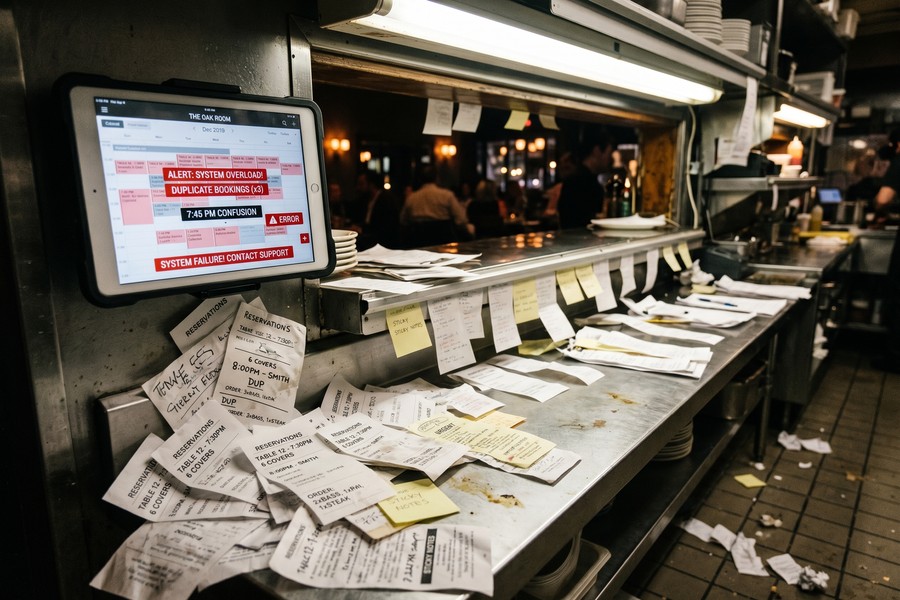
If your current reservation process is chaotic, automating it won’t fix the underlying problem, it will just make the chaos move faster. AI systems need clean, consistent inputs to produce reliable outputs. Audit your current booking, review, and ordering workflows before you automate them.
Specifically, ensure your table layout in your POS reflects your actual seating capacity, your menu items are correctly categorized and priced, and your supplier information is current. These 2-3 hours of cleanup upfront will save dozens of hours of troubleshooting later.
The Future of AI in Restaurants: What’s Coming in the Next 24 Months
The AI tools available to restaurant owners today are impressive, but they represent only the early phase of what’s coming. The next wave of innovation is moving toward fully autonomous operational management, predictive guest relationship tools, and AI-driven menu engineering that responds to demand in real time.
Autonomous Guest Relationship Management
Platforms like SevenRooms are already previewing AI that doesn’t just manage reservations, it manages the entire guest relationship lifecycle. The AI remembers that a regular customer always orders the halibut and prefers a booth near the window. It proactively reaches out with a personalized invitation when that dish appears as a special. It triggers a win-back campaign if a loyal guest hasn’t visited in 60 days.
This level of personalization, previously available only to restaurants with a dedicated marketing team, will become standard for independent operators within the next 18-24 months as the tools become cheaper and more accessible.
Voice AI for Phone Reservations
One persistent challenge with AI reservation systems has been phone-based booking, a channel many older diners still prefer. Voice AI products specifically designed for restaurant phone systems are now in active deployment. These systems answer the phone with a natural-sounding AI voice, handle reservation requests conversationally, and pass complex inquiries to a human only when needed.
Early adopters using voice AI phone systems report that roughly 85% of incoming reservation calls are handled to completion without any human intervention. The remaining 15%, unusual requests, complaints, large party inquiries, are flagged and transferred, ensuring quality is maintained while eliminating the bulk of phone labor.
Google’s Duplex technology, which can make reservations on behalf of users using a lifelike AI voice, is now available on Android devices. This means your restaurant may already be receiving AI-generated reservation calls from customers. Having your own AI system to handle them creates a fully automated booking loop.
Predictive Menu Pricing
The final frontier of AI automation restaurant owners will face in the next two years is dynamic menu pricing, the same concept airlines and hotels have used for decades, applied to food service. AI systems will analyze real-time demand, reservations, day of week, local events, and inventory costs to suggest or automatically apply variable pricing on menu items.
This is already happening at a small number of fast-casual chains. Independent restaurant operators will see accessible versions of this technology within the next 18 months as AI pricing engines become embedded in existing POS platforms.
Real-World Example: How One Independent Pizzeria Cut Costs by $4,200/Month with a Three-Tool AI Stack
Marco Delgado owns a 45-seat neighborhood pizzeria in Austin, Texas. In early 2024, he was working 70-hour weeks, hemorrhaging money on food waste, and watching his Google rating sit at 3.7 stars despite making what his regulars called the best pizza in the city. His front-of-house team was spending 3 hours per shift managing phone reservations and call-ahead waitlists. He had no system for managing supplier orders other than texting his distributor rep each morning. His staff had answered exactly 11% of the 83 reviews left on Google over the previous year.
In March 2024, Marco implemented a three-tool stack: Yelp Guest Manager for reservations ($149/month), GatherUp for review management ($99/month), and MarketMan for inventory and reordering ($239/month), a total monthly investment of $487. The onboarding took two weekends and approximately 12 hours of his time. Within the first 30 days, his no-show rate dropped from 17% to 6%, recovering an average of 4-5 covers per weekend night worth $280-$350. His review response rate jumped to 98%, and his Google rating climbed from 3.7 to 4.1 stars within 90 days.
The inventory automation delivered the largest financial impact. Marco’s food waste rate dropped from 9.2% to 3.1% of monthly food cost over three months. On $22,000 in monthly food purchases, that represented a saving of $1,342 per month. His kitchen manager reported spending 40 minutes per week on inventory and ordering, down from 6-7 hours. The system also flagged a 22% price increase from his primary mozzarella supplier in month two, prompting Marco to negotiate a locked rate and save an additional $180 per month.
By month four, Marco’s combined monthly savings from reduced no-shows ($1,200), lower food waste ($1,342), labor reallocation ($800 in effective staff time recovered), and improved reservation efficiency ($900 in additional seated covers) totaled approximately $4,242 per month, against an investment of $487. His annual net return on the automation stack exceeded $45,000. He now works 55-hour weeks instead of 70, his Google rating sits at 4.3 stars, and he’s planning to open a second location.
Your Action Plan
-
Audit Your Current Operational Pain Points
Before purchasing any tools, spend one week tracking exactly where your staff time goes and where your money is leaking. Log every reservation call, count your weekly no-shows, review your food waste disposal, and check how many recent reviews have gone unanswered. These baseline numbers will determine which AI tool to prioritize first and will serve as your benchmark for measuring ROI.
-
Confirm Your POS Integration Compatibility
Make a list of the AI tools you’re considering and verify each one’s integration with your specific POS system. Visit each vendor’s integration page or call their sales team directly. Do not commit to any annual contract until you’ve confirmed that your POS, and specifically your version of that POS, is on their supported list. A non-integrated tool creates manual workarounds that defeat the purpose of automation.
-
Start With Reservation Automation First
The fastest ROI and easiest implementation comes from reservation automation. Choose a platform based on your restaurant type and volume, set it live, and let it run for 30 days before adding additional tools. This sequenced approach prevents overwhelm, lets you learn one system at a time, and generates cost savings that you can reinvest in the next tool layer. Most reservation platforms can be fully live within 48-72 hours of signing up.
-
Set Up Review Automation in Month Two
After your reservation system is running smoothly, connect a review management tool. Before turning on automated responses, spend 30 minutes training the AI on your brand voice, give it three to five example responses that sound like you, specify any topics that should always route to a human, and set your quality threshold for which reviews need approval before publishing. This initial setup dramatically improves the quality of AI-generated responses.
-
Implement AI Inventory in Month Three
AI inventory tools require the most upfront data work, loading your recipes, current par levels, and supplier details. Block two half-days in month three for this setup. Most platforms offer white-glove onboarding support, so schedule a call with your account manager and work through the configuration together. The payoff begins immediately, but the AI’s predictive accuracy compounds over the first 6-8 weeks as it builds its baseline model from your real sales data.
-
Integrate the Stack for Maximum Intelligence
Once all three tools are live, check whether your reservation and inventory platforms can share data. Many tools integrate via Zapier, even if they don’t have native connections. A simple Zapier automation that sends upcoming reservation volume from your booking platform to your inventory tool as a daily summary can trigger smarter ordering without requiring a custom API build.
-
Review Your AI Dashboards Every Week
Block 20-30 minutes every Monday morning to review the data your AI tools have generated. Look at reservation trends and no-show patterns, review sentiment shifts and recurring complaint themes, and inventory variance reports showing where actual usage differed from predicted. This habit converts your AI tools from simple automation into a genuine business intelligence system.
-
Conduct a 90-Day ROI Audit
At the 90-day mark, compare your current no-show rate, food waste percentage, average Google rating, and staff hours spent on administrative tasks against your baseline numbers from step one. Calculate your monthly savings and divide by your monthly tool cost to get your ROI multiple. Most operators find they’re generating $4-$8 in value for every $1 spent, a data point that either confirms the investment or helps you identify which tool needs adjustment or replacement.
Related reading: How a Solo Traveler in New Zealand Packed a 10.
Frequently Asked Questions
Do I need a tech background to set up AI automation tools for my restaurant?
No. The vast majority of AI tools designed for restaurants are built for non-technical users. Platforms like OpenTable, GatherUp, and MarketMan have guided onboarding flows, video tutorials, and live support teams specifically trained to help restaurant operators get up and running. Most tools are fully operational within 1-3 days of setup.
Will AI automation replace my front-of-house staff?
No. AI automation handles specific administrative tasks: answering booking requests, sending reminders, responding to online reviews, and generating purchase orders. The human elements of hospitality, greeting guests, reading the room, resolving complex complaints with empathy, delivering personalized service, remain in your team’s hands. Most restaurant staff report higher job satisfaction after AI is implemented because they spend more time on meaningful guest interaction and less on repetitive administrative tasks.
How do I make sure AI review responses don’t sound robotic or generic?
Feed the AI 5-10 examples of responses you’ve written yourself that sound natural, use your restaurant’s name, and reflect your tone. Set rules for which reviews require human approval before publishing. Most operators can’t distinguish between a well-trained AI response and one written by a human within the first few weeks of operation. Revisit the training quarterly to refine the outputs.
What happens if the AI makes a reservation error, like double-booking a table?
All major AI reservation platforms have built-in safeguards against double-booking. They connect directly to your floor plan and capacity data in real time and will not confirm a booking for a slot that isn’t genuinely available. Errors are far more common with manual phone booking than with AI systems. Keep your table layout and capacity settings updated in the system, particularly when you change your floor plan or close sections.
Can AI tools help with takeout and delivery orders, not just dine-in?
Yes. Several platforms extend their automation capabilities to off-premise channels. AI chatbots can handle takout order-taking via your website or social media channels. Inventory AI tracks takeout item usage alongside dine-in consumption, so your par levels account for your total food output. Some platforms also automate upselling in digital order flows, suggesting add-ons based on order history and popular combinations.
How does AI handle special requests or unusual reservation scenarios?
Modern AI reservation tools handle the vast majority of standard requests autonomously. For unusual scenarios, large parties, special event inquiries, accessibility requests, or anything the AI identifies as outside its trained parameters, the system routes the inquiry to a human team member with a notification. This hybrid model ensures efficiency on routine bookings without sacrificing service quality on complex situations.
Is my customer data safe with these AI platforms?
Reputable AI platforms for restaurants comply with applicable data privacy regulations including CCPA in California and GDPR for any European guest data. When evaluating vendors, ask specifically about data encryption standards, whether customer data is used to train their general AI models (it should not be), and what happens to your data if you cancel the service. Look for vendors who offer a Data Processing Agreement (DPA) as part of their contract terms.
Can small restaurants with limited budgets benefit from AI automation?
Absolutely. Budget-tier tools cover all three automation areas for under $300 per month combined. For a small 30-seat restaurant, even conservative improvements, reducing no-shows by 3 covers per weekend, improving review response rate from 20% to 100%, and cutting food waste by 2 percentage points, generate monthly savings that easily exceed the tool cost. The ROI case is stronger for smaller operators where every recovered dollar has a larger proportional impact on thin margins.
How long before I see measurable results from AI automation?
Reservation automation delivers results within the first week, no-show rates drop immediately when reminders go live. Review management impacts begin showing in Google ratings within 30-60 days of maintaining 100% response rates. Inventory AI takes 6-8 weeks to build its predictive model, but early waste reduction is typically visible within the first two weeks of operation. Most operators report being able to quantify a positive ROI within 45-60 days of full implementation.
What’s the difference between AI automation and basic online booking or inventory software?
Traditional software follows fixed rules: if inventory drops below X, send an alert. AI learns from patterns and predicts outcomes. An AI reservation system doesn’t just accept bookings, it scores each guest’s no-show likelihood and adjusts reminder frequency accordingly. An AI inventory tool doesn’t just track stock, it predicts next week’s demand based on reservation volume, weather forecasts, and historical patterns. This predictive layer is the fundamental difference, and it’s what drives the outsized financial results operators are reporting.
“Independent restaurant operators have historically been the last to adopt new technology because the barrier to entry felt too high. What’s changed in the last two years is that AI tools have been packaged specifically for operators who have zero technical staff — and the ROI has become too obvious to ignore.”
The case for AI automation restaurant owners are building their future on is no longer theoretical. The tools exist, they work, and they pay for themselves within weeks. Whether you run a 20-seat café or a 120-seat full-service restaurant, the three core automation areas, reservations, reviews, and reorders, represent the clearest path to recovering time, protecting margin, and building a more resilient operation. The operators moving fastest on this aren’t the tech-savvy ones. They’re simply the ones who got tired of leaving money on the table.
For restaurant owners who are also managing the broader financial infrastructure of their business, tracking expenses, understanding business financials, and planning for growth, the same discipline that makes AI automation work also applies to understanding how to build a business plan that positions your restaurant for long-term success. The tools are ready. The question now is simply how quickly you’re willing to move.
Sources
- National Restaurant Association, State of the Restaurant Industry Report
- U.S. Burea of Labor Statistics, Employment Cost Index
- Cornell University Hospitality Research, Impact of Online Reviews on Restaurant Revenue
- Toast, Restaurant Technology Report 2023
- OpenTable, Diner Preferences and Reservation Behavior Survey
- SevenRooms, No-Show Cost and Guest Experience Research
- Harvard Business School, The Effect of Yelp Ratings on Revenue
- Podium, 2023 Reputation Management Report for Local Businesses
- MarketMan, Restaurant Inventory Management Resources and Case Studies
- Deloitte, How AI Is Revolutionizing Restaurants (2025)






