
Fact-checked by the ZeroinDaily editorial team
Quick Answer
Finding small electronics e-waste recycling near me starts with municipal drop-offs, major retailers like Best Buy, or a quick Earth911 zip-code search. Only 22.3% of global e-waste was documented recycled in 2022, most aging phones, cables, and wearables still end up in landfills. Data-wiping, battery removal, and verifying a recycler’s certifications are essential before you drop anything off.
Updated August 2026
The mountain of cast-off gadgets grows every year, and small electronics are a surprisingly large slice of it. In 2022 alone, discarded small devices, toys, e-cigarettes, phones, mice, keyboards, totaled 20.4 million tonnes globally, according to the Global E-waste Monitor 2024 published by UNITAR. Yet only 12% of that small-device waste was collected and recycled through documented channels. When you search “small electronics e-waste recycling near me,” you’re tapping into a system that works, but one that still leaves enormous room for improvement.
This guide maps out exactly what your local options are likely to accept and what will get turned away. You’ll see how to locate certified drop-offs, prepare devices securely, and understand the real costs. By the end, you’ll be able to recycle common small electronics without guesswork, and avoid the mistakes that send reusable materials to the incinerator.
Key Takeaways
- Small devices made up 33% of all e-waste in 2022, yet they had a documented recycling rate of just 12% (UNITAR).
- Municipal convenience centers, retailer take-back programs, and certified e-Stewards or R2 recyclers are the three most reliable local channels (EPA).
- Lithium-ion batteries must never go in curbside bins; they need separate hazardous-waste handling to prevent fires (EPA).
- Data security demands a full factory reset and SIM removal before any device leaves your hands; certified recyclers often provide documented destruction for business equipment (EPA).
- New state laws post-2025 have expanded free manufacturer take-back obligations, so a quick check of your state’s DEC website can save fees.
In This Guide
- Why Local E-Waste Recycling Is More Urgent Than Ever
- Finding E-Waste Recycling Locations Near You
- What Gets Accepted at Local Drop-Offs
- What Local Recyclers Usually Reject
- Preparing Devices for Drop-Off: Data Security and Practical Steps
- Manufacturer Take-Back, Retailer Options, and Certified Recyclers
- Costs, Limitations, and Realistic Expectations by Location
Why Local E-Waste Recycling Is More Urgent Than Ever
Local small electronics recycling prevents toxic materials from leaching into groundwater and cuts the energy needed to mine fresh metals. The U.S. Environmental Protection Agency (EPA) warns that tossing lithium-ion batteries or devices containing them into household garbage poses a direct fire risk at waste facilities and landfills. Those batteries contain cobalt, nickel, and lithium that can be recovered only if the device enters a certified stream.
The numbers make the case starkly: global e-waste from small IT and telecom equipment, laptops, mobile phones, GPS units, routers, hit 4.6 million tonnes in 2022, and with a documented recycling rate of 22.3%, roughly 3.57 million tonnes of those materials were landfilled, incinerated, or handled informally. That’s the arithmetic gap. Households that treat proper disposal as a predictable line item stop contributing to that pile.
4.6 million tonnes, the weight of small IT e-waste generated globally in 2022. Only 22.3% reached documented recycling, leaving over 3.5 million tonnes uncaptured.
Finding E-Waste Recycling Locations Near You
Plug your zip code into Earth911’s recycling search tool or your municipal sanitation department’s website. Most county or city sites maintain a calendar of drop-off events and a list of permanent convenience centers that accept small electronics. Retailers like Best Buy and Staples also run store-locator pages that filter by accepted categories: phones, tablets, cables, and ink cartridges.
The results you get depend on whether you’re using a free government-run center, a one-day collection event, or a for-profit recycler. Municipal sites usually require proof of residency and may limit quantities, while private recyclers often charge by the pound. The keyword “small electronics e-waste recycling near me” works best when you add your town name directly, because Earth911’s database pulls hyperlocal data from hundreds of municipalities and certified facilities.
Certified vs. Uncertified Drop-Offs
The EPA recommends using recyclers certified to e-Stewards or R2 (Responsible Recycling) standards, which require third-party audits, safe handling of hazardous components, and documented downstream processing. An uncertified collection event might seem convenient, but without a paper trail your old phone could end up in an unregulated shredding operation overseas. Larger retailers like Best Buy typically contract only with certified vendors, which provides a layer of assurance that’s worth the trip. Call2Recycle, a nonprofit stewardship organization, also maintains a locator for certified battery drop-off points that complements both Earth911 and retailer programs.
What Gets Accepted at Local Drop-Offs
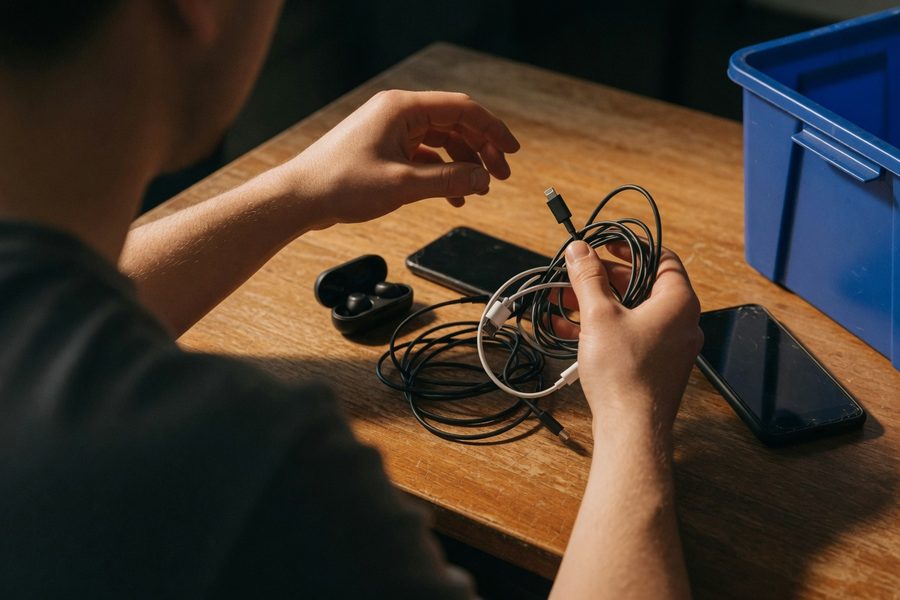
Last month, I cleared a drawer full of dead chargers, an old iPod shuffle, and a pair of wireless earbuds that held a charge for about twelve minutes. I assumed half of it was trash. Turns out, almost all of it had a recycling home. Most municipal and retailer programs accept cell phones, tablets, e-readers, keyboards, mice, cables, chargers, small audio devices, and portable GPS units, often at no charge.
Older items carry no stigma: that cracked-screen smartphone from 2019 and the fitness tracker you replaced in 2025 are welcome. As long as the device doesn’t leak battery fluid and the lithium-ion cell isn’t visibly swollen, convenience centers and store kiosks will take it. Some sites, like the Recology program in Kirkland, Washington, even ask that small electronics be placed in clear bags for easy sorting, so keep a box of sandwich bags handy.
What Local Recyclers Usually Reject
The single biggest rejection at local drop-offs is damaged lithium-ion batteries, bulging, punctured, or leaking packs that pose a fire hazard. Standards are tightening: post-2025 regulations in several states now mandate that any device with a non-removable swollen battery be handled as household hazardous waste, not tossed into the small-electronics bin.
Other common turn-aways include non-electronic components like plastic phone cases, novelty-shaped USB drives with embedded liquids, and proprietary docking stations for medical devices that contain mixed materials. Many municipal sites also refuse CRT monitors and TVs, even if they’re small; those fall under separate bulky-waste streams. Retail programs that seem generous, Best Buy’s free recycling, for instance, exclude items like large appliances, console TVs, and units containing Freon. For small electronics, the line is usually drawn at anything over roughly 50 pounds or having a screen larger than 32 inches, though specifics vary by store.
Wireless earbuds and smartwatches with built-in batteries are the trickiest emerging category. While many municipal programs now accept them, you often must tape the battery terminals and bag each piece separately to prevent short circuits during transport.
Preparing Devices for Drop-Off: Data Security and Practical Steps
A factory reset alone doesn’t guarantee data is irrecoverable. First, encrypt the device, most modern Android phones and iPhones do this by default, then perform the wipe. After that, remove any SIM card and memory card. The EPA explicitly warns that personal information should be deleted before donation or recycling; failing to do so opens the door to identity theft, and our protecting yourself from financial scams guide covers what can happen next.
For devices that store data on internal hard drives or flash memory, laptops, tablets, old iPods, a full data-destruction utility like DBAN or the built-in secure erase function adds a second layer of assurance. Once wiped, back up anything you might need later. Cloud storage for small businesses can also handle personal archives if you’re dealing with more than a handful of gadgets.
The identity-theft risk isn’t hypothetical. Services like Experian and competing credit bureaus routinely flag account-takeover attempts traced back to data recovered from improperly wiped devices. A two-step process, encrypt first, then reset, closes that exposure before the device changes hands.
Organizing Items for Drop-Off
Bagging cables separately and coiling them with twist ties helps sorting facilities process them faster. If your municipality requires clear bags, put each device in an individual bag so handlers can see battery condition at a glance. Tape over exposed charging ports on items that have been sitting in a damp basement; corroded contacts can spark at the recycling facility.
Manufacturer Take-Back, Retailer Options, and Certified Recyclers
New York’s Electronic Equipment Recycling and Reuse Act is a model many states are now adopting. It requires manufacturers of covered electronics to offer free take-back to consumers. Beginning in 2025, similar laws expanded in California, Illinois, and Minnesota, mandating that brands accepting small IT gear must also publish a public collection-site list on their websites. The NY Department of Environmental Conservation maintains a searchable roster of registered collectors, and analogous agencies in other states likely do the same.
On the retail side, Best Buy stands out for volume: it accepts up to three items per household per day at no charge, covering everything from cell phones to networking gear. Staples offers free recycling for most office electronics but charges a small fee for certain large printers, check its online list before loading the car. Goodwill, through its partnership with Reworld, takes many small electronics for free, though it directs lithium batteries and heavily damaged items to Earth911 or Call2Recycle instead. Apple operates its own GiveBack program for Apple-branded devices, occasionally offering gift cards for devices in working condition, which makes it worth checking before defaulting to a general drop-off.
For business users, the stakes around certified recyclers are higher. Companies that recycle office equipment, laptops, routers, multifunction printers, should request a Certificate of Data Destruction from any R2-certified vendor. Financial firms regulated by the FDIC or subject to Federal Reserve oversight face specific data-handling obligations that make undocumented recycling a compliance risk, not just an environmental one. Small-business owners who use accounting software through platforms like QuickBooks or manage payroll via ADP should treat old hardware with the same care as paper records.
| Recycling Channel | Accepted Small Electronics | Typical Fees | Key Limitation |
|---|---|---|---|
| Municipal Convenience Center | Phones, tablets, cables, small peripherals | Free with residency proof | Often 3–5 items per visit; seasonal closures |
| Best Buy (Retail In-Store) | Up to 3 items/day: phones, tablets, networking, ink | Free for most small electronics | No large appliances, no TVs over 32″ |
| Manufacturer Mail-Back | Own-brand devices, sometimes other brands | Free prepaid label (covered by state law) | Requires shipping; box size limits apply |
Sell your intact old phone to a certified refurbisher and you might pocket enough for a weekend trip. The cash surplus is a nice side effect, and our advice on traveling more often without overspending can turn that into a real getaway.
Costs, Limitations, and Realistic Expectations by Location
Free isn’t universal. While many municipal drop-offs and retailer programs cover basic small electronics at no charge, rural areas often lack permanent centers, forcing residents to rely on fee-based events or mail-back labels that cost between $5 and $25 per box depending on weight. In Santa Fe County, New Mexico, for instance, residential e-waste disposal is free at the convenience center but limited to two visits per month, a constraint that surprises newcomers. If you have a 640 credit score and about $8,000 in savings for a down payment, paying a $15 mail-back fee might feel like a small price to avoid a 50-mile drive. But when every dollar counts, that same $15 stays in your pocket at a free retailer drop-off, covering a week’s worth of coffee instead.
Even free programs impose hidden costs when you have to remove stuck batteries or pay a separate hazardous-waste fee for a swollen power bank. Best budgeting apps can help track these occasional outlays, though a simple spreadsheet works just as well if you’re only recycling a few items a year. Quantity limits are another friction point: Best Buy’s three-items-per-day cap means a family clearing a decade of obsolete gadgets may need several trips. Certified mail-back programs from manufacturers, subsidized by state take-back laws, are the consistent fallback when local options are full or too distant.
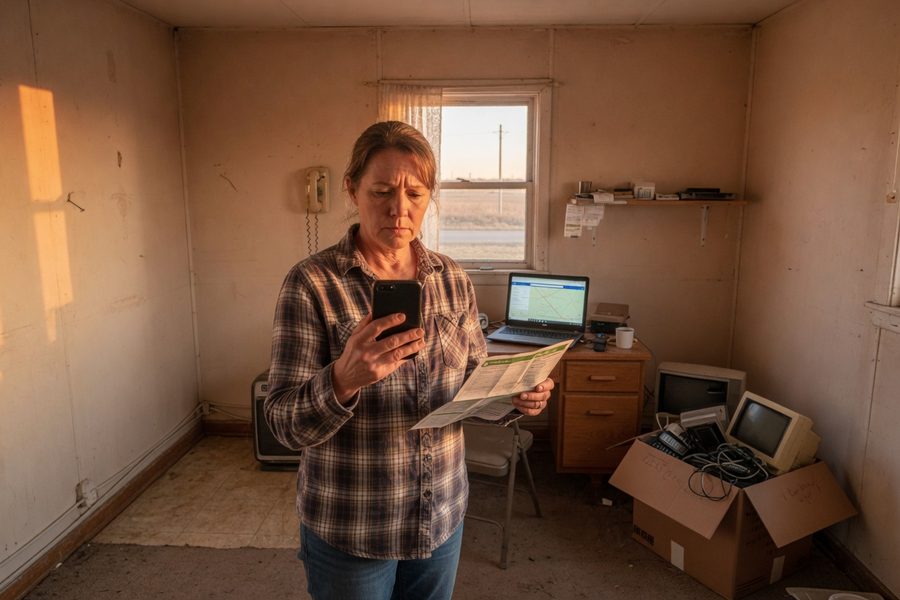
A working iPhone 13, for example, traded in through Apple’s program in mid-2026 netted about $200. That same device dropped off at a municipal center yields nothing but a clean conscience. The $200 difference, roughly a month’s worth of streaming subscriptions, shows how a small habit shift can put cash back in your budget. The geographic disparity is real and worth naming plainly. Urban households near a Best Buy, a Staples, and a municipal convenience center have four or five options within a few miles. A rural household in, say, western Montana may have one annual collection event and a mail-back program as their only practical choices. That gap doesn’t disappear by checking Earth911 more carefully; it reflects genuine infrastructure limits that state legislators and manufacturers are only beginning to address through expanded take-back mandates.
Finally, expect seasonal ebbs. Many towns schedule e-waste collection events in spring and fall, leaving summer and winter with limited slots. Bookmark your public works department’s calendar and set a smartphone reminder; the slots fill fast enough that the word “convenient” starts to feel generous.
Related reading: AIO Expert: Pro Techniques for Using a Personal Air Purifier in Small Apartments.
Frequently Asked Questions
Can I recycle my old phone at a local drop-off?
Yes, most municipal convenience centers and retailer programs accept phones. Check your local site’s list, but expect to remove the SIM card and perform a factory reset first.
What should I do with a broken smartwatch before recycling?
Remove the battery if possible and tape the terminals. If it’s non-removable or swollen, take it to a household hazardous waste facility, do not place it in a standard e-waste bin.
Are wireless earbuds recyclable at most drop-off centers?
Many municipalities now accept them, but only if battery contacts are taped and each earbud is bagged separately to prevent shorts during transport.
Can I recycle old chargers and cables curbside?
No. Curbside collection doesn’t handle tangled cords. Drop them off at a municipal e-waste center or a retailer like Staples that accepts them.
Does Best Buy accept all small electronics for free?
Best Buy takes up to three items per household per day free, including phones, tablets, cables, and small peripherals, but not large appliances, TVs over 32 inches, or devices with Freon.
How do I properly wipe my old phone before recycling?
Enable encryption (on by default on modern iOS and Android), perform a factory reset, then remove the SIM and memory cards. This sequence ensures data is irrecoverable.
Do I need to remove the SIM card before recycling?
Yes. A SIM card can store contacts, passwords, and authentication data. Remove it after the factory reset to prevent data transfer.
Are e-cigarettes recyclable locally?
Most municipal programs do not accept e-cigarettes due to their lithium-ion batteries and liquid components. Check with Earth911 or Call2Recycle for dedicated battery or e-waste drop-off points.
Can I mail back my old laptop for recycling?
Yes, if your manufacturer offers a free mail-back program under state take-back laws. These programs are often available through the brand’s website and include prepaid shipping labels.
What if my battery is swollen or leaking?
Do not attempt to recycle it at a standard e-waste drop-off. Take the device to a household hazardous waste collection site or a certified battery recycler like Call2Recycle.
Sources
- UNITAR, Global E-waste Monitor 2024: Electronic Waste Rising Five Times Faster Than Documented E-waste Recycling
- U.S. Environmental Protection Agency, Electronics Donation and Recycling
- U.S. Environmental Protection Agency, Certified Electronics Recyclers
- U.S. Environmental Protection Agency, Used Lithium-Ion Batteries
- Earth911, Recycling Search Tool
- Call2Recycle, Battery and Cell Phone Recycling Program
- New York State Department of Environmental Conservation, Electronic Equipment Recycling and Reuse Act
- Best Buy, Electronics and Appliances Recycling Program






