
Updated August 2026
Fact-checked by the ZeroinDaily editorial team
You wake up congested for the third morning in a row, eyes itchy, throat raw, and you have no idea why. You changed your bedding, banned pets from the bedroom, and spent $300 on a new HEPA air purifier. Yet the symptoms persist. The missing piece? You never actually measured what was in your air. A portable air quality monitor can reveal the invisible culprits, fine particulate matter, volatile organic compounds, mold spores, and humidity levels, that trigger allergic reactions even in seemingly clean homes.
Indoor air pollution is a bigger problem than most people realize. According to the U.S. Environmental Protection Agency, indoor air can be 2 to 5 times more polluted than outdoor air, and in some cases up to 100 times worse. In 2024, 25.2% of U.S. adults and 20.6% of children had a diagnosed seasonal allergy, according to the CDC, totaling over 80 million Americans. The economic cost of allergy-related healthcare is significant, with billions spent annually on treatment and lost productivity. Meanwhile, the average American spends roughly 90% of their time indoors, where pollutant concentrations are often the highest.
This guide gives you exactly what you need to make a smart purchase decision. You will learn which sensors actually matter for allergy sufferers, how to decode air quality readings, which features are worth paying for, and how to use real data to reduce your symptoms. By the end, you will know how to choose the right device, use it effectively, and stop guessing about your indoor environment.
Key Takeaways
- Indoor air can be 2-5 times more polluted than outdoor air, according to the EPA, making indoor monitoring critical for allergy sufferers.
- Entry-level portable air quality monitors cost between $30 and $100; professional-grade models range from $150 to $400+.
- PM2.5 particles (2.5 microns or smaller) penetrate deep into lung tissue and are the most common allergy and asthma trigger measured by consumer devices.
- VOC levels above 500 ppb indoors are associated with a 40% increase in respiratory symptom frequency, per indoor air quality research.
- Humidity between 30% and 50% suppresses dust mite reproduction by up to 80%, a metric most quality monitors track in real time.
- Consumer-grade sensors can have a ±15-25% margin of error compared to reference instruments; calibration and placement matter enormously for accurate readings.
In This Guide
- Why Allergy Sufferers Need Air Quality Monitoring
- Key Pollutants Every Allergy Sufferer Should Track
- Understanding Sensor Types and Their Accuracy
- Must-Have Features in a Portable Air Quality Monitor
- Price Tiers Explained: What You Get at Each Level
- Top Models Compared for Allergy Use
- Placement, Usage, and Getting the Most Accurate Readings
- Interpreting Your Data and Taking Action
- Limitations, Pitfalls, and Common Mistakes
Why Allergy Sufferers Need Air Quality Monitoring
Most allergy management strategies are reactive. You take antihistamines after symptoms appear. You run your purifier constantly, without knowing whether it is actually working. Real-time monitoring flips that dynamic, you respond to data, not symptoms.
Allergy triggers are not uniformly distributed throughout a home. Cooking fumes spike PM2.5 in kitchens by as much as 200 micrograms per cubic meter within minutes. A damp bathroom can push relative humidity above 70%, creating ideal conditions for mold growth within 24 to 48 hours. Without a monitor, you cannot know which room is causing your worst reactions.
The Hidden Indoor Pollution Problem
New furniture, freshly painted walls, and scented candles all off-gas volatile organic compounds (VOCs) continuously. A 2022 study published in Environmental Health Perspectives found that common household products contribute to indoor VOC concentrations 2 to 10 times higher than outdoor background levels. Many of these compounds are potent allergy and asthma triggers.
Central HVAC systems can distribute allergens through an entire house within minutes. Without knowing your baseline air quality, every purification strategy becomes a guess. Monitoring gives you a feedback loop, you can see whether opening a window helps or makes things worse, depending on outdoor pollen counts.
The World Health Organization estimates that 3.8 million premature deaths annually are linked to indoor air pollution from household sources, more than traffic accidents and HIV/AIDS combined.
How Monitoring Connects to Allergy Treatment
Allergists increasingly recommend environmental control as the first line of defense before medication. The American Academy of Allergy, Asthma and Immunology notes that reducing allergen exposure can decrease medication needs by 30 to 60% in sensitized individuals. A portable monitor generates the data needed to implement targeted environmental controls rather than broad, expensive interventions.
Tracking air quality over time also helps identify patterns. You might discover that your worst allergy mornings correlate with overnight humidity spikes above 60%. That single insight could lead you to run a dehumidifier at night, a $40 to $80 operational change that eliminates the problem at its source.
Key Pollutants Every Allergy Sufferer Should Track
Not all air quality metrics are equally relevant for allergy management. Understanding which pollutants to prioritize helps you choose a device with the right sensor set, and avoid paying for measurements that don’t affect your health.
Particulate Matter: PM2.5 and PM10
PM2.5 refers to particles 2.5 micrometers or smaller. These particles bypass the nose and throat entirely, depositing deep in lung tissue. Dust mite debris, mold spores, pollen fragments, and pet dander all contribute to PM2.5 readings. The EPA’s safe daily average is 35 micrograms per cubic meter, many kitchens exceed this during cooking.
PM10 captures coarser particles up to 10 micrometers. These are more easily filtered by nasal passages but still trigger upper respiratory allergy symptoms. Dust, pollen, and larger mold spores fall in this range. Both readings together give you a complete picture of your particulate exposure.
Cooking on a gas stove can spike indoor PM2.5 to over 300 micrograms per cubic meter, nearly 9 times the EPA’s safe daily average of 35 micrograms per cubic meter.
VOCs and Carbon Dioxide
VOCs are emitted by hundreds of household products: cleaning sprays, air fresheners, adhesives, carpeting, and even some personal care products. They are measured in parts per billion (ppb). Indoor levels consistently above 500 ppb are associated with significant respiratory irritation and can worsen allergic sensitization over time.
Carbon dioxide (CO2) is not a direct allergen, but it serves as a proxy for ventilation quality. CO2 above 1,000 ppm typically means the space needs fresh air, and poor ventilation concentrates every other pollutant. Monitoring CO2 helps you know when to open windows or run mechanical ventilation.
Humidity and Temperature
Humidity is arguably the most underappreciated allergy metric. Dust mites cannot survive below 50% relative humidity, yet they thrive above 60%, according to the American Lung Association. A 2019 study in the Journal of Allergy and Clinical Immunology found that maintaining indoor humidity between 30 and 50% reduced dust mite allergen levels by up to 80% over a 12-week period.
Mold requires sustained humidity above 70% on surfaces to germinate. Temperature affects both humidity dynamics and the activity of biological allergens. A good monitor tracks both so you can intervene before mold becomes a visible, and expensive, problem.
| Pollutant | Safe Threshold | Primary Allergy Impact | Measurement Unit |
|---|---|---|---|
| PM2.5 | Below 12 µg/m³ (annual), 35 µg/m³ (24-hr) | Deep lung irritation, asthma triggers | µg/m³ |
| PM10 | Below 150 µg/m³ (24-hr) | Upper respiratory symptoms, pollen reaction | µg/m³ |
| VOCs | Below 500 ppb (total) | Respiratory irritation, sensitization | ppb or mg/m³ |
| CO2 | Below 1,000 ppm | Ventilation proxy; indirect allergy impact | ppm |
| Humidity | 30–50% RH | Dust mite and mold growth | % RH |
Understanding Sensor Types and Their Accuracy
Consumer air quality monitors use different sensor technologies, each with distinct accuracy profiles, lifespans, and price implications. Knowing the difference helps you evaluate whether a $50 device gives you trustworthy data.
Optical Particle Counters vs. Laser Particle Sensors
Most consumer PM sensors use laser light scattering. A laser beam hits particles, and a photodetector measures the scattered light. The particle count is then converted to a mass concentration estimate. These sensors are reasonably accurate for relative comparisons but can be fooled by humidity, water droplets scatter light just like dust particles.
Higher-end devices use optical particle counters (OPCs), which size-sort particles more precisely. These typically appear in devices priced above $200 and offer significantly better accuracy in humid conditions, important for allergy sufferers who are often monitoring spaces with elevated moisture levels.
Consumer-grade PM sensors are useful for identifying relative changes and pollution events, but absolute concentration values can vary by 20 to 40% from reference instruments, especially in humid environments, according to a 2020 review of consumer sensor accuracy.
Electrochemical and Metal Oxide VOC Sensors
Metal oxide semiconductor (MOS) sensors are the most common VOC measurement technology in consumer devices. They detect a broad spectrum of gases by measuring resistance changes in a metal oxide film. They are inexpensive and reasonably sensitive but non-specific, they cannot distinguish between individual VOC compounds.
Electrochemical sensors offer better specificity for particular gases like formaldehyde or carbon monoxide. Devices that include dedicated formaldehyde sensors (HCHO) are especially valuable for allergy sufferers in newer buildings, where off-gassing from building materials is highest in the first 12 to 18 months after construction.
CO2 Sensor Technologies
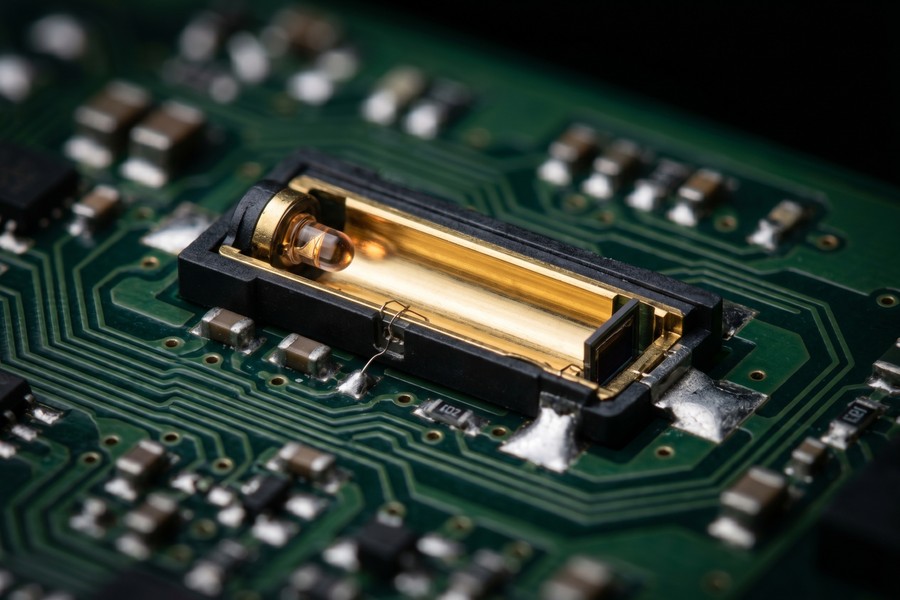
NDIR (Non-Dispersive Infrared) sensors are the gold standard for CO2 measurement. They are accurate to within ±50 ppm and maintain calibration well over time. Cheaper devices sometimes use estimated CO2 (eCO2) derived from VOC sensors, this is a proxy, not a direct measurement, and should be clearly labeled as such in the product specifications.
Always check whether a monitor’s CO2 reading is “true CO2” (NDIR) or “eCO2.” True CO2 monitors typically cost $30 to $60 more but provide genuinely actionable ventilation data.
Must-Have Features in a Portable Air Quality Monitor
The feature set of an air quality monitor determines how useful it is for allergy management versus just generating numbers. Here is what to prioritize.
Real-Time Display and Alert Thresholds
A real-time display lets you see pollution spikes as they happen. This is critical for identifying triggers, you can watch PM2.5 spike when you light a candle, spray cleaning products, or run the dishwasher. Without live readouts, you are reviewing history, not responding to events.
Configurable alert thresholds notify you when levels exceed your personal limits. Some devices allow you to set alerts via a smartphone app; others use audible beeps or LED color changes. Color-coded LED systems, green, yellow, red, provide at-a-glance information without requiring you to read numbers.
Set your PM2.5 alert threshold at 12 µg/m³ rather than the EPA’s 24-hour average of 35 µg/m³. Allergy sufferers often react at lower concentrations, and catching spikes early gives you time to act before symptoms develop.
Data Logging and App Connectivity
Data logging, storing historical readings, is essential for pattern recognition. A device that only shows current readings cannot help you identify that your allergies are worst every Tuesday because that is when you clean with VOC-heavy products. Look for at least 30 days of stored data, accessible via a companion app or exportable as CSV files.
App connectivity via Bluetooth or Wi-Fi enables remote monitoring, historical trend visualization, and automated reports. Wi-Fi-connected devices sync to the cloud continuously, while Bluetooth devices require your phone to be nearby. For whole-home monitoring, Wi-Fi is preferable. For a truly portable unit you carry room to room, Bluetooth with local storage is sufficient.
Battery Life and Portability Metrics
Genuine portability requires a battery life of at least 4 hours at continuous monitoring. Many devices advertise portability but have only 1 to 2 hours of battery life in practice. Check the specs carefully. Some monitors, like the IQAir AirVisual Pro, are designed primarily for stationary use despite their compact size.
Weight and form factor matter for practical use. A device under 200 grams and pocket-sized encourages consistent daily use. Larger units (300g+) are better suited as semi-permanent room monitors that you move occasionally rather than carry continuously.
| Feature | Basic ($30-$80) | Mid-Range ($80-$200) | Premium ($200+) |
|---|---|---|---|
| PM2.5 Sensor | Laser scatter, ±25% | Laser scatter, ±15% | OPC or calibrated, ±10% |
| VOC Detection | MOS, broad range | MOS + eCO2 | MOS + formaldehyde specific |
| CO2 Measurement | eCO2 estimate only | eCO2 or NDIR | True NDIR CO2 |
| Data Logging | None or 24 hrs | 7-30 days | 90 days to unlimited cloud |
| App Connectivity | None | Bluetooth | Wi-Fi + cloud dashboard |
| Battery Life | 2-4 hours | 4-8 hours | 8-12 hours or AC-powered |
Price Tiers Explained: What You Get at Each Level
The air quality monitor market spans a wide price range, and the differences between tiers are meaningful, not just marketing. Understanding what each price point delivers helps you avoid overpaying or underspending for your specific needs.
Entry Level: $30 to $80
Devices in this range typically measure PM2.5, temperature, and humidity. They use MOS VOC sensors and eCO2 estimates. Accuracy is adequate for identifying major events, cooking smoke, high humidity mornings, but insufficient for precise threshold tracking. The Temtop LKC-1000S (~$60) and similar models offer basic functionality for people who want a starting point without significant investment.
The primary limitation is data persistence. Most entry-level devices display current readings only, with no logging or app integration. This makes them reactive tools rather than analytical ones. For allergy sufferers trying to identify triggers, this is a significant drawback.
Mid-Range: $80 to $200
This tier adds data logging, Bluetooth app connectivity, and often a dedicated formaldehyde sensor. Devices like the Airthings Wave Plus (~$150) and the Govee Air Quality Monitor (~$90) offer multi-pollutant tracking with smartphone integration. Accuracy improves meaningfully, PM2.5 readings are typically within ±15% of reference instruments in controlled conditions.
Mid-range devices hit the sweet spot for most allergy sufferers. You get actionable data, historical trends, and sufficient accuracy to make informed decisions without professional-grade pricing. This is where most buyers should focus their search.
Premium: $200 and Above
Premium devices like the IQAir AirVisual Pro (~$270), Awair Element (~$150 to $200), and Airthings View Plus (~$300) add true NDIR CO2 sensors, radon detection (in some models), professional calibration, and solid cloud analytics. They are appropriate for people with severe allergies, asthma, or medical conditions that require precise environmental data.
At this tier, you also often get integration with smart home platforms, IFTTT, Amazon Alexa, Apple HomeKit, allowing your air quality data to automatically trigger HVAC adjustments or purifier operation. The long-term health ROI of preventing one serious allergy-triggered asthma hospitalization can easily justify the upfront investment. Asthma-related hospitalizations in the U.S. cost an average of $14,212 per stay, according to the Agency for Healthcare Research and Quality.
Asthma-related hospitalizations in the U.S. cost an average of $14,212 per stay, according to the Agency for Healthcare Research and Quality. A $200 air quality monitor that prevents even one severe episode pays for itself 70 times over.
Top Models Compared for Allergy Use
With dozens of options on the market, choosing the right device requires a head-to-head comparison of the metrics that matter most. The following table evaluates five leading models specifically through the lens of allergy management.
| Model | Price | Key Sensors | Battery Life | Best For |
|---|---|---|---|---|
| Airthings Wave Plus | ~$150 | PM, VOC, CO2 (NDIR), Humidity, Radon | AC-powered | Stationary bedroom/living room monitoring |
| IQAir AirVisual Pro | ~$270 | PM2.5, CO2 (NDIR), VOC, Humidity, Temp | AC-powered | High-accuracy indoor/outdoor comparison |
| Awair Element | ~$170 | PM2.5, VOC, CO2 (NDIR), Humidity, Temp | AC-powered | Smart home integration, HEPA purifier pairing |
| Temtop P1000 | ~$130 | PM2.5, PM10, HCHO, VOC, CO2, Humidity | 4 hours | True portable multi-room surveys |
| Govee Air Quality Monitor | ~$90 | PM2.5, PM10, VOC, HCHO, Temp, Humidity | 5 hours | Budget-conscious buyers, basic allergy tracking |
For true portability, moving the device from room to room to identify where your air quality is worst, the Temtop P1000 and Govee offer the best battery life in their respective price ranges. For stationary monitoring with the highest data quality, the IQAir AirVisual Pro remains the benchmark.
Allergy specialists often encourage patients to invest in a quality monitor and use the data to guide environmental controls before relying solely on medication. The American Academy of Allergy, Asthma and Immunology recommends a comprehensive approach to reducing indoor allergens, noting that environmental control can reduce medication needs by 30 to 60%.
Radon Monitoring: An Underrated Allergy-Adjacent Feature
Radon is a radioactive gas that seeps from soil into basements and ground-floor rooms. It is the second leading cause of lung cancer in the U.S., responsible for approximately 21,000 deaths annually according to the EPA. While not technically an allergen, radon causes respiratory inflammation that worsens allergy and asthma symptoms significantly.
Only a handful of consumer monitors, notably the Airthings View Plus (~$300) and Airthings Wave (~$200), include radon detection. If you live in a high-radon region (check EPA maps), the additional cost is strongly justified. Long-term radon testing via charcoal canisters (~$15 to $30) remains the most affordable option for a one-time assessment.
Placement, Usage, and Getting the Most Accurate Readings
Even the most accurate sensor gives misleading data if placed incorrectly. Placement decisions can swing PM2.5 readings by 50% or more, turning actionable data into noise.
Optimal Placement by Room Type
In bedrooms, where most allergy sufferers spend 7 to 9 hours unconsciously breathing, place the monitor at bed height, approximately 3 to 4 feet from the floor. Avoid window sills and surfaces directly above radiators or air vents, which create unrepresentative microclimates. Place it at least 3 feet from the bed itself to avoid measuring your exhaled CO2.
In living rooms, position the device away from upholstered furniture (which off-gases VOCs continuously) and at least 6 feet from open kitchen areas during cooking surveys. The EPA recommends placing monitors in the “breathing zone”, roughly 3 to 6 feet above the floor, for the most representative readings of what you actually inhale.
Running Systematic Room Surveys
A room survey involves moving the monitor to each room for a consistent 20-minute period, noting baseline readings before any activities disturb the air. Record readings in the morning before activity, during peak activity (cooking, cleaning), and overnight. This three-time-point protocol, repeated over 5 to 7 days, reveals meaningful patterns.
Document your findings in a simple spreadsheet or the device’s companion app. Many allergy sufferers are surprised to find that their home office, filled with laser printer emissions, old carpet, and limited ventilation, shows higher VOC and PM readings than any other room.
Never place your air quality monitor near an air purifier’s intake or output. Purifier airflow creates a false “clean zone” that produces readings 30-60% lower than the room average, giving you an inaccurate picture of actual exposure.
Outdoor Comparison Testing
Taking your portable monitor outdoors for 5 minutes before entering each room gives you an outdoor baseline. Comparing indoor to outdoor readings reveals whether your home is adding pollution (likely if indoor > outdoor) or filtering it (ideal). This comparison is especially valuable during wildfire smoke events, when outdoor PM2.5 can reach 150 to 500 µg/m³, and you need to know whether your building envelope is keeping it out.
Interpreting Your Data and Taking Action
Raw numbers become meaningful only when you know what they mean and what to do about them. This section translates monitor readings into specific interventions.
Reading the AQI and Raw Concentration Values
The Air Quality Index (AQI) is a 0-500 scale that translates raw pollutant concentrations into color-coded categories, as explained by AirNow. AQI 0-50 is “Good” (green). AQI 51-100 is “Moderate” (yellow). AQI 101-150 is “Unhealthy for Sensitive Groups” (orange), this is where allergy and asthma symptoms typically begin. Many consumer monitors display both raw values and AQI simultaneously.
For allergy management, raw PM2.5 values are often more useful than AQI because AQI is based on 24-hour averages, while short-term spikes (during cooking, for example) can be just as harmful. A 15-minute peak at 100 µg/m³ may not move the 24-hour AQI into orange territory, but it absolutely triggers respiratory symptoms in sensitized individuals.
Connecting Readings to Specific Interventions
When PM2.5 exceeds 35 µg/m³, run your HEPA air purifier on high and identify the source. When VOCs exceed 500 ppb after cleaning, increase ventilation for at least 30 minutes. When CO2 climbs above 1,000 ppm, open a window or run an exhaust fan for 10 minutes. When humidity exceeds 60%, run a dehumidifier immediately, especially in bedrooms and bathrooms.
These are not arbitrary rules. They are based on the thresholds established by the EPA, ASHRAE Standard 62.1 for ventilation, and clinical guidelines from the AAAAI. Connecting monitor data to specific, time-bound actions is what transforms monitoring from a passive hobby into an active health management tool.
Running a kitchen exhaust fan during and for 10 minutes after cooking reduces PM2.5 concentrations by an average of 60-70%, according to research published in Building and Environment, far more effective than an air purifier placed in an adjacent room.
Using Trend Data for Long-Term Allergy Management
Weekly trend reports from your monitor’s app reveal seasonal patterns. You might find that September brings outdoor pollen infiltration, driving indoor PM10 above safe thresholds. That data justifies sealing windows, upgrading to MERV-13 HVAC filters, and increasing purifier runtime, proactively, before your symptoms peak.
Sharing this trend data with your allergist provides clinical value. Most allergists have limited visibility into patients’ home environments. Presenting 30 days of logged humidity, PM2.5, and VOC data during an appointment can lead to more targeted treatment adjustments than a symptom diary alone. Just as the right digital tools make financial management more data-driven and effective, the right monitoring technology brings precision to health management that was previously impossible at home.
Limitations, Pitfalls, and Common Mistakes
Consumer air quality monitors are powerful tools, but they have real limitations. Understanding these prevents misinterpretation and misplaced confidence.
Accuracy Limitations of Consumer Sensors
As noted earlier, consumer PM sensors can deviate 15 to 25% from reference instruments under ideal conditions, and more in high-humidity or high-concentration environments. This does not make them useless, but it means you should treat absolute numbers as approximations, not precise measurements. Focus on trends and relative changes rather than single-point readings.
Sensors also drift over time. Most laser PM sensors maintain reasonable accuracy for 2 to 3 years. MOS VOC sensors degrade faster, often within 12 to 18 months of continuous use. If your monitor is more than 2 years old and readings seem inconsistent with your symptoms, consider recalibration (if the manufacturer supports it) or replacement.
Humidity above 75% significantly degrades laser particle sensor accuracy, causing false high PM2.5 readings. If you monitor a bathroom or basement, humidity correction algorithms, offered by some premium devices, are essential for trustworthy data.
What Monitors Cannot Detect
Most consumer monitors cannot detect individual biological allergens, dust mite proteins, specific mold species, or pollen types. They measure particle counts and sizes as proxies for these triggers. This means a low PM reading does not guarantee the absence of allergens. Molecular allergen tests (available as home test kits for $30 to $80) complement air monitors by directly detecting specific proteins.
Carbon monoxide (CO) and nitrogen dioxide (NO2), serious respiratory hazards from gas appliances, are not included in most general-purpose air quality monitors. If you have gas appliances, a dedicated CO detector is non-negotiable and is separate from your air quality monitoring setup.
Air quality monitors are one piece of the puzzle. They are excellent for identifying ventilation problems and pollution events, but allergen-specific testing, HVAC filter upgrades, and professional remediation for mold remain essential components of a complete environmental control strategy, as outlined by the CDC’s indoor environmental quality guidance. A monitor’s data complements these measures by pinpointing the most urgent areas for improvement.
The Technology Ecosystem Around Your Monitor
A portable air quality monitor works best as part of a broader ecosystem. Pairing it with a quality HEPA purifier, a smart thermostat, and MERV-13 HVAC filters creates a closed-loop system where your data drives automated responses. Many buyers find that the insights from even a $90 monitor reveal simple fixes, like running the bathroom fan 20 minutes longer, that eliminate symptoms without expensive equipment purchases.
Just as AI tools are transforming how businesses process complex data streams, smart home air quality ecosystems are bringing that same automation to personal health management. The monitor is the data input; smart devices are the actuators; your health is the outcome you are optimizing.
Real-World Example: How One Allergy Sufferer Eliminated Morning Symptoms in 6 Weeks
Sarah, a 34-year-old teacher in Atlanta, had struggled with chronic morning allergy symptoms for three years. She was spending approximately $1,200 per year on antihistamines, nasal sprays, and allergy specialist co-pays. She had already purchased two HEPA air purifiers, one for the bedroom, one for the living room, at a combined cost of $380. Her symptoms persisted. Her allergist suspected dust mites or mold but could not confirm the source without an environmental investigation that would cost $400 to $800 to commission professionally.
Sarah purchased a Temtop P1000 portable air quality monitor for $130. Over five days, she conducted systematic room surveys every morning, afternoon, and evening. The data revealed two critical findings: her bedroom humidity was spiking to 74% each night between 2 and 6 a.m. (well above the 50% dust mite growth threshold), and her bathroom, directly adjacent to the bedroom, showed VOC readings of 680 ppb, consistently above safe limits. She had been using an aerosol air freshener daily that was identified as the VOC source.
Sarah replaced the aerosol freshener with an unscented alternative and purchased a $45 dehumidifier for the bedroom, set to maintain 45% relative humidity. She also repositioned her bedroom HEPA purifier from the corner near the window to a more central location, based on the monitor’s readings showing better air distribution. Within two weeks, overnight humidity readings stabilized between 42 and 48%. Within six weeks, her morning congestion had decreased by roughly 80% by her own assessment. Her allergist confirmed reduced nasal inflammation at her follow-up appointment.
The total additional investment was $175 ($130 monitor + $45 dehumidifier). Compared to her annual $1,200 symptom management spend, the payback period was under two months. She subsequently reduced her antihistamine use by approximately 70%, cutting her annual medication cost to roughly $350. The monitor provided the specific, actionable insight that two years of trial-and-error had failed to generate.
Your Action Plan
-
Identify your primary allergy triggers and match them to sensors
Before purchasing, make a list of your known or suspected triggers, dust mites, mold, pet dander, chemical sensitivities. Match these to sensor requirements. Dust mite and mold concerns require humidity and PM2.5 monitoring. Chemical sensitivities require VOC and formaldehyde detection. This narrows your device selection to models with the right sensor combination for your specific needs.
-
Set a realistic budget based on your symptom severity
Mild, seasonal allergy sufferers will likely get sufficient value from a $80 to $130 device. Those with year-round symptoms, asthma, or multiple chemical sensitivities should budget $150 to $270 for a mid-to-premium device with true NDIR CO2 and data logging. Avoid the cheapest options ($30 to $50) if you need data logging, without it, pattern recognition is nearly impossible.
-
Conduct a 5-day baseline survey of every room in your home
On your first week with the monitor, spend 20 minutes in each room at three times per day, morning, afternoon, and evening. Record all readings in a simple spreadsheet or the device app. This establishes your home’s unique pollution profile and identifies the highest-risk rooms before you start making any changes.
-
Identify the top two or three pollution events driving your worst readings
Review your baseline data and look for the largest spikes and the rooms with consistently elevated readings. Common culprits include gas cooking without exhaust fan use, bathroom humidity from inadequate ventilation, and VOC off-gassing from cleaning products or new furniture. Prioritize addressing the biggest problems first for the fastest symptom relief.
-
Implement targeted interventions and measure their impact
Take one action at a time, run the exhaust fan during cooking, switch to fragrance-free cleaning products, or add a dehumidifier to the bedroom. Measure air quality before and after each change over 3 to 5 days. This controlled approach tells you exactly which interventions are working, so you invest only in solutions that deliver measurable improvement.
-
Bring your data to your next allergist appointment
Export 30 days of logged data from your monitor’s app and share it with your allergist. Highlight the rooms with highest pollutant levels and any clear correlations between specific readings and symptom days. This transforms your medical appointment from a symptom-reporting session into a data-driven environmental consultation, enabling more targeted treatment recommendations.
-
Set up automated alerts for critical thresholds
Configure your monitor’s companion app to send push notifications when PM2.5 exceeds 25 µg/m³, humidity exceeds 60%, or VOCs exceed 500 ppb. These alerts allow you to intervene within minutes of a pollution event, opening a window, running a purifier on high, or leaving a freshly cleaned room, before concentrations rise high enough to trigger symptoms.
-
Re-evaluate and upgrade your sensor as your needs evolve
After 6 months of monitoring, reassess whether your current device is providing the level of insight you need. If you have addressed obvious problems but symptoms persist, consider upgrading to a premium model with radon detection, true formaldehyde sensing, or professional calibration. Plan for sensor replacement or device upgrade every 2 to 3 years as sensor accuracy degrades. Budget $100 to $300 for this recurring maintenance cost in your household health planning, just as you would budget for any other health management technology. Resources like the best budgeting apps can help you track these health-related technology expenses alongside your other financial goals.
Related reading: Pro Tips for Using a Wearable Air Quality Monitor in Urban Apartments.
Frequently Asked Questions
What is the best portable air quality monitor for allergy sufferers?
The best choice depends on your budget and specific triggers. For most allergy sufferers, the Temtop P1000 (~$130) offers the best combination of true portability, multi-pollutant sensing (including formaldehyde), and battery life. For stationary monitoring with the highest accuracy, the IQAir AirVisual Pro (~$270) or Airthings View Plus (~$300) are the premium benchmarks. If budget is the primary constraint, the Govee Air Quality Monitor (~$90) covers the most critical allergy metrics at the lowest price.
Can a portable air quality monitor detect mold?
No consumer air quality monitor directly detects mold spores or mold species. Monitors measure PM2.5, humidity, and VOCs, all of which can indicate conditions favorable to mold growth. Sustained humidity above 70% and unexplained VOC spikes in a poorly ventilated area are strong indirect indicators of mold activity. For confirmed mold detection, use a dedicated mold test kit ($20 to $50) or hire a certified industrial hygienist.
How accurate are consumer air quality monitors compared to professional instruments?
Consumer PM sensors typically show 15 to 25% deviation from reference instruments under controlled conditions. In high-humidity environments, deviation can exceed 40%. VOC sensors are less accurate for absolute values, they are better at detecting relative changes than precise concentrations. CO2 readings from true NDIR sensors are the most accurate consumer measurements, typically within ±50 ppm of reference values. For clinical-grade accuracy, professional instruments costing $1,000 to $5,000+ are required.
Do I need a separate device to monitor outdoor air quality?
Not necessarily. Many premium portable monitors include an outdoor mode for taking external readings. You can also reference the EPA’s






