Fact-checked by the ZeroinDaily editorial team
Quick Answer
To recover from jet lag, you’ll need to shift your circadian rhythm using timed light exposure, strategic melatonin (0.5–5 mg at the right local time), and app-guided schedules. Most tech-aided users cut adaptation to less than 2 days per time zone, down from the typical 1 day per 1–1.5 time zones.
If crossing multiple time zones leaves you foggy, irritable, or wide awake at 3 a.m., you’re in crowded company. 68% of international business travelers experience negative jet lag symptoms on a regular basis, according to the Centers for Disease Control and Prevention (CDC). The old advice, drink water, stay awake until local bedtime, doesn’t cut it anymore. Today’s most effective jet lag recovery techniques lean on real-time data from wearables, algorithm-driven light and melatonin schedules, and portable light therapy tools that were once the province of sleep labs.
The difference between travel fatigue and genuine circadian misalignment is profound. As Eileen Wong, MD, a sleep medicine expert at University Hospitals, puts it: “A good night’s rest will usually resolve symptoms of travel fatigue, while symptoms of jet lag may persist for several days.” This guide is for anyone who needs to land clear-headed and perform at full speed, whether you’re closing a deal in London or chasing a toddler through a Tokyo airport. By the time you finish reading, you’ll have a tech-backed, step-by-step playbook that tackles the biological clock directly, instead of just masking the symptoms.
Key Takeaways
- 68% of international business travelers suffer from jet lag regularly, per the CDC, making evidence-based strategies essential.
- Strategic light exposure can shift your circadian rhythm by roughly 1 hour per day, according to Jamie Zeitzer, PhD, of Stanford University.
- Melatonin dosed between 0.5 and 5 mg at destination-appropriate times, recommended by the American Academy of Sleep Medicine, can dramatically speed alignment.
- Apps like Timeshifter, built on NASA-derived research, deliver personalized schedules that some frequent transatlantic flyers claim cut symptoms by up to 50%.
- Wearables such as Oura Ring and Apple Watch provide real-time sleep debt and heart-rate variability scores, letting you adjust post-arrival plans dynamically instead of relying on static advice.
- Portable light therapy glasses (e.g., Luminette) and smart home lighting systems can start shifting your body clock days before departure, compressing the total recovery window.
In This Guide
- Step 1: How Do I Use a Jet Lag App Like Timeshifter to Prep Before My Flight?
- Step 2: What’s the Actual Science of Light Exposure, and How Do I Apply It East vs. West?
- Step 3: Can Tech Help Me Sleep Better on a Long-Haul Flight?
- Step 4: What Should I Do the Moment I Land to Avoid Jet Lag?
- Step 5: How Do Wearables Like Oura Ring Actually Track My Jet Lag Recovery?
- Step 6: What Advanced Gadgets and Biohacks Work for Frequent Flyers?
- Frequently Asked Questions
Step 1: How Do I Use a Jet Lag App Like Timeshifter to Prep Before My Flight?
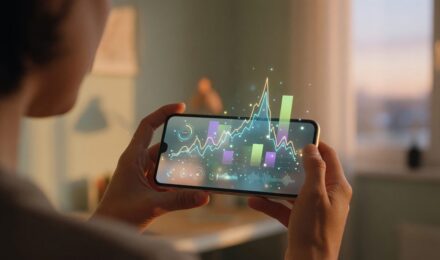
Open the app, input your flight details and normal sleep schedule, and it will generate a precise timeline for light exposure, caffeine, and melatonin, starting two to three days before departure. Timeshifter, the dominant jet lag app with over 1.7 million users, bases this on NASA-funded research and your chronotype. You simply follow the alerts: “Seek bright light now,” “Avoid light from 2 p.m. to 6 p.m.,” “Take 0.5 mg of melatonin at 10 p.m.” The algorithm calculates the optimal shifting rate, roughly 1 hour per day, which matches what Jamie Zeitzer, PhD, a Stanford sleep researcher, describes as the maximum achievable under ideal light conditions.
How to Do This
After booking your flight, download Timeshifter or an alternative like Jet Lag Rooster. Enter your departure city, destination, flight times, and your habitual bed and wake times. The app will produce a pre-travel plan. Start adjusting your sleep schedule, going to bed and waking up 30 to 60 minutes earlier for eastward trips, or later for westward ones, in small daily increments. If you have smart bulbs from Philips Hue, you can program them to simulate sunrise and sunset at the times the app suggests, giving your brain a stronger entrainment signal.
What to Watch Out For
Flight delays break app schedules. If your departure time shifts more than three hours, you need to re-sync the app, a feature Timeshifter now supports by pulling real-time data from United Airlines’ integration. Also, the plan requires strict adherence; accidentally getting bright light during a “dark” window can delay adaptation by hours. Treat the schedule as non-negotiable in the days before you fly.
If you fly often, store your chronotype profile in the app once. Timeshifter’s algorithm uses your personal sleep midpoint to tailor future schedules, making each new trip faster to set up.
Step 2: What’s the Actual Science of Light Exposure, and How Do I Apply It East vs. West?
Light is the single most powerful signal your brain’s master clock uses to determine when it’s day or night. “Understanding light intensity levels in different environments is key,” says Jamie Zeitzer, PhD. The rule is simple: seek bright light in the biological morning, avoid it in the biological evening. When flying east, shortening your day, you need light early in your destination’s morning to advance your clock. When flying west, lengthening your day, you need light later in the afternoon and early evening to delay your clock. Apps like Timeshifter automate this calculation, but knowing the principle helps when Wi‑Fi fails mid-trip.
How to Do This
For a New York to London trip (eastward), aim for bright outdoor light or a 10,000-lux light therapy lamp as early as possible upon arrival, and wear sunglasses or avoid sunlight in the late afternoon. For a Los Angeles to Tokyo flight (also east but with a larger shift), the morning light window is even more critical. If you don’t have a therapy lamp, simply stepping outside into natural daylight for 20 to 30 minutes sends a robust signal to your suprachiasmatic nucleus.
What to Watch Out For
Airport lounges and airplane cabin lighting emit far less than 500 lux, well below the threshold needed to shift circadian timing. Sitting next to a window during a daytime flight helps, but it’s not a replacement for destination-based bright light. Also, blue light from screens late at night can inhibit melatonin production; activate your phone’s Night Shift or use a blue-light filtering app like f.lux once the app tells you it’s time to wind down.
The CDC specifically recommends adjusting sleep patterns days before travel, later for west, earlier for east, and matching light exposure accordingly, a practice backed by dozens of controlled studies.
Step 3: Can Tech Help Me Sleep Better on a Long-Haul Flight?
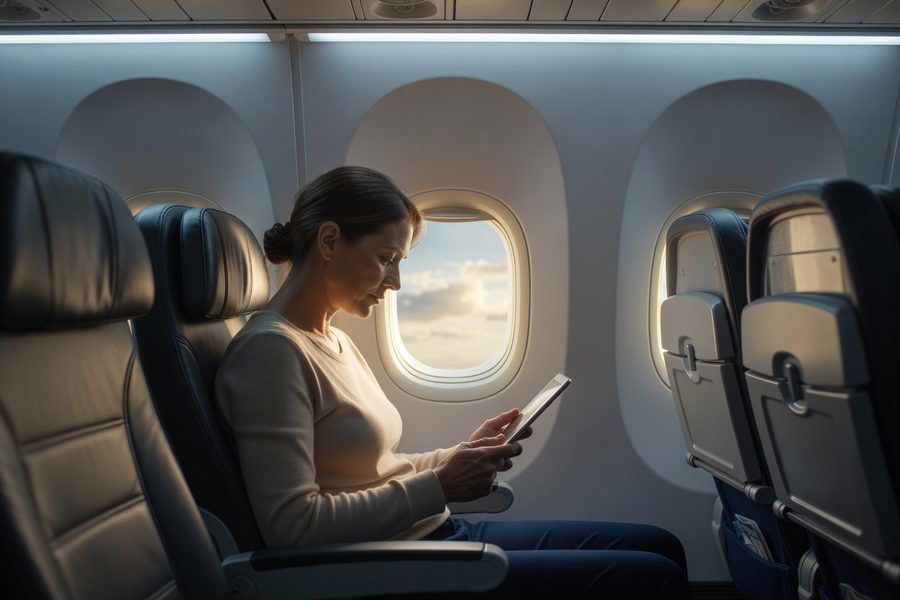
Yes, but the real benefit comes from layering tools that mimic nighttime conditions and provide bio-feedback. Noise-canceling headphones such as the Sony WH-1000XM5 paired with a white-noise app like Dark Noise can cut cabin roar enough to let you fall asleep in a middle seat. Meanwhile, wearable trackers, an Oura Ring or Apple Watch, monitor sleep stages and heart rate variability (HRV), giving you a data readout of how restorative that doze actually was. If your app alerts you to avoid caffeine after a certain hour, heed it: even a 4 p.m. espresso can fragment sleep later, and the wearable will confirm it with reduced deep-sleep percentages.
How to Do This
Start by setting up your sleep environment: a contoured eye mask that blocks 100% of light, noise-canceling over-ears, and a playlist of slow, non-vocal tracks. If you use a wearable, enable the “airplane mode” and check the sleep dashboard when you wake. Oura’s Readiness Score, for instance, factors in sleep efficiency and HRV to tell you how much exertion you can handle upon arrival. Stretching your travel budget wisely can also free up funds for a premium economy seat that reclines further, a small investment that can double your in-flight sleep quality.
What to Watch Out For
Relying solely on tech without managing meal timing can backfire. A heavy, high-carb meal at 2 a.m. UTC can disrupt blood sugar and fragment sleep, regardless of white noise. Also, many wearables estimate sleep stages with roughly 60–80% accuracy compared to lab polysomnography; use them as trend monitors, not medical devices.
| Jet Lag App | Pre-Trip Schedule Starts | Light & Melatonin Guidance | Price |
|---|---|---|---|
| Timeshifter | 2–3 days before flight | Personalized, algorithm-driven | $9.99 per trip or $24.99/year |
| Jet Lag Rooster | 1–2 days before | Free, based on generic phase-response curves | Free |
| Uplift | 2 days before | Light, caffeine, and acupressure recommendations | $14.99 one-time |
Running multiple jet lag apps simultaneously can generate conflicting schedules. Pick one, trust its algorithm, and avoid second-guessing.
Step 4: What Should I Do the Moment I Land to Avoid Jet Lag?
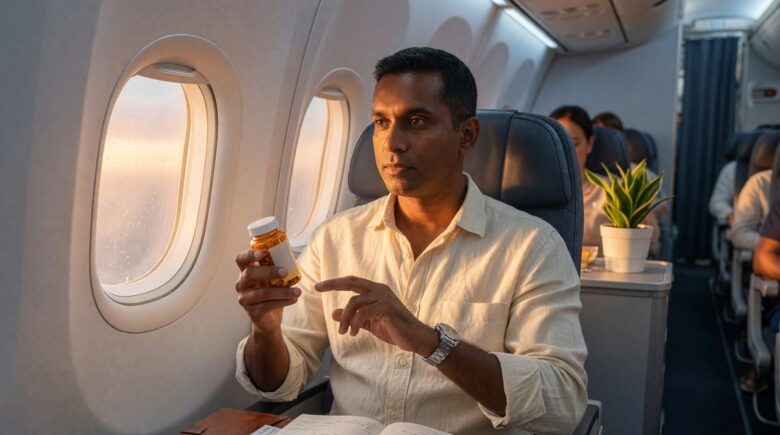
Follow your app’s landing-day timeline to the minute. If it says “expose eyes to bright light at 8 a.m.,” walk straight to the airport’s sunniest window or put on a pair of Luminette light therapy glasses for 20 minutes. If melatonin is scheduled for 9 p.m., take exactly 0.5 mg (a low dose that’s often more effective than higher doses for circadian shifts, per the American Academy of Sleep Medicine) and dim all screens. Avoid the temptation of a “short nap” that stretches past 20 minutes, because deep sleep during the biological day anchors your clock to the wrong time zone.
Hydration reminders from a smart water bottle like the HidrateSpark can help because air travel causes 1–2% dehydration, which worsens fatigue. But the primary error travelers make is ignoring light exposure windows, even a brief nap in a dark hotel room during the afternoon can push your adjustment back by half a day.
68% of international business travelers experience regular jet lag symptoms, according to the CDC. A precise landing protocol can cut that misery by half for those who stick with it.
Step 5: How Do Wearables Like Oura Ring Actually Track My Jet Lag Recovery?
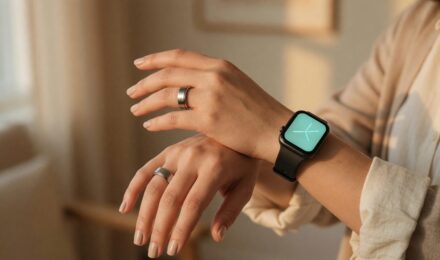
Wearables track recovery by measuring resting heart rate, HRV, skin temperature, and sleep-stage distribution, then distilling them into a single readiness or recovery score. When your circadian rhythm is misaligned, HRV drops and resting heart rate rises, signals that the device picks up. After a long-haul flight, you might see an Oura Readiness Score in the 50s or 60s instead of your usual 80+. That’s a real-time warning that your body hasn’t adapted, and it’s grounds to delay a high-stakes presentation or an intense workout by a few hours.
How to Do This
Wear the device to bed as soon as you arrive. In the morning, check the detailed sleep graph: look for sufficient deep sleep (at least 10–15% of total sleep time) and a high HRV. If the scores are poor, extend the dark period that evening and follow your app’s light exposure schedule even more strictly. Some users sync Oura data with the Timeshifter app via Apple Health, letting the algorithm tweak the next day’s timing based on actual sleep. This closes the feedback loop, turning static advice into dynamic coaching.
What to Watch Out For
Devices vary in accuracy. Oura’s sleep staging has been shown to agree with lab polysomnography about 70–80% of the time, good enough to spot trends, but not a substitute for acting on how you feel. Also, constant charging and data syncing can drain your phone battery; carry a small power bank if you plan to rely on multiple gadgets throughout the trip. If you’re maximizing every dollar you spend on travel, consider that a single annual subscription to a recovery-tracking ecosystem often costs less than one night in a business-class hotel.
A person can adjust their circadian rhythms by approximately one hour each day if they expose themselves to the right amounts of light at the right times.
Step 6: What Advanced Gadgets and Biohacks Work for Frequent Flyers?
Portable light therapy glasses like Luminette 3 and Re-Timer emit blue-enriched white light directly into your eyes, allowing you to get a circadian-shifting dose while walking through an airport terminal or sitting at a café. They are battery-powered and designed to be worn like glasses for 20 to 60 minutes, and they’ve been used in studies to shift sleep-wake cycles as effectively as natural outdoor light. Smart mattresses like the Eight Sleep Pod can adjust bed temperature by up to 10°F below ambient, promoting the drop in core body temperature that signals your body it’s time for deep sleep, a trick especially helpful when you land in a hot climate and need to force a nighttime environment.
How to Do This
For the frequent business traveler, building a permanent travel tech kit pays off quickly. Pack Luminette glasses in your carry-on; schedule their use according to Timeshifter’s morning light windows. At the hotel, set the Eight Sleep Pod to cool to 65°F around your target bedtime if you need to sleep during the day. For melatonin, ditch the standard pill and try a timed-release patch (such as Melatonin Time-Release Patches from PatchMD), which delivers a steady low dose over 8 hours, mimicking the natural evening rise in melatonin more closely than an oral pill. Some frequent fliers also stack a nootropic blend containing bacopa monnieri or phosphatidylserine to blunt the cognitive fog, though evidence for these is still emerging.
United Airlines previously partnered with Timeshifter to offer customized jet lag plans for passengers, marking one of the first major airline validations of app-driven circadian science. That integration also allowed the app to adjust for delays automatically, solving one of the biggest real-world adoption hurdles.
What to Watch Out For
These tools multiply battery drain and privacy concerns. The Luminette glasses need to be charged every 3 days, and the Eight Sleep requires a stable Wi‑Fi connection and shares temperature data with the cloud. If you’re uncomfortable with your sleep patterns living on a server, opt for offline light therapy and local-only sleep tracking. Also, while the tech stack is exciting, the core behavioral rules, sometimes the best trip is the one where you move more slowly, remind us that even the fanciest gadgets can’t replace the discipline of sticking to a schedule. That’s the honest trade-off: the gear is a multiplier, not a magic bullet.
Frequently Asked Questions
Can Oura Ring or Apple Watch actually help me recover from jet lag faster by tracking my sleep and readiness?
They can’t directly speed up recovery, but they provide real-time feedback on sleep debt, HRV, and resting heart rate, which tells you how well your circadian adjustment is progressing. An Apple Watch running AutoSleep or an Oura Ring can show you that your deep sleep is still 15% below baseline, prompting you to extend dark exposure that evening. Used this way, they help you adhere to a protocol and catch mistakes early, like discovering that a late-afternoon “short nap” tanked your readiness score.
Should I take melatonin for jet lag, and what’s the best dosage and timing based on my flight direction?
Yes, melatonin is effective when timed correctly. The American Academy of Sleep Medicine recommends 0.5 to 5 mg taken close to the desired bedtime at destination. For eastward travel, you want to advance your clock, so take melatonin about 30 minutes before bedtime in the new time zone. For westward travel, you may need it later in the evening, possibly 1–2 hours before bed, but the exact window should be calculated by a jet lag app. Avoid doses above 5 mg; higher amounts don’t improve entrainment and can leave you groggy.
How can I use noise-canceling headphones and white-noise apps to sleep better on a 12-hour flight?
Pair active noise cancellation with a droning soundscape that masks intermittent cabin sounds. Use the Sony WH-1000XM5 or Bose QuietComfort Ultra headphones and play a brown noise track from the Dark Noise or myNoise app. The combination can reduce perceived loudness enough to transition from light to deep sleep, especially if you also wear a contoured eye mask. One caveat: don’t volume-match to drown out everything, keep levels below 70 decibels to protect your hearing during an 8-hour flight.
What are the best portable light therapy devices for beating jet lag, and how do I use them?
The Luminette 3 and Re-Timer are the top wearable options. Luminette delivers diffuse blue-enriched light through a visor-like design; you wear it for 20–60 minutes during the app-prescribed morning window. Re-Timer looks like wraparound glasses and uses green light. Both are light, USB-rechargeable, and fit easily in a carry-on. For stationary use at your hotel, a 10,000-lux tabletop lamp like the Carex Day-Light Classic works well, but you need to sit within 12 inches of it for at least 30 minutes.
I fly internationally every week for business: what’s a reliable tech routine to minimize jet lag when my schedule is unpredictable?
Build a “travel core” that you deploy regardless of destination: always pack Luminette glasses, a reusable timed-release melatonin patch, and noise-canceling headphones. Use Timeshifter’s “Frequent Traveler” plan, which stores your chronotype and lets you generate a new schedule in under 60 seconds. When flights change last-minute, re-run the schedule immediately. If you can’t access the app, default to the rule “light early in the morning, melatonin at 10 p.m. local time” and skip caffeine after 2 p.m. This minimal stack won’t match a personalized plan but will still keep your adaptation on track.
What’s the worst thing I can do on arrival that will make jet lag worse according to sleep experts?
Taking a long nap during the destination’s daytime. A nap longer than 20 minutes can push you into deep sleep, which the brain interprets as a reset signal that anchors your internal clock to the wrong time zone. The CDC explicitly warns against extended daytime sleep upon arrival, and both the CDC and Stanford sleep researchers recommend keeping any naps under 20 minutes and timed at least 6 hours before your new bedtime.
Can I use my smart home lights to start shifting my circadian rhythm days before traveling?
Absolutely. Schedule Philips Hue or LIFX bulbs to mimic a gradual sunrise at the time your jet lag app says you should wake up. Three days before departure, have the lights start brightening at the new morning time. At night, program them to switch to a dim, warm color (under 2,500 K) two hours before the target bedtime. This pre-adaptation can shift your rhythm by 30 to 45 minutes per day without requiring you to step outside in the dark.
How long does it really take to adjust per time zone, and can tech speed it up?
Without any intervention, the body’s circadian clock shifts about 1 hour per day, meaning a 6-hour time difference takes nearly a week. With optimized bright light exposure, melatonin, and strict schedule adherence, most people can accelerate the process to 1.5 to 2 hours per day, cutting the total adjustment time by roughly 30–40%. Technology like Timeshifter and Luminette doesn’t break the biological speed limit; it simply removes the guesswork so you hit that maximum shift rate consistently.
Does the direction of travel really matter for jet lag severity, and how should my plan differ going east vs. west?
Yes, eastward travel is harder because you’re shortening the day, which requires advancing your internal clock, a more difficult adjustment than delaying it. Westward travel lengthens the day, a delay that most people find easier because the human circadian period is naturally slightly longer than 24 hours. Your plan should front-load: for eastward trips, prioritize early-morning bright light and early-evening melatonin; for westward Luminette use in late afternoon and no melatonin until very late in the new evening. A jet lag app will reverse the schedule automatically based on direction, so rely on that calculation.
Sources
- CDC Yellow Book 2024 – Jet Lag Disorder
- CDC Travelers’ Health – Jet Lag
- University Hospitals – 8 Strategies for Reducing Jet Lag (Eileen Wong, MD)
- Human Performance Alliance – Beating Jet Lag: A Guide to Strategic Light Exposure (Jamie Zeitzer, PhD)
- Timeshifter – The Jet Lag App
- Sleep Foundation – Jet Lag and Sleep