
Quick Answer
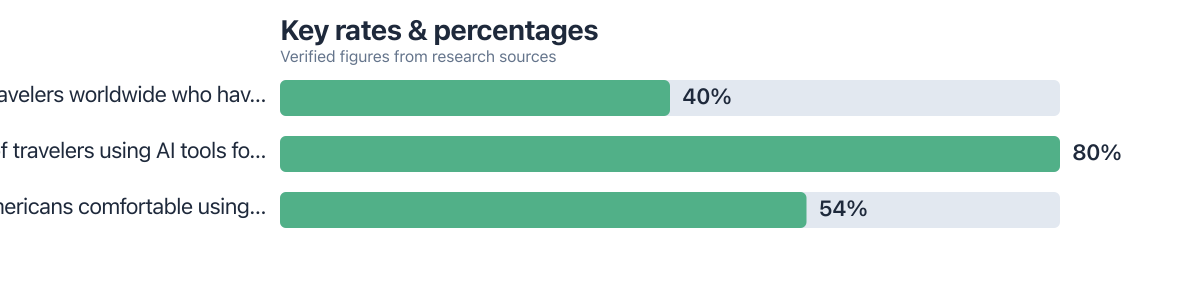
An AI packing list with weather integration 2026 pulls live forecasts (or historical climate data for far-off dates) and adjusts clothing and gear suggestions automatically. Roughly 80% of travelers now use some form of AI travel tool, according to an Accenture survey cited by Travala.
Updated July 2026
This article is part of a broader look at How Smart Packing Tech Is Reducing Travel Stress in 2026, which covers the full range of gadgets and apps reshaping how people pack. Here, the focus narrows to one specific piece of that shift: why weather-integrated AI packing lists have gone from a novelty feature to something frequent travelers actively seek out.
The short version is that generic packing templates never accounted for the fact that weather changes between the day you book a trip and the day you leave. An AI packing list with weather integration 2026 solves a narrow but real problem, forecast drift, by updating suggestions as your departure date gets closer. This piece looks at how the weather-pull actually works, what travelers report gaining from it, which apps take different technical approaches, and where the tech still falls short.
Key Takeaways
- 80% of travelers surveyed by Accenture across 14 countries now use AI tools somewhere in their trip planning, per Travala’s 2026 analysis.
- The global generative AI in travel market hit USD 1063.71 million in 2025, according to Precedence Research, a signal of how much investment is flowing into these tools.
- 54% of Americans say they’re comfortable letting AI plan a vacation start to finish, per HUMAN Security’s 2026 survey, which matters directly for how much packing decision-making people are willing to hand off.
- Weather-integrated tools typically switch data sources partway through a trip window: live 10-day forecasts near departure, historical seasonal averages further out.
The Shift Toward AI-Assisted Travel Prep in 2026
Manual packing lists break down the moment a trip spans more than one climate or the forecast shifts after you’ve already made the list. A spreadsheet built two months before a trip to Lisbon in March has no way of knowing that a late cold front rolled in the week before you fly. That gap between static planning and dynamic weather is exactly what pushed developers to build packing tools that pull live data instead of relying on generic seasonal guesses.
Adoption numbers back this up. About 40% of travelers worldwide say they’ve used an AI-based tool for trip planning in 2025, according to Travala’s citation of Statista data, and that figure jumps to 80% once the definition broadens to any AI-assisted travel task, per the Accenture survey noted above. Packing sits downstream of that same behavior shift. Travelers who already trust AI for flight search and itinerary building are naturally extending that trust to what goes in the suitcase, especially for trips where the weather is genuinely uncertain.
Info: Weather-integrated packing tools are not a separate app category from general AI trip planners. Most are features bolted onto broader itinerary apps, which is why adoption tracks so closely with overall AI travel tool usage.
How Weather Integration Actually Works in Practice
The core mechanic is a data-source switch based on how far out your trip sits. For departures inside a 7 to 10 day window, tools like journeybot pull live forecast APIs and adjust suggestions in near real time, adding a rain shell or swapping sneakers for waterproof boots the moment a forecast updates. For trips further out, the same apps fall back on historical seasonal averages for that destination and month, since no forecast model is reliable that far in advance. This is the single biggest technical distinction between tools worth understanding, because it directly affects how much you should trust the suggestion you’re looking at three months before a trip versus three days before.
The practical effect is a list that isn’t fixed the moment you create it. If you build a packing list for Bangkok in six weeks, expect general wet-season guidance. Check that same list four days before departure and, if the forecast has shifted, expect the app to have quietly added or removed rain gear, sun protection, or layering pieces without you asking. That’s the difference between a smart travel tech for packing efficiency approach and a list you print once and never touch again.
Consider this: a traveler booking a week-long trip to Reykjavik in October, outside of the peak season, might see a historical average of 5.2 rainy days per month. But if a late storm system pushes into the North Atlantic, actual forecasts could show 8 to 9 rainy days over the same period. An AI tool using live data pulls that shift in real time, adjusting the list from “light rain jacket” to “fully waterproof shell + gaiters.” A traveler relying on a static template from a service like SoFi’s travel advisory feature might still default to a light layer, risking discomfort or even hypothermia in extreme cases.
Key Benefits Travelers Report Beyond Basic Checklists
The most consistent benefit travelers describe is fewer forgotten items, specifically items tied to weather surprises rather than generic essentials like chargers or passports. When a list accounts for both the activities on your itinerary and the live forecast, it catches gaps a static template misses, like packing sun protection for a beach day that a generic list assumed would be temperate.
A second, less obvious benefit shows up in how well suggestions match a traveler’s actual luggage constraints. Tools such as Packwise let users define a packing style (minimalist versus a habitual overpacker) and factor that preference in alongside weather and planned activities, so the output isn’t just weather-accurate, it’s sized to how much room you actually have. That pairs naturally with hardware-side tools covered in a companion piece on real-time weight-sensing suitcase airport compliance, since a weather-smart list that ignores baggage weight limits just shifts the overpacking problem to the airport counter instead of solving it.
Time savings compound for travelers who take multiple trips a year. Building a packing list from scratch each time, checking forecasts manually, and cross-referencing what you packed last time for a similar climate adds up to real hours across a travel-heavy year, even though no single trip’s savings feels dramatic. That’s a qualitative pattern more than a hard number, since no verified study has isolated minutes saved per list, but it lines up with why repeat travelers are the ones adopting these tools fastest.
None of this is a case for handing over judgment entirely. A list is a starting point, not a verdict, and the tools that work best are the ones travelers still glance over before zipping the bag closed.
Leading Apps and Their Distinct Approaches
The clearest split among current tools is on-device versus cloud-based processing, and that split matters more than most reviews admit because it affects both privacy and how quickly the app can react to forecast changes. Cloud-based tools generally pull richer, more frequently updated weather data since they’re hitting live APIs on every session. On-device tools, several of which now build on Apple Intelligence, trade some of that real-time depth for keeping your itinerary, dates, and destination out of a third-party server, which matters if you’d rather not have a travel app holding a record of exactly where you’ll be and when.
That privacy tradeoff is one of the more overlooked angles in this space. Sharing precise trip dates and destinations with an AI tool means that data lives somewhere, and most travelers never check a given app’s retention policy before granting location and calendar access. If you’re using one of these tools for a solo trip or anything involving sensitive travel (a job interview abroad, a family emergency, a trip you’d rather not have logged), it’s worth reading the privacy terms the same way you’d check a bank’s data policy, not skimming past it during onboarding.
Warning: On-device processing reduces what a company can see about your itinerary, but it isn’t a guarantee of zero data sharing. Some apps still sync trip metadata to the cloud for weather refresh even when core list generation happens locally. Check the specific app’s data policy rather than assuming “on-device” means fully private.
Free tiers versus premium features tend to split along the same lines as most consumer software: free versions generate one list per trip with basic weather pulls, while paid tiers add multi-traveler support, family packing (useful when ages and activities vary widely across the group), and integration hooks with calendar or itinerary apps. If you’re the type of traveler who books trips the way described in a case study on how a remote worker booked months accommodation abroad for $3,120 (without airbnb), meaning long, multi-city stays rather than single week vacations, the premium tier’s multi-destination handling tends to justify itself quickly, since a single trip might span three climates in three weeks and a free tier’s one-shot list generation won’t track that.
| Approach | Weather Data Timing | Best Fit |
|---|---|---|
| Cloud-based (e.g., journeybot) | Live 10-day forecast pulls, refreshed each session | Trips within 1-2 weeks, frequent list checks |
| On-device (Apple Intelligence-based) | Local processing, periodic forecast sync | Privacy-conscious travelers, single-destination trips |
| Style-aware (e.g., Packwise) | Blends weather with user packing habits and luggage size | Overpackers, minimalist travelers, mixed-climate itineraries |
Common Pain Points and Limitations These Tools Target
Overpacking driven by “just in case” thinking is the single biggest pain point these tools go after, and it’s a reasonable target since weather uncertainty is exactly what drives most defensive overpacking. When a traveler doesn’t trust the forecast, the instinct is to pack for every possible condition. A weather-integrated list narrows that by committing to what the forecast actually shows close to departure, which only works if the traveler trusts the tool enough to leave the extra sweater at home.
Multi-destination itineraries expose a real gap in how most of these tools are marketed. A trip that moves from Rome to the Alps to the coast over ten days needs day-by-day weather tracking, not a single blended forecast for “your trip.” The better tools in this category handle that by generating segment-specific packing blocks tied to each leg’s dates and location, but plenty of cheaper or free tools flatten the whole itinerary into one averaged recommendation, which defeats the purpose for anyone doing a multi-city trip. If your itinerary looks more like the layered planning discussed in family four traveled europe three weeks without a single hotel booking, check specifically whether an app supports per-leg weather before relying on it, since that’s where generic tools quietly fail.
Special-needs travel is another area most coverage skips entirely. Travelers managing medical equipment, temperature-sensitive medication, or specific allergies need packing logic that goes beyond clothing layers, and few current AI tools handle that well out of the box. The workaround most experienced travelers use is treating the AI list as a base layer, then manually adding a fixed medical or accessibility checklist on top that the app never touches. Extreme weather anomalies (an unseasonal heatwave or an early cold snap) also expose the limits of historical-average data for trips booked months ahead, since averages smooth out exactly the kind of anomaly that catches travelers off guard.
Tip: For trips longer than 10 days from today, treat the AI list as a rough draft based on historical averages, not a live forecast. Re-check the list inside the 7-day window, when most tools switch to actual forecast data, before finalizing what goes in the bag.
Forecast unreliability beyond roughly a week is the honest limit here, and it’s worth naming directly. No weather model, AI-driven or otherwise, produces meaningfully accurate day-level forecasts two or three weeks out, so any packing suggestion generated that far ahead is really historical-average guidance wearing a live-forecast interface. Travelers who understand that distinction get more value from these tools because they know when to trust the output and when to treat it as a placeholder. A worked comparison makes the tradeoff concrete: if a manual list takes roughly 20 minutes to build and a weather-integrated app takes 3 minutes to generate plus a 2-minute review closer to departure, that’s a savings of about 15 minutes per trip, which turns into roughly two and a half hours a year for someone who travels ten times annually. None of this makes the tools infallible, and generic or overly cautious suggestions (an app defaulting to “pack a rain jacket just in case” even when rain probability is low) still require manual edits. Anyone doing serious multi-leg travel planning may also want to look at how worth time money comparisons factor into packing decisions, since transit mode affects both luggage limits and how much flexibility you have to adjust what you’re carrying mid-trip.

Stat: The global generative AI in travel market reached USD 1063.71 million in 2025, according to Precedence Research, reflecting how much of this investment is flowing specifically into planning and logistics features like packing.
Anyone weighing whether to adopt one of these tools should also look at the wider set of hardware and app pairings covered in the pillar guide on How Smart Packing Tech Is Reducing Travel Stress in 2026, since a weather-smart list works best paired with tools that handle the physical side of packing constraints, not as a standalone fix. It’s also worth checking whether a specific app addresses the tight volume limits covered in a related piece on How a Full lifestyle-tracking setup, since packing tech and daily-routine tech increasingly overlap for frequent travelers managing both.
Related reading: Why Alaska Travelers Are Switching to Self.
Frequently Asked Questions
Does an AI packing list update automatically if the forecast changes after I’ve booked?
For most cloud-based tools, yes, within the live forecast window, typically 7 to 10 days out. Outside that window, the list is usually based on historical averages and won’t reflect a genuine forecast shift until you’re closer to departure.
Are weather-integrated packing apps accurate for multi-city trips?
Accuracy depends heavily on whether the specific tool generates per-leg forecasts or averages the whole itinerary into one recommendation. Check this before relying on an app for a trip that crosses multiple climates or regions.
Is it safe to share my exact travel dates and destinations with these apps?
It depends on the app’s data handling policy, which most travelers never check. On-device processing options reduce (but don’t eliminate) how much itinerary data reaches a third-party server, so it’s worth reviewing the privacy terms for any app before granting full calendar and location access.
Can these tools account for strict airline baggage weight limits?
Some do, particularly ones built with luggage size and packing-style preferences in mind, but weight-limit compliance is generally better handled by dedicated smart luggage tools rather than the packing list app itself. Pairing a weather-aware list with a compliance-focused tool tends to work better than expecting one app to do both.
How far in advance should I trust an AI-generated packing suggestion?
Treat anything generated more than 7 to 10 days before departure as a rough historical-average guide rather than a firm forecast-based recommendation. Recheck the list once you’re inside that live-forecast window.
Do these apps handle special medical or accessibility packing needs?
Not reliably. Most current tools focus on clothing and general gear tied to weather and activities, so travelers managing medical equipment or specific allergies should layer a manual checklist on top of the AI-generated list rather than relying on it alone.






