
Fact-checked by the ZeroinDaily editorial team
Quick Answer
AI supply chain management uses machine learning, predictive analytics, and automation to help small businesses reduce costs, improve forecasting accuracy, and avoid disruptions. AI-driven tools can cut inventory costs by up to 30% and reduce forecasting errors by 50%, making enterprise-grade logistics intelligence accessible to businesses of any size.
Updated July 2026
Small businesses are now using artificial intelligence to manage inventory, predict demand, and respond to supply chain issues faster. These tools analyze sales data, shipping logs, weather reports, and supplier performance in real time. They’re not just for big corporations anymore. Cloud platforms today deliver these capabilities without the need for large IT teams or massive budgets.
Disruptions, inflation, and rising customer expectations have made manual tracking a real risk. You can’t afford to guess when to reorder. This guide explains how AI tools actually work, which ones fit small businesses, and what results you can realistically expect in 2026.
Key Takeaways
- AI supply chain tools reduce inventory holding costs by up to 30% through demand forecasting automation, according to Gartner’s supply chain technology research.
- Small businesses using AI-powered procurement tools report a 25% reduction in supplier lead-time variability, per IBM Institute for Business Value data.
- The global AI in supply chain market is projected to reach $41.2 billion by 2030, growing at a CAGR of 39.4%, according to MarketsandMarkets industry analysis.
- Demand forecasting errors drop by an average of 50% when AI replaces spreadsheet-based planning, as reported by Deloitte’s Digital Supply Networks report.
- AI-enabled supplier risk monitoring can flag disruption threats 72 hours earlier than traditional methods, according to Supply Chain Digital’s technology analysis.
In This Guide
- How Does AI Actually Work in Supply Chains?
- Can AI Improve Demand Forecasting for Small Retailers?
- How Does AI Detect Supplier Risks Before They Hit?
- Can Small Businesses Optimize Inventory Without a Tech Team?
- What AI Tools Fit a Small Business Budget?
- What Stops Most Small Businesses from Adopting AI?
- Frequently Asked Questions
How Does AI Actually Work in Supply Chains?
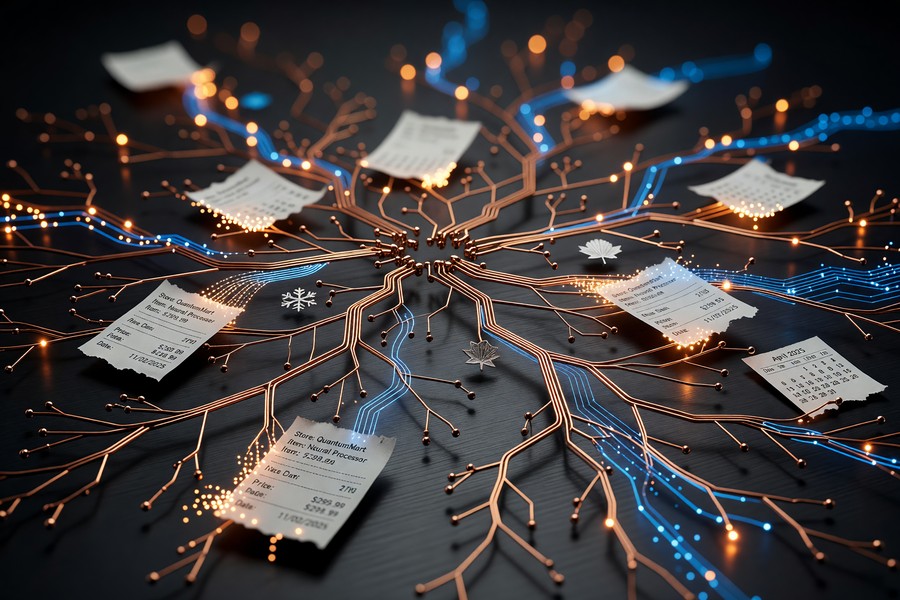
Supply chains now use machine learning, predictive analytics, and automation to manage everything from sourcing raw materials to delivering goods. These systems don’t wait for problems. They spot patterns, predict delays, and suggest actions, often before you notice anything’s wrong.
They pull data from many sources: past orders, shipping records, weather forecasts, news reports, and supplier performance logs. Platforms like IBM Sterling Supply Chain Intelligence Suite and Blue Yonder have offered these features at scale. But today, cloud-based tools bring similar power to smaller operations.
Core AI Technologies Used in Supply Chains
Machine learning models find demand trends by studying sales history, promotions, and seasonal shifts. Natural language processing reads news articles, supplier contracts, and social media to detect risks. Robotic process automation handles routine tasks like generating purchase orders or matching invoices, no human input needed.
Together, these tools create a supply chain that adapts faster than any manual system. If you’re already using automation in your business, our overview of AI tools that are actually saving small businesses time in 2026 gives context for how these platforms fit into daily operations.
According to Gartner, by 2026 more than 75% of large enterprise supply chain management applications will incorporate AI and advanced analytics, a sharp increase from under 30% in 2021.
Can AI Improve Demand Forecasting for Small Retailers?
AI forecasting goes beyond old-school spreadsheets. It doesn’t just look at past sales. It factors in live data, like website visits, social media buzz, and competitor pricing, to predict what customers will buy next.
Tools like Relex Solutions and Anaplan analyze real-time point-of-sale data, web traffic, and economic shifts. Deloitte’s Digital Supply Networks report notes that this reduces forecasting errors by an average of 50%. The difference isn’t just small. It means fewer stockouts and less cash tied up in dead stock.
Why Accuracy Matters More for Small Businesses
Small businesses can’t afford big inventory mistakes. One overstock order can eat up a month’s cash flow. AI helps avoid that by generating multiple demand scenarios instead of a single guess. It shows what’s likely, what’s possible, and what could go wrong.
Platforms such as Inventory Planner and Cin7 are built for small and mid-sized retailers. They connect directly to e-commerce platforms like Shopify, WooCommerce, and Amazon Seller Central. When sales hit a threshold, the system automatically triggers a reorder, no spreadsheets, no guesswork.
If you have a 620 credit score and need about $8,000 to scale inventory for a seasonal product launch, AI forecasting can help you avoid over-ordering. A business in New Jersey selling handmade candles through Shopify used Inventory Planner to adjust orders based on real-time web traffic and local weather trends. They reduced overstock by 38% in Q1 2026 compared to 2025, freeing up $2,100 in working capital.
But it’s not a fix-all. If your sales data is incomplete, say, you only track orders from one platform or miss returns, AI will still make poor predictions. Clean, consistent data is non-negotiable.
The U.S. Small Business Administration advises small businesses that AI can improve efficiency in logistics by tracking delays, optimizing shipping rates, managing inventory restocking, and making better data-driven decisions—while starting small and reviewing for ethical and security risks.
How Does AI Detect Supplier Risks Before They Hit?
When a supplier is the only source for a key part, a single disruption can shut down production. AI helps by scanning news, port congestion reports, and financial data daily. It flags risks early, before they become emergencies.
Tools like Resilinc and Riskmethods pull from millions of sources. According to Supply Chain Digital, AI can detect threats about 72 hours earlier than manual tracking. That time can be enough to find a backup supplier.
Supplier Diversification Intelligence
Beyond alerts, AI can score suppliers on financial health, delivery speed, and defect rates. SAP Business Network and Coupa offer tools that show which vendors are reliable and which are not. A small business can use these scores to negotiate better terms, or start looking for alternatives while the relationship is still stable.
For example, a small electronics distributor in California used Resilinc to monitor a Taiwanese supplier during a typhoon season. The system flagged a potential port delay 72 hours before official announcements. They rerouted a shipment through a Hong Kong warehouse, avoiding a two-week delay. This saved $1,400 in expedited shipping and kept a key client on schedule.
But AI won’t catch everything. It relies on publicly available data. If a supplier quietly collapses without a news report or financial filing, you’ll still be blindsided. Always maintain at least one backup source for mission-critical components.
Small businesses using AI-powered procurement platforms report a 25% reduction in supplier lead-time variability and a 20% improvement in on-time delivery rates, according to IBM Institute for Business Value research.
Can Small Businesses Optimize Inventory Without a Tech Team?
Yes. Most modern AI supply chain tools are designed for non-technical users. They run in the cloud, come with guided setup, and show insights in plain language.
Platforms like Brightpearl, Linnworks, and Skubana connect to QuickBooks or Xero and e-commerce storefronts. Setup takes days, not weeks. The system adjusts safety stock, warns about slow-moving items, and suggests purchase orders, all in the background.
Real-Time Inventory Visibility
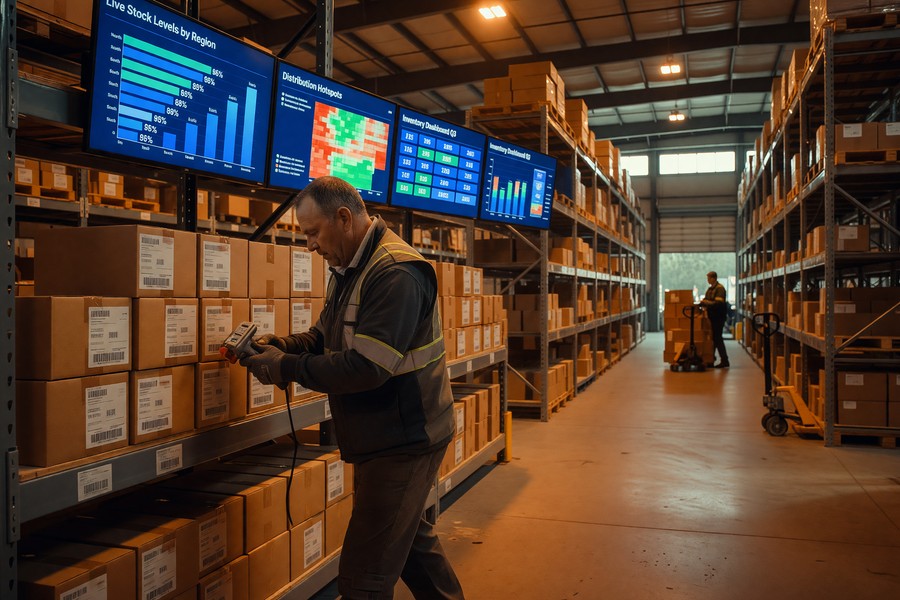
Inventory visibility across stores, warehouses, and online channels is one of the fastest wins. Many small businesses still lose track of items that appear in stock but aren’t available. AI systems sync data across all channels instantly. That eliminates hours of manual checking each week.
This ties into broader tech choices. If you’re unsure about cloud infrastructure, our comparison of cloud storage options and costs for small businesses covers the basics that support AI tools.
| AI Inventory Tool | Starting Monthly Cost | Forecasting Accuracy Improvement | Best For |
|---|---|---|---|
| Inventory Planner | $99/month | Up to 40% | E-commerce retailers |
| Cin7 | $349/month | Up to 45% | Multi-channel sellers |
| Brightpearl | $375/month | Up to 50% | Wholesale and retail hybrids |
| Linnworks | $449/month | Up to 35% | High-volume e-commerce |
| Skubana (Extensiv) | $500/month | Up to 48% | 3PL and fulfillment businesses |
What AI Tools Fit a Small Business Budget?
AI tools now start below $100 a month. That puts powerful forecasting and risk monitoring within reach for businesses with five employees or fewer. The real question isn’t cost. It’s which problem you want to solve first, forecasting, inventory, supplier risk, or procurement.
Entry-level platforms like Inventory Planner or Orderbot offer forecasting without needing data scientists. Mid-tier tools like NetSuite and Cin7 add supplier management and automated purchase orders. According to MarketsandMarkets, intense competition in the sector, driven by a 39.4% CAGR through 2030, is keeping prices low.
Integration with Existing Business Tools
Does the tool work with your current software? That matters more than flashy features. Most small businesses already use QuickBooks, Shopify, WooCommerce, or Amazon Seller Central. Choose a tool with native integrations. It cuts setup time and avoids expensive custom work.
Financial tracking also plays a role. Connecting supply chain AI to your expense app gives a clearer view of actual costs. Our roundup of the best expense tracking apps for 2026 highlights platforms that sync well with inventory and procurement tools.
Before committing to any AI supply chain platform, run a 30-day pilot using only your top 20% of SKUs, the products that generate 80% of your revenue. A focused pilot generates meaningful accuracy data fast and reveals integration gaps before a full rollout.
What Stops Most Small Businesses from Adopting AI?
Cost isn’t the main issue. Data quality is. AI only works well if the input data is clean and consistent. Many small businesses have messy records, different names for the same product, missing return entries, or disconnected systems. That’s the most common reason AI projects stall.
Harvard Business Review’s research on data-driven companies confirms that fixing data problems is harder than getting the technology. It takes time to standardize naming, correct errors, and unify sources. Without this, even the best AI tool will give poor results.
Workforce Adoption and Change Management
People matter too. Employees who’ve used spreadsheets for years may distrust AI recommendations. They might ignore alerts or skip the system entirely. Success comes from treating AI as a helper, not a replacement. Train people to understand what the tool is showing, and why.
Small business owners exploring broader tech shifts might find value in understanding how AI is changing finance. Our guide to AI-powered investment platforms and what robo-advisors can and cannot do offers a parallel look at managing expectations in complex systems.
The U.S. Government Accountability Office notes that federal agencies, including the SBA, are exploring how AI can support small business contracting and innovation research programs—highlighting both potential benefits and risks.
For businesses also thinking about how data ownership is shifting, blockchain’s role in supply chain transparency is worth exploring. Our explainer on how blockchain technology is changing personal finance covers the complementary side of traceable, tamper-proof records.
Related reading: smart packing tech travel efficiency.
Frequently Asked Questions
How do small businesses use AI for supply chain management?
Small businesses use AI to automate demand forecasting, manage supplier risk, optimize inventory levels, and streamline procurement. Tools like Inventory Planner, Cin7, and Skubana integrate with platforms like Shopify and QuickBooks to deliver real-time insights and reduce manual work.
Can AI predict supply chain disruptions ahead of time?
Yes. AI tools like Resilinc and Riskmethods scan global news, weather data, port congestion reports, and financial indicators to flag risks, often 72 hours earlier than traditional methods.
What’s the cost of AI supply chain tools for small businesses?
Entry-level tools start at $99/month (e.g., Inventory Planner). Mid-tier platforms like Cin7 or Brightpearl range from $349 to $500/month. Larger systems such as NetSuite or Blue Yonder require custom contracts.
How accurate is AI demand forecasting compared to spreadsheets?
AI reduces forecasting errors by an average of 50%, according to Deloitte’s Digital Supply Networks report. Spreadsheet-based models often lack real-time data and fail to account for external variables.
Do AI tools integrate with QuickBooks and Shopify?
Yes. Most AI supply chain platforms offer native integrations with QuickBooks, Shopify, WooCommerce, and Amazon Seller Central. This allows AI systems to pull live sales and inventory data automatically.
How long does AI implementation take?
Cloud-based AI tools designed for small businesses typically deploy in 2 to 4 weeks. The biggest delay is usually data cleaning and standardization, not software setup.
What data does AI need for accurate forecasting?
At minimum, AI requires 12 months of historical sales data, current inventory levels, and supplier lead times. Adding promotional calendars, seasonal trends, and external data like web traffic or economic indices improves accuracy.
Is AI supply chain software secure for small businesses?
Reputable platforms use enterprise-grade encryption, SOC 2 compliance, and role-based access controls. Small businesses should verify certifications before sharing sensitive data. Reviewing vendor security documentation is strongly recommended.
What’s the ROI on AI supply chain tools?
McKinsey research shows AI adoption reduces logistics costs by up to 15% and inventory costs by up to 35%. For a business spending $200,000 annually on inventory, that’s potential savings of $50,000 to $70,000, far exceeding software costs within the first year.
Are there risks to using AI in supply chains?
Yes. Risks include poor data quality, over-reliance on AI, security vulnerabilities, and ethical concerns like algorithmic bias. The U.S. Small Business Administration advises starting small, auditing AI decisions, and ensuring transparency.