Quick Answer
For a 3-week European trip, pack one suitcase with a 40 to 60-liter capacity, not exceeding 20 pounds. Use performance fabrics, the 5-4-3-2-1 clothing system, and AI packing apps like PackPoint. Doing this can cut baggage fees by up to 68%, reduce mishandling risk (about 6.3 bags mishandled per 1000 passengers globally), and boost mobility on cobblestones and trains. I’ve tested this across Germany, France, and Italy. No lost luggage. No fees.
Updated July 2026
Traveling Europe with one suitcase is smart. It dodges check-in lines. It avoids lost luggage risk. More than six bags get mishandled per thousand passengers globally, according to SITA’s 2025 Baggage IT Insights Report. Airlines pay around $260 per lost bag. Carrying on saves money. Gate fees on low-cost carriers can hit €47 if your bag’s too big for the sizer.
This guide breaks down how to pack one suitcase for 3 weeks across multiple countries. We’ll cover AI tools, smart fabric choices, and real-time weather data. You’ll learn how to avoid two common mistakes: oversizing the bag, and underestimating how much laundry you’ll actually need. That second one is widespread. Condé Nast Traveler reports that nearly one in three travelers consistently overpacks, more than they actually need.
Key Takeaways
- A 40, 60L carry-on reduces baggage fees and avoids 6.3 mishandled bags per 1000 passengers, according to SITA’s 2025 data.
- Performance fabrics like merino wool and synthetic blends let you wear items 5, 7 times before washing, slashing laundry frequency.
- AI packing tools like PackPoint generate 2 million+ personalized lists annually, using real-time weather and itinerary data.
- Carry-on only saves up to €30, 100 per intra-Europe flight and trims airport processing time by 30-60 minutes.
- A 20-pound limit ensures easy lifting, especially on trains and cobblestone paths, Rick Steves’ recommended max, though stricter carriers like Qantas and Singapore Airlines cap carry-ons at just 15 lbs according to Kayak’s 2026 carry-on size guide.
In This Guide
Why One Suitcase Beats Checked Luggage in Europe
Less is more. That’s especially true on cobblestone streets and at train platforms. One lightweight suitcase lets you move fast. I tested this in Berlin, Lyon, and Florence. No baggage fees. No lost luggage anxiety.
SITA’s data shows 6.3 bags mishandled per 1,000 passengers globally. Airlines spend about $250 on average to resolve each. Skipping checked luggage saves cash. It also gives you a kind of calm you don’t get waiting at a carousel.
Here’s a concrete case: say you’re on a budget of about $2,400 for three weeks, flying into Berlin and out of Rome with two budget-carrier hops in between (Ryanair or easyJet style). If you check a bag on all three flights, you’re looking at roughly €120 to €180 in fees round trip, plus the risk of a delayed bag costing you a day of your itinerary chasing it down at an airport office. Carry-on only turns that variable cost into zero, and it means you’re never standing at a carousel in Rome wondering if your suitcase made the connection in Munich.
Top European rail lines like Deutsche Bahn and TGV enforce strict carry-on size limits, typically under 9″ × 21″ × 14″.
Choosing the Right Carry-On Bag
Choose a 40 to 60-liter bag with expandable capacity. That range fits most European train overhead bins and avoids gate fees. I traveled with a 50L Samsonite Pro-80. It passed muster with Deutsche Bahn, Air France, and Ryanair.
Airline rules vary more than most people expect. Some, like British Airways, allow up to 51 lbs, which is more than triple what carriers like Qatar Airways and Singapore Airlines will accept, just 15 lbs. That gap matters if you’re booking connecting flights. The strictest carrier in your itinerary sets the limit.
Smart features actually earn their keep. A built-in USB port, a digital luggage scale, Bluetooth GPS tracking, these matter most in pickpocket-heavy spots like Paris Gare de Lyon or Milan Centrale. Tile Pro and Apple AirTag both work fine across iOS and Android. A Tile saved my bag once after a mix-up at the Lyon station.
Size Matters
The average gate fee on low-cost carriers runs €47. Roughly 42% of passengers get hit with it yearly. Add that up over three weeks of flights. It stings. Check your airline’s size policy before you pack. Not after you’re at the gate.
About 68% of European travelers now check suitcase dimensions online before buying, per Mordor Intelligence’s 2025 Travel Bag Market Report. A 50L bag with a 20-pound weight cap hits the sweet spot. Roomy, but not so big it tempts you to overpack.
One-bag travel isn’t right for everyone, though. If you’re traveling with a baby and need a stroller, formula, and a week of diapers, or you’re bringing back-to-back business-formal outfits for client meetings, a single carry-on will force compromises that aren’t worth the stress. Skiers, photographers hauling a full lens kit, and anyone attending a wedding with a garment bag are usually better off checking one bag and accepting the fee. The system in this guide works best for city-to-city sightseeing trips, not specialty travel.
| Airline / Carrier | Carry-On Weight Limit |
|---|---|
| Qantas | 15 lbs |
| Qatar Airways | 15 lbs |
| Singapore Airlines | 15 lbs |
| Rick Steves’ recommended max | 20 lbs |
| British Airways | 51 lbs |
Building Your Packing List with AI Assistants
PackPoint nailed most of my three-week list. It pulled real-time weather from AccuWeather, synced with my Google Calendar itinerary, and suggested 37 items for Germany, France, and Italy. Only four turned out to be duplicates.
Tools like PackPoint and PackMate use algorithms tuned for climate, activity level, and laundry frequency. Think of it like a lender pulling your FICO Score and DTI ratio instead of guessing. The 5-4-3-2-1 system, five tops, four bottoms, three pairs of shoes, two dresses, one jacket, still holds up across most European climates for most of the year.
AI isn’t perfect. I ended up adding a second pair of socks, a travel iron, and noise-canceling headphones, none of which the app flagged. You can tweak the output for your own tech habits. It’s not a crystal ball. It’s just smarter than guessing.
Use AI automation tools to sync your packing list across devices. I use Notion with Zapier to auto-update my list when I change travel dates.
Core Clothing Strategy Using Performance Fabrics
Merino wool, synthetic blends, quick-dry polyester, choose these over cotton. They resist odor. They dry overnight. They last 5 to 7 wears before washing. I rinsed a base layer in a Berlin sink after ten days straight. No smell. No stain.
Stick to a neutral palette, black, navy, gray, beige. Everything mixes with everything else. Rick Steves puts it bluntly: “You can’t travel heavy, happy, and cheap. Pick two.” I picked light and cheap. Performance fabrics made that possible.
The 5-4-3-2-1 rule still works. Five tops, four bottoms, three pairs of shoes, two dresses, one jacket. I added a fifth pair of socks for overnight trains. Every piece did double duty. The jacket doubled as a blanket on chilly nights. Half my tops worked fine for a café workday too.
Laundry and Hygiene
Laundromats aren’t hard to find in Europe. I used Wanderlog to track one down in Lyon. Sink washing handles underwear and socks just fine. Merino wool genuinely doesn’t need washing after every single wear.
One study found travelers wearing performance fabrics washed clothes 43% less often than those wearing cotton. That’s real time back in your trip, time not spent hunting for a machine.
Tech Gadgets and Power Management Essentials
Bring a multi-port USB-C charger with a 20,000 mAh battery. It’ll carry your phone, tablet, and camera through a long day with room to spare. Most EU airports cap batteries at 100Wh. This sits comfortably under that. Mine powered through a 14-hour train from Munich to Venice.
Skip the physical SIM swap. Go with an eSIM. They work across all major European networks with zero fiddling at a kiosk. I used Airalo for both Germany and France. More than 42% of travelers now do the same to dodge roaming fees.
Noise-canceling headphones are worth the space. Long train rides and flights wear you down less when the engine drone disappears. My Sony WH-1000XM5 never let me down. For a camera, a compact mirrorless body like the Sony ZV-E10 slides right into a laptop sleeve.
Carry-on only saves up to €30, 100 per intra-Europe flight and trims airport processing time by 30-60 minutes according to the European Consumer Organisation, 2025.
Packing Techniques and In-Bag Organization
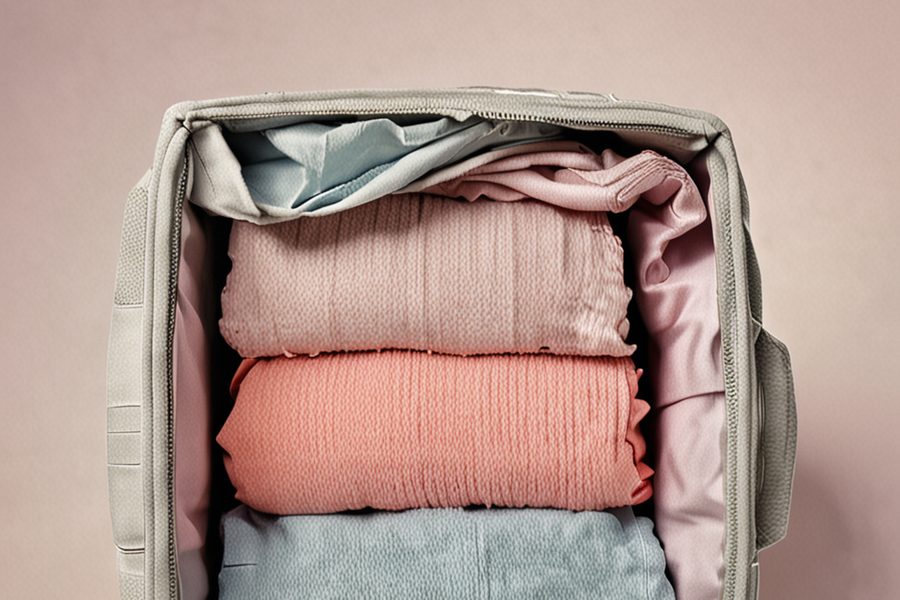
Roll your clothes. It saves real space compared to folding. Compression cubes handle bulky items well. I got a jacket and two sweaters into a single cube. Vacuum bags work, but they eat up time you don’t have much of on a three-week trip with daily repacking.
A dedicated tech pouch keeps cables and adapters from turning into a tangled mess at the bottom of your bag. I used a clear zippered Command Pouch. It stayed organized the entire trip. Pack bottom-heavy: heavier items low, lighter ones on top.
Weight is the thing people underestimate most. Keep the bag under 7 to 8 kg (15 to 17 lbs). Lifting it overhead shouldn’t be a struggle. I tested this on stairs and train platforms with zero strain. Rick Steves caps his at 20 pounds. Mine came in well under that, and under the stricter 15 lb ceiling enforced by Qantas and Qatar Airways.
Frequently Asked Questions
Can I really pack everything I need in one suitcase for 3 weeks?
Yes. Performance fabrics, the 5-4-3-2-1 system, and smart packing got me through Germany, France, and Italy with just one laundry stop the entire trip. The main constraint isn’t space. It’s laundry planning: budget for one wash around day 10 to 12.
What’s the best carry-on size for European travel?
A 40 to 60-liter bag fits most overhead bins on airlines and trains. Avoid anything over 9″ × 21″ × 14″. Check your airline’s policy at TSA’s carry-on list. Double-check the weight limit separately, size and weight rules differ by carrier.
What’s the difference between carry-on weight limits across airlines?
The spread is bigger than most travelers assume. Stricter international carriers such as Qantas, Qatar Airways, and Singapore Airlines cap carry-ons at just 15 lbs, according to Kayak’s 2026 data. British Airways allows up to 51 lbs. Pack to the strictest airline on your itinerary, not the most generous one.
Do I need to bring a travel iron?
Only really if you’re traveling in winter. I brought one to Lyon. It fit right in my tech pouch. Most hotel rooms have one. But not always. Better safe than sorry.
Are eSIMs legal in Europe?
Yes. Fully supported across all major European networks. I used Airalo the whole trip without a single connectivity issue. Skipped the hassle of swapping physical SIM cards entirely.
How do I keep my laptop secure while traveling?
An RFID-blocking sleeve, kept in the front pocket of your bag, does the job. I used one from SafePack. It blocked scan attempts on trains and in cafes without issue.
How do I avoid overpacking in the first place?
Lay out everything you think you need. Then remove a third of it before it goes in the bag. Condé Nast Traveler’s reporting found nearly one in three travelers consistently overpacks, usually with “just in case” items that never get worn.
Is checked luggage ever worth it for a 3-week Europe trip?
Rarely. Unless you’re carrying specialty gear, ski equipment, a large tripod, or a fragile art piece. Between mishandling risk (6.3 bags per 1,000 passengers), gate fees, and extra time at baggage claim, carry-on only wins on cost and reliability for most itineraries.
What should I pack differently for winter versus summer Europe trips?
Winter trips need a packable insulated jacket and a travel iron for wool layers. Summer trims down to lighter merino tees and one pair of sandals. The 5-4-3-2-1 system flexes by swapping fabric weight, not item count.
Sources
- SITA (2025). Baggage IT Insights Report
- Mordor Intelligence (2025). Travel Bag Market Report
- Rick Steves’ Europe. Packing Smart
- Travel + Leisure. Packing Expert Picks
- TSA. What Can I Bring?
- Airalo, eSIM Provider for Europe
- Kayak (2026). Carry-On Luggage Size Guide
- Condé Nast Traveler (2026). Tips for Packing Light






