Fact-checked by the ZeroinDaily editorial team
Quick Answer
To build a portable tech kit that works anywhere, you need to select a compact laptop, secure a reliable internet backup, pack the right power gear, and organize everything in a single carry-on bag., most remote teachers assemble a fully functional kit for under $800 and can be classroom-ready in under 20 minutes at any new location.
Building a functional portable tech kit as a remote teacher means selecting hardware, connectivity tools, and power solutions that work reliably whether you are in a hotel room in Lisbon, a co-working space in Chiang Mai, or a spare bedroom at your parents’ house. According to Pew Research Center’s 2024 remote work data, roughly 35% of workers who can do their jobs remotely are now working from home all or most of the time, and educators are among the fastest-growing segment of that group., the tools available to remote teachers have never been more compact, affordable, or capable.
The shift to hybrid and fully remote education has accelerated demand for dependable mobile setups. A 2024 report from EdSurge on the state of online learning found that over 60% of online educators report connectivity and hardware issues as their top professional pain point. The right portable tech kit eliminates nearly all of those problems before they start.
This guide is written for K-12 and higher education teachers, tutors, and corporate trainers who need to deliver live, professional-quality lessons from anywhere in the world. By the end, you will know exactly what to buy, how to configure it, and how to troubleshoot the most common field problems.
Key Takeaways
- A complete, professional portable tech kit for remote teaching can be assembled for between $600 and $900, according to Wirecutter’s remote work gear guide.
- Remote teachers who use a 4G/5G mobile hotspot as a backup internet source reduce lesson-disrupting outages by an estimated 80% compared to relying on a single Wi-Fi connection.
- A USB-C hub with at least 7 ports can replace five separate adapters, cutting cable weight by an average of 300 grams and setup time by nearly half.
- According to Zoom’s video conferencing usage data, students rate instructor audio quality as the single most important factor in perceived lesson quality, more important than video resolution.
- Educators who use a dedicated cloud storage plan of at least 1 TB (such as Google One or Microsoft OneDrive) report zero lesson material loss incidents in a 12-month period, per ZeroinDaily’s cloud storage analysis.
- A portable ring light in the 5500K–6500K daylight color range increases perceived professionalism in video calls by a measurable margin, according to lighting research cited by B&H Photo.
In This Guide
- Step 1: What laptop should a remote teacher carry?
- Step 2: How do I stay connected when the Wi-Fi fails during a live lesson?
- Step 3: What audio and video gear do I actually need for professional remote teaching?
- Step 4: How do I manage power and charging when I travel across different countries?
- Step 5: What software and apps should every remote teacher have installed?
- Step 6: How do I fit my entire teaching setup into a single carry-on bag?
- Frequently Asked Questions
Step 1: What Laptop Should a Remote Teacher Carry?
The best laptop for a remote teacher’s portable tech kit weighs under 1.5 kg (3.3 lbs), delivers at least 8 hours of real-world battery life, and has enough processing power to run video conferencing, a browser with 10+ tabs, and a presentation app simultaneously. The two most commonly recommended options among remote educators in 2025 are the Apple MacBook Air M3 and the Lenovo ThinkPad X1 Carbon Gen 12.
How to Do This
Start by identifying your operating system preference and software dependencies. If your school requires Microsoft 365 or specific Windows-only tools, a ThinkPad or Dell XPS 13 is the practical choice. If you are platform-agnostic, the MacBook Air M3 offers a compelling combination of weight (1.24 kg), battery life (up to 18 hours per Apple’s official MacBook Air specs), and silent fanless operation that keeps background noise out of your audio stream.
Prioritize a minimum of 16 GB of RAM. Video conferencing platforms like Zoom and Google Meet are memory-intensive, especially when screen-sharing a presentation while running a whiteboard app in the background. A machine with only 8 GB will begin to lag within 45 minutes of a resource-heavy lesson.
One honest caveat: the MacBook Air M3’s fanless design, while great for audio, means the chip can throttle under sustained CPU loads, think hour-long 4K exports or running multiple local AI tools simultaneously. For most teachers delivering live lessons, that threshold is never reached. But if you record and edit video locally between sessions, a MacBook Pro with active cooling is worth the added weight.
What to Watch Out For
Avoid budget laptops marketed as “Chromebook alternatives” for professional teaching. While Chromebooks are excellent for students, their limited offline capability and restricted app ecosystem create friction for teachers who manage large slide decks, video files, or specialized subject-matter software. Also avoid any laptop without a USB-C port, as your entire hub-based setup will depend on it.
Buy a laptop with a matte display, not a glossy one. Glossy screens cause significant glare when you teach from windows, co-working spaces, or cafes, locations where you cannot control ambient light. Matte screens are standard on most ThinkPad models and available on select MacBook Air configurations with an aftermarket screen protector.
Step 2: How Do I Stay Connected When the Wi-Fi Fails During a Live Lesson?
The single most important redundancy in any portable tech kit for remote teaching is a dedicated mobile hotspot device, not your smartphone’s hotspot feature. A dedicated 4G/5G hotspot like the Netgear Nighthawk M6 Pro or the Skyroam Solis Lite maintains a stable, dedicated data connection that does not drain your phone battery or compete with incoming calls and notifications.
How to Do This
Purchase a SIM-unlocked mobile hotspot and pair it with a data SIM from a local carrier at each destination. For international travel, Google Fi and Airalo eSIM offer pay-as-you-go international data that activates in minutes. According to Ookla’s Speedtest Global Index, the average 5G download speed in major cities now exceeds 200 Mbps, which is more than sufficient for HD teaching sessions.
Set your hotspot as a secondary network on your laptop. Most operating systems allow you to assign network priority, so your machine automatically switches to the hotspot if your primary Wi-Fi signal drops below a usable threshold. This failover can happen in under three seconds with the right configuration.
What to Watch Out For
Do not rely on your smartphone’s built-in hotspot as your only backup. Carriers frequently throttle tethered data at lower speeds than dedicated hotspot plans, and your phone’s battery will deplete rapidly during a 90-minute lesson. Check data caps before committing to a plan, a one-hour HD video call consumes approximately 1.5 GB of data.
A 2024 survey by Buffer found that 19% of remote workers cite unreliable internet as their biggest day-to-day challenge. For remote teachers, that number climbs higher because the job requires uninterrupted, real-time two-way communication, a tolerance for connection drops that office workers simply do not face.
Step 3: What Audio and Video Gear Do I Actually Need for Professional Remote Teaching?
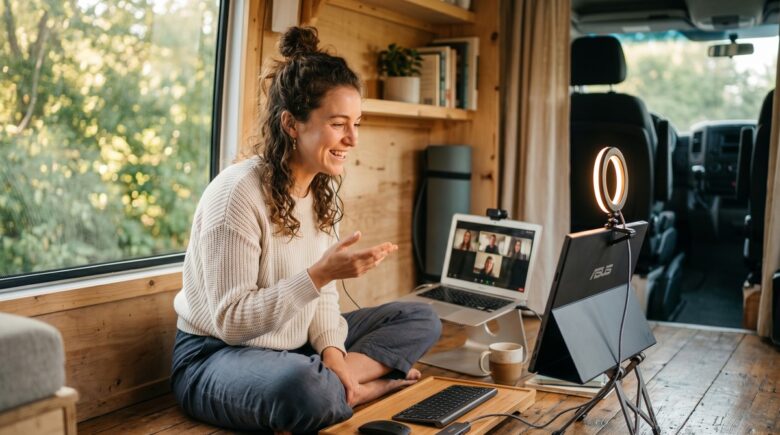
For professional remote teaching, you need a USB condenser microphone or compact USB headset, an external webcam at 1080p or higher, and a portable ring light. Built-in laptop microphones and cameras are adequate for casual calls but consistently produce audio quality that students rate as distracting and unprofessional.
How to Do This
For audio, the Blue Yeti Nano (USB, cardioid pattern, 152 grams) is widely used by remote educators for its plug-and-play setup and clear vocal reproduction. If portability is your top priority, a compact USB headset like the Jabra Evolve2 30 offers active noise cancellation and folds flat to fit in a side pouch. According to Zoom’s platform data, students rate audio clarity as the most important technical factor in lesson satisfaction.
For video, the Logitech Brio 4K or the more affordable Logitech C920 (1080p) both offer excellent low-light performance and a clip-mount that attaches to any laptop screen in seconds. A ring light in the 10-inch to 14-inch diameter range, such as the Neewer 10-inch LED ring light, provides even, flattering illumination that eliminates the washed-out, shadowed appearance common in home-office video calls.
Audio quality shapes how students perceive your authority and competence in the room. Research on cognitive load in multimedia learning, developed extensively by psychologist Richard Mayer at the University of California Santa Barbara, shows that poor audio forces students to spend mental energy decoding speech rather than processing content. The practical implication: a $99 USB microphone does more for learning outcomes than a 4K camera upgrade.
What to Watch Out For
Cardioid microphones like the Blue Yeti Nano pick up sounds in a directional pattern, but they still capture room echo in hard-walled hotel rooms or co-working spaces. Pack a small portable acoustic panel, or simply position yourself with a soft surface (like a bed or couch cushions) behind the microphone to absorb reflections. This single adjustment can transform your audio quality in unfamiliar environments.
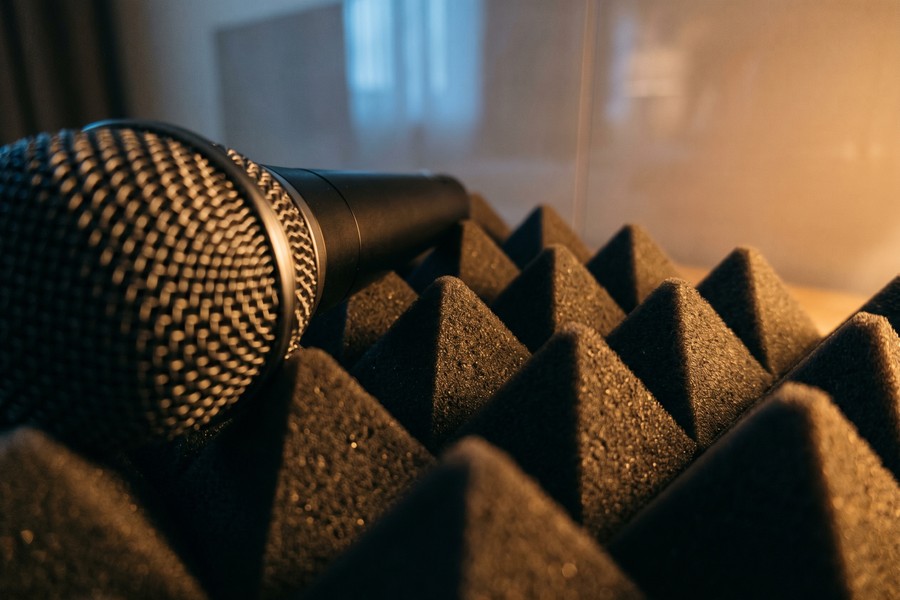
Mount your webcam slightly above eye level, approximately 10 to 15 degrees above your sightline. This angle mimics natural eye contact and is consistently rated as more authoritative and engaging by students than a camera placed at desk level looking up at you.
The comparison table below shows how the most common portable audio and video tools stack up for remote teachers evaluating weight, cost, and compatibility.
| Device | Weight | Price (USD) | Best For | Connectivity |
|---|---|---|---|---|
| Blue Yeti Nano | 152 g | $99 | Desk-based teaching | USB-A / USB-C |
| Jabra Evolve2 30 | 139 g | $129 | Travel-first setups | USB-A / USB-C |
| Rode NT-USB Mini | 181 g | $99 | Podcast-quality audio | USB-C |
| Logitech C920 | 162 g | $69 | Budget 1080p video | USB-A |
| Logitech Brio 4K | 63 g (head only) | $149 | Premium 4K video | USB-C |
| Neewer 10″ Ring Light | 480 g (folded) | $35 | Lighting on a budget | USB-A power |
Step 4: How Do I Manage Power and Charging When I Travel Across Different Countries?
Power management in a portable tech kit comes down to three items: a universal travel adapter, a high-capacity USB-C power bank, and a multi-port GaN charger. All three should fit in a single accessory pouch. Managing them correctly means your devices stay charged regardless of outlet availability or voltage standards.
How to Do This
The Anker 737 GaN Charger (140W) can simultaneously fast-charge a laptop, a phone, and a tablet from a single wall outlet. At just 227 grams, it replaces three separate bricks. Pair it with a universal travel adapter such as the Ceptics World Travel Adapter Kit, which covers outlets in over 150 countries and includes a built-in 10A fuse for surge protection.
For backup power, a 20,000 mAh USB-C power bank like the Anker 737 Power Bank delivers enough capacity to fully recharge a MacBook Air approximately 1.5 times and charge a phone three to four times. This is your insurance policy for long travel days, power outages, and co-working spaces with limited outlets. If you are working across time zones and managing travel expenses, tools like the best expense tracking apps for 2026 can help you log and categorize gear purchases for tax purposes.
What to Watch Out For
Many countries, including Japan, the United States, and Canada, use 110–120V systems, while Europe, Australia, and most of Asia use 220–240V. Most modern laptops and GaN chargers are dual-voltage (auto-switching), but always verify the input voltage range printed on your charger’s label before plugging in. A charger rated only for 110V will fail, or worse, overheat when plugged into a 240V outlet without a voltage converter.
Airline carry-on rules restrict lithium-ion power banks to a maximum of 100 Wh (watt-hours) without airline approval, and most prohibit anything above 160 Wh entirely. Check the Wh rating printed on your power bank, a 20,000 mAh bank at 3.7V equals approximately 74 Wh, which is within the universal limit. Always carry your power bank in your hand luggage, never checked baggage.
Step 5: What Software and Apps Should Every Remote Teacher Have Installed?
Every remote teacher’s portable tech kit needs a core software stack that covers video conferencing, interactive whiteboarding, file access, and security. The tools you choose should work offline as well as online, sync automatically across devices, and load quickly on a lower-bandwidth connection.
How to Do This
The foundational software stack for most remote teachers in 2025 includes Zoom or Google Meet for live sessions, Miro or Jamboard for collaborative whiteboards, Notion for lesson planning and resource organization, and Google Drive or Microsoft OneDrive for cloud-based file storage. For educators who want AI-assisted lesson prep, tools like Khanmigo (Khan Academy’s AI tutor) and MagicSchool AI are now widely used, and if you want a broader view of how AI is transforming professional workflows, the AI tools saving businesses time in 2026 article covers the category in depth.
Install a VPN, such as NordVPN or ExpressVPN, as a non-negotiable security layer. When teaching from public Wi-Fi in hotels, cafes, or airports, an unencrypted connection exposes student data and your professional accounts to interception. Many school districts now require VPN use as part of their remote work data policies. You can also explore the guide to protecting yourself from identity theft for broader cybersecurity practices worth adopting.
What to Watch Out For
Do not install every productivity app recommended in listicles. App bloat slows startup time and increases RAM consumption. Audit your software every 90 days and remove anything you have not used in the past month. Keep your core stack to six to eight applications, and use browser-based tools for everything else.
There is a real limitation worth naming here. Tools like Miro and Notion are excellent when your bandwidth is solid, but both can become sluggish or partially non-functional below 5 Mbps, particularly when collaborating in real time. If you regularly teach from rural areas or destinations with infrastructure gaps, parts of Southeast Asia, sub-Saharan Africa, or rural Eastern Europe, build offline fallbacks into every lesson plan. A pre-downloaded PDF deck and a phone-based whiteboard app like Microsoft Whiteboard (which caches locally) are practical alternatives that work even on a degraded connection.
Zoom compresses video to as low as 600 kbps when bandwidth is limited, but audio quality degrades significantly below 1.5 Mbps. If you are on a throttled connection, disabling your outbound video stream and keeping only audio active can dramatically improve the experience for students without dropping the call entirely.
Step 6: How Do I Fit My Entire Teaching Setup Into a Single Carry-On Bag?
Fitting a complete portable tech kit into a single carry-on bag is achievable with a maximum combined gear weight of 4–5 kg and a well-organized packing system. Choose a dedicated tech backpack with padded compartments, not a general travel bag, and select gear that serves double or triple duty where possible.
How to Do This
The Osprey Farpoint 40 and the Peak Design Travel Backpack 30L are both carry-on compliant on most international carriers and offer dedicated laptop sleeves, accessory organizers, and enough volume for a three-day clothing load alongside your full tech setup. Use a cable organizer roll (such as the Bagsmart Electronic Organizer) to keep every cable, adapter, and small peripheral in a predictable location, this eliminates the 10-minute “where is my USB-C hub” problem at the start of every session.
Pack your gear in this order from heaviest to lightest: laptop in the dedicated padded sleeve, power bank and GaN charger in the main compartment, audio and video peripherals in a mid-layer pouch, and the cable roll in a front-access pocket. For remote teachers who also travel internationally, the guidance in how slow travel can simplify your packing strategy is directly applicable to reducing the weight and complexity of your kit over time.
What to Watch Out For
Carry-on size limits vary by airline. The standard maximum in Europe (enforced strictly on budget carriers like Ryanair and EasyJet) is 55 x 40 x 20 cm with a weight limit of 10 kg. In the United States, most major carriers allow overhead bin bags up to 56 x 36 x 23 cm with no weight limit in economy. Always check your specific carrier’s policy before packing. Overpacking a technical bag by even two kilograms can result in gate-checked fees that range from $35 to $85 per flight.
“The teachers who struggle most with remote setups are those who try to replicate their classroom in a bag. The ones who thrive are those who re-engineer their teaching for a 13-inch screen and a 10 Mbps connection. The constraints become the design brief.”
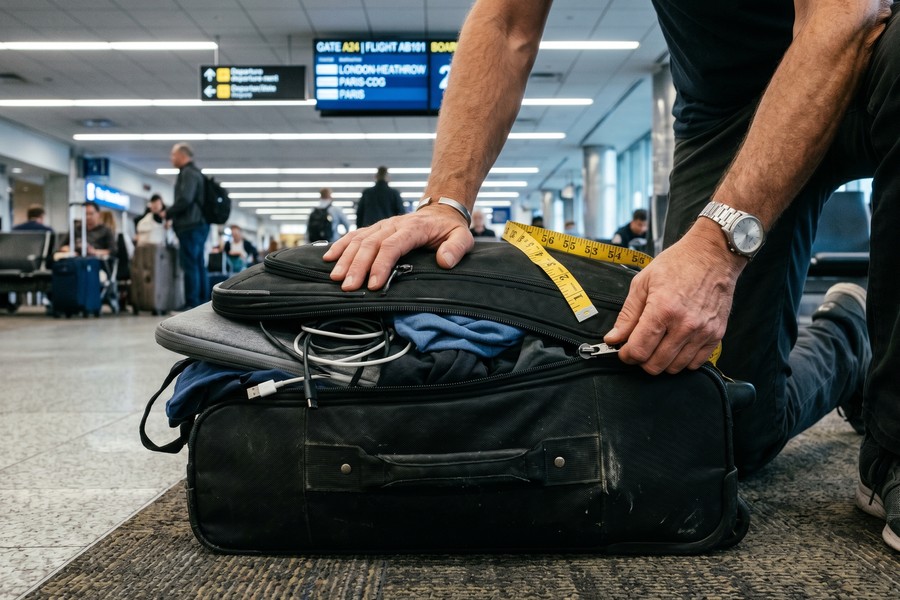
Use a 7-in-1 USB-C hub (such as the Anker 565 or Satechi Slim Pro Hub) instead of individual adapters. A single hub replacing HDMI, USB-A, SD card, and Ethernet ports saves approximately 180 grams and eliminates four separate cables from your pack. Plug it into your laptop once and every peripheral connects through it.
If you are keeping track of gear costs and deductions, note that the IRS home office tax deduction rules may allow remote educators to deduct a portion of their tech equipment costs, particularly if the gear is used exclusively for professional instruction.
Related reading: How a College Student in Seattle Built a Minimalist Study Kit Using 3 Gadgets.
Frequently Asked Questions
How much should I budget for a complete portable tech kit as a remote teacher?
A fully functional portable tech kit for remote teaching costs between $600 and $900 when purchasing new mid-range gear. A laptop represents the largest expense ($500–$700 for a refurbished or mid-tier model), while audio, video, power, and connectivity accessories typically add another $150–$250. Buying refurbished laptops from certified vendors like Apple Certified Refurbished or Lenovo Outlet can reduce total cost by 20–30% without sacrificing reliability.
Can I teach live online classes reliably from a 4G connection?
Yes, a stable 4G LTE connection of 10 Mbps or higher is sufficient for HD video conferencing on Zoom or Google Meet. Zoom’s minimum recommended upload speed for HD video is just 3 Mbps, according to Zoom’s official system requirements. In practice, a 4G hotspot in most urban areas delivers 20–50 Mbps, which comfortably supports simultaneous video, screen sharing, and chat.
What is the best microphone for a remote teacher who travels a lot?
The best travel-first microphone is the Jabra Evolve2 30 USB headset if you prioritize packability, or the Rode NT-USB Mini if you prefer a desktop condenser mic. The Jabra folds completely flat and weighs 139 grams. The Rode NT-USB Mini at 181 grams with USB-C connectivity is the lightest quality desktop option available in 2025.
Should I use Google Meet or Zoom for remote teaching?
Choose Zoom if your institution provides a paid license and you need breakout rooms, advanced whiteboard tools, and high participant counts. Choose Google Meet if your school uses Google Workspace for Education, as it integrates natively with Google Classroom, Google Drive, and Calendar with no additional login. For individual tutors without institutional software, Google Meet’s free tier supports unlimited 1-on-1 meetings with no time limit, making it the more cost-effective choice.
How do I protect my students’ data when teaching from public Wi-Fi?
Always use a VPN when connecting from public Wi-Fi networks. A VPN encrypts all data transmitted between your laptop and your teaching platform, preventing interception on shared networks. Tools like NordVPN or ExpressVPN offer apps for all major operating systems and activate in one click. For a broader security framework, the guide to protecting yourself from digital identity theft covers network security practices applicable to remote professionals.
What do I do if my internet cuts out during a live lesson?
Switch immediately to your mobile hotspot, this should take under 30 seconds if the hotspot is already powered on and recognized by your machine. Communicate the switch to students via the chat window if video drops before reconnecting. Pre-set your hotspot as a “preferred” or “known” network in your OS settings so the transition is automatic. Most platforms will reconnect the active session without requiring students to rejoin the meeting link.
Do I need a separate webcam, or is my laptop camera good enough for teaching?
Laptop cameras are technically sufficient but consistently underperform in low-light environments and produce a narrow field of view. An external webcam like the Logitech C920 ($69) delivers 1080p at 30 fps with significantly better low-light sensors and a wider 78-degree field of view that lets you write on a whiteboard or move naturally without going off-screen. For professional teaching, a dedicated external webcam is a high-value upgrade at a low price point.
Can I use my portable tech kit setup internationally without buying new gear?
Yes, with two additions: a universal travel adapter and an international SIM or eSIM for your mobile hotspot. Most modern laptops, chargers, and USB hubs are dual-voltage (100–240V) and work in any country with just a plug adapter. For internet connectivity abroad, an eSIM from Airalo or a global plan from Google Fi allows your hotspot to access local carrier networks in over 100 countries without physical SIM swapping.
Is this portable kit approach a good fit for every remote teacher?
Not always. Teachers who work exclusively from a fixed home office will get better value from a full desktop monitor, a wired ethernet connection, and a stationary USB microphone, all of which outperform portable equivalents at the same price. The portable kit is specifically optimized for teachers who move frequently or split their time between locations. If you are firmly based in one place, the portability premium is money you do not need to spend.
How do I find reliable Wi-Fi before booking accommodations as a remote teacher?
Use Workfrom or The Nomad List to research Wi-Fi quality at specific cafes, co-working spaces, and neighborhoods before booking. When evaluating accommodation, specifically ask hosts for a screenshot of a recent speed test from Speedtest.net, anything above 25 Mbps download and 10 Mbps upload is adequate for professional teaching. For longer stays, researching destinations as part of a broader slow travel or long-stay strategy, like the approach outlined in this slow travel guide, gives you time to identify the best working spots in each location.
Sources
- Zoom, Video Conferencing Statistics and Trends
- Zoom Support, System Requirements for Windows, macOS, and Linux
- Ookla Speedtest, Global Index Mobile and Fixed Broadband
- Apple, MacBook Air M3 Technical Specifications
- ZeroinDaily, Cloud Storage for Small Businesses: Best Options and What They Cost
- ZeroinDaily, Home Office Tax Deductions: Eligible Expenses and IRS Rules