
Fact-checked by the ZeroinDaily editorial team
Quick Answer
A smart wallet for parents solves lost cards, misplaced cash, and overspending in one device. As of July 2025, top models like Ekster and Ridge Wallet use Bluetooth tracking, RFID blocking, and app-based spending alerts. Most parents set one up in under 15 minutes and report finding misplaced items 3x faster than before.
If you are looking for a smart wallet for parents, the process starts with identifying your biggest pain point — lost cards, forgotten cash, or no spending visibility — and matching a wallet’s features to that problem. In July 2025, the smart wallet market has grown to an estimated $3.1 billion globally according to Grand View Research, driven largely by busy households who need both organization and security in a single carry item.
The timing matters. With contactless payment fraud rising and family budgets tighter than ever, parents are turning to technology to manage what used to slip through the cracks — literally. A 2024 survey by CreditCards.com found that 62% of cardholders had lost or misplaced a payment card in the past year, and parents with multiple household cards ranked among the most affected group.
This guide is for any parent who has spent ten frantic minutes hunting for their debit card before school drop-off, or handed cash to a kid only to lose track of how much. By the end, you will know exactly how to choose, set up, and use a smart wallet for parents to eliminate those moments for good.
Key Takeaways
- 62% of cardholders lost or misplaced a payment card in the past year, with parents disproportionately affected, according to CreditCards.com’s 2024 data.
- Smart wallets with RFID-blocking technology protect against electronic pickpocketing, which accounts for an estimated $3 billion in annual losses in the U.S. according to FTC identity theft reports.
- Bluetooth-enabled wallets like Ekster and Tile-connected models can locate a misplaced wallet within a 400-foot range, reducing average search time significantly, per Ekster’s product specifications.
- Parents who pair a smart wallet with a budgeting app save an average of $200 per month on untracked spending, according to data from NerdWallet’s budgeting app analysis.
- Top smart wallets hold between 4 and 12 cards while staying under 8mm thin, making them practical for everyday parenting bags and pockets, based on published product specs from Ridge Wallet and Bellroy.
- Setting up Bluetooth tracking and spending alerts on a smart wallet takes less than 15 minutes and requires no technical expertise beyond a basic smartphone, per manufacturer setup guides.
In This Guide
- Step 1: What Problems Does a Smart Wallet Actually Solve for Parents?
- Step 2: How Do I Choose the Best Smart Wallet for My Needs as a Parent?
- Step 3: How Do I Set Up Bluetooth Tracking on a Smart Wallet?
- Step 4: Does a Smart Wallet Really Protect My Cards from Being Skimmed?
- Step 5: How Do I Use a Smart Wallet to Track Family Spending and Stay on Budget?
- Step 6: How Can a Smart Wallet Help Me Manage Cash for My Kids?
- Frequently Asked Questions
Step 1: What Problems Does a Smart Wallet Actually Solve for Parents?
A smart wallet solves three core problems for parents: lost or misplaced cards, untracked cash leaving your wallet, and vulnerability to contactless card fraud. Unlike a standard leather billfold, a smart wallet for parents integrates technology — Bluetooth trackers, RFID shields, and app connectivity — to address each of these directly.
The Real Costs of Wallet Chaos
Lost cards are not just inconvenient. Replacing a debit or credit card takes an average of 5 to 7 business days and can trigger declined payments, late fees, and hours of customer service calls. For a parent managing school fees, grocery auto-pay, and subscription services, that disruption is genuinely costly.
Misplaced cash is a separate but equally frustrating issue. The average American household spends approximately $3,458 per year in cash transactions according to the Federal Reserve’s Diary of Consumer Payment Choice. Without a system, parents often cannot account for where that cash went.
What to Watch Out For
Not every product marketed as a “smart wallet” includes all three protective features. Some are simply slim card holders with no tracking or RFID protection. Always verify the specific technology included before purchasing.
The average person spends 10 minutes per day searching for misplaced items, adding up to over 60 hours per year, according to research cited by The Atlantic. For parents juggling school runs and work, that time is irreplaceable.
Step 2: How Do I Choose the Best Smart Wallet for My Needs as a Parent?
Choose a smart wallet based on four criteria: card capacity, tracking technology, RFID protection, and compatibility with your smartphone’s ecosystem. The right choice depends on whether you carry mostly cards, cash, or both — and how often your wallet actually goes missing.
How to Do This
Start by counting how many cards you carry daily. Most parents carry between 4 and 8 cards — ID, debit, two credit cards, insurance, loyalty cards. That narrows your field immediately. Wallets like the Ridge Wallet hold 1–12 cards and are aluminum-bodied with built-in RFID blocking. The Ekster Parliament holds up to 10 cards with a quick-eject mechanism and an optional Bluetooth tracker card.
If you lose your wallet more than your cards, prioritize a model with built-in Tile or Apple AirTag integration. The Bellroy Note Sleeve pairs with tracking tiles and includes dedicated cash pockets — a practical choice for parents who still use notes for school fees and pocket money.
What to Watch Out For
Avoid wallets that require proprietary apps with spotty reviews. Check the App Store or Google Play rating before committing. An app with below a 4.0 rating often signals unreliable notifications or poor Bluetooth range — defeating the whole purpose.
| Wallet Model | Card Capacity | Bluetooth Tracking | RFID Blocking | Price (USD) | Best For |
|---|---|---|---|---|---|
| Ekster Parliament | Up to 10 cards | Optional Tracker Card (Tile network) | Yes | $89–$109 | Card-heavy parents |
| Ridge Wallet | 1–12 cards | AirTag compatible variant | Yes (aluminum) | $95–$165 | Minimalist parents |
| Bellroy Note Sleeve | Up to 8 cards | Tile compatible | Yes | $79–$99 | Cash + card users |
| Secrid Slimwallet | Up to 6 cards | No (manual only) | Yes (metal case) | $65–$85 | Budget-conscious parents |
| Distil Union Wally | Up to 7 cards | Tile compatible | Yes | $45–$65 | Everyday family use |
Once you have selected your wallet, the next step is activating its core tracking features — which most parents skip entirely, leaving the most valuable function unused.
If you carry an iPhone, choose a wallet with an AirTag slot or pocket. Apple’s Find My network has over 1 billion active devices contributing to its location grid — far larger than any standalone Bluetooth tracker network.
Step 3: How Do I Set Up Bluetooth Tracking on a Smart Wallet?
Setting up Bluetooth tracking on a smart wallet takes under 15 minutes and requires only your smartphone and the manufacturer’s companion app. The process is nearly identical across major brands — download the app, pair the device, and enable location permissions.
How to Do This
For Tile-based wallets (Ekster, Bellroy, Distil Union): Download the Tile app from the Tile website, create an account, and tap “Find” on the tracker card inside your wallet. Your phone will ring the tracker, and the app will show the last known GPS location.
For Apple AirTag wallets (Ridge AirTag variant): Insert the AirTag into the dedicated slot, then hold it near your iPhone. iOS will automatically prompt setup through the Find My app. No separate app download is required.
For Ekster Solar Tracker: The wallet has a built-in solar panel that keeps the tracker charged. Open the Ekster app, scan the QR code inside the wallet, and follow the pairing steps. The solar charging means you never need to replace a battery — a genuinely useful feature for parents who will forget to charge it otherwise.
What to Watch Out For
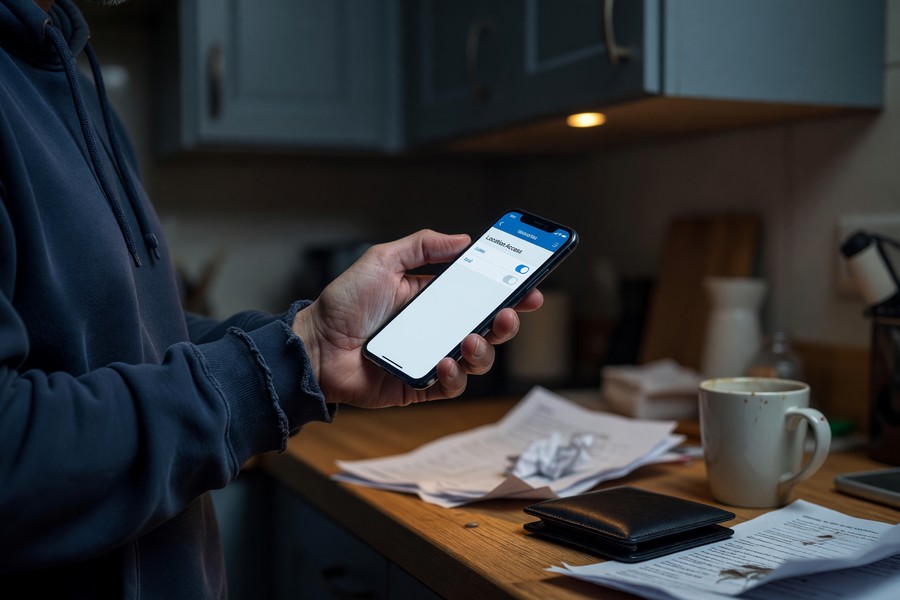
Always enable background location for the tracker app. Many parents set up Bluetooth tracking but deny the app background access during the permissions screen, which disables the “last seen location” feature entirely. That location stamp is the most useful function when you cannot remember where you last had your wallet.
“Parents consistently underestimate how much cognitive load comes from managing physical items like wallets. When you automate the search process with a Bluetooth tracker, you free up mental bandwidth for the things that actually matter — like being present with your kids.”
Step 4: Does a Smart Wallet Really Protect My Cards from Being Skimmed?
Yes — smart wallets with certified RFID-blocking material genuinely prevent contactless card skimming. The protection works by creating a Faraday cage around your cards, blocking the 13.56 MHz radio frequency that contactless readers and skimmers use to communicate with your cards.
How to Do This
Look for wallets that explicitly state RFID blocking at 13.56 MHz, which is the standard frequency used by Visa payWave, Mastercard PayPass, and most transit cards. Aluminum-body wallets like Ridge provide continuous protection with no additional setup. Fabric wallets with RFID-blocking layers, like Bellroy, also work but should be tested with a contactless card reader to confirm the shielding is intact after heavy use.
You can verify your wallet’s protection at home. Place your contactless card inside the closed wallet and hold it against a compatible card reader. If the reader does not register the card, the RFID blocking is working correctly.
What to Watch Out For
Partial RFID protection is a real issue. Some wallets only shield cards stored in specific pockets. If your wallet has both shielded and unshielded compartments, put your most sensitive cards — debit, primary credit, transit pass — in the shielded slots. Also note that RFID blocking does not protect against chip-and-PIN fraud, magnetic stripe skimming at ATMs, or digital theft through data breaches. For broader financial protection, it is worth reading about how to protect yourself from financial scams and identity theft as a complementary measure.
Not all wallets labeled “RFID safe” are independently tested. Look for products that cite testing against ISO/IEC 14443 standards, the international benchmark for contactless card communication. Vague marketing claims without standards references offer no guarantee of real protection.
Step 5: How Do I Use a Smart Wallet to Track Family Spending and Stay on Budget?
Using a smart wallet to track family spending means pairing the wallet’s card organization with a connected budgeting app that sends real-time alerts for every transaction. The wallet itself does not track spending — your bank or a third-party app does — but a smart wallet makes the habit sustainable by eliminating card chaos.
How to Do This
The most effective approach is a three-step system. First, consolidate to the fewest cards possible inside your smart wallet — ideally one debit card and one or two credit cards. Every card you eliminate from daily carry is one fewer statement to reconcile.
Second, link those cards to a budgeting app with instant push notifications. Apps like YNAB (You Need A Budget) and Copilot send alerts within seconds of a transaction. Parents who consistently use this approach save an average of $200 per month on untracked spending according to NerdWallet’s budgeting app analysis. For a detailed comparison of the best options, see this guide to the best budgeting apps for 2026.
Third, use the wallet’s card-eject or quick-access feature to make it slightly harder to impulse-spend on lesser-used cards. The friction is minimal but measurable — behavioral economists call this a “soft barrier,” and it reduces incidental spending without requiring willpower.
What to Watch Out For
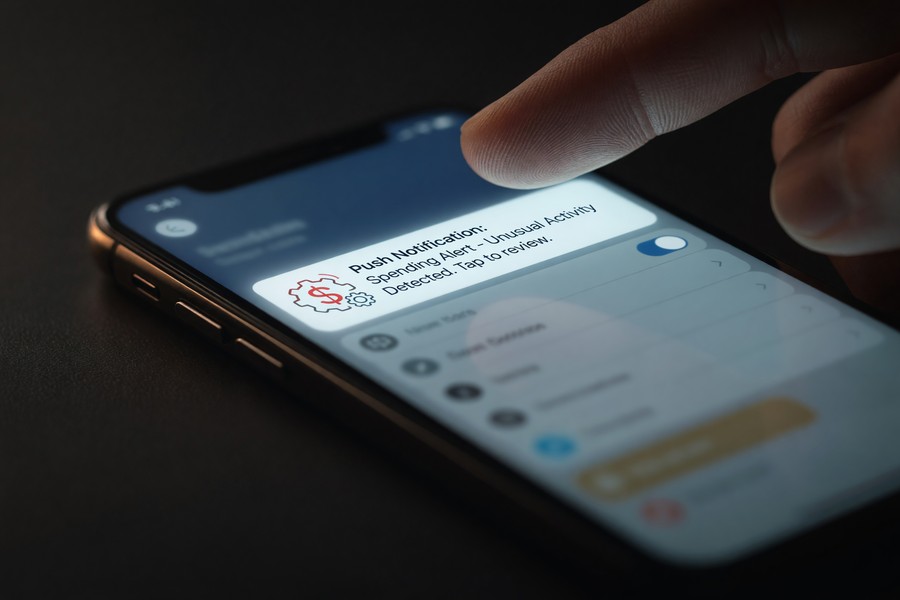
Spending alerts only work if your phone’s notification settings allow the app to push in real time. Check that your budgeting app has unrestricted background refresh enabled, especially on iPhone where battery-saving modes can delay alerts by hours.
The average American household carries 4.7 payment cards, according to the Federal Reserve’s 2023 Consumer Payment Choice study. Parents managing joint accounts often carry significantly more, making card organization a genuine daily challenge.
Step 6: How Can a Smart Wallet Help Me Manage Cash for My Kids?
A smart wallet for parents with dedicated cash compartments creates a simple, visible system for managing pocket money, school lunch cash, and activity fees. When cash has a designated place and a fixed capacity, parents naturally spend and distribute it more intentionally.
How to Do This
Choose a smart wallet with a separate, slim cash strap or note sleeve — Bellroy and Ekster both offer this. Designate specific bills for specific purposes before they go into the wallet. For example: two $20 notes for the week’s lunch money, one $10 note for emergency cash. When that compartment is empty, the budget for that category is spent.
For older children, some parents use a secondary slim card holder attached to the main wallet via a keyring clip. This lets you hand a child their own card or pre-loaded debit card without opening your primary wallet. The GoHenry and Greenlight prepaid debit cards are purpose-built for this arrangement — both include real-time parental spending controls via app. Teaching children about money through real tools is an important step; you can explore more strategies in this guide to family money conversations and teaching kids about finances.
What to Watch Out For
Cash compartments in ultra-slim wallets are often only functional with 2–3 notes folded once. If you regularly carry more than $60 in cash, verify the wallet’s stated cash capacity before purchasing. Many minimalist wallets are marketed to parents but physically cannot accommodate a working cash budget.
“The single most effective habit for parents managing household cash is visible separation. When money is physically divided by purpose — not just mentally earmarked — spending discipline improves without requiring constant willpower.”
If you are also looking at digital tools that complement your wallet system, the best expense tracking apps for 2026 offer features that sync across family members, giving both parents visibility into spending in real time.
Take a photo of your wallet’s contents — cards and cash amounts — every Sunday evening. This 30-second habit creates a weekly baseline so you notice immediately if a card or significant cash amount goes missing during the week.

Related reading: smart luggage tags gps battery.
Frequently Asked Questions
What is the best smart wallet for parents who lose things constantly?
The best smart wallet for parents who frequently lose items is the Ekster Parliament with Solar Tracker or a Ridge Wallet with AirTag slot. Both offer Bluetooth-based location tracking with ranges up to 400 feet and last-known GPS location logging. The Ekster’s solar charging means you never need to replace a battery, which is a practical advantage for busy parents.
Does a smart wallet actually block RFID skimming, or is it just marketing?
Certified RFID-blocking wallets do genuinely block skimming attempts. Wallets tested against ISO/IEC 14443 standards block the 13.56 MHz frequency used by contactless card readers, preventing unauthorized reads. Look for explicit standards references rather than vague “RFID safe” claims. Testing at home with a contactless reader confirms protection is working.
How long does the battery last on a Bluetooth smart wallet tracker?
Most Bluetooth tracker cards inserted into wallets last between 1 and 3 years on a single battery, depending on how frequently they are pinged. Tile-compatible tracker cards typically last 12 months before requiring replacement. The Ekster Solar Tracker is an exception — its built-in solar panel extends battery life indefinitely under normal indoor and outdoor light conditions.
Can I use a smart wallet if I have an Android phone instead of an iPhone?
Yes. Tile-compatible wallets work equally well on Android and iPhone through the Tile app, which has over 50 million registered users across both platforms. Apple AirTag wallets are iPhone-only and require iOS 14.5 or later. Android users should specifically choose Tile or Samsung SmartTag-compatible options for full functionality.
Should I get a smart wallet with cash storage or go fully card-based?
For most parents, a wallet with both card storage and a slim cash compartment is the more practical choice. Cash still accounts for 20% of U.S. consumer transactions according to the Federal Reserve’s 2023 payment data, and school-related expenses like bake sales, field trips, and activity fees frequently require physical cash. A wallet like the Bellroy Note Sleeve accommodates both without adding bulk.
Is a smart wallet worth the price compared to a regular wallet?
A smart wallet for parents is worth the price if you lose your wallet more than once a year or have experienced card fraud. The average cost of replacing a lost wallet — including card replacements, missed payments, and time lost — easily exceeds $150 to $400 per incident. A quality smart wallet costs between $45 and $165 once, often saving money within a single year. For parents managing household budgets, the tracking and RFID features have measurable financial value.
How do I stop my kids from pulling cards out of my smart wallet?
Wallets with a card-eject mechanism like the Ekster release cards only when a lever is pressed — reducing accidental card removal by curious children. Aluminum-bodied wallets like Ridge hold cards under firm elastic tension, making them significantly harder for small hands to access than traditional billfolds. Some parents also use a dedicated slim card holder for their most critical cards, kept separately in a zipped bag pocket.
What features should a smart wallet for parents have that regular wallets don’t?
A smart wallet for parents should include at minimum: RFID blocking, Bluetooth or GPS tracking capability, a card capacity of 6 or more, and a durable build that survives being dropped, sat on, or thrown in a bag repeatedly. Bonus features worth considering include quick card-eject mechanisms, cash storage, and waterproofing. Regular wallets offer none of these and provide no recourse when cards are lost or skimmed.
Can a smart wallet help me manage a joint account with my partner?
A smart wallet itself does not manage joint accounts, but pairing it with a shared budgeting app like YNAB or Copilot gives both partners real-time visibility into spending from shared cards. The wallet’s organizational discipline — carrying only the essential joint account cards — reduces the risk of one partner using the wrong card for personal versus household spending. For managing shared finances digitally, reviewing the online tools that make money management easier can complement your wallet setup.
How do I know if my current wallet’s RFID protection has worn out?
RFID protection in fabric wallets can degrade over time as the blocking layer is flexed, folded, and abraded. Test it annually by holding your contactless card inside the closed wallet against a compatible reader. If the reader registers the card, the RFID shielding has failed. Aluminum wallets like Ridge maintain RFID protection indefinitely because the blocking mechanism is structural rather than material-based.
Sources
- Grand View Research — Smart Wallet Market Size and Forecast
- CreditCards.com — Lost and Misplaced Card Statistics 2024
- Federal Reserve — 2023 Findings from the Diary of Consumer Payment Choice
- Federal Trade Commission — Identity Theft Data Spotlight
- NerdWallet — Best Budgeting Apps and Savings Analysis
- Ekster — Smart Wallet Product Specifications and Tracker Range
- Tile — App Download and Tracker Network Information
- The Atlantic — How Much Time Do We Spend Looking for Lost Things?
- ISO — ISO/IEC 14443 Contactless Card Communication Standard
- FTC Consumer Advice — How to Protect Yourself from Identity Theft






