Fact-checked by the ZeroinDaily editorial team
Quick Answer
Fitness trackers ($30–$250) win on battery life, comfort, and consistent health data collection. Smartwatches ($150–$800+) win on smartphone integration, app ecosystems, and on-wrist communication. Buy a fitness tracker if sleep tracking and battery life are your priorities; buy a smartwatch if daily convenience features justify the higher cost and nightly charging.
The global wearable device market hit $95.5 billion in 2023 and is projected to exceed $186 billion by 2030, yet return rates for wearables remain stubbornly high because buyers chose the wrong device for their lifestyle. The smartwatch vs fitness tracker debate has stumped millions of consumers, and it’s costing them real money.
Research from Pew Research Center found that roughly one in five American adults owns a smartwatch or fitness tracker, but a striking 30% of those users stop wearing their device within six months. That’s millions of devices collecting dust in drawers, representing wasted purchases ranging from $30 to $800 per unit. The confusion is understandable: feature lists overlap, marketing blurs the lines, and price points span an enormous range.
This guide cuts through the noise. You’ll get a precise, data-backed breakdown of every major category, price, health tracking accuracy, battery life, compatibility, and long-term value, so you can make a decision without guesswork.
Key Takeaways
- Fitness trackers typically cost $30–$150, while smartwatches range from $150–$800+, making price the single biggest differentiator for most buyers.
- The global wearable market is projected to grow at a 14.6% CAGR through 2030, driven primarily by health-monitoring demand.
- 30% of wearable users abandon their devices within 6 months, most because the device doesn’t match their actual daily use case.
- Fitness trackers deliver battery life of 5–21 days on average, while most smartwatches last only 1–3 days on a single charge.
- Clinical studies show that optical heart rate monitors in wearables are accurate to within 5% during rest but can deviate by up to 22% during intense exercise.
- Smartwatch owners spend an average of $340 per device purchase, compared to $75 for fitness tracker buyers, a 353% price difference for overlapping core features.
In This Guide
- What Actually Separates a Smartwatch from a Fitness Tracker?
- Price Comparison: What You Really Get at Each Tier
- Health Tracking Accuracy: The Data Behind the Claims
- Battery Life: The Hidden Deal-Breaker
- Smartwatch Features Worth Paying For
- Where Fitness Trackers Still Win
- Who Should Buy What: Matching Device to Lifestyle
- Top Models Head-to-Head in 2024
- Long-Term Value and Total Cost of Ownership
What Actually Separates a Smartwatch from a Fitness Tracker?
The core distinction is simple on paper but messy in practice. A fitness tracker is a purpose-built device designed primarily to monitor physical activity, steps, heart rate, sleep, and calories. A smartwatch is a miniature computer strapped to your wrist, capable of running apps, making calls, processing payments, and yes, also tracking your health metrics.
The lines have blurred significantly since 2018. Fitbit now offers devices with GPS and on-wrist Spotify controls. Apple Watch has added advanced sleep tracking. Samsung Galaxy Watch includes body composition analysis. Both categories are racing toward each other’s feature sets, but the underlying design philosophy remains different.
Design Philosophy and Form Factor
Fitness trackers prioritize comfort, lightness, and discretion. Most weigh between 20–35 grams and use flexible bands designed for 24/7 wear, including during sleep. Smartwatches typically weigh 30–55 grams, feature larger displays (typically 1.4–1.9 inches vs. 0.7–1.1 inches on trackers), and are designed to be noticed.
That physical difference matters more than it sounds. A heavier, bulkier device gets removed more often, and every hour off your wrist means lost health data. Sleep tracking accuracy, for example, drops dramatically if users remove their device at night because it feels uncomfortable.
Software Ecosystems and Connectivity
Smartwatches run full operating systems. Apple Watch uses watchOS, Samsung uses One UI Watch built on Wear OS, and Google Pixel Watch runs Wear OS directly. These platforms support third-party apps, meaning you can install everything from banking apps to navigation tools. Fitness trackers run proprietary firmware, closed systems optimized purely for sensor data collection and companion app syncing.
Ecosystem lock-in is a real consideration. Apple Watch only pairs with iPhones. Switch to Android and your $400 Apple Watch becomes a paperweight. Most fitness trackers work across iOS and Android with full functionality, giving them a compatibility advantage for users who switch platforms frequently.
Apple Watch captured 30.9% of the global smartwatch market in 2023, making it the single best-selling wearable brand worldwide, ahead of Samsung at 10.1% and Fitbit at 4.2%.
Price Comparison: What You Really Get at Each Tier
Price is where the smartwatch vs fitness tracker debate becomes most concrete. The ranges are wide within each category, but the overlap is minimal. Understanding what you actually get at each price point prevents expensive mistakes.
Entry-level fitness trackers from brands like Xiaomi Mi Band and Amazfit start at just $30–$50 and include step counting, basic heart rate monitoring, and sleep tracking. Mid-range trackers from Fitbit and Garmin’s Vivosmart line run $80–$150 and add features like GPS connectivity (some), stress tracking, and blood oxygen (SpO2) monitoring, with 7–21 day battery life. Premium fitness trackers from Garmin’s Vivosport and Fitbit Charge lines push toward $180–$250, blurring into smartwatch territory.
Smartwatch Price Tiers Explained
Entry-level smartwatches, think Amazfit GTS series or Samsung Galaxy Watch FE, start around $150–$200. They offer app support, notification mirroring, and basic fitness features, but often sacrifice GPS accuracy, display quality, or build materials. Mid-range smartwatches ($250–$400) include Apple Watch SE, Samsung Galaxy Watch 6, and Google Pixel Watch 2: solid all-rounders with strong health sensors and reliable performance.
Premium smartwatches ($400–$800+) include Apple Watch Ultra 2 at $799 and Garmin Fenix 7 Pro at $799. These devices target athletes and power users who need multi-band GPS accuracy, titanium construction, and up to 37 days of battery in smartwatch mode (Garmin’s solar models). Paying $800 for a wrist device is a serious commitment, and many buyers overspend on features they never use.
The average selling price of smartwatches increased 12% year-over-year in 2023, while fitness tracker prices dropped 8%, widening the gap between categories even further.
| Category | Price Range | Key Features Included | Battery Life |
|---|---|---|---|
| Basic Fitness Tracker | $30–$80 | Steps, heart rate, sleep, calories | 7–14 days |
| Mid-Range Fitness Tracker | $80–$180 | Adds SpO2, GPS, stress score | 5–21 days |
| Premium Fitness Tracker | $180–$260 | Adds ECG, advanced sleep, NFC | 5–10 days |
| Entry Smartwatch | $150–$250 | Apps, notifications, basic health | 1–3 days |
| Mid-Range Smartwatch | $250–$450 | ECG, GPS, payments, full OS | 1–4 days |
| Premium Smartwatch | $450–$800+ | Multi-band GPS, titanium, cellular | 2–37 days |
Hidden Costs to Factor In
The purchase price is only the beginning. Smartwatch users often pay $10–$15/month for cellular plans if they opt for LTE models, that’s $120–$180 annually on top of the device cost. Replacement bands run $20–$80. Third-party app subscriptions add up: Garmin Connect Premium costs $7.99/month, and Fitbit Premium runs $9.99/month or $79.99/year.
Smartwatches also depreciate faster. Apple releases a new Watch model annually, and older models lose significant resale value within 12–18 months. A fitness tracker like the Garmin Vivosmart 5 retains utility for 3–5 years without feeling obsolete. For budget-conscious buyers, that long-term math matters significantly.
Health Tracking Accuracy: The Data Behind the Claims
Marketing claims about health metrics are everywhere. But how accurate are these wrist-worn sensors really? The answer is nuanced, and matters most if you’re using your device for anything beyond casual awareness.
A 2020 study published in the Journal of Medical Internet Research tested eight popular wearables and found heart rate accuracy ranged from 91.3% to 98.9% during rest, but dropped to 78–95% during vigorous exercise. The type of exercise mattered enormously: cycling produced better results than high-intensity interval training, where wrist movement creates optical sensor interference.
Heart Rate Monitoring: Optical vs. Electrical
All consumer wearables use photoplethysmography (PPG), an optical sensor that shines light through your skin to detect blood volume changes. This is accurate for resting heart rate but struggles during intense activity. Medical-grade ECG (electrocardiogram) sensors, now available on Apple Watch Series 4 and later, Fitbit Sense 2, and Samsung Galaxy Watch 6, use electrical signals and are significantly more accurate for detecting arrhythmias like atrial fibrillation.
The Apple Watch ECG feature received FDA clearance in 2018, a landmark moment for consumer health tech. ECG readings on wearables are single-lead measurements, compared to the 12-lead ECGs used in clinical settings. They’re useful for flagging potential issues, not for definitive diagnosis.
A 2019 study in The Lancet Digital Health found that wearable ECG sensors detected atrial fibrillation with sensitivity above 97% compared to clinical 12-lead ECG in controlled settings, but researchers cautioned that real-world accuracy drops when sensors are worn loosely or during movement. The FDA’s Digital Health Center of Excellence has published guidance on how consumer wearable makers must validate these claims before marketing them as health screening tools.
Sleep Tracking Accuracy
Sleep tracking is one of the most marketed features on both device types, and one of the least accurate. A 2022 review in the journal Sleep Medicine Reviews found that consumer wearables overestimated total sleep time by an average of 21 minutes and misclassified sleep stages (REM, light, deep) up to 35% of the time compared to clinical polysomnography.
Tracking trends over weeks or months is genuinely useful, even so. If your device consistently shows your deep sleep dropping after late-night alcohol consumption, that pattern is real and actionable, even if the exact minute count isn’t clinically precise. Both fitness trackers and smartwatches perform similarly on sleep tracking, since this metric depends more on sensor quality than platform sophistication.
GPS Accuracy Differences
For runners and cyclists, GPS accuracy is critical. Dedicated GPS fitness trackers from Garmin, like the Forerunner 255 at $349, use multi-band GPS (GPS + GLONASS + Galileo) and consistently outperform smartwatches in outdoor tracking accuracy. Apple Watch Ultra 2 has closed this gap significantly with its dual-frequency GPS, but standard Apple Watch Series 9 GPS still shows more route deviation in dense urban environments compared to Garmin’s dedicated running watches.

Garmin’s Forerunner series wearables are used by over 60% of professional marathon runners for race-day tracking, according to data from the 2023 Berlin and Chicago Marathon participant surveys.
Battery Life: The Hidden Deal-Breaker
Battery life is the most underestimated factor in the smartwatch vs fitness tracker decision, and the one that causes the most post-purchase regret. The difference between a device that lasts 2 days and one that lasts 14 days goes beyond convenience. It produces a fundamentally different health data picture.
Smartwatches are power hungry. The always-on displays, cellular radios, app processors, and GPS chips drain batteries fast. Apple Watch Series 9 lasts approximately 18 hours with typical use, meaning you charge it every night without exception. Samsung Galaxy Watch 6 Classic offers around 40 hours. Google Pixel Watch 2 manages about 24 hours. These are genuinely impressive engineering achievements given the hardware packed into each device, but daily charging is non-negotiable.
Why Battery Life Matters for Health Data
Charging every night means removing the device every night, and that directly compromises sleep tracking, one of the most valuable health metrics a wearable can provide. If your smartwatch can’t track sleep because it needs to charge, you’re missing 33% of your daily health data window.
Devices like the Garmin Vivosmart 5 (7 days), the Fitbit Charge 6 (7 days), and the Xiaomi Smart Band 8 (16 days) solve this cleanly. You charge them once a week or less, slip them off for a quick top-up during a work meeting, and wear them to bed without anxiety. For users who prioritize holistic health monitoring, sleep especially, the battery advantage of purpose-built trackers is decisive.
Enabling always-on display on a smartwatch can cut battery life by 30–50%. A device rated for 40 hours drops to 20–28 hours with this single setting enabled, a factor most buyers don’t discover until after purchase.
Smartwatch Battery Exceptions
Some smartwatches break the battery mold. The Garmin Fenix 7 Pro Solar lasts up to 37 days in smartwatch mode and 22 days with GPS active. The Apple Watch Ultra 2 offers up to 60 hours in Low Power Mode. These are exceptional devices at premium price points, $799 each. For most mainstream buyers, the daily charging reality of typical smartwatches is a genuine lifestyle friction point worth weighing carefully before purchase.
| Device | Category | Battery Life | Price (2024) |
|---|---|---|---|
| Apple Watch Series 9 | Smartwatch | 18 hours | $399 |
| Samsung Galaxy Watch 6 | Smartwatch | 40 hours | $299 |
| Google Pixel Watch 2 | Smartwatch | 24 hours | $349 |
| Apple Watch Ultra 2 | Smartwatch | 60 hours | $799 |
| Fitbit Charge 6 | Fitness Tracker | 7 days | $159 |
| Garmin Vivosmart 5 | Fitness Tracker | 7 days | $149 |
| Garmin Fenix 7 Pro Solar | Smart-Fitness Hybrid | 37 days | $799 |
| Xiaomi Smart Band 8 | Fitness Tracker | 16 days | $35 |
Smartwatch Features Worth Paying For
Smartwatches justify their premium price point through features that purpose-built trackers simply cannot replicate. Whether those features matter to you depends entirely on your lifestyle.
The most impactful smartwatch-exclusive capabilities are on-wrist communication, app ecosystems, and contactless payments. Answering calls, replying to texts, and responding to emails from your wrist without touching your phone is genuinely useful during workouts, meetings, and commutes. This alone drives many buyers toward a smartwatch regardless of the price premium.
The Case for Apple Watch
Apple Watch remains the gold standard for smartwatch integration if you’re in the Apple ecosystem. Features like Handoff (seamlessly passing tasks between Watch, iPhone, and Mac), native Siri integration, and the Digital Crown interface are genuinely superior to competitors. The Fall Detection feature, which calls emergency services if it detects a hard fall and no movement for 60 seconds, has demonstrably saved lives since its 2018 debut.
Apple Pay on the Watch is genuinely seamless: tap to pay without unlocking your phone, a small convenience that adds up daily. The Series 9’s double-tap gesture, which lets you control the Watch by tapping your index finger and thumb together, removes another friction point. These micro-conveniences compound into a meaningfully better daily experience for iPhone users.
Third-Party App Ecosystem
Wear OS and watchOS support thousands of third-party applications. Google Maps runs navigation directly on your wrist. Strava, MyFitnessPal, Spotify, and various banking apps all have Watch versions. For users whose workflows depend on these tools, wrist-based access is a genuine productivity gain, similar in concept to the AI tools saving small businesses time by reducing friction in daily tasks.
Purpose-built trackers can’t compete here. They sync data to their companion apps but don’t run third-party software. What you see at purchase is the device you’ll use forever, no add-ons, no expansions. For some users, that simplicity is a feature. For others, it’s a ceiling.
Before buying a smartwatch for its app ecosystem, spend 10 minutes browsing the actual available apps in the Wear OS or watchOS app store for your specific use case. Many popular apps have low-quality or abandoned Watch versions that won’t deliver the experience you expect.
Where Fitness Trackers Still Win
Despite the smartwatch’s feature explosion, purpose-built trackers hold genuine, durable advantages in several categories. For the right user, these advantages are decisive, and worth far more than any app ecosystem.
The core advantage is focus. These devices do fewer things and do them better. Garmin’s trackers, for example, use the brand’s proprietary Body Battery metric, a composite score drawing on heart rate variability, sleep quality, stress, and activity data, to give you a real-time energy readiness score from 0–100. No smartwatch offers equivalent depth of athletic readiness analysis at comparable price points below $300.
Superior Athletic Metrics
Garmin fitness trackers include VO2 max estimation, training load analysis, recovery advisor, and even race time predictor features that athletes would otherwise need expensive lab testing to access. The Garmin Forerunner 265 at $449 provides lactate threshold heart rate estimation, real-time running dynamics (cadence, stride length, ground contact time), and a daily suggested workout based on your current training load. That’s coaching-grade data on your wrist. Polar and COROS offer similarly deep training science for endurance athletes, and Suunto’s devices are favored by trail runners and adventure racers who need rugged accuracy over smartphone integration.
Dedicated sport watches from these brands prioritize training science over smartphone integration. If running, cycling, or triathlon is your primary purpose, these devices deliver ROI that general-purpose smartwatches simply cannot match.
Comfort and Wearability
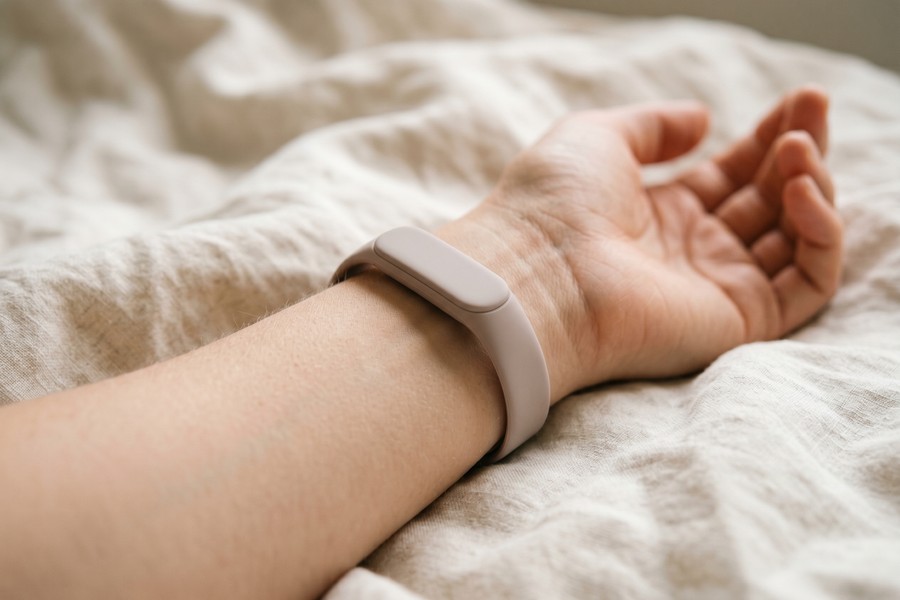
On comfort, purpose-built trackers win by a wide margin for most users. The Fitbit Inspire 3, at just 20 grams, is barely perceptible on your wrist after a few days. The Garmin Vivosmart 5 uses a slim, integrated band design with no protruding case edge. Sleeping in either feels natural within a week.
A device you wear 24/7 produces richer longitudinal health data than one you remove nightly. If your primary goal is monitoring long-term health trends, sleep quality, resting heart rate trajectory, stress patterns across months, consistent wear outweighs feature richness. Just as the best expense tracking apps succeed by making tracking effortless and automatic, the best health tracker is the one you actually keep wearing.
Who Should Buy What: Matching Device to Lifestyle
The smartwatch vs fitness tracker question isn’t about which device is objectively better, it’s about which one fits your specific life. The following profiles map common user types to the right device category.
Buy a Smartwatch If…
You’re a professional who lives in a hybrid work environment, relies on your phone constantly, and wants to reduce the number of times you pull it out. You value notifications, quick replies, and payments on your wrist. You’re comfortable charging daily and using Apple Pay or Google Wallet regularly. You’re an iPhone user who wants deep iOS integration and have a budget of $300+ with plans to keep the device for 2–3 years.
Smartwatches also make sense if you’re a casual exerciser, someone who runs or walks a few times per week and wants basic fitness data without obsessing over metrics. The convenience features will get used daily, justifying the premium.
Buy a Fitness Tracker If…
You’re a serious athlete focused on training optimization, or someone who simply wants 7+ days of battery life without exception. You prioritize sleep tracking and want to wear your device to bed comfortably every night. You’re on a budget under $150, or you switch between Android and iOS and need cross-platform compatibility. You want a device that doesn’t feel like a tech statement on your wrist.
Older adults and those new to wearables often find trackers the better fit. The simpler interface, longer battery, and focused health metrics reduce overwhelm. For users managing chronic conditions like hypertension or sleep apnea, a focused tracker worn consistently delivers more clinically relevant data than a smartwatch worn intermittently. Tracking your health metrics carefully shares a mindset with using budgeting apps to monitor spending, consistency matters more than features.
Among adults over age 55, fitness trackers outsell smartwatches by a 2.3-to-1 ratio, driven by battery life preference, comfort, and simpler interfaces, according to 2023 NPD Group consumer data.
Top Models Head-to-Head in 2024
Comparing specific models makes the abstract concrete. The following table covers the most popular devices in each category, with the metrics that actually matter for decision-making.
| Model | Category | Price | Battery | Heart Rate | ECG | GPS | Best For |
|---|---|---|---|---|---|---|---|
| Apple Watch Series 9 | Smartwatch | $399 | 18 hrs | Continuous | Yes | Built-in | iPhone users, daily use |
| Samsung Galaxy Watch 6 | Smartwatch | $299 | 40 hrs | Continuous | Yes | Built-in | Android users |
| Google Pixel Watch 2 | Smartwatch | $349 | 24 hrs | Continuous | Yes | Built-in | Wear OS fans |
| Garmin Forerunner 265 | Sport Watch | $449 | 13 days | Continuous | No | Multi-band | Runners, triathletes |
| Fitbit Charge 6 | Fitness Tracker | $159 | 7 days | Continuous | Yes | Built-in | Budget health tracking |
| Garmin Vivosmart 5 | Fitness Tracker | $149 | 7 days | Continuous | No | Connected | All-day comfort wear |
| Fitbit Inspire 3 | Fitness Tracker | $99 | 10 days | Continuous | No | Connected | Budget beginners |
| Apple Watch Ultra 2 | Smartwatch | $799 | 60 hrs | Continuous | Yes | Dual-freq | Extreme athletes |
One nuance worth flagging: “Connected GPS” on fitness trackers means the device borrows your phone’s GPS signal rather than having its own chip. This produces accurate route data but requires your phone to be present. For gym-based exercisers, this distinction is irrelevant. For trail runners or cyclists who leave their phone behind, built-in GPS is essential.
The Fitbit Charge 6 is the first Fitbit device built with direct Google integration, offering Google Maps, Google Wallet, and YouTube Music controls, signaling how aggressively fitness tracker brands are adopting smartwatch features.
Long-Term Value and Total Cost of Ownership
The purchase price tells only part of the financial story. Total cost of ownership over 3 years, the typical upgrade cycle for serious wearable users, reveals a very different picture than the sticker price suggests.
A mid-range smartwatch at $350 with a $10/month cellular plan and one band replacement at $40 costs approximately $800 over three years. A mid-range fitness tracker at $150 with a $8/month premium subscription costs approximately $438 over three years. That’s a $362 difference, enough to pay for a significant portion of a follow-on device. For users who find both devices’ core features sufficient, the fitness tracker delivers substantially better financial value.
Resale Value and Upgrade Cycles
Smartwatches depreciate quickly. An Apple Watch Series 7 (released 2021) now sells for $100–$150 used, a 65–75% depreciation from its original $399 price. Garmin fitness trackers hold value better: a Garmin Fenix 6 (released 2019) still sells for $200–$280 used, reflecting roughly 50% depreciation over 4 years. Garmin’s devices benefit from longer software support and a user base less focused on annual upgrades.
Factoring in resale value changes the true cost calculation meaningfully, the same logic that applies when using online tools to manage money more efficiently. Selling your old device and buying new becomes part of the annual budget for dedicated tech users.
Software Support and Longevity
Apple supports Apple Watch for approximately 5–6 years with watchOS updates. Samsung and Google typically support Galaxy Watch and Pixel Watch for 3–4 years. Garmin’s fitness trackers often receive software updates for 5+ years, remarkable longevity for consumer electronics. Fitbit’s future is less certain since Google’s 2021 acquisition, with some users concerned about long-term platform support and data portability.
According to consumer electronics research, over a 3-year ownership period, the average smartwatch user spends $756 total (device, accessories, and subscriptions), compared to $412 for the average fitness tracker user, a 45% cost premium for the smartwatch category.
Over a 3-year ownership period, the average smartwatch user spends $756 total (device + accessories + subscriptions), compared to $412 for the average fitness tracker user, a 45% cost premium for the smartwatch category.
Premium subscription services like Fitbit Premium and Garmin Connect+ lock your most detailed health analytics behind paywalls. Before purchasing a device from either brand, verify which features are free versus which require a monthly fee, the free tier is often significantly more limited than marketing implies.
Real-World Example: Marcus’s $400 Mistake, and How He Fixed It
Marcus, a 34-year-old software engineer from Austin, Texas, bought an Apple Watch Series 8 in January 2023 for $399. His stated goals were to “get healthier” and “run more consistently.” He was averaging 3 runs per week and sleeping 6.5 hours per night. Within two months, he noticed he was removing the Watch every night to charge it, meaning he had zero sleep tracking data. His workout data was strong, but he was missing the health picture he wanted most.
By March 2023, Marcus’s Apple Watch was in a drawer 40% of nights. He had accumulated only 47 days of sleep data in 90 days, a 52% data capture rate. He’d also paid $9.99/month for Fitbit Premium on a second app he was trialing, adding $30 to his costs without benefit. His total spend: $429 in 3 months, with core health goals unmet.
In April, Marcus switched to a Garmin Vivosmart 5 at $149. He wore it every night. Within 60 days, he had continuous sleep data and noticed his deep sleep was consistently lower on days when he worked out intensely after 8 PM. He adjusted his workout schedule, moving intense sessions to before 6 PM. Over the next 3 months, his average nightly deep sleep increased from 48 minutes to 71 minutes, a 48% improvement. His Garmin Body Battery scores at wake-up improved from an average of 52 to 74 out of 100.
Marcus kept his Apple Watch for travel days and client meetings where the communication features matter. But for daily health tracking, the $149 Garmin delivered what $399 couldn’t: consistent, complete data. His lesson: a device you wear every day beats a device with better specs you wear half the time. The right tool depends entirely on the job you actually need done.
Your Action Plan
-
Define your single most important use case
Before comparing specs, write down the one thing you most want from a wearable. If it’s sleep tracking or athletic performance, lean toward a fitness tracker. If it’s smartphone integration and communication, lean toward a smartwatch. One use case, one decision, everything else is secondary.
-
Set a realistic total budget including subscriptions
Add $8–$10/month for any premium health subscription you’ll likely activate, that’s $96–$120/year on top of the device. Factor in one band replacement ($30–$60) and any cellular plan costs. Your real first-year budget may be $100–$200 higher than the sticker price suggests.
-
Audit your phone platform and ecosystem
If you have an iPhone, Apple Watch delivers the deepest integration. If you use Android, Samsung Galaxy Watch or a Wear OS device makes more sense. If you switch platforms regularly or aren’t committed to one ecosystem, choose a fitness tracker with cross-platform support, it will work with any phone you buy next.
-
Test the battery life requirements against your lifestyle
Ask yourself honestly: will you charge a device every night without fail? If you travel frequently, forget chargers often, or hate adding a daily ritual, a device with 7+ day battery life is worth more than any smartwatch feature. Battery life failure is the #1 reason for tracker abandonment.
-
Compare the specific health metrics you want
Make a short list of the health features you’ll actually use: ECG, SpO2, skin temperature, stress score, VO2 max, or advanced sleep staging. Then verify, by looking at spec sheets, not marketing copy, which devices at your price point actually include those features without an additional subscription.
-
Read current user reviews focused on long-term experience
Look for reviews written 6–12 months after purchase. Early reviews are overwhelmingly positive. Long-term reviews reveal battery degradation, software bugs, comfort issues, and whether the health features delivered on their promise over time. Reddit’s r/Garmin, r/AppleWatch, and r/Fitbit communities are excellent for candid long-term user feedback.
-
Buy from a retailer with a generous return policy
No spec sheet can fully predict whether a device will feel right on your wrist or integrate into your habits. Amazon, Best Buy, and Apple all offer 15–30 day return windows for wearables. Take the device home, wear it for two full weeks, and return it if it doesn’t genuinely fit your life, not just your wishlist.
-
Reassess after 60 days of ownership
Set a calendar reminder for 60 days after purchase. Review which features you actually use daily, which you’ve never touched, and whether the device has changed your health behaviors measurably. This data-driven self-assessment tells you whether your purchase delivered ROI, and informs your next upgrade decision 2–3 years from now.
Frequently Asked Questions
Is a smartwatch better than a fitness tracker for health monitoring?
Not necessarily. Smartwatches include advanced features like ECG and fall detection, but purpose-built trackers often provide more complete data because users wear them more consistently, including during sleep. For comprehensive daily health monitoring, the device you wear 24/7 beats the device with better specs that you charge overnight.
Can a fitness tracker replace a smartwatch?
For pure health and fitness goals, yes. Modern trackers from Garmin, Fitbit, and Polar include heart rate monitoring, GPS, sleep tracking, stress scores, and on-wrist notifications. What they cannot replace are app ecosystems, on-wrist phone calls, contactless payments like Apple Pay or Google Wallet, and deep smartphone integration. If those features are important to your daily workflow, a fitness tracker is not a full replacement.
Which is better for weight loss, a smartwatch or fitness tracker?
Both track the core metrics relevant to weight management: calories burned, activity levels, step counts, and sleep quality (which significantly impacts metabolism and hunger hormones). The difference is marginal for weight loss specifically. What matters more is which device you’ll consistently use and pair with a calorie tracking app. Research shows that wearable plus food logging combinations increase weight loss outcomes by 15–20% compared to either alone.
Do fitness trackers work without a smartphone?
Most fitness trackers store data locally for 5–30 days without syncing to a phone, depending on the model. You need a smartphone to set up the device, view detailed analytics, and access the full feature set. Some higher-end Garmin and Fitbit trackers have on-device displays that show basic stats without a phone nearby, but the experience is significantly reduced without companion app connectivity.
Are expensive smartwatches worth the price for casual users?
For casual users who primarily want step counting, heart rate, and sleep tracking, a premium smartwatch at $399+ is difficult to justify. You’re paying for features, app ecosystems, cellular connectivity, premium materials, that casual users rarely engage with. A mid-range fitness tracker at $80–$150 delivers 80% of the health functionality at 25–40% of the cost. The premium makes sense for power users who genuinely use the smartwatch as a wrist computer throughout the day.
How accurate are wearable heart rate monitors?
Consumer wearable heart rate monitors are accurate to within 5% during rest and low-intensity activity. During high-intensity exercise, especially activities involving significant wrist movement like boxing or CrossFit, accuracy can drop to 78–85%. For medical monitoring purposes, any concerning readings should always be confirmed by a clinical ECG. For fitness optimization, the data is accurate enough to track trends meaningfully over time.
Can I swim with a fitness tracker or smartwatch?
Many modern devices from both categories support swimming. Apple Watch Series 2 and later are water resistant to 50 meters. Fitbit Charge 6, Garmin Vivosmart 5, and most Garmin sport watches are rated for swimming. “Water resistant” ratings vary, though, always check the ATM rating for your specific model before submerging it. Devices rated 5ATM or higher are suitable for swimming; 3ATM ratings are splash-proof only.
What happens to my data if the company goes out of business?
This is a legitimate concern. When Jawbone shut down in 2017, users lost access to years of health data. Google’s 2021 acquisition of Fitbit raised similar concerns about long-term data stewardship. Best practice: regularly export your data using each platform’s built-in export function. Garmin Connect and Apple Health both allow full data exports. Storing your own health history locally ensures you don’t lose years of personal data to corporate changes.
Is it safe to use health data from wearables to make medical decisions?
Consumer wearables are screening tools, not diagnostic instruments. The FDA has cleared certain features, like Apple Watch ECG and Fitbit’s AFib detection, for detecting potential arrhythmias, but all findings should be discussed with a physician before any medical decision. The FDA’s Digital Health Center of Excellence maintains public guidance on how these clearances work and what they do and don’t authorize. Using wearable data to track long-term trends and flag anomalies for professional review is appropriate; self-diagnosing based on wearable readings alone is not.
How do I know when it’s time to upgrade my wearable?
Upgrade signals include battery life degrading to less than 50% of original capacity, software support ending (meaning no more security patches), sensors producing noticeably inconsistent readings, or a new-generation device offering features that materially address your unmet health goals. Avoid upgrading annually based on marketing alone, for most users, a quality wearable delivers meaningful value for 3–5 years before an upgrade makes genuine sense. Tracking this decision financially is similar to evaluating any recurring tech expense, much like the approach used in digital financial tools that help manage ongoing costs.
Does health data from wearables affect insurance rates?
In the United States, health insurers are prohibited from using health status to set premiums under the Affordable Care Act, and the HIPAA Privacy Rule restricts how health data can be shared without your consent. Some employers and insurers offer voluntary wellness programs, where you share wearable data in exchange for premium discounts, but participation is optional. Read the terms carefully before enrolling: once you share data, how it’s stored and used may be governed by the insurer’s own privacy policy rather than HIPAA, since consumer wearable data doesn’t always meet the legal definition of protected health information.
Sources
- National Institutes of Health / JMIR, Accuracy of Consumer Wearable Heart Rate Measurement During an Ecologically Valid 24-Hour Period
- American Heart Association, Physical Activity Recommendations for Adults
- NIH PubMed Central, Accuracy of Consumer-Grade Sleep Tracking Technology Compared to Polysomnography






