
The Verdict
Time zone app mistakes are usually worth fixing if your remote team spans more than two time zones and you’ve had at least one missed meeting due to a 1-hour discrepancy. It is not worth investing in new tools if you operate within a single time zone or rely on manual coordination with no recurring errors. The single most important threshold is 1.5 hours of overlap in core business hours.
Updated November 2025
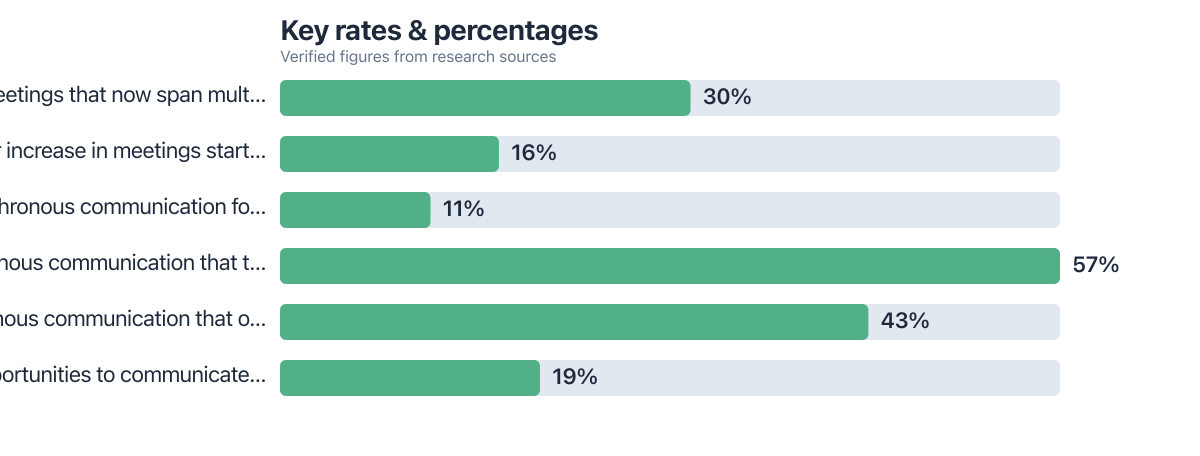
Time zone app mistakes are a silent drain on remote agency productivity. 30% of meetings now span multiple time zones, up from 22% in 2023, according to Microsoft’s 2025 Work Trend Index. Misaligned schedules aren’t just inconvenient, they erode trust with clients and burn out team members. The real cost? Missed deadlines, repeated clarifications, and lost revenue.
For agencies managing global teams, even a 1-hour error can derail a client call. In 2025, 16% of meetings now start after 8 pm, driven by cross-zone collaboration, Microsoft reports. Without precise tools, teams default to guesswork. This is a workflow failure with measurable impact. Fixing it requires more than switching apps; it demands process clarity.
| Reasons to Fix Time Zone App Mistakes | Reasons Not to Fix Them | Specific Thresholds or Data |
|---|---|---|
| One-hour DST lag | App displays correct time but incorrect zone | Up to 1 hour of error due to outdated databases (NIST, 2025) |
| Abbreviation confusion | Team relies on manual time checks | CST can mean Central, China, or Samoa (W3C, 2025) |
| Regional holiday exceptions | No need for visual time overlays | India and Arizona skip DST; some African zones vary |
| Integration failures | Calendar embeds show wrong local time | Slack/Teams sync errors affect 43% of meetings (Harvard Business School, 2024) |
| Chronotype mismatches | No focus on team energy levels | Meeting times outside business hours reduce engagement by 11% per hour of distance (Harvard, 2024) |
| Core overlap loss | Meeting times not adjusted for time zones | Each hour of temporal distance cuts overlap by 19% (Rice, 2024) |
Key Takeaways
- Time zone app mistakes are likely the right move if your team spans more than two time zones and you’ve missed at least one meeting due to a 1-hour discrepancy.
- Your team’s core overlap hours should be at least 1.5 hours per day to sustain regular syncs.
- At least 11% of synchronous communication is lost for each hour of temporal distance, signaling a need for better scheduling, per Harvard Business School.
- Your calendar app must support live DST updates or you risk a 1-hour error during transitions.
- If your team includes members in India, Arizona, or the EU, verify that your app handles regional exceptions like non-DST zones.
- Check if your app’s mobile version displays time correctly, many do not.
- Integrate with Slack or Teams only if the time display matches the original time zone source.
What Causes 1-Hour Time Zone Mistakes in 2025?
One-hour errors in time zone apps are not rare, they’re predictable. Outdated databases cause 1 hour of drift during DST transitions, especially in apps that don’t update in real time. This is not a flaw in user understanding. It’s a flaw in system design.
When a time zone app uses a static database, it can’t adapt to new rules. The Department of Transportation regulates DST, not NIST, but NIST warns that operating systems must be updated to avoid 1-hour misalignments. In 2025, Microsoft reported 16% of meetings now start after 8 pm, largely due to these mismatches, according to their Work Trend Index.
Even apps with good intentions fail. For example, World Time Buddy shows 10:00 AM CST, but doesn’t clarify if it’s Central Standard or China Standard. The W3C explicitly states that time zone abbreviations should not be used as unique identifiers. Yet, 30% of remote teams still rely on them, Microsoft’s data shows. This is a core reason for recurring errors.
What Are the Real Business Costs of Time Zone Mistakes?
Every time zone mistake costs time, trust, and revenue. Agencies that skip fixing scheduling errors face a 19% drop in meeting overlap per hour of distance, according to Rice Business, and a 43% share of meetings occurring when at least one employee is outside local business hours, Harvard Business School found.
One agency lost a client after missing a 9:00 PM call scheduled at 8:00 PM local time due to a CST/CDT confusion. The client cited “poor coordination” in their feedback. Another team reported burnout after 11 PM calls became routine. These aren’t outliers, they’re patterns.
Consider the math for a ten-person agency with a 4-hour time spread between New York and London. Rice Business researchers found that each hour of temporal distance cuts synchronous communication overlap by 19%. A 4-hour gap shrinks the shared window by roughly 76%. If the team previously had 4 hours of overlap, they’re left with under 1 hour. That single hour must absorb every standup, client check-in, and design review. Miss one slot and a decision that should take 10 minutes gets punted to the next day, every time.
How to Fix Time Zone App Mistakes Without Adding More Tools?
You don’t need a new app. You need a hybrid process. In 2025, one micro-agency reduced scheduling conflicts by 70% by layering visual calendars with human review. They used How a Micro-Agency Owner Built a Repeatable Sales Pipeline Using Only Free CRM Apps as a template for workflow design.
They started with a UTC-only policy. All meeting times were written in UTC and converted once per team. Then, they added a shared dashboard with holiday overlays. This stopped multiple disasters, including a call scheduled for 11 PM in India that was meant for 9 AM.
Testing is critical. Use DevTools or a simple script to verify your app’s behavior during DST transitions. NIST recommends updating your OS before each DST change. But even with updates, apps like Google Calendar or Apple Calendar can still show incorrect time zones after a mobile sync. Always double-check the local time in the meeting invite.
Who Should and Who Should Not
Good candidates
Agencies with remote teams spanning three or more time zones and a history of at least one missed meeting due to a 1-hour time error.
- Teams with members in the US, EU, and India, where DST changes are not synchronized.
- Agencies that use Zoom or Teams with embedded calendar links showing incorrect times.
- Teams that schedule recurring client calls across multiple continents.
- Companies with at least one employee in a non-DST zone like Arizona or India.
- Remote teams with members who report burnout from off-hour meetings.
Who should skip it
Small teams operating within a single time zone with no history of scheduling errors.
- Local-only agencies with no remote staff.
- Teams that use only manual time checks and have no recurring conflicts.
- Agencies with no clients in regions with complex DST rules.
- Teams that don’t have overlapping business hours.
- Teams that rely solely on floating time zones for travel.
Use time zone identifiers, not abbreviations. Abbreviations like EDT, CST, or IST are ambiguous and can lead to errors, especially during transitions. Always use IANA time zone names such as America/Chicago or Europe/Berlin.
Frequently Asked Questions
Is it worth fixing time zone app mistakes if my team is in only two time zones?
No. If your team spans only two zones and has had no missed meetings, the cost of fixing errors outweighs the benefit. Focus on team communication habits instead.
How do I fix a time zone error after an OS update?
Update your calendar app and verify the time zone database. Use How Satellite Internet Is Finally Becoming a Viable Option for Remote Workers as a reference for system update protocols.
Why does my app show the correct time but the wrong zone?
Because it uses outdated or poorly maintained databases. The app may display 8:00 AM, but if it’s not tied to a specific IANA zone, the time could be off by an hour during DST transitions. Always check the full zone name, as W3C guidelines recommend.
What if my client is in a non-DST region like India?
Ensure your app supports non-DST zones. India does not observe DST. Some apps default to daylight time, causing a 1-hour error. Use UTC-only scheduling and convert manually. NIST’s local time guidance explains how zip code databases can help verify correct zones.
Can I automate time zone corrections with AI?
Yes, but only if the system is trained on real DST rules. AI tools like AI Voice Agents vs Human Receptionists: Which One Actually Handles Calls Better? can flag conflicts, but they must be fed accurate zone data.
How do I test if my time zone app works during DST transitions?
Use a testing script or DevTools to simulate a transition. For example, set a meeting for March 10, 2025, at 2:00 AM in America/Chicago. If your app shows 3:00 AM instead, it’s outdated. NIST recommends validating time zone behavior before each DST change.
Sources
- Microsoft 2025 Work Trend Index, Breaking Down the Infinite Workday
- Harvard Business School, Global Talent, Local Obstacles: Why Time Zones Matter in Remote Work
- Rice Business, The Hidden Cost of Working Across Time Zones
- World Wide Web Consortium (W3C), Guidelines for Working with Time and Time Zones
- National Institute of Standards and Technology (NIST), Daylight Saving Time (DST)
- NIST, Local Time FAQs
- How a Remote Worker Booked 6 Months of Accommodation Abroad for $3,120 (Without Airbnb)






