Fact-checked by the ZeroinDaily editorial team
Quick Answer
The best portable chargers for heavy smartphone users in 2025 combine capacities of 20,000–26,800mAh with 65W+ USB-C Power Delivery output. Top picks include the Anker 737, Baseus Blade 2, and Mophie Powerstation Pro XL. Prioritize wattage over raw capacity. A higher-watt output can cut charge time by up to 60% compared to standard 5W chargers.
Updated August 2026
A portable charger for heavy users isn’t the same product as a casual top-up pack. Heavy smartphone users, those consuming 4+ hours of active screen time daily, often drain 100% battery before evening. A 10,000mAh bank at 18W just can’t keep pace. According to Statista’s 2024 mobile usage data, the global average daily smartphone screen time now exceeds 4.2 hours. In the U.S., 50.4% of teenagers already spend 4 hours or more on screens daily, according to CDC data from 2021–2023. The global power bank market reached USD 18.6 billion in 2025, per Global Market Insights, and the U.S. market alone was valued at USD 4.6 billion in 2024. With 8.9 billion smartphone subscriptions worldwide (ITU via Persistence Market Research), reliable portable power has never mattered more.
Buy the wrong power bank and you lose charge exactly when you need it most. Capacity, wattage, cell quality, form factor. These specs get buried in marketing copy or flat-out misrepresented on product listings, and most buyers never dig past the headline mAh number.
Key Takeaways
- Heavy smartphone users need at least 20,000mAh and 45W+ USB-C PD output. Anything less forces compromise. (Wirecutter)
- The global power bank market hit USD 18.6 billion in 2025, reflecting surging demand. (Global Market Insights)
- Over 50% of US teens spend 4+ hours of daily screen time, a threshold that defines heavy use. (CDC)
- FAA rules cap carry-on power banks at 100Wh. A 24,000mAh unit gives more travel headroom than 26,800mAh. (FAA)
- Keeping charge cycles between 20% and 80% preserves over 90% capacity after 500 cycles. (Lithium polymer battery research)
- The Anker 737 (140W) delivers the fastest multi-device charging among top picks. (Anker)
How much capacity do heavy users really need?
Aim for a minimum of 20,000mAh paired with at least 45W USB-C PD output. Go below that and you’re settling for a compromise if you’re draining a flagship phone once or twice a day.
Most modern flagship smartphones have batteries large enough that a 20,000mAh bank delivers three to four full charges after typical conversion losses. For frequent travelers managing tech on long trips, this math gets critical fast once outlets disappear.
Wattage determines speed, not capacity alone. A 26,800mAh bank outputting only 18W charges a Galaxy S24 Ultra slowly. Swap in a 65W bank and the same phone charges noticeably faster, according to GSMArena’s Galaxy S24 Ultra charging benchmarks.
Consider this: if you have a 620 credit score and need about $8,000 for an emergency medical bill, you’ll likely be locked out of standard personal loans. Your smartphone becomes your lifeline to research, apply, and communicate during that crisis. A power bank that drains in 3 hours under sustained use won’t cut it. You need a unit that charges your flagship phone in under 1.5 hours and keeps your backup tablet running during a 12-hour airport wait. That’s where 65W+ output and 20,000mAh capacity earn their keep.
Key Takeaway: Portable charger heavy users need at least 20,000mAh and 45W+ output to keep pace with flagship battery drain. High-wattage banks can dramatically cut full-charge time versus standard 18W alternatives, as shown by GSMArena’s device benchmarks.
Which portable chargers are best for heavy users in 2025?
The Anker 737 Power Bank (24,000mAh, 140W), the Baseus Blade 2 (20,000mAh, 100W), and the Mophie Powerstation Pro XL (20,000mAh, 90W) are the three strongest all-round picks for heavy users as of mid-2025. Each pairs high capacity with fast, bidirectional charging, though none of them are cheap, and that price gap is where most people hesitate.
The Anker 737’s 140W USB-C port charges a MacBook Pro and a smartphone at the same time without throttling either one. Anker is consistently rated among the top power bank manufacturers by Wirecutter’s annual battery pack guide, which cites cell consistency and build quality as the key differentiators.
The Baseus Blade 2 is the best slim-form option on this list. At 13.6mm thick, it fits flat in a jacket pocket while still pushing 100W, a spec that matches most laptop chargers. Mophie’s Powerstation Pro XL suits iPhone-heavy users thanks to its Apple MFi-certified USB-C cable and tight iOS integration, though it costs more per milliamp-hour than the other two.
One thing worth flagging: none of these banks fix a bad charging habit. If you’re plugging in a nearly-full phone every hour out of anxiety rather than need, you’ll burn through cycles faster regardless of which unit you buy.
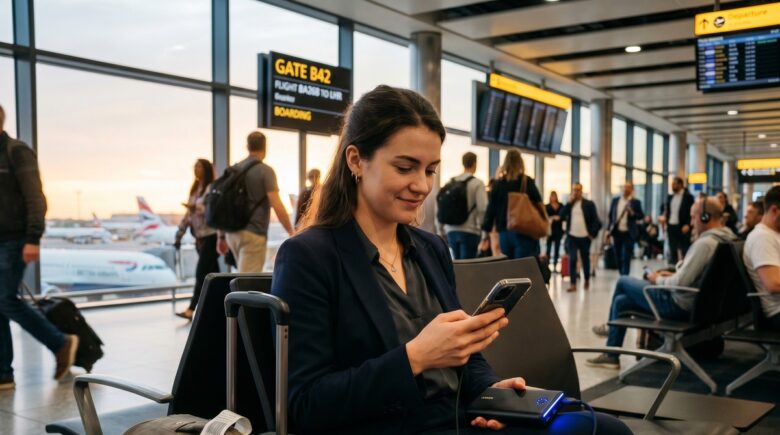
Keep in mind: if you’re planning a long weekend trip with no access to outlets and rely on your phone for navigation, messaging, and work apps, even a 20,000mAh bank can be stretched thin under heavy use. The 140W Anker 737 recovers faster during midday downtime, which matters when you’re in a remote area and can’t afford to lose connectivity.
Budget Option Worth Considering
The Xiaomi 33W Power Bank 20000 delivers solid performance at roughly 40% of the price of premium options. Output is capped at 33W, fine for overnight top-ups but not built for rapid mid-day recovery sessions.
Key Takeaway: The Anker 737 at 140W is the top choice for portable charger heavy users who need simultaneous multi-device charging. Wirecutter’s battery pack reviews consistently rank Anker first for cell reliability and long-term output consistency.
| Power Bank | Capacity | Max Output | Ports | Approx. Price (USD) |
|---|---|---|---|---|
| Anker 737 | 24,000mAh | 140W USB-C | 2x USB-C, 1x USB-A | $100 |
| Baseus Blade 2 | 20,000mAh | 100W USB-C | 2x USB-C, 1x USB-A | $80 |
| Mophie Powerstation Pro XL | 20,000mAh | 90W USB-C | 2x USB-C, 1x USB-A | $120 |
| Xiaomi 33W 20000 | 20,000mAh | 33W USB-C | 1x USB-C, 2x USB-A | $45 |
| RavPower 26800mAh PD | 26,800mAh | 65W USB-C | 2x USB-C, 1x USB-A | $65 |
What specs separate a good power bank from a great one?
Cell type, thermal management, and charge protocol support are the three specs separating adequate portable chargers from great ones. The capacity number printed on the box tells maybe a third of the story.
Lithium-polymer (LiPo) cells beat lithium-ion on energy density and shape flexibility. They also degrade more slowly under repeated fast-charge cycles, which matters when you’re plugging in every single night. The USB Power Delivery (USB-PD) standard, maintained by the USB Implementers Forum, governs how devices and chargers negotiate maximum safe wattage. Skip PD certification and you’re capped at 18W no matter what the label promises.
Thermal management gets overlooked constantly. Cheap power banks throttle output once internal temperature climbs past 45°C, exactly the condition you hit during simultaneous fast charge-in and charge-out. Premium units from Anker and Baseus build in active cooling circuits to hold output steady during dual-device use.
Industry testing consistently shows wattage beats milliamp-hours for daily multi-device users. A 20,000mAh bank at 100W does more for you than a 30,000mAh bank at 18W if you need a fast top-up mid-afternoon. That lines up with Wirecutter’s testing methodology, which weighs output speed over raw capacity every time.
Key Takeaway: Portable charger heavy users should verify USB-PD certification and LiPo cell type before buying. The USB Implementers Forum sets the PD standard. Uncertified banks are hard-capped at 18W regardless of advertised specs.
What airline rules apply to large power banks?
The FAA limits carry-on power banks to 100Wh without approval, and allows 101–160Wh banks with airline permission. Go above 160Wh and you can’t fly with it on a passenger plane at all. This directly shapes which high-capacity options actually work for travel.
To calculate watt-hours, multiply capacity (Ah) by voltage, typically 3.7V: a 26,800mAh bank comes out to roughly 99.16Wh, just under that 100Wh ceiling. The Anker 737 at 24,000mAh lands at 88.8Wh, comfortably inside the unrestricted carry-on allowance. That’s why plenty of frequent travelers pick the 24,000mAh option over the 26,800mAh one despite the lower number on the box. If you regularly manage tech across borders, pairing this knowledge with smart packing strategies covered in our guide to hidden travel costs including gear fees can save real money.
Airlines including Delta, United, and American all follow FAA guidelines as outlined in FAA’s dangerous goods passenger guidance. Power banks must always travel in carry-on baggage. Checked luggage is off-limits for lithium batteries regardless of size. The European Union advises that individual airlines set their own cabin baggage size and weight limits, so check with your carrier before packing a large power bank. TAP Air Portugal, for instance, enforces strict hand baggage weight caps that can affect how much tech you’re able to carry on board, per TAP Air Portugal.
None of this high-wattage capability matters if your device can’t use it. An older phone without USB-PD support, or one capped at 18W, simply won’t pull more than it’s built to accept. The 140W spec sits there unused. Fast charging only kicks in when both sides of the connection speak the same protocol, which is a detail plenty of buyers miss until they’re staring at a slow charge with an expensive bank in hand.
Key Takeaway: The FAA caps unrestricted carry-on power banks at 100Wh. A 26,800mAh bank sits at roughly 99Wh, within the limit, but the Anker 737’s 24,000mAh gives more headroom. Always check FAA carry-on battery rules and your airline’s specific baggage policy before packing.
How can you extend a power bank’s lifespan?
Keeping charge cycles between 20% and 80% is the single most effective way to extend a power bank’s lifespan. Fully discharging or topping off to 100% accelerates capacity loss in lithium cells, a pattern that shows up across every lithium chemistry on the market.
Most premium power banks from Anker and Mophie include a battery health mode that automatically caps charge at 80% when switched on. Manufacturers like Samsung SDI and Panasonic Energy, two of the largest lithium cell suppliers, publish degradation data showing batteries kept in the 20–80% range retain over 90% capacity after 500 cycles, compared to roughly 75% for cells repeatedly pushed to 100%.
Heat is the other big enemy. Don’t leave a power bank baking in a hot car or sitting in direct sunlight. Ambient temperatures above 40°C speed up electrolyte breakdown no matter what charge level you’re sitting at. For heavy users who also rely on cloud-connected productivity tools, pairing device management with smart cloud storage strategies can trim the screen-on time driving battery demand in the first place.
Key Takeaway: Lithium cells maintained between 20% and 80% charge retain over 90% capacity after 500 cycles, according to cell manufacturers including industry battery life benchmarks. Avoiding heat and partial cycles is the cheapest performance upgrade available.
Frequently Asked Questions
What is the best portable charger for heavy phone users in 2025?
The Anker 737 (24,000mAh, 140W) is the best overall portable charger for heavy users in 2025. It delivers the highest wattage in its class, charges two devices simultaneously without throttling, and meets FAA carry-on limits at 88.8Wh.
How many mAh do I need in a power bank for heavy use?
Heavy smartphone users need at least 20,000mAh. This provides several full charges for a modern flagship battery after accounting for typical conversion losses in lithium-polymer power banks.
Can I bring a 26800mAh power bank on a plane?
Yes, a 26,800mAh power bank at 3.7V equals approximately 99.16Wh, just under the FAA’s 100Wh unrestricted carry-on limit. It must travel in carry-on baggage, never checked luggage. Confirm with your airline before flying internationally.
What wattage should a portable charger have for fast charging?
A minimum of 45W USB-C PD output is recommended for fast charging modern flagship smartphones. For laptop-level versatility, choose 65W or above. Banks below 18W are considered standard speed and are not adequate for portable charger heavy users who need rapid mid-day recovery.
Is Anker or Mophie better for heavy smartphone users?
Anker offers higher wattage and better value per milliamp-hour, making it the stronger pick for most heavy users. Mophie is preferable for iPhone-centric users who value Apple MFi certification and a more compact design. Both brands consistently rank at the top of independent testing guides.
Do fast chargers damage phone batteries over time?
Modern USB-PD fast charging is designed to minimize battery stress through dynamic voltage negotiation. The greatest risk comes from heat generated during charging. Keeping your phone in a cool environment during fast charging protects long-term battery health more than avoiding fast charging itself.
Can these power banks charge a laptop?
Yes. The Anker 737 (140W) and Baseus Blade 2 (100W) can charge most USB-C laptops, including MacBook Pro and Dell XPS models. Verify your laptop’s wattage requirements; a 65W bank may charge a laptop slowly or only when it is asleep.
How long does it take to recharge the power bank itself?
Recharge time depends on input wattage and capacity. A 24,000mAh bank like the Anker 737 recharges in about 1.5 hours via its 140W input. A 20,000mAh bank at 65W input typically takes 2–2.5 hours. Always use a compatible high-wattage wall charger to maximize speed.
Do any of these support wireless charging?
None of the top picks listed include wireless charging pads. If you need Qi wireless output, consider the Mophie Powerstation Wireless XL, which adds 10W wireless charging but sacrifices some wired wattage. Wireless charging is less efficient and generates more heat, so wired remains faster for heavy users.
What is pass-through charging, and is it safe?
Pass-through charging lets you charge the power bank while it simultaneously charges a connected device. All three top picks support this feature. It is safe when using certified cables and a quality wall adapter. Avoid pass-through charging in high heat, as it can increase thermal stress on the cells.
Sources
- Statista, Daily Mobile Internet Usage Hours Worldwide 2024
- CDC, Screen Time Among Teenagers, 2021–2023
- Global Market Insights, Power Bank Market Size 2024–2025
- Persistence Market Research, Global Smartphone Subscriptions via ITU
- Wirecutter (New York Times), Best USB Battery Packs
- GSMArena, Samsung Galaxy S24 Ultra Full Specifications and Charging Benchmarks
- USB Implementers Forum, USB Power Delivery Standard
- Federal Aviation Administration, Batteries Carried by Airline Passengers
- European Union, Cabin Baggage Rules
- TAP Air Portugal, Hand Baggage Allowance
- Wikipedia, Lithium Polymer Battery: Chemistry and Cycle Life






