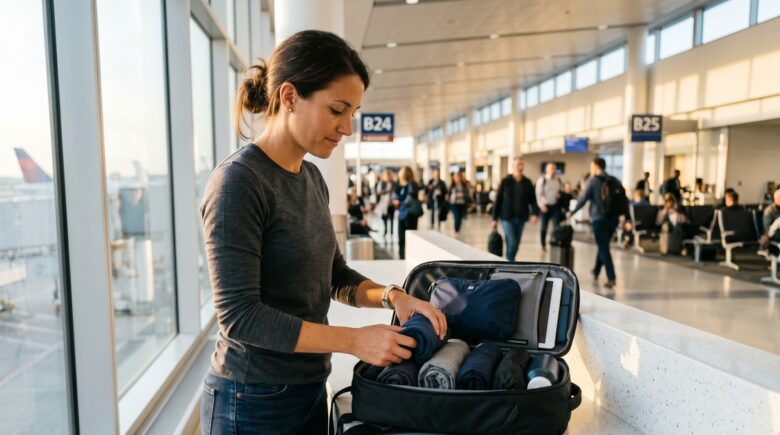
Fact-checked by the ZeroinDaily editorial team
Quick Answer
Long-term travelers stay under 7kg by cutting the bag itself (a 20-26L backpack instead of a rolling suitcase), building a 12-15 piece merino/synthetic wardrobe using the 5-4-3-2-1 formula, switching to solid toiletries, and consolidating tech to one laptop or tablet. Most also lean on laundry every 3-5 days instead of packing extra clothes, and weigh their bag a week before departure so there’s time to fix problems before they cost money at the gate.
Updated July 2026
You’ve stood at a check-in counter, heart sinking, watching the scales tick past 23kg while a queue of impatient travelers forms behind you. The airline charges $75 per extra bag, the budget evaporates before the trip even starts, and you still have three weeks of destinations ahead. This is the hidden tax of long term travel packing done wrong, and it costs the average backpacker an estimated $400-$600 per year in excess baggage fees alone.
A recent Global Rescue Traveler Sentiment and Safety Survey found that 32% of travelers admitted to overpacking on their trips. On the flip side, only 15% of travelers checked no bags at all on domestic personal trips, and just 10% went carry-on-only on international personal trips, according to luggage industry data compiled by Market.us News. That gap, between the small minority who travel carry-on only and everyone else, is where the real savings live. Budget carriers across Europe, Southeast Asia, and Latin America increasingly enforce carry-on limits as strict as 7kg, and those routes are exactly the ones long-term travelers rely on most.
This guide pulls back the curtain on exactly how experienced nomads, people who travel for months at a stretch without checking a single bag, build and maintain a sub-7kg kit. You’ll get gear weight comparisons, decision frameworks, and real cost breakdowns, plus a step-by-step action plan. By the end, you’ll know which items to cut, which to keep, and how to stop paying excess baggage fees for good.
Key Takeaways
- Nearly a third of travelers (32%) admit to overpacking, per Global Rescue’s most recent survey, directly costing $400-$600 per year in fees and missed budget-airline savings.
- A functional 7kg carry-on wardrobe costs as little as $180-$350 when built around merino wool and synthetic multi-use pieces.
- Only about 10-15% of travelers currently go carry-on-only, according to Market.us data, meaning most people are still paying the checked-bag tax unnecessarily.
- The 5-4-3-2-1 packing rule (5 tops, 4 bottoms, 3 shoes, 2 accessories, 1 jacket) keeps most 2-8 week trips under 6.5kg with the right fabrics.
- Toiletries and “just in case” items are consistently cited as a leading source of excess weight in overpacked bags.
- Digital nomads who master sub-7kg packing report saving an average of $1,200 per year across baggage fees, taxi costs (lighter bags fit in smaller vehicles), and avoided checked-bag delays.
In This Guide
- Why 7kg Is the Magic Number for Long-Term Travelers
- The Long-Term Travel Packing Mindset Shift
- Choosing the Right Bag: Size, Shape, and Weight
- Building a High-Performance Clothing System
- Where Most Weight Actually Hides
- Fabrics and Layering for Every Climate
- The Definitive Long-Term Travel Packing List by Category
- The Laundry Strategy That Replaces Half Your Wardrobe
- Navigating Airline Weight Rules Without Stress
- Smart Gear Upgrades That Pay for Themselves
Why 7kg Is the Magic Number for Long-Term Travelers
The 7kg threshold is not arbitrary. It is the strictest carry-on weight limit enforced by major budget carriers including Ryanair, AirAsia, and Wizz Air, airlines that dominate the routes connecting Europe’s budget hubs and Southeast Asia’s island-hopping circuits. Staying at or below 7kg means you fly on any airline, anywhere, without paying a single baggage surcharge.
Beyond fees, the physics are compelling. A bag weighing 7kg or less can be lifted comfortably overhead on every flight, carried up cobblestone streets in Lisbon, hauled through a Bangkok market in 35°C heat, and loaded onto a motorbike taxi in Vietnam, all without physical strain accumulating across weeks of travel.
The Real Cost of Going Over
Ryanair’s checked bag fee runs €35-€65 per flight depending on the route and booking window, per the airline’s own baggage terms and conditions. On a three-month trip with even six flights, that is a minimum of €210 added to your budget, enough to cover several nights of accommodation in Southern Europe. AirAsia charges between $15-$55 USD per leg for checked baggage on Asian routes, according to its carry-on and checked baggage policy.
There are also the invisible costs: arriving 90 minutes before departure instead of 45, waiting 20-35 minutes at baggage claim, the risk of delayed or mishandled luggage, and the psychological weight of managing a large bag through hostels, overnight buses, and shared taxis. The U.S. Department of Transportation tracks mishandled baggage rates for domestic carriers in its Air Travel Consumer Report, and travelers who check bags are, by definition, exposed to that risk in a way carry-on-only travelers are not.
Who Actually Does This?
The community of sub-7kg travelers is large and well-documented. The forum r/onebag on Reddit has over 450,000 members. The “one bag” philosophy, one carry-on, no checked bags, for trips of any length, has spawned a dedicated industry of ultralight gear. These are not minimalists living in discomfort. They have simply learned to separate necessity from habit, and the data backs up how rare that habit still is: Market.us puts carry-on-only rates at just 15% domestically and 10% internationally for personal trips.
Only 15% of travelers check zero bags on domestic personal trips, and just 10% do the same internationally, according to Market.us luggage industry data. Meanwhile, 32% of travelers admit to overpacking, per Global Rescue’s traveler survey. Those two numbers together explain most of the excess baggage fee revenue airlines collect every year.
The Long-Term Travel Packing Mindset Shift
Most people approach long term travel packing like they are preparing for every possible scenario. They pack for rain, sun, a formal dinner, a hiking trail, a beach, and a business meeting, often on the same trip. This “what if” thinking is the single largest driver of overpacking, and it lines up with what Global Rescue found: nearly a third of travelers know they overpack and do it anyway.
Experienced long-term travelers flip the framework. They ask: “What is the absolute minimum I need to be comfortable and socially appropriate in 90% of situations?” The answer is almost always far less than the intuitive first guess.
The Subtraction Method
Veteran nomads often use a subtraction method when packing: lay out everything you think you need, then remove one-third of it before zipping the bag. This mirrors research on decision fatigue, which suggests that having fewer clothing choices actually reduces daily stress, a phenomenon documented in behavioral economics as the paradox of choice.
The subtraction method works because most items packed for “just in case” never get used. The unused portion of a typical traveler’s bag is dead weight, literally and financially, and it reflects the same habit Global Rescue’s survey data points to when it flags overpacking as a self-aware behavior rather than an accident.
Accepting Localized Resupply
One of the most useful mindset shifts is accepting that almost everything is available locally at your destination. Shampoo, sunscreen, toothpaste, and even specialty items like contact lens solution are sold in virtually every country. Buying locally as needed is often cheaper than the checked baggage fee you’d pay to bring bulk quantities.
For long-term travelers working out broader budget optimization, similar to the approach covered in our guide to slow travel and seeing more by moving less, cutting physical load is just one piece of a larger efficiency plan.
Choosing the Right Bag: Size, Shape, and Weight
The bag itself is your first weight decision. An empty rolling carry-on suitcase weighs an average of 3.5-4.5kg. An empty 20-26L travel backpack weighs 0.8-1.5kg. That difference, up to 3.5kg, is roughly half your entire weight budget before you pack a single item.
The case for a backpack over a rolling suitcase is strong for destinations with uneven terrain, stairs, and limited taxi infrastructure. For urban-only trips between major cities with good transport links, a compact rolling bag can still work fine. But for true long-term flexibility, a well-fitted backpack wins in almost every scenario. The tradeoff is comfort under load: a poorly fitted backpack can strain your shoulders and back in ways a rolling bag never will, so it’s worth trying one on with weight in it before committing.
The Optimal Size Range
| Bag Size | Typical Weight (Empty) | Carry-On Compliant | Best For |
|---|---|---|---|
| 20-22L Backpack | 0.8-1.1kg | All airlines | 1-4 weeks, warm climates |
| 24-26L Backpack | 1.0-1.4kg | Most airlines | 1-12 weeks, mixed climates |
| 28-32L Backpack | 1.2-1.8kg | Some airlines | Cold-weather trips, couples |
| Rolling Carry-On | 3.0-4.5kg | Most airlines (size varies) | Urban trips, business travel |
| Checked Duffel (40L+) | 1.5-2.5kg | No | Extended cold-weather expeditions |
Top Bag Recommendations by Weight
The Osprey Farpoint 40 is one of the most recommended bags in the one-bag community, weighing 1.47kg empty and fitting within most airlines’ carry-on dimensions. The Tom Bihn Synik 30 weighs 1.02kg and is built specifically for one-bag travel. The WANDRD PRVKE 21 comes in at 1.05kg and doubles as a camera bag for digital nomads.
For ultralight travelers, the Hyperlite Mountain Gear Junction 3400 (Dyneema fabric) weighs just 0.54kg empty, though at $375+, it represents a real upfront investment, one that only makes financial sense if you’re flying budget carriers often enough to actually hit that break-even point.
A rolling carry-on suitcase’s empty weight alone can consume 50-65% of your 7kg budget before a single item of clothing is packed. Switching to a lightweight backpack instantly reclaims 2-3kg of usable capacity.
Building a High-Performance Clothing System
Clothing is where most travelers lose the weight battle, not because they pack too many categories, but because they pack the wrong fabrics in the wrong quantities. A clothing system for long-term travel is built around multi-use versatility, fast-dry capability, and pack-flat construction.
The goal is a capsule wardrobe where every item works with every other item: no single-purpose pieces, no items that require special care, no garments that take more than 4 hours to air dry.
The 5-4-3-2-1 Packing Formula
The 5-4-3-2-1 formula is the most widely cited starting point in the one-bag community:
- 5 tops (mix of t-shirts, one long-sleeve, one collared or polished layer)
- 4 bottoms (2 pants/shorts, 1 swimwear doubling as shorts, 1 leggings or thermal)
- 3 footwear options (walking shoes, sandals, and one dress/formal option, often the same pair)
- 2 accessories (scarf/buff, hat)
- 1 jacket (packable down or softshell, depending on climate)
This system typically weighs 2.8-3.5kg total when built from merino wool and lightweight synthetics, leaving 3.5-4.2kg for your bag, tech, toiletries, and documents.
Fabric Weight Comparison
| Fabric Type | Avg Weight (T-Shirt) | Dry Time | Odor Resistance | Cost Range |
|---|---|---|---|---|
| Merino Wool | 140-180g | 6-12 hours | Excellent (3-5 wears) | $40-$90 |
| Synthetic (Polyester) | 100-140g | 1-3 hours | Moderate (1-2 wears) | $25-$60 |
| Nylon Blend | 110-150g | 2-4 hours | Moderate (2-3 wears) | $30-$75 |
| Cotton | 180-280g | 12-24 hours | Poor (1 wear) | $10-$30 |
| Linen | 160-220g | 8-16 hours | Poor (1 wear) | $20-$50 |
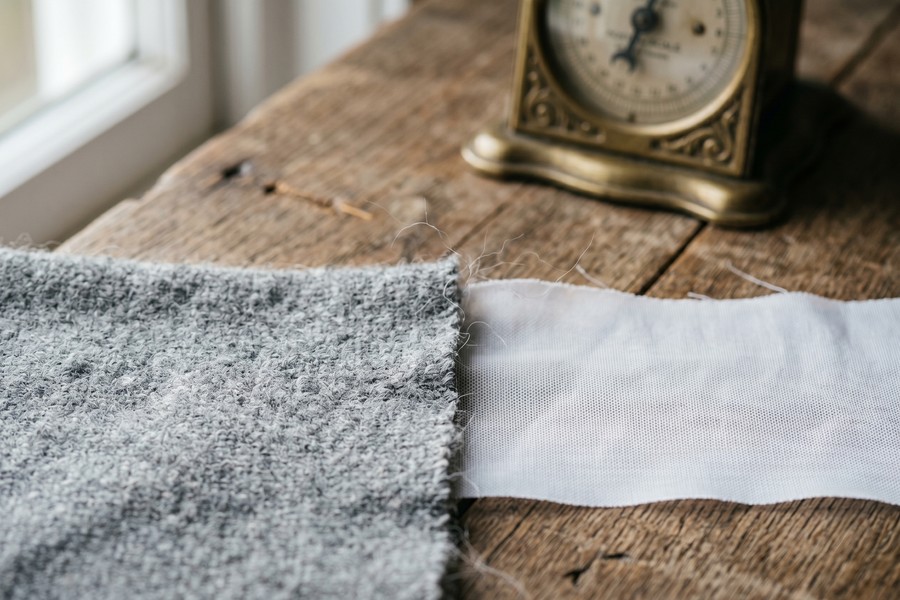
Buy merino wool t-shirts during end-of-season sales at brands like Icebreaker, Smartwool, or Uniqlo. You can often find quality merino for $20-$35, versus paying full price of $60-$90. One good merino shirt replaces three cotton shirts in a travel wardrobe.
Where Most Weight Actually Hides
Ask any experienced one-bag traveler where beginners go wrong, and the answer is almost always the same: toiletries and tech accessories. These two categories cause the most surprising weight overruns, because each individual item seems small, but the cumulative total is devastating.
A standard toiletry bag packed intuitively, full-size shampoo, conditioner, face wash, moisturizer, sunscreen, deodorant, toothpaste, and a razor, weighs 1.2-1.8kg. That is nearly a quarter of your entire 7kg budget. The optimized equivalent weighs 250-400g.
Toiletry Optimization Tactics
Solid toiletries are the single biggest weight saver in this category, and Sea to Summit’s guide to solid travel toiletries breaks down the math well: a solid shampoo bar (50g) replaces a 300ml liquid bottle (300g+). Solid conditioner, solid sunscreen, and solid deodorant sticks follow the same principle. The entire solid toiletry kit for a three-month trip can weigh under 200g.
For liquid holdouts, 10ml and 30ml refillable silicone bottles, available for $8-$15 for a set of six, let you carry only what you’ll use in 1-2 weeks, buying refills locally as needed. This system keeps you within the TSA’s 3-1-1 liquids rule (100ml containers, one quart-sized bag) and cuts weight at the same time.
Tech Weight: The Hidden Culprit
Tech accessories are the other silent killer. A laptop (1.2-1.8kg), tablet (400-600g), phone (150-200g), e-reader (170-200g), plus a tangle of cables, adapters, and a power bank (300-500g) can easily push 3.5-4kg, over half the budget for tech alone.
The discipline is ruthless prioritization. Most long-term travelers choose one primary computing device: either a lightweight laptop (like the 1.09kg LG Gram 14) or an iPad Pro with a keyboard case (weighing 970g together). They do not carry both.
| Tech Item | Typical Weight | Ultralight Alternative | Alternative Weight |
|---|---|---|---|
| Laptop (15″ MacBook Pro) | 2,150g | MacBook Air M2 (13″) | 1,240g |
| Power Bank (20,000mAh) | 440g | 10,000mAh slim bank | 180g |
| Universal Adapter (multi-port) | 280g | Lightweight GaN adapter | 85g |
| DSLR Camera | 800-1,200g | Sony ZV-1 compact | 294g |
| Paperback Books (x3) | 600-900g | Kindle Paperwhite | 182g |
Never weigh your packed bag the night before departure. Weigh it 5-7 days before your trip, while you still have time to swap out items, ship packages home, or buy lighter alternatives. Last-minute weight discoveries lead to panic decisions, and expensive airport fees.
Fabrics and Layering for Every Climate
The most common objection to the sub-7kg approach is cold weather. “You can’t pack for Europe in January in 7kg.” This is technically false, but it does require a more disciplined approach to the layering system rather than packing bulky single-purpose items.
The layering principle, base layer, mid layer, outer shell, lets three garments cover a temperature range from -5°C to 25°C. Each layer weighs significantly less than a single heavy jacket that only works in one temperature band.
Cold-Weather Layering Under 7kg
- Base Layer: Merino wool long-sleeve (220g), also serves as pajamas and a casual top in mild weather
- Mid Layer: Packable down jacket, e.g. Uniqlo Ultra Light Down (280g packed), doubles as a pillow on overnight flights
- Outer Shell: Lightweight waterproof jacket, e.g. Outdoor Research Helium Rain Jacket (280g), folds into its own pocket
- Total layering system weight: ~780g for coverage from -5°C to 20°C
Compare this to a single winter parka that typically weighs 900g-1,800g and only works in cold conditions. The layering system is lighter, more versatile, and compresses to a fraction of the volume. The tradeoff is upfront cost: three purpose-built layers usually cost more combined than one mid-range parka, so this approach pays off more for frequent, extended travel than for a single winter trip.
Footwear: The Heaviest Single Category
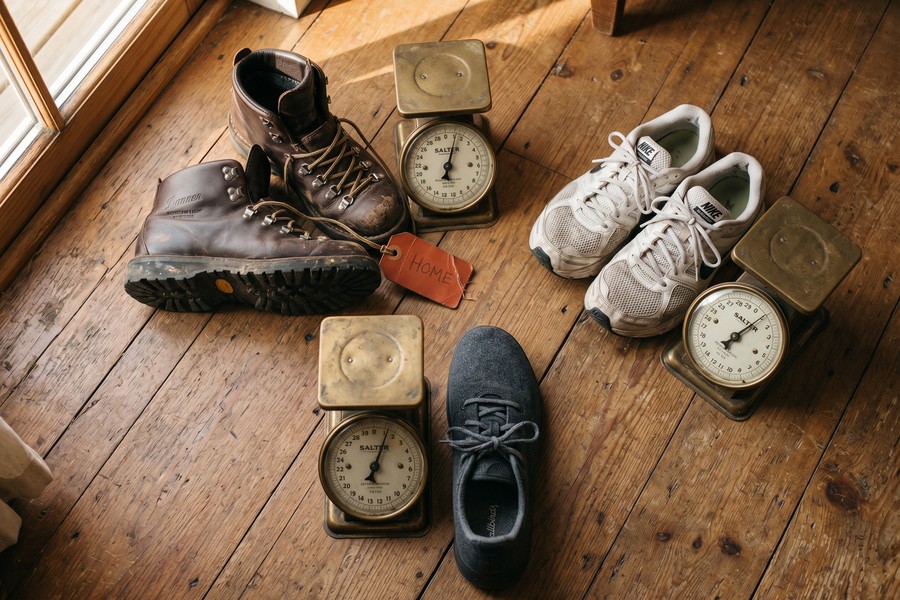
Footwear is the densest weight category per item. A single pair of running shoes weighs 280-400g. Boots can reach 600-900g per pair. The standard advice from the one-bag community is to carry two pairs maximum, one walking/casual shoe that can pass in a restaurant, and one pair of sandals or flip-flops for showers, beaches, and hostel common areas.
The Allbirds Wool Runners (300g per pair) and Vivobarefoot Primus Lite (260g per pair) are frequently cited as a good balance of comfort, style, and low weight. Worn on the plane, neither counts toward your bag’s weight budget.
The Definitive Long-Term Travel Packing List by Category
This is a weight-verified list used by experienced long-term travelers. Every item has been weighed and checked against the 7kg threshold. Adjust for your specific climate and trip length, but use this as a baseline for your own long term travel packing strategy.
Complete Packing List with Weights
| Category | Items | Total Weight |
|---|---|---|
| Bag | 24L travel backpack | ~1,100g |
| Clothing | 5 tops, 2 pants, 1 shorts, 1 swimwear, 1 merino base, 1 down jacket, 1 rain shell, 6 underwear, 4 socks | ~2,200g |
| Footwear | 1 pair walking shoes (worn), 1 pair sandals | ~220g (sandals only) |
| Tech | Laptop, phone (carried), GaN charger, 10,000mAh bank, 2 cables | ~1,600g |
| Toiletries | Solid shampoo bar, toothbrush, solid deodorant, moisturizer, sunscreen solid, razor, nail clippers, medications | ~350g |
| Documents/Misc | Passport wallet, packing cubes x2, reusable bag, travel towel (microfiber) | ~300g |
| Total (bag on scale) | ~5,770g (5.77kg) |
The total comes in at roughly 5.77kg, leaving a 230g buffer for a travel journal, a small first-aid kit, or a paperback book. This is a workable, comfortable kit for 2-12 weeks in warm-to-temperate climates.
Wearing your heaviest items, boots, jeans, and your bulkiest jacket, through security means they do not count toward your carry-on weight. This “airport outfit” trick can save 1.5-2.5kg from your bag’s weighed total without removing a single item from your kit.
The Laundry Strategy That Replaces Half Your Wardrobe
The reason long-term travelers can survive months on 5-7 items of clothing is not magic. It is a disciplined laundry strategy. Understanding the global laundry ecosystem and building a routine around it removes the psychological need to “pack enough clothes for the whole trip.”
In Southeast Asia, local laundry services (known as “wash-and-fold”) typically cost $0.50-$1.50 per kilogram, with same-day or next-day turnaround. In Europe, laundromats average €4-€8 per load. In Latin America, hand-washing in a hostel sink with a bar of soap remains the fastest and cheapest option.
The 3-Day Rule
The 3-day rule governs most experienced travelers’ laundry cadence: every third day, do laundry. This keeps the clothing system perpetually clean without requiring more than 5-6 tops in the pack. With merino wool, which stays odor-free for 3-5 wears, the interval can stretch to 5-7 days.
Sink-washing at night and hanging items to dry while sleeping is the zero-cost option that works in any climate with a hotel room or hostel bunk. A 30-second squeeze of travel laundry soap (e.g., Sea to Summit Trek & Travel Soap, 100g, $7) handles spot-cleaning and light washes indefinitely.
Packing Cubes and Organization
Packing cubes do not save weight. What they save is time and mental energy. Two small cubes (one for clean clothes, one for worn-but-wearable items) cost $12-$25 for a set and weigh 80-120g combined. The efficiency gain, finding any item in under 10 seconds, pays psychological dividends on long trips.
For travelers also working to optimize their budgets on the road, pairing smart packing with tools like the best budgeting apps for 2026 can help track exactly what you’re spending on laundry, accommodation, and transport in real time.
Navigating Airline Weight Rules Without Stress
Understanding airline carry-on policies is about strategic planning, not just compliance. Policies vary dramatically by carrier, fare class, and route. The traveler who understands this matrix never pays a surprise fee at the gate.
Budget carriers like Ryanair, Wizz Air, and Spirit enforce carry-on limits most aggressively. Full-service carriers like Qatar Airways, Singapore Airlines, and Lufthansa typically allow 7-12kg in the cabin. Alliance status can also matter: a Star Alliance Gold member flying economy on United may get a 10kg overhead allowance on a Lufthansa codeshare that a non-member would not, much the same way a strong FICO Score can unlock better terms with a lender even when the base product looks identical on paper.
The Airline Weight Rules Matrix
| Airline | Carry-On Weight Limit | Size Limit | Personal Item Allowed |
|---|---|---|---|
| Ryanair | 10kg (Priority) / 2 small bags for Basic | 40 x 20 x 25cm (basic) | No (included in 2-bag rule) |
| AirAsia | 7kg | 56 x 36 x 23cm | 1 small bag, max 7kg combined |
| Wizz Air | 10kg (WIZZ Go/Plus only) | 55 x 40 x 23cm | Small bag for Basic fare |
| Emirates | 7kg | 55 x 38 x 20cm | Laptop bag allowed |
| Southwest (US) | No weight limit stated | 10 x 16 x 24 inches | Yes, one personal item |
Budget airlines frequently change their baggage policies, sometimes mid-booking flow. Always verify the specific fare class rules on the airline’s official website at time of booking, not from third-party aggregators. Policies can shift between booking and travel dates without much notice.
Managing the Weigh-In
Gate agents at budget carriers sometimes spot-check carry-ons at the boarding gate with portable scales. The airport outfit trick (wearing your heaviest items) is one mitigation. Another is carrying a luggage scale (100g, $8-$12) and weighing your bag immediately after each repacking. This removes all uncertainty.
For travelers maximizing points and perks, which can include carry-on upgrades and higher weight allowances, our guide to the best travel credit cards for frequent flyers covers which cards unlock elite status benefits most efficiently. Just be aware that opening new travel cards involves a hard inquiry that can dent your credit score temporarily, something the Consumer Financial Protection Bureau (CFPB) recommends weighing against the value of the perks before applying.
Smart Gear Upgrades That Pay for Themselves
Not all gear is created equal, and the performance gap between budget and premium options shows up most in the weight category. A targeted gear investment, focused on the heaviest categories first, delivers measurable returns across every trip you take.
The calculation is straightforward: if you spend $120 on a merino wool travel shirt that saves you $70 in checked baggage fees on your next three flights, it has paid for itself in under six months. Premium lightweight gear is a rational financial decision here, not a luxury purchase, similar to how a slightly higher APR might still be the better deal if it comes with no annual fee.
The Highest-ROI Gear Investments
- Lightweight backpack ($150-$350): Saves 2-3.5kg versus a rolling suitcase. ROI achieved after 2-4 flights on budget carriers.
- Merino wool base layer set ($80-$160): Replaces 3-4 cotton layers. Saves 300-500g of clothing weight.
- GaN USB-C charger ($35-$65): Charges laptop, phone, and tablet simultaneously. Replaces 2-3 separate adapters. Saves 150-250g.
- Packable down jacket ($50-$180): Compresses to 280g. Replaces a 900-1,500g winter coat.
- Microfiber travel towel ($15-$35): Weighs 100-150g. Dries in 30-60 minutes. Replaces a standard cotton towel (500-700g).
A traveler who invests $400 in one-bag gear and then takes just 8 budget flights per year avoiding checked bag fees saves an average of $560 annually at current Ryanair/AirAsia pricing. The initial investment is recouped in under 9 months, a payback period that compares favorably to most financed purchases you’d track through Experian or a similar credit monitoring service.
The Diminishing Returns Zone
Ultralight gear has a point of diminishing returns. Going from a 1.2kg bag to a 0.8kg bag costs an extra $150+ in premium materials. Going from 180g merino to 150g merino costs an extra $40 per shirt. These gains matter for thru-hikers carrying 25+kg over mountain ranges. For regular travelers, the practical weight savings below 6kg rarely justify the marginal cost.
The sweet spot for most travelers is hitting 5.5-6.5kg with mid-range gear ($250-$500 total investment) rather than chasing 4kg with $1,500+ of ultralight equipment.
The global travel gear market is projected to grow steadily over the coming years, according to Grand View Research’s market report. The fastest-growing segment is carry-on-optimized backpacks and ultralight travel accessories, a shift that tracks with declining checked-bag rates reported by Market.us.
Real-World Example: From 22kg to 6.8kg in 60 Days
Maya Chen, a 34-year-old UX designer from Vancouver, had traveled extensively for seven years, always with a 22kg checked bag plus a carry-on. Her annual baggage fee bill averaged $580 CAD, and she described herself as “a chronic overpacker who never learned.” After a missed connecting flight caused by a 35-minute baggage claim delay in Amsterdam, she committed to the one-bag system for an upcoming 11-week trip through Southeast Asia and Japan.
Her before kit weighed 22.3kg and included: two pairs of heeled shoes, a hairdryer (680g), six full-size toiletry bottles, three pairs of jeans, a laptop, a tablet, and an SLR camera with two lenses. Her rebuilt kit for the same trip weighed 6.8kg and included: a 24L Osprey Fairview backpack (1.1kg), five merino and synthetic tops, two pants (one hybrid travel/dress, one jogger), one pair of Allbirds runners worn on the flight, one pair of Teva sandals, an iPad Pro with keyboard case replacing both the laptop and tablet, a Sony ZV-1 compact camera replacing the SLR kit, and a solid toiletry kit weighing 280g total.
Over the 11-week trip, Maya took 14 flights, nine of them on budget carriers. Her total baggage fee for the trip: $0. Her estimated savings versus the prior year’s equivalent trip: $740 CAD, including avoided fees, smaller taxi capacity, and one instance where a smaller bag allowed her to board a full bus that had no overhead space for large bags. She also reported spending roughly 47 fewer minutes per airport visit on average, totaling over 10 hours of time reclaimed across the trip.
Maya has not checked a bag since. She notes that the only item she genuinely missed was the hairdryer, which she solved by booking accommodations with a hairdryer listed in the amenities, a filter now applied to every Booking.com search. Total cost of her gear overhaul: $387 CAD, recovered in savings within the first 5 flights of the new system.
Your Action Plan
-
Weigh everything you currently pack, right now
Pull out your usual travel bag and weigh it on a bathroom scale or luggage scale. Then remove and weigh each category separately: clothing, tech, toiletries, footwear, miscellaneous. You need hard numbers, not estimates. Most people are shocked to find their toiletry bag alone weighs over 1kg. This baseline data drives every decision that follows.
-
Choose a target bag that weighs under 1.3kg empty
If you’re currently using a rolling suitcase, this is your highest-leverage first move. Research 20-26L travel backpacks within your budget ($80-$300). The Osprey Farpoint 40, Tom Bihn Synik 30, and Tortuga Setout Laptop Backpack are all proven options. Order one and make it your new non-negotiable travel container.
-
Audit your clothing using the subtraction method
Lay out every clothing item you would normally pack. Remove exactly one-third, starting with anything cotton that takes more than 8 hours to dry, anything single-purpose (formal wear for an event that may not happen), and any duplicate categories. Replace removed items with merino or synthetic equivalents as your budget allows over the next 60 days.
-
Convert your toiletry kit to solids and 30ml bottles
Order a set of solid toiletries: shampoo bar, conditioner bar, solid deodorant, and solid or 30ml sunscreen. Eliminate all full-size bottles. Your entire toiletry kit should weigh under 400g. This single step typically saves 700g-1,200g from an average traveler’s bag without removing a single comfort item.
-
Consolidate your tech stack to one primary computing device
Decide: laptop or tablet. Then commit fully. If you choose a laptop, your phone handles everything a tablet would do. If you choose a tablet with a keyboard, it handles 80% of laptop tasks at half the weight. Add a single GaN multi-port charger that handles all devices, and eliminate every redundant cable and adapter.
-
Establish a laundry cadence before you leave
Research laundry options at your first three destinations. Identify the nearest wash-and-fold service, laundromat, or in-room sink-washing conditions. Pack 100ml of travel laundry soap. Commit to washing every 3 days. This habit removes the psychological pressure to pack “enough clothes for the whole trip” and is the behavioral foundation of the entire system.
-
Do a trial run with your packed bag for 72 hours at home
Live out of your travel bag for three full days before your trip. Wear each outfit, use each item, and note what you reach for and what stays buried. Anything untouched for 72 hours in a controlled environment will be untouched for 72 days on the road. Remove those items before departure.
-
Verify your bag weight 5-7 days before departure
Weigh your packed bag, fully loaded, as you would actually travel, a week before you leave. If it’s over 7kg, you still have time to make targeted swaps, ship items home, or reconsider what you’ve added since the trial run. Never discover a weight problem at the check-in counter.
Related reading: Why Travelers Are Switching to Compression Socks for Long.
Frequently Asked Questions
Can you really do long-term travel packing for months in under 7kg?
Yes, and a meaningful (if still small) share of travelers already do it routinely. The key is understanding that long-term travel is not one continuous outfit decision; it is a series