Fact-checked by the ZeroinDaily editorial team
Quick Answer
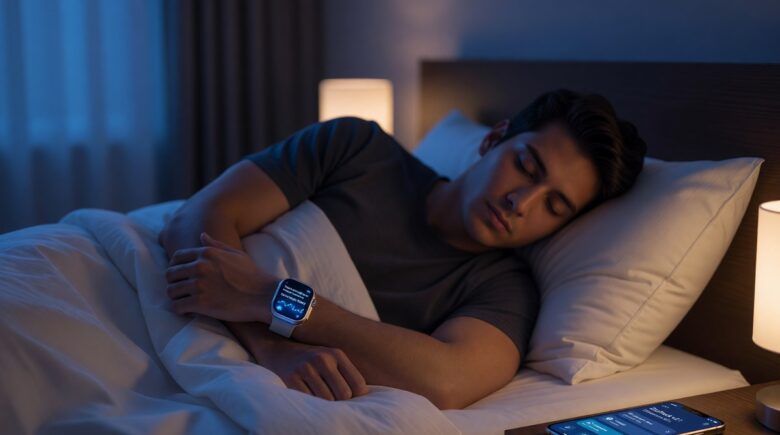
A sleep tracking device monitors sleep stages, heart rate, and breathing patterns to help you understand and improve rest quality. As of July 2025, top devices range from $30 to $400+, with clinical-grade accuracy typically starting around $150. The best choice depends on your health goals, preferred form factor, and whether you need FDA-cleared sensors.
A sleep tracking device guide helps you cut through a crowded market and find hardware that actually improves your rest. According to CDC sleep data, more than 1 in 3 American adults do not get the recommended seven or more hours of sleep per night — making accurate, affordable tracking more relevant than ever.
The wearable health market has matured rapidly, and 2025 devices now measure variables that were clinical-only five years ago. Knowing what separates marketing claims from verified capability will save you money and frustration.
How Does a Sleep Tracking Device Actually Work?
Most consumer sleep trackers use accelerometry (motion detection) and photoplethysmography (PPG) — an optical sensor that reads blood-volume changes — to infer sleep stages. Neither method is as precise as a clinical polysomnography (PSG) test, but modern devices have closed the gap significantly.
Higher-end devices from Fitbit, Garmin, Apple, and Oura layer in heart rate variability (HRV), skin temperature, and blood oxygen saturation (SpO2) to improve stage detection. A 2023 validation study published in the journal Sleep found that consumer wrist-worn devices achieved roughly 78% accuracy in identifying REM versus non-REM sleep compared to PSG gold-standard tests.
Sensor Types and What They Measure
Understanding sensor types is essential in any sleep tracking device guide. Accelerometers detect body movement and are present in every tracker. PPG sensors add heart rate context. SpO2 sensors identify potential oxygen desaturation events linked to sleep apnea. Skin-temperature sensors — found in Oura Ring Gen 3 and Garmin Venu 3 — provide a separate physiological signal that reduces false stage classifications.
Key Takeaway: Consumer sleep trackers use PPG and accelerometry to estimate sleep stages with roughly 78% accuracy versus clinical PSG. Devices with additional sensors — SpO2, HRV, skin temperature — consistently outperform single-sensor models in independent validation studies.
What Are the Main Types of Sleep Tracking Devices?
There are four primary form factors, each with distinct trade-offs in accuracy, comfort, and price. Your lifestyle should drive the decision more than brand loyalty.
- Smartwatches (Apple Watch Series 10, Samsung Galaxy Watch 7): Dual-purpose devices with robust ecosystems. Best for users who already wear a watch daily.
- Dedicated fitness bands (Fitbit Inspire 3, Garmin Vivosmart 5): Lighter and cheaper than smartwatches. Battery life is typically 5–10 days.
- Smart rings (Oura Ring Gen 3): Minimal form factor, high sensor density, no display. Battery life averages 4–7 days.
- Bedside/under-mattress sensors (Withings Sleep Analyzer, Amazon Halo Rise): No wearable required. Uses ballistocardiography to detect movement and breathing through the mattress surface.
Under-mattress devices are ideal for those who dislike wearing anything to bed. However, they cannot track daytime naps taken elsewhere, and their SpO2 monitoring is less reliable than wrist-based optical sensors.
If you are managing a condition like sleep apnea, this sleep tracking device guide strongly recommends pairing any consumer tracker with a clinician-guided evaluation from the Sleep Foundation before drawing health conclusions.
Key Takeaway: The 4 main form factors — smartwatches, fitness bands, smart rings, and bedside sensors — each suit different lifestyles. Smart rings offer the highest sensor density with the least daytime intrusion, while bedside devices eliminate wearables entirely at the cost of SpO2 precision.
How Do Top Sleep Tracking Devices Compare in 2025?
Price, battery life, and FDA clearance status vary widely across the leading brands. The table below compares the most-purchased devices as of mid-2025.
| Device | Price (USD) | Battery Life | Key Sensors | FDA Cleared |
|---|---|---|---|---|
| Oura Ring Gen 3 | $299 + $5.99/mo | 4–7 days | PPG, SpO2, HRV, Temp | No |
| Apple Watch Series 10 | $399 | 18 hours | PPG, SpO2, ECG, Temp | ECG only |
| Fitbit Charge 6 | $159 | 7 days | PPG, SpO2, HRV, Temp | No |
| Garmin Venu 3 | $449 | 14 days (watch mode) | PPG, SpO2, HRV, Temp | No |
| Withings Sleep Analyzer | $129 | Plugged in | Ballistocardiography, SpO2 | Yes (snore/apnea) |
| Samsung Galaxy Watch 7 | $299 | 40 hours | PPG, SpO2, HRV, Temp, BIA | No |
“Consumers should understand that no commercially available sleep tracker is a diagnostic tool. They are best used to identify behavioral trends — like consistent late bedtimes or fragmented sleep — rather than to diagnose conditions like sleep apnea or insomnia.”
FDA clearance matters specifically for medical claims. The Withings Sleep Analyzer holds an FDA 510(k) clearance for sleep apnea detection — making it the strongest choice for users with suspected breathing disorders. For general wellness tracking, FDA clearance is less critical.
Key Takeaway: Among leading devices, only the Withings Sleep Analyzer holds FDA clearance for apnea detection, priced at $129. If clinical-grade respiratory monitoring is your priority, it offers the clearest regulatory backing of any consumer device currently on the market.
How Accurate Are Consumer Sleep Trackers — and What Are Their Limits?
Consumer trackers are useful for spotting trends, but they are not clinical instruments. Stage-detection accuracy is the most commonly misunderstood metric in any sleep tracking device guide.
Independent research from the Brigham and Women’s Hospital Sleep Medicine division found that wrist-worn devices overestimate total sleep time by an average of 29 minutes per night compared to PSG. Light sleep is consistently the most over-reported stage, while deep sleep is often underreported.
Data Privacy Considerations
Sleep data is classified as sensitive health data under several U.S. state laws, though no single federal standard governs consumer wearables. Fitbit (owned by Google), Apple Health, and Samsung Health each have distinct data-sharing policies. Reading the privacy policy before purchase — particularly clauses about third-party data sales — is a step most buyers skip.
Just as protecting your personal data from financial scams requires understanding how companies use your information, the same discipline applies to health data from wearables.
Key Takeaway: Consumer sleep trackers overestimate total sleep by an average of 29 minutes per night according to clinical validation studies. Treat device readings as behavioral benchmarks — not diagnoses — and review each platform’s privacy policy before sharing sensitive health data with third parties.
What Should You Look for Before Buying a Sleep Tracking Device?
Five criteria consistently separate high-value purchases from regret in this category. This sleep tracking device guide distills them into a practical pre-purchase checklist.
- Sensor suite: A minimum of PPG, SpO2, and HRV sensors is needed for reliable stage detection. Temperature sensors add measurable accuracy.
- Battery life: Smartwatches charging every night cannot track sleep consistently. Aim for at least 5 days of battery for uninterrupted monitoring.
- App quality: Raw sensor data is meaningless without actionable insight. Test the companion app’s free tier before committing to a subscription.
- Subscription model: Oura charges $5.99/month after purchase. Fitbit Premium is $9.99/month. Garmin’s core sleep features require no subscription. Factor lifetime cost into your decision.
- Ecosystem compatibility: Apple Watch integrates natively with Apple Health. Samsung Galaxy Watch integrates with Samsung Health and Google Fit. Cross-platform exports vary widely.
The same analytical mindset that applies when evaluating AI-powered investment platforms — scrutinizing what the tool can and cannot actually do — applies directly to evaluating sleep tracker claims. Marketing language often overstates clinical capability.
For tech-forward users already tracking productivity and health holistically, AI tools that integrate with health data can layer sleep metrics into broader wellness dashboards, offering a more complete picture of performance.
Key Takeaway: Battery life under 5 days and hidden subscription fees are the two most overlooked costs in sleep tracker purchases. Garmin offers full sleep analytics with no ongoing subscription, while Oura and Fitbit require monthly fees ranging from $5.99 to $9.99/month to unlock their core insight features.
Related reading: Everything You Need to Know About Password Managers: Bitwarden vs 1Password in.
Frequently Asked Questions
What is the most accurate consumer sleep tracker available in 2025?
Independent validation studies rank the Oura Ring Gen 3 and Garmin Venu 3 among the most accurate wrist-worn and ring-based devices for sleep stage detection. Neither matches clinical PSG accuracy, but both outperform single-sensor accelerometer-only bands by a measurable margin in peer-reviewed testing.
Can a sleep tracking device detect sleep apnea?
Most consumer devices flag potential apnea events using SpO2 dips and breathing rate irregularities, but only the Withings Sleep Analyzer holds FDA clearance for sleep apnea detection. Any device-flagged concern should be confirmed through a clinical sleep study ordered by a physician.
Is it worth paying for a sleep tracker subscription?
It depends on which features sit behind the paywall. Oura restricts most trend analysis to paid subscribers, while Garmin provides full sleep data at no ongoing cost. Evaluate the free tier thoroughly before buying — many users find the subscription features do not add actionable value beyond the base data.
How do I know if my sleep tracker data is accurate?
Cross-reference device data with subjective sleep quality surveys over two to four weeks. If the device consistently reports high sleep quality on nights you feel poorly rested — or vice versa — sensor placement, fit, or algorithm limitations may be at fault. Loose band fit is the most common cause of degraded PPG accuracy.
Do I need a sleep tracking device if I already have a smartwatch?
If your smartwatch includes PPG, SpO2, and HRV sensors, a dedicated sleep tracker adds minimal value. Apple Watch Series 10 and Samsung Galaxy Watch 7 already deliver multi-stage sleep analysis without an additional device, provided you charge them during the day rather than overnight.
What is the best budget sleep tracker under $100?
The Fitbit Inspire 3 ($99) and Xiaomi Smart Band 8 ($45) both offer PPG-based sleep staging at sub-$100 price points. The Fitbit Inspire 3 provides the stronger app ecosystem and English-language support, making it the safer choice for most U.S. buyers following a sleep tracking device guide on a limited budget.
Sources
- CDC — Sleep and Sleep Disorders: Adults Data and Statistics
- Oxford Academic — Sleep Journal (Peer-Reviewed Research on Sleep Technology)
- Sleep Foundation — Sleep Apnea: Overview and Evaluation Guidance
- Brigham and Women’s Hospital — Sleep Medicine Division
- Fitbit — Fitbit Premium Subscription Features and Pricing
- Withings — Sleep Analyzer Product Page and FDA Clearance Details
- FTC — Health Privacy and Consumer Wearable Data Guidance






