Fact-checked by the ZeroinDaily editorial team
Quick Answer
Booking connecting flights separately means purchasing each flight leg as an individual ticket. To do it safely, allow a minimum of 3 hours between flights at the same airport, purchase separate travel insurance for each segment, and always book the first leg first. As of July 2025, this strategy can save travelers 20–40% compared to standard itinerary prices when done correctly.
Self-connecting, purchasing each flight leg as a standalone ticket rather than letting one airline bundle the routing, is one of the most effective ways to cut airfare costs., travelers who use this method strategically report saving an average of $200–$600 per round trip, according to data published by Kayak’s travel insights team. The approach works by shopping each segment independently rather than paying the premium that comes with a single bundled itinerary.
The practice has surged in popularity as airline pricing algorithms have grown more aggressive. Budget carriers like Ryanair, Spirit Airlines, and EasyJet operate point-to-point networks that rarely appear in traditional connecting itineraries, meaning the only way to access their lowest fares is to book each leg yourself. Comparison platforms like Google Flights, Skyscanner, and Kiwi.com have made mixing and matching airlines easier than ever before.
This guide is for any traveler who wants to find cheaper airfare without being stranded at a connecting airport. By the end, you will know exactly how to find the best separately booked segments, how much buffer time to leave, what insurance you need, and how to handle the worst-case scenario if one leg is delayed or cancelled.
Key Takeaways
- Booking connecting flights separately can save travelers 20–40% on average compared to single-ticket itineraries, according to Kayak’s pricing analysis.
- A minimum layover buffer of 3 hours for domestic connections and 4–5 hours for international connections is recommended to avoid missed flights when tickets are separate.
- When tickets are self-connected, airlines are under no legal obligation to rebook you on a missed onward flight, protection comes entirely from your own travel insurance policy.
- Platforms like Kiwi.com offer a proprietary “Kiwi Guarantee” that covers rebooking costs up to $500 USD when a self-connected segment is missed due to delays.
- Travelers who book separate tickets across different airports in the same city (e.g., London Heathrow to London Gatwick) face the highest risk and should allow at least 4–6 hours for ground transfer time.
- According to the U.S. Bureau of Transportation Statistics, roughly 20% of domestic flights experience delays in a given month, a key risk factor when planning self-connected itineraries.
In This Guide
- Step 1: What Does Booking Connecting Flights Separately Actually Mean?
- Step 2: How Do I Find the Cheapest Separate Flight Segments?
- Step 3: How Much Layover Time Do I Need Between Separately Booked Flights?
- Step 4: What Travel Insurance Do I Need When Booking Flights on Separate Tickets?
- Step 5: How Does Baggage Work When Flying on Two Different Tickets?
- Step 6: What Happens If My First Flight Is Delayed and I Miss My Connection?
- Frequently Asked Questions
Step 1: What Does Booking Connecting Flights Separately Actually Mean?
Purchasing two or more individual, independent tickets to complete a journey that requires a stop, instead of buying one itinerary that the airline packages together, is what “self-connecting” means in practice. Each ticket is a standalone contract with its own airline, and neither carrier has any obligation to the other.
How Single-Ticket vs. Self-Connected Itineraries Differ
On a standard interline or codeshare itinerary, the airline assumes responsibility for getting you to your final destination, even if a delay causes a missed connection. They will rebook you, often at no charge. With separately booked tickets, that protection disappears entirely.
The upside is cost. Budget airlines that don’t participate in interline agreements, like Frontier Airlines, Wizz Air, or Allegiant Air, offer fares that can be 50–70% cheaper than legacy carrier equivalents on the same route. The only way to access these prices in a multi-leg trip is to book each leg as its own ticket.
One honest caveat worth naming early: the savings can be real, but so can the stress cost. Travelers who self-connect frequently report that a single disrupted trip, with its emergency rebooking fees, hotel nights, and insurance paperwork, can erase the savings from several previous successful trips. The strategy works best for travelers who fly often enough to absorb an occasional bad day.
What to Watch Out For
Many travelers confuse “connecting flights” with “layovers on the same ticket.” If you bought one ticket with a layover from a single airline or travel agent, you are already protected, this guide applies only when you have two or more separate booking confirmation numbers. Always check your confirmation emails before assuming you’re on a self-connected itinerary.
Airlines operating within the EU are governed by EU Regulation EC 261/2004, which mandates compensation of up to 600 EUR for denied boarding or long delays, but only for delays caused by the airline on that specific ticket. A missed connection on a separate ticket is not covered by this regulation.
Step 2: How Do I Find the Cheapest Separate Flight Segments?
The best tools for this approach are flight search engines that either surface individual segment pricing or actively build self-connect itineraries for you. Start with Google Flights to establish a price baseline, then cross-check with specialist platforms.
How to Do This
Use Google Flights (flights.google.com) to search your origin and final destination first. Note the cheapest single-ticket price. Then search each leg individually, origin to layover city, then layover city to destination. If the combined price of both legs is lower, you’ve found a savings opportunity.
Kiwi.com is purpose-built for this strategy. Its “Nomad” search function automatically assembles self-connected itineraries mixing airlines that don’t work together, often surfacing fares 30–45% below traditional booking channels. Skyscanner’s “multi-city” option serves a similar function and compares budget carriers alongside full-service airlines.
For routes involving low-cost carriers in Asia, platforms like AirAsia‘s own booking engine and Wego are essential. Many Asian budget carriers simply don’t appear on Western aggregators at all.
What to Watch Out For
Avoid booking separate tickets that depart from different terminals at the same airport unless you’ve confirmed the transfer time is realistic. At London Heathrow, for example, moving between Terminal 2 and Terminal 5 can take 45–60 minutes with shuttle connections and security re-screening. Always verify terminal layouts on the airport’s official website before confirming a booking.
Set price alerts on Google Flights for each leg individually. Fares for separate segments often drop at different times, tracking them separately lets you lock in the best price on each leg before they rise again.
Step 3: How Much Layover Time Do I Need Between Separately Booked Flights?
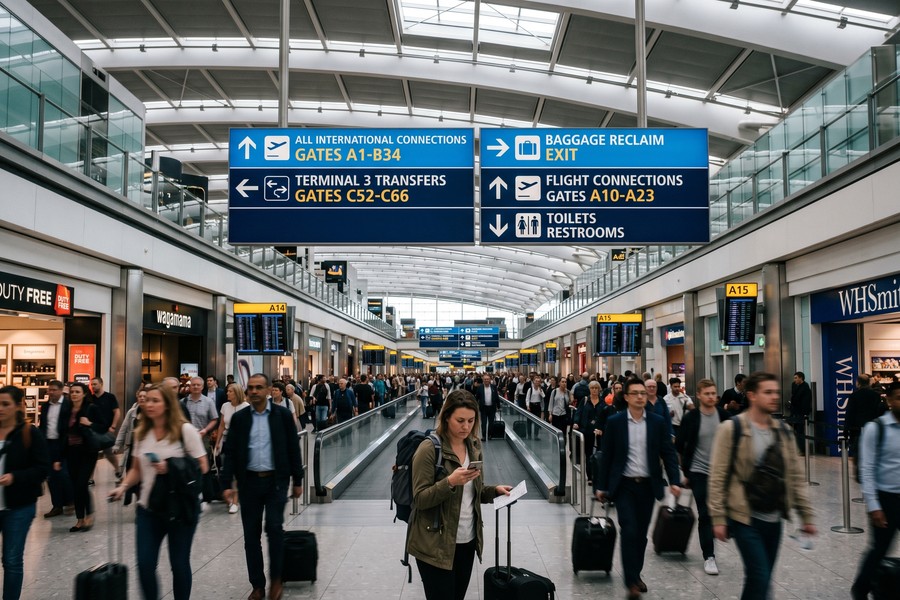
When self-connecting, the single most important safety buffer is layover time. A minimum of 3 hours for domestic connections and 4–5 hours for international connections is the widely accepted guideline among experienced travelers and travel risk professionals.
How to Do This
Calculate your required buffer based on three factors: the on-time performance of your inbound airline, the airport’s complexity, and whether you need to re-clear customs or security. The U.S. Bureau of Transportation Statistics reports that approximately 20% of domestic flights experience measurable delays each month, meaning a 2-hour buffer still exposes you to significant risk.
For international arrivals into the U.S., factor in CBP (Customs and Border Protection) processing time. During peak hours at major hubs like JFK, LAX, or Miami International, customs queues alone can consume 60–90 minutes. International travelers should build in a minimum of 5 hours at any U.S. hub when tickets are separate.
When connecting between two different airports in the same city, such as flying into Paris CDG and departing from Paris Orly, allow at least 4–6 hours. Ground transfers between airports are unpredictable and entirely your responsibility. If you’re planning complex multi-city European travel on a tight schedule, consider reading our guide on slow travel strategies that reduce time pressure between destinations.
What to Watch Out For
Do not rely on airline apps showing a flight as “on time” until you are physically in the gate area. Delays are often announced less than 90 minutes before departure. Build buffers for reality, not for the best-case scenario.
| Connection Type | Minimum Recommended Buffer | Key Risk Factors |
|---|---|---|
| Domestic to Domestic (Same Airport) | 3 hours | Tarmac delays, gate changes, baggage claim time |
| International to Domestic (Same Airport) | 4–5 hours | CBP processing, immigration queues, baggage re-check |
| Domestic to International (Same Airport) | 3–4 hours | Security re-entry, terminal change, check-in cutoffs |
| Different Airports in Same City | 4–6 hours | Ground transfer time, traffic, taxi/transit costs |
| International to International (Same Airport) | 4–5 hours | Transit visa requirements, airside vs. landside routing |
Some countries require a transit visa even if you never leave the airport. The UK, Canada, and Australia all have specific transit visa rules that depend on your passport nationality. Check the official immigration authority website for your layover country before booking, or use IATA Travel Centre’s visa checker tool to verify requirements.
Step 4: What Travel Insurance Do I Need When Booking Flights on Separate Tickets?
Travel insurance is not optional here, it is the entire safety net that replaces the airline’s rebooking protection. Specifically, you need a policy that includes missed connection coverage and trip interruption benefits.
How to Do This
Look for policies that explicitly cover “self-connect” or “independent connection” scenarios. Standard travel insurance often excludes missed connections unless the booking was on a single itinerary. Providers like Allianz Travel Insurance, World Nomads, and AXA Assistance USA offer plans with missed connection riders that pay for rebooking costs, hotel accommodation, and meals during unexpected delays.
The minimum coverage you need is $500–$1,000 in missed connection benefits per segment. A rebooking fee on a transatlantic route can easily exceed $800 at the gate, making under-insured travelers extremely vulnerable. For a deeper overview of what travel policies actually cover in real-world scenarios, our guide on what travel insurance is and whether you need it is worth reading before you buy.
Self-connecting travelers in a missed connection situation are in a fundamentally different position than those on a single-ticket itinerary. The most common mistake is purchasing a basic cancellation-only policy and discovering too late that missed connections due to delays are excluded entirely. This is a documented pattern among insurers: cancellation coverage is cheap and widely sold, while missed connection riders require deliberate selection and cost more.
What to Watch Out For
Read the policy exclusions for “foreseeable delays.” Some insurers deny claims if a storm was forecast more than 72 hours in advance, arguing you had the opportunity to reschedule. Choose a policy that covers weather-related delays without a foreseeability exclusion when possible. Always buy insurance at the time of booking, not the day before travel, as pre-existing event exclusions will apply.
According to U.S. Travel Association data, the average cost of rebooking a disrupted transatlantic flight at the gate in 2024 was $612, more than the cost of most travel insurance policies for an entire trip.
Step 5: How Does Baggage Work When Flying on Two Different Tickets?
When you have two separate tickets, your checked baggage will NOT automatically transfer to your second flight. You must claim your bags after the first flight and re-check them for the second, which is one of the most time-consuming parts of self-connecting travel.
How to Do This
At your connection airport, proceed to baggage claim after your first flight, collect all checked bags, then go to the check-in counter or bag drop for your second airline. This process typically takes 30–60 minutes even under ideal circumstances, and it is a major reason why longer layover buffers are essential.
The simplest solution is to travel with carry-on luggage only. This eliminates the baggage re-check problem entirely and saves the checked bag fees charged by most budget carriers. Spirit Airlines charges up to $79 per checked bag on some routes, and Ryanair‘s fees can reach 40 EUR each way. Carry-on-only travel can therefore reduce your total cost significantly. For tips on keeping your overall travel spend lean, our article on strategies to save money on trips, flights, and hotels covers several complementary approaches.
What to Watch Out For
Even if both legs of your journey are operated by airlines within the same alliance (such as Star Alliance or Oneworld), separate tickets do not trigger interline baggage agreements. Alliance membership only applies to bags on the same booking reference. Do not assume your bags will flow through just because both airlines have a partnership.
If you must check a bag, photograph it before each check-in and keep the baggage receipt from both airlines in your email. If a bag is lost between separately booked legs, each airline will try to pass responsibility to the other, your photos and receipts are critical evidence for an insurance claim.
Step 6: What Happens If My First Flight Is Delayed and I Miss My Connection?
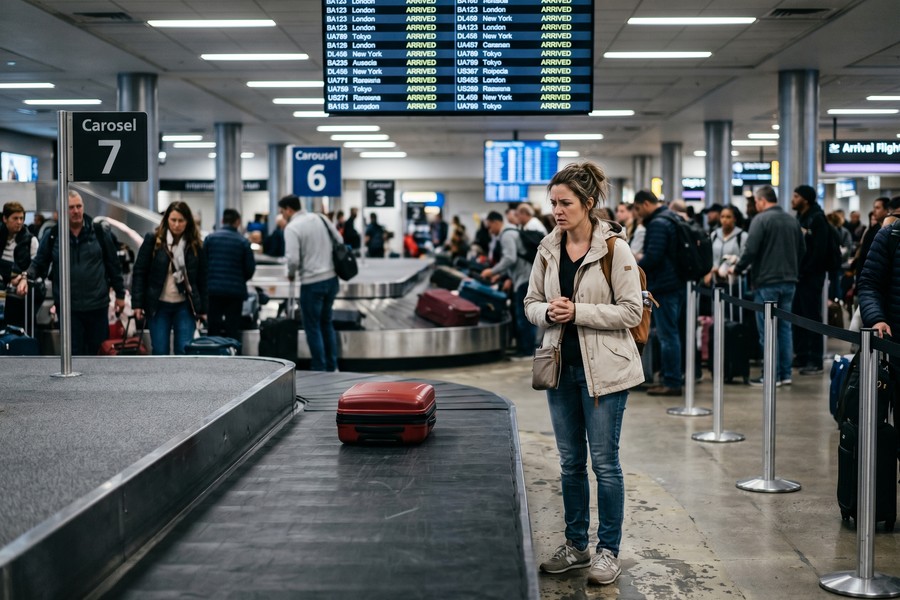
If your first flight is delayed and you miss your separately booked connection, the second airline owes you nothing. You will need to purchase a new ticket or use your travel insurance to cover rebooking, this is the core risk of self-connecting travel and must be planned for before you book.
How to Do This
As soon as you know a delay may cause you to miss your connection, take three actions simultaneously. First, contact the second airline directly (via app, website, or phone) and ask about same-day standby options or flexible rebooking fees before the flight departs. Second, call your travel insurance provider’s emergency line to begin the claims process, some insurers require you to notify them while the disruption is still in progress. Third, check Google Flights or Skyscanner for the next available flight on any carrier to your destination so you have an alternative in mind before you land.
If you used Kiwi.com to book your self-connected itinerary, their Kiwi Guarantee provides rebooking assistance up to $500 USD per disruption, but you must book through their platform and opt into the guarantee at checkout. This is one of the few automatic safety nets available for self-connect travel outside of personal travel insurance.
Experienced travelers who handle missed self-connections well share a common habit: they’ve already identified their Plan B before boarding the first flight. Know your next-flight option in advance. Trying to problem-solve from zero while standing at a baggage carousel, with a dead phone and a queue at the rebooking desk, is a poor position to be in.
What to Watch Out For
Do not wait until you land to act. Most airlines close their check-in counters 30–60 minutes before departure, and some budget carriers enforce this rule strictly even if a connecting flight delay is the cause. If you can reach the second airline while still airborne (via in-flight Wi-Fi), do so immediately.
When you ask the first airline to rebook you due to their delay, they are only obligated to get you to the destination on your ticket, not your final destination on a separate ticket. Never let an airline agent rebook you on a late flight that assumes your separately booked connection will wait. Insist on being routed directly to your final destination on their own metal if they caused the delay.
Travelers who frequently use this strategy often find it useful to pair the approach with a strong travel rewards credit card that includes trip delay insurance and rebooking assistance. Our roundup of the best travel credit cards for frequent flyers in 2026 identifies cards that include built-in trip protection, a useful complement to standalone travel insurance when booking flights separately. Maximizing your points for redemption can also offset the occasional extra rebooking cost; our guide on how to use travel reward points for maximum value in 2026 covers that strategy in detail.
Frequently Asked Questions
Is it safe to book connecting flights on separate tickets, or is it too risky?
Safe enough, when you allow generous layover buffers and carry missed connection travel insurance. The risk is not the strategy itself but the failure to plan for delays. Roughly 20% of U.S. domestic flights experience delays monthly according to the Bureau of Transportation Statistics, so buffer time and insurance coverage are non-negotiable.
How much money can I actually save by booking flights on separate tickets?
Savings vary by route and travel dates, but travelers typically save between $200 and $600 per round trip versus a single-itinerary ticket. Routes that include a low-cost carrier leg, such as a budget European airline as part of a transatlantic journey, tend to produce the highest savings. Compare the combined separate-ticket price against the best bundled price using a tool like Google Flights or Skyscanner before committing.
Can I check a bag through to my final destination when I have two separate tickets?
No, checked baggage does not transfer automatically between separate tickets. You must collect your bags at the connection airport and re-check them with the second airline. This process takes 30–60 minutes minimum and is one of the main reasons you need a longer layover when traveling with checked luggage. Traveling carry-on only eliminates this problem entirely and saves on checked bag fees.
What happens if my first flight is cancelled when I have a separate ticket for the second leg?
The first airline must rebook you on their own services or provide a refund, but they have no obligation to protect your separate second ticket. You must rebook the second leg yourself. File a travel insurance claim immediately, as missed connection coverage will typically reimburse you for the cost of purchasing a new second-leg ticket, subject to your policy’s limit and terms.
Do I need to go through security again between separately booked flights at the same airport?
It depends on whether you can remain airside (past security) during the connection. If both flights depart from the same terminal and you have no checked bags to collect, you may be able to stay airside and skip re-screening. However, if you must collect bags and re-check them, you will almost certainly need to exit and re-enter the secure zone, adding 30–90 minutes to your transit time depending on queue lengths.
Should I use Kiwi.com or Google Flights when booking connecting flights separately?
Use both tools for different purposes. Google Flights is best for comparing individual segment prices and setting fare alerts. Kiwi.com is better for automatically building self-connected itineraries and offers the Kiwi Guarantee rebooking protection, a valuable safety net that covers up to $500 in rebooking costs when a Kiwi-booked connection is missed due to a delay. For maximum savings, price both platforms before buying.
Does travel insurance cover a missed connection when I booked flights separately?
Standard travel insurance often does NOT cover missed connections on separate tickets unless the policy specifically includes a “self-connect” or “independent connection” clause. Before purchasing, ask the insurer directly whether separately booked tickets are covered. Providers like World Nomads and Allianz Travel Insurance offer plans that include this coverage, but you must read the fine print carefully to confirm it applies to your specific situation.
Can I earn frequent flyer miles when booking connecting flights separately?
Yes, each ticket earns miles independently with the operating airline’s loyalty program or with a partner program linked to your credit card. However, you cannot pool the miles from both tickets toward a single upgrade or award redemption the way you can on a single-itinerary booking. If maximizing points is a priority alongside saving money on airfare, pairing this strategy with the right rewards card is highly effective.
Does EU Regulation EC 261/2004 protect me if I miss a self-connected flight in Europe?
No. EU Regulation EC 261/2004 covers delays and cancellations caused by the airline on the specific ticket you hold. If your first flight departs from an EU airport and is delayed, you may be entitled to compensation of up to 600 EUR for that leg, but that regulation provides zero protection for a missed separately purchased second ticket. The two claims are entirely independent of each other.
What is the biggest mistake people make when booking connecting flights separately?
Booking insufficient layover time. Specifically, choosing a 60–90 minute connection because it looks manageable on paper. Without the airline’s protection, a 90-minute buffer leaves almost no room for a minor delay, slow baggage claim, or a long security line. Experienced self-connecting travelers treat 3 hours as the absolute minimum for domestic connections and 4–5 hours for international segments, and push those numbers higher for high-risk airports like Chicago O’Hare or Denver International in winter months.
Are there any routes where self-connecting is especially risky and I should avoid it?
Routes with high weather-related disruption risk, such as winter travel through Chicago O’Hare, Denver International, or any Northeast U.S. hub, carry significantly higher self-connection risk due to frequent cascading delays. Routes that require crossing between two separate airports in the same city (like New York JFK to New York LaGuardia) are high-risk because ground transfer time is entirely unpredictable. These routes are not impossible to self-connect, but they demand longer buffers and stronger insurance coverage.






