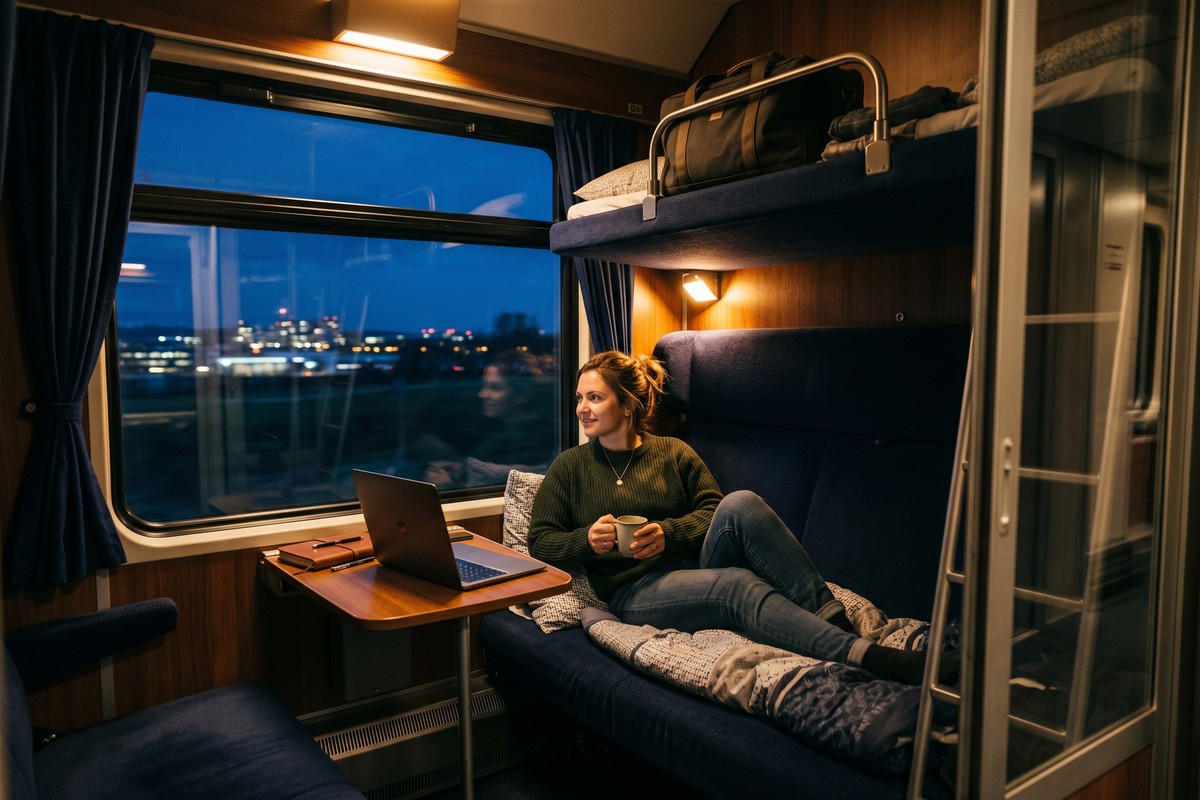
Updated July 2026
Fact-checked by the ZeroinDaily editorial team
Picture this: it’s 6 a.m., you’re bleary-eyed in a foreign city, already $180 down from last night’s hotel, dragged out of bed by a 4 a.m. alarm, and now staring at a $40 taxi before you’ve had a single coffee. Sound familiar? This is the hidden cost of flying between major destinations, and millions of long-haul travelers just… pay it. Without question. Night train travel savings flip that equation entirely: one ticket covers both transportation and accommodation, often for less than either would cost on its own. According to CarbonClick’s travel analysis, night train passengers typically save over $100 per trip on accommodation alone because the berth replaces a hotel night.
“Sleeping while rolling down the tracks saves time and money: For every night you spend on the train, you gain a day for sightseeing and avoid the cost of a hotel.”
The numbers genuinely surprised me when I first looked at them. According to Statista’s European rail transport data, overnight train ridership has surged by over 30% since 2019 as budget airlines keep piling on hidden fees and hotel rates in major European cities average $150–$220 per night. The International Union of Railways (UIC) reported in 2023 that 17 new overnight rail routes launched across Europe alone, and bookings are outpacing available berths on peak routes by up to 400%. Meanwhile, the average domestic flight in the U.S. now costs $382 before fees, baggage, and transfers.
This guide breaks down exactly how night train travel saves money and time for long-haul travelers. Route-by-route cost comparisons, booking strategies, a breakdown of sleeper classes, a step-by-step action plan, it’s all here, so you can start reclaiming your budget and your sleep schedule on your very next trip.
Key Takeaways
- A sleeper berth on popular European overnight routes averages $60–$120 per person, replacing both a $150+ hotel night and a $80–$200 flight in a single fare.
- Night train passengers save an average of 2.5–4 hours of productive daytime compared to equivalent fly-and-transfer itineraries, according to 2023 European rail studies.
- Carbon emissions from overnight trains are 6–10 times lower per passenger-kilometer than short-haul flights, making rail the lowest-carbon long-haul option available today.
- Booking 90 days in advance on routes like Vienna–Paris or Amsterdam–Vienna can cut sleeper ticket prices by up to 55% compared to same-week purchases.
- Travelers using multi-country rail passes (e.g., Interrail Global Pass) report average trip savings of $380–$620 over equivalent flight-plus-hotel combinations on 7-day itineraries.
- The U.S. Amtrak overnight network covers 46 states, with sleeper fares starting at $99 one-way on corridors like Chicago–New Orleans, including all meals served in the dining car.
In This Guide
- What Is a Night Train and How Does It Work?
- What’s the Real Cost Difference?
- Best European Overnight Routes for Your Budget
- Amtrak’s Overnight Network in the U.S.
- Understanding Sleeper Classes and Their Value
- Do Night Trains Really Save Time?
- How to Book for Maximum Savings
- Rail Passes vs. Point-to-Point: Which Saves More?
- Are Night Trains Better for the Planet and Your Sleep?
- Common Challenges and How to Overcome Them
What Is a Night Train and How Does It Work?
A night train is a long-distance passenger rail service that departs in the evening, typically between 7 p.m. and midnight, and arrives at its destination the following morning. Unlike day trains, overnight services are specifically built around sleeping, with converted carriages offering reclining seats, couchettes, or private sleeper compartments.
Overnight trains run on standard rail infrastructure, sharing tracks with freight and day trains. Journey times are deliberately slower than high-speed rail. That’s actually the point, cover maximum distance while passengers sleep undisturbed through the night.
Types of Overnight Rail Cars
Most night trains offer three types of accommodation: seat carriages with reclining chairs, couchette cars with fold-down bunk berths (usually 4 or 6 per compartment), and sleeper cars with 1–3 beds per private compartment. Each tier comes with a different price point and comfort level.
Most modern overnight services include bedding, a breakfast pack, power outlets, and sometimes a dining car. Austria’s Nightjet service, one of Europe’s premier overnight operators, goes further on select routes with mini-suites that have private bathrooms. Not bad for a train ticket.
A Brief History of the Modern Night Train Revival
Night trains dominated European and American long-haul travel for most of the 20th century, then fell apart between the 1990s and 2010s as budget airlines ate their lunch. Rising flight costs, environmental pressure, and post-pandemic shifts in travel behavior have sparked a genuine revival. The European Union’s EU Rail Action Plan committed €2 billion toward expanding overnight rail infrastructure through 2030. The sleeping giant, as it were, is waking back up.
And the trend is strong. Popular night train routes connecting 34 European cities have reached a 90% occupancy rate, according to CarbonClick’s 2025 data.
Austria’s national rail operator OeBB carried over 1.4 million passengers on its Nightjet overnight services in 2023, a 25% year-on-year increase, and has announced 12 new routes by 2026.
What’s the Real Cost Difference?
The most compelling argument for overnight rail is financial. To really understand the true cost comparison, you have to stack all expenses side by side, not just headline ticket prices. Most travelers dramatically underestimate what flying actually costs because they only price the airfare. Airport transfers, baggage fees, accommodation, those get forgotten until they hit your credit card statement.
Take the Vienna to Paris corridor. A budget airline ticket purchased two weeks out averages €89. Fine. But then add a checked bag (€30), an airport transfer from CDG into central Paris (€16 by RER, or €55 if you grab a taxi), a night in a central Paris hotel (€160 average in 2024), and a pre-flight overnight near Vienna Airport (€90). Suddenly you’re at €385–€434. Before breakfast.
The Night Train Alternative
That same Vienna–Paris route on Nightjet, booked two weeks out, runs approximately €109 in a couchette or €179 in a private sleeper. One fare. No hotel. No airport transfer. No 4 a.m. alarm. Total trip cost: €109–€179.
The savings range from €206 to €255 per person on a single journey. For a couple, that’s over €400 back in your travel budget, enough to fund two extra nights of accommodation somewhere else entirely.
On the Vienna–Paris overnight route, choosing a couchette berth over a budget flight plus hotel saves an average of €225 per person, or $243 at current exchange rates.
Let’s ground this in a real trip. A couple budgeting $4,000 for a two-week European tour wants to cover Vienna, Paris, and Amsterdam. If they fly and book mid-range hotels, the transport and lodging for those three legs would total about $1,800. Switching to overnight couchettes on Nightjet for all three moves drops that to roughly $600. The $1,200 they keep in their pocket covers meals, museum tickets, and maybe a splurge dinner or two.
Hidden Costs That Vanish with Night Trains
Beyond the obvious hotel substitution, night train travelers eliminate a whole cluster of smaller costs that add up fast. No baggage fees, most overnight services allow two large bags and a carry-on at no charge. No airport parking. No €18 airport sandwich eaten under fluorescent lighting at 5:45 a.m. No ride-share surge pricing in the dark.
For remote workers, there’s another angle worth considering. The overnight journey eliminates a lost working day. You depart after dinner, arrive ready to work, not recovering from a brutal early check-in at a budget airport hotel. If you’re already thinking about strategies to save money on trips, flights, and hotels, honestly, the night train formula is one of the most powerful tools you’ve got.
| Expense Category | Fly + Hotel (Vienna–Paris) | Night Train (Vienna–Paris) |
|---|---|---|
| Ticket / Airfare | €89 (budget airline) | €109–€179 (couchette/sleeper) |
| Baggage Fees | €30 (1 checked bag) | €0 |
| Airport Transfer | €32–€110 (both ends) | €0 (city-center to city-center) |
| Overnight Hotel | €160 (central Paris avg.) | €0 (included in ticket) |
| Pre-flight Hotel | €90 (near Vienna Airport) | €0 |
| Total | €401–€479 | €109–€179 |
Best European Overnight Routes for Your Budget
Europe is where night train travel savings really shine. The overnight rail network has expanded rapidly since 2020, and the continent’s geography is almost perfectly designed for it, densely packed cities sitting 6–12 train hours apart. Depart at 9 p.m., arrive at 8 a.m. That’s a full night’s sleep covering the right distance. It works almost suspiciously well.
The three major operators are Austria’s Nightjet (OeBB), Sweden’s SJ Night Train, and France’s Intercités de Nuit, each connecting dozens of city pairs with varying comfort levels and price structures.
Top 10 Best-Value Overnight Routes in Europe
| Route | Operator | Lowest Couchette Fare | Equivalent Flight + Hotel |
|---|---|---|---|
| Vienna–Paris | Nightjet | €109 | €380–€440 |
| Amsterdam–Vienna | Nightjet | €99 | €320–€400 |
| Brussels–Vienna | Nightjet | €89 | €290–€360 |
| Stockholm–Hamburg | SJ Night Train | SEK 599 (~€53) | €240–€310 |
| Paris–Nice | Intercités de Nuit | €35 | €180–€260 |
| Zurich–Barcelona | Nightjet / RENFE | €129 | €350–€420 |
| Prague–Brussels | Nightjet (via Vienna) | €95 | €310–€390 |
The Paris–Nice route deserves a special mention. €35 for a couchette. That’s cheaper than most sit-down dinners in Paris, and it replaces a €100+ flight, two airport transfers, and a Nice hotel night averaging €140. A potential saving of over €250 on a single leg. For a trip that’s already stretching your budget, that kind of number changes everything.
The European Night Train map is set to grow by 65% by 2030 under the EU’s Green Deal, with new direct routes planned between Berlin–Barcelona, London–Amsterdam (post-Brexit variant), and Rome–Madrid.
The New Nightjet Network Expansion
OeBB launched a new Berlin–Paris overnight service in December 2023, under 14 hours, departing Berlin at 10:38 p.m. and pulling into Paris at 8:00 a.m. Couchette fares start at €79. That directly undercuts the flight alternative (typically €110–€160 without extras) while wiping out hotel costs entirely. It’s a genuinely impressive value proposition.
For budget travelers building multi-city European itineraries, these routes make the whole continent feel dramatically more accessible. Check out our guide to the best cities in Europe for a budget solo trip to pair with your overnight rail planning.
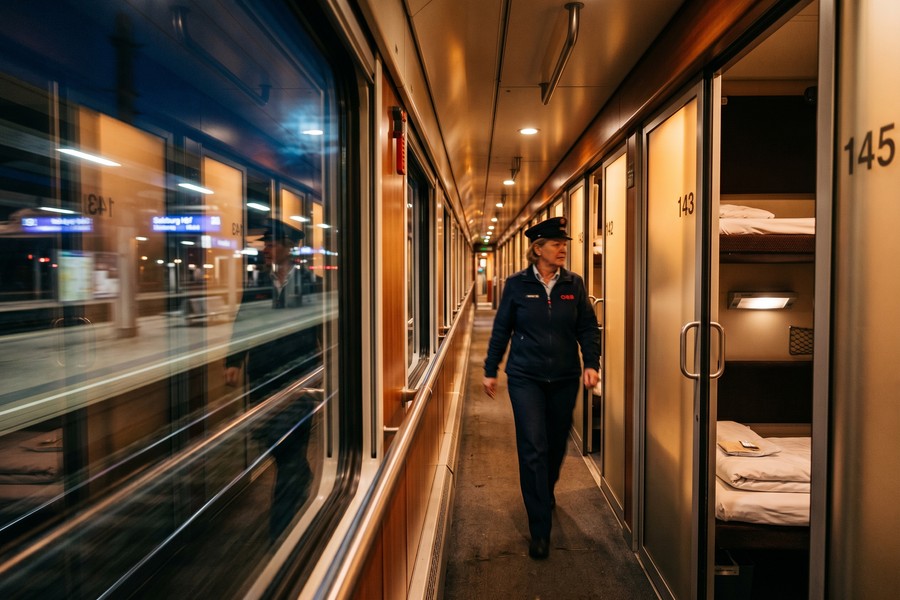
Amtrak’s Overnight Network in the U.S.
The United States has its own overnight rail network through Amtrak, though it covers different geography and carries a distinctly different travel culture than European services. These routes are genuinely epic in scale. The California Zephyr traverses 2,438 miles from Chicago to San Francisco through the Rocky Mountains. The Sunset Limited cuts across the Deep South and Sonoran Desert, connecting New Orleans to Los Angeles. These aren’t just budget travel hacks, they’re experiences in their own right.
Here’s a detail that consistently catches people off guard: Amtrak’s sleeper fares include all meals in the dining car. That’s real, sit-down food. A roomette on the City of New Orleans (Chicago to New Orleans) starts at $129 per person, and that covers dinner, breakfast, and all non-alcoholic beverages. Try finding that deal at an airport. Amtrak’s sleeper car fares, which include meals, consistently offer value over flights plus hotels on long-haul routes.
Amtrak Overnight Routes: Value by Corridor
| Route | Distance | Roomette Fare (from) | Flight + Hotel Equivalent |
|---|---|---|---|
| Chicago–New Orleans | 924 miles | $129 (incl. meals) | $280–$380 |
| New York–Miami | 1,389 miles | $149 | $310–$450 |
| Chicago–Los Angeles | 2,265 miles | $199 | $380–$520 |
| Seattle–Los Angeles | 1,389 miles | $159 | $290–$400 |
| New York–New Orleans | 1,377 miles | $169 | $320–$470 |
The dining car inclusion on Amtrak sleepers is persistently underrated. On the Chicago–New Orleans route, a full dinner, wine, and breakfast would run $60–$80 at any decent restaurant. That’s folded into your $129 roomette fare. Stack that against airport food during a layover, and the savings compound quickly. The math just keeps getting more lopsided in the train’s favor.
Coach Seats: The Ultra-Budget Option
For the truly budget-conscious traveler, Amtrak coach seats on overnight routes might be the cheapest long-distance overnight travel option in the country. Full stop. Coach seats on the Capitol Limited (Chicago–Washington D.C.) start at $49. They don’t fully recline, but they’re significantly larger than airplane coach, footrests, wide armrests, actual legroom.
You save the hotel cost but sacrifice comfort. That calculus shifts considerably if you’re a light sleeper or traveling with young kids, in those situations, a roomette’s privacy and flat beds are absolutely worth the upgrade.
Understanding Sleeper Classes and Their Value
Understanding sleeper class tiers is essential for getting the most out of night train travel savings. Each level offers a different balance of privacy, comfort, and cost, and picking the wrong one means either overpaying for amenities you won’t use, or under-budgeting for a genuinely miserable night. Neither is a great start to a trip.
Couchette (Shared Compartment)
A couchette is the most affordable sleeper option on European overnight trains. Compartments typically hold 4–6 passengers with fold-down bunk beds, and bedding, a pillow and blanket, is usually included. Privacy is limited. You’re sharing a small space with strangers. But for solo budget travelers who don’t mind that, couchettes represent the best pure cost-per-kilometer value in European travel.
Couchette fares on Nightjet routes start from €29 when booked well in advance. Twenty-nine euros. For a bed and a city-to-city journey. It’s hard to argue with that.
Private Sleeper Compartment
A private sleeper compartment, called a “Schlafwagen” on German-speaking routes, offers 1–3 berths in a lockable private room. Most include a fold-down sink, individual reading lights, and more substantial bedding. Some Nightjet deluxe suites go further with a private shower and toilet.
Private sleeper fares run €99–€249 depending on the route and booking window. Now, here’s a detail worth knowing: two people sharing a 2-berth compartment at €149 each pay just €74.50 per person. That beats virtually any equivalent hotel room at that price point, and you’re moving between cities at the same time.
If you’re traveling as a couple on a European overnight train, book a 2-berth private compartment rather than two separate couchette berths. You’ll often pay similar total fares but gain complete privacy, a lockable door, and a much higher-quality sleep, all critical for arriving refreshed.
Seat Cars: The Low-Cost Entry Point
Most overnight trains also offer standard seat carriages at the lowest price tier. Seats recline partially but aren’t designed for flat sleeping. Viable for journeys under 6 hours, or for travelers who genuinely can sleep sitting up, you know who you are.
Seat fares on Nightjet typically start around €19–€29. Cheaper than a budget hostel dorm in most major European cities. For ultra-tight budgets, this still eliminates the hotel cost, even if you won’t exactly wake up refreshed.
Do Night Trains Really Save Time?
Look, night train travel savings aren’t purely financial. The time economy of overnight rail versus flying is one of the most compelling arguments for trains, and consistently one of the most overlooked. When you account for the full door-to-door travel day, flying is rarely as fast as it appears on a booking screen.
A typical short-haul European flight requires arriving at the airport 1.5–2 hours before departure, then a 15–45 minute flight, then 30–45 minutes of passport control and baggage claim, then 30–60 minutes transferring to the city center. Total time consumed: 4–6 hours, all burning through your waking day.
The Door-to-Door Comparison
The Vienna to Brussels route makes this painfully clear. A morning flight departs at 7:30 a.m., requiring a 5:30 a.m. airport arrival. Travel from Vienna city center to the airport takes 40 minutes, so your morning starts at 4:50 a.m. After the 2-hour flight and Brussels transfer, you reach your hotel around 11:30 a.m., 6.5 hours of your day, gone.
The overnight Nightjet departs Vienna at 10:00 p.m. and arrives in Brussels at 9:08 a.m. Zero daytime hours consumed in transit. You arrive rested. Net time advantage of the train: approximately 5 full waking hours returned to work or exploration. That’s not a marginal gain, that’s half a day.
Overnight trains aren’t for everyone. If you’re a light sleeper who needs absolute silence and darkness, the rhythmic rail noise and occasional jolts can still disrupt sleep, even in a private compartment. Similarly, trips under five hours might not justify the sleeper premium over a day train plus an affordable hotel in the same city.
A 2022 study by the European Parliamentary Research Service found that when door-to-door travel time is measured, overnight trains are competitive with or faster than flying for journeys of 6–14 hours on 78% of major European city pairs.
The Productivity Angle
For remote workers and business travelers, the overnight train offers something genuinely unusual: it functions as both accommodation and transit simultaneously, freeing up an entire working day. If your daily billing rate is $300, reclaiming that day has a quantifiable monetary value that goes well beyond the hotel saving.
Overnight trains also depart from and arrive at city-center stations, Vienna Hauptbahnhof, Paris Gare de l’Est, Brussels Midi, dropping you directly into the heart of your destination without any additional transfer. This city-center-to-city-center advantage compounds across multi-stop itineraries. For travelers drawn to slow travel strategies, the overnight train aligns perfectly with moving deliberately and efficiently.
How to Book for Maximum Savings
The difference between paying €29 and €179 for the exact same Nightjet couchette often comes down entirely to when and how you book. That’s it. Night train travel savings are amplified dramatically by smart booking behavior, and understanding how the pricing mechanics work is half the battle.
The Booking Window: When to Buy
European overnight rail tickets typically go on sale 180 days in advance. The cheapest “Sparschiene” or “Early Bird” fares drop at the 180-day mark and again at 90 days out, in limited allocations. These promotional fares can be 50–60% cheaper than the walk-up price.
On Nightjet routes, booking 90 days out versus 14 days out typically saves €60–€100 per person on a couchette. For a family of four, that’s €240–€400 in savings, enough to fund several additional nights of accommodation. To keep track of these savings across your overall budget, a tool like one of the best budgeting apps for 2026 can genuinely help you plan your travel fund without losing the thread.
Rail Europe‘s booking platform allows advance reservations up to 180 days before departure on most European overnight routes, and early-bird couchette fares on popular routes like Amsterdam–Vienna sell out within 48 hours of release.
Booking Platforms and Tools
The primary booking channels for European night trains are the operator’s own websites (oebb.at for Nightjet, sj.se for SJ Night Train), Rail Europe as an aggregator for multi-country journeys, and Trainline. Each has different fee structures, Rail Europe charges a €3–€5 booking fee but simplifies multi-operator itineraries considerably, which is often worth it.
For some rail journeys, bundling your train ticket with a hotel can save an average of €40, according to Eurostar’s package deals (2025). That extra padding might let you upgrade to a private sleeper without feeling the pinch.
For U.S. travelers, Amtrak’s own site is still the best source. Amtrak’s “Rail Sale” promotions, released most Tuesdays, offer 25–50% discounts on sleeper fares for travel 10–45 days out. Sign up for email alerts. Seriously, just do it.
Avoid booking overnight train tickets through third-party resellers that are not Rail Europe, Trainline, or direct operator sites. Some resellers add markups of 20–40% and may not issue the correct ticket format for onboard validation, leading to fines or denied boarding.
Using Travel Credit Cards to Further Reduce Costs
Many premium travel credit cards include rail travel in their “travel purchase” categories, earning 2–3x points per dollar spent. On $400 worth of Amtrak sleeper tickets, that’s 800–1,200 bonus points redeemable for future travel. If you’re squeezing every dollar, check out the best travel credit cards for frequent flyers in 2026 to pair with your overnight rail strategy.
Rail Passes vs. Point-to-Point: Which Saves More?
For multi-destination travelers, whether to buy a rail pass or individual point-to-point tickets can meaningfully swing your total trip cost. Honestly, the answer isn’t always obvious, it depends on your itinerary density, your flexibility needs, and how far ahead you’re booking.
Interrail and Eurail Passes
The Interrail Global Pass (for European residents) and Eurail Global Pass (for non-European visitors) cover trains in 33 countries. A 7-day flexible Eurail Global Pass runs approximately €305 for adults. On a 7-day itinerary with three overnight journeys, you’d otherwise spend approximately €207–€357 in point-to-point couchette fares, which means passes only really make financial sense for dense, multi-country itineraries.
One thing that trips people up: pass holders still pay a mandatory reservation fee on overnight trains (typically €6–€12 for couchettes, €9–€29 for sleeper compartments). That gets overlooked constantly in pass calculations and can quietly add €50–€100 to a week of overnight travel if multiple reservations are needed.
When Point-to-Point Wins
If your trip involves two or three specific overnight journeys on pre-planned dates, point-to-point early-bird tickets almost always beat the pass. A Vienna–Paris couchette booked 90 days out at €79, plus an Amsterdam–Vienna at €89, totals €168, significantly cheaper than a Global Pass at €305 plus reservation fees.
Point-to-point tickets also lock in specific berths and compartments. Pass holders, by contrast, sometimes find sleeper reservations fully booked in peak season, leaving them stuck in a seat car despite holding an expensive pass. Not a great outcome after all that planning.
“The common mistake travelers make with rail passes is assuming the pass covers everything. The overnight train reservation system runs separately, and on peak-season routes like Vienna–Paris in July, those reservation slots sell out months in advance regardless of what type of ticket you hold.”
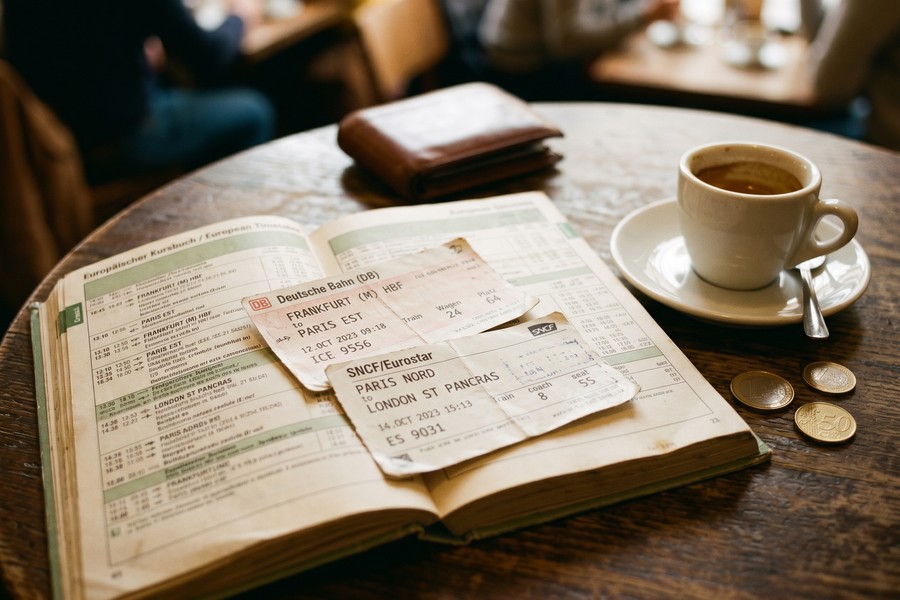
Are Night Trains Better for the Planet and Your Sleep?
The financial case for overnight rail stands on its own. But the broader benefits, environmental impact, sleep quality, travel stress, add real value that never shows up on a booking screen.
Carbon Footprint: The Numbers Are Stark
According to data from the European Environment Agency, rail travel produces approximately 14 grams of CO2 per passenger-kilometer. Short-haul aviation produces 255 grams per passenger-kilometer, roughly 18 times more. On a Vienna–Paris journey of approximately 1,200 km, flying generates around 306 kg of CO2 per passenger. The overnight train generates 16.8 kg.
A 2023 study commissioned by the German Federal Ministry for Digital and Transport, cited by Back-on-Track, found that night trains produce 28 times less greenhouse gases than airplanes on a well-to-wheel basis. That number captures the full energy chain, not just the tailpipe.
That’s not a marginal difference. On a Vienna–Paris flight you’re generating roughly the same CO2 as leaving a 100-watt lightbulb running for three years. The overnight train equivalent is barely a footnote. For environmentally conscious travelers, choosing 10 overnight train journeys over equivalent flights in a year reduces your annual transport carbon footprint by approximately 2.9 tonnes of CO2 per year.
Beyond carbon, night trains slash noise, local air pollution, and land use. Trains move through existing corridors while airports demand vast perimeters. It’s a systemic win.
Sleep Quality and Arrival Wellness
Sleeping horizontally, even in a narrow couchette bunk, shifts your body into a restorative cycle that air cabins can’t match. Most overnight trains limit in-cabin announcements; once the conductor punches your ticket, the corridor grows quiet. No seatbelt sign, no drink cart rattling, no engine whine that throbs for hours. You wake with the landscape already changed, not bleary from semi-conscious attempt to curl up in 31 inches of pitch.
Arrival wellness matters for the rest of your itinerary. A bad airport night can cascade into a foggy first day, wasted hours, and the kind of fog that dulls museums and conversations. A decent bunk on a train leaves you at the station, often with a complimentary coffee and croissant, ready to step into the city.
Common Challenges and How to Overcome Them
Night train travel has real tradeoffs. Knowing them in advance lets you tip the balance toward comfort.
- Noise and motion. Earplugs and a sleep mask are essentials. A white-noise app on your phone can mask rhythmic clacking. If you’re sensitive, book a top-tier sleeper compartment, the suspension is softer there.
- Shared facilities. Couchettes mean sharing a sink and bathroom, and the toilet may be a squeeze. A quick-dry towel, slip-on shoes, and a small toiletry kit make early-morning routines smoother.
- Limited booking windows for passes. As noted, pass holders can’t always secure a berth. Plan your overnight legs first when building an interrail itinerary, and reserve the moment 180-day windows open.
- Variable dining. Dining cars are improving, but not every route has one. Pack a solid meal, especially on east-west routes where the car might be detached at midnight. The food you bring is your safety net.
- Solo female travelers’ comfort. On most European night trains, women can request a female-only couchette compartment when booking. Nightjet and SJ offer this option on all routes; just tick the preference box.
- Punctuality anxiety. Overnight trains sometimes run late, but the schedule buffers your arrival. A 30-minute delay at 7 a.m. costs you less than a morning flight cancellation. Check the operator’s live-tracking app before bed.
- Customs on non-Schengen routes. Trains crossing borders that aren’t in the Schengen zone may have onboard passport checks at odd hours. Keep documents handy and don’t lock your compartment door until the check is done.
One more thing: if you have a chronic back condition or need absolute stillness to sleep, a night train couchette might not be for you. Even the best sleeper compartments can’t eliminate the gentle sway of the tracks, and for some people, that makes restful sleep impossible.
Frequently Asked Questions
How do night trains save time compared to flights?
A night train departs in the evening and arrives in the morning, converting travel time into sleep time. Instead of losing 4–6 daytime hours to flying, you gain a full day at your destination. The time saved can be invested in work or exploration.
Are night trains safe for solo travelers?
Yes, with basic precautions. Lockable compartments, staff patrols, and female-only couchettes add layers of security. The communal aspect of shared berths often creates a self-policing environment among passengers.
Can night trains really replace a hotel room?
Absolutely. A sleeper berth or private compartment provides a flat bed and bedding, covering the accommodation you’d otherwise pay for at a separate hotel. Many trains also include breakfast, which replaces another small expense.
How far in advance should I book to get the best fare?
Target 90–180 days before travel. The cheapest promos release at 180 days and again at 90 days in limited batches. Last-minute bookings often cost 50–60% more.
Do I need a rail pass or point-to-point tickets for multiple trips?
For two or three planned overnight journeys, point-to-point early-bird tickets usually win. Passes shine on dense, multi-country itineraries with over five travel days, but you still pay a reservation fee on night trains.
What amenities do night trains offer compared to budget hotels?
Modern sleeper compartments include reading lights, outlets, sinks, and sometimes private showers. Couchettes have basic bedding. While you won’t get a sprawling lobby, you do get city-center drop-off and often a dining car with fresh meals.
Which European night train routes offer the biggest savings?
Vienna–Paris, Amsterdam–Vienna, and Paris–Nice consistently deliver savings of €200+ over equivalent fly-hotel combinations. The Paris–Nice couchette at €35 is exceptional, replacing a €140 hotel night and a €100 flight.
Are there night trains in the U.S.?
Yes. Amtrak’s long-distance network includes sleeper cars on routes like the California Zephyr and City of New Orleans. Fares start at $129 and include all meals, offering a distinct value over flights plus hotels on transcontinental corridors.
How much less polluting are night trains compared to airplanes?
Overnight trains generate roughly 28 times fewer greenhouse gas emissions than short-haul flights on a well-to-wheel basis, according to a 2023 German government study. On a per-passenger basis, rail’s carbon footprint is a fraction of aviation’s.
Can I work on a night train?
Most overnight trains have power outlets and fold-down tables. Wi-Fi is unreliable, so plan offline work or use a mobile hotspot. A private sleeper gives you a quiet, lockable office on rails.
Sources
- Statista, European Rail Transport Data
- European Commission, EU Rail Action Plan
- Back-on-Track / German Federal Ministry for Digital and Transport, 2023 Night Train Climate Study
- CarbonClick, Train Tourism Carbon Savings vs. Flights (2025)
- Eurostar, Train + Hotel Packages (2025)
- Rick Steves’ Europe, Night Train Travel Tips
- Amtrak, Sleeper Car Accommodations
- Rail Europe, Booking Platform
- Interrail, Global Pass Information
- Eurail, Global Pass Information
- Seat61.com, Independent Rail Travel Resource
- SJ, Swedish Railways (SJ Night Train)
Related reading: Alternatives to a Travel Pillow That Actually Work on Long Flights.






