Fact-checked by the ZeroinDaily editorial team
Your phone dies at 40% battery. Again. You’ve owned it for 18 months, and the battery that once lasted two days now barely survives a commute. This isn’t bad luck — it’s the fundamental chemistry of lithium-ion batteries degrading, right on schedule. The solid-state battery comparison happening in labs and factories right now promises to end this cycle permanently, and the stakes go far beyond your smartphone.
The global lithium-ion battery market hit $160 billion in 2023 according to the International Energy Agency, with EVs consuming over 60% of production. Yet these batteries catch fire, degrade after 500–1,000 charge cycles, and require complex thermal management systems that add weight and cost. The U.S. Department of Energy estimates that battery-related EV fires occur in roughly 25 out of every 100,000 vehicles annually — a small percentage, but one that has triggered recalls worth billions of dollars.
In this guide, you’ll get a data-driven breakdown of exactly how solid-state and lithium-ion batteries differ, what the real-world numbers look like today, which industries will be disrupted first, and what the timeline looks like for tech you can actually buy. No hype, no vague promises — just the information you need to understand where energy storage is heading and why it matters to your wallet and your tech.
Key Takeaways
- Solid-state batteries can theoretically deliver energy densities of 400–500 Wh/kg, versus 150–300 Wh/kg for current lithium-ion cells — a potential 2x improvement in range or runtime.
- The global solid-state battery market is projected to grow from $800 million in 2023 to over $8 billion by 2030, a compound annual growth rate of approximately 36%.
- Toyota has committed over $13.6 billion to solid-state battery development and aims to launch vehicles with the technology by 2027–2028.
- Lithium-ion batteries degrade to about 80% capacity after 500–1,000 cycles; solid-state prototypes have demonstrated stability beyond 1,000 cycles in lab conditions with less than 10% capacity loss.
- Manufacturing a solid-state battery currently costs 4–10x more per kWh than a lithium-ion equivalent, which is the primary barrier to mass-market adoption before 2030.
- Consumer electronics using solid-state batteries — including hearing aids and wearables — are already commercially available in 2024, with smartphones and EVs targeted for 2027–2030 rollout.
In This Guide
- What Is a Solid-State Battery?
- Solid-State Battery Comparison: The Core Chemistry Differences
- Energy Density and Real-World Range
- Safety and Thermal Stability
- Lifespan and Degradation Over Time
- Cost and Manufacturing Challenges
- Who Is Winning the Solid-State Race?
- Solid-State Battery Comparison by Industry
- When Can You Actually Buy One?
- Environmental Impact: Is Solid-State Actually Greener?
What Is a Solid-State Battery?
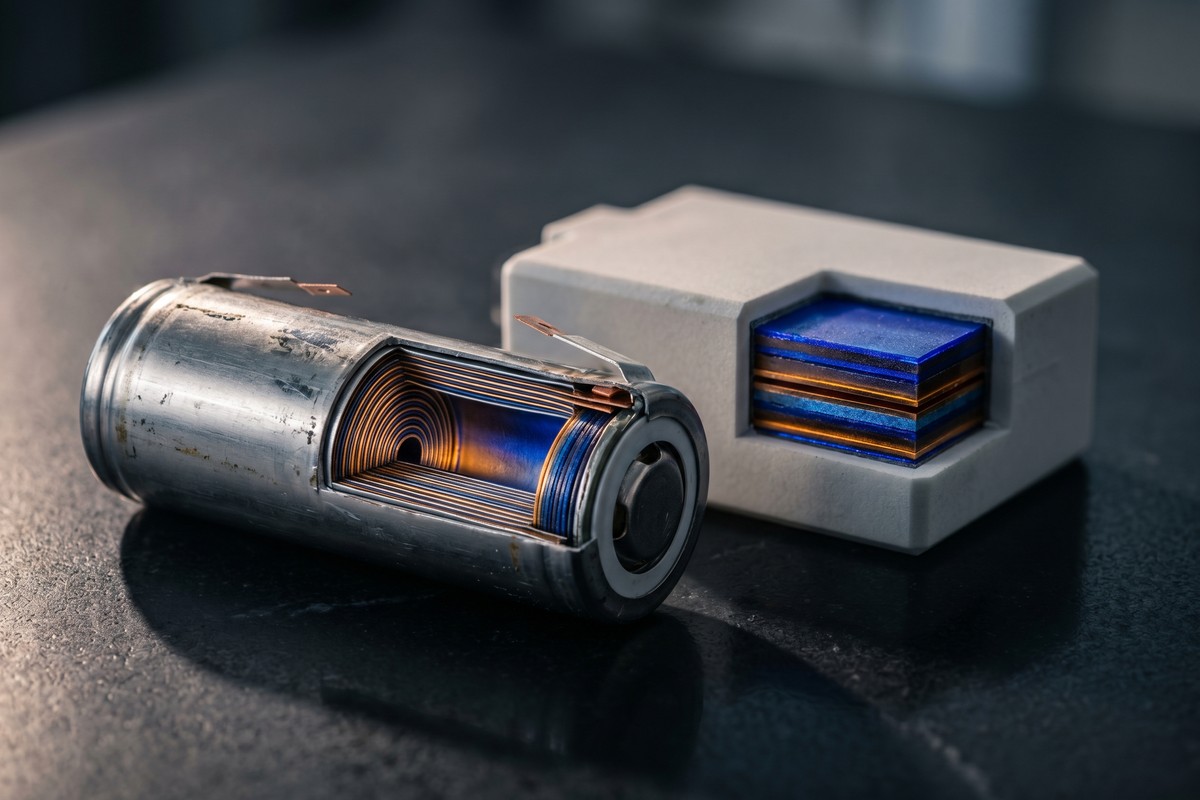
A solid-state battery replaces the liquid or gel electrolyte found in conventional lithium-ion cells with a solid material. That one change cascades into dramatic differences in safety, energy density, lifespan, and form factor. The concept isn’t new — researchers have been working on solid electrolytes since the 1960s — but manufacturing them at scale and at acceptable cost has remained elusive until recently.
The electrolyte in a battery serves as the medium through which lithium ions travel between the anode and cathode during charging and discharging. In lithium-ion batteries, this is a liquid or polymer gel mixed with lithium salt. In solid-state designs, it’s a ceramic, sulfide, or oxide material. Each electrolyte class has different conductivity profiles, stability windows, and manufacturing requirements.
Types of Solid Electrolytes
There are three main categories of solid electrolytes currently in development. Oxide-based electrolytes (like LLZO — lithium lanthanum zirconium oxide) are stable and safe but require high processing temperatures. Sulfide-based electrolytes offer higher ionic conductivity closer to liquid electrolytes but are sensitive to moisture and air. Polymer-based electrolytes are easier to manufacture but typically require elevated operating temperatures and offer lower conductivity.
Each approach has its own manufacturing hurdles and performance tradeoffs. Toyota and QuantumScape are betting on different sulfide and oxide approaches respectively, which explains why their commercialization timelines and target applications differ significantly.
Solid-state batteries have already been used in niche applications for decades. Thin-film solid-state cells power cardiac pacemakers and RFID chips — the challenge has always been scaling them up to smartphone or vehicle size at reasonable cost.
How It Differs From What’s in Your Phone Right Now
Your current smartphone almost certainly uses a lithium-ion or lithium-polymer (LiPo) cell. LiPo is a variation of lithium-ion that uses a semi-solid polymer gel instead of a purely liquid electrolyte — it’s not the same as true solid-state. The distinction matters because LiPo still carries many of the same thermal runaway risks as traditional lithium-ion cells.
True solid-state batteries eliminate the flammable liquid entirely, which changes the thermal risk profile completely. That single design difference unlocks a cascade of engineering possibilities that have automakers, phone manufacturers, and defense contractors spending billions to be first to market.
Solid-State Battery Comparison: The Core Chemistry Differences
A proper solid-state battery comparison has to start at the molecular level. In lithium-ion cells, lithium ions shuttle through a liquid electrolyte between a graphite anode and a metal oxide cathode. The liquid enables fast ion movement but creates instability at temperature extremes and during rapid charging. Over time, a layer called the solid electrolyte interphase (SEI) builds up on the anode, slowly degrading capacity.
Solid-state designs can use a lithium metal anode instead of graphite. Lithium metal holds roughly 10 times more lithium ions per unit weight than graphite. That single substitution is a major reason solid-state batteries can theoretically achieve far higher energy densities. However, lithium metal anodes in liquid-electrolyte batteries form dangerous needle-like structures called dendrites during charging — a problem that solid electrolytes largely suppress.
| Property | Lithium-Ion | Solid-State |
|---|---|---|
| Electrolyte | Liquid/gel (LiPF6 salt solution) | Solid ceramic, sulfide, or polymer |
| Anode Material | Graphite | Lithium metal (in most designs) |
| Cathode Material | NMC, LFP, NCA | NMC, LFP (same or compatible) |
| Dendrite Risk | High (causes short circuits) | Low to none |
| Flammability | High — liquid electrolyte is flammable | Very low — no flammable liquid |
| Operating Temperature Range | -20°C to 60°C (optimal) | -30°C to 100°C+ (varies by type) |
The Dendrite Problem — and Why Solid Electrolytes Help
Dendrites are the hidden enemy of lithium batteries. During fast charging, lithium ions deposit unevenly on the anode, forming microscopic metal spikes. These spikes can pierce the separator between anode and cathode, causing an internal short circuit. In liquid-electrolyte batteries, this can ignite the flammable electrolyte — the source of the dramatic battery fire videos you’ve seen on the news.
A solid electrolyte physically resists dendrite penetration far more effectively. The material’s rigidity means dendrites can’t easily punch through. This is why solid-state designs are considered inherently safer, and why Samsung, Apple, and every major automaker are investing heavily in the technology.
Lithium-ion battery thermal runaway events have triggered over $5 billion in product recalls since 2016, including the Samsung Galaxy Note 7 recall alone costing an estimated $5.3 billion in total losses.
Energy Density and Real-World Range
Energy density is the most critical metric in battery performance — it determines how much power you can store per unit of weight or volume. Today’s best lithium-ion cells in EVs achieve around 250–300 Wh/kg at the cell level. Solid-state cells in lab settings have demonstrated up to 500 Wh/kg, though commercially viable products are expected to land in the 350–450 Wh/kg range initially.
For an electric vehicle with a 75 kWh battery pack, doubling energy density means you could either cut the battery weight in half or double the range without adding weight. Both outcomes are transformative. A lighter vehicle is more efficient, cheaper to manufacture, and easier to handle.
What This Means for EV Range
Today’s best-in-class EVs — like the Tesla Model S Long Range — deliver around 405 miles on a single charge using optimized lithium-ion packs. With solid-state technology at scale, the same vehicle architecture could theoretically achieve 700–800 miles of range. More realistically, automakers would use the improved energy density to reduce battery size and cost while maintaining current range figures.
Toyota’s solid-state roadmap projects a 745-mile range EV using a bipolar solid-state battery. That number is based on laboratory cell performance and will likely be lower in real-world conditions, but even 550–600 real-world miles would eliminate range anxiety almost entirely for the vast majority of drivers.
| Battery Type | Energy Density (Wh/kg) | Equivalent EV Range | Charge Time (10-80%) |
|---|---|---|---|
| Current LFP (Li-Ion) | 150–200 | 250–300 miles | 25–40 min (DC fast charge) |
| Current NMC (Li-Ion) | 250–300 | 350–400 miles | 20–30 min (DC fast charge) |
| Near-Term Solid-State (2027–2029) | 350–400 | 450–550 miles (estimated) | 10–15 min (projected) |
| Long-Term Solid-State (2030+) | 400–500 | 600–750 miles (projected) | Under 10 min (projected) |
Fast Charging: The Solid-State Advantage
Lithium-ion batteries slow down charging as they heat up. The chemistry is sensitive — push too much current too fast, and you degrade the cell or risk thermal runaway. Most manufacturers limit fast charging aggressively to preserve battery life. Solid-state batteries, without flammable liquid electrolytes, can tolerate higher charge rates with less thermal management overhead.
QuantumScape’s published data shows their solid-state cells can charge to 80% in under 15 minutes without significant degradation. That approaches the time it takes to fill a gasoline tank and would fundamentally change the user experience of EV ownership.

Safety and Thermal Stability
Battery safety is not an abstract concern. The FAA recorded over 400 lithium battery incidents on aircraft between 2006 and 2023. Laptop and phone fires cause thousands of insurance claims annually. In the EV sector, the National Highway Traffic Safety Administration (NHTSA) has investigated dozens of fire-related incidents linked to battery thermal runaway.
The core safety problem with lithium-ion is thermal runaway — a self-reinforcing reaction where heat causes chemical breakdown, which produces more heat, which accelerates further breakdown. Once started, thermal runaway is nearly impossible to stop. It can turn a smartphone into a fire hazard or an EV battery pack into an uncontrollable blaze that burns for hours and cannot be extinguished with water.
Why Solid-State Is Fundamentally Safer
Removing the liquid electrolyte eliminates the primary fuel source for thermal runaway. Solid electrolytes are non-flammable. Even if a solid-state cell fails mechanically, the energy release is dramatically lower than in a liquid-electrolyte system. Independent tests on early solid-state prototypes have shown they can be punctured, crushed, or overcharged without catching fire.
This isn’t just a consumer convenience issue. Airlines could allow larger batteries in carry-on luggage. Automakers could dramatically simplify (and cheapen) battery thermal management systems, which currently add significant weight, cost, and complexity to EVs.
Some companies marketing “solid-state” batteries in 2024 are actually selling semi-solid or quasi-solid designs that still contain some liquid electrolyte. These products carry reduced (but not eliminated) thermal runaway risk. Always check the electrolyte specification before assuming a product has solid-state safety properties.
Cold Weather Performance
Lithium-ion batteries lose significant capacity in cold temperatures. Studies show a Tesla Model 3 can lose 25–40% of its range at -15°C. This happens because ion mobility in liquid electrolytes slows dramatically at low temperatures. Solid-state designs using certain sulfide electrolytes maintain higher ionic conductivity across a wider temperature range, potentially solving one of the most frustrating real-world limitations of current EVs.
For consumers in cold climates — Canada, northern Europe, the northern United States — this could be the single most compelling practical advantage of solid-state technology.
Lifespan and Degradation Over Time
Every lithium-ion battery degrades with each charge cycle. The graphite anode expands and contracts, the SEI layer thickens, and active lithium becomes permanently bound up in side reactions. After 500 full cycles, most consumer lithium-ion cells retain about 80% of their original capacity. After 1,000 cycles, many are below 70%. That’s why your three-year-old phone battery is a shadow of its original self.
Solid-state designs largely avoid the SEI growth problem. Lithium metal anodes don’t expand and contract the way graphite does. Lab results from companies like QuantumScape and Solid Power show cycle life exceeding 1,000 cycles with less than 10% capacity fade — a dramatic improvement over the current baseline.
What Longer Cycle Life Means for Your Wallet
An EV battery replacement today costs between $8,000 and $20,000 depending on the vehicle. If solid-state batteries deliver 2–3x the cycle life of lithium-ion, battery replacement could become a non-issue for many owners over a typical 10–15 year vehicle lifespan. That’s a real financial benefit worth thousands of dollars per vehicle.
For smartphones, longer cycle life means fewer forced upgrades driven by battery degradation. Technology improvements in general are reshaping business costs, and battery longevity is increasingly a factor in total cost of ownership calculations for fleets, hospitals, and logistics operators.
Apple’s “Optimized Battery Charging” feature exists specifically to slow lithium-ion degradation by preventing the battery from sitting at 100% charge for extended periods. Solid-state batteries would eliminate the need for this kind of software workaround.
Calendar Aging vs. Cycle Aging
Batteries don’t just degrade when you use them — they also degrade just sitting on a shelf. This is called calendar aging. The liquid electrolyte in lithium-ion cells continues to react with electrode materials even when the battery isn’t cycling. Solid electrolytes are significantly more chemically stable over time, meaning solid-state batteries should retain capacity longer even during storage — an important factor for emergency equipment, grid storage, and aerospace applications.
| Metric | Lithium-Ion (Current) | Solid-State (Projected) |
|---|---|---|
| Cycle Life (to 80% capacity) | 500–1,000 cycles | 1,000–5,000+ cycles (projected) |
| Calendar Life | 5–10 years (storage) | 15–20+ years (projected) |
| Capacity Loss at -15°C | 25–40% | 5–15% (projected) |
| Capacity at 1,000 Cycles | ~70–75% | ~90%+ (lab data) |
Cost and Manufacturing Challenges
Here’s where the excitement meets hard reality. Manufacturing solid-state batteries at scale is extraordinarily difficult. The solid electrolyte must be deposited in an extremely thin, uniform layer — often just a few microns thick — without cracks or voids. Any defect creates a short circuit. The entire process must happen in controlled environments, often at high temperatures or under inert gas atmospheres.
Current estimates put solid-state battery production costs at $400–$800 per kWh, compared to $110–$130 per kWh for lithium-ion in 2024. That gap is enormous. An EV with an 80 kWh pack would cost $32,000–$64,000 just for the battery at current solid-state costs — before any other vehicle components.
The Path to Cost Parity
Lithium-ion costs fell from over $1,000 per kWh in 2010 to under $130 today — a 90% reduction in roughly 14 years. Most analysts project solid-state costs following a similar curve once manufacturing scales. BloombergNEF estimates solid-state could reach $150–$200 per kWh by 2030 if key manufacturing breakthroughs occur on schedule. That’s still more expensive than lithium-ion, but within the range of premium acceptance.
The economics of battery technology connect directly to broader questions about how technology disrupts established cost structures — similar patterns have played out in blockchain technology reshaping financial infrastructure and solar panel manufacturing over the past decade.
If you’re buying an EV in 2024–2025, don’t wait for solid-state. Current lithium-ion EVs are excellent products with strong range and reliability. Solid-state at mass-market prices is realistically 5–7 years away. The opportunity cost of waiting is real.
Why Thin Films Are So Hard to Make
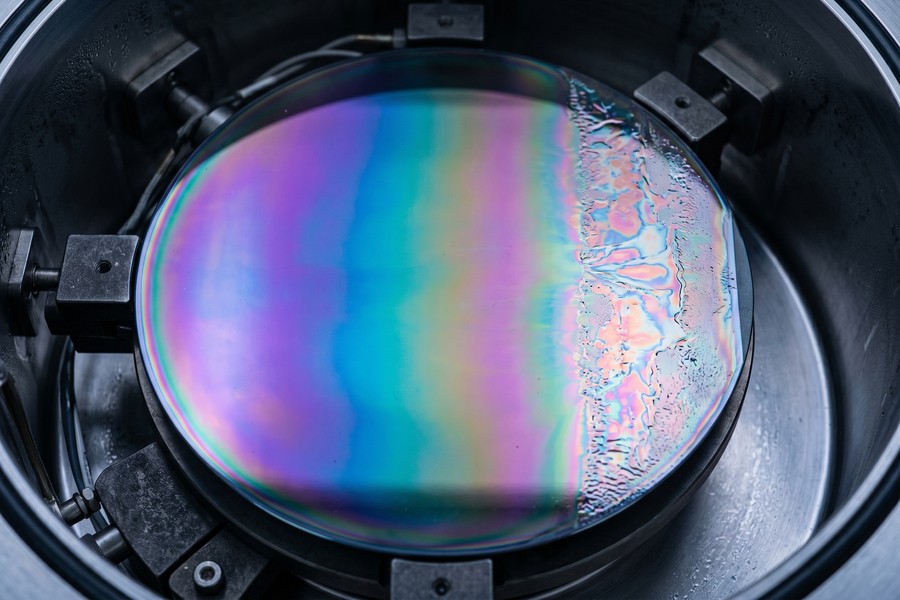
The critical challenge in solid-state manufacturing is depositing the electrolyte layer uniformly at nanometer or micron scale across a large electrode surface. Existing roll-to-roll manufacturing equipment — used efficiently for lithium-ion production — doesn’t directly translate to solid-state. New deposition tools, dry room requirements, and quality control systems add billions to factory build costs.
Toyota plans to spend $13.6 billion on battery development through 2030, much of it on manufacturing process innovation rather than pure chemistry. Samsung SDI, Panasonic, CATL, and QuantumScape are each making parallel bets on different manufacturing approaches — a signal that the industry has no consensus yet on the best production method.
Who Is Winning the Solid-State Race?
The solid-state battery race is genuinely competitive, with no single clear winner. Different companies are pursuing different chemistries, target applications, and timelines. Understanding who the key players are helps calibrate which claims to believe and which timelines to discount.
“The question isn’t whether solid-state batteries will work — they already do in the lab. The question is whether we can manufacture them at the scale and cost that the automotive industry demands. That’s a manufacturing problem, not a chemistry problem.”
Key Players and Their Timelines
| Company | Approach | Investment | Target Launch |
|---|---|---|---|
| Toyota | Sulfide-based, bipolar design | $13.6 billion (2022–2030) | 2027–2028 (EV) |
| QuantumScape (VW-backed) | Lithium-metal, ceramic separator | $1.5 billion raised | 2025 (pilot), 2028 (mass) |
| Solid Power (BMW/Ford-backed) | Sulfide-based | $130 million Series B (2021) | 2026 (pilot), 2030 (mass) |
| Samsung SDI | Silver-carbon composite anode | Undisclosed (billions estimated) | 2027 (EV pilot) |
| CATL | Semi-solid, transitioning to full solid | Part of $5 billion R&D budget | 2027 (condensed battery) |
The QuantumScape Controversy
QuantumScape went public via SPAC in 2020, briefly reaching a market cap of $50 billion on the promise of its solid-state technology. By 2023, the stock had fallen over 90% from its peak as commercialization delays mounted. This is a cautionary tale about hype cycles in deep-tech investing — but it doesn’t mean the technology doesn’t work. QuantumScape’s published technical data remains among the most credible in the industry.
The lesson isn’t that solid-state batteries are vaporware. It’s that the gap between laboratory success and automotive-scale manufacturing is measured in years and billions of dollars — not months.
Global investment in solid-state battery startups exceeded $3.5 billion between 2020 and 2023, according to Wood Mackenzie — more than the total raised by all solid-state companies in the preceding decade combined.
Solid-State Battery Comparison by Industry
A complete solid-state battery comparison requires looking at how the technology will disrupt different sectors at different speeds. Not every industry faces the same cost sensitivity or technical requirements. Some sectors will adopt solid-state batteries within five years. Others won’t see mass adoption until the 2030s or beyond.
The industries most likely to see early disruption are those where safety risk justifies premium pricing, or where energy density is so critical that customers will pay more per kWh. Defense, aerospace, medical devices, and high-end automotive will lead. Consumer electronics and grid storage will follow once costs come down.
Consumer Electronics
Solid-state batteries are already in commercial consumer products — but only at small scale. Murata and TDK both produce solid-state cells for hearing aids and smart cards. These are tiny cells (under 1 mAh) where the manufacturing challenges are manageable. Scaling to a 4,000 mAh smartphone cell is orders of magnitude more difficult.
Apple, Samsung, and other phone makers are reportedly targeting 2027–2029 for solid-state in flagship phones. The initial premium could add $100–$200 to device cost, but the benefits — faster charging, longer battery life, thinner form factors — would be immediately obvious to consumers. Just as digital banking has fundamentally changed how people interact with financial services, solid-state could fundamentally change how people interact with their devices.
Electric Vehicles
EVs represent the largest addressable market for solid-state batteries. A single EV battery pack contains 50–100 kWh of storage — compared to 0.01–0.05 kWh in a smartphone. The safety, energy density, and cycle life advantages of solid-state translate directly into tangible consumer benefits: longer range, faster charging, lower lifetime cost.
The challenge is that automakers need millions of cells per year, not thousands. Toyota’s 2027 target is ambitious. Most industry analysts expect limited production runs of solid-state EVs at premium price points before 2030, with broader availability in the $40,000–$60,000 vehicle segment by 2030–2032.
Grid Storage and Renewable Energy
Grid-scale battery storage is dominated by LFP lithium-ion today, largely because cost per kWh is the overriding factor — and LFP is the cheapest option. Solid-state batteries offer no compelling advantage for grid storage in the near term. Safety is less critical in large stationary installations with proper fire suppression. Energy density matters less when weight and space aren’t constrained.
Solid-state will likely enter grid storage last, after the technology matures and costs fall to within 20–30% of lithium-ion. That timeline is probably mid-2030s at the earliest.
“For grid storage, the dominant battery technology will be defined by cost per kilowatt-hour above all else. Solid-state won’t displace lithium iron phosphate in stationary applications until it can compete on price — and that’s at least a decade away.”
When Can You Actually Buy One?
The honest answer to “when can I buy a solid-state battery product?” depends on what you want to buy. For hearing aids and medical-grade wearables, you can buy one today. For smartphones, you’re probably looking at 2027–2029 for early adopter devices at premium prices. For electric vehicles, expect limited availability at $50,000+ price points from 2027–2029, with broader market availability from 2030 onward.
These timelines have been pushed back before. The solid-state EV was originally predicted to arrive by 2025 by several manufacturers who are now targeting 2028–2030. Treat all dates with appropriate skepticism while recognizing that meaningful progress is genuinely occurring in labs and pilot production lines right now.
How to Track Progress
The best signals to watch are not press releases — they’re supply agreements, manufacturing facility announcements, and regulatory submissions. When Toyota breaks ground on a dedicated solid-state cell factory, that’s a real milestone. When a company files a patent for a roll-to-roll solid electrolyte deposition process, that indicates manufacturing progress. These tangible steps matter more than announced timelines.
Following battery technology developments from sources like the U.S. Department of Energy’s Vehicle Technologies Office gives you unbiased technical progress updates without the hype cycle of investor relations communications.
The U.S. government’s “Battery500 Consortium,” led by Pacific Northwest National Laboratory, has a stated goal of developing lithium-metal batteries with 500 Wh/kg energy density — specifically to close the gap with solid-state projections using existing manufacturing infrastructure.
Environmental Impact: Is Solid-State Actually Greener?
Battery technology sits at the center of the clean energy transition — but manufacturing batteries has its own significant environmental footprint. Mining lithium, cobalt, nickel, and manganese creates habitat destruction, water pollution, and carbon emissions. The question for solid-state batteries is whether their improved performance translates into a better overall environmental profile.
On a lifecycle basis, the IEA estimates that an EV powered by average grid electricity already produces 50% fewer lifecycle carbon emissions than a comparable gasoline vehicle — even accounting for battery manufacturing. Solid-state batteries, with longer cycle lives and potentially higher efficiency, could improve this ratio further.
Materials and Mining Concerns
Solid-state batteries using lithium metal anodes require high-purity lithium — more so than graphite-anode lithium-ion cells. Some solid electrolyte formulations use cobalt (expensive and ethically fraught) or rare earth elements. Sulfide electrolytes use sulfur, which is abundant and cheap, but require processing under inert atmospheres, adding energy cost.
The good news is that longer battery lifespans mean fewer batteries need to be manufactured over time. A solid-state battery lasting 3x as long as a lithium-ion cell effectively reduces material throughput by 67% over a given period — a significant environmental benefit even if per-cell manufacturing is more energy-intensive. Just as businesses are finding smarter ways to manage resources, as explored in analyses of AI tools transforming business efficiency in 2026, solid-state technology represents a similar efficiency leap for energy storage.
Recycling and End-of-Life
Lithium-ion battery recycling is an established but imperfect industry. Companies like Redwood Materials are building large-scale recycling infrastructure. Solid-state batteries present different recycling challenges — the ceramic or sulfide electrolyte must be separated from electrode materials using processes that are still being developed.
Recycling technology will need to evolve in parallel with solid-state battery adoption. Policymakers in the EU have already mandated battery recycling content requirements, with targets rising to 16% for lithium and 85% for cobalt by 2031 under the EU Battery Regulation. These mandates will shape which electrolyte chemistries manufacturers choose, potentially favoring more recyclable oxide or sulfide designs over polymer alternatives.
Some solid-state battery designs use lithium sulfide electrolytes that release toxic hydrogen sulfide gas if exposed to moisture or damaged. End-of-life handling protocols for these batteries will require specialized training and infrastructure — a factor that’s rarely discussed in mainstream coverage of the technology.
The global battery recycling market is projected to reach $23.2 billion by 2030, growing at a 25% CAGR, according to Allied Market Research — driven largely by the volume of lithium-ion EV batteries reaching end-of-life from vehicles sold between 2018 and 2024.

“The environmental calculus on solid-state batteries is genuinely complicated. Longer life cycles help, but we need to solve the recycling and responsible sourcing questions simultaneously — not as an afterthought once the technology scales.”
Real-World Example: A Fleet Manager’s Battery Cost Problem — and What Solid-State Means for the Bottom Line
Marcus Chen manages a 120-vehicle electric delivery fleet for a regional logistics company based in Minnesota. In 2021, he made the transition from diesel vans to electric — a decision that saved the company roughly $180,000 annually in fuel costs. But by early 2024, a new problem emerged: 23 of his oldest EVs had degraded to the point where their usable range had dropped from 180 miles to under 120 miles. Battery replacement quotes came in at $11,000–$14,000 per vehicle. For his 23 affected units, that’s a potential $253,000–$322,000 expense — nearly wiping out two years of fuel savings.
Marcus began modeling the financial case for solid-state battery replacement once the technology becomes available. Using conservative projections of $200 per kWh by 2030 (down from current $400–$800 per kWh for solid-state), a 65 kWh replacement pack would cost approximately $13,000 — similar to today’s lithium-ion replacement cost, but with projected 2,000+ cycle life versus the 800 cycles his current packs achieved. Running the numbers, that’s a 2.5x improvement in cost per delivered mile from the battery investment alone.
He also factored in cold-weather performance. Minnesota winters routinely hit -15°C, and his current fleet suffers 30–35% range reduction on cold days — forcing route restructuring and occasionally stranding vehicles. Solid-state cells with their projected 10–15% cold-weather range loss would recover roughly 20% of his effective fleet capacity during the five coldest months of the year. At current utilization rates, that translates to approximately $40,000 in additional annual delivery revenue without adding a single vehicle.
Marcus’s takeaway? He’s not waiting for solid-state to make his current EV fleet work — it already does. But he is actively planning for a 2029–2031 fleet refresh cycle timed to coincide with expected solid-state availability at competitive price points. His projected break-even on switching to solid-state (accounting for premium pricing) is under three years based on combined cycle-life extension and cold-weather performance gains. The financial case, he says, “makes itself on the spreadsheet — as long as the technology actually lands on schedule.”
Your Action Plan
-
Understand where you are in the battery technology cycle
If you bought a smartphone or EV in the last two years, you’re using the best available lithium-ion technology. Check your battery health metrics (iOS Battery Health, Android AccuBattery, EV onboard diagnostics) to understand where you stand. This establishes a baseline before you start tracking solid-state developments.
-
Don’t delay major purchases waiting for solid-state
Mass-market solid-state devices are 3–7 years away at competitive price points. An EV or smartphone purchased today delivers immediate, real-world value. The opportunity cost of waiting — in utility, fuel savings, or feature access — almost always outweighs the benefit of holding out for next-generation technology.
-
Track legitimate progress signals, not press releases
Follow announcements of factory groundbreakings, automotive supply agreements, and peer-reviewed technical papers — not corporate roadmap presentations or investor-day slides. Reliable sources include the U.S. Department of Energy, journal publications in Nature Energy, and analysts at BloombergNEF or Wood Mackenzie.
-
Identify which product category matters most to you
Prioritize your attention based on what you actually use. If you drive an EV, track Toyota, QuantumScape, and Solid Power milestones. If you care about smartphones, watch Samsung SDI and Apple supply chain news. If you’re in fleet management or energy procurement, monitor grid storage developments and cost-per-kWh projections from industry analysts.
-
Plan device and vehicle refresh cycles accordingly
If you’re buying an EV in 2024–2026, buy with confidence — current technology is excellent. If you’re planning to buy in 2028 or beyond, solid-state options at premium price points may be available. Build flexibility into your purchase timing if the premium matters less than being on the leading edge of the technology curve.
-
Consider the investment angle carefully
Solid-state battery stocks (QuantumScape, Solid Power, etc.) are high-risk, high-speculative investments. Most are pre-revenue or early-revenue and burning significant cash. If you want exposure to the energy storage theme, diversified ETFs covering clean energy or battery materials may offer better risk-adjusted returns than individual solid-state startups. For context on evaluating tech-adjacent investments, consider reading up on AI-powered investment platforms and what they can and cannot do.
-
Optimize your current lithium-ion battery life today
While waiting for solid-state technology to mature, protect the batteries you have. Keep lithium-ion batteries between 20–80% charge where possible. Avoid frequent full discharge-to-zero cycles. Don’t expose devices to extreme heat (above 40°C) for extended periods. These practices can extend battery life by 30–50% and delay costly replacements.
-
Stay skeptical of “breakthrough” announcements
Battery technology is prone to headline-generating announcements that don’t survive contact with manufacturing reality. Apply a simple filter: has the technology been independently verified in peer-reviewed research? Is a major manufacturer committing real capital (not just a partnership agreement) to production? If the answer to both is no, treat the announcement as preliminary research, not a market-ready product.
Related reading: Should I Buy a Smart Water Bottle or Stick With a Traditional One?.
Frequently Asked Questions
What is the main difference between a solid-state battery and a lithium-ion battery?
The core difference is the electrolyte. Lithium-ion batteries use a liquid or gel electrolyte to move ions between electrodes. Solid-state batteries use a solid material — ceramic, sulfide, or polymer — instead. This change enables higher energy density, improved safety (no flammable liquid), and potentially longer cycle life. Most solid-state designs also use a lithium metal anode instead of graphite, which stores significantly more energy per gram.
Are solid-state batteries available now?
Yes, but only in very small form factors. Thin-film solid-state cells are used in hearing aids, smart cards, RFID devices, and some medical implants. Consumer-scale solid-state batteries for smartphones, laptops, and EVs are not yet commercially available at mass-market prices. Limited pilot production is underway at several companies, with commercial launches targeted for 2027–2030 at premium price points.
How much longer do solid-state batteries last compared to lithium-ion?
Laboratory data from companies like QuantumScape suggests solid-state cells can sustain 1,000+ charge cycles with less than 10% capacity loss, compared to lithium-ion which typically reaches 80% capacity at 500–1,000 cycles. Real-world production batteries will likely perform somewhat below lab benchmarks, but the general projection is 2–3x improvement in cycle life. Calendar aging (degradation during storage) is also expected to be significantly lower in solid-state cells.
Is a solid-state battery safer than lithium-ion?
Yes, substantially so in most scenarios. The absence of a flammable liquid electrolyte dramatically reduces the risk of thermal runaway — the self-reinforcing chemical reaction responsible for the dramatic battery fires you’ve seen in smartphones and EVs. Solid-state cells have passed puncture and crush tests without igniting in independent testing. However, some sulfide-based solid electrolytes can release toxic hydrogen sulfide gas if damaged or exposed to moisture, so “safer” doesn’t mean entirely risk-free.
Why aren’t solid-state batteries in every phone and car already?
Manufacturing cost and scalability are the primary barriers. Current solid-state cells cost $400–$800 per kWh to produce, versus $110–$130 per kWh for lithium-ion. Depositing the ultra-thin solid electrolyte layer consistently across large electrode surfaces without defects requires new manufacturing processes and equipment that don’t yet exist at industrial scale. Companies are investing billions to solve these problems, but it’s an engineering and manufacturing challenge, not a pure chemistry challenge.
Will solid-state batteries fix range anxiety in electric vehicles?
They would help significantly. With projected energy densities of 350–500 Wh/kg versus 250–300 Wh/kg for current lithium-ion, solid-state batteries could deliver 500–700+ miles of real-world range from the same battery pack weight. Combined with faster charging capabilities (potentially 10–15 minutes to 80%), solid-state would address both legs of the range anxiety problem. Toyota’s published projections suggest a 745-mile solid-state EV is achievable, though real-world performance will likely be somewhat lower.
Which companies are leading in solid-state battery development?
Toyota is the most aggressive automotive manufacturer, with $13.6 billion committed through 2030 and a 2027–2028 target launch. QuantumScape (backed by Volkswagen) and Solid Power (backed by BMW and Ford) lead the startup field in North America. Samsung SDI and CATL are advancing proprietary designs in Asia. No single company is clearly ahead across all metrics — different firms lead in different electrolyte chemistries and target applications.
How will solid-state batteries affect smartphone prices?
Early solid-state smartphones are expected to carry a price premium of $100–$200 over equivalent lithium-ion models. As manufacturing scales and costs fall, this premium should compress over 3–5 years, similar to the pattern seen with OLED displays and higher-resolution camera sensors. The performance benefits — substantially longer battery life, thinner form factors, faster charging — would be immediately apparent to users, potentially justifying the initial premium for power users.
Do solid-state batteries perform better in cold weather?
Yes, this is one of the most practically important advantages of the technology. Lithium-ion batteries can lose 25–40% of their range at temperatures around -15°C because cold temperatures slow ion movement through the liquid electrolyte. Certain solid-state electrolyte types maintain higher ionic conductivity across a wider temperature range, with projected cold-weather range loss of only 10–15%. For drivers in Canada, northern Europe, and the northern United States, this is a compelling real-world benefit.
Should I invest in solid-state battery companies?
This is a high-risk category. Most publicly traded pure-play solid-state battery companies (QuantumScape, Solid Power) are pre-revenue or early-revenue and burning significant cash while racing to commercialization. Stock prices in this sector have shown extreme volatility — QuantumScape fell over 90% from its 2021 peak. If you want exposure to the theme, a diversified clean energy or battery materials ETF provides less concentrated risk than individual company bets. As with any speculative investment, only allocate capital you can afford to lose entirely.
Sources
- International Energy Agency — Global EV Outlook 2023
- U.S. Department of Energy — Vehicle Battery Technologies
- National Highway Traffic Safety Administration — Electric Vehicle Safety
- European Commission — EU Battery Regulation
- Nature Energy — Solid-State Batteries: Advances and Challenges
- Argonne National Laboratory — Battery Research Program
- Pacific Northwest National Laboratory — Battery500 Consortium
- BloombergNEF — Electric Vehicle Outlook 2024
- Wood Mackenzie — Solid-State Battery Market Analysis
- Toyota Global Newsroom — Battery EV Strategy and Investment
- QuantumScape — Solid-State Battery Technology Overview
- Solid Power — Electrolyte Technology Platform
- Federal Aviation Administration — Lithium Battery Safety
- Allied Market Research — Battery Recycling Market Forecast
- Science.gov — Solid-State Battery Research Publications






