Fact-checked by the ZeroinDaily editorial team
Quick Answer
For most simple domestic round-trips, booking directly with the airline saves $12–$55 in avoided OTA service fees and gives you faster rebooking access during disruptions. Use OTAs when bundling flights with hotels (up to 22% savings) or researching multi-city routes, then complete the actual purchase on the airline’s site whenever possible.
You’ve found what looks like a great deal on a flight, $287 round-trip to Cancún on an OTA like Expedia or Kayak, only to discover at checkout that the “deal” quietly tacked on $43 in booking fees, excluded seat selection, and locked you into a no-change fare. This exact scenario plays out millions of times a year, and it sits at the center of the debate over how to book flights airline vs OTA. The difference between the right choice and the wrong one can mean hundreds of dollars lost, or saved.
The online travel agency market is enormous. According to Statista’s online travel market overview, OTAs processed over $432 billion in global bookings in 2023, with that figure projected to exceed $510 billion by 2026. Yet a 2023 report by the U.S. Department of Transportation found that over 62% of flight-related customer complaints about refunds and rebooking assistance involved third-party intermediaries, not the airlines themselves. The convenience pitch is real. But so is the risk.
This guide cuts through the noise with a section-by-section breakdown of price differences, hidden fees, loyalty program implications, cancellation policies, and the exact scenarios where each booking method wins. By the end, you’ll know precisely when to book direct and when an OTA actually earns its place in your workflow.
Key Takeaways
- Direct airline bookings typically save travelers $12–$55 per ticket in avoided OTA service fees, depending on the platform and route.
- OTAs account for 62%+ of flight-related refund and rebooking complaints filed with the U.S. Department of Transportation in 2023.
- Booking directly with airlines preserves full frequent flyer mile accrual, some OTA fares reduce mileage earning by 25–50%.
- Price differences between direct and OTA bookings narrowed to under 3% on average in 2024, but hidden fees can widen the gap to 12–18%.
- In disruption scenarios (delays, cancellations), airline-direct customers are rebooked an average of 47 minutes faster than OTA customers, per a 2023 IATA analysis.
- OTAs offer genuine value for multi-city itineraries, package deals, and comparison shopping, saving up to 22% on hotel-plus-flight bundles vs. booking separately.
In This Guide
- How OTA Pricing Actually Works
- The Real Advantages of Booking Direct
- Hidden Fees: Where the Savings Disappear
- How Your Booking Channel Affects Frequent Flyer Miles
- Cancellation and Refund Policies Compared
- Flight Disruptions and Rebooking: Who Helps Faster
- When an OTA Genuinely Wins
- Book Flights Airline vs OTA: A Decision Framework
- Technology Shaping How We Book Flights in 2026
How OTA Pricing Actually Works
Most travelers assume OTAs are simply price aggregators, neutral screens showing all available fares. The reality is more layered. OTAs access airline inventory through Global Distribution Systems (GDS) like Amadeus, Sabre, and Travelport, and they earn commissions, override payments, and incentive bonuses from airlines for volume bookings.
That business model creates incentives that don’t always align with yours. An OTA may surface a slightly pricier fare from an airline paying higher commissions before showing you the cheapest option. A 2022 study by the European Consumer Organisation (BEUC) found that 60% of OTA price rankings were influenced by commercial relationships, not purely by price.
The GDS Markup Layer
When you book through an OTA, your ticket often passes through two or three intermediary layers before it’s confirmed. Each layer can add micro-fees. These aren’t always visible as a line item, they’re baked into the “base fare” you see.
Some OTAs also sell opaque fares, tickets where the airline identity is hidden until after purchase. These can be cheaper, but they strip you of carrier choice and often lock you into basic economy restrictions.
Amadeus, Sabre, and Travelport together process over 90% of global flight bookings made through travel agents and OTAs. Airlines pay these GDS providers between $3 and $11 per passenger segment, a cost that can be passed on to consumers through higher fares on third-party platforms.
OTA Subscription and Membership Pricing
Several major OTAs now offer subscription models, Booking.com’s Genius program, Expedia One Key, and Hopper’s Price Freeze subscription. These can unlock genuine discounts of 5–15% on select flights. But the savings are inconsistent, and the subscription fee ($60–$120/year for premium tiers) can eat into any discount for low-frequency travelers.
OTA pricing is a dynamic ecosystem, not a static price list. Fares fluctuate based on your browsing history, device type, location, and the OTA’s current inventory contracts. Using incognito mode and comparing across multiple platforms remains a standard tactic for savvy shoppers.
The Real Advantages of Booking Direct
Since 2018, major carriers have invested heavily in their direct booking channels. The push to reclaim customers from OTAs led to perks, price-match guarantees, and exclusive fare classes that only appear on airline websites or apps. United, Delta, American, and Southwest all now offer web-exclusive fares that are structurally cheaper than anything available on third-party platforms.
Delta’s “Basic Economy” fares on delta.com, for instance, come with direct access to upgrade waitlists and seat assignment tools, features blocked on OTA-issued tickets for the same fare class. That’s a tangible operational advantage that price alone doesn’t capture.
Best Price Guarantees and Direct Fare Classes
Most major carriers now offer price match or best-rate guarantees on their direct channels. American Airlines guarantees it will match any lower publicly available fare found within 24 hours of booking. Southwest’s Wanna Get Away fares are entirely exclusive to southwest.com, they don’t appear on any OTA.
That exclusivity is not a minor footnote. Southwest carries roughly 17% of total U.S. domestic passengers, according to Bureau of Transportation Statistics passenger data. Comparison shopping without checking Southwest’s own site means missing a significant slice of the market.
Southwest Airlines operates 100% of its ticket sales through direct channels, zero OTA distribution. That makes it entirely invisible on Expedia, Google Flights (for booking), and Kayak unless you visit southwest.com directly.
Direct Booking and Customer Service Access
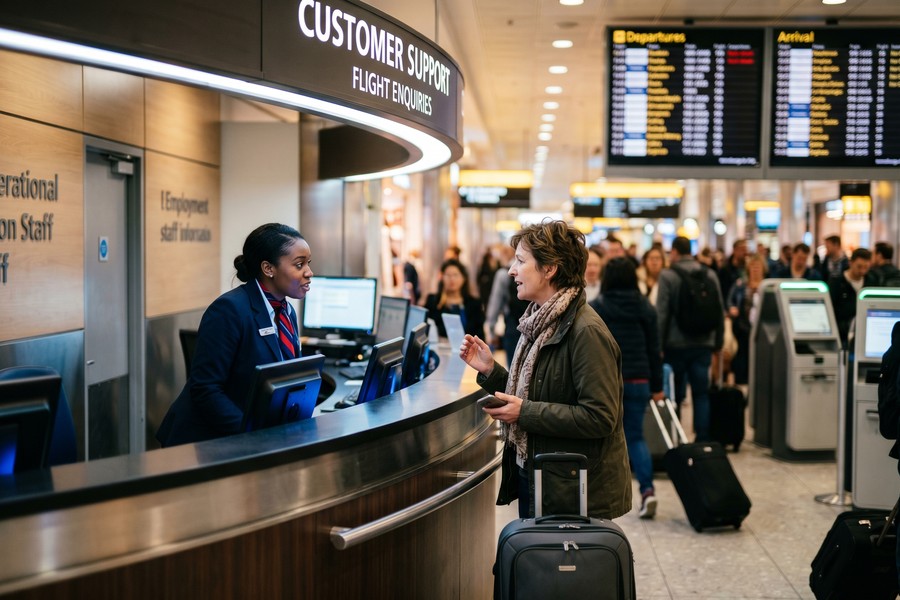
Book direct and you are the airline’s customer. Book through an OTA and the OTA is the airline’s customer, you are the OTA’s customer. That distinction sounds abstract until your flight is cancelled and you need to rebook immediately.
Airlines have explicit policies giving priority service to direct-booking customers in irregular operations. During the 2022 Southwest meltdown, direct customers were rebooked in queue order while OTA-booked passengers had to wait for the OTA to release control of the ticket before the airline could act. Some waited 12–36 hours longer for resolution.
One honest caveat here: direct booking is not a universal fix for poor customer service. Smaller carriers with thin staffing, Spirit, Frontier, and some regional operators, can deliver slow rebooking regardless of how the ticket was issued. The rebooking speed advantage of direct booking is most pronounced with full-service carriers like Delta, United, and American, especially during systemwide disruptions. On budget carriers where the call center is already overwhelmed, the gap narrows considerably.
Hidden Fees: Where the Savings Disappear
The headline fare on an OTA can look compelling. The final checkout price often tells a different story. Hidden and add-on fees are the primary mechanism by which OTAs monetize travelers beyond their airline commissions.
A 2023 analysis by Consumer Reports on OTA fee structures found that travelers paid an average of $23.47 in unexplained fees per ticket on major OTA platforms. On premium routes or international itineraries, that figure climbed to $67 per booking.
Fee Comparison: Direct vs. OTA Booking
| Fee Type | Airline Direct | Typical OTA |
|---|---|---|
| Service/Booking Fee | $0 | $0–$35 per ticket |
| Seat Selection Fee | Standard airline rates | Often blocked or marked up |
| Change Fee | Airline policy applies | OTA fee + airline fee stacked |
| Cancellation Processing | Free (airline policy) | $25–$75 OTA processing fee |
| Travel Insurance Upsell | Optional at standard rates | Aggressively pre-checked |
| Baggage Visibility | Full policy displayed | Often shown only post-purchase |
The Pre-Checked Box Problem
OTAs are notorious for pre-selecting add-ons, travel insurance, seat upgrades, rental car coverage, during checkout. A 2021 Which? investigation in the UK found that 74% of OTA checkouts had at least one pre-checked add-on. Travelers who didn’t notice paid an average of $18–$42 extra per booking.
Before confirming any OTA purchase, always review the hidden costs that OTAs routinely obscure. Unchecking unnecessary add-ons is the single fastest way to close the price gap between OTA and direct booking.
Some OTAs charge a separate “cancellation protection” fee at checkout, which is NOT the same as travel insurance and provides far less coverage. Read every line item before you click “confirm.” Always cross-check with a dedicated guide to what travel insurance actually covers before purchasing OTA-bundled protection plans.
How Your Booking Channel Affects Frequent Flyer Miles
Few aspects of the book flights airline vs OTA decision carry longer-term financial consequences. Frequent flyer miles have real monetary value, the Points Guy’s 2024 valuations peg Delta SkyMiles at 1.2 cents each, United MileagePlus miles at 1.35 cents, and American AAdvantage miles at 1.5 cents.
On a $400 round-trip fare, earning 1,600 miles at 1.35 cents each equals $21.60 in mileage value. An OTA booking class that reduces your earning rate by 50% costs you $10.80 in value, potentially erasing any price advantage the OTA offered.
Booking Class Mileage Accrual Rates
| Fare Source | Typical Booking Class | Miles Earned per $ Spent |
|---|---|---|
| Airline Direct (standard) | Y, B, M classes | 100% base miles |
| OTA Published Fare | Q, N, G classes | 50–75% base miles |
| OTA Opaque Fare | L, V, T classes | 25–50% base miles |
| Corporate Travel Portal | Negotiated mixed | 75–100% base miles |
| Airline Direct (premium) | J, C, F classes | 125–150% base miles |
For frequent flyers pursuing elite status, the booking channel matters even more. Most airlines require that a minimum percentage of qualifying miles come from direct-channel or partner-channel bookings. For Delta Platinum Medallion status, for example, at least 50% of Medallion Qualifying Dollars must originate from purchases where Delta is the merchant of record, which typically excludes OTA bookings.
Travel Credit Card Rewards Interaction
Using the right travel credit card can offset some of this mileage gap, but only if you understand the interaction. Cards like the Chase Sapphire Reserve earn 3x points on all travel, regardless of booking channel. Airline co-branded cards (Delta SkyMiles Amex, United Explorer, etc.) often pay bonus miles only on direct airline purchases.
For a deep dive on maximizing card rewards across booking channels, the guide on best travel credit cards for frequent flyers breaks down which cards work best in each scenario. Co-branded airline cards strongly favor direct booking. General travel rewards cards are more booking-channel agnostic.
“The mileage accrual difference between a direct booking and an OTA booking on the same fare can be the equivalent of $15–$40 per ticket in lost loyalty value. Over 10 flights a year, that’s a free domestic ticket you never earned.”
Cancellation and Refund Policies Compared
The pandemic exposed a structural weakness in OTA bookings that millions of travelers learned the hard way. When airlines began issuing credits and refunds in 2020, OTA customers discovered they weren’t in the airline’s refund queue, they were in the OTA’s queue, which was often weeks or months longer.
The U.S. Department of Transportation received 87,000 air travel complaints in 2020, the highest single-year volume on record. Consumer advocacy groups estimated that a disproportionate share, over 65%, involved tickets purchased through intermediaries. The issue persisted through 2022 and into 2023 as travel demand rebounded faster than OTA customer service capacity.
The 24-Hour Rule and Who It Protects
Under DOT regulations on airline refunds, passengers who book directly with a U.S. carrier are entitled to cancel any reservation within 24 hours of purchase for a full refund, no questions asked. This rule technically extends to OTA bookings as well, but enforcement is inconsistent.
Several OTAs process the 24-hour cancellation through their own systems first, then request the refund from the airline. This creates delays. More problematically, some OTAs only offer a credit toward future OTA purchases, not a cash refund, even when the DOT rule entitles you to cash.
The DOT’s 2024 refund rule expansion now requires airlines to issue automatic cash refunds for cancellations and significant delays, but this applies only to airline-issued tickets. OTA-issued tickets may still be subject to the OTA’s own refund processing timelines, which averaged 7–14 business days in 2023 vs. 3–5 days for direct airline refunds.
Change Fees: The Double-Stack Problem
Changing an OTA-booked flight can trigger what travelers call the double-stack fee, the airline’s own change fee (if any) plus the OTA’s administrative change fee on top. Many OTAs charge $25–$75 to process a change, even when the underlying airline charges nothing.
Major carriers eliminated change fees on main cabin and above fares for domestic routes beginning in 2020. OTAs haven’t all passed this benefit through. Always verify whether the OTA’s terms waive their processing fee when the airline itself has eliminated theirs.
Flight Disruptions and Rebooking: Who Helps Faster
Speed of resolution during a disruption may be the most practical consideration in the entire book flights airline vs OTA debate. When things go wrong, and in aviation, they do, how quickly you get rebooked depends heavily on who holds your ticket.
An airline can only rebook you when it has custody of your PNR (Passenger Name Record). When an OTA holds the PNR, the airline must wait for the OTA to release it before intervening. During peak disruption periods, major storms, system failures, staffing shortages, OTA phone lines are overwhelmed. Wait times of 3–6 hours were documented during the 2022 holiday travel meltdown.
Gate Agent Authority and OTA Tickets
Gate agents have significant discretionary authority to rebook passengers, upgrade them to available seats, or waive fees during irregular operations. But this authority typically extends only to tickets where the airline is the issuing carrier. An OTA-issued ticket requires the gate agent to call the OTA’s B2B line, which further delays resolution.
Travelers who learn strategic booking habits consistently report that direct bookings deliver faster on-the-ground problem resolution, especially for international itineraries where multiple legs and codeshare partners are involved.
According to a 2023 IATA disruption handling analysis, passengers with direct airline bookings were rebooked an average of 47 minutes faster than passengers with OTA-issued tickets during irregular operations events. On heavily disrupted days, this gap widened to over 2 hours.
Travel Insurance and Disruption Coverage
Independent travel insurance, purchased separately, not through an OTA checkout, is almost always broader and cheaper than OTA-bundled protection. Annual travel insurance policies covering trip interruption, medical evacuation, and delay compensation are available from $120–$300/year for frequent travelers.
Understanding what travel insurance genuinely covers before you buy is essential. OTA “protection plans” are often limited to credit vouchers rather than cash reimbursements, a distinction that matters enormously when a disruption forces you to buy last-minute replacement tickets at $600+ each.
“In a mass cancellation event, the airline’s first priority is its own customers. OTA customers enter a secondary queue that depends entirely on the OTA’s staffing and systems. The difference in resolution time can mean sleeping in an airport vs. making your connection.”
When an OTA Genuinely Wins
Framing this as a one-sided argument would be intellectually dishonest. OTAs exist because they provide real value in specific scenarios, and the goal is identifying those scenarios precisely rather than defaulting to one platform for everything.
Complex, multi-destination itineraries, New York to Tokyo to Bangkok to London, for example, are where OTAs with flexible search tools can surface routing combinations that airline websites won’t show. Google Flights’ multi-city builder and Kayak’s flexible search are genuinely superior to most airline booking engines for non-standard routes.
Package Deals and Hotel Bundling
Here is where OTAs offer the most unambiguous financial advantage. Expedia, Booking.com, and Priceline have access to dynamic packaging rates, airline and hotel inventory bundled at wholesale prices that neither the airline nor the hotel publishes separately.
A 2024 Expedia internal analysis found that travelers who booked flight-plus-hotel packages through the platform saved an average of 22% compared to booking both components separately. On a $1,200 combined spend, that’s $264 in real savings, not a rounding error.
| Scenario | Better Option | Estimated Savings |
|---|---|---|
| Simple domestic round-trip | Airline Direct | $12–$55 in avoided fees |
| Flight + Hotel bundle | OTA Package | 15–22% vs. separate booking |
| Multi-city international | OTA (search) + Direct (book) | Best of both |
| Last-minute fare | OTA (comparison) or Direct | Variable, check both |
| Status-qualifying flight | Airline Direct | $15–$40 in mileage value |
| Budget carrier comparison | OTA for discovery, direct to book | Avoids OTA booking fees |
Price Comparison as a Research Tool
The approach many frequent travelers use: OTAs for price discovery, airlines for actual booking. Use Google Flights (which doesn’t charge booking fees) or Kayak to identify the cheapest route and date combination, then go directly to the airline’s website to purchase.
This hybrid strategy captures the OTA’s aggregation value without exposing you to OTA booking risks. Google Flights, in particular, is a pure metasearch tool, it redirects you to the airline or OTA to complete the purchase, so it carries none of the custody or fee risks of a full OTA booking.
Set price alerts on Google Flights or Hopper for your target route 6–8 weeks before departure. When the alert triggers, book directly on the airline’s site within 2–4 hours. Fares at the alert price are often available for 24–48 hours, giving you time to purchase direct without paying OTA fees. For more money-saving techniques, see the complete list of budget travel hacks that still work in 2026.
Book Flights Airline vs OTA: A Decision Framework
Rather than a blanket rule, experienced travelers use a decision matrix to determine where to book on a trip-by-trip basis. The variables that matter most are: trip complexity, loyalty status, price difference, and disruption risk.
Running through a short set of criteria takes less than 60 seconds and can save meaningful money or prevent a customer service nightmare. The framework below codifies what seasoned travelers do intuitively when the book flights airline vs OTA question comes up.
The Four-Variable Decision Matrix
| Variable | Book Direct If… | Consider OTA If… |
|---|---|---|
| Loyalty Status | You have or are pursuing elite status | You have no loyalty program membership |
| Price Gap | OTA is less than 5% cheaper after all fees | OTA package is 15%+ cheaper (bundle) |
| Trip Complexity | Simple point-to-point itinerary | Multi-city or open-jaw routing |
| Disruption Risk | Weather-prone season or hub airport | High-frequency, low-disruption route |
Applying the Framework in Practice
A traveler flying Dallas to Los Angeles in January, a predictable, low-disruption route, who has no loyalty program and finds a $40 savings through an Expedia flight-plus-hotel bundle should book via OTA. The disruption risk is low and the savings are real.
The same traveler flying Dallas to Denver in February, peak snowstorm season, who holds American Airlines AAdvantage status should book direct without hesitation. The rebooking priority, mileage accrual, and customer service access are worth more than any marginal OTA discount.

Technology Shaping How We Book Flights in 2026
The booking environment in 2026 looks meaningfully different from 2020. AI-powered search tools, dynamic pricing algorithms, and airline NDC (New Distribution Capability) adoption have changed the economics of both channels.
NDC is the most significant structural shift. The IATA-led NDC standard allows airlines to sell richer, more customized fare products directly to travelers and through select OTAs, without going through legacy GDS systems. Airlines using NDC can offer bundles, ancillaries, and upgrades in real time that traditional GDS channels can’t display.
AI Price Prediction Tools
Apps like Hopper use machine learning to predict fare movements with reported accuracy of up to 95% within a 7-day window. These tools have democratized timing intelligence, previously available only to corporate travel managers, for individual travelers. Hopper’s Price Freeze feature lets you lock in a fare for 14 days for a flat fee of $10–$20, giving you time to decide without losing the price.
AI tools are also reshaping how airlines themselves price seats. Dynamic pricing now adjusts fares in real time based on dozens of variables: route demand, fuel costs, competitor pricing, and even social media travel trends. For travelers, the gap between “good timing” and “bad timing” can exceed $200 on the same route. The guide on how to travel more often without overspending covers timing strategies that interact directly with these AI pricing systems.
The Rise of Airline Super Apps
Major carriers are investing heavily in app-based direct booking experiences. Delta’s app now offers end-to-end trip management, real-time rebooking during disruptions, and AI-powered seat upgrade bidding. United’s app introduced a “ConnectionSaver” tool that holds connecting flights when incoming planes are delayed, a feature only accessible to direct-booking customers with the airline app installed.
These technology investments are widening the service gap between direct and OTA booking in the airline’s favor. As carriers continue to reserve their best technology experiences for direct customers, the non-price value of booking direct is growing year over year.
“NDC is the airline industry’s way of reclaiming the customer relationship from OTAs. By 2027, the majority of ancillary content — upgrades, bundles, premium services — will only be available on direct or NDC-connected channels. OTAs that don’t adapt will show travelers an increasingly incomplete picture of what’s available.”
over 65 airlines have implemented IATA’s NDC standard at Level 4 certification, the highest tier. Airlines using NDC at this level can offer personalized fares, seat upgrades, and ancillary bundles that are invisible to traditional OTA platforms still relying on legacy GDS connections. This gap will widen through 2026 and beyond.
Real-World Example: The $340 Lesson in OTA Booking
Marcus, a freelance consultant based in Chicago, booked a round-trip flight from O’Hare to Miami through a major OTA for a January conference. The listed fare was $287–$34 cheaper than United’s direct price of $321. He paid through the OTA, accepted a pre-checked travel protection add-on for $29, and didn’t notice the $18 booking service fee. His actual total: $334–$13 more than booking direct.
Two days before departure, a winter storm warning was issued for Chicago. Marcus called the OTA to rebook. After 90 minutes on hold, he was told the OTA needed to contact United to release his ticket before any change could be processed. The OTA’s change processing fee was $45. United’s own change fee had been waived under their storm policy, but because Marcus’s ticket was OTA-issued, the airline couldn’t apply the waiver directly. He ultimately paid $45 to change his departure by one day, bringing his total to $379 for a trip that would have cost $321 booked direct.
The comparison is stark. Direct booking total: $321, with free storm-related rebooking. OTA booking total: $379, including fees he didn’t anticipate and a rebooking process that took 3 hours and cost $45. The $58 difference, 18% more than the direct price, validated exactly the risk profile that experienced travelers associate with OTA bookings for time-sensitive itineraries.
After this experience, Marcus adopted the hybrid strategy: Google Flights for price research, airline websites for purchase. He now uses a travel rewards credit card for all direct bookings to capture airline-specific bonus miles, and he keeps an annual travel insurance policy rather than OTA-bundled protection. His average cost per flight dropped 11% in the following year, and he’s avoided two additional disruption-related headaches by having direct airline ticket control.
Your Action Plan
-
Use Google Flights or Kayak for price discovery only
Run your route search on Google Flights first. Set flexible date search to find the cheapest 3-day window. Note the price and carrier. Do NOT book on Google Flights, use it solely to identify your target fare and airline. This takes the OTA aggregation value without the OTA booking risk.
-
Check the airline’s direct site before purchasing
Go directly to the carrier’s website or app and search the same route and dates. Compare the total fare including all mandatory fees. Many airlines now match or beat OTA prices on their own platforms, and some offer web-exclusive fares not available anywhere else. Always check Southwest.com separately since it never appears on OTAs.
-
Calculate the true OTA cost including all fees
If the OTA appears cheaper, proceed to the final checkout page without purchasing. Add up all line-item fees, service fees, seat selection, protection add-ons. Uncheck any pre-selected add-ons. Compare this real total to the direct booking price. In most cases, the gap will be under $10, often in the airline’s favor.
-
Factor in your loyalty program before deciding
If you have frequent flyer status or are within 5,000 miles of the next tier, book direct. The mileage accrual difference between a direct and OTA-issued ticket can represent $15–$40 in loyalty value on a single booking. Use the guide to maximizing travel reward points to calculate your exact mileage value before making the call.
-
Assess disruption risk for your specific route and season
Check historical on-time performance for your route and departure airport on the BTS Air Travel Consumer Report. Flying through a hub known for weather delays (Denver, Chicago, New York) in winter months, weight the rebooking speed advantage of direct booking heavily. The 47-minute average rebooking speed advantage of direct customers can mean making or missing a connection.
-
Use OTAs deliberately for package deals and complex routes
If your trip involves a hotel stay and you’re indifferent to brand loyalty, run a flight-plus-hotel search on Expedia or Booking.com. The dynamic package discount (often 15–22%) is a genuine, not illusory, saving. For multi-city itineraries with 3+ destinations, OTA search tools are often more capable than airline booking engines at finding optimal routings.
-
Purchase independent travel insurance separately
Never rely on OTA-bundled “protection plans.” Purchase a standalone annual travel insurance policy from a provider like Allianz, World Nomads, or Travel Guard. Annual policies covering trip interruption, medical evacuation, and delay compensation typically cost $120–$300/year, cheaper than individual per-trip OTA add-ons for anyone flying 4+ times annually.
-
Register your direct booking in the airline app immediately after purchase
Download the carrier’s app and link your booking before you travel. Enable push notifications for flight status. In a disruption scenario, the app will often offer rebooking options before the gate agent even makes an announcement, giving you a 5–15 minute head start on selecting available alternatives. This is a zero-cost upgrade to your travel resilience.
Related reading: Do Smart Travel Jackets with Hidden Compartments Actually Save Space in 2026?.
Frequently Asked Questions
Is it always cheaper to book flights directly with an airline?
Not always, but it’s cheaper more often than most travelers realize. The average price difference between airline direct and OTA bookings narrowed to under 3% in 2024 on comparable fares. When you factor in OTA service fees ($0–$35 per ticket), direct booking comes out cheaper in the majority of simple itinerary cases. The main exception is OTA package deals combining flights and hotels, where bundled discounts can reach 15–22%.
What is an OTA and how does it make money?
An Online Travel Agency (OTA) is a platform, like Expedia, Booking.com, Priceline, or Kayak, that aggregates and sells travel inventory from multiple airlines, hotels, and car rental companies. OTAs earn revenue through commissions from airlines (typically 1–5% per ticket), service fees charged to consumers, and override bonuses from suppliers for volume bookings. This model means OTA interests and consumer interests don’t always perfectly align.
Does booking through an OTA affect my frequent flyer miles?
Yes, significantly. OTA-booked tickets are frequently issued in lower booking classes (Q, N, G, or L class) that earn 25–75% of base miles compared to directly booked equivalents. For travelers pursuing elite status on programs like Delta SkyMiles, United MileagePlus, or American AAdvantage, OTA bookings may not generate the Qualifying Miles or Qualifying Dollars required for status progression. Always check the fare class listed on your OTA ticket against the airline’s mileage earning chart before purchasing.
What happens if my flight is cancelled and I booked through an OTA?
The airline must work through the OTA to rebook you, because the OTA holds your ticket’s PNR. This process typically adds 47 minutes to several hours of delay compared to direct booking rebooking times. Contact both the OTA and airline simultaneously. Document all communications in writing, as OTA rebooking policies vary and the U.S. Department of Transportation’s automatic refund rule applies differently to OTA-issued tickets than to airline-issued ones.
Are OTAs regulated the same way as airlines?
No. Airlines operating in the U.S. are regulated by the Department of Transportation and must comply with specific consumer protection rules on refunds, disclosure, and bump compensation. OTAs are primarily governed by their own terms of service and general consumer protection law. The DOT’s 2024 expanded refund rule imposes new requirements on airlines but does not directly regulate OTA processing timelines for passing those refunds through to customers.
Which OTAs are the most trustworthy for flight booking?
Google Flights is the most transparent because it redirects to the airline or OTA to complete the booking, it doesn’t hold your money or ticket. Among full-service OTAs, Expedia and Booking.com have the largest customer service infrastructure. Smaller or less-known OTAs, sometimes called “rogue OTAs”, have generated disproportionate complaints about refund fraud and hidden fees. Always check an OTA’s BBB rating and DOT complaint history before using a platform you haven’t used before.
Do all airlines allow booking directly on their websites?
The vast majority of commercial airlines offer direct booking through their websites and apps. Southwest Airlines is notable for exclusively selling through direct channels, no OTA distributes Southwest fares. Budget carriers like Spirit, Frontier, and Ryanair also strongly incentivize direct booking by charging OTA booking fees on top of their already-unbundled fare structures, making the price difference particularly pronounced on low-cost carriers.
What is the 24-hour cancellation rule and does it apply to OTA bookings?
The DOT’s 24-hour free cancellation rule requires that tickets purchased at least 7 days before departure can be cancelled within 24 hours of booking for a full refund. This applies to U.S. carriers on direct bookings. The rule technically extends to OTA bookings on U.S. carriers, but implementation varies. Some OTAs process refunds promptly; others issue travel credits rather than cash, or create procedural delays. For testing a price, direct booking gives you a cleaner, faster refund if you change your mind.
Can I earn credit card travel rewards regardless of where I book?
General travel credit cards like Chase Sapphire Reserve or Amex Platinum earn points on all travel purchases regardless of booking channel, so you’ll earn rewards whether you book direct or through an OTA. Airline co-branded cards (Delta SkyMiles Amex, United Explorer, etc.) typically pay enhanced bonus miles only on purchases made directly with that airline. Using a co-branded card to book through an OTA may earn only the base travel rate (1x) rather than the airline bonus rate (2–3x), losing meaningful per-ticket value.
What is NDC and how does it affect OTA bookings?
NDC (New Distribution Capability) is an IATA-led technology standard that allows airlines to sell richer fare content, bundled ancillaries, real-time upgrades, personalized offers, directly or through NDC-connected distributors., over 65 airlines are NDC Level 4 certified. OTAs that haven’t adopted NDC connectivity may show incomplete fare options, missing bundles, upgrades, or ancillaries available only on direct channels. This gap is widening as more airlines shift their best inventory to NDC-only distribution through 2026 and beyond.
Is direct booking a good fit for every type of traveler?
Direct booking is the right default for most travelers, but it’s not universally optimal. Infrequent travelers with no loyalty program and no status to protect lose the mileage argument entirely, for them, a genuine OTA package discount matters more. Travelers booking last-minute international itineraries with multiple stops may also find OTA search tools more capable than individual airline booking engines at constructing optimal routings. Direct booking delivers its clearest advantages for loyalty program members, travelers on weather-prone routes, and anyone who values clean cancellation access.

Be cautious of “rogue OTAs”, small, less-known booking platforms that appear at the top of price comparison searches. These platforms have been associated with fraudulent ticket issuance, refund denial, and identity theft. A 2023 report by the American Society of Travel Advisors found that complaints involving non-accredited OTAs rose 34% in 2022. Stick to OTAs listed on the Airlines Reporting Corporation (ARC) accredited agency database or well-established platforms with verifiable consumer ratings. For broader guidance, review the guide to protecting yourself from financial scams online.
Sources
- IATA, New Distribution Capability (NDC) Program Overview
- View From The Wing, Airline Loyalty Program Analysis and OTA Booking Research
- Atmosphere Research Group, Travel Industry Consumer Behavior Reports
- IATA, Air Transport Statistics and Disruption Handling Analysis
- Hopper, Flight Price Prediction Accuracy and Methodology